Southwest
Texas has spent millions placing razor wire along the border: Is it working?

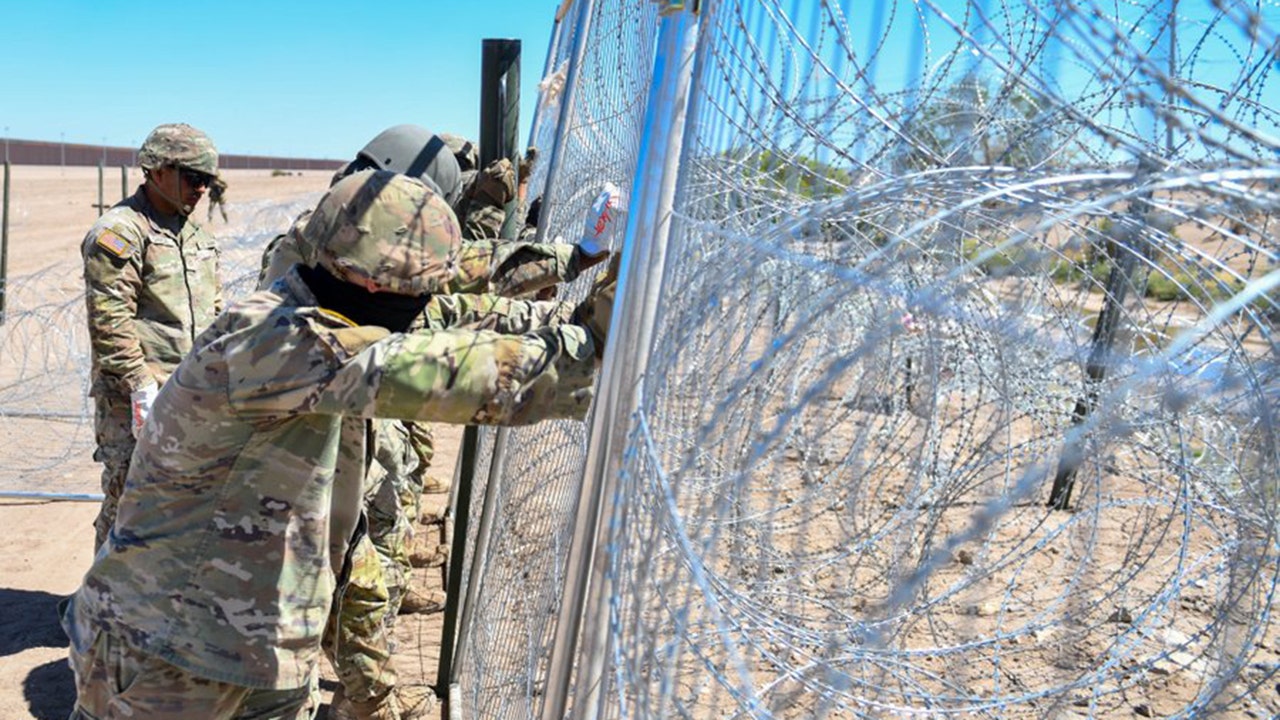
In the past couple of years the Texas National Guard and state authorities have placed over 100 miles of razor wire at some of the most critical migrant crossing points along the southern border. The state, which makes up over 60 percent of the U.S. border with Mexico, has spent well over $10 million erecting and maintaining these border barriers as part of its larger multi-billion-dollar border enforcement campaign “Operation Lonestar.”
This week, a federal appeals court ruled against the Biden administration’s attempt to block Texas from continuing to place walls of razor wire – also called concertina or “c-wire” – along the border. This comes after U.S. Border Patrol agents under the Biden administration cut down Texas’ wire on a 26-mile stretch of the border in September 2023.
Earlier this year, Texas Governor Greg Abbott, a Republican, said that “Biden should be thanking Texas, not obstructing our efforts to secure the border.”
“Joe Biden completely abandoned his constitutional duty to secure the border. Texas stepped up in his absence to build the wall, repel illegal crossings, and protect our country,” said Abbott.
HEARTBREAKING VIDEO SHOWS 10-YEAR-OLD MIGRANT LEFT ALONE AT BORDER
Texas Gov. Greg Abbott announce the deployment of an inflatable barrier along the Rio Grande River on Thursday, along with a six-bill package he signed to bolster border efforts. (Gov. Greg Abbott’s Office)
But does razor wire really keep migrants from entering the country illegally, and is it worth the cost?
Andrew Arthur, a law and policy expert at the Center for Immigration Studies, says the answer is an emphatic “Yes.”
He pointed to data from U.S. Customs and Border Protection that shows illegal migrant encounters in Texas’ five border sectors dropped by nearly two-thirds in January after the state finished placing wire.
Arthur told Fox News Digital that Texas began placing wire fortifications in May 2023 after the COVID-era measure Title 42 expired. Then, after the migrant surge in December, Texas deployed additional guard personnel, state troopers and resources to the border.
“Based on the numbers that we’re looking at here, it is most definitely effective,” he said.
Members of the U.S.military place razor wire along the U.S.-Mexico border on the McAllen-Hidalgo International Bridge, Friday, Nov. 2, 2018, in McAllen, Texas. (AP Photo/Eric Gay)
INCOMING BORDER CZAR HOMAN ISSUES WARNING IN TEXAS TO DEMS OPPOSING TRUMP DEPORTATIONS: ‘DON’T TEST US’
“What the wire did from my reading of this is it shifted that flow west,” he explained. “And that’s important, because that’s a much longer route. You’re adding hundreds of miles to that smuggling journey.”
While effective, razor wire is not without drawbacks. More than a traditional border wall, wire needs to be constantly monitored. It also requires regular upkeep and additional wire being laid down after old wire is damaged or destroyed.
“It’s a temporary solution, because you’re going to have to replace the concertina wire that they have and, at some point, they’re not going to be able to keep sending wave after wave of troopers, because a lot of those guys are hundreds of miles from their homes, because Texas is a big state,” he explained. “When I was embedded with a trooper down there, he was from Abilene, which is nowhere near the border, and he had been there for six weeks.”
A Texas National Guard soldier stands on patrol near the banks of the Rio Grande on April 2, 2024, in El Paso, Texas. (Photo by Brandon Bell/Getty Images)
There are also humanitarian considerations.
Arthur said that by being an effective deterrent, razor wire protects migrants from attempting the dangerous crossing over the Rio Grande.
Meanwhile, Dylan Corbett, who runs an El Paso-based migrant aid and advocacy group called the Hope Border Institute, said that the presence of c-wire along the border has increased migrant injuries and deaths.
Corbett told Fox News Digital that doctors working with the Hope Border Institute have had to treat the wounds of families injured by the wire, as well as “wounds caused by projectiles fired by the National Guard.”
Venezuelan immigrant Louis Sanchez asks Texas National Guard troops to let his family pass through razor wire after they crossed the Rio Grande from Mexico on September 27, 2023, in Eagle Pass, Texas. (John Moore/Getty Images)
“In El Paso, nearly our entire border has been fortified by layers of concertina wire, including part of our border with New Mexico,” he explained. “While the numbers of border deaths along the whole border appear to have gone down over the past year, in El Paso they have increased. That increase has been sharp over the past couple years and coincides with the presence of the Guard and the concertina wire, because it is forcing border crossers just to the west of the city, where they die in the desert or crossing the river.”
He called for the federal government to finally step in and “assert its supremacy over managing migration at the border and fix our overall system.”
“More people are dying here than ever before,” he said. “The longer we wait, states will continue to engage in uncoordinated and irresponsible enforcement actions on their own, unnecessarily putting lives at risk and needlessly diverting millions of dollars in taxpayer resources.”
Read the full article from Here


Crews worked overnight on what is expected to be a long-term effort to clean up and repair a broken water main that caused extensive damage in West Hollywood on Thursday.
Yellow tape remained in place Friday morning, blocking streets around Sunset Boulevard and Holloway Drive as crews continued pumping water out of the century-old trunk line.
Asphalt and soil were also being removed so crews could get a better look at the damaged 36-inch trunk line, a major feeder pipe serving the area.
-

Aerial view of flooded streets in West Hollywood following a water main break on July 16, 2026. -
Two men fell into a sinkhole that opened on a sidewalk after a massive water main break in West Hollywood on July 16, 2026. (KTLA) -
Aerial view of flooded Metro buses in West Hollywood following a water main break on July 16, 2026. -
Aerial view of flooded streets in West Hollywood following a water main break on July 16, 2026. -
Aerial view of flooded streets in West Hollywood following a water main break on July 16, 2026. -
A broken water main sent water gushing out of an apartment building and turned streets into rivers in West Hollywood on July 16, 2026. (KTLA) -
A broken water main sent water gushing into a parking garage in West Hollywood on July 16, 2026. (KTLA) -
Floodwaters from a water main break push parked cars into one another in West Hollywood. July 2026. (KTLA) -
Floodwaters from a water main break push parked cars into one another in West Hollywood. July 2026. (KTLA) -
Residents stand at the entrance to an apartment parking garage as floodwaters from a water main break rush past in West Hollywood. July 2026. (KTLA) -
A parking garage is seen flooding following a water main break in West Hollywood on Thursday, July 16, 2026. (KTLA) -
Floodwaters from a water main break push parked cars into one another in West Hollywood. July 2026. (KTLA) -
Floodwaters from a water main break push parked cars into one another in West Hollywood. July 2026. (KTLA) -
Floodwaters from a water main break push parked cars into one another in West Hollywood. July 2026. (KTLA) -
A broken water main sent water gushing into the streets of West Hollywood on July 16, 2026. (KTLA)


“First and foremost is our crews’ safety,” a Los Angeles Department of Water and Power spokesperson said Thursday. “When we excavate, we are going to have to make sure the area is safe before we send crews in to proceed and start the actual repairs on the pipe.”
The water main ruptured around 3 a.m. Thursday, sending thousands of gallons of water rushing through West Hollywood streets, flooding dozens of garages and pushing parked cars into one another.
A Metro bus yard was also flooded, leaving several buses partially submerged.
The force of the water washed away dirt and gravel supporting the roadway, creating a massive sinkhole on Sunset Boulevard and a smaller one near Palm Avenue, where two people fell in.
“I’m astounded by the massive sinkhole that has just opened up before our eyes,” KTLA’s Annie Rose Ramos reported Thursday from Palm Avenue.
The two men appeared to be uninjured.
As for the larger trunk line that burst beneath Sunset Boulevard, KTLA’s Carlos Herrera reported it was scheduled for replacement in 2031.
LADWP officials now hope to establish a repair timeline after getting a closer look at the damage Friday. For now, the intersection is expected to remain closed for anywhere from several days to several weeks.
The cause of the rupture remains under investigation.
Los Angeles, Ca
Arrest made in deadly shooting at 4th of July gathering in Compton; search for 2nd suspect continues

Los Angeles County Sheriff Robert Luna gave an update Thursday on several shootings over the Fourth of July weekend that left three people dead and several others injured.
Police arrested Antoine Jones, a 50-year-old man from the Los Angeles area, who they believe is responsible for the murder of a 19-year-old woman and the attempted murder of two additional surviving female victims who were attending a large community block party in Compton.
On July 4 at approximately 11:40 p.m., deputies from the Compton station responded to an apartment complex on the 700 block of West Laurel Street following reports of multiple people being shot.
Meah Bordenave-Jenkins, a 19-year-old nursing student at the University of Nevada, Las Vegas, was killed when gunfire broke out at the party.
Deputies located Bordenave-Jenkins and the two other women suffering from gunshot wounds outside of the apartment complex.
“While today’s announcement represents an important step towards justice for Meah and her family, our work is very far from being over,” said LASD Sheriff Robert Luna.
The LASD is also seeking the public’s help in identifying those responsible for the murder of Eric Washington, 37, a beloved community activist and former government staffer, and the attempted murder of another surviving man injured that same night at the same party.
Washington was reportedly killed while trying to deescalate a conflict at the party, his family said. Deputies found victim Washington suffering from a gunshot wound inside the complex.
Investigators later learned that another man had also been shot at some point during the incident.
Bordenave-Jenkins and Washington both died from their injuries. The remaining victims, two women and a man, sustained non-life-threatening injuries and have been released from the hospital. They have not been identified by police.
Detectives determined the two shootings happened moments apart at the party but appear to be separate and unrelated.
-
A man and a women were killed and three others were injured, one critically, at a Fourth of July Party in Compton on July 4, 2026. (OnScene.TV) -
A shooting at a Compton Fourth of July block party in the 2100 block of Grandee Avenue in Compton left one man dead and another injured on July 5, 2026. (OnScene.tv) -
A shooting at a Compton Fourth of July block party in the 2100 block of Grandee Avenue in Compton left one man dead and another injured on July 5, 2026. (OnScene.tv) -
A shooting at a Compton Fourth of July block party in the 2100 block of Grandee Avenue in Compton left one man dead and another injured on July 5, 2026. (OnScene.tv) -
A shooting at a Compton Fourth of July block party in the 2100 block of Grandee Avenue in Compton left one man dead and another injured on July 5, 2026. (OnScene.tv) -
A shooting at a Compton Fourth of July block party in the 2100 block of Grandee Avenue in Compton left one man dead and another injured on July 5, 2026. (OnScene.tv) -
A shooting at a Compton Fourth of July block party in the 2100 block of Grandee Avenue in Compton left one man dead and another injured on July 5, 2026. (OnScene.tv) -
A shooting at a Compton Fourth of July block party in the 2100 block of Grandee Avenue in Compton left one man dead and another injured on July 5, 2026. (OnScene.tv) -
A shooting at a Compton Fourth of July block party in the 2100 block of Grandee Avenue in Compton left one man dead and another injured on July 5, 2026. (OnScene.tv) -
A man and a women were killed and three others were injured, one critically, at a Fourth of July Party in Compton on July 4, 2026. (Google) -
A man and a women were killed and three others were injured, one critically, at a Fourth of July Party in Compton on July 4, 2026. (OnScene.TV) -
A man and a women were killed and three others were injured, one critically, at a Fourth of July Party in Compton on July 4, 2026. (OnScene.TV) -
A man and a women were killed and three others were injured, one critically, at a Fourth of July Party in Compton on July 4, 2026. (OnScene.TV) -
A man and a women were killed and three others were injured, one critically, at a Fourth of July Party in Compton on July 4, 2026. (OnScene.TV) -
A man and a women were killed and three others were injured, one critically, at a Fourth of July Party in Compton on July 4, 2026. (OnScene.TV) -
A man and a women were killed and three others were injured, one critically, at a Fourth of July Party in Compton on July 4, 2026. (OnScene.TV)


Detectives identified Jones as the suspect responsible for Bordenave-Jenkins’ death and the attempted murder of the two surviving women. Authorities located Jones on July 14 in Los Angeles and took him into custody.
The LASD is still searching for the suspect or suspects responsible for the murder of Washington and the attempted murder of the surviving male victim.
“Although today’s arrest is significant, this investigation remains extremely active,” Luna said.
“There were hundreds of people at this gathering,” Luna said. “Somebody knows, somebody saw or somebody heard what happened.”
The LASD also announced they’re searching for a suspect in a separate shooting at a different Fourth of July gathering that occurred in the early morning of July 5.
At approximately 12:10 a.m., Compton deputies responded to the 2100 block of North Grandee Avenue, where they located a 30-year-old victim, Thaddeus Clark, and a second victim suffering from gunshot wounds at the gathering.
Clark, a father of three, did not survive his injuries, Luna said.
The LASD is urging anyone with information about Clark’s murder and the attempted murder of the surviving victim to contact the LASD Homicide Bureau.
Although these shooting incidents occurred at gatherings less than an hour apart, investigators found no evidence that the two were connected, Luna said.
Luna also announced three suspects have been arrested in connection with a shooting in East L.A. on July 5. It happened as crowds crossed the intersection near Whittier Boulevard and Leonard Avenue during a World Cup match.
Four people were hit by gunfire, including two men, one woman and a boy. None of the injuries were life-threatening.
The sheriff said the alleged shooter, a 15-year-old known gang member, was arrested. Two female suspects, ages 21 and 38, have been arrested in the Lancaster and Palmdale areas for their alleged roles in luring the primary victim to the location and assisting the shooting suspect in evading arrest.
They’re all facing four counts of attempted murder.

A broken water main sent water gushing from an apartment building and turned nearby streets into rivers in West Hollywood early Thursday morning. The break was reported around 3 a.m. near Holloway Drive and Sunset Boulevard. “It’s a rupture of one of the significant mains that goes through here. West Hollywood, as it turns out, […]
-
 Politics5 minutes ago
A new piece of Democrats’ midterm strategy: Being ‘practical’
-
 Science11 minutes ago
After wildfires destroyed 95% of this California tribe’s forests, members uncovered 1,200 ancestral sites
-
 Sports17 minutes ago
World Cup championship and third-place game: Start times and how to watch
-

 World29 minutes ago
Rule of Law in Hungary shows ‘radical change’ under Magyar, EU says
-

 News59 minutes ago
Where Wildfire Smoke Is The Worst Right Now—And What To Do About It
-

 Los Angeles, Ca3 hours ago
LADWP begins long-term repairs after West Hollywood water main rupture
-

 Detroit, MI3 hours ago
Livestream: Mayor Sheffield, Detroit health chief to address wildfire smoke threat
-
 San Francisco, CA3 hours ago
A sculpture of a giant naked woman goes on sale in San Francisco. Bring a crane

