Southwest
Texas has a beef with the name of 'New York strip' steak

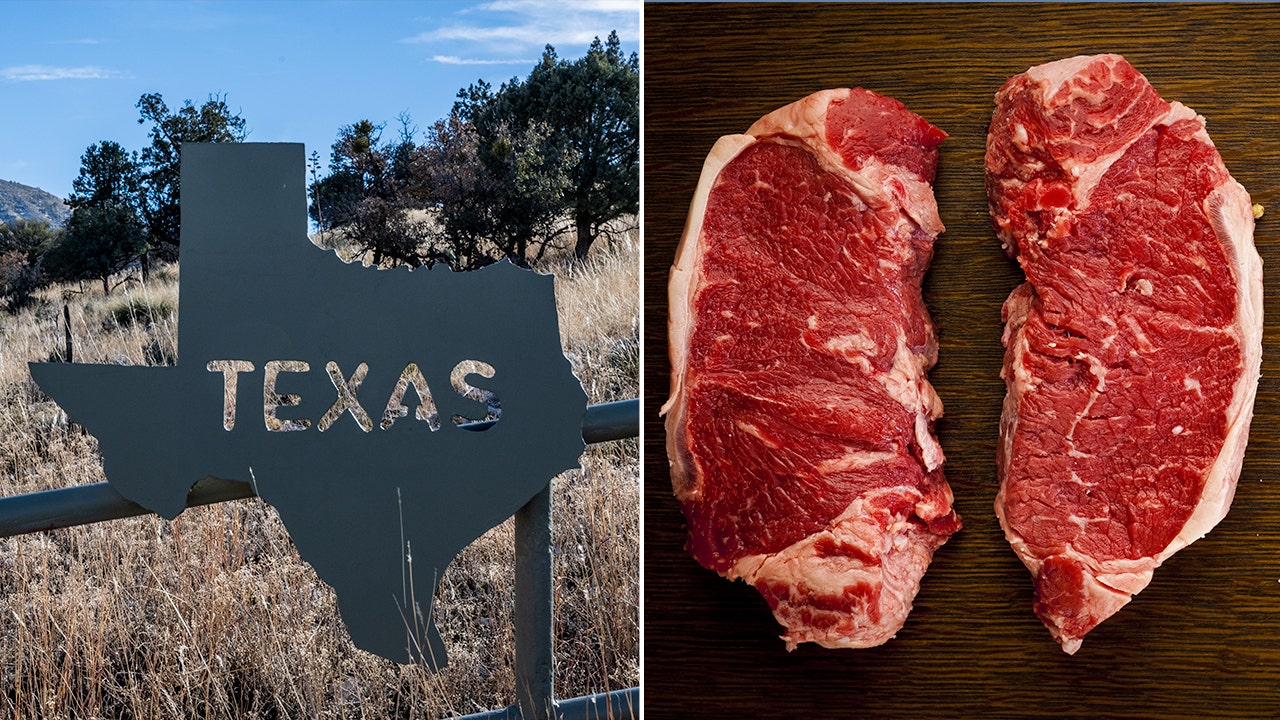
The lieutenant governor of Texas wants to change the name of a cut of a steak.
Texas Lt. Gov. Dan Patrick proposed in a social media post that the New York strip should be renamed in honor of the Lone Star State.
Patrick voiced his thoughts on X on Friday after meeting with the Texas Cattle Feeders Association.
STEAK ‘N SHAKE TO COOK FRIES IN BEEF TALLOW: ‘AUTHENTIC WAY’
When a few members said their favorite cut was the New York strip, Patrick wanted to know “why we didn’t call it a ‘Texas Strip’ because New York has mostly dairy cows.”
“Just because a New York restaurant named Texas beef a New York Strip in the 19th century doesn’t mean we need to keep doing that,” Patrick wrote.
Patrick went on to say that a resolution will be filed in the Texas Senate “to officially change the name” of the “New York strip” to the “Texas strip.”
He said restaurants will be asked “to change the name of this strip of meat the next time they reprint their menus.”
Could the “New York strip” cut of steak become known as the “Texas strip”? (iStock)
Grocery stores will be asked to do the same in the hopes that it will “catch on across the country and around the globe.”
“In a world filled with serious issues that we address every day at the Texas Capitol, this simple resolution will help better market Texas beef,” Patrick wrote. “That’s good for the Texas cattle industry.”
Texas has about 12.2 million head of cattle – the most in America, Patrick said.
The Texas Cattle Feeders Association represents the cattle-feeding industry in Texas, Oklahoma and New Mexico. It is the largest cattle-feeding region in the U.S., according to the Texas Cattle Feeders Association’s website, and its members market more than 6 million fed cattle – about 25% of the total fed cattle population produced in the country.
Texas has about 12.2 million head of cattle, more than any other state in America, Lt. Gov. Dan Patrick said. (iStock)
“Liberal New York shouldn’t get the credit for our hard-working ranchers,” Patrick continued. “We promote the Texas brand on everything made or grown in Texas because it benefits our economy and jobs.”
The strip steak is known by many names — including the Kansas City strip and Omaha strip — but most people in the U.S. call it the New York strip, according to a blog post on the website for Omaha Steaks.
For more Lifestyle articles, visit www.foxnews.com/lifestyle
“So why did ‘New York’ stick?” the post said. “Simple: That’s where it all began – the great steakhouses of New York City.”
Elsewhere in the world, the strip steak is known as a sirloin (Australia and United Kingdom) and a striploin (Canada).
A New York strip is known by many names in the U.S., including the Kansas City or Omaha strips. (iStock)
Patrick has been the lieutenant governor of Texas since 2015.
Under the provisions of the Texas Constitution, the lieutenant governor is also president of the Texas Senate.
“After session ends this summer, I might take a short cruise across the Gulf of America and have a juicy medium-rare Texas Strip,” Patrick wrote.
Fox News Digital reached out to Patrick’s office for further comment.
Fox News Digital also reached out to the Texas Cattle Feeders Association and National Cattlemen’s Beef Association seeking comment.
Read the full article from Here


A woman was struck and killed by a driver while crossing the street on Pacific Coast Highway in Long Beach.
On June 3, the female pedestrian was using the crosswalk at Pacific Coast Highway and Pacific Avenue around 4:50 a.m.
She had walked against a red light and was hit by a 19-year-old driver in a Chevy sedan, Long Beach police said.
Despite lifesaving efforts, the woman was pronounced dead at the scene. The driver remained at the scene and is cooperating with the investigation.
“At this time, impaired driving, distracted driving and excessive speed are not believed to be a factor in this collision,” police said.
The woman’s name is being withheld pending identification by the Los Angeles County Medical Examiner.
Anyone who witnessed the crash or has information on the incident is asked to call Detective Joseph Johnson at 562-570-7355.
Anonymous tips can be provided to L.A. Regional Crime Stoppers at 1-800-222-8477 or online at lacrimestoppers.org.

A man wanted for a deadly road rage shooting in Los Angeles was arrested and extradited from Mexico after fleeing the U.S. in 2024.
The suspect was identified as Christian Rojas, 21, of Bellflower, according to the California Highway Patrol.
Authorities had been searching for him since the deadly incident on October 10, 2024.
Rojas and a second suspect, Joshua Rojas Sr., 47, of Downey, were driving on the northbound 5 Freeway in Boyle Heights around 4 p.m. when they became involved in an altercation with another driver that escalated into a shooting.
-

Video obtained exclusively by KTLA shows the terrifying moment a road rage suspect opened fire the driver of another car on the 5 Freeway in Los Angeles, fatally wounding him and seriously injuring a passenger, on Oct. 10, 2024. (Credit: @hugoboss01) -
Video obtained exclusively by KTLA shows the terrifying moment a road rage suspect opened fire the driver of another car on the 5 Freeway in Los Angeles, fatally wounding him and seriously injuring a passenger, on Oct. 10, 2024. (Credit: @hugoboss01) -
Video obtained exclusively by KTLA shows the terrifying moment a road rage suspect opened fire the driver of another car on the 5 Freeway in Los Angeles, fatally wounding him and seriously injuring a passenger, on Oct. 10, 2024. The alleged gunman is circled. (Credit: @hugoboss01) -
Video obtained exclusively by KTLA shows the terrifying moment a road rage suspect opened fire the driver of another car on the 5 Freeway in Los Angeles, fatally wounding him and seriously injuring a passenger, on Oct. 10, 2024. (Credit: @hugoboss01) -
Video obtained exclusively by KTLA shows the terrifying moment a road rage suspect opened fire the driver of another car on the 5 Freeway in Los Angeles, fatally wounding him and seriously injuring a passenger, on Oct. 10, 2024. (Credit: @hugoboss01) -
Christian Rojas, 21, of Bellflower, was arrested and extradited to the U.S. from Mexico on June 2, 2026, in connection with a deadly road rage shooting in Los Angeles. (California Highway Patrol)


Video of the tense confrontation showed the suspects, who were driving a Dodge Durango SUV, opening fire on two men in a Cadillac sedan.
The shooting forced the victim to pull over abruptly. That’s when a suspect ran up to the Cadillac, opened the passenger-side door and fired several shots at close range.
In a panic, the Cadillac driver tried to escape by making a sudden U-turn and driving against oncoming traffic. He eventually crashed head-on into several vehicles.
The suspects ditched their SUV and fled toward a freeway exit on foot. The Cadillac driver was left with serious injuries and his passenger was killed. Their identities were not released.
The incident caused a miles-long backup that left thousands of motorists stranded on the freeway for hours and authorities worked to clear the scene.
Following an extensive investigation, detectives identified the two men as the suspects involved.
Joshua Rojas Sr. was arrested in San Bernardino on October 22, 2024, on a murder charge. He remains in custody awaiting trial.
Meanwhile, Christian Rojas had fled the U.S. and was hiding in Mexico, detectives said. A $4.3 million bail warrant was issued for his arrest.
“Through a coordinated international effort, investigators determined that Rojas was living in Palomo de Arriba, Mexico,” CHP officials said. “The U.S. Marshals Service worked with Mexican state police to locate and arrest him on the outstanding warrant.”
On June 2, 2026, Christian was arrested and extradited to the U.S. to face a murder charge.
“This arrest demonstrates that time and distance will not shield violent offenders from justice,” said CHP Southern Division Chief Chris Margaris. “For nearly two years, our detectives remained relentless in their pursuit of those responsible for this senseless act of violence. Through exceptional collaboration with the United States Marshals Service and our law enforcement partners in Mexico, we located and apprehended this suspect and brought him back to face the charges. We remain committed to protecting the public, supporting victims and their families, and holding violent criminals accountable wherever they may try to hide.”

The northbound 405 Freeway will remain closed for several hours near Los Angeles International Airport after a police pursuit ended with officers opening fire Friday morning. Unconfirmed reports indicated the incident began with a robbery at a 7-Eleven store, which ended with Los Angeles Police Department officers pursuing the suspect in a Kia. The chase […]
-

 New York10 minutes ago
How Tony Danza Spends a Day Playing a Villain and Frank Sinatra
-

 Los Angeles, Ca17 minutes ago
Woman killed by driver while crossing PCH in Long Beach
-

 Detroit, MI35 minutes ago
Tigers takeaways: Detroit rolls to a little ALDS revenge vs Seattle
-

 San Francisco, CA47 minutes ago
Chapman (8 RBIs) among trio of Giants with 2 HRs in 18-run Wrigley romp
-

 Dallas, TX50 minutes ago
Isolated Flooding Threat to North Texas Late Saturday
-

 Miami, FL55 minutes ago
Tampa Bay Rays beat the Miami Marlins in game 1 of the series, with a score of 6-0
-

 Boston, MA1 hour ago
Red Sox win series opener, ending rough stretch against Yankees – The Boston Globe
-

 Denver, CO1 hour ago
Denver weather: Near-record heat Saturday

