Southwest
SENATOR PETER WELCH: I’m a Democrat and we need to fix FEMA with local control

NEWYou can now listen to Fox News articles!
The threat of natural disasters has again gripped the nation. In Texas, more than 120 people are dead after horrific flooding, and at least 170 are still missing. Tragically, young children and counselors from a camp are among those lost. In New Mexico, houses have been washed down a river. And in North Carolina, more than 10 inches of rain flooded entire communities.
The scenes from these disasters are horrific and all too familiar. My state of Vermont faced catastrophic flooding two years ago, on July 10-11. Homes, farms and businesses were destroyed. Roads and bridges were washed away. The damage was shocking, and the recovery was painful. Then, exactly one year later, another flood devastated our state. Communities were left reeling — two once-in-a-generation floods, back-to-back.
After two consecutive floods, Vermonters know firsthand how essential local volunteer responders and the Federal Emergency Management Agency (FEMA) were to our state’s immediate recovery. Without question, the victims of flooding in Texas, North Carolina and New Mexico are experiencing this too.
GOV. ABBOTT DEMANDS COMPREHENSIVE OVERHAUL OF TEXAS FLOOD WARNING SYSTEMS AS DEATH TOLL RISES
When disaster strikes, it is an all-hands-on-deck moment. The federal government has the unique ability to surge resources and personnel, and it’s critical they show up.
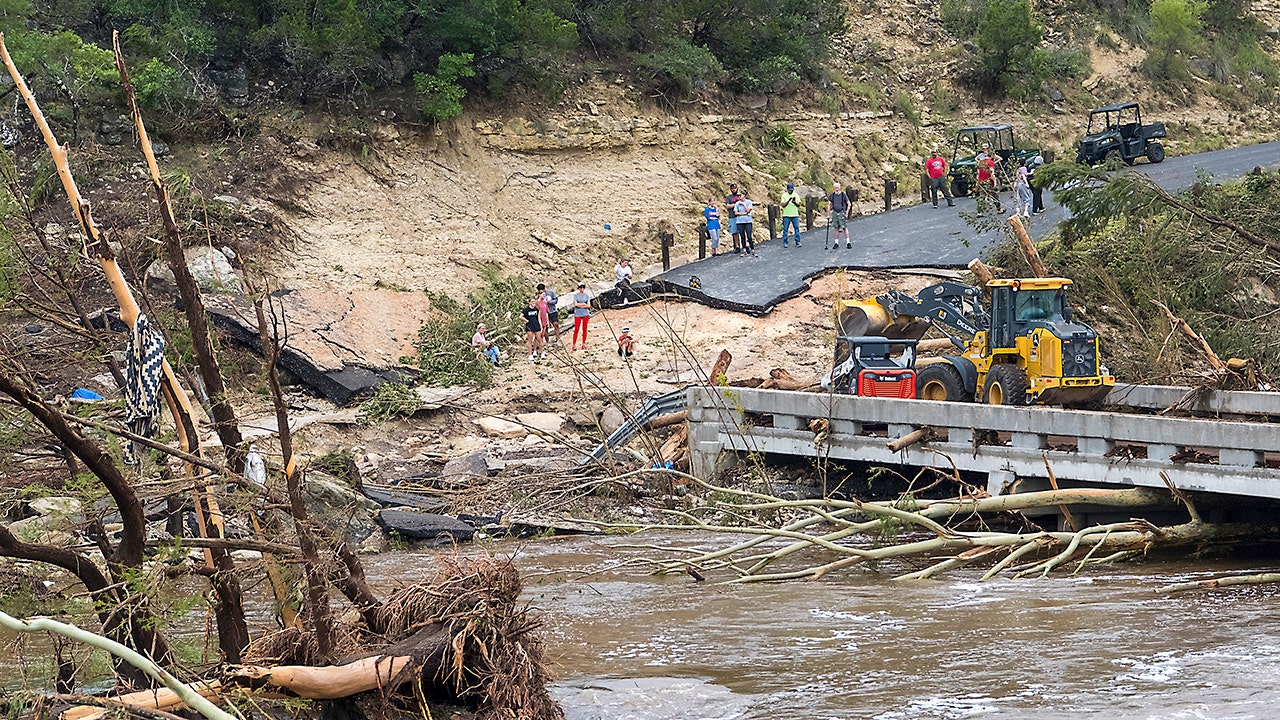
Crews work to clear debris from the Cade Loop bridge along the Guadalupe River on Saturday, July 5, 2025, in Ingram, Texas. (AP Photo/Rodolfo Gonzalez)
As long as there is destructive weather, there must be a fully functioning FEMA. Communities from Vermont, to Texas, to North Carolina, to New Mexico know this reality.
But, the agency is far from perfect. FEMA must be reformed.
LEFT-WING CRITICS BLAME TEXAS FLOOD DEVASTATION ON ‘CLIMATE DENIALISM,’ WARN MORE TO COME UNLESS INACTION ENDS
FEMA is too slow, too bureaucratic and too bloated. Administrative costs outweigh direct disaster assistance. Recovery is hindered by red tape.
Thats why I introduced new legislation July 10 to fix FEMA’s broken long-term recovery process.
The “Disaster Assistance Improvement and Decentralization (AID) Act” has a simple premise: local leaders know their local community best. They should be empowered to make decisions.
Local leaders know what size culvert they need, what size stones to use in grading a road, and what bridge to replace first.
NEW MEXICO FLOODING LEAVES 3 DEAD AS FAST-MOVING WATER SWEEPS THROUGH MOUNTAIN RESORT TOWN
Local leaders have the best understanding of the needs of their local communities and their neighbors. Too many communities across Vermont have wasted invaluable weeks debating with FEMA over inconsequential details or submitting and re-submitting paperwork every time they’re assigned a new recovery officer.
Final decisions on recovery projects weren’t even made in Vermont. The FEMA employee overseeing Vermont’s disaster recovery was located in Puerto Rico.
This image made from drone footage provided by the Vermont Agency of Agriculture, Food and Markets shows flooding in Montpelier, Vermont, on July 11, 2023. (Vermont Agency of Agriculture, Food and Markets via AP)
Time and time again, I heard these frustrations from flooded communities in Vermont. And time and time again, we got excuses from FEMA.
In early July, I visited five communities still recovering from the Vermont floods — Killington, Ludlow, Weston, Barre and Montpelier — and in the coming weeks, I’ll visit the state’s Northeast Kingdom. I spoke with leaders and recovery workers in every town who were exhausted and frustrated.
TRUMP, LAWMAKERS AT ODDS OVER WHETHER FEMA SHOULD BE ELEVATED TO CABINET-LEVEL AGENCY OR COMPLETELY OVERHAULED
Their recovery has been set back by constant staff turnover, endless paperwork and waiting, and now the threat of funding freezes and other uncertainty. Local leaders need the system to change.
Disaster-stricken towns and cities need to be empowered and need more authority to make decisions in the recovery process. Bureaucracy needs to take a backseat.
The AID Act helps local communities tailor recovery solutions to their unique needs by cutting through red tape in FEMA’s public assistance program and easing burdensome requirements that slow recovery.
It will get federal funding out faster once a disaster hits, so our communities don’t waste time or overextend their budgets on repairs.
CLICK HERE FOR MORE FOX NEWS OPINION
It will provide more training and technical assistance to towns and cities. Many rural towns have only one or two full-time employees. They have little-to-no capacity after a storm hits to begin the complicated recovery process.
It allows FEMA to cover the cost of relocating a government facility that has been damaged, such as a wastewater treatment plant. It allows counties and regional planning commissions to work with local towns in submitting FEMA applications and paperwork.
The “Disaster Assistance Improvement and Decentralization (AID) Act” has a simple premise: local leaders know their local community best. They should be empowered to make decisions.
Frequent staff turnover at FEMA only sets recovery back. The Disaster AID Act would make it easier to bring back experienced current and former FEMA employees and help limit this staff turnover, rather than force them out by compromising their pensions.
The Disaster AID Act protects FEMA’s pre-disaster hazard mitigation funds, so communities can better prepare for disasters. These funds are currently frozen, and many communities in Vermont and across the United States have been forced to pause or stop these projects as a result.
Like any reform effort, details matter. Accountability will be crucial, and this bill includes safeguards to avoid waste and fraud. But accountability cannot come at the expense of efficiency. I know we can find a workable solution that protects taxpayer dollars while fixing these broken processes.
Washington tends to think that more federal control is better. But I believe that we need to trust and empower the people working every day to improve their communities. This is a policy I can find common ground on with my colleagues across the aisle, and I look forward to working with them to help disaster victims from Vermont to Texas. We all want to improve FEMA, and we’ll need to work together to make it happen.
Read the full article from Here


A broken water main sent water gushing from an apartment building and turned nearby streets into rivers in West Hollywood early Thursday morning. The break was reported around 3 a.m. near Holloway Drive and Sunset Boulevard. “It’s a rupture of one of the significant mains that goes through here. West Hollywood, as it turns out, […]

After more than four decades, the remains of a woman who was found buried in the mountains of Riverside County were identified as a multi-millionaire who went missing in 1981.
The body of Thelma Gaston was discovered by a person gathering firewood in a mountainous area near Sugar Loaf Mountain and the Pinyon Crest community on Nov. 28, 1981.
After experiencing a series of heartbreaking life events, including the death of her husband and her 32-year-old son in the same year in 1957, Gaston continued forging ahead, focusing on her business of buying repossessed properties and selling them.
By 1980, she had amassed a fortune estimated to be over $20 million, SFGATE reported.
On June 28, 1981, a note was left on the front door of her home near Century City, saying she was out searching for her cat. However, she never returned home and her loved ones did not hear from her.
By then, Gaston was 80 years old. As Los Angeles Police Department detectives investigated her disappearance, they discovered a younger man, Lawrence Remsen, then 39, had recently entered her life and was the woman’s romantic companion, SFGATE reported.
At one point, the woman’s friends said Gaston had wondered about Remsen’s motives in being with her.
Police eventually found letters and documents reportedly signed by Gaston that gave Remsen power of attorney. Another letter allegedly written by the woman claimed she had run away “to have some fun in life.” However, her friends said the move was completely out of character.
Detectives later confirmed the letters were certified with a stolen notary stamp and her signatures were believed to be forged.
Remsen had tried selling some of Gaston’s properties and attempted to withdraw more than $100,000 from her bank accounts. Remsen eventually fled the Southern California area.
A few months later, he was arrested by border agents when he tried to enter the U.S. from Mexico. He was charged with Gaston’s murder even though the woman’s body had not been found.
During a trial hearing, Remsen later claimed he found the woman dead of natural causes in her home and, attempting to take her fortune, had disposed of her body in the ocean.
The judge disagreed and later ruled that Remsen had killed the woman “intentionally and with malice.” He was convicted of murder and sentenced to life in prison.
Gaston’s body was later discovered buried in a shallow grave in the mountains. However, due to the poor condition of the remains, investigators were unable to narrow down an identity.
A breakthrough occurred in 2022 when the Riverside County Sheriff’s Coroner’s Bureau received new funding to reexamine long-standing unidentified cases.
“Combined with significant advances in forensic science, this funding opened new avenues for identification,” the sheriff’s office said.
In May 2026, utilizing investigative genetic genealogy and dental records, the remains were positively identified as Gaston’s.
“The Riverside Sheriff’s Coroner’s Bureau extends its sincere appreciation to everyone whose dedication, expertise, and perseverance made this identification possible,” officials said in a statement. “Together, these efforts have ensured that Ms. Gaston has her name—and her story—returned to her.”
Remsen, who is now 83 years old, continues serving his life sentence at the California Institution for Men in Chino.

Southern California remains under an extreme heat warning as residents brace for the hottest day of the week on Wednesday.
“It will be roasty toasty in the valleys, lower mountain elevations and far interior, with highs ranging from 100 to 110 degrees,” the National Weather Service said. The warmest conditions are expected in the western San Fernando Valley.
An extreme heat warning remains in effect for much of Southern California until 8 p.m. Thursday. Forecasters say there is a high risk of heat-related illness for anyone outdoors for extended periods. Heat advisories are also in place for areas along the coast.
“Highs for today: 98 in Ojai, 100 in Ontario. Temecula, good morning to you, 100 degrees expected there. 112 in Palm Springs. Unbelievably hot,” KTLA’s Kirk Hawkins said Wednesday morning.
Residents are urged to adjust their afternoon plans to limit strenuous outdoor activities during the heat of the day, stay hydrated and check in on elderly neighbors and loved ones.
The Weather Service said record highs are slightly warmer than those forecast for Wednesday. As a result, despite the extremely hot conditions, few, if any, temperature records are expected to be broken.
A few degrees of cooling are expected Thursday, but a more significant cooldown will arrive Friday as onshore winds increase.
Afternoon highs are expected to cool even more over the weekend, with below-average temperatures possible in some areas.
-

 Oregon4 minutes ago
Meet Miss Oregon at the Ross Ragland Theater Next Month – KOBI-TV NBC5 / KOTI-TV NBC2
-

 Pennsylvania10 minutes ago
Wildfire smoke puts Pittsburgh under Code Red air quality alert
-

 Rhode Island16 minutes ago
These 8 Towns In Rhode Island Were Ranked Among US Favorites In 2026
-

 South Dakota28 minutes ago
South Dakota confirms three cyclosporiasis cases as CDC investigates growing outbreak
-

 Tennessee34 minutes ago
How did your school district do? New TCAP scores released across Southeast Tennessee
-

 Texas40 minutes ago
Texas Rangers Announce 2027 Regular Season Schedule
-

 Utah46 minutes ago
Utah man arrested again for allegedly abusing dog twice in three months
-

 Vermont52 minutes ago
A Vermont couple builds an 800-square-foot home on a budget – The Boston Globe

