Southwest
How Trump can turn Biden’s energy blunders into America’s greatest comeback

NEWYou can now listen to Fox News articles!
With the recent launch of the National Energy Dominance Council to increase energy production and speed infrastructure permitting, the president has an opportunity to turn destructive Biden-era policies into tools of his America First agenda.
What the Democrats created for their purposes, President Donald Trump can use for his.
And that is especially true with President Joe Biden’s clean energy agenda. From EV subsidies and mandates to rejoining the Paris climate agreement and investments in green energy infrastructure, the last administration spent countless hours and cost Americans well over a trillion dollars in an attempt to drive down carbon emissions.
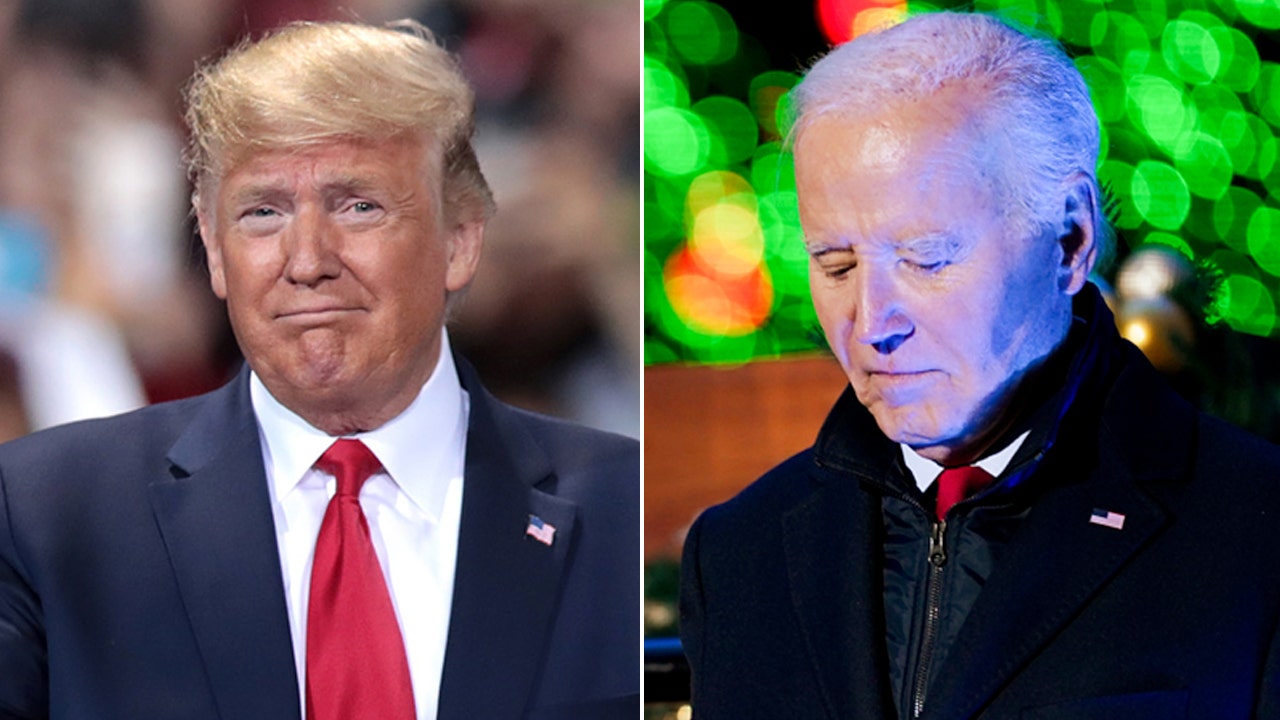
President Donald Trump and former President Joe Biden (Getty Images)
Naturally, Biden’s subsidy and regulatory approach didn’t work. The Democrats fell short of their carbon reduction targets and U.S. debt skyrocketed.
THE PREDICTABLE OUTCOME OF CALIFORNIA’S GREEN ENERGY POLICIES HAS ARRIVED AND IT’S A DISASTER
Yet while the Biden administration failed to accomplish its climate change goals, Trump’s National Energy Dominance Council can repurpose Democratic-built tools to advance an America First energy agenda.
A prime target for reform would be Biden’s Inflation Reduction Act (IRA). This bloated bill was replete with waste, unnecessary earmarks and classic Washington grift. But there are also some beneficial policies as well. The IRA provides hundreds of billions of dollars to infrastructure, job creation and technological innovation in the clean energy sector.
“Clean energy sector” may have a left-coded ring to it, but on the ground, these jobs are precisely what we need to revitalize the workforce among the forgotten men and women of America who vaulted Trump to office. In large part because blue jurisdictions are so overburdened by taxes and regulations, 80% of the Biden administration’s clean energy manufacturing investments actually went to Republican districts.
In fact, it’s not a blue state like California that is at the forefront of the U.S. clean energy sector – it’s deep-red Texas.
AMERICA’S ENERGY CRISIS IS HIDING IN PLAIN SIGHT AND IT’S WORSE THAN YOU KNOW
The National Energy Dominance Council should lean into these investments and let red states follow Texas’ lead. The clean energy market is already well over $1.2 trillion and growing at over 5% a year.
The market for clean energy technology alone is expected to balloon to over $2 trillion by the mid-2030s. If current trends hold, China will eat up the lion’s share of this market. We can’t let that happen.
Ironically, China has relied on its high-polluting economy to become the leading producer of solar panels and other clean tech. We must maintain national investments in this sector to keep clean energy development, manufacturing and production jobs in America rather than China. At the end of the day, we want American citizens and the world to buy our solar panels, batteries, nuclear technology and more.
When that happens, red America will not only benefit with lower energy costs and more manufacturing jobs – it will also give more Americans the freedom to produce and store their own power instead of having a local utility company control their energy destiny.
CLICK HERE FOR MORE FOX NEWS OPINION
However, simply repurposing Biden-era policies in wise ways is not enough. Trump will win where Biden failed because his energy strategy realizes the U.S. can’t attain energy dominance without dominating every energy technology.
Instead of going all-in on clean energy tech alone, Trump also wholeheartedly embraces America’s legacy of fossil fuel production. To be energy dominant, America must keep oil and gas production high to drive down prices, retain good-paying American jobs, and displace higher-emitting fuels abroad.
By leaning into American oil and gas, Trump will also help the environment – just like he did during his first administration, when historic American LNG production helped cut U.S. carbon emissions to the lowest level in a quarter of a century.
Not every Biden-era green policy is ripe for redemption. Far from it: EV mandates, for example, are not only costly and inefficient but an affront to American freedom. And Biden’s regulatory attack on the oil and gas industry drove up prices while undermining what remains our greatest strategic energy advantage.
But we shouldn’t throw the baby out with the bathwater. The National Energy Dominance Council should utilize Biden-era energy investments, redirect programs where possible and eliminate what can’t be used. When that happens, President Trump will have the ultimate victory – achieving total and complete energy dominance as fast, and efficiently, as possible.
CLICK HERE TO READ MORE FROM NEIL CHATTERJEE
Read the full article from Here


A man wanted for a deadly road rage shooting in Los Angeles was arrested and extradited from Mexico after fleeing the U.S. in 2024.
The suspect was identified as Christian Rojas, 21, of Bellflower, according to the California Highway Patrol.
Authorities had been searching for him since the deadly incident on October 10, 2024.
Rojas and a second suspect, Joshua Rojas Sr., 47, of Downey, were driving on the northbound 5 Freeway in Boyle Heights around 4 p.m. when they became involved in an altercation with another driver that escalated into a shooting.
-

Video obtained exclusively by KTLA shows the terrifying moment a road rage suspect opened fire the driver of another car on the 5 Freeway in Los Angeles, fatally wounding him and seriously injuring a passenger, on Oct. 10, 2024. (Credit: @hugoboss01) -
Video obtained exclusively by KTLA shows the terrifying moment a road rage suspect opened fire the driver of another car on the 5 Freeway in Los Angeles, fatally wounding him and seriously injuring a passenger, on Oct. 10, 2024. (Credit: @hugoboss01) -
Video obtained exclusively by KTLA shows the terrifying moment a road rage suspect opened fire the driver of another car on the 5 Freeway in Los Angeles, fatally wounding him and seriously injuring a passenger, on Oct. 10, 2024. The alleged gunman is circled. (Credit: @hugoboss01) -
Video obtained exclusively by KTLA shows the terrifying moment a road rage suspect opened fire the driver of another car on the 5 Freeway in Los Angeles, fatally wounding him and seriously injuring a passenger, on Oct. 10, 2024. (Credit: @hugoboss01) -
Video obtained exclusively by KTLA shows the terrifying moment a road rage suspect opened fire the driver of another car on the 5 Freeway in Los Angeles, fatally wounding him and seriously injuring a passenger, on Oct. 10, 2024. (Credit: @hugoboss01) -
Christian Rojas, 21, of Bellflower, was arrested and extradited to the U.S. from Mexico on June 2, 2026, in connection with a deadly road rage shooting in Los Angeles. (California Highway Patrol)


Video of the tense confrontation showed the suspects, who were driving a Dodge Durango SUV, opening fire on two men in a Cadillac sedan.
The shooting forced the victim to pull over abruptly. That’s when a suspect ran up to the Cadillac, opened the passenger-side door and fired several shots at close range.
In a panic, the Cadillac driver tried to escape by making a sudden U-turn and driving against oncoming traffic. He eventually crashed head-on into several vehicles.
The suspects ditched their SUV and fled toward a freeway exit on foot. The Cadillac driver was left with serious injuries and his passenger was killed. Their identities were not released.
The incident caused a miles-long backup that left thousands of motorists stranded on the freeway for hours and authorities worked to clear the scene.
Following an extensive investigation, detectives identified the two men as the suspects involved.
Joshua Rojas Sr. was arrested in San Bernardino on October 22, 2024, on a murder charge. He remains in custody awaiting trial.
Meanwhile, Christian Rojas had fled the U.S. and was hiding in Mexico, detectives said. A $4.3 million bail warrant was issued for his arrest.
“Through a coordinated international effort, investigators determined that Rojas was living in Palomo de Arriba, Mexico,” CHP officials said. “The U.S. Marshals Service worked with Mexican state police to locate and arrest him on the outstanding warrant.”
On June 2, 2026, Christian was arrested and extradited to the U.S. to face a murder charge.
“This arrest demonstrates that time and distance will not shield violent offenders from justice,” said CHP Southern Division Chief Chris Margaris. “For nearly two years, our detectives remained relentless in their pursuit of those responsible for this senseless act of violence. Through exceptional collaboration with the United States Marshals Service and our law enforcement partners in Mexico, we located and apprehended this suspect and brought him back to face the charges. We remain committed to protecting the public, supporting victims and their families, and holding violent criminals accountable wherever they may try to hide.”

The northbound 405 Freeway will remain closed for several hours near Los Angeles International Airport after a police pursuit ended with officers opening fire Friday morning. Unconfirmed reports indicated the incident began with a robbery at a 7-Eleven store, which ended with Los Angeles Police Department officers pursuing the suspect in a Kia. The chase […]

The victim in a bizarre and deadly stabbing in Tarzana has been identified as 81-year-old character actor James Handy, best known for a recent role in Tom Cruise’s “Top Gun: Maverick.” The stabbing happened around 9:30 a.m. Wednesday in the 19200 block of Erwin Street in the West Valley area. Officers responded after receiving a […]
-

 Seattle, WA3 minutes ago
CONGRATULATIONS! Parks Foundation award for two local organizations
-

 San Diego, CA10 minutes ago
San Diegan celebrates 50 year career milestone
-
Milwaukee, WI13 minutes ago
Brewers score 8 late runs, stun Rockies 9-7 in wild 10-inning victory
-

 Atlanta, GA18 minutes ago
Suspect on the run after ‘targeted’ shooting on MARTA train, police say
-

 Minneapolis, MN25 minutes ago
Minneapolis will pay $1.4M for ‘coaching’ between mayor, council members
-

 Indianapolis, IN28 minutes ago
Saints winning streak comes to an end vs. Indianapolis
-

 Pittsburg, PA33 minutes ago
Pittsburg State Track and Field’s Blakelee Winn named National Women’s Field Athlete of the Year
-

 Augusta, GA40 minutes ago
Downtown Augusta construction accelerates as parking becomes scarce


