Southeast
Weird South Carolina laws that will surprise you, including the ramification of buying silverware on Sundays


Did you know that it’s illegal to play pinball if you’re under 18 in South Carolina?
This is just one of the Palmetto State’s odd regulations that are still technically a law. Other laws include limitations on dancing, shopping on Sundays and more.
Take a look at a few of South Carolina’s bizarre laws.
One of South Carolina’s strange laws prevents kids from playing pinball. (iStock)
THESE ODD LAWS IN AMERICA ADDRESS BANNED TATTOOS, PINK BUTTER, POKER PLAYING AND MORE
- No playing pinball if you’re under 18
- No insincere marriage proposals
- Dancing stops at midnight on Saturday
- Silverware, and other items, can’t be bought on Sunday
1. No playing pinball if you’re under 18
If you’re taking a stroll down a South Carolina boardwalk and stumble upon a pinball machine, you must be at least 18 to participate in the popular arcade game.
In South Carolina, it is “unlawful for a minor under the age of eighteen to play a pinball machine,” according to Section 63-19-2430 in the South Carolina’s Children’s Code.
The old law coincides with the invention of the game, when it was considered a form of gambling.
BIZARRE LAWS IN CALIFORNIA THAT COULD GET YOU INTO TROUBLE
Although this is still a law in South Carolina, it is not one widely enforced throughout the state.
2. No insincere marriage proposals
In South Carolina, the promise of marriage in an attempt to seduce a woman is strictly prohibited. So much so that there is a law forbidding it.
In South Carolina, don’t promise marriage unless you mean it; it’s the law. (iStock)
You can find this law in South Carolina Code Section 16-15-50. The law applies to males that are over the age of 16 and could lead to jail time if broken.
“A male over the age of sixteen years who by means of deception and promise of marriage seduces an unmarried woman in this State is guilty of a misdemeanor and, upon conviction, must be fined at the discretion of the court or imprisoned not more than one year,” the law states.
3. Dancing stops at midnight on Saturday
If you love to dance the night away, don’t plan on partying too late in South Carolina.
6 WEIRD BEACH LAWS AROUND UNITED STATES THAT MAY SURPRISE YOU
This holds true for Saturdays at least, with dance venues in the state closed beginning at 12 a.m. Saturday through Sunday.
You can find this law in Title 52 – Amusements and Athletic Contests in South Carolina’s Code of Law.
In South Carolina, it’s against the law for dance venues to be open on Sundays. (iStock)
Section 52-12-10 outlines that it is “unlawful for any person to keep open or admit persons to any public dancing hall owned or operated by him or to allow any person to continue thereat between the hours of twelve o’clock, midnight, Saturday and twelve o’clock, midnight, Sunday, and all such places shall be and remain closed to the public between such hours.”
The punishment for breaking this law is a fine between $10 and $15 for the first offense, with the fine increasing to between $50 and $100 for second time offenders or imprisonment for 30 days.
Additionally, the location of dance halls is also outlined in South Carolina law.
50 BIZARRE LAWS THAT HAVE EXISTED OR STILL EXIST IN AMERICA
According to state law, it’s illegal for dance halls to be located within one fourth of a mile of a church or cemetery in the state. This law is laid out in Section 52-13-20.
4. Silverware, and other items, can’t be bought on Sunday
If you find yourself needing a sparkly new silverware set, building supplies or a musical instrument to begin a new hobby on a South Carolina Sunday, you may be out of luck due to a law in the state.
The sale of certain items, including silverware, is illegal on Sunday,
Title 53 in South Carolina’s code highlights regulations specific to Sundays, holidays and other special days.
Under Section 53-1-60, the sale of many items is prohibited on the first day of the week.
In-store transactions are limited on Sundays in South Carolina, with many businesses closed. (iStock)
The selling of “clothing and clothing accessories (except those which qualify as swimwear, novelties, souvenirs, hosiery, or undergarments); housewares, china, glassware, and kitchenware; home, business and office furnishings, and appliances; tools, paints, hardware, building supplies, and lumber; jewelry, silverware, watches, clocks, luggage, musical instruments, recorders, recordings, radios, television sets, phonographs, record players or so-called hi-fi or stereo sets, or equipment; sporting goods (except when sold on premises where sporting events and recreational facilities are permitted); yard or piece goods; automobiles, trucks, and trailers,” is prohibited according to the law.
Connected to this law is one that makes it “unlawful to work on Sunday,” according to Section 53-1-40.
“On the first day of the week, commonly called Sunday, it shall be unlawful for any person to engage in worldly work, labor, business of his ordinary calling or the selling or offering to sell, publicly or privately or by telephone, at retail or at wholesale to the consumer any goods, wares or merchandise or to employ others to engage in work, labor, business or selling or offering to sell any goods, wares or merchandise, excepting work of necessity or charity,” according to South Carolina law.
Read the full article from Here

Southeast
Virginia prosecutor’s record on violent offenders scrutinized after illegal immigrant charged in mom’s murder
NEWYou can now listen to Fox News articles!
A prosecutor in Virginia is facing criticism after a Fairfax County Police Department officer warned the county’s commonwealth attorney about a criminal illegal immigrant who has racked up over 30 arrests before allegedly killing a mother.
Abdul Jalloh, 32, was charged with second-degree murder after he allegedly stabbed a mother to death while at a bus stop in Fairfax County, Virginia, on Feb. 23. Fairfax County Commonwealth Attorney Steve Descano’s office, however, was warned several times about how dangerous Jalloh is, and dismissed many of his previous criminal charges.
Jalloh’s case is far from the only controversial actions by Descano’s office, which even includes a plea deal with a murder suspect that allows him the chance at freedom.
POLICE WARNED PROSECUTORS 3 TIMES ABOUT VIOLENT ILLEGAL IMMIGRANT BEFORE HE ALLEGEDLY KILLED VIRGINIA MOTHER
Here’s a list of controversial cases handled by Descano’s office:
Abdul Jalloh
Abdul Jalloh, 32, is accused of killing Stephanie Minter, 41, at a Virginia bus stop. (Fox 5 DC)
Jalloh, 32, was charged with second-degree murder after he allegedly stabbed a mother to death while at a bus stop in Fairfax County, Virginia, on Feb. 23. The victim, 41-year-old Stephanie Minter, was found dead with multiple stab wounds to her upper body, according to the Department of Homeland Security. Jalloh has a violent rapsheet dating back to 2014 and includes over 30 arrests with several charges dismissed by Descano’s office.
Jalloh was arrested the next day while he was allegedly trying to steal from a liquor store when an employee called 911. Officials said Jalloh came to the U.S. illegally in 2012 from Sierra Leone under the Obama administration.
United States Immigration and Customs Enforcement lodged a detainer on Jalloh in 2020, and he was later issued a final order of removal allowing him to be deported to any country other than Sierra Leone. Despite that order, he was not deported.
A police major for the Fairfax County Police Department even warned Fairfax County Commonwealth’s Attorney Steve Descano about Jalloh on at least three separate occasions, according to emails obtained by WJLA.
In one email to Fairfax County Chief Deputy Commonwealth’s Attorney Jenna Sands, the police major said Jalloh “is one of the repeat (and violent) offenders” that they had discussed before.
TRAVIS COUNTY DA FACES RENEWED ‘SOFT ON CRIME’ CRITICISM AFTER CAREER CRIMINAL CHARGED WITH MURDER
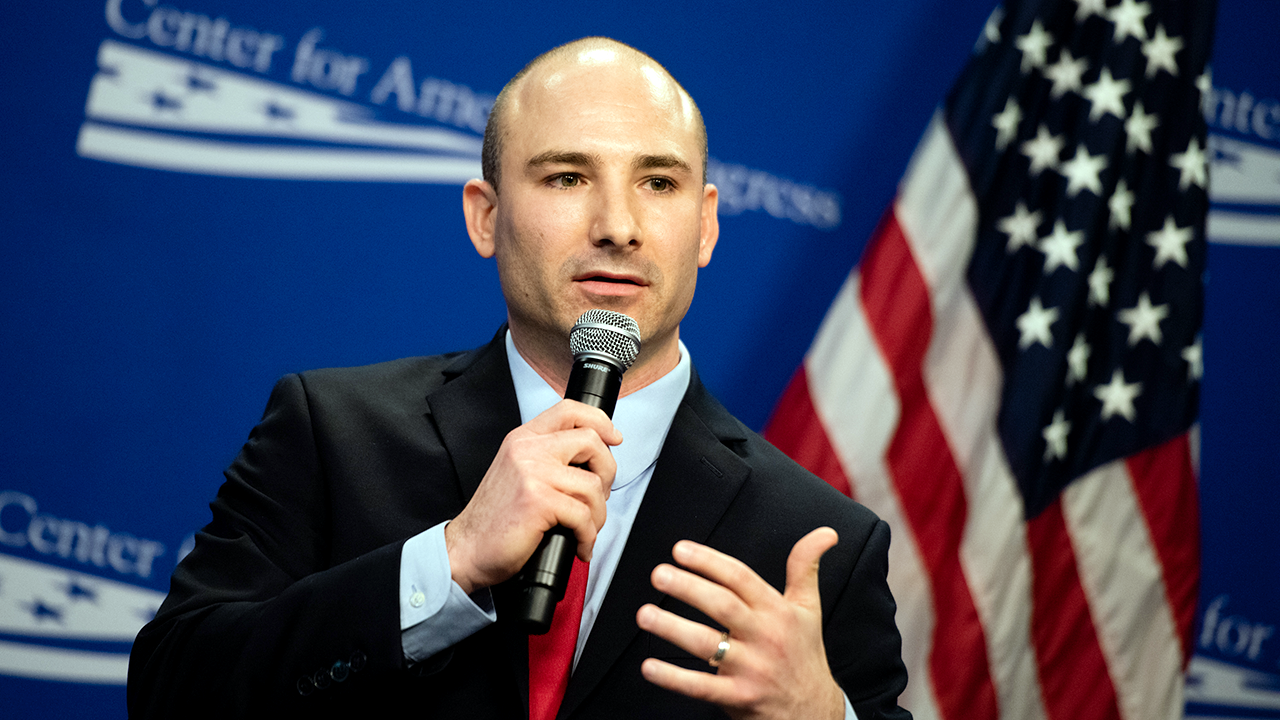
Fairfax County Commonwealth’s Attorney Steve Descano speaking at an event. (Sarah Voisin/Getty Images)
“I wanted to get your background on why he is out so soon and ask if his prior suspended sentence (of I believe 5 years) was pursued by your office? Unfortunately, based on MTV Station’s numerous dealings with him, it is not a question of if, but rather when he will maliciously wound (or worse) again. My role of keeping the public safe, prompts me to follow up on his status,” the major wrote.
A Fairfax County Commonwealth’s Attorney’s Office spokesperson told Fox News Digital that the office “was aware of Jalloh’s criminal history and shared police concerns about potential future dangerousness. That is why our Chief Deputy Commonwealth’s Attorney personally handled these cases.”
The spokesperson added that prosecutors “will often explore many different pathways to successful prosecution, but, at the end of the day, our decisions are constrained by what testimony is available and what is legally permissible and practicable in Fairfax courts.”
Joshua Danehower
In 2022, Joshua Danehower was arrested for the murder of Gret Glyer. (Fairfax County Sheriff’s Office)
In 2022, Danehower was charged with Gret Glyer’s murder. According to WUSA 9, Glyer, who owned the donation platform DonorSee, was shot 10 times as he slept next to his wife on June 24, 2022.
Prosecutors alleged Danehower killed Glyer because of an obsession with his wife. The suspect allegedly became fixated with her after a church function, and according to her family, the two had gone on a date about a decade ago.
Danehower was given a plea deal by Descano’s office, which found him not guilty by reason of insanity in February.
DHS RIPS DEM-RUN COUNTY AFTER ILLEGAL IMMIGRANT MURDERER RELEASED: ‘BLOOD ON THEIR HANDS’
Virginia law requires Danehower to be sent to a psychiatric hospital, where his status will be evaluated on an annual basis for the next five years, then every two years afterward. If he’s deemed no longer a threat to himself or others, he’d have an opportunity to be released from the psychiatric hospital.
Heather Glyer, the victim’s wife, said while on the witness stand, “I was robbed of my life partner.”
“My kids were robbed of their father,” she added.
Wilmer Osmany Ramos-Giron
Wilmer Osmany Ramos-Giron pleaded guilty to lesser charges. (DHS)
In January 2025, according to a report by former Virginia Attorney General Jason Miyares, Ramos-Giron, an illegal immigrant from Guatemala, choked his ex-wife during an argument and pulled out a knife.
He was charged with felony abduction by force, felony strangulation, and misdemeanor assault and battery against a family member after the incident, but Descano’s office allowed him to plead to lesser charges of misdemeanor battery and brandishing a bladed weapon.
In a statement released by Fairfax Commonwealth’s Attorney Deputy Chief of Staff and Public Information Officer Laura Birnbaum, according to the report, the plea agreement “achieved the outcomes that the victim wanted.”
SEND US A TIP HERE
However, when the victim spoke with 7News, she refuted Birnbaum’s statement, saying she didn’t agree to the plea deal.
“He’s dangerous,” she said, fearing another violent incident would happen.
“If I die, who is going to take care of them?” the victim asked, referring to her children.
Ronnie Reel
Ronnie Reel accepted a plea deal by Fairfax county prosecutors. (Fairfax County Sheriff’s Office)
In July 2021, Reel was arrested on charges of sexual penetration, forcible sodomy and aggravated sexual battery against a minor, according to the Fairfax County Times.
During Reel’s trial on Sept. 13, 2022, Chief Judge of the Fairfax County Circuit Court Penney Azcarate ruled that the Fairfax County Commonwealth Attorney’s office had missed an evidentiary deadline, meaning confessions, including a call from Reel to a defendant’s mother where he allegedly confessed, as well as other evidence and witnesses couldn’t be used in court.
According to the outlet, that meant the case would rely on the victim’s testimony entirely.
As a result, Reel was offered a plea deal and pleaded guilty to misdemeanor assault and battery and was sentenced to one year in prison, but was released on time served. He also wasn’t required to register as a sex offender, according to FOX 5.
CLICK HERE TO DOWNLOAD THE FOX NEWS APP
The mother, who asked to be identified as Amber, told FOX 5 the case has had a big impact on her son.
“I was really upset. This is my child, this is my baby,” she said while crying. “And he got no justice. So he continues to see me cry and everything. He held his own, he stayed strong. He’s always trying to be strong for mom.”
“He was confessing every little detail that he did, and it was making me sick to my stomach,” she added. “It was horrible. He literally confessed to me why he did it.”
Fox News Digital’s Alexandra Koch contributed to this report.
Read the full article from Here
NEWYou can now listen to Fox News articles!
Immigration enforcement is a core federal power. Under Article I of the Constitution, Congress has the duty to write our federal immigration laws. Under Article II, the President has the duty to enforce them. States cannot meddle and certainly not obstruct. Unfortunately, many Democrat states, especially Virginia, are on a deadly collision course with the federal government.
American voters gave President Trump and the Republican-led Congress a broad electoral mandate to reverse the disaster the Biden-Harris border policy caused in every state in America by mass importing as many as 20 million illegal aliens, including the worst of the worst around the world.
Activist judges and other Democrat politicians and election deniers have done everything they can fathom to thwart Trump’s constitutional duty to expel these dangerous illegal aliens.
TRUMP URGES DHS, ICE TO PUBLICIZE ARRESTS, SAYS CRACKDOWN IS ‘SAVING MANY INNOCENT LIVES’
The latest example is Virginia, which is passing a series of unconstitutional laws that would dangerously and illegally obstruct ICE. These proposals include criminal penalties, meaning that state law enforcement would attempt to arrest and jail ICE agents for simply doing their jobs.
This effort is seditious, insurrectionist, extremely dangerous and blatantly unconstitutional. For the sake of the Republic, the Justice Department must immediately and aggressively quell this Virginia seditious conspiracy.
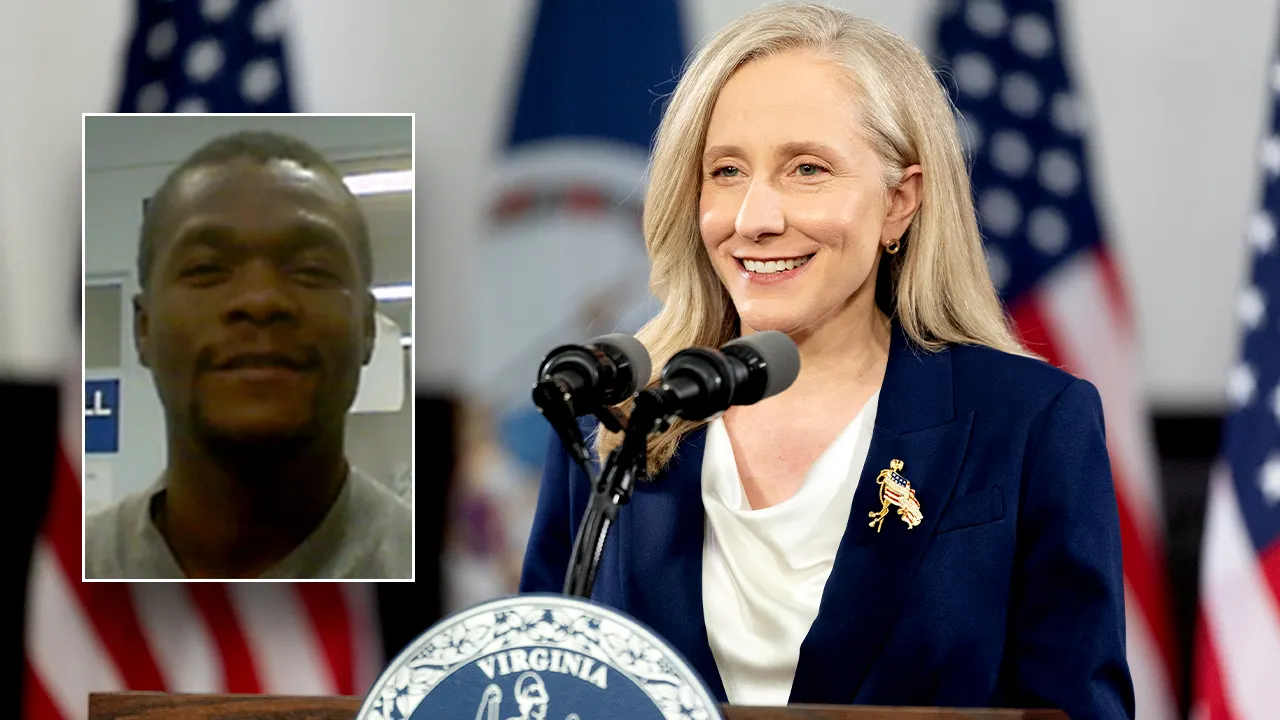
Virginia Gov. Abigail Davis Spanberger laughs aloud during a ceremony in a Virginia court in Richmond. (Mike Kropf-Pool/Getty Images)
Fairfax County District Attorney Steve Descano is the Soros puppet Democrat prosecutor in the DC suburb, an uber-wealthy Democrat enclave that is an albatross around Virginia’s neck. Abdul Jalloh is an illegal alien who invaded our country in 2012. Jalloh settled in Virginia and began wreaking havoc on the good citizens there, racking up a whopping 30 arrests. These included one for rape and four charges for stabbing Americans.
Yet, thanks to the willful ineptitude of Fairfax County’s Democrat regime, Jalloh only had one felony conviction. He violated his probation, spent three months in jail and went free because of a deal between his lawyer and Descano’s office. Sanctuary jurisdictions like Fairfax County do not notify ICE when detaining or releasing illegals like Jalloh, who had a final order of removal from 2020.
Police in Fairfax repeatedly warned Descano’s office via email that Jalloh’s release would endanger the public, but the pleas fell on deaf ears. Earlier this week, Jalloh allegedly stabbed to death 41-year-old innocent mother Stephanie Minter at a bus stop.
Virginia Gov. Abigail Spanberger ran as a moderate Democrat. But after her inauguration this year, she immediately showed her true leftist colors. She issued an order prohibiting cooperation between state officials and ICE.
Several anti-ICE bills await Spanberger’s signature: (1) a prohibition against ICE arrests at courthouses (where these alleged dangerous criminal illegals visit daily); (2) a prohibition against ICE arrests within 40 feet of polling places (where illegals violate federal criminal laws by voting); and (3) criminal penalties for ICE agents who wear masks (because they don’t want to get doxxed and killed).
Fairfax County Commonwealth’s Attorney Steve Descano (Sarah Voisin/Getty Images)
If Spanberger signs these unconstitutional state laws, the Trump Justice Department should immediately sue and seek to enjoin them in court. A Virginia federal judge should issue an injunction, following the lead of the U.S. Court of Appeals for the 9th Circuit, which fully stayed California’s unconstitutional prohibition against ICE agents’ use of masks.
But civil enforcement is not enough. Virginia Democrat officials plotting to arrest ICE agents for doing their jobs (seditious conspiracy under 18 U.S.C. § 2384) — and especially those who cause the arrests (insurrection under 18 U.S.C. § 2383, assault, kidnapping, harboring, conspiracy, and more) — must go to federal prison for their serious federal felonies. If anyone gets killed in a deadly standoff between these new Virginia confederates and ICE, these Virginia Democrat officials must face felony murder charges.
VIRGINIA LAWMAKERS UNLEASH ON VCU NURSE FIRED OVER ‘HEALTHCARE TERRORISM’ ENCOURAGING HARMING ICE AGENTS
Former President Biden and his missing-in-action border czar Kamala Harris allowed millions of illegal immigrants, including the most violent and dangerous criminals in the world, to pour across our borders. Trump is doing everything in his power to fulfill his broad electoral mandate and undo the damage by arresting and deporting these illegals.
Virginia’s proposed laws do not merely prohibit communication between state officials and ICE; rather, they criminalize federal law enforcement actions that are plainly within the scope of federal immigration enforcement power.
Abdul Jalloh has racked up over 30 arrests since entering the U.S., according to officials. (DHS)
States do not have to help ICE by, for instance, providing law enforcement resources to assist in ICE apprehensions of illegals. But states certainly cannot subvert or obstruct these federal efforts. This is especially true of Virginia’s attempt to arrest ICE agents in the line of duty, which could justify their use of deadly force.
CLICK HERE TO DOWNLOAD THE FOX NEWS APP
Virginia’s attempt to subvert and obstruct federal law must fail. We fought the Civil War because the Confederacy, headquartered in Virginia, sought to nullify federal law with respect to slavery. Today’s Virginia Democrats are reverting to their confederate roots.
Just as the federal government did during the Civil War and for a century after when segregationist states continued their efforts to nullify federal law, the federal government now must stand strong against Virginia’s sedition and insurrection. The Supremacy Clause of the Constitution makes plain that federal law is supreme in areas where the federal government has authority.
If Virginia gets away with effectively nullifying federal immigration enforcement, other states can nullify any other federal law that it finds distasteful. Let’s hope Abigail Spanberger comes to her senses and vetoes this insanity. If she does not, the federal government must use all tools at its disposal, including the Insurrection Act of 1807 and other federal criminal statutes, to preserve federal law.
Virginia state officials must go to federal prison for engaging in seditious conspiracy, insurrections and other very serious federal felonies. Anything less would threaten the existence of the Republic.
CLICK FOR MORE FROM MIKE DAVIS
Read the full article from Here
Southeast
South Carolina pastor describes evacuating members from Middle East after war broke out during Israel trip

NEWYou can now listen to Fox News articles!
SUMMERVILLE, S.C. – Dozens of members of a South Carolina church are finally back in the United States after Operation Epic Fury left them stranded in Israel for nearly a week after their flight was supposed to depart.
Forty members of Calvary Chapel Summerville landed in Israel on Feb. 20 for eight days of exploration in the Holy Land.
The group was set to fly home on Feb. 28 and had arrived at the airport three hours before their scheduled departure when the U.S. and Israel launched airstrikes on Iran. The attack prompted the closure of Israel’s airspace and the group had to evacuate the airport.
“It felt like the weight of the world on my shoulders and I just prayed and prayed and prayed and asked God to give me wisdom,” said Vic Carroll, pastor at Calvary Chapel Summerville in South Carolina.
TRAVELERS STRANDED IN DUBAI PAYING HUGE SUMS TO FLEE ON PRIVATE CHARTER FLIGHTS AMID OPERATION EPIC FURY
Members of Calvary Chapel Summerville visit Al-Khazneh in Petra. (Melanie Carroll)
Carroll said the group had to shelter-in-place in Israel, going in and out of bomb shelters for several days. He then had to face the decision of the group staying or taking a bus to Jordan to have a shot at getting a flight back to the United States.
“We ultimately, you know, made the decision between what was bad and what was worse. I thought the worst would be to stay,” the pastor said.
“We were instructed that if a siren goes off while we were on the road, the bus would pull over, we would all need to get on the ground, lay on the ground face-down for at least 10 minutes until the threat was gone, and then be on our way,” he continued.
STATE DEPARTMENT USES PATRIOTS TEAM PLANE TO EVACUATE AMERICANS FROM MIDDLE EAST
The members of Calvary Chapel Summerville sightseeing in the Holy Land. (Melanie Carroll)
Fortunately, that did not happen and the group made it to the airport in Jordan to hop on a flight out of the Middle East Thursday morning.
Before the flight, Carroll said it was frightening, but their faith was greater than their fear.
“We’re just having to trust that we’re making the right decision, and this is our only option to get home, so we [were] just trusting in God,” he said.
AMERICAN STUCK IN MIDDLE EAST ESCAPES IN RACE TO REACH CRITICALLY ILL HUSBAND IN CALIFORNIA
The group returned to the U.S. on Thursday night, landing at JFK in New York.
Melanie Carroll, the pastor’s wife, texted, “We are so thankful!!!!! It’s surreal!!”
Melanie and Vic Carroll while visiting The Holy Land. (Kailey Schuyler)
The unexpected extension of the trip caused the price tag to increase significantly. Melanie created a GoFundMe, writing, “The path to get us home between lodging, flights and transfers will be upwards of $2500 per person.”
The group was able to raise their goal of $100,000 in less than three days.
Melanie said the group is continuing to pray for everyone trying to get out of the Middle East.
Nearly 24,000 Americans have returned to the U.S. after fleeing the Middle East since Operation Epic Fury began last week, according to the State Department.
Read the full article from Here

Wolverines make Frozen Four

Bay Area residents hold rally in SF as war with Iran enters 2nd month

Dallas Jenkins says he is the ‘evangelical mascot of the LDS church’ and talks Easter celebrations

New video shows aftermath of police shooting in Downtown Miami

Boston Celtics Star Jayson Tatum Made History In Hornets Game

Florida High School Football Rankings: Top 25 teams – Oct. 21

How old is Bo Nix? What to know about Oregon quarterback ahead of 2024 NFL Draft

Cleary's 21 help Le Moyne down Central Connecticut State 69-64 in OT

99th annual Pony Swim held in Virginia

Indiana Members Credit Union announced as new anchor tenant at Bottleworks District

Scathing report claims nation’s oldest labor union ‘betrayed’ MAGA members through ‘shocking’ spending

Republican US lawmaker demands Congress vote on any Iran troop deployment

So you went to a No Kings protest. Now what?

JD Vance says he was ‘obsessed’ with UFOs, believes aliens are actually ‘demons’
The EU's recipe for trade deals : easy on beef, tough on wine
-

 Sports1 week ago
IOC addresses execution of 19-year-old Iranian wrestler Saleh Mohammadi
-

 New Mexico1 week ago
Clovis shooting leaves one dead, four injured
-

 Miami, FL4 days ago
Jannik Sinner’s Girlfriend Laila Hasanovic Stuns in Ab-Revealing Post Amid Miami Open
-

 Tennessee6 days ago
Tennessee Police Investigating Alleged Assault Involving ‘Reacher’ Star Alan Ritchson
-

 Minneapolis, MN4 days ago
Boy who shielded classmate during school shooting receives Medal of Honor
-

 Politics1 week ago
Schumer gambit fails as DHS shutdown hits 36 days and airport lines grow
-

 Science1 week ago
Record Heat Meets a Major Snow Drought Across the West
-

 Technology1 week ago
YouTube job scam text: How to spot it fast