West Virginia
West Virginia Treasurer Allocates Medical Marijuana Revenue Despite Governor’s Veto – Marijuana Moment


“The issue isn’t whether the funds should be used, it’s how they’re used and whether we’re doing it in a responsible, sustainable way.”
By Henry Culvyhouse, Mountain State Spotlight
This story was originally published by Mountain State Spotlight. Get stories like this delivered to your email inbox once a week; sign up for the free newsletter at https://mountainstatespotlight.org/newsletter.
In spite of a veto that could have further delayed the spending of $38 million in medical marijuana money collected over the last four years, state Treasurer Larry Pack (R) now says he will release the funds under the original mandate.
Last week, Gov. Patrick Morrisey (R) vetoed a bill that would’ve required the release of medical marijuana funds to help the homeless and expedite child abuse and neglect cases in the court system. He said the bill tied up monies for future spending.
In his veto letter, Morrisey wrote, “West Virginia must do better to plan for the future, and it can’t totally pre-commit future revenue streams like this if it’s going to have reserves to invest more in roads, water, sewer, site selection, rail, and future tax cuts.”
Morrisey said he was willing to negotiate with the Legislature on how to spend the money.
“The issue isn’t whether the funds should be used, it’s how they’re used and whether we’re doing it in a responsible, sustainable way,” governor’s office spokesman Lars Dalseide wrote in an email.
But the money was already pre-committed in state code.
Pack’s office said 100 percent of that money will now go to various offices and programs prescribed by the original law—more than half to the Office of Medical Cannabis and the remainder of the funds split between a grant program for substance abuse treatment and grants for law enforcement. The move ignores the governor’s wishes for future reserves to tackle infrastructure and tax cuts.
In October, a Mountain State Spotlight investigation revealed $34 million had accumulated in an account held by the Treasurer’s Office from the state’s medical marijuana program.
Pack’s office said the money hadn’t been spent because of legal concerns surrounding the drug. Currently, marijuana is listed as a Schedule I narcotic under federal law, meaning it has no medical use and is illegal.
Pack isn’t the first state treasurer to express concern. State Treasurer John Perdue (D) said his office wouldn’t hold the money in 2018, following passage of the Medical Cannabis Act. Riley Moore (R), who beat Perdue in the 2020 race, never released the money, either.
Going into the 2026 Legislative Session, Del. Evan Worrell, R-Cabell, said he read a report about the amassed funds and wanted to change it. He successfully ran a bill that would force the state to spend the money on a commission to to help thousands of child abuse and neglect court cases, and homelessness services.
Had the governor not vetoed the bill, the money would have been designated to those things for one year. Money for substance abuse research, treatment and the abuse and neglect commission would continue in the following years.
The Treasurer’s Office spokeswoman Carrie Smith said due to the complexity of state and federal laws, the office had been working to release the money for months. She said the money has now been released to the Department of Homeland Security and the Department of Health.
This article first appeared on Mountain State Spotlight and is republished here under a Creative Commons Attribution-NoDerivatives 4.0 International License.
Marijuana Moment is made possible with support from readers. If you rely on our cannabis advocacy journalism to stay informed, please consider a monthly Patreon pledge.


West Virginia
Secretary of State maintains West Virginia’s elections are “safe, secure” after Trump claims – WV MetroNews

CHARLESTON, W.Va. — West Virginia’s Secretary of State maintains that elections in the Mountain State are secure after voter information corruption claims by President Donald Trump.
Secretary of State Kris Warner joined MetroNews “Talkline” Friday to unpack claims by President Trump that voter information for over 200 million Americans had been compromised by China, starting in the 2020 election. Trump addressed the nation Thursday night and said 18 states had experienced corruption by the Chinese government in regard to voter data.
“Our elections are safe, secure, fair, and honest,” Warner said. “We have 55 county clerks and about 8,500 poll workers that did a phenomenal job in the Primary Election, and we’re ready, less than four months away to conduct a general midterm election. So, there’s confidence in our elections and we’re very proud of that.”
Warner said his office has not heard from federal officials.
“I know the President mentioned 18 states, but West Virginia’s not been contacted by the White House, by anyone in the intelligence community; nobody from FBI, CIA, DNI (Director of National Intelligence), or any other federal agency alerting us to any real or existing threat for our upcoming election,” he said.
If the White House or other officials reach out to the Secretary of State’s office with “actionable intelligence,” Warner said the election division will investigate it. Warner praised his office, saying that other states consider West Virginia as a gold standard for election safety,
“People from all over the country look to us,” Warner said. “So, obviously, anything that comes our way that we can act on, we want to increase our election security even further. But until then, we’re going to stay the course.”
West Virginia’s elections are quite secure, Warner emphasized, because the state uses ballot-marking devices. He said that not only are ballots marked electronically, but those votes are also noted on paper.
“Every vote in West Virginia cast is backed up by a paper ballot,” Warner said. “You get to see that paper ballot and make sure that it is exactly who you intended to vote for.”
Because of this commitment to security, Warner said, the election officers in West Virginia will catch anything out of the ordinary. He said his office tracks previous elections and understands the typical numbers of who votes in each precinct. Additionally, he said that 10 days after the election, an audit occurs to confirm results through hand counting.
West Virginia has also been one of the states targeted by the U.S. Department of Justice over disclosure of voter information. A federal judge tossed out a DOJ lawsuit against West Virginia earlier this week over voter data.
Warner said Trump’s claim doesn’t change West Virginia’s stance on refusing to hand over voter information to the DOJ.
“West Virginia law says I’m not to share personal information — that’s social security numbers, driver’s license numbers, tied to birth dates, in some cases, cell phone numbers, email addresses, your home address,” Warner said. “Again, there would need to be actionable intelligence that is going to strengthen our election security before we do anything further.”
While he said he agrees with the mission — keeping people outside of the law from voting — but this isn’t the way to do it. Warner said voter information is personal, and it doesn’t need to be “floating around to vendors” in the nation’s capital, Washington, D.C.

WEST VIRGINIA (WCHS) — On Wednesday, Gov. Patrick Morrisey announced a statewide plan to review every bridge in the state.
Bumpy roads and crumbling bridges are something drivers in West Virginia like Molly Darby are all too familiar with.
“We just bought a newer car and we actually got to take out additional insurance just for the tires, because you worry about that,” Darby said. “You worry about the popping and that can be a huge added expense to a lot of other people.”
About 19% of the state’s 7,300 bridges were deemed to be in poor condition in the 2025 infrastructure report card.
“We have DOT conducting a comprehensive review of all the bridges across West Virginia,” Morrisey said. “We have to be proactive. We have to stay ahead of maintenance and never let our state fall behind.”
Transportation Secretary Todd Rumbaugh said his team at the DOT is working to lower the number of problem bridges that effect every corner of the state.
“We are doing a comprehensive review of all of our bridges,” Rumbaugh said. “We’ve been going through making priorities and we currently have our statewide transportation improvement plan out there for public comment.”
One massive step being taken on the infrastructure front is the nearly $75 million bridge deck replacement on the Fort Hill Bridge in Charleston, one of the most traveled bridges in the state.
“This rehab project represents a once in a generational investment in our economic corridor,” Rumbaugh said. “It’s about much more than concrete, structural steel and orange barrels. It’s about safety reliability and planning for the next 50 years.”
West Virginia
Repair work on busiest bridge in West Virginia to happen in phases to “minimize disruptions”

CHARLESTON, W.Va. — Traffic in the Capital City will soon have to adjust as the busiest bridge in West Virginia draws closer to undergoing a rehabilitation project.
The West Virginia Division of Highways recently awarded a $74.5 million contract for the rehabilitation of the Eugene A. Carter Bridge to Triton Construction. The bridge, also known as the Fort Hill Bridge, is located in the Capital City and carries Interstate-64 over the Kanawha River.
Around 100,000 vehicles travel across the bridge each day.
Gov. Patrick Morrisey joined state and local officials Thursday at Magic Island to officially announce the contract awarding. DOH officials have told MetroNews that crews will build two median crossovers this August, with the majority of that construction taking place at night and on weekends to minimize its impact on traffic. Official repair work is expected to begin in early 2027, with an anticipated conclusion next December.
DOH officials said everything should be “back to normal” by Spring 2028 under the current timeline.
Del. J.B. Akers, R-Kanawha, was on hand for the news conference. He emphasized that motorists will have to be flexible with their routes.
“We’ll have a little bit of an inconvenience while that’s going on,” Akers said. “This is going to be a huge project that impacts traffic from all over the East Coast, really.”
Issues have popped up at the Carter Bridge in recent years. The state DOH made emergency repairs to fix potholes that had popped up last summer, causing traffic delays. Triton Construction also repaired concrete, installed a waterproof membrane, and added a 2-inch layer of asphalt last October.
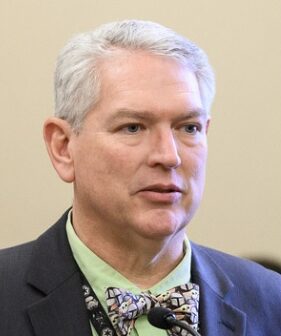
Minimizing the impact on motorists during this project has been a top priority, according to state Transportation Secretary Todd Rumbaugh.
“Our team at the Department of Transportation has worked tirelessly to phase this construction, so we minimize the disruptions on your daily commute and your businesses,” Rumbaugh said.
DOH officials said crews will work on one side of the bridge first, then crews will shift traffic and begin work on the other side. Motorists can stay up to date on the project by visiting the Division of Highways website to see the anticipated construction schedule.
Akers commended Morrisey and Rumbaugh for taking action now.
“For doing the hard thing, on a project like this, which is a maintenance and repair project,” Akers said. “They’re not kicking the can down the road for some other administration to deal with. They’re dealing with a major issue, right now, and this will be a generational project for this bridge. It’s going to prevent us from having to deal with this in the future.”
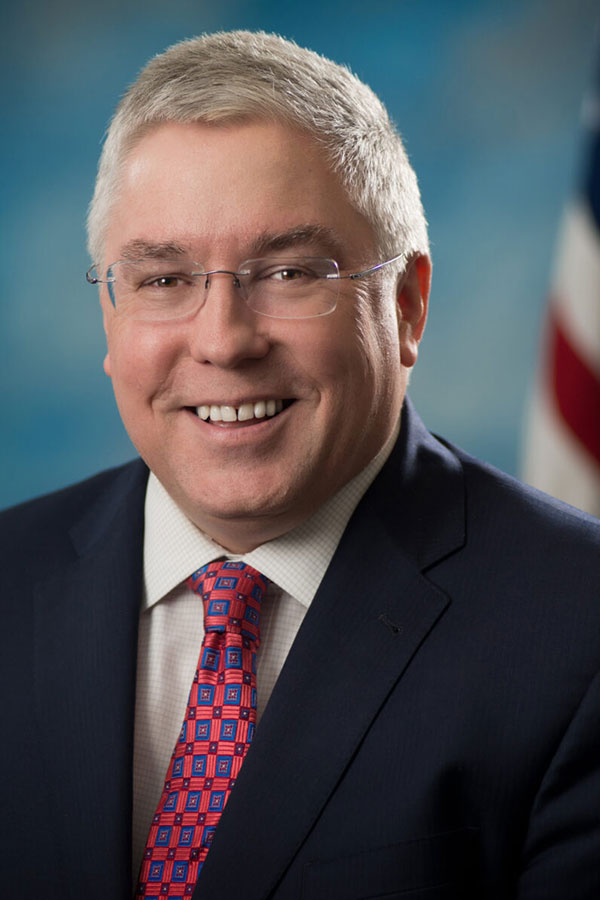
The governor mentioned the state had previously been given poor grades by national surveys on bridge safety. He said his administration is committed to improving bridges all across the state, starting with the heavily trafficked bridge in Charleston.
“This is a signal that we take bridge repair work very seriously,” Morrisey said. “When we inherit being an ‘F’ in bridges, I do not want that to be the case. We need safe bridges for our people, and I’m going to keep working every day to make sure that happens.”
Morrisey said in his year and a half as governor, the administration has been focused on “getting back to the fundamentals.”
“Site-selection and remediation, speed to build; cutting red tape faster, that’s what’s why I’m so excited about our one-stop shop permitting. (That’s) going to make things go even faster, and responsibly.”
Those efforts have been paying off, Morrisey said.
“When you have that kind of economic growth, that level of construction, it’s particularly important to make sure that your infrastructure is strong,” Morrisey said. “That’s really why we’re here today.”
Rumbaugh said the investment signals a commitment to the future of the Mountain State and its travelers.
“This rehab project represents a once-in-a-generation investment in our economic corridor,” Rumbaugh said. “It’s about much more than concrete, structural steels, and orange barrels. It’s about safety, reliability, and planning for the next 50 years.”
-

 Indiana4 minutes ago
Chance for storms continue into the weekend across Central Indiana
-

 Iowa10 minutes ago
Will Moon, Iowa football donor and owner of Iowa 80 truck stop, dies at 64
-

 Kansas16 minutes ago
Kansas City Current vs San Diego Wave FC: Where to watch, TV channel, live stream & kick-off time | Goal.com US
-

 Kentucky22 minutes ago
Adkins among new appointments to Kentucky State Fair Board
-

 Louisiana28 minutes ago
How vital is New Orleans to Louisiana’s economy? See the data after Landry’s ‘special’ comments.
-

 Maine34 minutes ago
Maine Democrats must show moral courage on Palestine | Opinion
-

 Maryland40 minutes ago
Maryland residents got a pro-data center text linked to an ‘interfaith’ website. Who’s behind it?
-

 Michigan46 minutes ago
Two from Colombia extradited, face federal drug trafficking charges in West Michigan

