West Virginia
West Virginia, Baltimore, Tulsa: 7 U.S. states, cities and towns that will pay you to move there


Whether you’re making a move to escape the high costs of a big city or just wanting a fresh start in a new place — why not get paid?
There are many states, cities and towns across the United States that offer financial incentives to move there. It’s something that Evan Hock, co-founder and COO of MakeMyMove tells CNBC Make It, he wishes more people were aware of.
“For the first time, consumers are in the driver’s seat of where they live and work. They are more mobile than ever, both through remote work, and if you’re a smart person, you can pretty much get a job anywhere, and that gives people options,” he says.
“They are moving from places like California, New York, Texas and Florida to places that maybe have a better quality of life. As far as they’re concerned, they’re looking for affordability and community connection.”
The goals of most of these programs, Hock says, is to reach an audience of move-ready talent and grow their communities.
“The places that most commonly participate are places in the middle of the country. Lots of times, it’s places that have historically struggled to grow, or they’ve lost talent to city centers. This is a way that they can sort of open their doors and bring some of that talent back.”
Before applying to any of these programs, one of the most important things to do is visit. Hock says it’s something he finds that many people neglect. But once that’s done, go for it.
“The seats are limited, so if you’re thinking about making a move, it’s free to apply and applying kind of gets your name in the hat, so take the plunge,” he adds.
As of June 2025, the following cities and states are offering a financial incentive, with some paying as much as $12,000.
West Virginia
Ali Majdfar | Moment | Getty Images
1. West Virginia
Program name: Ascend West Virginia
Incentive: Up to $12,000 or more
How it works: In addition to money, West Virginia is offering prospective residents a slew of other incentives, including a free outdoor recreation package and a co-working space. To take advantage, you must live in the state for at least two years in one of the designated communities: New River George, Greenbrier Valley, Morgantown, Eastern Panhandle, and Greater Elkins.
To be eligible for the Ascend West Virginia program, applicants must work remotely, have the ability to work remotely in a business based outside of West Virginia or be self-employed outside of the state. You must provide proof of employment and income prior to being accepted into the program, have the ability to relocate within six months, be 18 years or older, and be a U.S. citizen or green card holder.
2. Tulsa, Oklahoma
Program name: Tulsa Remote
Incentive: $10,000 in rental grants or a lump sum after the purchase of a qualifying home and a three-year membership to a local co-working space.
How it works: Tulsa launched its program in 2018. In order to take advantage of the program, you must meet these requirements: be at least 18 years of age, authorized to work in the United States, have current full-time, remote employment outside of Oklahoma, can relocate to Tulsa within 12 months of approval. Applicants must also have lived outside of the state for one full year before applying.
The application process includes a 30-minute virtual interview and if you are selected to proceed, you’ll be required to complete a background check and income verification before continuing. Once you’re approved, Tulsa Remote will have to verify you’ve signed a qualifying lease or purchased a qualifying home. Approved applicants will then attend a new member orientation. Once those steps are completed, you will be eligible to receive the grant money.
3. Topeka, Kansas
Program name: Choose Topeka
Incentive: Up to $10,000 to be allocated to rent for the first year or up to $15,000 to put towards buying a home.
How it works: To receive the incentive, your employer must participate in the GO Topeka employee transfer program and contribute anywhere from $2,500 up to $15,000. After the first year, the program will reimburse part of the total qualified relocation incentive.
The city has two other programs that offer $5,000 to former Topeka residents and $5,000 to those transitioning out of the military. For these programs, the funds can be used however the recipient chooses.
4. Baltimore, Maryland
Program name: Buying Into Baltimore
Incentive: $5,000 in down payment and closing cost assistance, 5-year forgivable loan
How it works: The program is awarded by lottery 12 business days after the Live Baltimore’s Trolley Tour event, which is held three times a year.
Homebuyers must attend and complete all requirements of the Trolley Tour event. After that event, applicants have 12 business days to make an offer on a home, have the offer accepted, obtain a contract of sale and submit the required paperwork to be eligible for the lottery drawing. 20 homebuyers will be selected to receive the funds.
For remote workers interested, it’s important to note that the property must also be used as a primary residence.
Baltimore, Maryland
Andrey Denisyuk | Moment | Getty Images
5. Hamilton, Ohio
Program name: Talent Attraction Program Scholarship
Incentive: Up to $15,000
How it works: From April 1, 2025 to July 1, 2025, the Hamilton Community Foundation is taking applications for what is known as a “reverse scholarship.” Recent graduates will receive assistance with student loan debt.
To be eligible, applicants must have graduated within the last seven years from a STEAM (Science, Technology, Engineering, the Arts, or Mathematics) program. Additionally, you can’t currently reside in the designated areas of the city of Hamilton, but you must have plans to move there.
Those interested must demonstrate employment within Butler County or have a full-time remote position. The application states that preference will be given to “those with a desire to give back to the community and become engaged in activities.”
6. Ketchikan, Alaska
Program name: Choose Ketchikan
Incentive: Up to $2,000
How it works: Applicants must be at least 18 years old and fully employed. They must live outside Alaska while working remotely for a company that is also outside Alaska.
Once you become a resident of Alaska, the state will pay you after a year of living there from the Alaska Permanent Fund Dividend.
The program is also offering up to three months of free internet.
7. Newton, Iowa
Program name: The Newton Housing Initiative
Incentive: $10,000 cash
How it works: The city, located approximately 30 miles from Des Moines, is offering $10,000 in cash to individuals seeking to purchase homes valued at more than $240,000.
Rental properties are not eligible and homes under $240,000 shall be eligible for tax abatement. Part of the “Get to Know Newton Welcome Package” also includes getting gifts from local businesses and attending events.
Are you ready to buy a house? Take Smarter by CNBC Make It’s new online course How to Buy Your First Home. Expert instructors will help you weigh the cost of renting vs. buying, financially prepare, and confidently navigate every step of the process—from mortgage basics to closing the deal. Sign up today and use coupon code EARLYBIRD for an introductory discount of 30% off $97 (+taxes and fees) through July 15, 2025.
Plus, sign up for CNBC Make It’s newsletter to get tips and tricks for success at work, with money and in life, and request to join our exclusive community on LinkedIn to connect with experts and peers.



KANAWHA COUNTY, W.Va. (WOWK) – The school clothing allowance program will soon be open to eligible children for the upcoming school year.
The West Virginia Department of Human Services will begin to accept applications for eligible children enrolled in West Virginia schools starting on Monday, July 20.
Applications can be found HERE or by requesting a paper application be mailed to them by contacting the DOHS office. They will be accepted until August 15, or until available funds are fully allocated.
Each eligible child will receive a $200 benefit that may be used toward the purchase of appropriate school clothing or piece goods for families who sew clothing for their children.
The monthly income for a family of four for the school clothing program may not exceed $3,483.
The program’s future was uncertain due to the state’s federal Temporary Assistance for Needy Families funding. Governor Patrick Morrisey announced that West Virginia has ensured that the funding needed to open the program for families this year will be available.
“We are doing this the right way, and we’re working to make funding streams last. COVID-era reliance on one-time money helped create these challenges, so now we are working to put this program on solid footing. Starting July 20, West Virginia families can apply for the School Clothing Allowance,” said Governor Patrick Morrisey.
The School clothing allowance program recipients will receive payments on their EBT cards. This will allow for both online transactions and an increased choice of vendors when purchasing school clothing. The EBT card will operate like a debit card and can be used at any retailer who accepts EBT cash transactions.
Parents or guardians of children in foster care will receive the school clothing allowance benefit as a check.

MARLINTON, W.Va . (WVVA) – UPDATE: The NTSB has confirmed the crash involves a Sikorsky S76D helicopter.
A helicopter has crashed in Pocahontas County.
Few details are available at this time but the crash has been confirmed in the Marlinton area.
Capt. Leslie T. Goldie with the West Virginia State Police said Troopers are on the scene assisting with security and the National Transportation Safety Board (FAA) will investigate the crash.
The NTSB has confirmed the crash involves a Sikorsky S76D helicopter.
WVVA will provide details as they become available.
Copyright 2026 WVVA. All rights reserved.
West Virginia
How midsummer wild berries connect people, wildlife, and West Virginia’s forests – West Virginia Explorer

CHARLESTON, W.Va. — In midsummer, West Virginia’s forests yield one of their richest annual harvests. Blackberries spill over abandoned fence rows. Raspberries brighten sunny hillsides. Blueberries and huckleberries ripen on the state’s highest mountains.
For generations, families have carried buckets into the woods to gather berries for cobblers, jams, and pies. Yet these fruits nourish far more than Appalachian traditions. Each summer, millions of berries feed an extraordinary variety of wildlife, helping sustain everything from songbirds and wild turkeys to white-tailed deer and black bears.
Wildlife experts say the annual berry crop is one of the Appalachian forest’s most important natural food sources, influencing where animals travel, how they raise their young, and even how often people encounter bears.
Nature’s midsummer pantry
By July, West Virginia’s forests enter one of their most productive seasons. Forester William N. Grafton, a longtime specialist with the West Virginia University Extension Service, wrote in the West Virginia Encyclopedia that the Mountain State is home to “dozens of native berry plants, ranging from trees and shrubs to vines and herbs.”
Among the berries most prized by both people and wildlife, he wrote, are blackberries, blueberries, huckleberries, strawberries, serviceberries, and raspberries.
“July and August are the best months for juicy, tart blackberries,” Grafton wrote. “These months are also best for raspberries (black, red, and wineberry).”
Blueberries and glossy huckleberries continue to ripen from July through September, especially along forest margins, open woodlands, and high mountain ridges.
According to Grafton, these delicious fruits—known to wildlife biologists as “soft mast”—provide critical nutrition for numerous species during summer. Black bears, deer, raccoons, foxes, squirrels, chipmunks, wild turkeys, grouse, and countless songbirds depend on seasonal berry crops as they build energy reserves for the months ahead.
Berry patches also provide much more than food. Dense blackberry thickets offer nesting cover, escape habitat, and shelter for birds and small mammals, making them among the most valuable habitats along forest edges, old fields, and woodland openings.
Why berry season changes bear behavior
The arrival of berry season can also help explain a pattern many West Virginians notice each year. Black bears often become highly visible in late spring, wandering through neighborhoods in search of easy meals before natural foods become abundant. By July, however, reports of bears visiting residential areas frequently decline.
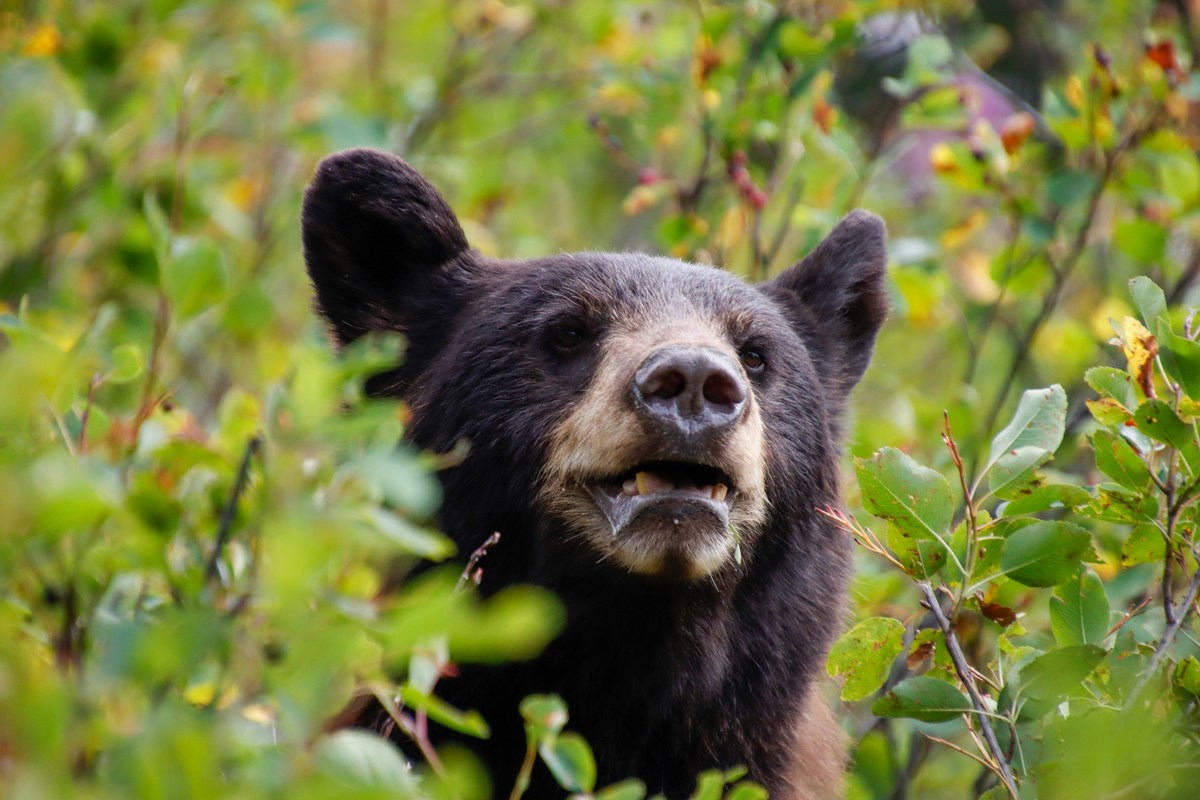
“The decrease in cumulative conflicts in the month of July coincides with the ripening of raspberries, blackberries, and blueberries,” according to Colin Carpenter, black bear project leader with the W.Va. Division of Natural Resources.
As these natural foods become plentiful, bears spend more time feeding deep in forests and less time searching neighborhoods for garbage, bird feeders, livestock feed, or pet food.
“Bear movements are tied to food sources,” Carpenter says. “Bears that roam around residential areas in search of food are less likely to stay if they do not find anything to eat.”
While bears remain opportunistic feeders throughout the summer, abundant wild crops help keep many of them focused on natural forage rather than human-provided food sources.
Read more: Why more West Virginians are seeing black bears this summer
A tradition rooted in Appalachia
Long before grocery stores, midsummer berry season was among Appalachia’s most anticipated harvests.
Native peoples gathered wild berries for food and medicine, and later settlers preserved them as jams and jellies, baked them into pies, and canned them for winter. For many families, berry picking became both a necessity and a cherished summertime tradition.

For Matt Welsch, a West Virginia food historian, chef, and advocate for Appalachian foodways, berry picking remains one of the state’s most enduring seasonal rituals.
“I grew up picking berries on the farm,” Welsch says. “It was a family activity, a communion, and it always ended in a treat, whether that was something simple like fresh berries over cornbread with sugar and milk or a fresh fruit pie.”
Although the fruits now fill supermarket shelves year-round, he says gathering them in the woods offers something modern conveniences cannot replace.
“They say splitting your own wood warms you twice,” Welsch says. “Gathering forest berries is a treat twice over. Berries are in every grocery store these days, but nothing compares to those fresh from the woods. Picking berries is a touchstone for who we really are.”
That tradition remains especially strong in West Virginia’s high country. Grafton noted that “hundreds of people make annual forays to Dolly Sods, Spruce Knob, and nearby areas to pick blueberries,” a seasonal pilgrimage that continues today as hikers combine mountain adventures with one of the state’s most celebrated natural harvests.
Elsewhere, blackberry patches flourish along abandoned farmsteads, old logging roads, utility corridors, reclaimed meadows, and sunny woodland edges, offering some of the easiest and most rewarding wild foods to gather.
Welsch says those outings often became treasured family memories, even if they didn’t always seem that way at the time.
“I don’t want to put on airs,” he says. “I remember a lot of griping when we’d head out to pick berries. But even at my crabbiest, I couldn’t deny what coming home with a full pail meant. The griping was part of it. So was the pie.”
Reading the health of the forest
To wildlife biologists, berry patches reveal much more than where to find summer fruit.
The abundance—or scarcity—of the fruits reflects weather patterns, forest health, and habitat quality. Strong berry years provide ample nutrition for wildlife, helping many species raise young successfully and prepare for the changing seasons. Poor berry crops, caused by late frosts, drought, or other environmental conditions, can force animals to travel farther in search of food.
For black bears especially, the difference can be noticeable. When natural foods are scarce, bears are more likely to investigate neighborhoods and campsites in search of alternative meals. When berry crops are abundant, many remain deep within forests, where food is plentiful.
For Welsch, berry patches also remind people that they share the mountains with countless other creatures.
“My favorite thing to do out there is look for animal signs,” he says. “Tracks and scat show me I’m part of a larger ecosystem, standing in the same patch the bears and the birds are working. It connects me with the land. I treasure that feeling.”
Knowing which berries to pick
Not every colorful berry growing in the woods is safe to eat. Grafton advised that “white or whitish fruits generally should be regarded as toxic and poisonous.”
Plants such as poison ivy, poison sumac, doll’s-eyes, white coralberry, and mistletoe produce berries that should be avoided.
He also warned that the unripe fruits of may-apple and groundcherry are toxic, and that the seeds of cherries and pokeberries contain poisonous compounds. Even experienced foragers harvest only berries they can identify with certainty.
Fortunately, West Virginia’s best-known edible berries—blackberries, raspberries, blueberries, huckleberries, strawberries, and serviceberries—are among the easiest to recognize when ripe.
Why wild berries taste different
Welsch believes wild berries have flavors that cultivated fruit simply cannot duplicate.
“Wild berries had to fight for everything, so the flavor is concentrated,” he says. “A grocery-store blackberry was bred to survive a truck ride. A wild one was bred by the hillside it grew on. More acid, more perfume, less water.”
His favorite preparation remains the simplest. “Cornbread, sugar, milk, berries,” Welsch says. “That’s the one I reach for first because that’s what berries meant on the farm.”

Today, he also enjoys using wild fruit in savory dishes, especially blackberry gastriques and sauces served with locally raised beef.
“A blackberry-based steak sauce is a current favorite,” he says. “Wild blackberries, a splash of vinegar, and a good cut of beef will tell you everything about a West Virginia summer.”
More than a summer harvest
Every berry patch tells a larger story about West Virginia’s forests. It feeds migrating birds before autumn, fuels growing bear cubs through summer, shelters rabbits and nesting songbirds beneath tangled canes, supports pollinators, and sustains a seasonal tradition that has connected generations of West Virginians to the land. It also preserves recipes, family memories, and food traditions that remain deeply rooted in Appalachian culture.
For visitors exploring the state’s back roads and mountain trails this July, the ripening fruits are evidence of a healthy Appalachian landscape where people and wildlife continue to share the same seasonal harvest—a reminder that some of West Virginia’s oldest traditions begin with something as simple as a blackberry by the trail.
-

 Wyoming1 minute ago
Residents celebrate Wyoming Statehood Day by revealing their favorite thing about the Cowboy State
-
Crypto4 minutes ago
Trump’s crypto grift spins into its own industry
-

 Finance16 minutes ago
New changes to financial aid will be minor for UND students, bigger for loan borrowers in repayment
-

 Fitness19 minutes ago
The NHS has reignited the hybrid working debate – but WFH isn’t the health risk, this is
-

 Movie Reviews31 minutes ago
‘Only Beautiful Things to Look At’ Review: A Handsome but Muffled Portrait of State-Sanctioned Cruelty
-

 World39 minutes ago
Colombia Adds Massive Soundstage as Bogotá Audiovisual Market Attendance Soars and ‘Narcos’ Star-Led ‘Rookies’ Cleans Up in Project Prizes
-
News46 minutes ago
How a Beer Hall Keeps Up With a World Cup Crowd
-
 Lifestyle1 hour ago
Shy on the dance floor? Virtual reality ‘partners’ aim to help you find your groove


