Just a few years ago, West Virginia officials celebrated the arrival of GreenPower Motor Company, an electric school bus manufacturer that could generate hundreds of jobs and deliver its products round and round the state.
“I am really proud. I am really proud that an incredible company is coming right here to our back door, bringing hundreds of jobs to West Virginia,” then-Gov. Jim Justice said at a 2022 ceremony before climbing behind the wheel of one of GreenPower’s buses.
Yet at the progress has mostly been idle.
State officials said the operation would bring up to 200 new jobs to the state when manufacturing started in late 2022, with the potential workforce to eventually reach up to 900 new jobs when full production hit two years after that.
Advertisement
At this point, though, GreenPower officials say the employment is less than 100.
The bus delivery has not gotten very far either.
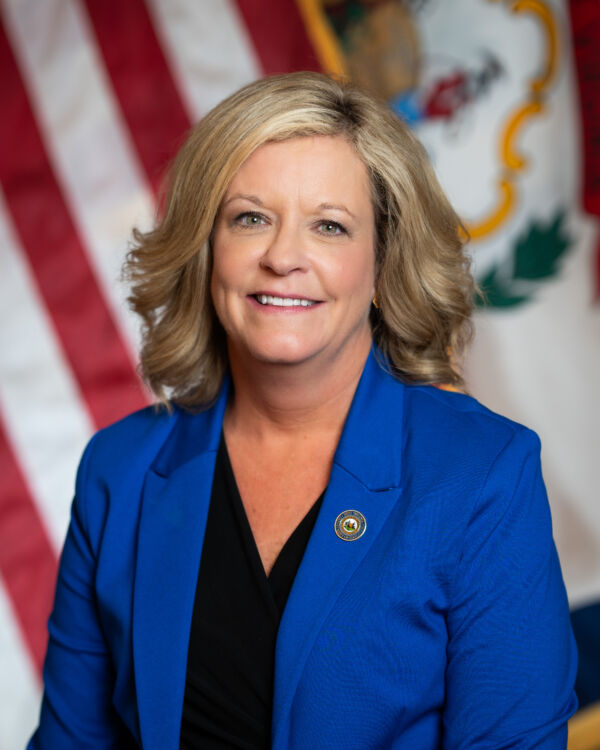
Sonya White
“They have orders for 91 buses and they’ve delivered 12,” said Sonya White, deputy superintendent of the West Virginia Department of Education.
Those orders are split into a couple of categories, one broadly with the state and another with several individual counties.
Under an agreement with the state that could have paid out up to $15 million, GreenPower was in line to deliver 41 buses for use around West Virginia.
Advertisement
“We have five. Four of them are on the road and one needs to be inspected,” White said.
In terms of money paid, the deal has not gotten past the first $3 million. So the State of West Virginia still has a little more than $11 million of the money originally meant for buses.
In a separate financial arrangement, GreenPower was in line to deliver 50 all-electric buses to seven West Virginia county school systems as part of an $18.5 million order through the U.S. Environmental Protection Agency’s Clean School Bus Program.
The counties were Kanawha, Lewis, Calhoun, Clay, Grant, Monongalia and Cabell.
So far, under that arrangement, seven buses have been delivered to the counties.
Advertisement
“Our first 3 EPA funded Greenpower buses are built and they are currently at the dealership getting camera systems installed. We expect to have them on the road by the middle of May,” said Chris Williams, the communications director for the state’s largest county school system, Kanawha.
Overall, Kanawha is in line to receive 21 total Greenpower buses from the EPA grant and an additional four Greenpower buses from the state.
Cabell County says it has received none so far.
“As of now, we have not received delivery of any buses,” said Ashley Stephens, the communications director for Cabell County Schools.
“We anticipate the delivery of the first bus this coming December or January. As for any other buses promised in the grant, we are still analyzing the information to determine whether or not those will come to fruition for Cabell County Schools.”
Advertisement
GreenPower’s view
GreenPower executives described a range of reasons for the slow pace.
Chief executive officer Fraser Atkinson and President Brendan Riley spoke with MetroNews over a videoconferencing call last week.
On the initial agreement with the State of West Virginia, the executives contended a state purchasing requirement to involve a dealer further complicated the process. They also said that, normally, they would expect payment before delivery.
Fraser Atkinson
“So you know, if you looked at the amount of the deposit that we have, the actual build costs that we have ongoing far exceed what that initial $3 million deposit represents,” Atkinson said.
“So it’s not as straightforward that, you know, ‘Hey, there’s a bucket of money that was contributed and it’s sitting there.’ You know, we’re well into our own capital if you will in terms of the build pursuant to that state contract.”
Advertisement
A memorandum of understanding with the state had laid out a Dec. 31 mark to deliver dozens of buses.
“There was a number of dates that the state had in terms of performance requirements, as did GreenPower,” Atkinson said, saying a state requirement to have a dealer in the middle of that arrangement has complicated matters.
Brendan Riley
Riley chimed in to say the memorandum of understanding was a broad framework.
“From my experience, the MOUs are basically just frameworks that, you know, you build a contract off of, and it’s just points that, you know, things are taken — I mean, nothing’s set in stone with an MOU,” Riley said.
“It’s just an understanding and, you know, allows for basically memorializing points that people want to address.”
Disruption of EPA grant
Advertisement
A major factor, the executives indicated, has been the disruption of the major grant under the EPA.
Atkinson said a change in administrations at the federal level meant that grants like the one with the Environmental Protection Agency had to be justified.
Under the Trump administration’s Department of Government Efficiency initiatives all kinds of grants have been up against cancellation. Meanwhile, the EPA’s administrator also changed.
“In other words, after January 20, it seemed like there was, you know, new developments — I’ll call it every day,” Atkinson said.
A significant complication, he said, was that the grant actually ran from the federal government to the local dealer in West Virginia. If it had gone directly to GreenPower, he said, the company would have been better resourced to react with its experience and influence.
Advertisement
In any case, the disruption in the flow of the federal grant threatened to knock out one of GreenPower’s two financial supports in West Virginia.
“We need both elements here to further advance our electrification strategy,” Atkinson said.
The strategy evolved to emphasize delivery under the EPA grant to protect and justify it — making the arrangements under the state deal secondary.
“So instead of delivering pursuant to a state order, you know, as long as everybody is in agreement with us, let’s deliver pursuant to the federal EPA program,” Atkinson said.
He continued, “So right now we’re juggling both. It’s like, ‘OK, these buses are going under this contract to this to this county and these buses will go under the state to those counties.’
Advertisement
“And we’re just going to do our best to juggle that so that we’re not caught up where the EPA comes back and says, ‘You know, you haven’t delivered. You know, you guys haven’t delivered any buses so we want the money back.’”
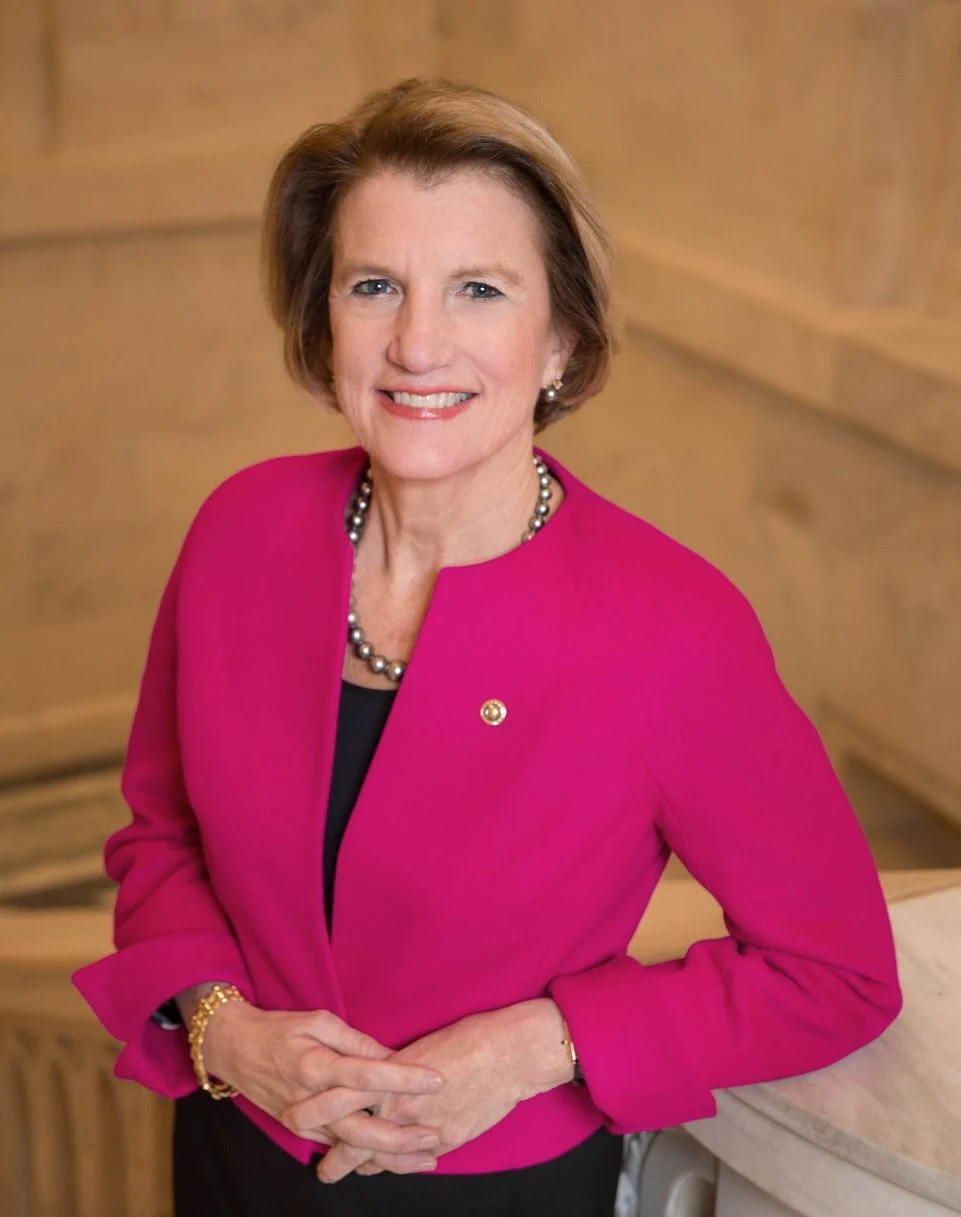
During a February conference call with reporters, U.S. Senator Shelley Moore Capito was asked about the flow of those grant dollars to GreenPower.
Shelley Moore Capito
At the time, Feb. 20, Capito said it was her understanding that the money had just been released” and that they have been successful in in acquiring or acquiring the money for the grant that was due them.
“So that’s the good news there. With GreenPower, we have definitely been talking with the administration and trying to help our communities and other organizations who have grants to find out the status. Many of them have been unfrozen as the one with GreenPower was.”
Fewer employees than the goal
The state’s initial manufacturing agreement had a target of 200 employees by Dec. 31, 2024 — with a financial incentive to GreenPower for a reduction of the purchase price of its South Charleston facility.
Advertisement
“We were roughly 50% of that 200 target,” Atkinson said, again emphasizing that the financial incentive did not mean receiving money up front from the state, but instead is a reduction in the purchase price of the facility, potentially years from now.
Bottom line regarding employment at this point, “We’re approximately a hundred, slightly less than a hundred.”
That employment number is less than hoped, he said, because of the earlier complications with the EPA, which Atkinson described as a “black swan event.”
“It’s like, how do you do business? You know, it’s like, we’re in good faith building vehicles on our dime, and under, you know, a contract pursuant to a contract award. So we’re not even a direct, we’re an indirect,” he said.
“And yet, somebody wants to pull the rug out from under, underneath all that arrangement with the wave of a wand saying, ‘We want the money back.’”
Advertisement
The chief executive said the automotive supply chain is connected at a global level, and the recent imposition of aggressive tariffs has affected all that.
“And so when, when you ask about the employees right now we’re being very careful building with what we’ve got and not getting too far ahead of your in front of our skis,” Atkinson said.
“And so we’re having to juggle a lot of their current production pursuant to ‘What’s the impact long-term with the remaining part of our builds here?’”
‘They have not met those requirements’Daniel Linville
During the most recent West Virginia legislative session, Delegate Daniel Linville asked several questions during a House Finance meeting about the state’s arrangement with GreenPower.
Linville, R-Cabell, began by asking the status.
Advertisement
Michele Blatt
“The time limit has expired. It was December 2024 when that company was to meet the requirements in the MOU,” responded Michele Blatt, the state schools superintendent.
“They have not met those requirements, and we have provided those details and information to our economic development office, and they are working through that process with the company.”
Linville followed up by asking, “As a result of that, do we stand to recoup dollars that we had put forward for that purpose?”
“I think that’s a possibility, yes,” Blatt replied.
This past week in a telephone interview, Linville said he wants to keep watch over how GreenPower continues to interact with the State of West Virginia. He said he is assured, though, that GreenPower is paid only when it delivers school buses.
“We certainly want to see these dollars and jobs within the state of West Virginia,” Linville said. “It’s a great thing to have roughly a hundred jobs or so right here in West Virginia manufacturing automobiles, so we’re generally very supportive of that.”
Advertisement
He said the incentives from the state were tailored to ensure that West Virginia would truly receive a product or service in return.
“I knew that we’d agreed to purchase a certain number of school buses and just wanted to figure out what the status of those dollars were and whether or not they’d been delivered,” Linville said of his questions in House Finance.
“It seems like significantly fewer have been delivered to us under that agreement than we initially ordered for our school systems, but the good thing is that we retained nearly all those dollars and we’re trying just to pay for those we actually receive. So we want to make sure the taxpayer is protected there and that we get what we pay for.”
CHARLESTON, W.Va. –Governor Patrick Morrisey has appointed a new member of the state House of Delegates.
Shane Thomas Stack, of Triadelphia, was appointed Tuesday to represent District 4. Stack replaces former Delegate Bill Flanigan who resigned to join the Supreme Court of Appeals of West Virginia following his election to the Division 2 seat.
Advertisement
“Shane Stack is an outstanding choice to represent the families and communities of the fourth district,” Morrisey said in a release. “With his deep roots in the local community, his background as a business owner, and his proven experience managing municipal finances, Shane understands what it takes to support economic growth and advocate for working West Virginians. He will serve his constituents well in Charleston.”
In Morrisey’s release, it said that Stack has a diverse background in small business ownership, municipal finance, and higher education administration. Stack currently is the owner, licensed auctioneer, and certified appraiser for Frio Stack & Associates, as well as the owner of Island Pawn & Gun.
Stack previously worked as the Town Treasurer for West Liberty.
He earned his Bachelor of Science in Business Administration with a specialization in General Business from West Liberty University.
MINGO COUNTY, W.Va. (WSAZ) – Sentencing is underway for Timothy Kennedy, the man convicted of murdering West Virginia State Police Trooper Cory Maynard.
Trooper Maynard was shot to death in June 2023.
The jury found Kennedy guilty on all counts: first-degree murder, first-degree robbery, first-degree disarming a law enforcement officer, and two counts of first-degree attempted murder.
Shannon Litton has has that, plus your other top stories for Tuesday, July 7th.