West Virginia
Fall study to provide insight into trout harvest rates, movement in West Virginia


CHARLESTON, W.Va. — Biologists in West Virginia will be studying trout harvest rates during the state’s fall trout-stocking season to better understand how long trout stay in stocked streams, how they move over time, and whether they survive through the summer.
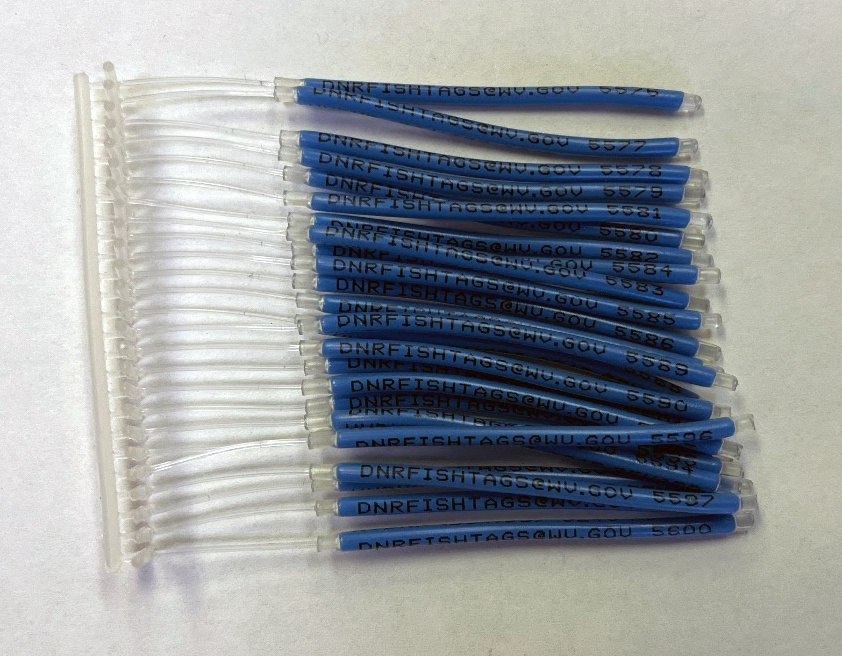
As part of the effort, the state recently released rainbow and golden rainbow trout marked with unique numbered blue tags into waters during fall stockings. Anglers who catch a tagged trout are asked to clip off the tag and report it using the contact information printed thereon.
Brett McMillion, director of the W.Va. Division of Natural Resources in Charleston, said his agency is looking forward to the help of anglers in the process.
“We appreciate our anglers and their cooperation in this important research,” McMillion said. “Anglers who report tagged trout contribute to the science that helps us improve how we manage and stock trout across West Virginia.”
Anglers may keep or release the fish after removing the tag. If a fish has more than one tag, all tags should be removed and reported to the authorities.
To assist with data collection, division biologists are asking anglers to provide the following information when reporting a tagged fish:
- Tag number
- Location and date of catch
- Whether the fish was harvested or released
- Contact information for sending the reward
All anglers 15 years old and older must have a valid West Virginia fishing license and a form of identification while fishing. Anglers fishing for trout are also required to have a trout stamp. Fishing licenses and stamps can be purchased online at WVFish.com, where anglers can also upgrade their annual license with a collectible license card.
Tag reports can be submitted by email to dnrfishtags@wv.gov or by calling 304-637-0245. Participants in the study will receive a gift card valued up to $100.
Trout in West Virginia
Trout are cold-water fish that play a vital ecological and cultural role in West Virginia’s highland environments. The state supports three primary species—the native brook (Salvelinus fontinalis), as well as two non-native but widely established species: the rainbow (Oncorhynchus mykiss) and brown (Salmo trutta). Brook is the only species native to the Appalachian region and is often regarded as a biological indicator of pristine water quality.

Brook trout inhabit small, shaded headwater streams where water temperatures rarely exceed 65°F and dissolved oxygen levels remain high. These fish depend on coarse gravel beds for spawning and clear, well-oxygenated flows for survival.
Their presence typically signifies stable watersheds with intact forest cover and minimal human disturbance. Genetic studies have shown that many of West Virginia’s brook trout populations are isolated remnants of postglacial colonization, making them of significant conservation interest.
Rainbow and brown species were introduced to West Virginia in the late nineteenth and early twentieth centuries to expand recreational fishing opportunities and now occupy a variety of cold-water streams and rivers. While both species have naturalized, they can outcompete native brookies for food and spawning habitat.
Environmental pressures, including acid rain, rising stream temperatures, and land-use changes, have reduced the range of native brook trout to an estimated 500 miles of streams, primarily in the Allegheny Highlands.
Restoration initiatives by the state and partner organizations focus on improving stream habitat, restoring riparian vegetation, and mitigating water chemistry imbalances through liming projects.
The species remains an important part of West Virginia’s aquatic biodiversity, serving as an indicator of ecosystem health and as an emblematic species of the state’s cool, high-elevation mountain waters.
Trout fishing in West Virginia
West Virginia has earned a strong reputation as a top destination for angling thanks to its extensive network of cold, clear streams, active stocking programs, and accessible wild habitats. The state regularly stocks more than 40,000 pounds in about 40 lakes and streams each fall, bolstering both stocked fisheries and angler interest.
Meanwhile, many streams such as the Elk and Cranberry rivers are celebrated as quality wild and stocked waters. The state’s combination of rugged backcountry access, scenic mountain settings, and strong fisheries management attracts fly-fishing enthusiasts, families, and newcomers alike, making trout fishing an integral part of West Virginia’s outdoor tourism appeal.
Sign up to receive a FREE copy of West Virginia Explorer Magazine in your email weekly. Sign me up!



OHIO COUNTY, WV — Protesters lined Kruger Street and National Road in Wheeling on Saturday as part of “No Kings” demonstrations held across the country.
People were already packed along the streets before the protest began at 11:30 as participants cited rising gas prices and the controversial Iran war. Protesters chanted and voiced their opinions during the event.
Teddie Grogan said the group gathered to push back against what they see as undemocratic leadership and unnecessary conflict. “We’re here today to protest the fact that we want our country we want it run as a democracy we don’t want wars that are somebodys choice and not a necessity,” Grogan said.
Former U.S. military member Cody Cumpston also criticized the current administration and said he is frustrated by the cost of living and the direction of the country. “I’m here today because of the current administration we’re in a new war we didn’t need to be in prices are still skyrocketing I’m just tired of it I feel like they’ve forgotten all about us and they keep forgetting about us,” Cumpston said.
Another protester, April Pascoli, said she believes many people are not aware of what the administration is doing internationally and at home. “If I don’t go to work one day and I ask people do you know what’s happening in this country? And somebody says, we’re at war right now? Really? People my age don’t even know that we have troops on the ground, that they are bombing. Bombing our bases in the middle east. Do you know that, do you realize that?” Pascoli said.


Mary Beth Hurt, Who Starred in ‘The World According to Garp,’ Dies at 79

Sunday Puzzle: Vowel Renewals

Red Rooms makes online poker as thrilling as its serial killer

Over 2 dozen children among 33 bodies pulled from Kenyan mass grave: authorities

Scathing report claims nation’s oldest labor union ‘betrayed’ MAGA members through ‘shocking’ spending

Florida High School Football Rankings: Top 25 teams – Oct. 21

How old is Bo Nix? What to know about Oregon quarterback ahead of 2024 NFL Draft

Cleary's 21 help Le Moyne down Central Connecticut State 69-64 in OT

99th annual Pony Swim held in Virginia

Indiana Members Credit Union announced as new anchor tenant at Bottleworks District
Scathing report claims nation’s oldest labor union ‘betrayed’ MAGA members through ‘shocking’ spending

Republican US lawmaker demands Congress vote on any Iran troop deployment

So you went to a No Kings protest. Now what?

JD Vance says he was ‘obsessed’ with UFOs, believes aliens are actually ‘demons’
The EU's recipe for trade deals : easy on beef, tough on wine
-

 Sports1 week ago
IOC addresses execution of 19-year-old Iranian wrestler Saleh Mohammadi
-

 New Mexico7 days ago
Clovis shooting leaves one dead, four injured
-

 Miami, FL3 days ago
Jannik Sinner’s Girlfriend Laila Hasanovic Stuns in Ab-Revealing Post Amid Miami Open
-

 Tennessee6 days ago
Tennessee Police Investigating Alleged Assault Involving ‘Reacher’ Star Alan Ritchson
-

 Minneapolis, MN3 days ago
Boy who shielded classmate during school shooting receives Medal of Honor
-

 Technology1 week ago
YouTube job scam text: How to spot it fast
-

 Politics1 week ago
Schumer gambit fails as DHS shutdown hits 36 days and airport lines grow
-

 Science1 week ago
Record Heat Meets a Major Snow Drought Across the West