West Virginia
Audit finds contract nursing in WV state facilities costs $284M, hiring process typically 688 days • West Virginia Watch


State-run hospitals, struggling to fill full-time nursing positions, are heavily reliant on contract positions to fill gaps. It cost the state $284 million since 2015 since contract positions pay more than the state’s own full-time nursing jobs.
The Department of Health Facilities’ lengthy hiring process and questionable budgeting practices combined with a national nurse shortage have led to a reliance on contract labor, according to an audit presented to lawmakers on Tuesday. Meanwhile, contract labor’s price tag has risen.
“From fiscal year 2015 to 2023, the total annual expenditure for contract clinical staff increased 955%,” said Mike Jones, audit manager with the Post Audit Division.
The audit, conducted by the Legislature’s Post Audit Division, reviewed the Department of Health Facilities hiring process prior to it becoming its own agency this year. It found that, on average, it took 688 days to post jobs and hire full-time nurses.
“That’s among the most ridiculous things I’ve heard in a long time,” House Speaker Roger Hanshaw, R-Clay, said in response. “Can anyone respond to that? Anyone?”
Aaron Snodgrass, health facilities finance officer, said he couldn’t provide clarity but noted that the agency was posting jobs much more quickly at this time.
With the likely continued rising cost of contract nursing, the legislative auditor recommended that lawmakers “consider if the continued operation of health facilities by the state is in the best long-term interests of the state and address the issues as it sees fit. “
DHF leaders have said they’re already considering selling four of the state-run hospitals to private providers largely due to operation costs. Snodgrass told lawmakers that the audit was fair and he was not surprised by the findings.
“We are working with a broker to find investors who want to invest in these facilities. I can’t really provide any additional information on that because it’s not my project,” he said.
In DHF’s official response to the audit, it said the department contracted with Lument Securities earlier this year to look for outside buyers. West Virginia Watch on Sept. 23 filed a Freedom of Information Act request for a copy of DHF’s contract with Lument; an attorney with DHF recently delayed possibly sharing the contract until Dec. 20.
DHF operates four long-term care facilities: Hopemont Hospital in Terra Alta; Jackie Withrow Hospital in Beckley; John Manchin Health Care Center in Fairmont; and Lakin Hospital in West Columbia. The department also operates two psychiatric facilities — William R. Sharpe, Jr. Hospital in Weston and Mildred Mitchell-Bateman Hospital in Huntington — along with Welch Community Hospital.
Contract nurses involved in crimes, patient death at hospitals
Lawmakers requested the audit due to concerns about “ambiguous information around expenditures,” cost concerns with state-run hospitals and more.
There was not a line item dedicated to contract nursing, according to the audit.

There are 846 allocated positions in the seven hospitals for full-time clinical nurses. Del. Kayla Young, D-Kanawha, noted that the audit failed to say how many positions were being filled by contract nurses.
The COVID-19 pandemic worsened the state’s reliance on contract nursing, and from 2019 to 2020, the cost jumped from $20 million to more than $40 million.
“These staffing issues are not new or unique to hospitals in West Virginia. They existed before COVID, which only worsened the issue … No single policy has addressed the issue,” Jones said.
The millions of dollars spent on contract nursing were paid out to 33 vendors over the last nine years; 28 of those were out-of-state vendors. Sharpe Hospital, where multiple contract employees have been charged with crimes, spent $30 million on contract staffing last year.
The state spent $3.8 million on contract nursing in Hopemont Hospital in 2023. Three contract employees were fired there this year who were involved in a gruesome death of an elderly patient in a boiling whirlpool.
The audit noted that West Virginia was not immune to issues sparked by the national nursing shortage. Lawmakers and educators have attempted to bolster the state’s nursing programs, including the creation of a West Virginia Nursing Academy that starts for kids in ninth grade. The Legislature provided $20 million in surplus funding for continued education initiatives started in the Governor’s Nursing Workforce Program in 2024.
“Are any of the programs that we have done in the past few years to bolster the nursing programs working?” Young asked.
Snodgrass said that it will take years to graduate more nurses in the state.
“We are seeing positive results within the department,” he said. “When we come back in budget meetings in the spring, if trends continue that we’re seeing, we’ll have good positive results to report for contract nursing.”
YOU MAKE OUR WORK POSSIBLE.



The No. 17 West Virginia Mountaineers (17-4, 5-1) are in a top 25 road matchup and look to remain atop the Big 12 Conference standings against the No. 22 Arizona State Devils (18-6, 4-2) for a three-game weekend series. Game one is Friday night with the first pitch set for 9:30 p.m. EST (ESPN+) game two is Saturday at 9:30 p.m. EST (ESPN+) and the series finale is scheduled for Sunday night at 9:00 p.m. EST (ESPN2).
West Virginia comes into the game on a six-game winning streak after taking two of three from Baylor, sweeping BYU and knocked off Marshall Tuesday night.
Two Mountaineers reside in the top five of the Big 12 in batting averaging. Paul Schoenfeld has emerged as the Mountaineers leader at the plate, hitting a team-high .418, which ranks third in the conference with a team-best 26 RBI. The senior is currently on an 11-game hitting streak.
Gavin Kelly is fourth in the league with a .416 batting average and is riding a 17-game hitting streak. The sophomore leads the team in hits (37), runs (28) and doubles (11).
Senior Matthew Graveline has clubbed a team-high four home runs, while junior Armani leads the Mountaineers in stolen bases with 12.
On the mound, West Virginia is expected to start Dawson Montesa in the series opener. The junior right hander threw seven innings in his last outing against BYU, tying a season-high, with seven strikeouts. He holds 4-0 record with 4.65 ERA and 39 strikeouts.
Lefty Maxx Yehl is scheduled to move to the middle of the series after closing out each of the first six series of the season. The redshirt junior is second in the conference in ERA at .084, allowing a mere three runs in 32.0 innings of work. In the last two outings, he has recorded a combined 23 strikeouts, upping his season total to a team-leading 44 strikeouts on the season.
Chansen Cole will start game three. The right-handed sophomore had his toughest outing of the season last weekend against BYU. He allowed six earned runs in three innings, but registered six strikeouts. He is currently 3-0 with a 4.00 ERA with 29 strikeouts.
Arizona State is 11-2 after a four-game skid against SEC opponents, and notched its series wins over TCU and Kansas State.
Sophomore Landon Hairston leads the team with a .458 batting average, tie with fifth-year senior Dean Toigo with 11 home runs, 11 doubles, 36 runs, and 34 RBI.
Junior lefty Cole Carlon is slated to counter with Cole Carlon (2-1, 3.19 ERA), junior right-hander Alex Overbay (0-0, 5.19 ERA), is set for game two, and senior righty Kole Klecker (3-1, 5.61 ERA) is scheduled for the series finale.
This is the first meeting between the two programs.
West Virginia
West Virginia Agencies Shielding Details on $1.44B DOE Coal Bail-out Loan from Public – CleanTechnica

Support CleanTechnica’s work through a Substack subscription or on Stripe.
West Virginians Are On the Hook to Pay DOE for Short-Sighted Projects with Big Health Impacts
CHARLESTON, W.Va. — Following two postponements, the West Virginia Department of Commerce has informed Sierra Club’s West Virginia Chapter that there are “no non-exempt records” responsive to the Club’s Freedom of Information Act (FOIA) request pertaining to the U.S. Department of Energy (DOE) plans to loan local utilities $1.44 billion to fund refurbishment projects at six unnamed West Virginia coal-fired power plants.
The DOE and Governor Patrick Morrisey first announced the $1.44 billion in coal refurbishment projects as part of a larger $4.2 billion suite of fossil-fuel expansions in November 2025. The projects are intended to extend the lives of the six coal plants up to 20 years. However, regardless of how long the coal plants manage to continue operating, payments on the low-interest DOE loans will be passed on to West Virginians’ electric bills for decades.
According to the West Virginia Department of Commerce, “certain public records within the scope” of the Sierra Club’s FOIA request are, “exempt from disclosure.” In the January FOIA filing, Sierra Club requested a detailed list of the six plants set to receive loans, as well as information on the cost and the specific upgrades proposed at each plant.
In addition to funding the projects, West Virginians will also shoulder the public health impacts. According to a Sierra Club study, West Virginia’s in-state coal plants currently account for hundreds of expensive hospital visits and 20 West Virginian deaths annually. West Virginia’s coal plants also account for 335 out-of-state deaths annually.
“West Virginians are being kept in the dark,” said Bill Price, Sierra Club West Virginia Chapter Chair. “Our local state agencies, tasked with serving the public interest, are expecting the public to repay billions of dollars in loans — blindfolded. No honest lender operates this way. No reasonable borrower would accept it. So why ask us to go along with the Governor’s deal without any details? In this time of increasing energy costs and high bills, people need to know where their money is going. We will continue to seek the answers and transparency West Virginians deserve.”
“West Virginia’s Freedom of Information Act states quite clearly, ‘The people, in delegating authority, do not give their public servants the right to decide what is good for the people to know and what is not good for them to know. The people insist on remaining informed so that they may retain control over the instruments of government they have created.’ Before the State loads down West Virginia citizens with over a billion dollars in loans, they should at least tell us what this is for, what we have to pay back, and who profits from these loans,” added Jim Kotcon, Conservation Chair for Sierra Club West Virginia.
About the Sierra Club
The Sierra Club is America’s largest and most influential grassroots environmental organization, with millions of members and supporters. In addition to protecting every person’s right to get outdoors and access the healing power of nature, the Sierra Club works to promote clean energy, safeguard the health of our communities, protect wildlife, and preserve our remaining wild places through grassroots activism, public education, lobbying, and legal action. For more information, visit www.sierraclub.org.
Sign up for CleanTechnica’s Weekly Substack for Zach and Scott’s in-depth analyses and high level summaries, sign up for our daily newsletter, and follow us on Google News!
Have a tip for CleanTechnica? Want to advertise? Want to suggest a guest for our CleanTech Talk podcast? Contact us here.
Sign up for our daily newsletter for 15 new cleantech stories a day. Or sign up for our weekly one on top stories of the week if daily is too frequent.
CleanTechnica uses affiliate links. See our policy here.
CleanTechnica’s Comment Policy

CHARLESTON, W.Va. (WCHS) — New CDC data shows a sharp decline in overdose deaths across West Virginia, dropping nearly 50% over a recent 12-month period. However, the report does not identify a single cause for the decrease.
New CDC data shows a sharp decline in overdose deaths across West Virginia, dropping nearly 50% over a recent 12-month period. However, the report does not identify a single cause for the decrease. (WCHS)
Organizations across the state say progress is likely due to a combination of prevention, treatment and long-term recovery efforts.
The West Virginia First Foundation, which distributes opioid settlement funds, says it has invested heavily in those areas.
“We’ve committed nearly $40 million to over 170 projects throughout the state in those categories,” Executive Director Jonathan Board said.
Board says the collaboration among groups statewide has been key.
“It is all of us and all programs working together with a camaraderie that you rarely see in this space,” he said.
That includes recovery programs like Pollen8, which works directly with people overcoming addiction. Founder and CEO Cheryl Laws says funding has made a noticeable difference.
“There’s momentum, right? That 48% decrease with the funding that has been given is the biggest thing,” Laws said.
While progress is encouraging, Laws says continued effort is critical.
“It has to be a continuum of care. Every piece is important, from harm reduction to longer-term inpatient. I think you see more success rates with that,” she said.
Organizations say maintaining that momentum will be essential to continuing the decline in overdose deaths.
“We still need that momentum going. We just built it. We do not need to go backwards. We need to keep going forward,” Laws said.
Board agrees, emphasizing the long-term impact of the work underway.
“We understand that generations from now people will look back and ask us what we did with the time that was gifted to us. We need to make sure that we respect them,” he said.

Don’t want to miss the bloom? This L.A. scientist created a poppy forecast

DHS attorney said agents in Los Angeles should have ‘started hitting’ protesters, emails show

Lakers beat Nets, but Luka Doncic is facing suspension again after 16th technical

EU Parliament unblocks key political hurdle in digital euro talks
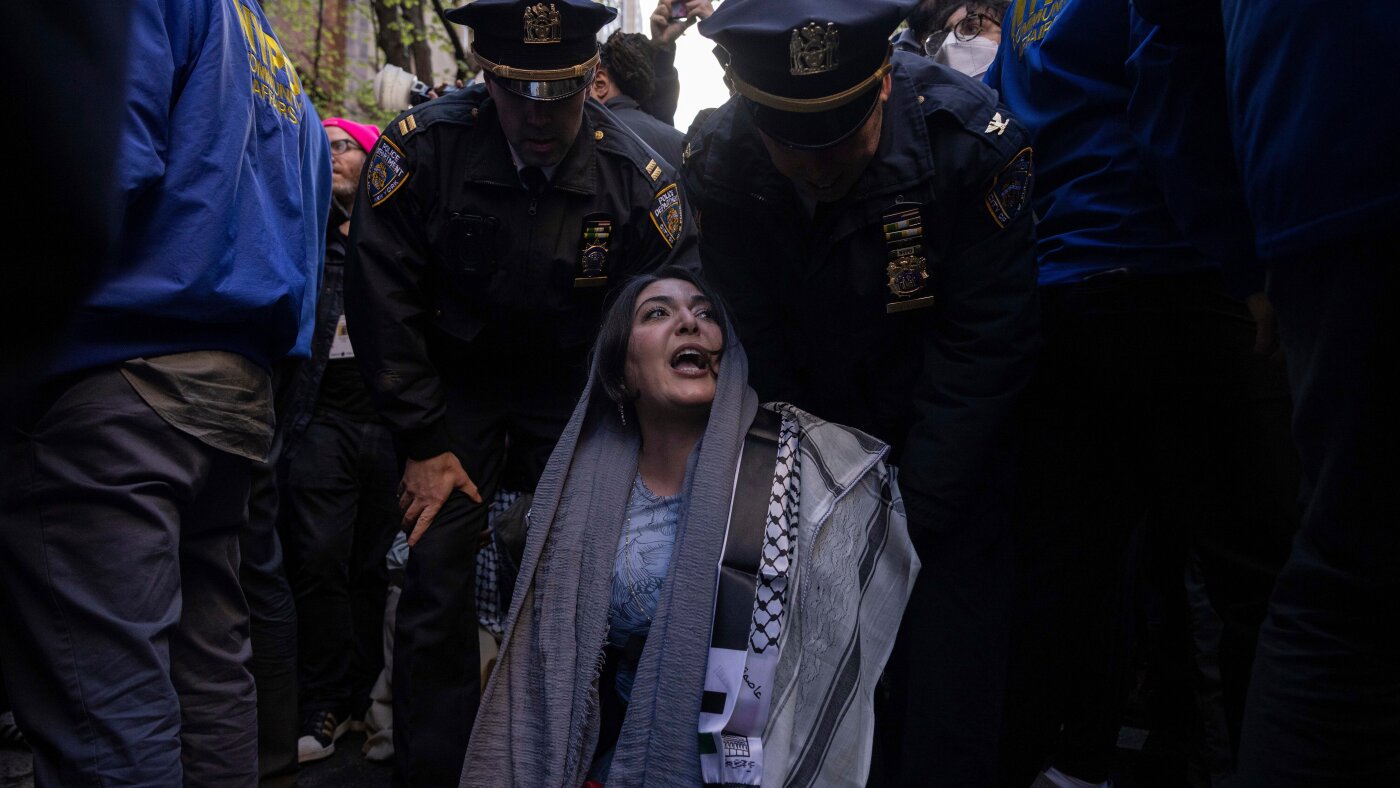
Man arrested in plot to firebomb Palestinian activist’s home after undercover op

Florida High School Football Rankings: Top 25 teams – Oct. 21

How old is Bo Nix? What to know about Oregon quarterback ahead of 2024 NFL Draft

Cleary's 21 help Le Moyne down Central Connecticut State 69-64 in OT

99th annual Pony Swim held in Virginia

Indiana Members Credit Union announced as new anchor tenant at Bottleworks District
EU Parliament unblocks key political hurdle in digital euro talks
Man arrested in plot to firebomb Palestinian activist’s home after undercover op

WATCH: Senate hearing goes silent after Angel Father confronts top Dem over daughter’s death

US diplomat Marco Rubio denounces settler violence, tolls in Hormuz strait

Iran-linked hackers have breached FBI Director Kash Patel’s personal emails | CNN Politics
-

 Detroit, MI1 week ago
Drummer Brian Pastoria, longtime Detroit music advocate, dies at 68
-

 Movie Reviews1 week ago
‘Youth’ Twitter review: Ken Karunaas impresses audiences; Suraj Venjaramoodu adds charm; music wins praise | – The Times of India
-

 Sports7 days ago
IOC addresses execution of 19-year-old Iranian wrestler Saleh Mohammadi
-

 New Mexico5 days ago
Clovis shooting leaves one dead, four injured
-
 Business1 week ago
Disney’s new CEO says his focus is on storytelling and creativity
-

 Technology6 days ago
YouTube job scam text: How to spot it fast
-

 Tennessee4 days ago
Tennessee Police Investigating Alleged Assault Involving ‘Reacher’ Star Alan Ritchson
-

 Texas1 week ago
How to buy Houston vs. Texas A&M 2026 March Madness tickets