Washington, D.C
Washington Nationals news & notes: Nats drop second straight to Cubs; 5-3 in D.C.; DJ Herz runs into trouble in 5th…


DJ IN D.C.:
In his previous four starts before facing the Chicago Cubs on Saturday afternoon in D.C., DJ Herz gave up 6 of the 15 hits, 7 of his 11 walks, and 4 of the 7 runs he allowed in the outings in the first innings of those appearances.
“The first inning over the last couple of starts has been rough,” manager Davey Martinez told reporters, as quoted on MLB.com, after Herz tossed a clean first inning (minus the HBP and the 2 walks which loaded the bases before he got out of the 27-pitch bottom of the inning in Atlanta) against the Braves last week in Truist Park, “… but he seems to settle down a little bit and he starts throwing strikes and utilizing his pitches.
“It’s about getting the ball close to the zone because his stuff is really good. If he gets too erratic, that’s when he gets in trouble. When he keeps the ball in the zone, he gets a lot of swings and misses.”
“[The first inning] has been like that three times in a row,” Herz said. “That’ll stop eventually, but I just keep grinding through [my starts] and they will eventually change.”
Asked how he’s able to put the rough firsts behind him and settle in, Herz told reporters, “It all happens just by attacking the zone. When I’m attacking the zone and [I get] settled in, it all plays.
“I’m not chasing anything, I’m just letting it happen.”
Martinez said his starter would also have to deal with the emotions of going against his one-time team, since he was facing the Cubs who drafted him in the 8th Round in 2019 and traded him (along with infielder Kevin Made) to the Nationals (for Jeimer Candelario in 2023).
“He’s going to be a little wild, I mean, not pitch-wise, yeah, it’s his old team, right?” Martinez said. “But we got to be able to control his heartbeat, but we expect him to go out there and compete, and I know he’ll do that.”
“He might be a little anxious. We got to get him through that first inning. We’ve said that his last few outings. He comes out and he’s just geeked up, ready to go. We’ve to get him to slow his heartbeat down and get him through that first inning and settle in and he should be fine.”
Herz, who said in Spring Training he wanted to show Chicago they made a mistake when they dealt him, got through a quick, clean first, worked around a walk (and balk) in the top of the second, and struck out 2 of 3 batters in the third for three scoreless (and hitless) on 46 pitches.
DJ Herz in spring training: “I’m going to show them up, or I’m going to come out and I’m just going to put everything on the line and be a beast and do everything I can to make the Cubs know that they messed up a little bit.” https://t.co/e33XFbwvO4 https://t.co/xUBcKBUj82
— Bobby Blanco (@Bobby_Blanco) August 31, 2024
Herz retired the Cubs in order in a 13-pitch fourth which left him at 59 pitches overall, but it went all pear-shaped for the southpaw in the fifth. He took the mound with a 2-0 lead, but a single by Isaac Paredes for the first hit by the visiting team, a walk to Michael Busch, and a line drive single by Nico Hoerner loaded the bases with no one out before a sac fly by Pete Crow-Armstrong cut the lead in half, 2-1, an RBI single by Christian Bethancourt tied things up at 2-2, and a ground ball to the mound brought in the third run, 3-2 Cubbies.
That was it for Herz, who threw 87 pitches total in the outing, walking two, striking out five, and giving up three hits and four earned runs, the fourth scoring after he was in the home dugout, 4-2, in what ended up a 5-3 win for the Cubs.
“We talked about the first inning, right?” Martinez said after the second straight loss in the series. “The first inning he came out and he threw the ball really well, and then he had one inning where he just got the ball up a little bit. So, we tried to get him out of the inning, he couldn’t get it. He threw one changeup right down the middle, it cost him a couple runs.
“But overall I thought he threw the ball [well]. Pitch count got up there, but he was attacking the zone.
“Sometimes he was trying to make that finish pitch, he couldn’t get it over, and he got into deep counts.”
“I think there were times when I got 0-2 or 1-2 and I was trying to maybe [get hitters to] chase,” Herz said, as quoted by MASN’s Mark Zuckerman, “… instead of just staying in the zone and not nibbling,” the lefty said. “I think that came back to get me, especially in that last inning.”
LEADOFF SPOT:
Davey Martinez gave CJ Abrams a night off against Yankees’ lefty Carlos Rodón on Wednesday night, with the shortstop scuffling at the plate and mired in a long-ish slump this month (.184/.250/.322 line in August).
“We’ve got a day off tomorrow. I wanted to give him two days off,” he explained. “I told him there’s a good chance he might get into the game today, so be ready. But I wanted to get him off his feet. He’s played a lot. He went through the All-Star break, didn’t really have any time off. So I’m trying to give him a day off here and there.”
Martinez moved rookie Dylan Crews up to the top of the Nationals’ lineup in the series finale with New York.
“I would really like him to hit up at the top because he does take pitches, he understands the strike zone, but yet he’s aggressive,” Martinez said, as quoted by MLB.com’s Jessica Camerato. “I know that he can walk, so I would love to hit him up at the top.”
Martinez told reporters he would keep his newest outfielder up top against a lefty in the series opener with Chicago (NL) and he did, even with Abrams back in there in the first of three with the Cubs.
Abrams hit seventh in the lineup.
“Just want to give him a little breather,” the skipper said of dropping Abrams to the 7-hole. “I want him to relax a little bit, just kind of start working better at-bats. As you know, he’s chasing a lot. I just want him to kind of slow down a little bit. So I talked to him before I sent the lineup out. He’s good with it. And like I said, when you start getting on base and taking your walks, I want you to get back up there. But we need to slow you down a little bit. He’s just swinging a lot.”
Seeing Abrams revert to some bad habits at the plate led the manager to make the decision to shake things up a bit.
“He’s got to go back to using the middle of the field and swinging at strikes,” he said. “I know he likes swinging at the first pitch, as we always see. I told him, I said, “I’m not going to tell you not to, especially if you get a fastball, but it’s got to be in the zone. And that’s where we need to be.’ But like I said, he worked his way to be a leadoff hitter. He’s going to do it again. I just want to just ease his mind a little bit and just go out there and have fun and get some decent pitches to hit. If not, walk.”
:no_upscale()/cdn.vox-cdn.com/uploads/chorus_asset/file/25597979/2169656102.jpg)
As Martinez noted, Abrams has struggled throughout the second half, with a rough .178/.243/.282 line over 35 games and his 148 plate appearances since the All-Star Break, after a .268/.343/.489 first half (in 89 games and 398 PAs).
“He’s been struggling pretty much since the All-Star break and we’re trying to get him going,” Martinez said.
”I think the biggest thing we need to do with him is understand that he needs to slow his feet down. He’s really going to get the baseball. We need him to get back, get ready early, and slow his feet down a little bit.”
“It’s been going on for a while, been wanting to do it for a while, and I thought, ‘Let’s do it now and see if we can get him back so he can finish the season off strong.’ A lot of teams move their guys all over the place.”
The hope, Martinez said, is Abrams will see the way opposing pitchers attach his teammates (especially his fellow lefties in the lineup) and be better prepared for his own at-bats.
“I want him to focus on watching some of the other guys’ at-bats, and see what the pitcher is doing for a little bit until he goes up there.
“We talked about that today —- he gets to see a couple lefties like [James] Wood and [José] Tena hit in front of him and see what the pitcher is trying to do to them.
“Hopefully he’ll understand what the guy is trying to do and see what the balls are doing.”
If the move sparks something in Abrams, and he finishes strong he’ll end the year on a positive note.
“I think it will help him. I think, one, like I said, the pressure of being that first guy to get on base and try to get something going for us, it’s definitely a lot of pressure,” Martinez acknowledged.
“Right now, I think the best thing for him is just to kind of move him down, not feel the added pressure. He can hit, as we all know, but just getting him back in the zone, and getting him to take some pitches maybe will definitely help him out, and like I said, once he gets going again we’ll get him back up there.”



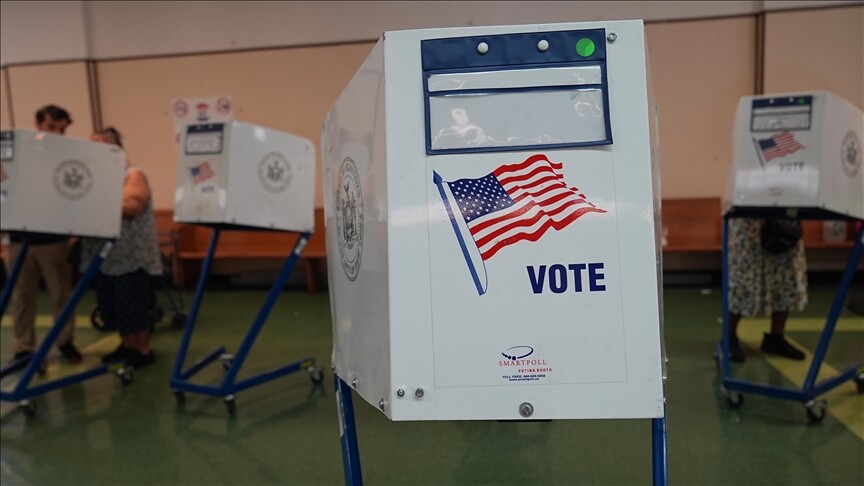
WASHINGTON – Washington, D.C., mayoral candidate Kenyan McDuffie on Thursday conceded the Democratic primary race to Janeese Lewis George.
Although the official certification of the primary race is continuing, McDuffie said in a statement that “it is clear that the voters have chosen a different path.” The former member of the D.C. council said he had contacted Lewis George and congratulated her. He thanked his supporters and urged them to continue working for the city.
“The campaign may be over, but the work of building a safer, more affordable, more prosperous city continues.”
The Associated Press has not declared a winner in the race. Lewis George had a little less than 53% of the vote Thursday morning, which is just a few percentage points above the 50% threshold to avoid ranked choice voting.
The city is scheduled to release preliminary ranked choice voting results on Sunday. AP will call the race before then if it is clear that the ranked choice process will be avoided.
Lewis George has pledged to aggressively stand up to federal intervention into Washington, D.C.’s, affairs, setting up a potential showdown with President Donald Trump over his administration’s moves to challenge the city’s limited autonomy.
If the results stand, Lewis George is likely to win November’s general election in the heavily Democratic city. The winner in the general election will replace Muriel Bowser, who decided not to run again after three terms.
Lewis George would join Robert White Jr., who won the Democratic primary for the district’s delegate to Congress, as the top local officials who likely will contend with the federal government’s intentions for the city. They each campaigned on a promise to take a harder line than their predecessors against the Trump administration’s moves on the district, including its deployment of the National Guard on an ongoing, open-ended mission meant to fight crime.
“As mayor, I will work with anyone who makes D.C. safer,” Lewis George told a crowd of cheering supporters Tuesday night, “but I will also stand up to Trump.”
Washington has limited autonomy and federal leaders retain significant control over local affairs, including approval of the budget and laws passed by the D.C. Council.
Trump further encroached on that autonomy last year when he briefly federalized the city’s police force and deployed an ongoing law enforcement surge that included the National Guard. His efforts to downsize the federal government also roiled the capital region, costing thousands of people their jobs. And he has been reshaping the city by renovating storied landmarks and putting his name or image on buildings.
Lewis George, a self-described democratic socialist and a member of the D.C. Council, has already come under fire from Trump, who last week threatened to place the city under federal control if she won.
“Maybe we’d take back Washington, run it on the federal basis,” he said.
Lewis George, 38, and a third generation Washingtonian, has vowed to overrule an executive order by the city’s police chief permitting local law enforcement to cooperate with Immigration and Customs Enforcement agents. Lewis George argued the order “hurt the trust of our community.”
She also pledged to use any levers available to her through the city’s home rule compact to resist what she called authoritarian infringements on the district’s local governance.
“We have legal tools we can use to fight back,” she told the AP in an interview before the vote. “And we know that when we have gone to court, we’ve won.”
Bowser found herself walking a fine line between staying in Trump’s good graces and responding to the concerns of constituents, many of whom said she didn’t push back hard enough on Trump’s actions. Eleanor Holmes Norton, the 18-term, 89-year-old delegate to Congress, meanwhile, faced mounting concern from critics who said she wasn’t forcefully pushing back on the Trump administration’s moves against the city.
Copyright 2026 The Associated Press. All rights reserved. This material may not be published, broadcast, rewritten or redistributed without permission.
Darren Lyn
18 June 2026•Update: 18 June 2026
Democratic socialist Janeese Lewis George currently leads the vote tally as of Wednesday versus six other candidates in the Washington, DC Democratic mayoral primary, and if victorious, could be following in the footsteps of the most notable democratic socialist in the United States — New York Mayor Zohran Mamdani.
With 73% of the ballots counted since Tuesday’s primary election in the nation’s capital, the Associated Press (AP) has Lewis George leading with 52.9% of the vote. Her closest challenger is Kenyan McDuffie, who currently holds 36.5%.
The mayor’s office in the District of Columbia has traditionally been a Democratic stronghold, and political experts have said that any Republican challenger is not expected to put up meaningful competition for the mayor’s seat in the general election.
If Lewis George keeps her current lead and wins the majority, she will head to the November election as the favorite to replace three-term Mayor Muriel Bowser, who decided not to run for a fourth term.
A victory for Lewis George would be to the ire of US President Donald Trump, who told reporters that he could attempt a federal takeover of Washington if she won the mayor’s race, according to local media reports.
“We won’t put up with it,” Trump told reporters at a news conference.
Yet Trump has already seen a democratic socialist take power in America’s largest city, with the election of Mamdani as mayor of New York City.
Not to be outdone, the race for the mayor’s office in Los Angeles, California — the second largest city in the US by population — has a democratic socialist, Nithya Raman, in the runoff to vie for the position in November’s general election. Raman will face incumbent Democratic Mayor Karen Bass, who narrowly edged out Raman in the primary 34.3% to 29.0%.
In California’s 14th congressional district, two candidates will head to a runoff election to replace former US Rep. Eric Swalwell, who resigned from Congress in April amid allegations of sexual assault, including rape.
Aisha Wahab secured the first runoff spot on Tuesday with 38.3% of the vote, with the AP on Wednesday calling the second position to go to Melissa Hernandez, who tallied 17.2%.
The runoff election will be held on Aug. 18, with the winner finishing out the rest of Swalwell’s term.

At time of writing, the Associated Press estimates that around 64% of votes have been counted. Races where no candidate wins a majority of first choices will proceed to a ranked choice voting count – most likely the at-large Council and Ward 1 Democratic primaries. With RCV, all nominees will have support from a majority of their party – as will the winner in an at-large Council special election.
Mayor
In the closely watched mayoral race, Councilmember Janeese Lewis George leads with 52.8% of voters’ first choices, followed by former Councilmember Kenyan McDuffie at 36.6%. If Lewis George remains above 50% as the remaining votes are counted, a ranked choice tabulation will not be necessary to determine the winner.
Congressional delegate
Five candidates ran in the Democratic primary to succeed retiring Delegate Eleanor Holmes Norton. Councilmember Robert White won that election with 63.2% of first choices. Councilmember Brooke Pinto came in second with 21.5% of first choices.
At-large Council Democratic primary
Nine candidates ran for the Democratic nomination to succeed at-large Councilmember Anita Bonds. No candidate has won a majority of first choices. Oye Owolewa leads with 33.8%, followed by Lisa Raymond at 15.2% and Kevin Chavous at 13.8%. The result will likely be determined by a ranked choice voting count.
| Candidate | Share of first choices |
| Oye Owolewa | 33.8% |
| Lisa Raymond | 15.2% |
| Kevin B Chavous | 13.8% |
| Greg Jackson | 11.0% |
| Candace Tiana Nelson | 7.7% |
| Dwight Davis | 6.0% |
| Fred Hill | 5.4% |
| Dyana N. M. Forester | 3.7% |
| Leniqua’dominique Jenkins | 3.0% |
| Write-in | 0.4% |
In a choose-one election, Owolewa would have won the nomination despite 66% of voters voting for another candidate. In 2022, for instance, Councilmember Anita Bonds won the Democratic primary for this seat with only 36% of first choices. Now, ranked choice voting will ensure the nominee – whether Owolewa or someone else – has majority support.
At-large Council special election
In the special election for at-large Council, former Councilmember Elissa Silverman is leading with 54.8% of first choices, followed by appointed Councilmember Doni Crawford and Board of Education President Jacque Patterson, with 25% and 19% respectively. If Silverman maintains a majority of first choices, there will be no ranked choice tabulation.
Ward 1
In the competitive Democratic primary for Ward 1 councilmember, Aparna Raj leads with 47% of first choices. Depending on remaining ballots, Raj may win with a majority of first choices, or the winner may be determined by a ranked choice voting count.
Candidate
Share of first choices
Aparna Raj
46.7%
Michael Trindade Deramo
20.3%
Rashida Brown
17.2%
Jackie Reyes Yanes
10.0%
Terry Lynch
5.8%
Write-in
0.1%
Notably, in three Council races – the at-large Council Democratic primary, at-large Council special election, and Ward 1 Democratic primary – candidates cross-endorsed each other, asking voters to rank each other on their ballots. Past elections show that voters often listen to cross-endorsements by candidates they support, so it’s possible candidates who cross-endorsed will benefit when their races go to RCV tallies.
DC’s ranked choice voting elections offer a sharp contrast with the District’s recent past, in which candidates regularly won key primaries without majority support. Since 2012, every districtwide office and six of the eight wards have seen Democratic primaries won with less than 50% of the vote. Since 2020, Ward 2 and Ward 7 have had Democratic Council primaries won with less than 30% of the vote.
FairVote will post more analysis of the DC election over the coming week. In the meantime, visit Grow Democracy DC to learn more about RCV in DC.
-
 Montana2 minutes ago
Newly released documents shed light on Montana PSC dispute
-

 Nebraska9 minutes ago
Nebraska Dept. of Agriculture proposes ban on food and beverages containing any amount of THC
-

 Nevada12 minutes ago
WOW Carwash touts year-round water conservation with recycling tech in Southern Nevada
-

 New Hampshire17 minutes ago
Concord celebrates 237 years of Constitution ratification with festivities – Concord Monitor
-

 New Jersey24 minutes ago
Is ICE giving up on Roxbury detention center? NJ leaders laud report
-

 New Mexico27 minutes ago
New Mexico leaders push funding to fight screwworm after 1 local case
-
North Carolina32 minutes ago
Rare whale shark sighting off North Carolina coast
-

 North Dakota39 minutes ago
NDSU, Dickinson State partner to expand nursing education


