Virginia
UVA Football Report Card: Handing Out Grades for Virginia’s Win at Coastal


Virginia took care of business in week 4 at Coastal Carolina, riding a breakthrough performance from its run game and timely stops from its defense to cruise to a 43-24 victory over the Chanticleers on Saturday in Conway.
As we break down what we saw from the Cavaliers in their win at Coastal and what it means moving forward, let’s hand out some report card grades for various players, position groups, and other categories to help evaluate Virginia’s performance in week 4.
Xavier Brown & UVA Rushing Attack: A++
UVA fans will hope that this is just the first of many great games for the junior running back, but now, this has to go down as “the Xavier Brown game.” He needed just nine carries to rack up 171 yards, averaging an astonishing 19.0 yards per carry. Brown became the first Cavalier to rush for more than 150 yards since Bryce Perkins in the win over Virginia Tech in 2019 and Brown’s 75-yard carry in the third quarter was the longest by a Virginia running back since Jordan Ellis in 2018.
Virginia rushed for 384 yards, most since totaling 446 rushing yards against San Jose State in 1998.
Coastal Carolina was overmatched at the line of scrimmage, but Brown and Kobe Pace have the potential to be a formidable running back duo if they can sustain their success on the ground against ACC defenses. That’s a big question mark, but Saturday showed what the Hoos can be offensively when they get into a rhythm running the football.
Anthony Colandrea: A-
Colandrea’s stats don’t jump off the page: 13/20 (65%) for 131 yards and two touchdowns, 46 rushing yards. The game simply didn’t call for Colandrea to throw the ball very much and he did well to switch his mentality to more of a game manager. He executed that role at a high level, not turning the ball over and effectively orchestrating long scoring drives that almost always ended in points. The lone blemish (and reason for the A-) was a lack of pocket awareness by Colandrea on a couple of sacks, including one where he held on to the ball too long and got hit by a pass rusher he should have seen coming. Other than that, it was a solid day for Colandrea and a good bounce-back from the Maryland game.
Honorable mention QB Tony Muskett: A
Muskett didn’t look good late in the season-opener against Richmond, throwing an interception and going 0/3 on his passes in garbage time. The Coastal game was the opposite, as Muskett completed both of his passes for 10 yards, scrambled for nine yards to move the chains on third down and generally played good clean football in his two drives on the field in the fourth quarter. This isn’t the role Muskett saw for himself this year, but it’s important that he show positive signs in these garbage time reps in case something happens to Colandrea.
Offensive Line: A
Still missing multiple starters (LT McKale Boley and RG Ty Furnish) and other key depth linemen who are out for the season, this was an important performance for the UVA offensive line, even against an overmatched opponent. The Cavaliers enforced their will up front and successfully established the run, which anyone who follows Virginia football can say is a rare occurrence. You can’t complain with the results running the ball and at least one of the sacks Colandrea took was not really the fault of the offensive line. Let’s see if this group can get some confidence going after this game and begin to string together good performances, especially if McKale Boley and Ty Furnish are able to return after the bye week.
Penalties: C
This was a bit of an issue on both sides of the ball, but more so for the UVA offense, which was penalized five times for 45 yards. It was an all-around great day for the Virginia offense, but there’s always something to work on.
Overall Offense: A
In so many ways, this game was the opposite of the Maryland game for the UVA offense. Virginia didn’t turn the ball over, executed well in the red zone (31 points on six trips), and converted on third downs to keep drives alive (9/18). The 43 points scored was the most for Virginia since the 2021 season and the Hoos went over 500 yards of total offense for the first time since early in the 2022 campaign.
UVA Football: Five Takeaways From Virginia’s 43-24 Win at Coastal Carolina
Antonio Clary: A+
Clary continues to play at an elite level in his comeback season after missing all of 2023 with an injury. He finished with eight tackles and recorded UVA’s first interception of the season. Clary has led Virginia in tackles in each of the first four games this season. Together, he and Jonas Sanker make up one of the strongest safety units in the ACC through the first third of the season.
Run Defense: A
Coastal Carolina came into this game ranked 13th in the country in average rushing offense and 9th in total rushing yards. Those numbers were propped up by some lousy competition, but the UVA defense completely smothered Coastal’s ground game, holding the Chanticleers to 82 total yards and 3.4 yards per carry. The holes weren’t there and the Cavaliers did a good job tackling at the point of attack on running plays.
Pass Defense: C
We mentioned that Virginia did a good job tackling specifically on running plays because UVA’s pass defense did leave something to be desired with missed tackles and big plays. Coastal Carolina had seven passing plays of 15 or more yards, including completions of 65, 58, 41, 31, and 29 yards. 259 of Coastal’s 302 passing yards came on big plays. It was a good game plan to force Ethan Vasko to throw rather than using his legs, but there remains some significant questions about UVA’s cornerback play as opposing receivers continue to find some success, especially on big plays.
Overall Defense: A-
As opposed to the Maryland game, where the UVA offense consistently put the Virginia defense in bad spots. This was a game where the Cavalier defense didn’t need to do much in order to come away with a win. Virginia’s defense did its part, though, coming up with huge plays and pivotal stops to prevent Coastal from building any momentum. Holding the Chanticleers to a field goal on their first possession and turning them over on downs three times in the second half were notable moments for a UVA defense that struggled to get off the field against Maryland. Coastal Carolina was 4/13 on third downs and 1/4 on fourth downs. That’s a step in the right direction and some good positive momentum heading into the bye week.
Special Teams: B
Daniel Sparks had some issues on his kickoffs early on, sending one out of bounds for a penalty and leaving another short of the end zone, but he settled in later and got a few to go through the end zone for touchbacks. He also booted a 60-yard punt, but shanked another out of bounds for just 28 yards. All in all, Sparks averaged 46.7 yards on three punts and that’ll get the job done.
None of Will Bettridge’s field goals are going to win any beauty contests, but they all went in. Bettridge went 3/3 on field goals, including a 47-yarder that matched his career-high, and 4/4 on extra points, accounting for 13 total points.
Virginia still isn’t getting much out of the return game yet as Chris Tyree has yet to really find his rhythm. He had one return for 16 yards and Virginia did not return any punts.
That said, there were no massive special teams miscues and as long as that’s the case, Virginia will earn a satisfactory grade on special teams.
ESPN+ Broadcast Quality: F
Those that tuned in to the ESPN+ stream of Virginia’s game at Coastal Carolina will agree that this F grade is justified. That was embarrassing.
Hitting the Keys: Looking Back at Our Five Keys to Virginia vs. Coastal Carolina
By the Numbers: Breaking Down Virginia’s Win at Coastal Carolina
UVA Football: Five Takeaways From Virginia’s 43-24 Win at Coastal Carolina
Virginia Uses Dominant Ground Game to Overpower Coastal Carolina 43-24


CLARKSBURG, W.Va. (WBOY) — West Virginia has plenty of state symbols, be it the black bear as the state animal, the cardinal as the state bird or the rhododendron as the state flower, but did you know that the Mountain State also has its own official gun?
The Hall Flintlock Model 1819 was first manufactured in Harpers Ferry by John H. Hall in 1811 and was adopted by the United States Army in 1819, making it the first breech-loading rifle ever adopted by a country’s military.
-

Model 1819 Hall Breechloading Rifle presented by Congress to Gustavous A. Bird for his participation in the Battle of Plattsburgh 9/11/1814 by John C. Bird via the Smithsonian Institution -
Model 1819 Hall Breechloading Rifle presented by Congress to Gustavous A. Bird for his participation in the Battle of Plattsburgh 9/11/1814 by John C. Bird via the Smithsonian Institution


All of this information is listed in Senate Concurrent Resolution 7, which was introduced and passed during the 2013 West Virginia Legislative session, and officially recognizes the Model 1819 as the official firearm of the State of West Virginia.
On top of being created in West Virginia, the resolution also points out that the rifle saw use during the Civil War, an event that directly led to West Virginia’s statehood.
While having an officially recognized state firearm may seem far-fetched, West Virginia is not the only state that has one. As a matter of fact, a fifth of the states in the country have officially designated a state firearm, including West Virginia’s neighbors in Kentucky and Pennsylvania.

CHARLOTTE, N.C. — In this world of college football, with the transfer portal and recruiting battles, bad blood is present more than ever before between head coaches.
That’s not the case between the Virginia Tech head coach and Clemson head coach Dabo Swinney, however. In fact, Franklin revealed at ACC Kickoff on Thursday that the two are actually close friends, dating back to their time at the Nike trip that various coaches take over the summer.
“Dabo’s my guy,” Franklin said on Thursday. “We go way back. We’ve been on the Nike trip for a long time. His wife and my wife are friends.”
The long-time Penn State head coach is making the move to the ACC after being fired from the Nittany Lions in October. 12 seasons of being with the program had Franklin hold a 44-21 record against top 10 opponents, an impressive record for a new conference foe of Swinney’s.
But when that trip comes around, there’s a camaraderie between Swinney and Franklin and both of their wives. In fact, the two hang out with each other instead of the other coaches at times. It simply comes to an “edgy” time in college athletics that raises tempers.
“I’m going to be honest, I wouldn’t say we’re necessarily like the type of people that love a lot of other coaches and a lot of other programs,” Franklin said. “It’s hard when you just compete year-round.”
On Swinney’s end, there are a few who could immediately come to mind among Clemson fans. Perhaps the most recent would be Ole Miss coach Pete Golding, who played the most significant role in the tampering of former linebacker Luke Ferrelli.
It’s a select list of coaches who make the good side of the Tigers’ head coach, and Franklin is certainly on that list. On the other hand, Hokies’ head coach has Swinney on his own shortlist.
“Obviously, tremendous respect for what he has built at Clemson and what he’s done at Clemson, and what he’s done for the ACC,” he said.
The two will see that close relationship face off at Memorial Stadium this upcoming season. Clemson will host the Hokies on Oct. 24 in what could be a potential title-eliminator for the ACC Championship.
Of course, the last game that we’ve seen the Tigers play in was against Franklin’s former team in Penn State at the Bad Boy Mowers Pinstripe Bowl. That game ended in a 22-10 contest that saw a foundation of Franklin players end Clemson’s season in disappointment.
Swinney will see many of those players once again in October, including starting quarterback Ethan Grunkemeyer, in that contest. The anticipated Hokie starter recorded 260 yards and two passing touchdowns on the Tigers in the Bronx that day.
Although friends become foes, another ACC coach has given Swinney his flowers for what he’s been able to do for the conference. In the upcoming moments, Franklin will look to prepare his team to prove itself on one of the biggest stages in the ACC, while Swinney looks to put his team back at the top of a conference he’s dominated for over 15 years.
Follow

MARTINSVILLE, Va. (WSET) — Extreme drought conditions in parts of Virginia have prompted an emergency drought warning for a wide swath of the region, including Bedford, Campbell, Charlotte, Franklin, Halifax, Henry, Mecklenburg, Patrick, Pittsylvania and Roanoke counties, along with the cities of Danville, Roanoke, Salem and Martinsville.
The governor has warned that if conditions worsen, she will activate mandatory nonessential water-use restrictions.
In Martinsville, city leaders have issued a voluntary water conservation notice and are urging residents and businesses to cut back where they can. The request comes as local businesses that rely heavily on water say the drought is already affecting day-to-day operations.
SEE ALSO: Botetourt County residents adjust daily routines as voluntary water restriction continues
John Hughes, owner of John’s Car Wash, said the dry conditions have hit his business hard in recent weeks. “For the last 3 weeks, it’s been hitting pretty hard. We done three yesterday and haven’t done anything today with the drought and hot weather. Yeah, I’m really concerned about it,” Hughes said.
Restaurants are also feeling the strain. David Kitzmiller, an owner of Be Wiched, said water is essential for routine tasks such as washing dishes and preparing some menu items.
“We use a lot of water for washing dishes and some of our recipes if they limit us in anyway defiently can’t produce and its a scary aspect,” Kitzmiller said.
Kitzmiller added that cutting back is not always realistic for businesses that must meet sanitation needs. “Not really feasible for a business that depends solely relies on water to wash their dishes, so that can’t definitely be an impact there,” he said.
City leaders emphasized that the conservation request is voluntary for now, but they are encouraging everyone to do their part by taking shorter showers, turning off the faucet when it is not in use, washing only full loads of laundry, and limiting outdoor watering whenever possible.
-

 Los Angeles, Ca16 minutes ago
LADWP begins long-term repairs after West Hollywood water main rupture
-

 Detroit, MI40 minutes ago
Livestream: Mayor Sheffield, Detroit health chief to address wildfire smoke threat
-
 San Francisco, CA52 minutes ago
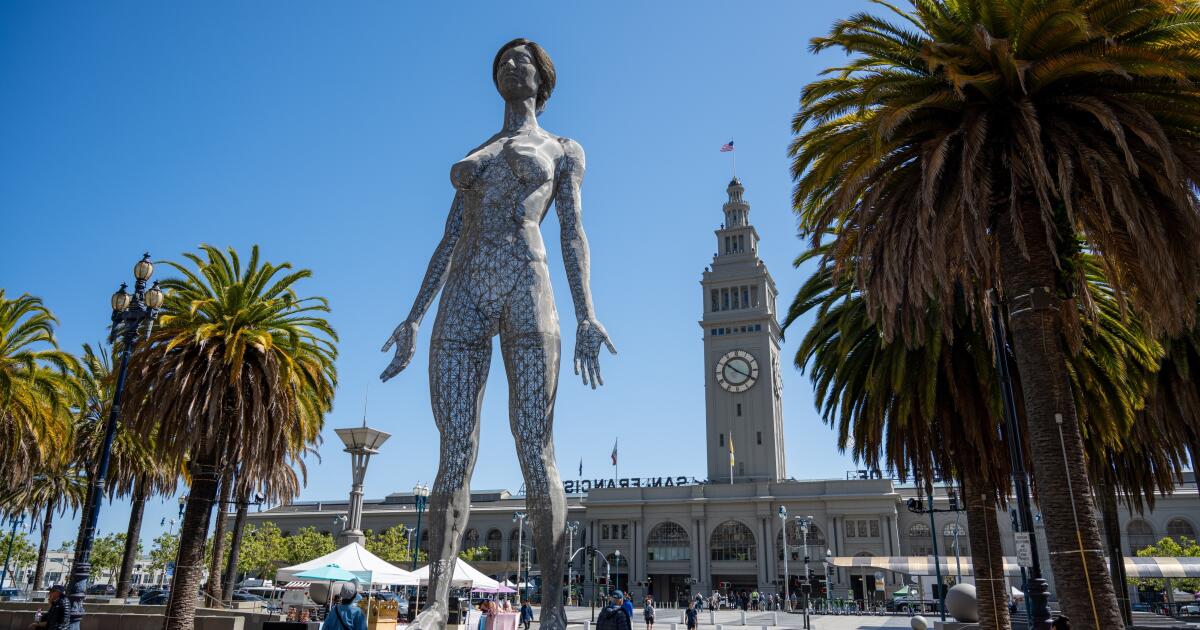
A sculpture of a giant naked woman goes on sale in San Francisco. Bring a crane
-

 Dallas, TX58 minutes ago
No ‘straight answer’: Why Pioneer Cemetery is the latest battleground at City Hall
-

 Miami, FL1 hour ago
TSA hosts news conference ahead of World Cup third place match at Miami Stadium
-

 Boston, MA1 hour ago
ICE Boston arrests Barbados national during targeted operations in Attleboro
-

 Denver, CO1 hour ago
Denver Broncos training camp is 2 weeks away
-

 San Diego, CA1 hour ago
Daily Business Report: July 17, 2026, San Diego Metro Magazine

