Virginia
San Diego State transfer forward Elijah Saunders commits to Virginia

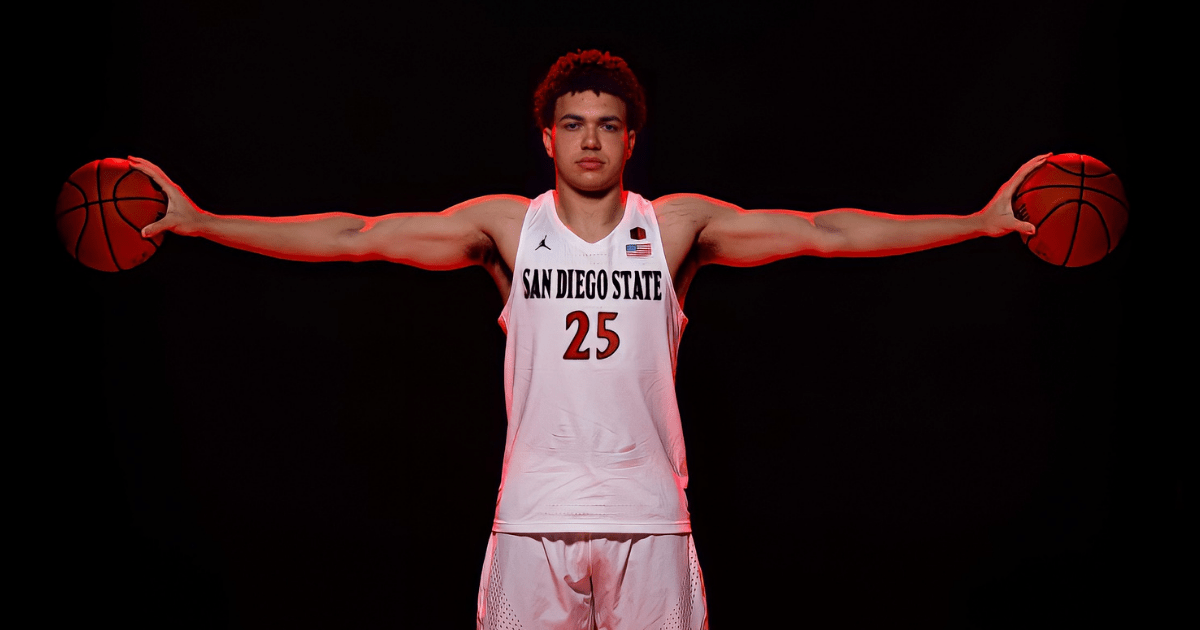
Former San Diego State forward Elijah Saunders has committed to Tony Bennett and the Univeristy of Virginia, he told On3.
The 6-foot-8 sophomore from Phoenix also closely considered Clemson and Washington. He averaged 6.2 points and 3.6 rebounds per game this season.
According to the On3 Industry Ranking, Saunders is a former three-star recruit and was the No. 179 overall player in the nation from the 20 cycle. The On3 Industry Ranking is a weighted average that utilizes all four major recruiting media companies.
Elijah Saunders commits to Virginia, transfer portal background information
The NCAA Transfer Portal, which covers every NCAA sport at the Division I, II and III levels, is a private database with names of student-athletes who wish to transfer. It is not accessible to the public.
The process of entering the portal is done through a school’s compliance office. Once a player provides written notification of an intent to transfer, the office enters the player’s name in the database and everything is off and running. The compliance office has 48 hours to comply with the player’s request and that request cannot be refused.
Once a player’s name shows up in the portal, other schools can contact the player. Players can change their minds at any point and withdraw from the portal. However, once a player enters the portal, the current scholarship no longer has to be honored. In other words, if a player enters the portal but decides to stay, the school is not obligated to provide a scholarship anymore.
The database is a normal database, sortable by a variety of topics, including (of course) sport and name. A player’s individual entry includes basic details such asynchronous contact info, whether the player was on scholarship and whether the player is transferring as a graduate student.
A player can ask that a “do not contact” tag be placed on the report. In those instances, the players don’t want to be contacted by schools unless they’ve initiated the communication.
Track transfer portal activity
While the NCAA Transfer Portal database is private, the On3 Network has streamlined the reporting process tracking player movement. If you find yourself asking, ‘How can I track transfer portal activity?’ our well-established network of reporters and contacts across college athletics keeps you up to speed in several ways, from articles written about players as they enter and exit the transfer portal or find their new destination, to our social media channels, to the On3 Transfer Portal.
The transfer portal wire provides a real-time feed of player activity, including basic player profile information, transfer portal ranking and original On3 Industry recruiting ranking, as well as NIL valuation (name, image and likeness).
The On3 Transfer Portal Rankings allow for you to filter the On3 Industry Rankings to find the best of the best in the portal, starting with Overall Top Players.
The On3 Transfer Portal Instagram account and Twitter account are excellent resources to stay up to date with the latest moves.

Virginia
Former Virginia Gov Glenn Youngkin hints at political future, says he’s ‘chomping at the bit’ after exit

NEWYou can now listen to Fox News articles!
Former Virginia Gov. Glenn Youngkin signaled his political career may not be over, telling Sean Hannity he still has “more to give” just under three months after leaving office.
“I have more to give. I just do. The one year of campaigning and the four years of running, so five years, went by in five seconds. It was amazing,” Youngkin said on the “Hang Out with Sean Hannity” podcast.
In the full episode, debuting Tuesday, Youngkin sat down with the Fox News host to discuss his time in office, as well as what things have been like since his term expired in January.
NEW POLL REVEALS SPANBERGER’S POPULARITY IS PLUMMETING AMID BACKLASH OVER GERRYMANDERING
Virginia Gov. Glenn Youngkin addresses the crowd during an early voting rally on Sept. 21, 2023, in Petersburg, Va. (Steve Helber/AP)
“Every morning [when I was governor], I woke up literally bounding out of bed, ready to roll, and that was the most purposeful I’ve ever felt in my whole life.“
Youngkin oversaw a range of conservative measures passed in the state, including a push to ensure age-appropriate curriculum in public schools.
SPANBERGER SIGNALS LEFT BENT AFTER CENTRIST CAMPAIGN; GOP LEADER WARNS OF ‘FAIRFAXING THE REST OF VA’
Virginia Gov. Abigail Spanberger responds to President Donald Trump’s unseen State of the Union address. (Steve Helber/Reuters)
He also pushed for tax cuts, including efforts to reduce the state’s grocery tax, rolled back COVID-19 restrictions early in his tenure and emphasized tougher public safety policies.
His time in office concluded earlier this year, when Democratic Gov. Abigail Spanberger’s administration succeeded his.
“I’ve been out of office for six weeks. I took [my wife] Suzanne on vacation, which she so deserved. She’s been amazing. I think she’s of the best first ladies in America,” he said.
CLICK HERE TO DOWNLOAD THE FOX NEWS APP
“But six weeks has felt like six years… You’re chomping at the bit.”
While Youngkin stopped short of outlining specific plans for the future, his comments suggest he is keeping the door open to a return to public office.
Fox News Digital’s Charles Creitz contributed to this report.

Denver police have arrested the man they believe was responsible for a fatal shooting on E. Virginia Avenue on Thursday afternoon.
According to an arrest affidavit, the Denver Dispatch Center received a 911 call around 12:35 p.m. to report a shooting in the 10100 block of E. Virginia Ave. The caller told dispatch workers that a white SUV was fleeing the scene.
Responding officers found a man who was critically wounded. He was taken to a hospital, where he was pronounced deceased.
Investigators reportedly discovered a handgun, the victim’s cellphone and money in the area where the shooting happened. They also located surveillance footage in the area, which appeared to show the victim exiting a white Chevrolet Tahoe as gunshots could be heard. He walked to the east, looking for help, before collapsing on the ground.
The affidavit says a conversation was discovered on the victim’s Instagram account in which he was speaking with another person who was selling a firearm.
Aurora police assisted investigators using the Flock License Plate Reader system, identifying the Tahoe at several locations. Police said the vehicle had unique characteristics on the passenger rear wheel. The affidavit says that, before the shooting, the vehicle had a rear license plate, but after the shooting, it was missing.
Investigators found the vehicle, executed a search warrant and found a fired cartridge case in the back seat. A person connected to the case reportedly told officers that he drove his friend, later identified as Daniel Puga Villegas, to meet a person to collect money from him. However, he says an argument took place, and Villegas shot the victim, then ripped off his temporary rear license plate and, while still holding the gun, told him to drive.
Villegas was arrested on Sunday with assistance from the APD and is facing charges of first-degree murder.

If you need help with the Public File, call (540) 512-1559
At WSLS, we are committed to informing and delighting our audience. In our commitment to covering our communities with innovation and excellence, we incorporate Artificial Intelligence (AI) technologies to enhance our news gathering, reporting, and presentation processes. Read our article to see how we are using Artificial Intelligence.

Hour-by-hour: See when to expect steady snow Tuesday in Vermont, New York

Former Virginia Gov Glenn Youngkin hints at political future, says he’s ‘chomping at the bit’ after exit

DC’s highly qualified workers can’t find jobs: ‘What is happening?’

John Blackwell’s Wisconsin teammates comment on his departure

Children’s Home Society of West Virginia seeking donations for new building

Florida High School Football Rankings: Top 25 teams – Oct. 21

How old is Bo Nix? What to know about Oregon quarterback ahead of 2024 NFL Draft

Cleary's 21 help Le Moyne down Central Connecticut State 69-64 in OT

99th annual Pony Swim held in Virginia

Indiana Members Credit Union announced as new anchor tenant at Bottleworks District

Ilhan Omar calls Trump an ‘unhinged lunatic,’ urges booting him out of office
Between Budapest and Brussels: Péter Magyar’s political tightrope
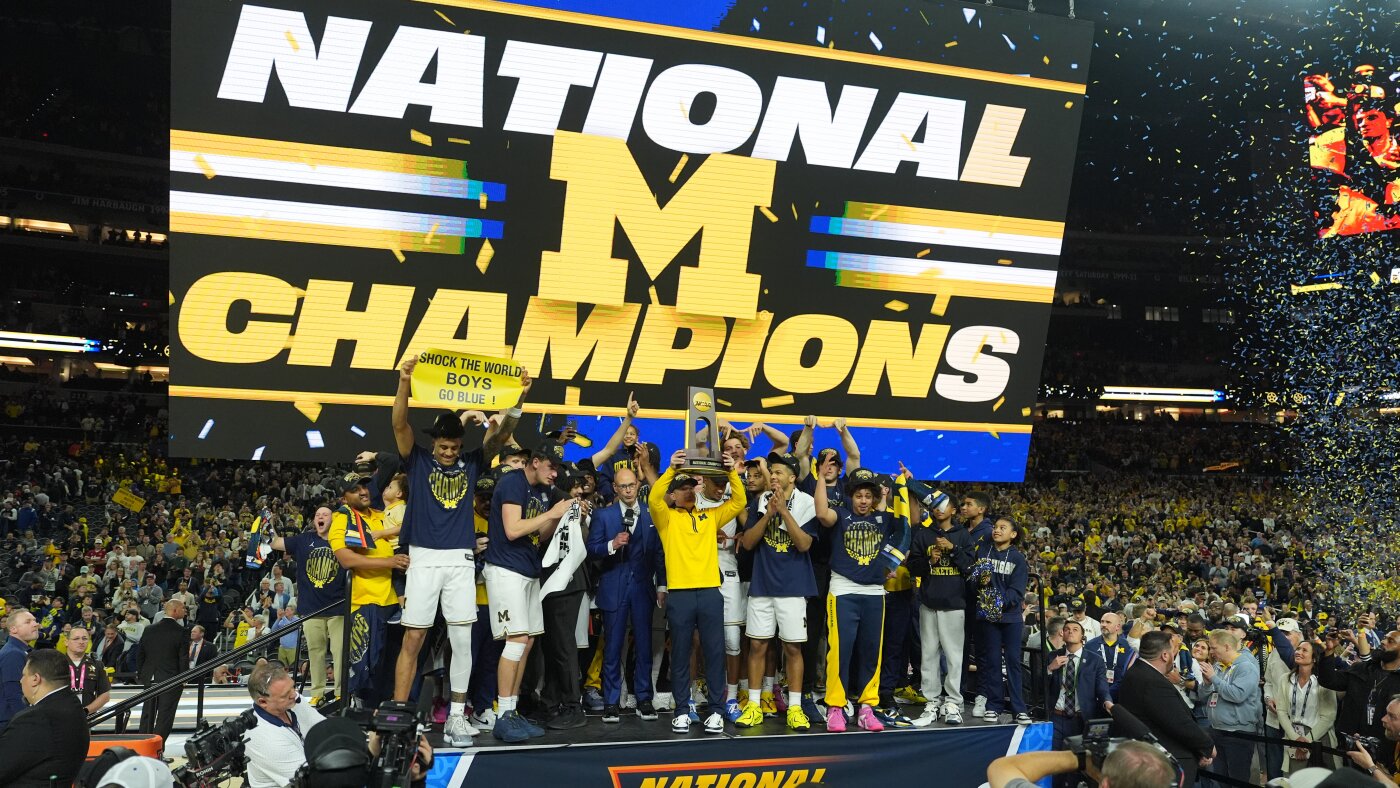
Michigan muscles its way to program’s 2nd NCAA basketball title, beating UConn

Map: Minor Earthquake Strikes Near San Diego

Trump claims he’d win as the president of Venezuela — just needs to ‘quickly’ learn Spanish
-

 Atlanta, GA2 days ago
1 teenage girl killed, another injured in shooting at Piedmont Park, police say
-

 South-Carolina1 week ago
South Carolina vs TCU predictions for Elite Eight game in March Madness
-

 Movie Reviews5 days ago
Vaazha 2 first half review: Hashir anchors a lively, chaos-filled teen tale
-

 Vermont1 week ago
Skier dies after fall at Sugarbush Resort
-

 Politics1 week ago
Trump’s Ballroom Design Has Barely Been Scrutinized
-

 Politics1 week ago
JD Vance says he was ‘obsessed’ with UFOs, believes aliens are actually ‘demons’
-
 Entertainment5 days ago
Inside Ye’s first comeback show at SoFi Stadium
-

 Politics1 week ago
Jeffries declines to break with indicted Democrat after ethics panel’s guilty verdict