Texas
Texas wants $11 billion back from the government


Texas Governor Greg Abbott has written to congressional leaders asking that the federal government reimburse his state for the $11 billion it spent on border security under Operation Lone Star.
Newsweek contacted Abbott’s office and the White House press office for comment on Friday via email outside regular office hours.
Why It Matters
The governor’s request may be an early test for President Donald Trump, who has praised Abbott’s efforts on border security under his predecessor but may balk at the federal government footing the bill.
Alex Wong/GETTY
What To Know
In a letter dated January 23 and addressed to the Republican and Democratic leaders of the Senate and House of Representatives, Abbott said Texas had spent more than $11 billion to “protect the nation and secure the border.”
The total included almost $3 billion constructing 100 miles of border wall and deploying floating buoys in the Rio Grande and almost $6 billion on the deployment of 10,000 Texas National Guard soldiers and Texas Department of Public Safety personnel.
In his letter to congressional leaders, Abbott said the Biden administration had “refused to enforce federal immigration law and pursued reckless open-border policies that invited record-breaking illegal immigration.”
The governor said he launched Operation Lone Star in 2021 as “a direct result of the refusal of the federal government to do its job” and was now seeking to get the program’s cost reimbursed for Texas taxpayers. Abbott said that under Operation Lone Star, more than 500,000 illegal migrants had been apprehended, with 50,000 criminal arrests and the seizure of enough fentanyl to “kill every man, woman, and child in the U.S., Mexico, and Canada combined.”
According to figures from Customs and Border Protection, there were 10.6 million encounters between Border Patrol officers and suspected illegal migrants between October 2020 and August 2024, of which more than 8 million took place on the southwest border with Mexico.
In 2021, Abbott issued a disaster declaration covering more than 50 counties on the Texan-Mexican border, allowing him to deploy National Guard soldiers to increase security. In his letter, he said about 10,000 such troops were deployed at the peak of Operation Lone Star, with the current figure at almost 4,200.
In a funding breakdown for Operation Lone Star sent alongside his letter, Abbott said that between 2022 and 2025, Texas spent $4.75 billion on border walls and other obstacles, processing criminal trespass arrests, and “the relocation of migrants out of small Texas towns.” The state spent an additional $3.62 billion on “personnel costs for the deployment of National Guard soldiers” and $2.25 billion to fund Texas state troopers.
Abbott addressed the letter to Speaker of the House Mike Johnson, House Minority Leader Hakeem Jeffries, Senate Majority Leader John Thune and Senate Minority Leader Chuck Schumer.
What People Are Saying
Senator John Cornyn, a Republican from Texas, wrote on X, formerly Twitter, on Thursday: “No state has had to bear the brunt of the Biden-Harris border crisis more than Texas. I will fight to include funds in Congress’ reconciliation bill to reimburse Texas for its efforts to secure the border as a result of the Biden admin’s complete dereliction of duty.”
Texas Governor Greg Abbott wrote on X on Thursday: “This week, Texas & Indiana National Guard soldiers installed additional razor wire barriers along the border. Razor wire is a proven strategy to deter & repel illegal immigrants. Working with President @realDonaldTrump & partner states, Texas will continue to secure the border.”
What Happens Next
During his inauguration on Monday, Trump vowed to “declare a national emergency at our southern border,” adding, “All illegal entry will immediately be halted, and we will begin the process of returning millions and millions of criminal aliens back to the places from which they came.”
The president has since signed a series of executive orders restricting asylum access to the U.S., terminating an app used by thousands of migrants and revoking birthright citizenship—though that measure was blocked on Thursday by a federal judge.
Trump will have to decide whether he wants to reward Abbott by reimbursing his state’s expenses for Operation Lone Star or whether he wants to prevent the $11 billion price tag from falling on federal coffers.



Dallas weather: July 8 morning forecast
High pressure starts to build back into North Texas, which lowers our rain chances and brings triple digit temperatures to parts of the region. Expect partly to mostly sunny skies today, with highs near 100.
DALLAS – A building system of high pressure is bringing triple-digit temperatures back to North Texas, though the intense heat will be short-lived before a weekend weather shift brings relief and renewed chances of rain.
Wednesday forecast
We expect partly to mostly sunny skies Wednesday, with high temperatures reaching near 100 degrees across much of the region. While hot and dry conditions will dominate, a low chance of scattered rain showers remains possible, primarily in areas east of the Dallas-Fort Worth metroplex.
The heat is expected to solidify Thursday as the upper-level ridge settles firmly over the area. We have removed all chances of precipitation from Thursday’s forecast, locking in dry conditions and an afternoon high temperature of 100 degrees.
However, relief is on the horizon for the upcoming weekend. The high-pressure ridge will lose its grip on North Texas as it begins to shift westward toward the desert southwest.
Weekend forecast
By late Saturday and continuing into Sunday, the atmospheric shift will establish a northerly flow aloft. This pattern change is expected to funnel a series of weather disturbances into the region, triggering a return of widespread rain and thunderstorm opportunities.
The unsettled weather pattern is forecast to linger well into next week. The persistent cloud cover and moisture associated with the continuing rain chances will successfully suppress the heat, keeping afternoon highs closer to historical norms for this time of year.
7-Day forecast
The Source: Information in this article is from the FOX 4 weather team.

Man, identified as Lorenzo Salgado Araujo, is latest to be killed by ICE officers since President Trump took power.
Published On 8 Jul 2026
A United States immigration agent fatally shot a man in Houston, Texas, while officers were attempting to stop his vehicle, US Immigration and Customs Enforcement (ICE) said.
The man killed on Tuesday was identified as Lorenzo Salgado Araujo, described by ICE as a Mexican national and “illegal alien” who attempted to evade arrest during a “targeted enforcement operation” by federal immigration officers.
Recommended Stories
list of 3 itemsend of list
Ronaldo Salgado, who identified himself as Salgado Araujo’s son, told the Spanish-language television station Telemundo Houston that his father was shot while he was looking for workers to hire in the area.
The Department of Homeland Security (DHS), which oversees ICE, said Salgado Araujo ignored commands to stop his vehicle, saying he “rammed an ICE law enforcement vehicle, refused to follow multiple verbal commands, and weaponized his vehicle in an attempt to run over an ICE law enforcement officer”.
In past shooting incidents, including the January killings of Renee Good and Alex Pretti, immigration officials had said that their officers were being attacked when the two were shot, claims vigorously disputed in both incidents.
Video footage captured on Tuesday by a surveillance camera from a nearby business and reviewed by the Reuters news agency showed a person lying on the ground beside a white van and surrounded by officers, in what appeared to be the aftermath of the shooting.
Salgado Araujo was targeted in an operation because he was living in the country without legal permission, according to DHS.
Democratic US Representative Sylvia Garcia called for an independent and thorough investigation of ICE’s claims about the fatal shooting.
“All available footage, communications, and other evidence should be preserved and reviewed as part of a full and impartial investigation,” Garcia posted on social media.
Juan Proano, CEO of the League of United Latin American Citizens, echoed Garcia’s calls for a transparent investigation into ICE’s actions.
“We don’t take DHS at their word at all,” Proano told The Associated Press news agency. “There should be an independent investigation, and they should release all the videos.”
There have been at least six fatal shootings by federal immigration officers since the start of President Donald Trump’s intensified immigration enforcement crackdown.
Good, a 37-year-old US citizen, was shot in the head by a federal immigration agent during a crackdown in Minneapolis. DHS also said Good was trying to hit the agent with her vehicle, which local officials and witnesses disputed, saying she was only trying to drive away.
The backlash from Good’s killing and other similar incidents led ICE to step back from some of its more controversial operations.
However, Tuesday’s deadly confrontation in Houston came amid a recent increase in the number of ICE arrests nationwide, with immigration officers picking up about 2,000 migrants a day last week, Reuters reported.
Texas
Trump takes credit for Toyota moving some truck production from Mexico to Texas: ‘That’s what tariffs do’
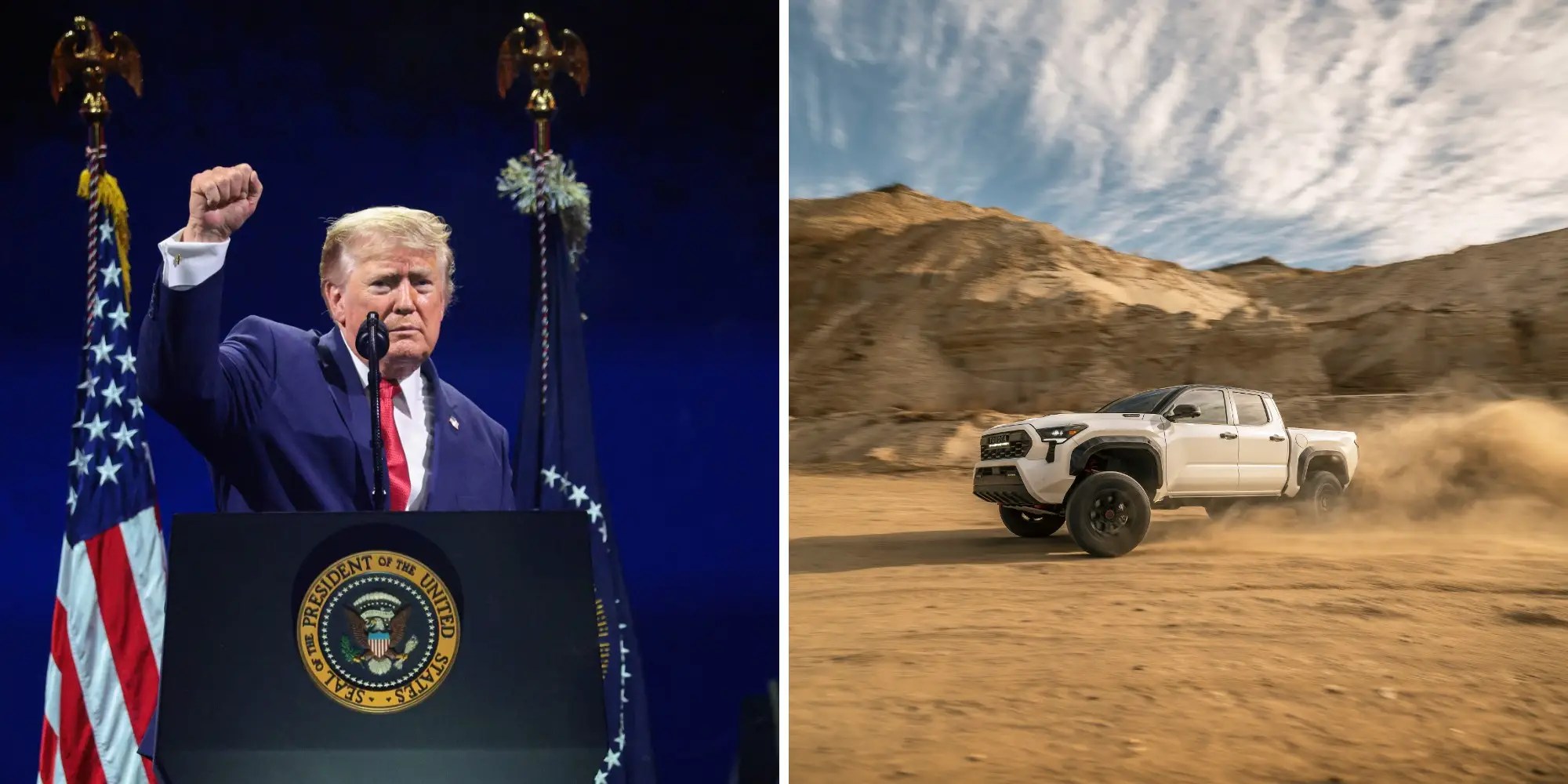
Toyota is planning a $3.6 billion expansion of its Texas truck assembly plant. President Donald Trump took credit for the investment.
On Monday, the automaker announced the multibillion-dollar investment to add a second vehicle assembly line at its San Antonio manufacturing campus to support production of the Tacoma pickup. Toyota said the expansion project would shift some of the midsize truck’s production from its Mexico plants to San Antonio over roughly 4 years. Toyota will still build some Tacoma models and the Corolla in Mexico.
While Toyota did not attribute the expansion to tariffs in its announcement and the company is not fully exiting production in Mexico, Trump said the fresh investment was a sign that his tariffs were working.
“It came over the wires that Toyota is moving out of Mexico into the United States, and building one of the biggest truck and car plants ever built,” Trump said on Tuesday during a visit to Ankara, Turkey. “It’s amazing. That’s what tariffs do, properly used.”
Toyota said the investment will create 2,000 jobs and add 2.5 million square feet to the site, doubling the company’s Texas footprint by 2030.
Toyota
On Monday, Ted Ogawa, president and CEO of Toyota Motor North America, said the investment reflected the company’s “confidence in the region’s workforce, innovation, and long-term growth potential.”
The move gives Trump a high-profile example of a well-recognized company creating manufacturing jobs. His administration has argued that tariffs incentivize companies — particularly automakers — to reshore manufacturing in America and reduce reliance on foreign production.
Toyota’s announcement also comes amid major uncertainty for automakers with plants in North America. The USMCA — the trilateral free trade pact between the US, Canada, and Mexico struck during Trump’s first term — is under review after the US declined to renew the treaty in its current form on July 1. The Trump administration is reportedly pushing to change the agreement so 50% of all automotive parts and manufacturing would happen in the US.
Toyota also nodded to that trade uncertainty in its release, saying it remained committed to operations in all three countries while encouraging “a quick resolution to USMCA” to keep North America globally competitive.
-
 Entertainment7 minutes ago
Rhea Seehorn celebrates her ‘Pluribus’ Emmy nomination as she waits to hear about Carol and the atom bomb
-

 Lifestyle10 minutes ago
Urban Jürgensen: Introducing Elite Watchmaking to New Audiences
-
 Politics15 minutes ago
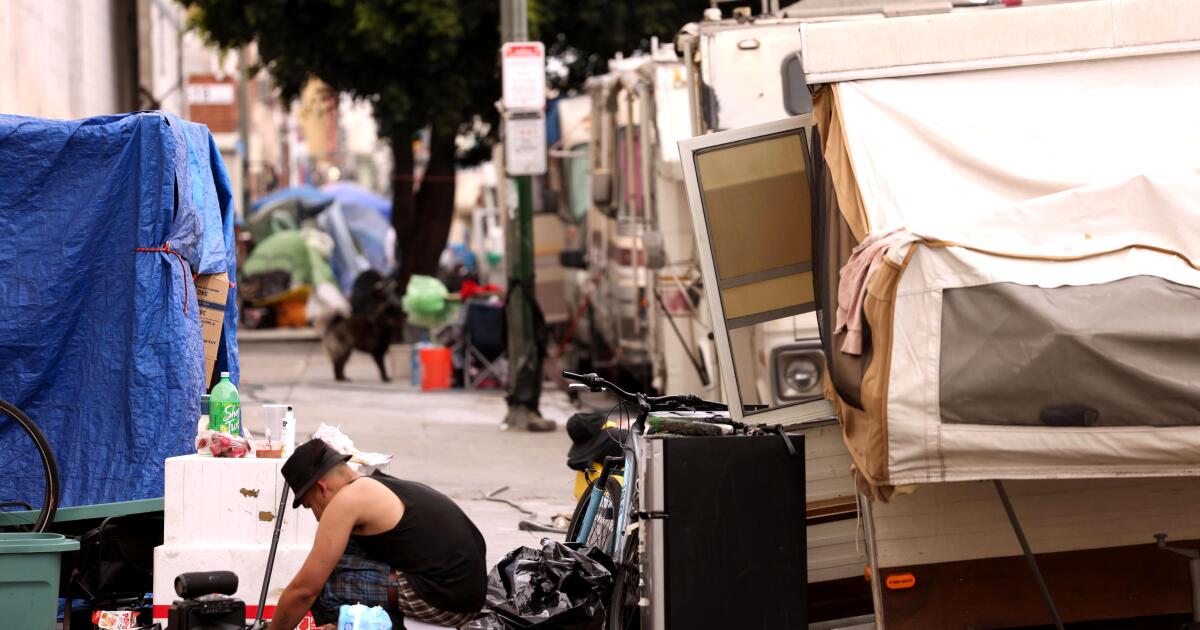
Commentary: On Skid Row, it’s been decades of frustration. Will the next mayor have a plan?
-
 Science22 minutes ago
What’s the deal with … coffee enemas?
-
 Sports25 minutes ago
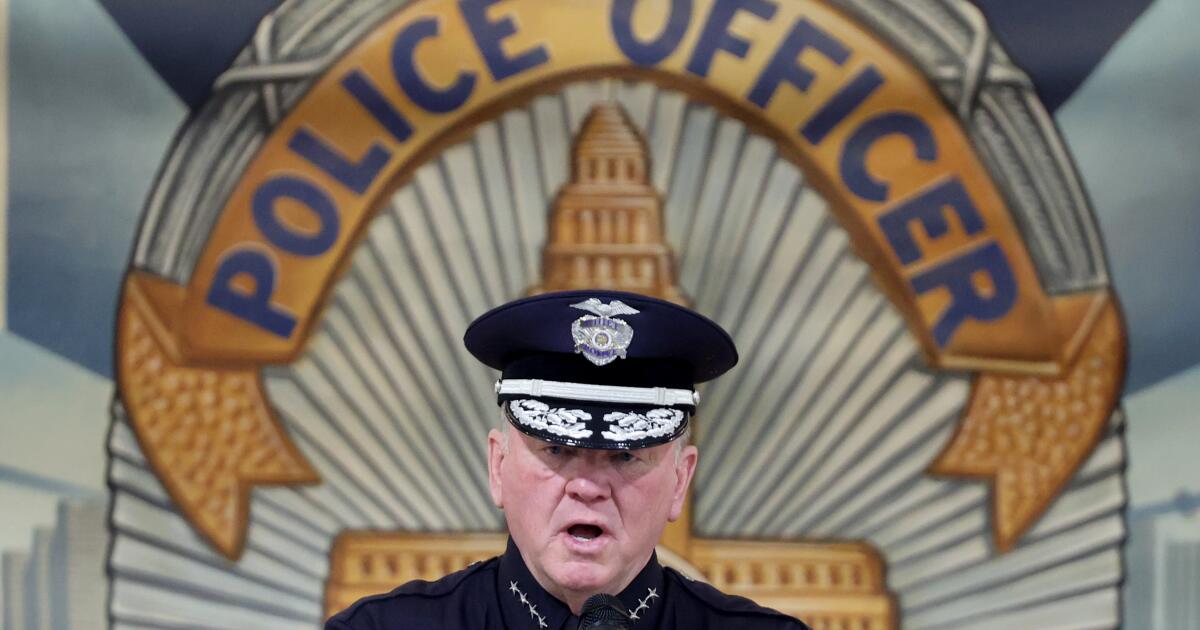
LAPD weighs canceling academy classes to get more cops on streets for Olympics
-

 World37 minutes ago
Trump ordered to pay E Jean Carroll $5.8m after failed appeal
-
 News60 minutes ago
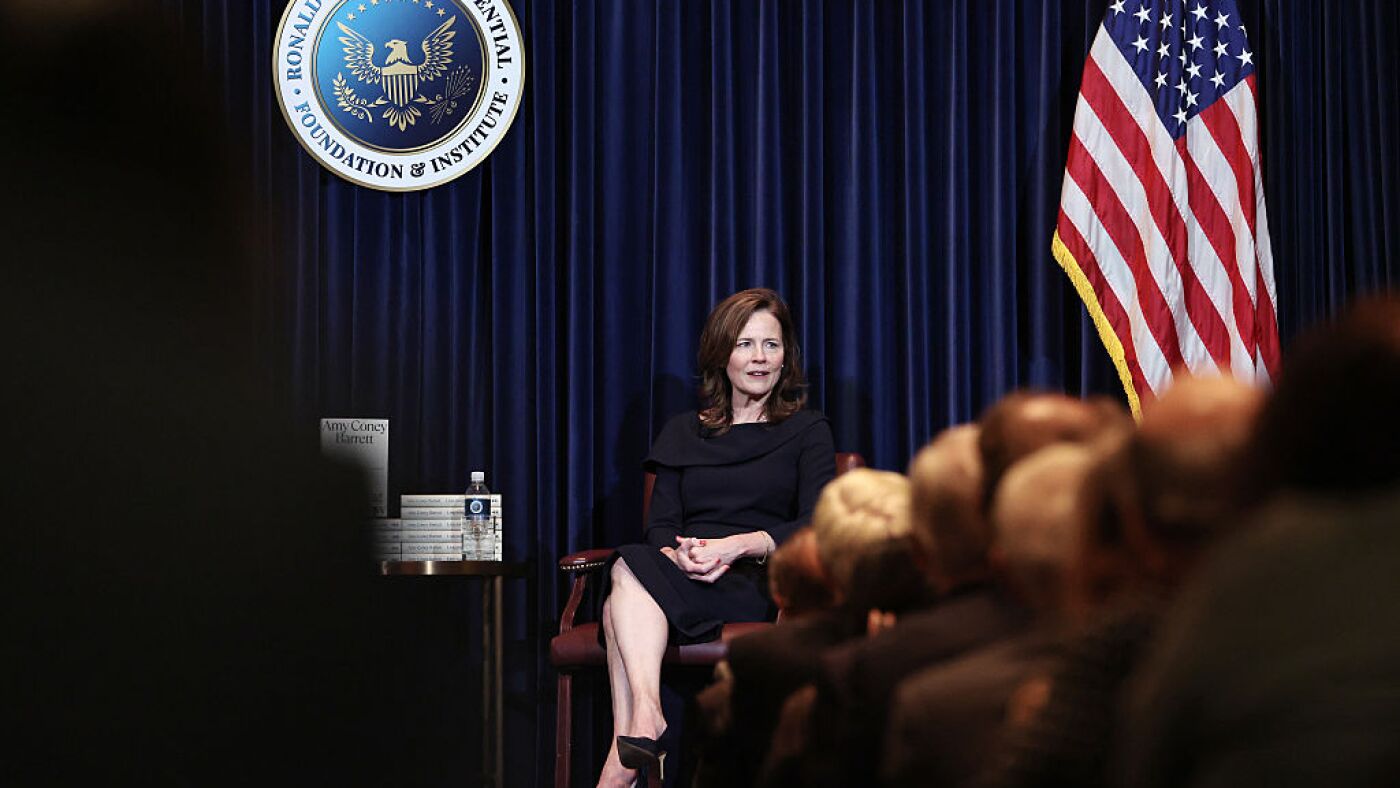
Supreme Court financial disclosures reveal how their books add to their income
-

 Los Angeles, Ca2 hours ago
Waymo video could determine charges after teens’ bizarre California ride

