Texas
Texas public health departments brace for another $119 million in federal cuts

:focal(2x204:2999x2000)/static.texastribune.org/media/files/f3fa10472cb075a4026d432b6d7537b7/0501%20Measles%20HHS%20Lab%20IPL%20TT%2035.jpg?ssl=1 "Texas public health departments brace for another 9 million in federal cuts")
Sign up for The Brief, The Texas Tribune’s daily newsletter that keeps readers up to speed on the most essential Texas news.
Texas officials have notified local public health departments to brace for another $119 million in federal cuts at the end of the month that could impact the state’s disease detection and prevention efforts, including for HIV, diabetes, vaccine outreach and emergency preparedness.
The news comes three months after the federal government notified Texas officials it was prematurely clawing back $700 million in unspent COVID pandemic funding, some of which was used to fight the spread of measles in West Texas.
With the state’s regular biennial legislative session ending less than two weeks ago, the Texas Department of State Health Services has lost its opportunity to ask the state for more money. Lawmakers left Austin increasing state funds to the agency by $86 million over the next two years, but it also expects to lose $685 million in federal funds due largely to the end of the COVID funds.
Imelda Garcia, chief deputy commissioner for the state health agency, made the disclosure on the latest potential cuts at the agency’s committee on public health funding and policy on Wednesday.
“We have staff checking the federal grant solution system every day, multiple times a day. We’ve made phone calls to our federal partners. However, we still don’t have any additional information at this time,” Garcia said.
Expiring at the end of June, the $119 million involves Centers for Disease Control and Prevention grants that trickle down to local public health departments. Among the potentially hardest hit would be:
Other programs facing cuts include those to address diabetes, cardiovascular disease, tuberculosis, tobacco use, wastewater testing and some public health-related school funding.
Garcia stressed that while none of the $119 million has been formally cut, Texas health officials have not yet received word that the funding would be renewed.
SUBSCRIBE NOW
“I wanted to put them on your radar in case there are additional delays that we may see in the coming weeks,” she said.
On May 30, Garcia notified health departments to pause HIV prevention and testing spending because the federal government hadn’t notified the state that it will be renewing funding for those services.
Local public health departments were also told this week at the meeting that there could be more cuts by the end of the year. This comes as Texas ranks among the worst in the country for public health funding.
“In a post-covid COVID world, in a world where we’ve got this measles outbreak and … you’re cutting immunizations, I mean, this just does not make any sense,” Dr. Philip Huang, director of the Dallas County Health and Human Services and the committee’s vice chair.
He said the cuts ran counter to the messaging from U.S. Health Secretary Robert F. Kennedy who has emphasized the federal agency should be focused on reducing the impact of chronic disease.
“You say your priorities are chronic disease, and you eliminate the whole Office on Smoking and Health and the FDA tobacco control program,” Huang said. “This doesn’t make sense at all.”
When the federal government abruptly cut off $700 million that the state had up until next year to spend, both state and local public health departments laid off employees. In May, the agency offered 63 employees transfers to other divisions and 32 employees were terminated. Of those laid off, 19 were fellows whose tenure ended a week early. Huang noted that he had to lay off more than 20 employees.
Amy Yeager, director of the Bell County Public Health District, noted that the day after she had to temporarily close the district’s health clinic in Temple, the city reported its first measles case involving an unvaccinated man.
Texas has been at the center of a historic measles outbreak that has infected close to 750 people statewide and even more across state and international borders. Two children have died and although the number of new cases have decreased in recent weeks, the state can’t consider the outbreak over until there are 42 days without a new infection.
Huang asked Garcia if the CDC could provide any leeway, perhaps, in light of the fact that Texas has been spending so many resources battling the measles outbreak.
“I think they’re sympathetic, but there’s so much going on,” Garcia said. “CDC doesn’t have a full time director as yet, so they are just having difficulty getting decisions made, is what we have heard.”
Big news: 20 more speakers join the TribFest lineup! New additions include Margaret Spellings, former U.S. secretary of education and CEO of the Bipartisan Policy Center; Michael Curry, former presiding bishop and primate of The Episcopal Church; Beto O’Rourke, former U.S. Representative, D-El Paso; Joe Lonsdale, entrepreneur, founder and managing partner at 8VC; and Katie Phang, journalist and trial lawyer.
Get tickets.
TribFest 2025 is presented by JPMorganChase.



Free Press staff writer Arpan Lobo breaks down the Elite Eight matchup between 1-seed Texas and 2-seed Michigan in the 2026 Women’s NCAA Tournament.
Fast facts
- Matchup: 1-seed Texas (34-3, 13-3, SEC) vs. 2-seed Michigan (28-6, 15-3 Big Ten); 2026 NCAA Tournament Fort Worth-3 regional final.
- Tipoff: 7 p.m., March 30; Dickies Arena, Fort Worth, Texas.
- TV: ESPN.
- Series: 1-0 Texas. The only other meeting between the two programs was in 2018, when Texas won, 69-52.
At stake: Winner advances to the Final Four in Phoenix on April 3-5.
Michigan women’s basketball: Meet the Wolverines
- Location: Ann Arbor.
- Coach: Kim Barnes Arico (311-150 over 14 seasons at U-M, 487-284 career).
- School tournament record: 15-13 in 13 appearances.
- Past 10 games: 9-1
- Scoring leaders: Olivia Olson, 19.2 points per game; Syla Swords 14.8; Mila Holloway, 12.4.
- Rebounding leaders: Olson, 6.2; Brooke Quarles Daniels, 5.2; Te’yala Delfosse, 4.6.
- Assist leaders: Holloway, 4.8; Quarles Daniels, 2.9; Olson, 2.5.
- 3-point leaders: McKenzie Mathurin, 40%; Macy Brown*, 36.1%; Holloway, 34.9%.
*Out for season.
The buzz: Michigan is back to the Elite Eight for only the second time in program history, with its only other appearance being a loss to Louisville in 2022. They’ve outclassed and outworked their first three opponents in the tournament, most recently overcoming an early deficit against Louisville to run away late in a 71-52 victory in the Sweet 16.
Even after slow shooting starts from stars Olson and Swords in their past two contests, the Wolverines have been able to break down their opponents by deploying constant pressure, picking up ballhandlers deep in their own backcourts. They force turnovers and create easy looks in transition. Olson, a third-team AP All-American, was big in the second half against both North Carolina State and Louisville, and has been Michigan’s leading scorer in the tournament.
Another factor aiding Michigan’s run? Outworking their opponents on the glass. Guard Brooke Quarles Daniels, at all of 5-foot-7, had a whopping seven offensive boards against Louisville. Michigan has won the rebounding battle in all three of its tournament games so far.
The Wolverines haven’t met an opponent like Texas yet, and particularly an individual force like Madison Booker.
Texas women’s basketball: Meet the Longhorns
- Location: Austin, Texas.
- Coach: Vic Schaefer (177-29 at Texas, 478-211 career).
- School tournament record: 58-36 in 38 appearances.
- Past 10 games: 10-0.
- Scoring leaders: Madison Booker, 19.3 points per game; Jordan Lee, 13.5; Kyla Oldacre, 10.4
- Rebounding leaders: Booker, 6.7; Oldacre, 6.1; Breya Cunningham, 5.6.
- Assist leaders: Rori Harmon, 6.1; Booker, 3.8; Lee, 2.5.
- 3-point leaders: Harmon, 45.8%; Bryanna Preston, 44.4%; 43.8%.
The buzz: After a dominating season, the Longhorns find themselves a win away from a second consecutive Final Four appearance. And the team’s biggest star is three-time All-American forward Madison Booker, who’s led the Longhorns in scoring on the way to another deep tournament run.
Booker is more than just a scorer, however, and is able to facilitate in half court. Although her 3-point field goal percentage has dipped compared to her sophomore season, she’s still able to provide spacing for Texas. Against Kentucky in the Elite Eight, she totaled 17 points, eight rebounds and five assists on the way to a 76-54 win for Texas that was never really in doubt.
Although the Longhorns have others with better percentages from deep, guard Jordan Lee is the team’s most willing outside shooter, hitting nearly 36% from range on more than three attempts a game.
Against Kentucky, Texas forced 24 Wildcat turnovers. The Longhorns boasted the third-best turnover margin in the country this season. Against a Michigan team that likes to bring pressure as well, the turnover battle could play a sizeable role in determining which program heads to Phoenix. The matchup represents a styles clash as well — the Wolverines are the eighth-best scoring offense in the country at 83.9 points per game, but Texas owns a top-15 scoring defense, limiting opponents to 56.4 points per game.
The contest is also taking place in Fort Worth, a much shorter trip from Austin than from Ann Arbor. The crowd is likely to be behind the Longhorns.
You can reach Arpan Lobo at alobo@freepress.com

No. 15 Texas A&M walked out of Austin with a hard‑earned win on Sunday, taking Game 3 of the rivalry series 9–7 to avoid the sweep in what felt every bit like a postseason matchup. The Aggies built an early lead, added crucial insurance late, and held off a furious seventh‑inning push from No. 1 Texas to snap the Longhorns’ nation‑leading win streak.
A&M once again struck first, continuing a trend from the entire weekend. Kennedy Powell’s speed immediately created pressure, turning a single into extra bases after a throwing error. Ariel Kowalewski followed with an RBI double, and Micaela Wark delivered a two‑run home run to give the Aggies a 3–0 advantage before Texas recorded its third out.
Advertisement
The Longhorns answered with a run in the bottom of the first, but KK Dement erased it with a solo shot in the second inning. A&M’s pitching and defense kept Texas quiet for the next three frames until a two‑run double trimmed the lead to 4–3.
With momentum shifting, the Aggies responded with their biggest inning of the series. Frankie Vrazel doubled, Powell doubled her home, and after a walk to Mya Perez, Kowalewski punched a two‑RBI single through the infield. Texas appeared ready to escape the inning, but consecutive defensive errors extended the frame and allowed three more Aggie runs to score, pushing the lead to 9–3 entering the seventh.
Texas refused to fold. The Longhorns put two on with no outs and pushed across a pair of runs, one on a sacrifice fly, another on a groundout. Down to their final out with no one on base, Texas launched back‑to‑back solo home runs to suddenly cut the deficit to two. Sydney Lessentine steadied the moment, inducing a pop‑up to the catcher to close out the win.
Across all three games, the rivalry delivered exactly what it promised. Intensity, high‑level softball, and postseason energy. While Texas claimed the series, the Aggies leave Austin with a top‑25 win, a snapped streak, and a performance that reinforced their ability to compete with anyone in the country.
No.15 Texas A&M will host the No. 7 Georgia Bulldogs in a three-game series starting on Thursday, April 2, at 6:00 p.m. CST. The game can be viewed on SEC Network+ and the ESPN App.
Advertisement
Contact/Follow us @AggiesWire on X and like our page on Facebook to follow ongoing coverage of Texas A&M news, notes, and opinions. Follow Jarrett Johnson on X: @whosnextsports1.
This article originally appeared on Aggies Wire: A&M’s sixth‑inning surge seals rivalry win in Austin to take Game 3

Voters deserve better than scorched-earth partisan politics that divide our country.
Getty Images
Not for us
In 35 years as a loyal Republican, I watched my party become unrecognizable. Now, Sen. John Cornyn’s transformation from principled conservative to full-throated Donald Trump sycophant is complete.
In the span of a week, Cornyn reversed his longstanding defense of the Senate filibuster, trying to appease Trump and secure his coveted endorsement. He also co-sponsored the SAVE America Act, which would force Texans to present passports or birth certificates that match their current surnames. Texas voters deserve better than scorched-earth partisan politics that divide our country and paralyze effective governance.
– Malcolm Jacobson, The Woodlands
Real fraud
I am sick and tired of hearing about voter fraud. There isn’t any to speak of, and what has been found was not perpetrated by people in the country illegally. Donald Trump has consistently claimed that there’s rampant fraud. Please show us your evidence, Mr. President. You can’t, because there is none, but people still believe him.
Please wake up to what this man is doing to our country.
– Zelda L Blalock, North Richland Hills
Death penalty
Texas is nearing its 600th execution since the death penalty was reinstated, with three already this year and three more scheduled. It should give us pause to know that four of the offenders are not white.
Legislators and district attorneys should step up, lock up the worst of the worst criminals and end the senseless barbaric practice of the state killing in our name.
– Bob Michael, Grapevine
What reason?
For more than 80 years, nuclear deterrence has kept the world safe from nuclear war, largely because of the power of the U.S. military, skilled diplomacy and moral leadership. Even hostile nations have understood the risks of nuclear engagement.
In just a few weeks, the United States’ war on Iran has cost billions, displaced millions and killed thousands of civilians, according to United Nations and Iranian officials. U.S. military stockpiles are degraded, energy prices are rising and the Iranian people are suffering increased repression.
The Iranian regime and military have been set back, but the country still has much enriched uranium and an even stronger incentive to develop nuclear weapons. It is difficult to understand the need for or benefits of this war.
– Karen Myers, Fort Worth
Oregon Lottery Pick 4 results for March 29

What you can do to lower your electric bill in Pennsylvania

This RI Garden Transforms Into a Fairy Wonderland

How to watch TCU vs. South Carolina women’s basketball Elite Eight: TV, streaming

Argus Leader First/Second Five: South Dakota’s best girls high school basketball players

Florida High School Football Rankings: Top 25 teams – Oct. 21

How old is Bo Nix? What to know about Oregon quarterback ahead of 2024 NFL Draft

Cleary's 21 help Le Moyne down Central Connecticut State 69-64 in OT

99th annual Pony Swim held in Virginia

Indiana Members Credit Union announced as new anchor tenant at Bottleworks District

Video: Iran to Allow More Oil Ships Through Strait of Hormuz, Trump Says

Dem senator warns deportation could let Virginia woman’s illegal immigrant killer ‘escape accountability’

Newsletter: G7 ministers to hold talks on war’s economic fallout
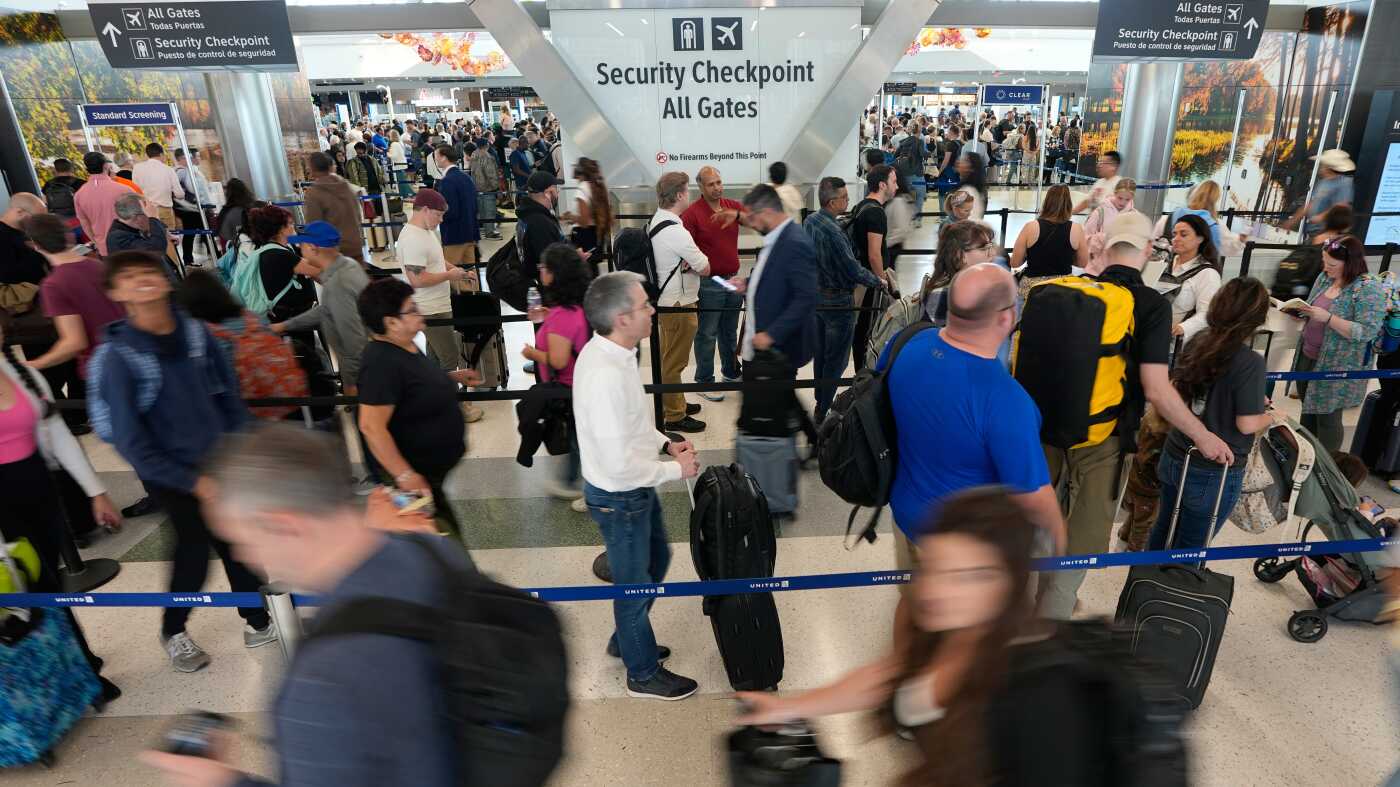
ICE officers could remain at airports after TSA workers are paid

Scathing report claims nation’s oldest labor union ‘betrayed’ MAGA members through ‘shocking’ spending
-

 Sports1 week ago
IOC addresses execution of 19-year-old Iranian wrestler Saleh Mohammadi
-

 Miami, FL4 days ago
Jannik Sinner’s Girlfriend Laila Hasanovic Stuns in Ab-Revealing Post Amid Miami Open
-

 New Mexico1 week ago
Clovis shooting leaves one dead, four injured
-

 Politics1 week ago
Schumer gambit fails as DHS shutdown hits 36 days and airport lines grow
-

 Tennessee7 days ago
Tennessee Police Investigating Alleged Assault Involving ‘Reacher’ Star Alan Ritchson
-

 Minneapolis, MN4 days ago
Boy who shielded classmate during school shooting receives Medal of Honor
-

 Science1 week ago
Record Heat Meets a Major Snow Drought Across the West
-

 Technology1 week ago
YouTube job scam text: How to spot it fast