Tennessee
Tennessee baseball made World Series history. How a Knox News photographer captured it all


The world was watching June 24 as Tennessee defeated Texas A&M to capture its first national title in the baseball program’s history. Behind the scenes and on the field, Knox News was tirelessly working to capture the biggest moments throughout the Vols’ quest for gold.
Brianna Paciorka, visual journalist at Knox News and producer of “The Scruffy Stuff” podcast, was in the middle of the action throughout the championship weekend. Her job: photograph history. The tireless work paid off with incredible shots that illustrate the excitement and emotions surrounding the Tennessee win.
Paciorka recently joined host Ryan Wilusz on “The Scruffy Stuff” to discuss how she approached this historical assignment, what was going through her head as the final game was winding down, and why seeing the confetti fall was also a career highlight for her.
Below, you’ll find an edited transcript of their discussion on “The Scruffy Stuff,” an award-winning podcast about downtown Knoxville with new episodes each Tuesday.
This episode is available in its entirety through the podcast player, below.
Keep up with “The Scruffy Stuff”: Apple | Spotify | iHeart
How Knox News captured Tennessee’s win at College World Series
Ryan Wilusz: What did you have to do to prepare for something like this?
Brianna Paciorka: I actually (hadn’t) been to Omaha before. But as I’ve said on other episodes, I’m from Louisiana. I graduated from LSU. LSU actually won the College World Series last year, so I totally understand how special Omaha is and the College World Series. … It was a wild trip. I didn’t find out that I was going until after they won the second game that first Sunday. So, it was like a mad dash to figure out what my travel plans were, packing up everything. … Of course, you don’t know how long you’re going to be there. You could be there for two games. I was there for five games. Having to pack enough clothes and all the items and then all of your camera equipment, which is very stressful − it was a lot.
Ryan: What was it like getting to be part of it in a way that other people don’t get to?
Brianna: They had where (the teams enter) into the stadium and the locker rooms kind of close to where the photo room was where we were editing photos. If we weren’t out there taking photos of them arriving on the buses, we could hear the teams arriving. They’d come in with a boombox, they’re playing loud hip-hop music. You could hear them getting all pumped up for the games. … There was a practice on Friday before the finals where both teams got some time on the actual field to practice. And it’s kind of fun to sit there and listen to the the type of music that they have playing during batting practice and seeing them laugh and have fun as they’re fielding balls and swinging their bats in the batting cage.
Ryan: What about any insights being around Tony Vitello?
Brianna: I noticed that a lot of the times that I photographed him the most were times where there were fans nearby, like him getting off of the bus or him after Game 3 and everything. And what really struck me is that he really did take time to acknowledge fans. He got off the bus, he threw up some fingers acknowledging the fans. He did go out of his way to try to fist-bump fans on the way into the stadium. After the (final game) … he walked out kind of close to the Tennessee bullpen. Some fans were yelling out to him, and some actually convinced him to take their cellphone and do some selfies and stuff.
Ryan: Baseball is a slow-paced game overall but fast-paced in the moment when a play is actually happening. I’m wondering, through your eyes, what you’re looking for … when you’re shooting a game like this, and anything that was going through your head when you’re taking these shots − with also the mindset that this is your job to document history. I don’t know if you think about that actively when you’re doing it. But how did you approach this?
Brianna: Leading up to the games, I get messages from various people above me who are like, “We need you to get certain kinds of photos because we’re planning on doing poster prints.” … There were things I knew I had to get. I’m also, admittedly, a very anxious person. So the whole time, at least on Monday, it was just trying to tell myself this is just like another game because otherwise I was going to psyche myself up, which was probably a good thing. Because if you watched that last inning of the game on (June 24), going into that last inning it was like, “Yeah, they’re gonna win, they’re gonna win.” And then all of a sudden it was like, “Uhh maybe not.” So it was a lot of just like, “Oh my gosh, do I have to change my plan and everything?”
Having some knowledge for baseball helps to get the actual game photos. But also, Tennessee is a very emotional team. They show a lot of emotion. So, it’s a lot of not only just sitting there and taking photos of the action, but just keep taking photos as things happen because they are going to celebrate in some way in doing that. And that’s where the best photos are.
Ryan: What was your favorite moment you were able to capture while you were out there?
Brianna: Three come to mind immediately if I could give three. The first one, it was actually our front-page photo on (June 24). It’s the photo of Christian Moore hugging Dylan Dreiling at home plate after Dreiling hit that two-run home run that basically secured the win on (June 23). That was probably one of them. I knew going into the game that I needed to get a front-page, poster print, vertical photo. And as soon as … I got that photo and I realized it was in focus − there were no ESPN cameras in my way or anything … I immediately texted Saul Young, who was catching my photos here in Knoxville, and I was like: “This is our poster photo. This is what’s going on the front page.”
Ryan: Not only did I see the excitement of that moment, but I also saw the exhaustion.
Brianna: Christian Moore looks very relieved and very just like, “Oh my gosh, we did it.” …
Another one I really loved, I took a photo − it’s a wider shot. It has the players at the bottom, and you see the confetti at the top. And right in the middle, you see Drew Beam, and he’s looking up and his hand is up in the sky like he’s trying to catch confetti. And then you just see all these smiling faces. And I really love that photo.
And then I guess my third one would probably be, and it was in our special section … you open it up, and it’s a double-page photo. And it’s of the team sitting on the ground. You see the confetti on the ground. They’re all watching highlights playing on the scoreboard. And you see the stadium, it says, “Charles Schwab Field Omaha.” You see some of the names of the fellow Omaha teams, and everyone’s smiling and they’re holding their individual trophies. It’s not like a showy piece, but you can see … it’s like that first moment that they’ve really got to just sit down as a team and get to actually see the highlights of their trip in Omaha. … It looks beautiful blown up.
Ryan: Anything else you can do to pull back the curtain for behind-the-scenes highlights from your trip?
Brianna: If you are a baseball fan and you have the chance to go to Omaha, you have to go. It’s a beautiful stadium. One of the highlights, best parts − and honestly a career highlight for me − was during Game 1 of the final series. I know it was a loss, but there was the most beautiful sunset for that game. Skies were just like a beautiful shade of blue and pink, and the lights were on the field. They always talk about how baseball is just like the most beautiful sport. That night was just like unbelievably magical in that moment. …
The whole city embraces the College World Series. There was a coffee shop that Mike (Wilson) and I went to almost every single day. And once the finals came around and it was Tennessee and Texas A&M, their tip jar was like, “Who do you think is going to win?” with the logos of both teams. Anywhere we went, people were talking about the College World Series. They were selling special items for it. I bought a shirt that says, “The best baseball is in Omaha.”
Ryan: We cover a lot of things (as journalists). And sometimes, things that seem very exciting to the average person may seem a little bit more routine to us just because you’ve shot games before, you’ve written stories before, gone behind the scenes before. Did you feel anything different inside of you?
Brianna: It kind of felt like an out-of-body experience. Because I’m in that work mode … but also realizing that Rick Barnes was on the field and Josh Heupel was there and Peyton Manning was there, and they’re all excited. And you see all the players are excited. The fans are going crazy. In the moment, I was definitely aware that it was a big deal. There’s a picture of me where I just have confetti all over my legs from kneeling on the ground and taking photos.
But afterward when you’re sitting in that photo room editing photos and you just realize: “Wow. We’re going to have front pages that are going to be sold out. People are going to want this.” And then just getting random comments from people saying how great the photos are. And just kind of realizing that yeah it’s sports, but at the same time this is a big moment in Tennessee sports history and for Knoxville. …
Just seeing the response from people and realizing how much people enjoy my photos and realizing that, yes I did do a really good job − that feels really good. I’m getting a little emotional thinking about it. I’m not a Tennessee fan. So, at the end of the day, it doesn’t really mean as much to me as other people. But knowing that fans think I did a really good job means a lot, more so than my own bosses saying stuff.
Ryan Wilusz is a downtown growth and development reporter. Phone 865-317-5138. Email ryan.wilusz@knoxnews.com. Instagram @knoxscruff.
Support strong local journalism by subscribing at knoxnews.com/subscribe.



The 2025-26 college basketball season will conclude Monday with a national championship game between Michigan and UConn at Lucas Oil Stadium in Indianapolis, Indiana. Tipoff is slated for 8:50 p.m. EDT (TBS).
Tennessee advanced to its third consecutive NCAA Tournament Elite Eight in 2026.
The NCAA transfer portal will open Tuesday after the national title game.
Tennessee freshman guard Clarence Massamba plans to enter the NCAA transfer portal, according to Joe Tipton of On3.
“Tennessee guard Clarence Massamba plans to enter the NCAA transfer portal, Joe Tipton reports,” On3 announced Monday.
Three players from Tennessee’s 2025-2026 roster are graduating: point guard Ja’Kobi Gillespie, shooting guard Amaree Abram and center Felix Okpara. Tennessee has three commitments in its 2026 basketball recruiting class: small forward Ralph Scott, power forward Manny Green and point guard Marquis Clark.
Former Belmont shooting guard Tyler Lundblade committed to the Vols on April 1. Power forward Cade Phillips was the first member of Tennessee’s 2025-2026 basketball team to declare his entry into the transfer portal on Friday.
Follow Vols Wire on Facebook and X (formerly Twitter).

Dave Burge slept in his truck overnight in frigid weather for a dental appointment.
Burge needed dentures, but was unable to afford them. He was one of more than 1,200 patients, some of whom waited in line for days, to get a free appointment at a Remote Area Medical pop-up clinic in Knoxville, Tennessee. RAM provides medical, dental and vision care to uninsured and underinsured Americans around the country.
“When they hand you your life back, that’s life changing,” Burge said. “That’s what teeth mean to me. I could be a normal human again.”
The people who need help
Burge already spent around $140,000 on medical bills after an uninsured drunk driver ran a red light and nearly killed him in 2012, he said. Then, one day, a construction accident while at work wrecked his teeth again.
“By then I was pretty thin on money to do much about it. So I didn’t have a lot of choices. I just kept working.”
Sandra Tallent, who drove more than 200 miles from Alabama and spent two nights sleeping in her car for a dental appointment with RAM, said she would also be unable to afford dentures if not for the free clinic.
Health care is a major cost across the U.S., and one many cannot afford. About a third of Americans say they’ve skipped meals, borrowed money or cut back on utilities to pay for health care, according to a March Gallup poll.
And while the Trump administration has lowered prices on more than 50 drugs, it has also let premiums rise in the Affordable Care Act marketplace, and made the biggest cuts ever under Medicaid. Around 3 million people have lost insurance under the Trump administration, according to government data, and it’s estimated up to 10 million could lose insurance in the next three years.
About half of the patients at RAM clinics have no insurance. The rest have insurance they can’t afford to use because of co-pays and deductibles – or they can’t find a provider who will take their insurance.
According to RAM CEO Chris Hall, approximately 60% of patients need dental care. About 30% request eye exams and glasses, with around 5% asking for medical care. There’s also screenings for blood sugar, blood pressure, breast cancer, skin cancer and more.
The volunteers helping
RAM, which got its start decades ago parachuting doctors into South American jungles, today operates clinics nearly every weekend around the U.S.
“Nobody here that’s working or volunteering today is going to judge any person that comes through that door. We are here to help,” Brad Sands, a former paramedic who coordinates RAM clinics, said.

There were 887 volunteers at the Knoxville weekend. Medical professionals pay their own way to come and bring medical students with them.
“I’ve said it a million times, if you ever lose faith in humanity, go spend ten minutes at a RAM clinic. You’re going to see hundreds of people there that are donating their time,” Sands said. “They’re coming out and they’re donating large swaths of their own money, slash time, to help their neighbors.
Dr. Glen Goldstein, a New Jersey dentist, started volunteering with RAM after seeing a 60 Minutes report in 2008 on the organization.
“And as soon as your segment was over, about this organization, I immediately went online, looked it up and registered down here,” he said.
In the years since, volunteering with RAM has become a regular event in his family, with his wife, his children and his daughter-in-law volunteering as well.
Goldstein said he sees patients who’ve suffered without health care, and who have no hope for the future. He’s had young patients who’ve asked him to remove all their teeth, because they don’t have money to get them fixed.
“And it’s heartbreaking to take all the teeth out,” Golden said. “It’s terrible.”
RAM operations
Depending on the size of the clinic, RAM will spend between $100,000 and $500,000 over a weekend. The money comes from donations, Hall, the CEO, said.
“Over 81% of our supporters are individual donors, people that write $5, $10, $20 checks every month,” Hall said.
RAM also gets supplies and clinic space donated.

The charity got its start under the late Stan Brock, an eccentric Englishman, who was a cowboy in the Amazon, a pilot, and later one of the stars of TV’s “Wild Kingdom.” When 60 Minutes met Brock in 2008, he was 73, had no family, took no salary, lived in an office he donated to RAM, and showered with a garden hose.
At the time, he was staging 12 clinics a year. After the broadcast, $4 million in donations poured in, along with thousands more volunteers. RAM now runs 90 clinics a year.
RAM has now treated more than a million patients since its start, thanks to more than a quarter-million volunteers.
Across the Knoxville weekend, RAM provided over a million dollars in medical care, at no cost to the patients. RAM volunteers treated 1,224 patients, made 588 pairs of glasses, pulled 1,467 teeth, filled 283 cavities, did 342 dental cleanings and conducted 247 medical exams.
And then there were the denture patients, including Dave Burge and Sandra Tallent.
At the Knoxville clinic, there was a trailer where 3D printers were used to make and print dentures. Connor Gibson, the 22-year-old engineer who helped build it, has slept in the trailer to keep the printers running nonstop. He’s inspired by something he calls the mirror moment: when a patient with a new set of dentures sees themselves in the mirror.
“You just see all that stress melt away. And no matter if they’re 18 or 80, we see grown men cry sitting in the chair,” Gibson said.
Burge and Tallent, with their new sets of dentures, both smiled when they had their mirror moments.
“I don’t know what I’d do [without RAM,]” Tallent said. “You know, the Lord would make a way. But I feel like he has made a way through RAM.”

When New Orleans-native Sami Khan co-founded a mobile game seven years ago, he could’ve never imagined it would land him and three New Yorkers on a farm in Thompson’s Station.
Atlas: Earth is a mobile metaverse game that allows players to buy virtual real estate, which mimics the real world, to earn and cash out rewards.
“ We started thinking about building entertaining content that can help mobilize our community and include them in more ways to earn/win money,” Khan said. “So our next task was how can we get our community to earn even more money and tie it into something entertaining that the rest of the community will wanna watch?”
The result, a YouTube game show called “Cashtronaut.” With the success of “Squid Game” and creators like Mr. Beast, game shows where you complete a variety of tasks for money are all the rage on social media.
When they originally began to plan for this “fish out of water” concept of having people from large cities live in rural or semi-rural areas, they chose to have people from Los Angeles, New York and Miami.
Khan and his group landed on only New Yorkers solely by chance.
“ The original idea was to find somebody in Miami and Los Angeles and New York but around that time we actually got the opportunity to have an ad in Times Square,” he said. “It was at that moment that we were like, wait a second. If we’re gonna have an ad in Times Square, why don’t we use three New Yorkers?”
From then, they completely shifted their original plan, and several months later they ended up on the Whispering Willows Farm in Thompson’s Station.
“ We were very excited and thought it would be a lot of fun,” said Jen Wilson, the co-owner of Whispering Willows Farm and Dairy. “ This is not the first time that we’ve done videotaping but we just really enjoy it.”
Besides a background in agriculture, Wilson also is a research scientist with degrees in biology and physics. She and her husband are also foster parents, and the space of the farm allows their children to gain new skills while relying on the animals as a sort of therapy.
“We’ve been foster parents for over 20 years, and as we grew older, we realized that having animals was really helpful for the foster kids,” she said. “So we ended up with a garage full of rabbits and then decided we needed to move. We got a farm and then just kind of grew from there.”
Upon arrival, the contestants were dropped straight into Thompson’s Station and forced to adapt quickly as they took on a series of hands-on challenges far removed from their city comfort zones.
The three Manhattan-based contestants from different walks of life included a DoorDash driver, fashion designer and lifestyle content creator.
They took part in challenges such as milking a cow in below-freezing temperatures, searching a potato field to locate potatoes marked with each contestant’s initials, and navigating a tractor through a timed obstacle course.
The episode also culminated in a high-energy farm race featuring an egg relay, crawling through mud, lassoing, and leading a sheep up a hill to the finish line. After a tightly contested final push, Courtney Moore, the content creator, emerged victorious, taking home the $10,000 grand prize.
“I had absolutely no idea what I was getting myself into, and that’s what made it so fun,” she said. “Going from Manhattan life straight into farm challenges was wild, exhausting, and honestly empowering. Winning the $10,000 was incredible, but the experience itself was unforgettable.”
In addition to awarding the cash prize, Cashtranaut donated $5,000 directly to the Thompson’s Station farm as a thank you for hosting and supporting the production.
“ Our dream is to build a learning barn where kids and adults could come learn about agriculture as well as some other things,” Wilson added. “I’ve homeschooled my biological children but it’s hard to teach biology without a lab. We would love to create a space where we could host homeschool lab classes for other students where we could do dissections and learn various skills.”
As with any challenge, Khan explained although earning money is a big part of it, they aim to educate the players and viewers.
“ If you watch the New Orleans episode where, you know, teaching people about the Napoleon House and a little bit about the history of the French Quarter,” he said. “These houses in the French Quarter were also slave quarters, and we’re trying to educate in a way where it’s not like preachy or aggressive. We’re just showing people what happened here.”
Their next challenge will take place at a public school in Seattle.
“ We’re making a video where we allow the school to earn up to $20,000 of fundraising,” he said. “We’re realizing that we can actually use these videos to educate a bit more about things like the lack of public school funding. So it’s a full loop because although we are creating content and making money, we are also giving it back.”
You can follow and learn more about Cashtronaut’s challenges on their YouTube page, www.youtube.com/channel/UCdXRY4jVYEmXaPfWskicV8A. Additional information about Whispering Willows Farm can be found at wwfarmanddairy.com/.

School Bus Driver Arrested, Local Officials Take Action: CT News

Vote for Week 1 Delaware High School Team of the Week

Lawsuit claims Florida doctor used ‘mentally ill’ woman as surrogate

Falcons address biggest hole with Georgia prospect in new mock draft

Traditional Treasures: A Brief History of Hawaiian Heirloom Jewelry

Florida High School Football Rankings: Top 25 teams – Oct. 21

How old is Bo Nix? What to know about Oregon quarterback ahead of 2024 NFL Draft

Cleary's 21 help Le Moyne down Central Connecticut State 69-64 in OT

99th annual Pony Swim held in Virginia

Indiana Members Credit Union announced as new anchor tenant at Bottleworks District

GOP races to pass ICE, Border Patrol funding bill as priorities pile up, divisions emerge
Jet fuel crisis: Rationing triggered at four airports in Italy
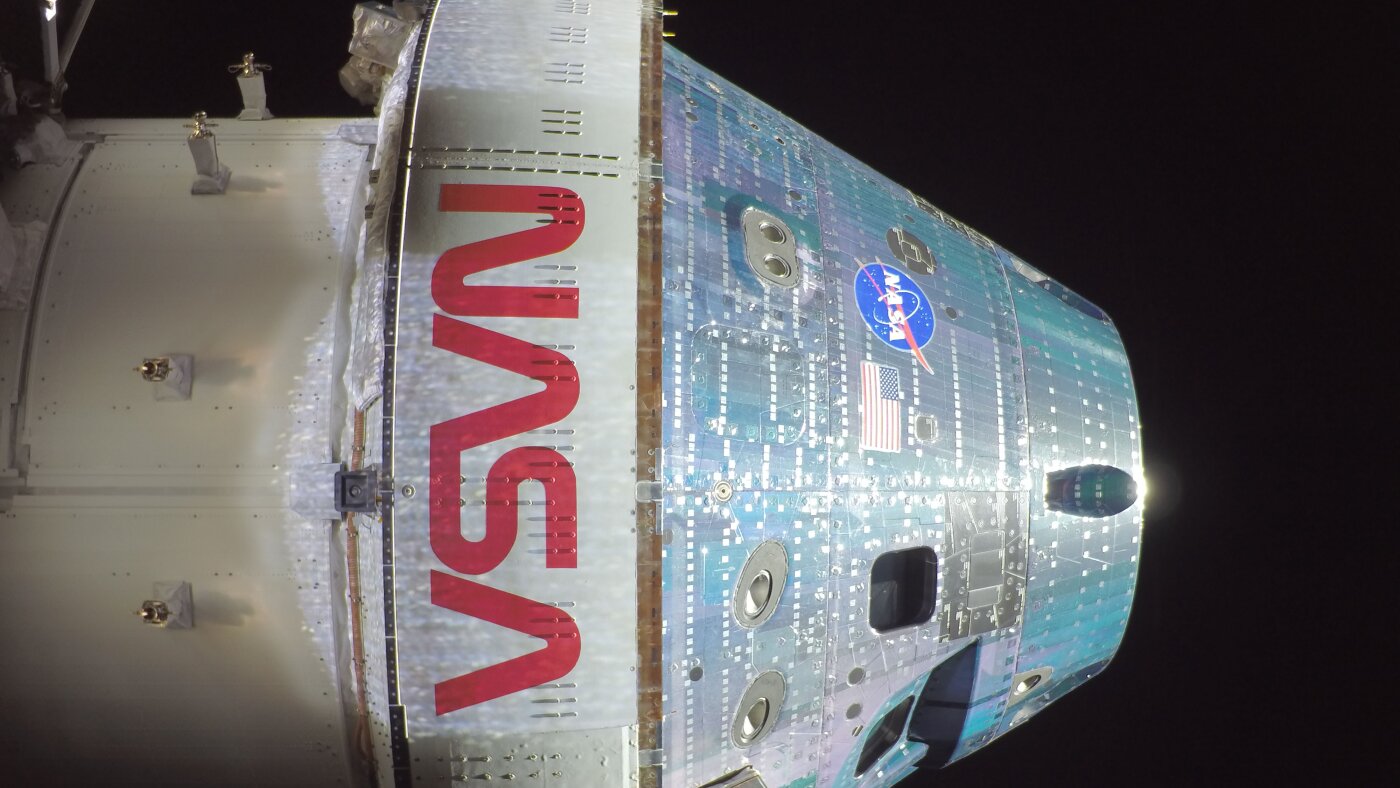
NASA’s Artemis II crew readies for Monday’s lunar flyby. Here’s what you need to know

Tax day is next week: Avoid these 5 common mistakes that can cost you money

Hamas armed wing says disarmament demands not acceptable
-

 South-Carolina1 week ago
South Carolina vs TCU predictions for Elite Eight game in March Madness
-

 Atlanta, GA1 day ago
1 teenage girl killed, another injured in shooting at Piedmont Park, police say
-

 Vermont1 week ago
Skier dies after fall at Sugarbush Resort
-

 Movie Reviews4 days ago
Vaazha 2 first half review: Hashir anchors a lively, chaos-filled teen tale
-

 Politics1 week ago
Trump’s Ballroom Design Has Barely Been Scrutinized
-
 Entertainment4 days ago
Inside Ye’s first comeback show at SoFi Stadium
-

 Atlanta, GA1 week ago
Fetishist ‘No Kings’ protester in mask drags ‘Trump’ and ‘JD Vance’ behind her wheelchair
-

 Politics1 week ago
JD Vance says he was ‘obsessed’ with UFOs, believes aliens are actually ‘demons’