Tennessee
A look at what Tennessee lawmakers accomplished during the 2025 Special Session


NASHVILLE, Tenn. (WTVF) — Many Tennessee lawmakers returned home to their districts Friday, after this week’s Special Session came to close. In all, Tennessee leaders passed more than a billion dollars in new programs and projects.
On Monday, before a single bill was even considered, young people in Tennessee flooded the capitol and the gallery, hoping lawmakers would focus on school safety. “What do we want? Gun control! When do we want it? Now!” echoed around the marble hallways of the capitol.
Gov. Bill Lee’s call for a special session couldn’t be amended on short notice, so instead, lawmakers focused on Hurricane Helene relief for East Tennessee and controversial bills involving illegal immigration enforcement and school voucher expansion.
Special session rules meant that bills, typically debated over several weeks, went to different committees in a matter of hours. Republican committee chairs had zero tolerance if they thought members of the public were disrupting proceedings. “The first four ladies, yessir, from there over — have all been snapping and being disruptive,” said Rep. Chris Todd, R-Jackson, during a Wednesday committee hearing on immigration.
Three women were forcibly removed from the room, carried by Tennessee State Troopers. They included Michelle Flynn, a grandmother, who claimed it was all a big misunderstanding. “We hadn’t said anything, we hadn’t broken any rules,” Flynn told NewsChannel 5.
School Vouchers
The Tennessee House and Senate voted to provide school vouchers to families in all 95 counties in the state.
The vote was 54-44, with some Republicans breaking from the supermajority on this issue.
State senators approved the measure a couple of hours later. It passed in the Senate by a vote of 20-13, with some Republicans voting against it like their colleagues in the House.
HB 6004 provides the framework for how public tax dollars would fund tuition expenses for students who want to attend private school. House Majority Leader William Lamberth and Sen. Jack Johnson are the bill’s primary sponsors for the Education Freedom Act of 2025. The bill included the layout for the vouchers, a one-time bonus for public school teachers and maintenance money for public school buildings across the state.
The bill sailed through four committees in seven hours this week. On Thursday, lawmakers spent hours debating the bill.
During that debate, House Speaker Cameron Sexton warned the gallery once about their noise level during the lawmaker discussion. He threatened to throw every audience member out of the House if it happened again.
Republicans argued this bill would provide school choice to many parents across the state. The baseline voucher amount is $7,000. The state wants to offer 20,000 students the opportunity to take part in the voucher program during the next school year. Republicans said the state can do both: both provide money for public schools and fund the voucher system.
“We will never go backward on public education,” Lamberth said. “I would hope each and every member would be for that. I know it’s a passionate issue for so many in this room and Tennessee. For the first time ever, we can fully support funding schools. I look forward to the regular session so every single kid in this state can have a fantastic education in this state.
Only one Republican tried to amend the bill, and that was to ensure that students with disabilities weren’t discriminated against. The House voted that down.
Democrats argued that the $7,000 wouldn’t cover the expenses of going to private school and it would hurt rural and urban students. They also filed more than 20 amendments to try to change the wording of the bill. All of their efforts failed.
“This is welfare for the wealthy,” said Rep. John Ray Clemmons, House Democratic Caucus Chair from Nashville. “We are going to blow a hole in our state budget voluntarily for wealthy people.”
Gov. Bill Lee had to face jeers from the public on the way to his news conference, following the conclusion of the special session, with demonstrators chanting “voucher scam” and waving $7,000 with his face on them. Even still, he couldn’t contain his excitement for passing school choice. “It is, in fact, a momentous day for students and for teachers and for parents across Tennessee,” said Lee Thursday.
For more on the school voucher debate, you can read more here.
Illegal Immigration Enforcement
The Tennessee Republican supermajority passed in both chambers an immigration bill that would create a border czar, an enforcement division and new state IDs for non-citizens.
House members voted on party lines after an impassioned debate on Thursday afternoon that lasted more than an hour during the special session.
The Senate already passed the bill on Wednesday. Democrats were staunchly against the bill.
The bill creates an Immigration Enforcement Division within the Tennessee Department of Safety, overseen by a Chief Immigration Enforcement Officer appointed by Gov. Lee.
This would in effect create a Tennessee border czar to serve as a federal liaison with the Trump administration and U.S. Immigration Customs and Enforcement. It would allow an agreement between the state and the United States Attorney General concerning the enforcement of federal immigration laws, detention and removals, and investigations in the state. That is known as the 287 G agreement.
The department would only last during the Trump administration. Per the bill, it would “sunset” or stop at the end of the Trump administration. Legislators would have to renew the department if they want it to continue after 2028.
As written, the new division would only employ four people, including the border czar who is scheduled to make $231,401.
The department itself will cost the state around $1.4 million each year, according to the fiscal note.
The bill would also allow for state grant funds to encourage local law enforcement to also complete 287 G agreements. Local agencies aren’t required to participate.
However, the bill’s language would not require city councils and county commissions to approve the participation.
That would cost the state $5 million in the budget for this upcoming year. It’s not clear what that amount will be in future years.
By state law, Tennessee doesn’t allow for sanctuary cities to begin with. However, the bill would allow the Tennessee Attorney General to remove elected leaders who violate Tennessee’s existing ban. This became a point of contention during the House Finance Committee hearing. “This should not be illegal or felonious to cast a vote as an elected official,” said Rep. Antonio Parkinson, a Memphis Democrat.
“Voting to establish a sanctuary city is just that, we’re not going to have that in the state of Tennessee,” replied Rep. William Lamberth, a Portland Republican.
Sanctuary cities are already banned under Tennessee law.
The bill outlined that only American citizens or lawful residents would be allowed a Tennessee ID.
Additionally, there will be a new marker on licenses for those who aren’t citizens. Lawmakers said that is being done to prevent non-U.S. citizens from registering to vote.
Lawmakers didn’t indicate how big of a problem this was within in the state, but this summer the Secretary of State’s office caused a stir when it requested 14,375 registered voters to provide proof of citizenship this summer before the 2024 election. The office later said they wouldn’t kick voters off the rolls if they didn’t respond.
At the time, the Secretary of State’s office said it compared Tennessee’s voter roles with data from the state Department of Safety and Homeland Security — the department that issues driver’s licenses. Residents — who were American citizens — complained to NewsChannel 5 at the time they received the letter, particularly after they had been U.S. citizens for more than a decade.
The new law would also require proof of citizenship for renewal of licenses.
If you’d like to read more about the immigration enforcement bill, tap here.
Aid for East Tennessee
Lawmakers also approved millions of dollars in aid to East Tennessee, following the devastation brought by Hurricane Helene last year. Here’s a breakdown of what impacted counties can expect:
- $240 million to bolster Tennessee’s existing disaster relief fund, as well as reduce the local cost-share burden from 12.5% to 5% and fund the state match requirement in order to access federal funds and cover administrative costs.
- $110 million to establish a new fund that will help local governments manage loan interest for recovery costs by covering interest costs at 5% per year for three years on loans for recovery expenses.
- $100 million to create a new program inspired by the HEAL Program that will provide flexible financial resources for future emergencies, including agricultural recovery, unemployment assistance, and business recovery efforts. The HEAL program provided impacted counties $65 million for debris removal and $35 million for clean water recovery efforts. The funds will be loaned to federally declared disaster counties with a zero percent interest rate.
- $20 million for the rebuilding of Hampton High School in Carter County, which was destroyed in Hurricane Helene.
What’s next?
School safety measures were not a part of Lee’s special session call. But in the wake of the Antioch High School shooting, many in attendance wanted it to be included. Per state law, the topic couldn’t be added. However, NewsChannel 5 asked the Governor about the topic following the special session.
“We will continue to look at ways to make our school safer. We’ve done that for years, we’ll continue to do that,” said Lee, in response.
Democrats also expressed eagerness to address this with legislation, when lawmakers return for the regular legislative session in February.
Do you have more information about this story? You can email us at Chris.Davis@NewsChannel5.com or Emily.West@NewsChannel5.com.
After years of hearing ‘no,’ this Lipscomb player finally heard a ‘yes’
In this time of NIL deals and transfer portals, this is a refreshing story about the best of college athletics. A must watch for all young athletes with big dreams. I already showed my boys, and I can tell you Jack has some new fans!
-Carrie Sharp



The Tennessee Lottery offers several draw games for those aiming to win big.
Here’s a look at July 13, 2026, results for each game:
Winning Powerball numbers from July 13 drawing
05-25-36-40-48, Powerball: 03, Power Play: 2
Check Powerball payouts and previous drawings here.
Winning Lotto America numbers from July 13 drawing
06-07-24-29-51, Star Ball: 04, ASB: 02
Check Lotto America payouts and previous drawings here.
Winning Cash 3 numbers from July 13 drawing
Morning: 2-1-5, Wild: 0
Midday: 9-7-0, Wild: 7
Evening: 3-0-2, Wild: 0
Check Cash 3 payouts and previous drawings here.
Winning Cash 4 numbers from July 13 drawing
Morning: 3-9-1-4, Wild: 1
Midday: 2-1-2-3, Wild: 2
Evening: 1-8-7-5, Wild: 9
Check Cash 4 payouts and previous drawings here.
Winning Daily Tennessee Jackpot numbers from July 13 drawing
13-17-20-22-31
Check Daily Tennessee Jackpot payouts and previous drawings here.
Winning Tennessee Cash numbers from July 13 drawing
10-26-29-32-34, Bonus: 04
Check Tennessee Cash payouts and previous drawings here.
Winning Powerball Double Play numbers from July 13 drawing
01-17-31-39-43, Powerball: 22
Check Powerball Double Play payouts and previous drawings here.
Winning Millionaire for Life numbers from July 13 drawing
19-36-38-43-48, Bonus: 03
Check Millionaire for Life payouts and previous drawings here.
Feeling lucky? Explore the latest lottery news & results
Are you a winner? Here’s how to claim your lottery prize
All Tennessee Lottery retailers will redeem prizes up to $599.
For prizes over $599, winners can submit winning tickets through the mail or in person at Tennessee Lottery offices. By mail, send a winner claim form, winning lottery ticket, a copy of a government-issued ID and proof of social security number to P.O. Box 290636, Nashville, TN 37229. Prize claims less than $600 do not require a claim form. Please include contact information on prizes claimed by mail in the event we need to contact you.
To submit in person, sign the back of your ticket, fill out a winner claim form and deliver the form, along with the ticket and government-issued ID and proof of social security number to any of these locations:
Nashville Headquarters & Claim Center: 26 Century Blvd., Nashville, TN 37214, 615-254-4946 in the (615) and (629) area, 901-466-4946 in the (901) area, 865-512-4946 in the (865) area, 423-939-7529 in the (423) area or 1-877-786-7529 (all other areas in Tennessee). Outside Tennessee, dial 615-254-4946. Hours: 9 a.m. to 4 p.m. Monday through Friday. This office can cash prizes of any amount.
Knoxville District Office: Cedar Springs Shopping Center, 9298 Kingston Pike, Knoxville, TN 37922, (865) 251-1900. Hours: 9 a.m. to 4 p.m. Monday through Friday. This office can cash prizes up to $199,999.
Chattanooga District Office: 2020 Gunbarrel Rd., Suite 106, Chattanooga, TN 37421, (423) 308-3610. Hours: 9 a.m. to 4 p.m. Monday through Friday. This office can cash prizes up to $199,999.
Memphis District Office: Chiles Plaza, 7424 U.S. Highway 64, Suite 104, Memphis, TN 38133, (901) 322-8520. Hours: 9 a.m. to 4 p.m. Monday through Friday. This office can cash prizes up to $199,999.
Check previous winning numbers and payouts at https://tnlottery.com/.
When are the Tennessee Lottery drawings held?
- Powerball: 9:59 p.m. CT Monday, Wednesday, and Saturday.
- Mega Millions: 10:00 p.m. CT Tuesday and Friday.
- Cash 3, 4: Daily at 9:28 a.m. (Morning) and 12:28 p.m. CT (Midday), except for Sunday. Evening game daily, seven days a week, at 6:28 p.m. CT.
- Daily Tennessee Jackpot: 9:00 p.m. CT daily.
- Tennessee Cash: 10:34 p.m. CT Monday, Wednesday, and Friday.
- Powerball Double Play: 10:30 p.m. CT Monday, Wednesday and Saturday.
- Millionaire for Life: 10:15 p.m. CT daily.
This results page was generated automatically using information from TinBu and a template written and reviewed by a Tennessean editor. You can send feedback using this form.
Tennessee
Everything Tennessee Basketball Assistant Coach Gregg Polinsky Said During Summer Practice | Rocky Top Insider


Tennessee basketball is holding summer practices in anticipation for the 2026-27 season. With so many new faces on campus, it’s a critical portion of the offseason as transfers and freshmen get to know each other.
Ahead of Monday’s practice, assistant coach Gregg Polinsky met with the media. He talked about the freshman class, transfer point guard Terrence Hill Jr., returning forward DeWayne Brown II and more.
Here’s what he said.
More From RTI: Game Time Set For Tennessee Basketball’s Matchup Against Bishop Boswell’s New Team
On what he’s seen from the freshmen
“I think it’s been a good blend of guys all from different places, obviously, but we like all those guys. They seem to have the kind of personality types that they want to learn. They want to get better. I think they’re enjoying each other’s company. It’s been good because we’ve kind of been isolated while they redid the other dorms, so they all stayed together. I think it’s called Brown Hall, I believe. And so I think that’s been good, develop a bond, be around these older guys, too, but I think the freshmen have enjoyed each other.”
On freshman Ralph Scott’s growth week to week
“Let’s not just go week to week. When I first saw Ralph Scott, he looked about like me. That’s not funny? Alright, I’ll keep going. Meaning that he needed a little muscle mass. And even though Ralph is still lean, he’s put on about 20, 25 pounds. He looks so much different than this time a year ago. And we saw the potential, but we also knew, much like Nate Ament, I was just talking about that with a friend of mine with the Bucks, and they realized, he’s got to get stronger, etc. Guys being able to play up into him. I think the same thing with Ralph. More than that, with Ralph, it was a mentality of, you got to remember, he was in Bermuda. His grandfather did a great job coaching him over there, but he realized he had to be here. IMG, or not IMG, but in the States for three years, last two years with IMG. Ralph was always a guy who deferred to other people. And I think what our message has been to him is, you gotta think that you’re one of the guys. This deferring stuff is over. You are talented, start to play to your ability.”
On what Scott’s ability is
“He’s got a high ceiling. Like, he’s six-nine probably without shoes. Seven-two wingspan. His frame is great, you know? Looking at him, he’s gonna be able to add more muscle mass. He shoots it pretty well. It’s not as consistent as we’d like. Coach (Rick Barnes) started working with him on a high release, and he picked it up really quick. So you add that to his size, his skill set. He’s an athlete to go with it. He just doesn’t know how good he could be in any context of the game yet. So I think the ceiling’s high for him.”
On evaluating high-potential freshmen when players transfer so often
“Yeah, I think that’s a great question. I wouldn’t do the comparison of calling him a second round pick you take a flyer on because I think Ralph has too much potential for that. But I would say this entire freshman group, you know how we do it. We do it our way and we don’t say that with a tone of arrogance. You say it with humility, but you have to know who you are, and we know who Coach (Barnes) is and what guys are gonna fit here and work well here. But to answer you, I think that we’re projecting. There’s gotta be guys that are productive, but a lot of those guys have already come from the portal. So I think with your freshmen, you’re looking at one or two things. Either they’re guys that you think you can instantly impact what you’re doing. We’ve had some of those guys. Or guys that can grow into that role, and I think the main thing is that you are honest with them during the recruiting process.”
On how Terrence Hill Jr. will fit in with other ball handlers
“Terrence is, and I want this to be taken the right way, because he’s not unathletic, but he’s more basketball player than he is an athlete playing basketball. You understand where I’m going with that? So, you’re not gonna see a max vertical of 40 and him Zakai Zeigler it up the court or Kennedy Chandler to the rim, but he does it a different way. So he’s got a great feel. It’s a balanced game. You’re coming, he’s going. He’s really quick-handed, something that’s not talked about enough, like making a pocket pass. Very NBA-like, and that window is so small cause guys are so long, he gets rid of that basketball in a hurry. So we tell the bigs, turn your head in a hurry, right? They’re starting to learn to play with him. But I think he’s making everybody better around him, and we all know he’s capable of scoring the ball.”
On watching Zakai Zeigler, Ja’Kobi Gillespie and Igor Milicic Jr. (Spurs) vs. Nate Ament (Bucks) in Summer League on Sunday night
“Well, it was great. It was also depressing, though, because having all those guys around was pretty good. Now, it was thrilling for, like, I think all of us, to see how these guys were doing, having an opportunity to play. They all have a dream of making it or in Nate’s case, obviously, he’s locked in. I think Ja’Kobi has impressed a lot of people and looks like a real value pick for San Antonio. I think he’s gonna be in the league a long time. And then Felix, I think Felix Okpara has played well in his couple of games. So we’re excited for Igor, all those guys. I watched Keon (Johnson) the other day, even though I wasn’t here. I’ve gotten to know (Keon) a little bit. Awesome individual. Hope all of them can make it.”
On helping fill out the roster in the transfer portal
“No. 1, it’s a group thing. So, it’s always been that, even in the NBA, whether I was in a role of a director position, it’s always been the group, and it’s still that way. What I try to do is just add perspective and questions that stimulate thinking. Not that I’m so smart, but I’ve made enough mistakes that I’ve learned from those. Any of you guys made mistakes before? You learn from them? Yeah. I’ve had a lot of them. So that’s my main thing.
“With this freshman class, again, we wanted more length on the wings. We didn’t anticipate losing so many big guys, but we realized we’re not gonna have the mass, but Juke (Harris), Jalen (Haralson), Ralph (Scott), Manny (Green), Tyler (Lundblade), I hope I’m not leaving anybody out. Chris Washington can play some over there. We have athleticism, and we have length. So when you take bare feet, you take standing reach, wingspan, that’s effective height, unless you play with alligator arms. So, guys that play extended around the rim, you want those guys to do that. We want those guys to do that. So we really shot it, no pun intended there, but we wanted guys that defensively, deflections, take up a lot of court, shrink the court with that, and then offensively, obviously be able to make plays and play extended at the rim.
On the front court, DeWayne Brown returning
“We have an athletic group. I wouldn’t call DeWayne a non-athlete. DeWayne can move his feet and his hands. I tell him all the time, you’re not gonna make it to the NBA with your vertical pop. But there’s guys that are really effective playing on the ground, as I call them. Not literally, but you know what I’m saying. The other guys, whether it’s (Braedan) Lue, Christian (Fermin), Miles (Rubin), all are twitchy. They’re fast-twitch, they’re long, they can switch out. They’re just learning what is required here to do that. Because different programs require different things. Like when Felix first got here, he played in a drop coverage, which is very effective. But we asked him to get out on the perimeter and guard guys, and he did that. And I think it’s added value to him being an NBA draft choice, and will add value to his career. So we gotta get these guys to do that because we don’t have what you just said last year, we could just smash you under the rim, and walk you under there. Offensive rebound like crazy. This group’s gonna have to do it a little differently.”
On DeWayne Brown being a vocal leader compared to last year
“Night and day. So what we asked of DeWayne early in the year or in the summer, DeWayne, like, you’re not a loud guy. You don’t have to be Zakai (Zeigler) and Jahmai Mashack or Santiago (Vescovi) or Josiah(-Jordan James), guys, they were literally, their decibel level was louder, right? So we already have that in Coach (Barnes). He’ll take care of that. What you gotta do is talk to these guys. You do it in your way. You do it with your personality type. But you’re smart. You know how you’re gonna read all these personalities in the room. What’s the best way to address and what’s the best way to get them, to me, like, maximize their potential, be efficient, and I think he’s done an awesome job. Troy (Henderson) is also trying to do the same thing, just hard when you’re not on the court, but DeWayne is taking a huge jump, and I’m really proud of him, not just as a basketball player, but as a human being and a young man.”
The Tennessee Lottery offers several draw games for those aiming to win big.
Here’s a look at July 12, 2026, results for each game:
Winning Cash 3 numbers from July 12 drawing
Evening: 6-5-7, Wild: 0
Check Cash 3 payouts and previous drawings here.
Winning Cash 4 numbers from July 12 drawing
Evening: 1-1-4-7, Wild: 1
Check Cash 4 payouts and previous drawings here.
Winning Daily Tennessee Jackpot numbers from July 12 drawing
12-24-26-29-31
Check Daily Tennessee Jackpot payouts and previous drawings here.
Winning Millionaire for Life numbers from July 12 drawing
12-21-39-46-48, Bonus: 02
Check Millionaire for Life payouts and previous drawings here.
Feeling lucky? Explore the latest lottery news & results
Are you a winner? Here’s how to claim your lottery prize
All Tennessee Lottery retailers will redeem prizes up to $599.
For prizes over $599, winners can submit winning tickets through the mail or in person at Tennessee Lottery offices. By mail, send a winner claim form, winning lottery ticket, a copy of a government-issued ID and proof of social security number to P.O. Box 290636, Nashville, TN 37229. Prize claims less than $600 do not require a claim form. Please include contact information on prizes claimed by mail in the event we need to contact you.
To submit in person, sign the back of your ticket, fill out a winner claim form and deliver the form, along with the ticket and government-issued ID and proof of social security number to any of these locations:
Nashville Headquarters & Claim Center: 26 Century Blvd., Nashville, TN 37214, 615-254-4946 in the (615) and (629) area, 901-466-4946 in the (901) area, 865-512-4946 in the (865) area, 423-939-7529 in the (423) area or 1-877-786-7529 (all other areas in Tennessee). Outside Tennessee, dial 615-254-4946. Hours: 9 a.m. to 4 p.m. Monday through Friday. This office can cash prizes of any amount.
Knoxville District Office: Cedar Springs Shopping Center, 9298 Kingston Pike, Knoxville, TN 37922, (865) 251-1900. Hours: 9 a.m. to 4 p.m. Monday through Friday. This office can cash prizes up to $199,999.
Chattanooga District Office: 2020 Gunbarrel Rd., Suite 106, Chattanooga, TN 37421, (423) 308-3610. Hours: 9 a.m. to 4 p.m. Monday through Friday. This office can cash prizes up to $199,999.
Memphis District Office: Chiles Plaza, 7424 U.S. Highway 64, Suite 104, Memphis, TN 38133, (901) 322-8520. Hours: 9 a.m. to 4 p.m. Monday through Friday. This office can cash prizes up to $199,999.
Check previous winning numbers and payouts at https://tnlottery.com/.
When are the Tennessee Lottery drawings held?
- Powerball: 9:59 p.m. CT Monday, Wednesday, and Saturday.
- Mega Millions: 10:00 p.m. CT Tuesday and Friday.
- Cash 3, 4: Daily at 9:28 a.m. (Morning) and 12:28 p.m. CT (Midday), except for Sunday. Evening game daily, seven days a week, at 6:28 p.m. CT.
- Daily Tennessee Jackpot: 9:00 p.m. CT daily.
- Tennessee Cash: 10:34 p.m. CT Monday, Wednesday, and Friday.
- Powerball Double Play: 10:30 p.m. CT Monday, Wednesday and Saturday.
- Millionaire for Life: 10:15 p.m. CT daily.
This results page was generated automatically using information from TinBu and a template written and reviewed by a Tennessean editor. You can send feedback using this form.
-
 Entertainment6 minutes ago
Finn Wolfhard is taking ‘control of the narrative’
-
 Lifestyle12 minutes ago
What are your most cherished memories of the 2026 World Cup in L.A.?
-
 Politics18 minutes ago
Commentary: Two Lorenzos from Mexico. One fulfilled his American dream. ICE killed the other
-
 Sports30 minutes ago
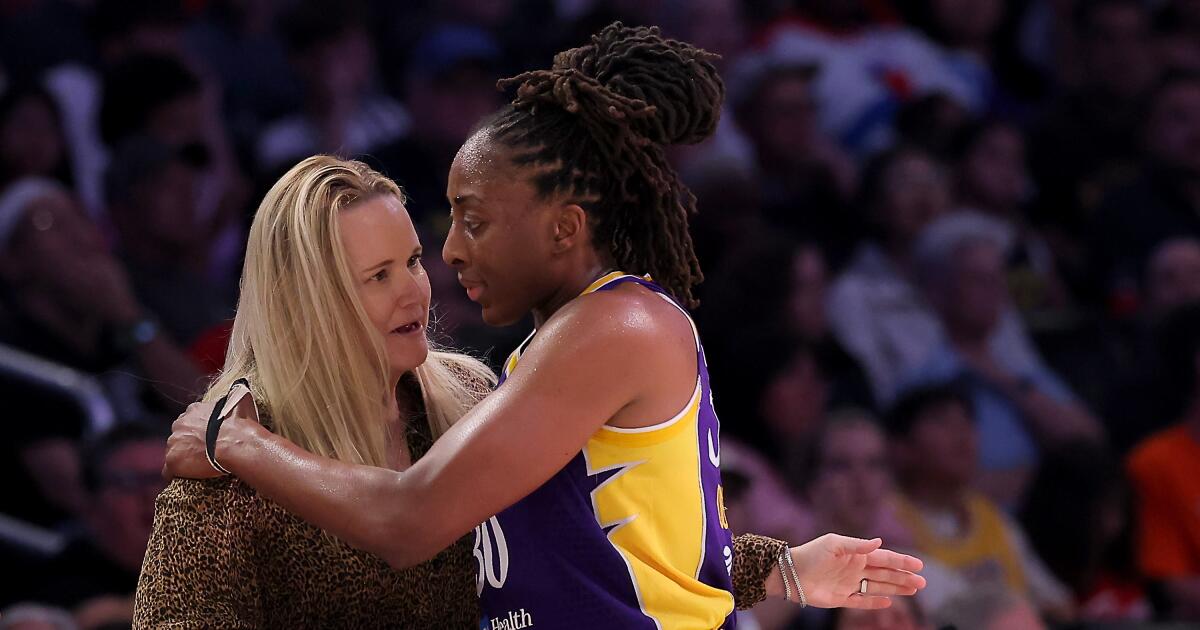
What will the Sparks do next? The franchise is at a crossroads after firing its GM
-
World42 minutes ago
Euronews explains: can Hungary's PM Magyar really remove president Sulyok from office?
-

 News1 hour ago
Mexico files criminal complaints in US over migrant deaths in custody
-

 Videos3 hours ago
New explosions near Iranian port cities, says state media | BBC News
-

 Los Angeles, Ca3 hours ago
Big rig crash spills cinder blocks on 101 Freeway; lanes blocked in Tarzana

