South-Carolina
What Can South Carolina Learn From California's Wildfires? – FITSNews


by DIANE HARDY
As a business owner in the city of Greenville, South Carolina I was concerned when city employees shared reports of discrimination against white men in Greenville’s police department (to be clear, they were referring to the city police department, not Greenville County Sheriff’s Office). As I dug deeper, I learned that the hiring practices they described likely stemmed from Greenville’s full-throated embrace of Diversity, Equity, and Inclusion via the adoption of a 40-page document titled, DEI – Demonstrating Commitment to DEI through Action.
The document (.pdf) contains, among other things, pages upon pages of detailed graphs and pie charts separating all city employees into one of seven racial categories. Next, it encourages acquiring the preferred percentages in each category so city employees can racially reflect Greenville demographics.
Spending taxpayer resources to create a document outlining plans to expand equity (which is not the same thing as equality) in hiring is one thing – but what are the real-world consequences of this new vision for our community?
Would most Upstate citizens support this vision?
***

***
What does the document mean, for example when it states, “the purpose of the DEI Initiative is to establish a road map for future actions… we recognize DEI is a journey, not a program. Our success is built not on promises but on action.”
One might wonder if other cities in our state have similar “action” plans?
Also, what specific actions are they talking about? In Greenville, it started with the hiring of a Chief Diversity Officer within a posted salary range of $86,400 – $121,200 – an employee who is tasked with, amongst other things, designing and implementing “citywide customized diversity programs and training” while also coordinating an annual “Equality Index submission to the Human Rights Campaign.” For those of you unfamiliar with its work, the Human Rights Campaign (HRC) is a discredited left-wing non-profit responsible for creating report cards on adherence to ever-changing LGBTQ+ standards
The salary for this new DEI Officer? Let’s just say it stands in sharp contrast to the pay range of a new police officer who is expected to put his or her life on the line for $53,000 – $58,000.
This plan also involves a reshuffling of the city police’s priorities. No longer is reducing serious crime listed as the department’s top priority. Strategic goal No. 1 is now “supporting DEI initiatives.” Let that sink in for a moment— reducing serious crime along with maintaining safety and order are now secondary to DEI for Greenville police.
As of January 2025, this remains on page one of the Greenville police department’s strategic plan for 2023–2027:
***
***
Of course, we are all heartbroken by what we are witnessing with the tragic fires in Los Angeles, but the crisis has also caused many to think about local governmental policies – and how they impact responses during disasters. Sadly, Californians are learning the hard way that not having the most qualified people in positions of authority and public safety can have deadly consequences. Many are now realizing it’s best to hire people based on merit, not melanin content or sexuality.
Unfortunately, the problems with these policies usually don’t come to light until there is a tragedy.
While the list of local governmental failures in southern California regarding the fires is long, one of the issues being explored is whether DEI initiatives adversely impacted the effectiveness of the agency’s response. Los Angeles deputy fire chief Kristine Larson has been blasted for saying:
“You want to see somebody that responds to your house, your emergency, whether it’s a medical call or a fire call, that looks like you. It gives that person a little more ease, knowing that somebody might understand their situation better.”
In my opinion, this is a racist statement. Are we really supposed to believe when someone calls for the fire department to rescue them, they are thinking, “boy, I hope they have the same skin color as me?” However, this idea doesn’t seem too dissimilar from what we find in Greenville’s DEI plan.
“Our sworn police and fire personnel represent 40% of the City’s employee base and are the most visibly public facing departments within the community,” it stated. “Therefore, building public safety departments that reflect the makeup of our community is an important business objective.”
***
In addition to outlining race-based hiring ratios, DEI initiatives have many ripple effects, including countless training sessions which are required for all city employees. Here’s one example of trainings sponsored by the Greenville fire department for all its staff:
- Age and Gender Diversity Training
- Racial Inequity in the Fire Service
- Improving Diversity and Inclusion in Your Workplace
- Understanding and Preventing Microaggressions
Is this really the best use of their time and taxpayers’ money?
DEI impacts extend beyond hiring practices and training procedures. Greenville’s mayor and fire chief are both members of the Racial Equity Economic Mobility Commission, which purports to push for change in the areas of “racial inequities and social justice.” The city has established LGBTQ+ liaisons in the city manager’s office and the police department. Even the Greenville Chamber of Commerce hosts city employees at their Greenville Chamber DEI Summit.
In addition to jeopardizing public safety, are these policies putting Greenville taxpayers at risk for legal payouts? The DEI plan states that the city has worked “to ensure our projects and programs are developed in accordance with civil rights laws.” I am not a lawyer, but while it is very possible these plans as written may be legal, the fallout from implementing them may become problematic given the U.S. supreme court’s 2023 ruling against affirmative action (and other reverse discrimination cases currently working their way through the courts).
After all, the reason I explored this in the first place was because of alleged discrimination in the Greenville police department.
There certainly seems to be a vested interest in maintaining DEI programs that likely extends beyond ideology. There is a lot of money to be made in DEI consulting work, continuing education and employee training, but California has shown us the price paid for policies like these can be much, much steeper than just monetary consequences.
I just hope we can have real dialogue on this topic in South Carolina before it’s too late.
***
ABOUT THE AUTHOR …
Diane Hardy is a former nurse anesthetist turned entrepreneur, who recently opened her second franchise bakery in Greenville. She is the Executive Director of the Mom and Pop Alliance of SC, which she founded during Covid upon discovering South Carolina’s over 400,000 small businesses had little representation in our State House. The Alliance provides education, communication, and advocacy for SC’s family-owned businesses. Her passion for South Carolina’s small business is strong, and as such she donates her time to the organization, accepting no salary or government funding. Her love for our state isn’t new. Before launching the Mom and Pop Alliance she was the founder and host of The Palmetto Panel (2014-2019), an annual statewide conference highlighting issues impacting South Carolina. Diane has a bachelor’s degree in nursing and psychology from Michigan State as well as a master’s degree from MUSC.
***
WANNA SOUND OFF?
Got something you’d like to say in response to one of our articles? Or an issue you’d like to address proactively? We have an open microphone policy! Submit your letter to the editor (or guest column) via email HERE. Got a tip for a story? CLICK HERE. Got a technical question or a glitch to report? CLICK HERE.



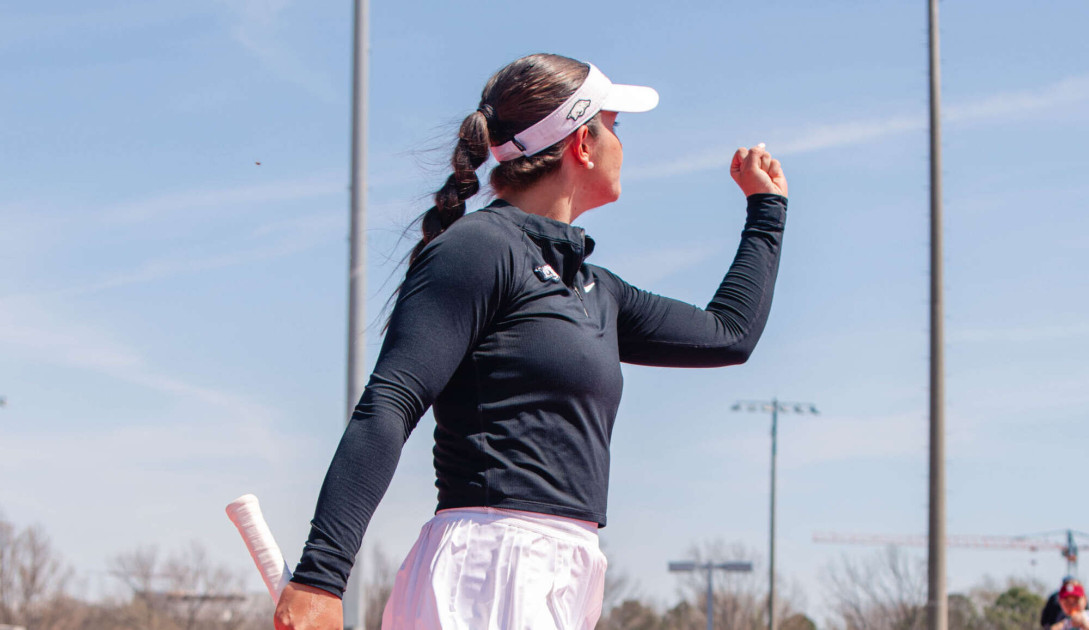
The No. 57 Razorbacks move to 11-10 (2-9) on the season after picking up a win against No. 27 South Carolina 9-10 (2-9).
The Hogs won the doubles point. No. 39 Carolina Gomez and Anet Koskel defeated No. 9 Helena Buchwald and Lauren Friedman, 6-3. Jimena Gomez and Alexandra Panagiotidou took down Sara Borkop and Jane Dunyon, 6-1.
The Razorbacks stayed hot during singles. No. 39 Carolina Gomez defeated No. 56 Kaitlyn Carnicella 7(7)-6(1), 3-6, 6-3 to seal the win. Alexandra Panagiotidou took down Taylor Goetz, 6-3, 6-3. Jimena Gomez defeated Jane Dunyon, 7-5, 6-3. Brooke Schafer fell to No. 52 Helena Buchwald, 7(7)-6(3), 6-2.
The Hogs will be back in action on Friday in Colombia, MO when they take on Missouri at 11:30 a.m.
Results from the match will be available on the women’s tennis schedule page.
For the latest information on all things Arkansas Women’s Tennis, follow the Hogs on social media by liking us on Facebook (Arkansas Razorback Women’s Tennis) and following us on Twitter and Instagram (@RazorbackWTEN).

SACRAMENTO, CA — No. 3 TCU took down No. 10 Virginia in the Sweet 16, preventing South Carolina women’s basketball coach Dawn Staley from coaching against her college team in the Elite Eight of the Women’s NCAA Tournament.
The No. 1 seeded Gamecocks (34-3) will play the No. 3 seeded Horned Frogs (32-5) on March 30 (9 p.m. ET, ESPN) in Golden 1 Center.
South Carolina beat No. 4 seed Oklahoma 94-68 in the Sweet 16 before TCU beat Virginia 79-69.
The only time these two teams met was in 2024 when South Carolina won 85-52.
Dawn Staley has only coached against TCU once
This will be somewhat of an unfamiliar matchup for Staley, who has only coached one game against TCU, and the 2024-25 roster was much different than what she’ll see on March 30.
Last year’s TCU team was powered by players like Hailey Van Lith and Sedona Prince. Now it’s Olivia Miles who is running the show.
Only one starter from last year’s team returned, and TCU added six transfer players.
Coach Mark Campbell is in his third season but has been to two of the last three NCAA Tournaments. Last year the Horned Frogs lost to Texas in the Elite Eight.
Olivia Miles is TCU’s star point guard
Olivia Miles transferred to TCU from Notre Dame in a shocking offseason move after Miles was projected as a top-5 WNBA draft pick.
The senior guard is averaging 19.4 points, 7.2 rebounds and 6.6 assists, coming off 28 points, 10 rebounds and eight assists in the Sweet 16.
She’s fifth in the nation in assists, 42nd in double-doubles with 12 total, and leads the nation in triple doubles with six.
Miles wasn’t healthy and didn’t play for Notre Dame against South Carolina in the 2023-24 season opener, so this is Staley’s first time scouting against one of the nation’s top ball handlers.
Marta Suarez, Clara Silva vs Joyce Edwards, Madina Okot
After fighting through Oklahoma’s post defense, South Carolina’s post players have a new challenge in TCU’s Marta Suarez. The 6-foot-3 Suarez is averaging 16.8 points and 7.4 rebounds, coming off 33 points and 10 rebounds in Sweet 16.
She’s tied with Miles with 12 double-doubles.
Clara Silva, 6-foot-7 center, is in her first season with TCU after one with Kentucky last year. Silva won’t be impacted by the SEC’s physicality given her freshman year experience and is averaging 9.3 points and 7.4 rebounds for TCU.
She didn’t score against South Carolina last year at Kentucky but had two assists and a steal in seven minutes of action.
TCU leads Big 12 in points allowed, rebounds and point differential
The Horned Frogs have the top defense in the Big 12, allowing an average of 55.9 points per game. They are also first in rebounds with 41.7 per game and in point differential at +21.4.
South Carolina vs TCU prediction in Elite Eight
South Carolina 84, TCU 72: This could be the closest game for South Carolina this tournament and will come down to execution. But despite almost three 100-point games, the Gamecocks say they still have room to grow with their best basketball left to play.
Raven Johnson vs Olivia Miles will be the main guard matchup, with Clara Silva vs Madina Okot at the center spot and Marta Suarez vs Joyce Edwards. So expect players like Tessa Johnson or Ta’Niya Latson to try to step up for Staley.
Lulu Kesin covers South Carolina athletics for The Greenville News and the USA TODAY Network. Email her at LKesin@usatodayco.com. Follow her on X@Lulukesin and Bluesky@bylulukesin.bsky.social
South-Carolina
Oklahoma vs. South Carolina box score: Full stats from 2026 NCAA Women’s Basketball Tournament game

Oklahoma vs. South Carolina box score: Full stats from 2026 NCAA Women’s Basketball Tournament game originally appeared on The Sporting News. Add The Sporting News as a Preferred Source by clicking here.
The 2026 NCAA Women’s Basketball Tournament continues with Sweet 16 action Saturday as No. 1 South Carolina and No. 4 Oklahoma battle for a spot in the Elite Eight.
Advertisement
Another year, another Sweet 16 appearance for Dawn Staley’s Gamecocks, who are a serious championship contender. They’ll face the Sooners in a SEC conference matchup. The game between both squads resulted in one of South Carolina’s three losses this season.
Oklahoma won the overtime thriller 94-82 in Norman on January 23.
Here is a look at the box score from Saturday’s Sweet 16 Regional 4 in Sacramento.
Oklahoma vs. South Carolina March Madness box score
Oklahoma stats
|
NO |
Name |
POS |
MIN |
FGM-A |
3PM-A |
FTM-A |
OREB |
REB |
AST |
ST |
BLK |
TO |
PF |
PTS |
|---|---|---|---|---|---|---|---|---|---|---|---|---|---|---|
|
6 |
Sahara Williams |
F |
24 |
2-8 |
0-0 |
1-1 |
2 |
5 |
2 |
2 |
1 |
0 |
1 |
5 |
|
4 |
Caya Smith |
F |
7 |
0-0 |
0-0 |
0-0 |
0 |
3 |
0 |
0 |
0 |
0 |
0 |
0 |
|
3 |
Zya Vann |
G |
22 |
2-7 |
1-3 |
1-2 |
1 |
2 |
0 |
0 |
0 |
2 |
1 |
6 |
|
2 |
Aaliyah Chavez |
G |
30 |
7-18 |
3-9 |
2-2 |
0 |
0 |
3 |
0 |
0 |
2 |
2 |
19 |
|
21 |
Brooklyn Stewart |
F |
15 |
0-2 |
0-0 |
0-0 |
2 |
5 |
1 |
0 |
4 |
4 |
1 |
0 |
|
12 |
Payton Verhulst |
G |
29 |
4-11 |
2-4 |
0-0 |
2 |
3 |
1 |
1 |
2 |
1 |
1 |
10 |
|
22 |
Keziah Lofton |
G |
10 |
2-3 |
0-0 |
0-0 |
0 |
2 |
0 |
1 |
0 |
1 |
0 |
4 |
|
15 |
Raegan Beers |
C |
27 |
4-8 |
0-1 |
2-6 |
2 |
6 |
2 |
1 |
2 |
2 |
1 |
10 |
|
Total |
21-57 |
6-17 |
6-11 |
13 |
31 |
9 |
5 |
9 |
12 |
7 |
54 |
|||
|
36.8% |
35.3% |
54.5% |
||||||||||||
South Carolina stats
|
NO |
Name |
POS |
MIN |
FGM-A |
3PM-A |
FTM-A |
OREB |
REB |
AST |
ST |
BLK |
TO |
PF |
PTS |
|---|---|---|---|---|---|---|---|---|---|---|---|---|---|---|
|
8 |
Joyce Edwards |
F |
28 |
3-10 |
0-0 |
2-2 |
2 |
8 |
3 |
2 |
0 |
1 |
2 |
8 |
|
1 |
Maddy McDaniel |
G |
13 |
0-3 |
0-1 |
0-0 |
0 |
1 |
0 |
1 |
0 |
0 |
2 |
0 |
|
30 |
Maryam Dauda |
F |
3 |
0-0 |
0-0 |
0-0 |
0 |
0 |
0 |
1 |
0 |
0 |
0 |
0 |
|
31 |
Alicia Tournebize |
F |
8 |
1-4 |
0-1 |
0-0 |
0 |
3 |
1 |
0 |
3 |
0 |
3 |
2 |
|
5 |
Tessa Johnson |
G |
21 |
6-8 |
2-2 |
0-0 |
1 |
4 |
2 |
0 |
1 |
1 |
0 |
14 |
|
Ta’Niya Latson |
G |
26 |
6-10 |
3-3 |
6-6 |
0 |
1 |
5 |
0 |
0 |
4 |
1 |
21 |
|
|
11 |
Madina Okot |
C |
19 |
3-6 |
1-1 |
0-0 |
5 |
11 |
2 |
1 |
1 |
2 |
3 |
7 |
|
44 |
Agot Makeer |
G |
21 |
3-8 |
1-2 |
1-1 |
1 |
2 |
2 |
1 |
0 |
0 |
1 |
8 |
|
25 |
Raven Johnson |
G |
25 |
8-11 |
2-3 |
0-0 |
1 |
2 |
3 |
1 |
0 |
0 |
0 |
18 |
|
Total |
30-60 |
9-13 |
9-9 |
12 |
35 |
18 |
7 |
5 |
8 |
12 |
78 |
|||
|
50.0% |
69.2% |
100.0% |
||||||||||||
As for the NCAA tournament, South Carolina has dominated so far, winning by 69 points against Southern before blowing out the USC Trojans by 40 in the Round of 32.
Advertisement
Oklahoma has made a nice run in this year’s tournament as a No. 4 seed, beating Idaho by 30 before knocking off No. 5 Michigan State by six in the second round.
These two teams will give each other fits. The real question could be which team will final possession and will they capilitize?
What channel is Oklahoma vs. South Carolina on today?
Oklahoma vs. South Carolina How to Watch
Date: Saturday, March 28
Time: 5 p.m. ET
Golden 1 Center- Saramento, California
TV: ESPN (Available on FuboTV)
More college basketball news:

USA Storms Back After Early Split, to Survive Pennsylvania Push to Win Pittsburgh Wrestling Classic

401Gives Starts Tuesday!

Arkansas Women’s Tennis Defeats South Carolina

TBD vs. South Dakota Coyotes – Live Score – March 31, 2026

What we learned as Vanderbilt baseball sweeps Tennessee for first time since 2013

Florida High School Football Rankings: Top 25 teams – Oct. 21

How old is Bo Nix? What to know about Oregon quarterback ahead of 2024 NFL Draft

Cleary's 21 help Le Moyne down Central Connecticut State 69-64 in OT

99th annual Pony Swim held in Virginia

Indiana Members Credit Union announced as new anchor tenant at Bottleworks District

Scathing report claims nation’s oldest labor union ‘betrayed’ MAGA members through ‘shocking’ spending

Republican US lawmaker demands Congress vote on any Iran troop deployment

So you went to a No Kings protest. Now what?

JD Vance says he was ‘obsessed’ with UFOs, believes aliens are actually ‘demons’
The EU's recipe for trade deals : easy on beef, tough on wine
-

 Sports1 week ago
IOC addresses execution of 19-year-old Iranian wrestler Saleh Mohammadi
-

 New Mexico1 week ago
Clovis shooting leaves one dead, four injured
-

 Miami, FL3 days ago
Jannik Sinner’s Girlfriend Laila Hasanovic Stuns in Ab-Revealing Post Amid Miami Open
-

 Tennessee6 days ago
Tennessee Police Investigating Alleged Assault Involving ‘Reacher’ Star Alan Ritchson
-

 Minneapolis, MN3 days ago
Boy who shielded classmate during school shooting receives Medal of Honor
-

 Technology1 week ago
YouTube job scam text: How to spot it fast
-

 Politics1 week ago
Schumer gambit fails as DHS shutdown hits 36 days and airport lines grow
-

 Science1 week ago
Record Heat Meets a Major Snow Drought Across the West