Oklahoma
Oklahoma public school students could soon earn credit through ‘Satanic Temple Academy’


OKLAHOMA CITY (KSWO) – The Satanic Temple is once again announcing plans for the Sooner State after a bill was sent to the governor’s desk which could allow students to receive class credits for religious and moral instruction off school campuses.
House Bill 1425 would force school districts to adopt a policy which allows students to go off-campus to attend a religious or moral instruction course taught by an independent entity. The student would be allowed to miss up to three class periods per week to attend such a course.
Instructors of these courses would not need to be licensed or certified teachers.
The bill’s language also states students would not be able to miss classes at their school in which the subject matter is open to assessment requirements. The student’s parents or guardians would have to provide written consent in order for the student to take the outside course.
School district funds, other than administrative costs, would not be involved in the outside instruction, according to the bill.
In response to the bill being one step away from becoming the state’s newest law, The Satanic Temple is highlighting their own learning academy that Oklahoma students could use to possibly earn school credit.
In a post on social media, the religious group stated their Hellion Academy of Independent Learning (HAIL) could soon be available for Oklahoma students.
“The Satanic Temple believes that public schools should be free from religious influence,” the post said. “We are, however, prepared to ensure our members’ children receive the same opportunities as those participating in other religion’s programs. By not vetoing HB 1425, Governor Stitt will allow the state to grant elective credit for religious and morality classes taught by The Satanic Temple, making it possible for parents to invite TST’s HAIL program to their local public schools as soon as this fall.”
The post ended with the group asking if Oklahoma Governor Kevin Stitt will be the first to award school credit for courses taught by The Satanic Temple.
In order for the course to be considered for credit, the course would have to evaluated based on the following secular criteria:
- The amount of classroom instruction time;
- The course syllabus, which reflects the course requirements and any materials used in the course;
- Methods of assessment used in the course; and
- The qualifications of the course instructor.
While The Satanic Temple does not believe in the actual existence of Satan or even the supernatural, they do consider themselves a religion that is divorced from superstition. The group is even already a federally recognized religious organization.
Their seven fundamental tenets are the following:
| Tenet Number | Tenet Language |
|---|---|
| 1 | One should strive to act with compassion and empathy toward all creatures in accordance with reason. |
| 2 | The struggle for justice is an ongoing and necessary pursuit that should prevail over laws and institutions. |
| 3 | One’s body is inviolable, subject to one’s own will alone. |
| 4 | The freedoms of others should be respected, including the freedom to offend. To willfully and unjustly encroach upon the freedoms of another is to forgo one’s own. |
| 5 | Beliefs should conform to one’s best scientific understanding of the world. One should take care never to distort scientific facts to fit one’s beliefs. |
| 6 | People are fallible. If one makes a mistake, one should do one’s best to rectify it and resolve any harm that might have been caused. |
| 7 | Every tenet is a guiding principle designed to inspire nobility in action and thought. The spirit of compassion, wisdom, and justice should always prevail over the written or spoken word. |
This bill is aimed at public schools, and there is a provision within the it stating charter schools would not be affected by the measure.
Found out how your Southwest-based elected officials voted on this bill below:
| Elected Official | Vote |
|---|---|
| Rep. Boles (R-Marlow) | Against |
| Rep. Trey Caldwell (R-Lawton) | Against |
| Rep. Hasenbeck (R-Elgin) | For |
| Rep. Kendrix (R-Altus) | For |
| Rep. McEntire (R-Duncan) | Against |
| Rep. Pae (R-Lawton) | Against |
| Rep. Worthen (R-Lawton) | Against |
| Sen. Deevers (R-Elgin) | For |
| Sen. Garvin (R-Duncan) | For |
| Sen. Howard (R-Altus) | For |
| Sen. Jech (R-Kingfisher) | For |
| Sen. Kidd (R-Waurika) | For |
Copyright 2024 KSWO. All rights reserved.



By: Braylea Lawson – Mulhall-Orlando FFA Chapter Reporter
Special to Guthrie News Page
The Mulhall-Orlando FFA Chapter was represented at the 54th Annual Oklahoma FFA Alumni Leadership Camp, held at Camp Tulakogee in Wagoner, Oklahoma.
More than 1,300 FFA members from over 300 Oklahoma FFA chapters have registered to participate in one of four 3½-day sessions scheduled from June 28 through July 11, 2026. Attendees from this chapter include: Lane Brown, Garrett Schoonover, Fletcher Inman, Braylea Lawson, Brylie Cook, and Kilee Blehm
This year’s camp, themed “Uncharted: Go Beyond Your Limits,” is designed to engage FFA members in fun, action-packed activities focused on personal, team, and service leadership. Special presenters include kickoff speaker Bill Cordes of Kansas, hypnotist Dr. Al Snyder of Wyoming, and nationally recognized clean comedian and youth speaker Mike Paramore, who will serve as the camp’s keynote speaker.

DAVIS, Okla. (KXII) – Law enforcement is searching for a 15-year-old boy from Davis who has been reported as an endangered missing person.
According to an OHP post on X, James Pletcher of Davis was last seen after 11 p.m. Saturday, July 4th. He was wearing a black shirt, black shorts and black shoes.
Anyone who sees Pletcher or has information on his whereabouts is asked to call 911.
Copyright 2026 KXII. All rights reserved.
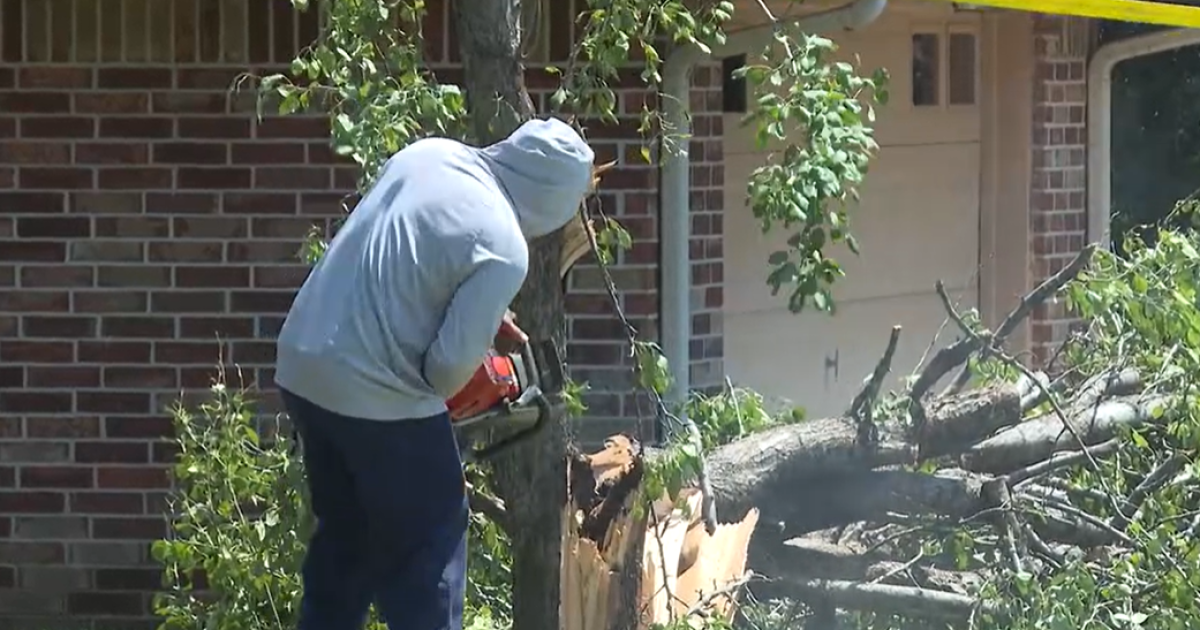
TULSA, Okla. — Oklahoma Governor Kevin Stitt signed an executive order declaring a disaster emergency for Cleveland and Washington Counties, following powerful severe weather that moved across the state on July 4.
The declaration will ensure recovery resources can be deployed to those impacted areas quickly.
Related Coverage>>> THOUSANDS WITHOUT POWER: Cooling centers open in Bartlesville and Dewey
The Governor’s office is asking anyone with damage to their home or business to report it at Damage.ok.gov.
In a news release, the Governor’s office said the state is also coordinating with Oklahoma Baptist Disaster Relief to assist residents affected by the storms.
People needing assistance from Oklahoma Baptist Disaster Relief can call (844) 690-9198 or fill out a request form online at www.okdisasterhelp.org.
“State and local crews are out across Cleveland and Washington counties this morning checking on families, clearing debris, and helping our communities get back on their feet after these severe storms,” said Governor Stitt in the news release. “As crews work to get power restored to those impacted, please help by reporting damage and checking on your neighbors.”
The full text of the executive order can be read here.
Stay in touch with us anytime, anywhere —
-

 Movie Reviews8 minutes ago
Film reviews: ‘The Invite’ and ‘Minions & Monsters’
-

 World18 minutes ago
Feds Detail Hoopster Kerr Kriisa’s Alleged $2.2M Criminal Side Hustle
-
Politics30 minutes ago
Preliminary Hearing for Man Accused of Killing Charlie Kirk Starts in Utah
-
 Lifestyle1 hour ago
What a divorce coach wishes couples knew before ending a marriage
-

 Technology1 hour ago
Hoto’s PixelDrive screwdriver is down to $60, matching its best price
-

 World1 hour ago
Cuba plunges into third major blackout this year as power crisis worsens
-

 Politics1 hour ago
Top Platner ally turns on him after bombshell rape allegation rocks campaign: ‘Red line’
-

 Health1 hour ago
Experimental vaccine shows promise against dangerous intestinal illness

