Oklahoma
Oklahoma politics launched with constitutional chaos


If you haven’t been paying attention, the Oklahoma Legislature is back in session and headed for its homestretch. Look at all the cowboy hats.
The governor, the attorney general and the “education” guy are in place and doing their respective things. Here, one may say, we are going again.
Throw in negotiations with sovereign tribal nations, and we’re guaranteed snits, spats and to-dos aplenty. Sometimes I feel sorry for my son, who covers the Capitol every week and writes some sort of newsletter, among other things.
Of course, if the Oklahoma Legislature looks like chaos — well, that’s how our state got started at the turn of the last century.
A microcosm of our initial population?
First, when America furthered its frontier West into more and more Indigenous territory, the area had land runs. Chaos on the hoof. Then, the white folks started calling for statehood. Eleven years passed before there were enough people living here for the place to qualify.
Republicans were in control in Washington, and their feet dragged on the question of statehood because they feared Oklahoma would be a Democratic stronghold, and they wanted time to build Republican power here, via political appointments and whatnot.
So, we were tools before we were tools.
Anyhow, along came the Oklahoma Enabling Act of June 16, 1906, which wrote the recipe to be followed in the creation of a new state.
The so-called Twin Territories — Oklahoma and Indian — were to be joined, and each would send 55 delegates (plus two from the Osage Nation) to a constitutional convention in Guthrie, a Republican outpost that was, according to the Enabling Act, to be the state’s capital until at least 1913.
The convention first met on Nov. 20, 1906. Of the 112 delegates, 100 were Democrats, and that was it for Republicans until the first coming of Henry Bellmon.
About the delegates, we know this: Their average age was 43. Among them stood 47 farmers, 27 lawyers, 12 businessmen, six preachers, three teachers, two physicians and one student. Besides them, the wag would say, 14 other people with no visible means of support also attended.
Was that a microcosm of our initial population? Hard to say. I am told even fewer lawyers and physicians serve in the Legislature now, but the teacher and preacher numbers have climbed.
A populist fear of centralized power
The president of the 1906 constitutional convention was none other than that soon-to-be nationally known bigot, crackpot and whatnot named William H. “Alfalfa Bill” Murray.
RELATED
History is clear: Alfalfa Bill Murray was a terrible bigot by William W. Savage Jr.

He began the proceedings by having the delegates join together in singing Nearer, My God to Thee, the hymn that would be played six years later on the deck of the sinking Titanic.
Perhaps Murray had a premonition, and not about a big boat.
The convention produced a 45,000-word constitution that President Theodore Roosevelt hated because Democrats had written it, but no legal reason existed for rejecting it because the document followed the stipulations of the Enabling Act to the letter. (I forbear particulars, except to note that in Oklahoma you cannot have more than one spouse at a time. Having them serially is another matter, but the Legislature works on that, from time to time.)
The Oklahoma Constitution was praised for its populist and progressive content, with many provisions limiting centralized control and empowering the Legislature as the institution most responsive to the will of the people.
Scholars wrote about it, but nit-pickers were not silent, complaining that the document was too detailed. Good grief, the thing even specified the flash point of kerosene, a provision designed to prevent corporate greed error that could result in towns burning to the ground if it were cut with cheaper fuels. Such atrocity had happened elsewhere.
A constitutional convention redo? Be careful what you wish for
From time to time, the electorate is invited to help remove outdated parts of the Oklahoma Constitution.
I recall the election in which the section requiring state payments to widows of Civil War veterans was excised. Someone had noticed that, on account of the passage of time, there were no such widows left.
Over the decades, voters have been asked to decide several questions related to the Oklahoma Constitution, which has been amended more than 200 times. In recent years, we have voted on liquor laws (twice), marijuana laws (twice, to different results), the separation of church and state, expanding Medicaid coverage, modifying school funding options, and whether to elect the governor and lieutenant governor jointly.
The results have hardly painted a straight ideological line.
I learned recently that Cherokee Nation citizens will be asked this June whether to call their own convention for revision of the tribe’s constitution. Various Oklahoma political factions sometimes float the idea of a new state constitutional convention as well.
If the state were to have a new constitutional convention, every moron in America with something to suggest would show up and try to participate, just as Carry Nation lobbied the original convention to prohibit consumption of alcohol. Ultimately, Gov. Charles Haskell successfully pushed the proposal as a separate article to be approved months later, and prohibition continued in Oklahoma for a quarter of a century after the rest of the country had reversed course.
By that measure, our path to Medicaid expansion felt relatively quick. Nonetheless, calling a new constitutional convention in Oklahoma would revive the recipe for chaos, to be sure. These days, 45,000 words would hardly do it.
In the meantime, perhaps the best we can hope for is legislators whose mothers taught them it’s impolite to wear your cowboy hat in the House — or the Senate.



A pair of Patty Gasso’s Sooners earned recognition for clutch performances against Ole Miss over the weekend.
Veteran Isabela Emerling was named SEC Co-Player of the Week after her clutch grand slam powered Oklahoma past the Rebels on Monday, and sophomore Audrey Lowry earned SEC Pitcher of the Week after two outstanding appearances.
Emerling, a redshirt senior, needed just one pitch to change Monday’s series finale.
She stepped in to pinch hit for freshman Allyssa Parker in the sixth inning and ruined Kyra Aycock’s outing.
Emerling connected with the first pitch she saw and parked a grand slam deep beyond the fence in left field to put OU on top 5-2.
It was Emerling’s 11th homer of the year, which is three shy of her career-high, and it was the seventh grand slam of her career.
She also homered in the Sooners’ mid-week triumph over Memphis and hit .545 for the week with a 1.091 slugging percentage.
Lowry pitched 7 2/3 total innings across two appearances against the Rebels and allowed zero runs.
She got the start in Saturday’s opener, then stepped in for Sydney Berzon with OU down 2-1 and shut the Rebels out to earn the victory in relief.
Lowry accounted for five strikeouts and gave up four free passes (two walks and two hit batters) in the pair of appearances.
Sign up to our free newsletter and follow us on Facebook and X for the latest news.
For the season, she’s now 15-1, which ranks third nationally in wins, and has a 2.08 ERA with a 52-9 strikeout to walk ratio across 67 1/3 innings of action.
Emerling and Lowry became the second OU duo to capture recognition in the same week, and it was the first time both have been honored individually by the SEC this season.
The No. 5 Sooners will be back on the road this weekend to take on No. 20 LSU.
The series will serve as a reunion for Avery Hodge and Paytn Monticelli, who are both former Sooners, as well as Berzon, who spent the first three years of her collegiate career in Baton Rouge.
Hodge transferred to LSU following the 2024 season, and Monitcelli departed Norman this past offseason.
Berzon is coming off her longest outing as a Sooner, where she threw 57 pitches and allowed zero earned runs on Monday against Ole Miss.
The series opener is scheduled to get underway at 6 p.m. on Friday.

Women’s Basketball
March 24, 2026
UCLA vs. Oklahoma State – Second round NCAA tournament extended highlights
March 24, 2026
Watch the highlights from No. 1 UCLA and No. 8 Oklahoma State’s matchup in the second round of the 2026 women’s NCAA tournament.

Oklahoma firefighters battle wildfire in Arapaho in March outbreak
Firefighters with the Hydro Fire Department responded to a grass fire in Arapaho, Oklahoma, on Sunday, March 15, 2026.
Provided, Hydro Fire Department
A fire at a scrapyard near the OKC Fairgrounds has produced a massive plume of smoke visible in downtown Oklahoma City, officials report.
Oklahoma City Fire Department Assistant PIO John Chenoweth told The Oklahoman that the fire started at the scrapyard building near Northwest 10th Street and May Avenue, northeast of the OKC Fairgrounds.
The fire has been marked as “basically contained” as the Oklahoma City Fire Department is currently shifting to defensive methods. There are some active rubbish fires surrounding the metal building.
Chenoweth states there are no injuries, and all inside the building have been evacuated.
The cause of the fire and the extent of damage are unknown.
➤ Weather alerts via text: Sign up to get updates about current storms and weather events by location
Oklahoma fire map: See smoke, wildfires across state, red flag warnings
Track the latest wildfire and smoke information in Oklahoma with data that is updated frequently based on input from several incident and intelligence sources.
If you can’t see the map below, please click here.
How to prevent wildfires
While severely warm weather can worsen a wildfire spread, most are the result of human behavior. In fact, nearly 85% of wildfires in the U.S. are caused by humans, according to the National Park Service.
With its wide acres, rural areas and inconsistent weather patterns, Oklahoma is prone to grass fires. Forestry and safety experts offer several guidelines for residents on how to avoid starting a fire, which can often breakout from just one wrong spark.
- Avoid using welding equipment.
- Never drive on a flat tire.
- Extinguish cigarettes completely before properly disposing of them, and never throw them outside of a window while driving.
- Avoid parking on dry grass or dragging chains behind your car.

Starting a GLP-1? Doctors Reveal Surprising Benefits and Side Effects

Wil Wheaton Discusses ‘Stand By Me’ and Narrating ‘The Body’ Audiobook

A professional cornhole player and quadruple amputee is arrested for murder

The Bumpboxx BB-777 is the ultimate in boombox nostalgia

US military sends drones, alongside 200 troops, to Nigeria amid fears of renewed Boko Haram insurgency

Florida High School Football Rankings: Top 25 teams – Oct. 21

How old is Bo Nix? What to know about Oregon quarterback ahead of 2024 NFL Draft

Cleary's 21 help Le Moyne down Central Connecticut State 69-64 in OT

99th annual Pony Swim held in Virginia

Indiana Members Credit Union announced as new anchor tenant at Bottleworks District

Chicago alderwoman apologizes for ‘wrong place at the wrong time’ comment on slain student

Fake Euronews website targets Hungary election with false claims
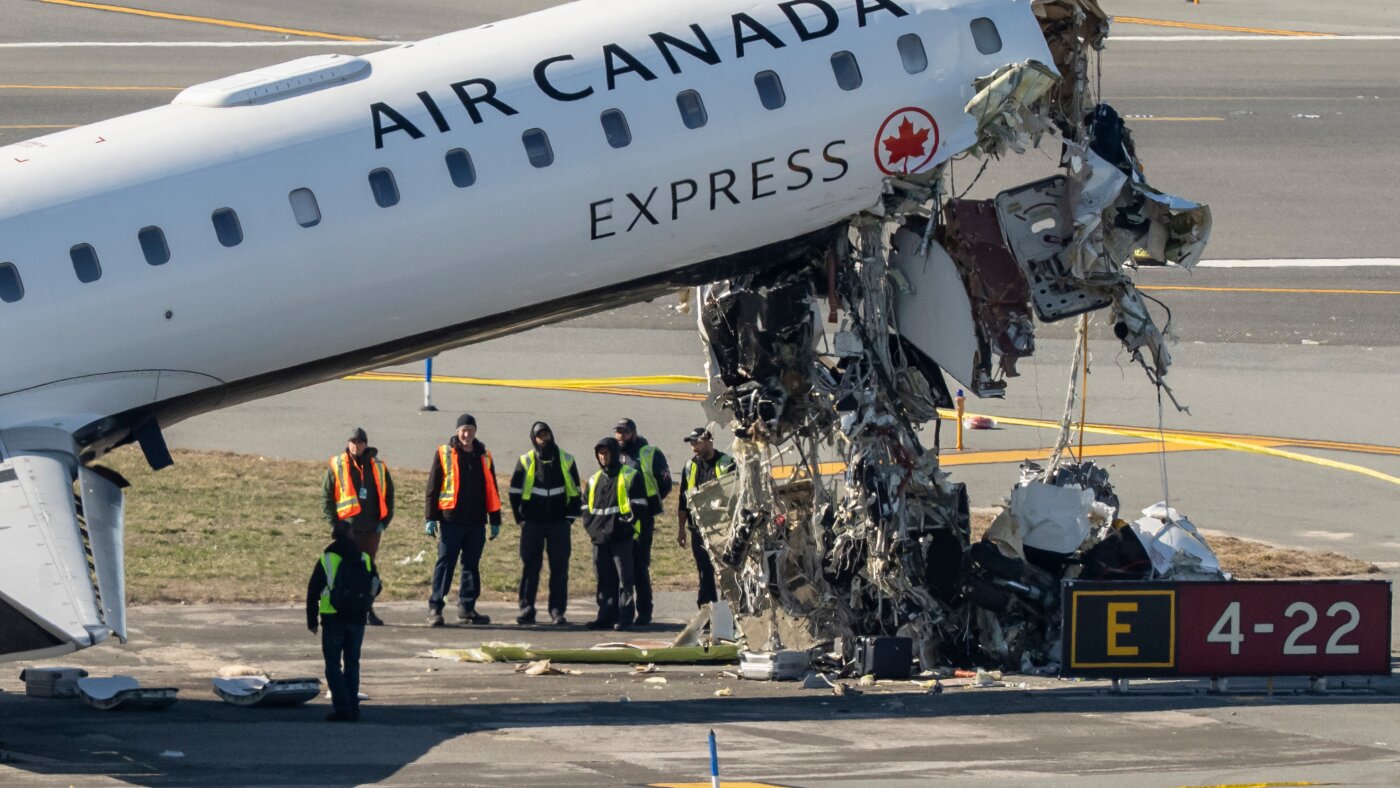
An air traffic controller was juggling extra roles during the LaGuardia plane crash

Iran War: Pentagon set to send thousands of elite 82nd Airborne troops to region | BBC News

Video: Passengers Wait in Long Security Lines at LaGuardia After Deadly Crash
-

 Detroit, MI6 days ago
Drummer Brian Pastoria, longtime Detroit music advocate, dies at 68
-

 Georgia1 week ago
How ICE plans for a detention warehouse pushed a Georgia town to fight back | CNN Politics
-

 Movie Reviews6 days ago
‘Youth’ Twitter review: Ken Karunaas impresses audiences; Suraj Venjaramoodu adds charm; music wins praise | – The Times of India
-

 Alaska1 week ago
Police looking for man considered ‘armed and dangerous’
-

 Education1 week ago
Video: Turning Point USA Clubs Expand to High Schools Across America
-

 Sports4 days ago
IOC addresses execution of 19-year-old Iranian wrestler Saleh Mohammadi
-
 Science1 week ago
Industrial chemicals have reached the middle of the oceans, new study shows
-

 New Mexico2 days ago
Clovis shooting leaves one dead, four injured