Oklahoma
Enrollment in tribal language courses grows in Oklahoma as tribes aim to increase fluency

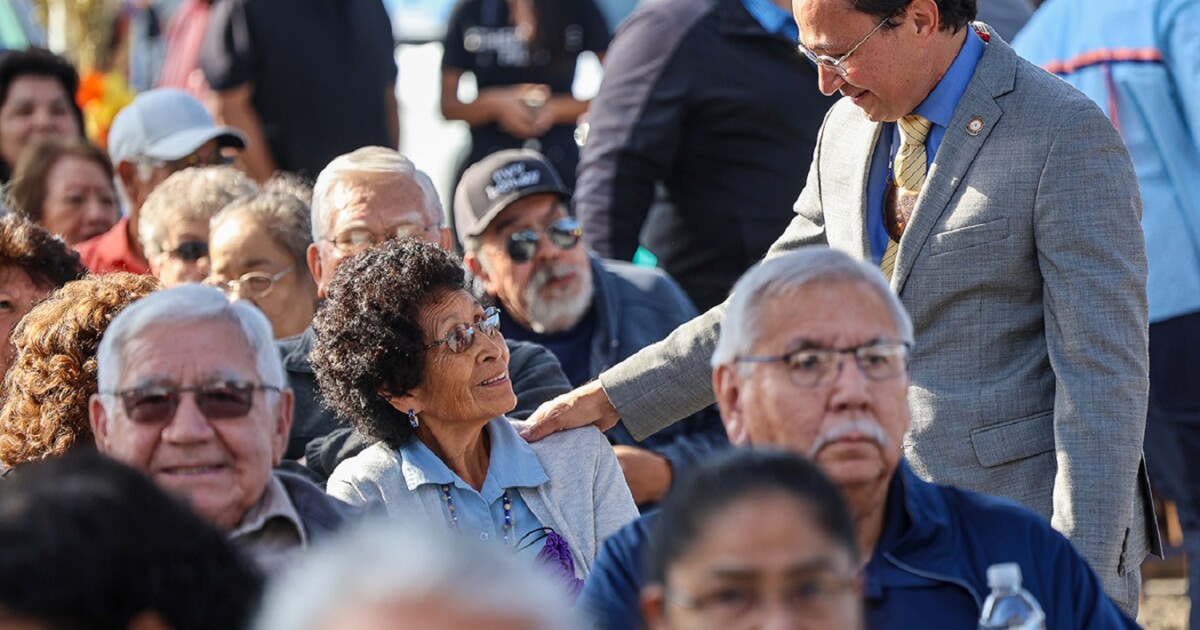
Like many Cherokee Nation citizens of his generation, Principal Chief Chuck Hoskin Jr. never had the chance to learn his tribal language in school.
He said those opportunities simply didn’t exist at the time.
“It would have meant a great deal to me,” Hoskin said. “It would have meant the opportunity to learn the Cherokee language as a child.”
Today’s generation of children has more possibilities, he said. State data shows an increasing number of students are seizing the chance.
Enrollment in Native American language programs is growing in Oklahoma public schools, according to information from the state Department of Education.
At least 3,314 students, from elementary through high school, participated in an Indigenous language program at their public school in the 2022-23 school year. That’s over 1,000 more students than the previous school year and 2,500 more than in 2020-21, according to state data.
Last year’s total includes about 1,600 elementary and middle school students who participated in Indigenous language programs.
Another 1,700 students earned high school world language credits by taking Choctaw, Cherokee, Chickasaw, Comanche, Mvskoke, Osage, Pawnee, Potawatomi, the Otoe-Missouria language of Jiwere-Nat’Chi, and other courses. The right to take an Indigenous language for high school credit was encoded in state law in 2014.
Choctaw and Cherokee classes had the most participating students and were offered in the greatest number of schools, according to the state Education Department.
The Cherokee Nation aims to grow its numbers with plans for a $30 million language immersion middle school. The investment would expand the capacity of its existing immersion middle school that teaches in the Cherokee tongue.
The tribal nation has pledged to spend at least $18 million a year on various language-preservation initiatives.
“We know we’ve got people on the way to fluency in what is a very difficult language to learn,” Hoskin said. “We just need to have more of them, given what we’re up against.”
The Cherokee language has 2,000 first-language speakers and thousands more at a beginner or proficient level.
UNESCO labels Cherokee as a language in danger of extinction. Chickasaw, Choctaw, Comanche, Potawatomi and other tribal languages found in Oklahoma also are designated as endangered.
Generations of Indigenous children were discouraged or forbidden from speaking their tribal languages at federally run boarding schools across the country for 150 years, according to a 2022 report from the U.S. Department of the Interior.
The boarding schools existed to culturally assimilate Native American children, and Oklahoma had more of these schools than any other state, the report found.
Tribal nations are now working to rebuild their ranks of fluent speakers.
The Choctaw Nation, for example, has its language taught in the greatest number of high schools in Oklahoma, as well as at colleges, early childhood centers, community classes and online. Fifteen adults are taking Choctaw as a full-time job through the tribal nation’s apprenticeship program.
Many Native American languages have a high degree of difficulty for English speakers to learn, according to state academic standards.
Cherokee, for instance, is a Class IV language, indicating it would take a similar number of hours to gain proficiency as it would to learn Greek, Hebrew or Russian. Languages more similar to English — like Spanish, Swedish and French — would take fewer hours of study to reach the same proficiency level.
Indigenous language courses must be sanctioned by the state Education Department for students to earn class credit.
In most public schools, the language teachers and lesson plans come from tribal nations, said Jackie White, the state agency’s program director of American Indian education.
“We wanted to make sure, whomever taught, that they were fluent speakers and that what they taught was credible,” White said.
White joined the agency in 2020. Since then, the department has expanded its Native American education staff, helping to boost communication between tribes, schools and the agency about Indigenous-focused programs.
Those conversations have included expanding tribal language courses to more schools through both in-person instruction and online teaching, White said.
Bartlesville High School is among the schools to recently add a face-to-face Indigenous language course. Only minutes away from the Osage Reservation, the northeast Oklahoma school is in its third year offering Osage language classes.
The school has 35 students enrolled in Osage I and 27 in Osage II, said Principal Michael Harp. He said the courses have attracted a diverse group of students, not only those who are Native American.
Interest in Indigenous culture has grown, he said, especially with movie filming of “Killers of the Flower Moon” taking place in the Bartlesville area.
“There definitely has been an uptick in the last couple of years of just students wanting to know more about their heritage, the culture (and) the culture that is around them,” Harp said.
Oklahoma Voice is part of States Newsroom, a nonprofit news network supported by grants and a coalition of donors as a 501c(3) public charity. Oklahoma Voice maintains editorial independence.


Looking for the perfect spot to celebrate Independence Day in Oklahoma this year? From massive fireworks displays over Grand Lake to food truck festivals and live music across the OKC metro, communities are pulling out all the stops to celebrate the Declaration of Independence. Grab your lawn chairs, round up the family, and get ready for an unforgettable week of summer fun. Here is your ultimate guide to the best Fourth of July events happening right in your backyard!
Key takeaways
- The bigger picture: Oklahoma communities are going all out for Independence Day in 2026, with celebrations spanning from Norman’s four-day Fourth Fest to major fireworks displays in Edmond, Tulsa, and on Grand Lake — giving families across the state plenty of options close to home.
- More details: Highlights include Liberty Fest in Edmond, one of the largest fireworks displays in the metro area, the Duck Creek Fireworks on Grand Lake featuring a War Bird flyover tribute synchronized to patriotic music, and Tribute to Liberty in Midwest City, which combines live music, a laser show, and fireworks in honor of the Declaration of Independence’s 250th anniversary.
- Why this matters: This year’s celebrations carry extra weight as part of America’s semiquincentennial, with several events — including Tribute to Liberty and the Duck Creek Fireworks — built around honoring both the nation’s founding and the service members who’ve defended it.
- Date: 9:45 p.m. July 1-4
- Location: Reaves Park; 2501 S Jenkins Ave., Norman
This year’s Fourth Fest is bigger than ever before, spanning four days. The city has added additional programming across multiple parks. Before the fireworks, enjoy a wide range of attractions including bouncy houses, local vendors, food trucks, pony rides, and a petting zoo. The fireworks show begins at 9:45 p.m. on July 4.
- Date: 8:30 p.m. July 3
- Location: Scissortail Park, 300 SW 7th St., Oklahoma City
OKCPHIL’s Red, White, and Boom concert is a high-energy celebration that brings the community together for an unforgettable summer evening of music. The Oklahoma City Philharmonic performs a vibrant program of American classics, fan favorites, and patriotic anthems.
- Date: 6-10 p.m. July 3
- Location: Boomer Lake Park; 2310 E Lakeview Road, Stillwater
This Independence Day celebration will include area vendors, food trucks, hometown hospitality, and a fireworks show. Free parking will be available at Stillwater High School’s Pioneer Stadium.
- Date: July 3-4
- Location: Yukon City Park & Chisholm Trail Park, 2200 S Holly Ave., Yukon
Bring the whole family to Freedom Fest in Yukon! Experience a lineup of live outdoor concerts, peruse the food trucks on site, and enjoy the activities for kids.
- Date: 2-10 p.m. July 4
- Location: Buck Thomas Park, 1903 NE 12th St., Moore
Enjoy one of the largest fireworks shows in the state with food trucks, vendors, and activities throughout the day. Admission is free. Fireworks will begin around 9:45 p.m.
- Date: 7-10 p.m. July 4
- Location: Joe B. Barnes Regional Park, 8700 E Reno Ave., Midwest City
Bring your chairs and join Midwest City in its celebration of the 250th anniversary of the Declaration of Independence. Enjoy food trucks, games, The Wise Guys performing live on stage, a huge fireworks display, and a laser show.
- Date: 9:30 p.m. July 4
- Location: University of Central Oklahoma; 100 N University Drive, Edmond
Liberty Fest’s grand finale is one of the largest fireworks displays in the metro area. Bring your entire family to witness the spectacular show. Parking is available in lots on campus.
- Date: July 4
- Location: Grand Lake O’ the Cherokees, 32888 S 4507 Road, No. 8123, Afton
Duck Creek Fireworks is the longest-running tradition on Grand Lake. Keep an eye out for the highly anticipated War Bird flyover, a tribute to the men and women serving overseas. The fireworks, beginning at sunset, will be synchronized to patriotic music.
- Date: July 4
- Location: River West Festival Park, 2100 S Jackson Ave., Tulsa
Celebrate America’s independence at Tulsa’s annual FreedomFest celebration. This celebration includes all-ages entertainment and a variety of activities and tasty concessions. FreedomFest features one of the largest free fireworks displays in Oklahoma.


Odds of winning the Powerball and Mega Millions are NOT in your favor
Odds of hitting the jackpot in Mega Millions or Powerball are around 1-in-292 million. Here are things that you’re more likely to land than big bucks.
The Oklahoma Lottery offers several draw games for those aiming to win big.
Here’s a look at June 27, 2026, results for each game:
Winning Powerball numbers from June 27 drawing
03-16-28-30-59, Powerball: 11, Power Play: 2
Check Powerball payouts and previous drawings here.
Winning Lotto America numbers from June 27 drawing
03-08-18-22-39, Star Ball: 06, ASB: 02
Check Lotto America payouts and previous drawings here.
Winning Pick 3 numbers from June 27 drawing
3-6-9
Check Pick 3 payouts and previous drawings here.
Winning Cash 5 numbers from June 27 drawing
15-17-20-25-26
Check Cash 5 payouts and previous drawings here.
Winning Powerball Double Play numbers from June 27 drawing
02-26-34-43-45, Powerball: 15
Check Powerball Double Play payouts and previous drawings here.
Winning Millionaire for Life numbers from June 27 drawing
26-32-38-51-52, Bonus: 05
Check Millionaire for Life payouts and previous drawings here.
Feeling lucky? Explore the latest lottery news & results
Are you a winner? Here’s how to claim your lottery prize
- Sign Your Ticket: Please make sure to sign and complete the back of your ticket
- You have 180 days from the draw date to claim your prize.
- Prizes up to $600: Can be claimed at any Oklahoma Lottery retailer or at the Oklahoma Lottery Winner Center, located at 300 N. Broadway in downtown Oklahoma City. Hours of operation are Monday – Friday 7:30 am – 4:00 pm.
- Prizes from $601 to $49,999: These can be claimed at the Oklahoma Lottery Winner Center or by mail. Payments can be issued as a check or direct deposit (ACH). Claiming in person requires a photo of the front and back of the winning ticket, a valid ID, official proof of Social Security number and a completed claim form.
- Prizes of $50,000 or more: These can be claimed in person at the Oklahoma Lottery Winner Center or by mail. Payment options include check or ACH. Bring a photo of the front and back of the winning ticket, proof of Social Security number, a completed claim form, and valid ID.
Mail-in Claims: Mail the original signed ticket and a completed claim form to the Oklahoma Lottery, P.O. Box 548810, Oklahoma City, OK 73154. For direct deposit, include a voided check or bank letter with your account details. Non-winning tickets are not accepted, and Oklahoma Lottery assumes no responsibility for lost or stolen mail.
For additional details, refer to the official Oklahoma Lottery claim page.
When are the Oklahoma Lottery drawings held?
- Powerball: 9:59 p.m. CT Monday, Wednesday and Saturday.
- MEGA Millions: 10 p.m. CT Tuesday and Friday.
- Lucky for Life: 9:38 p.m. CT daily
- Lotto America: 9:15 p.m. CT Monday, Wednesday and Saturday.
- Pick 3: 9:10 p.m. CT daily.
- Cash 5: 9:10 p.m. CT daily.
- Powerball Double Play: 9:59 p.m. CT Monday, Wednesday and Saturday.
- Millionaire for Life: 10:15 p.m. CT daily.
This results page was generated automatically using information from TinBu and a template written and reviewed by an Oklahoma editor. You can send feedback using this form.

ICE plans to sell or transfer $700m in empty warehouses
US Immigration & Customs Enforcement is reportedly planning to sell or transfer seven unused warehouse facilities that were purchased as part of a major immigrant detention expansion effort.
unbranded – Newsworthy
President Donald Trump announced June 27 he would nominate Lance Schroyer, a former Oklahoma state trooper, to serve as director of U.S. Immigration and Customs Enforcement.
“The Senate must CONFIRM Lance, IMMEDIATELY — Do not delay,” Trump wrote in a Truth Social post, calling Schroyer a “patriot” and asserting he would help carry out Trump’s broader immigration push to detain and deport individuals the administration describes as serious criminal offenders.
The move to fill the position comes months after Todd Lyons, the acting director of ICE who oversaw immigration enforcement crackdowns linked to killings in Minnesota and Illinois, resigned as acting director at the end of May.
Schroyer has over 29 years in law enforcement in Oklahoma and is a U.S. Marine, Trump said. Most recently, Schroyer’s spearheaded federal-local immigration enforcement partnerships with ICE, including a program that allows state and local agencies to assist federal immigration authorities.
Department of Homeland Security Secretary Markwayne Mullin also praised the selection, saying Schroyer’s background positions him to advance the administration’s immigration enforcement goals and called on the Senate to act quickly to confirm him.
Who is Lance Schroyer?
Schroyer currently serves as senior adviser to the Department of Homeland Security, where he helps coordinate immigration enforcement strategy and interagency cooperation among federal, state and local partners, according to the Department of Homeland Security.
He previously served as a major with the Oklahoma Department of Public Safety, overseeing emergency and special operations units that handled disaster response, civil disturbance planning, abducted child recovery efforts and tactical operations.
ICE leadership vacancy and broader enforcement debate
ICE has not had a Senate-confirmed director since early 2017 and has largely been led by acting officials.
The nomination comes as the agency continues to play a central role in Trump’s immigration enforcement agenda. The Trump administration has expanded detention and deporation efforts as part of the president’s goals to crack down on people entering the country illegally. Immigration rights groups have raised concerns about civil liberties and detention conditions. ICE has faced scrutiny over enforcement actions and deaths in custody, including incidents that have prompted protests and public debate.
ICE’s detention strategies continue to evolve, including adjustments to how custody facilities are planned and utilized. At the same time, immigration enforcement officers are being deployed in more states, pointing to a wider national presence as part of the administration’s enforcement efforts.
Contributing: Reuters
Reporter Anthony Thompson can be reached at ajthompson@usatodayco.com, or on X @athompsonUSAT
-
 Politics10 minutes ago
Commentary: This California bill is so bad it has me agreeing with a Trump Republican
-
 Sports22 minutes ago
Wife, kids of Dodgers’ Miguel Rojas in Caracas when earthquakes hit Venezuela
-

 World30 minutes ago
Stars, Stripes, VIPs and Protests: Brussels hosts US Independence bash
-

 News55 minutes ago
Can the so-called nanobubbler save the Reflecting Pool? | CNN Politics
-

 Los Angeles, Ca2 hours ago
Climbers rescued from Tahquitz Rock in San Bernardino National Forest
-

 Detroit, MI3 hours ago
Report: Pistons Targeting 7-Time All-Star Wing to Pair With Cade Cunningham
-

 San Francisco, CA3 hours ago
6/28 Gamethread: Giants vs. Braves
-

 Dallas, TX3 hours ago
Dallas community gathers donations for Venezuela

