North Carolina
The question of master’s pay for North Carolina teachers


 |
When Diana Chapman was applying to UNC-Chapel Hill’s Master of Arts in Teaching (MAT) program earlier this year, she knew she eventually wanted to teach in the Wake County Public School System — or leave North Carolina entirely.
The convenience of being close to her family in Raleigh was one factor, but a more important one was pay. Last year, Wake County Schools re-implemented a master’s pay program for teachers in the district: a 10% pay bump for teachers with a master’s degree.
This pay raise was an initiative funded statewide in North Carolina until 2013. Teachers who already had a master’s degree retained their raises, as did any teachers who had already started a master’s program in education or a related field before August 1, 2013 — but anyone who began their program after that date did not receive the higher pay.
The program was discontinued at the state level that year because of studies demonstrating that teachers with master’s degrees aren’t more effective at raising student test scores than teachers without them.
But to future teachers like Chapman, test scores aren’t the only way she sees herself measuring student success — and her own skills in the classroom — after she graduates with her MAT.
“I think there’s a lot more merit to be said about getting a master’s degree than teacher effectiveness via student test scores in the classroom,” Chapman said.
Education funding in North Carolina
Last March, Wake County’s school board voted to reinstate the 10% pay bump for teachers with master’s degrees using local recurring funds.
Elena Ashburn, the central area superintendent at Wake County Schools, didn’t work directly on the proposal, but fully supports it. She said master’s pay compensates qualified teachers for an increased level of professionalism they bring to the classroom.
“We have a lot of staff who have committed to this work that have their master’s degree — that are, quite frankly, going to do this work, even if they didn’t get this 10% raise,” Ashburn said. “So on the one hand, it rewards, it helps retain, it helps professionalize the people that we already have that are doing such incredible work in our schools.”
The other reason for the salary bump was to help recruit new teachers, Ashburn said.
For teachers in Wake County already grandfathered into the program, there weren’t any salary changes. But with the pay bump, a new teacher with a master’s degree would be making almost $400 a month more, according to North Carolina’s 2023-2024 State Salary Schedules.
In North Carolina, public school teachers are paid a base salary from the state dependent on years of experience. In the 2023-2024 school year, a first-year teacher earned $39,000 annually, while a teacher with 15 years of classroom experience earned $52,060 as their base pay.
That number can increase based on bonuses for classroom achievement and local supplements that range widely between districts. The average supplement is just over $5,000, but some counties don’t have a local supplement at all.
Before reintroducing the master’s pay program, Wake County’s average teacher supplement was $8,670 — the second-highest in the state in 2021-22, according to a BEST NC report on teacher pay.
Because these extra funds come from local dollars, lower-wealth counties typically aren’t able to offer as high of a supplement. The state legislature created the Teacher Supplement Assistance allotment in 2021 to try to address this problem.
If other districts wanted to re-implement a master’s pay program, they wouldn’t necessarily have the money to, unless the funds came from the state.
“Our rural counties can’t do that kind of supplemental pay program that our urban counties are doing,” said Susan Book, one of the co-founders of Save Our Schools NC. “And so we see great inequities in teacher pay across the state, which I find concerning.”
Paths to teaching with a master’s
The master’s degree in history Katie Bollinger received from American Military University in 2010 meant she was eligible for North Carolina’s master’s pay program when she started teaching middle school in Wake County in 2011.
She taught primarily social studies and science classes, and also a few in language arts, during her 12 years in Wake County. But because her degree was in history — and not a master’s in education or a master’s in teaching — she was more constrained in how that pay was applied.
“I actually had to teach my subject matter to get that pay,” Bollinger, who now teaches in Onslow County Schools, said. “Because if I were to teach anything less than 50% social studies, I would not get that master’s pay.”
Master’s pay programs offering raises to teachers with advanced degrees are popular throughout the rest of the country — North Carolina was the first state to eliminate the program in 2013. About 90% of the largest districts in the country have some kind of incentive for teachers with master’s degrees, according to the National Council on Teacher Quality’s Teacher Contract Database.
Critics of master’s pay programs claim that master’s pay only incentivizes getting a degree, not being a better teacher.
When the statewide program was in place, the master’s degree received had to be content-specific to a teacher’s subject area — like Bollinger’s — or in education.
That meant a teacher could get an advanced degree in School Administration, for example, for the sake of the master’s pay bump, but then go straight back to the classroom — where the skills they built during the graduate degree weren’t necessarily being applied to make them more effective educators.
In other cases, a master’s degree is how a future teacher gets their teaching license after an undergraduate degree in another subject — like Chapman, the future MAT student, who will graduate from UNC-CH in May with a degree in English and a minor in education.
UNC-CH does not have an undergraduate education major where students graduate with a teaching license. For UNC-CH students, a master’s degree — or an external program like Teach for America — is a natural next step toward a career in teaching.
While Chapman has both content-specific and teaching knowledge from her minor going into the MAT, Frank Forcino — the director of the science education program at Western Carolina University — said that’s not always the case.
“Folks that are trying to get in [Western’s] MAT program don’t have that content knowledge as often as they used to,” Forcino said. “And that is typically not as good for the students because in order to, you know, explain content, teach content, you really do need to have a deep understanding of it.”
Students who come into the MAT from other disciplines or careers don’t always have the opportunity to develop a pedagogical background — and because so much of the MAT structure is in the classroom, it can feel like they’re just being thrown in the deep end, Forcino said.
“They are learning how to be a teacher by being a teacher,” Forcino said. “They don’t have any training when they start and they’re getting this training as they go, while they’re being overwhelmed with being a first-time teacher.”
He said it’s hard to generalize which route leads to “better” teachers because there are so many factors affecting teacher effectiveness and student success in the classroom.
Forcino, though, almost always recommends a four-year education degree over just a MAT to the students he advises at Western. Even if it takes an extra semester of a student’s undergraduate career, there is much more time for a future teacher to develop both content-specific knowledge and learn teaching methods, he said.
But that’s the route that wouldn’t get a teacher a pay bump with a master’s pay system in place.
Read more about teacher pay
Beyond master’s pay
Since accepting admission to UNC-CH’s MAT program, Chapman has changed her mind about Wake County Schools. As someone who eventually wants to teach future teachers in a higher education setting, she thinks the experience of teaching in different districts in North Carolina will be valuable for her future career.
And the scholarships she’s gotten from UNC-CH mean she now knows she won’t have to worry about student loans going into her teaching career.
“But I think that for a while, I was definitely looking around, like, ‘Where can I live comfortably, and not have to eat ramen every day?’” Chapman said.
Bollinger now teaches at a middle school in Onslow County. She makes less there than she did during her years in the Wake County Public School System, but the rapidly rising cost of living in the Triangle area was too much for her to sustain on a teacher’s salary, she said.
The base pay for a new teacher will increase to $41,000 for 2024-2025 school year, due to raises approved in the North Carolina General Assembly’s most recent budget.
But, according to Forbes, the average two-year master’s program in the United States costs almost $40,000. UNC-CH’s MAT costs roughly $13,000 in tuition for the yearlong program, with Duke University’s MAT running closer to $50,000 — more than the starting teacher base salary.
Tara Wojciechowski, a chemistry teacher at Wake County High School, has reached the top of the North Carolina teacher pay scale — which caps at 25 years — with her 27 years in Wake County classrooms. Even so, for her, it’s never been about the dollar figure she brings home.
“It’s not about the pay, necessarily — I mean, if you have a partner that makes a decent amount of money, anyway,” Wojciechowski said. “I feel bad for all the single teachers out there.”
Wojciechowski said she has never felt the need to get her master’s degree — partially because of her financial situation, but also because she has her National Board Certification — which comes with a 12% pay bump paid out at the state level.
To be National Board-certified, teachers who have been in the classroom for at least three years to “demonstrate standards-based evidence of the positive effect they have on student learning,” according to the National Board website.
Research has demonstrated National Board certification is correlated with student achievement, but high-poverty districts have a much lower percentage of certified teachers.
According to a 2023 BEST NC report on teacher pay, just 5% of teachers at the highest-poverty schools are National Board-certified, compared with nearly triple that in the most well-off districts — presumably, at least in part, because of temptingly higher salaries in those districts.
Forcino said in his eight years teaching at Western, there have been only a few students who have stayed in the area to teach after graduating. Most of them, he said, have headed back to where they’re from, or to Raleigh and Charlotte for those more competitive salaries. Others have left to go to Georgia, South Carolina or even further away.
Keeping salaries competitive, by whatever means, is essential for ensuring there are qualified teachers in North Carolina classrooms, he said, but there’s more to it. Forcino said if parents and administrators are making teachers’ lives more difficult, that hardly incentivizes them to remain in a classroom, much less advance their professionalism with a degree.
“We need to pay teachers more — that’s the definitive fact. We need to pay them a competitive salary,” Forcino said. “But aside from that, the other key factor that goes into ensuring teachers stay in the field is giving them support, making them feel valued in their career.”



ASHEVILLE, N.C. (WLOS) — As spring returns, so does the 25th annual Asheville Orchid Festival at the North Carolina Arboretum.
The annual show features world-class growers, curated displays, and thousands of orchids for sale.
NORTH CAROLINA ARBORETUM’S ‘SPRING INTO THE ARB’ RETURNS FOR YEAR 2
The event is part of “Spring Into the Arb”, a celebration of the return of spring featuring a series of activities. This year, a new and unique display takes center stage.
“We build this castle, and it’ll be a one-time thing, and we always create something special that goes with the theme. This year it was orchid kingdom,” said Graham Ramsey, president of the Western North Carolina Orchid Society.
This is an American Orchid Society-sanctioned judging event as world-class orchid growers and breeders present hundreds of carefully crafted displays.
NORTH CAROLINA ARBORETUM HOSTS BONSAI CARE DEMONSTRATIONS
Ramsey says growing orchids, while not a hard thing to get into, is an obsessive hobby.
BE THE FIRST TO COMMENT
“I started out with one orchid that belonged to my wife and next thing you know, we’re buying more, and it’s a very obsessive hobby, and by joining the Western North Carolina Orchid Society, we invite all orchid growers to come because that’s what we do, we sit around and talk about how to grow our orchids,” Ramsey said.

A North Carolina legislative committee is drawing passionate support — and criticism — as it pushes forward with recommendations to inject more secrecy and politics into a group tasked with disciplining lawyers across the state.
The committee plans to meet again this week, fresh off a dramatic hearing Tuesday, during which members of the committee sniped at one another, at least one appeared to have had no idea they’d be asked to vote on one particularly contentious item, and security had to forcibly eject a former state lawmaker who had refused to stop yelling accusations from a podium.
The target of that speaker, as well as the committee he was addressing: the North Carolina State Bar, a regulatory board in charge of licensing and disciplining North Carolina’s lawyers.
It’s the central focus of the State Bar Grievance Review Committee, which has tussled with the Bar and its supporters in the state’s legal community as it has sought to investigate allegations of cancel culture against politically outspoken lawyers and as it has recommended other reforms or demanded political inquisitions.
The committee, created in 2024, is a rarity in North Carolina: It consists of zero members of the state legislature. It’s led by Larry Shaheen and former state Sen. Woody White, two GOP insiders close with Republican state Senate leader Phil Berger. It can’t make changes on its own but can recommend them to the state legislature for approval.
Some previous suggestions by the committee have won broad and bipartisan approval at the state legislature, such as limiting who can report lawyers to the Bar.
But its most recent proposals — including making lawyer discipline a more secretive process, controlled entirely by political appointees — has raised concerns inside the Bar, as well as with some of the lawyers who make a living fighting the Bar on behalf of their clients.
Some of the new changes Shaheen and others on the committee are backing would ban non-lawyers from being involved in hearings of the Bar’s Disciplinary Hearing Commission, which is tasked with deciding whether — and how harshly — to crack down on lawyers accused of things such as stealing clients’ money, sleeping with clients or abusing drugs or alcohol.
The committee also wants to staff the Disciplinary Hearing Commission entirely with political appointees — almost all of them Republicans — and decrease transparency in the process, making more details confidential.
The Bar has deep reservations about those and other proposed changes, saying they’ll harm its goal of protecting members of the public from predatory or simply bad lawyers. The committee has not asked for the Bar’s input during this process, and relations between the two groups have become strained.
State Bar Executive Director Peter Bolac told WRAL he questions the need for these changes, which he said appear to have been put together “without broader input or a comprehensive understanding of the State Bar’s work.”
Bolac was at the most recent hearing on the changes, but he wasn’t invited to speak — whether to provide his own presentation, or to answer questions and concerns. He told WRAL the committee should attempt to learn how the Bar works, first, before trying to change it.
“Without a clear and shared understanding of how the current system functions, it is difficult to engage in a meaningful discussion about potential improvements,” Bolac said. “Nevertheless, we remain willing to participate in thoughtful, good-faith dialogue aimed at strengthening the system.”
Shaheen says he knows firsthand how the process works, having served on Disciplinary Hearing Commission he and his committee are now targeting. And he sees it as his mission to drastically change the way it operates, saying he has lost friends because of his association with it. “I have several lawyers, who have been long term friends of mine, who have come to me and, because of some of the things said to them, feel like I’m the devil,” Shaheen said.
‘Radical changes’
The committee’s most recent meeting was just the latest in the committee’s years-long attempt to make reforms to the Bar.
Alan Schneider, who has represented more lawyers facing disciplinary hearings than perhaps anyone else in North Carolina, often finds himself at odds with the Bar. He previously gave a formal presentation to this same committee on suggestions to reform it.
But he says the latest suggestions, to ramp up the political appointments, go too far.
“There were problems in the past in terms of maybe old cases weren’t heard as quickly as they could,” Schneider said. “But the changes were made. The State Bar heard, and the State Bar has acted. What I’d like this panel to understand is the necessity for all these radical changes. I believe it is unnecessary.”
White and Shaheen said the changes are necessary. Shaheen said increasing political control over the Bar would increase accountability, by making members of the Bar answer to politicians who ultimately answer to the people.
Under the new proposal, 19 of its 26 members would be chosen by various Republican politicians and the remaining seven would be chosen by Democratic Gov. Josh Stein.
“To have more folks appointed by public officials, we want to create more accountability, to make sure that the process is not weaponized against attorneys,” Shaheen said at the committee’s meeting on Tuesday.
White defended the push for less transparency.
“Nowadays when you can weaponize allegations in a nanosecond and publish them, put them out in a political context … that is unfair, for a lawyer to be accused of something before he or she is convicted of it,” he said.
‘Such sweeping reforms’
The committee is set to meet again Wednesday. The committee hadn’t released information on what issues it plans to discuss, but it’s expected to be closely watched by the state’s legal community.
The relative lack of public notice on what this committee is considering also raised the ire of interested parties at last week’s meeting.
Jane Meyer, a Tharrington Smith attorney in Raleigh who also chairs the Bar’s disciplinary group, questioned why the proposals voted on Tuesday were only made public a few days beforehand, and with no opportunity for the Bar — or the general public — to respond.
White had originally attempted pushing through a vote Tuesday without allowing members of the public to speak. But he relented after Andrew Heath, a conservative lobbyist who serves on the committee, urged him to allow Meyer and other members of the public to have two minutes each to give brief comments.
“That troubles me — that such sweeping reforms are being considered without much study, and without asking for input,” Meyer told the committee.
Given the sweeping nature of their recommendations, Wake County District Attorney Colon Willoughby suggested the committee should “do a little bit more study and maybe get a little bit more information.”
Willoughby specifically criticized the proposal to make it harder for members of the public to learn about accusations against attorneys.
“We should not be trying to restrict and make things more confidential,” he said. “We should make it more open. The public needs to have quicker and more complete access. I think people find their lawyers now, not from their Sunday school class or their bowling league or their Lions Club, but through the internet searches. They want information.”
They were among the passionate speakers at the hearing, but perhaps not the most passionate.
Two-plus hours into its most recent hearing on Tuesday, former state Rep. Edwin Hardy had his mic cut off and then was escorted out of the room by security. He was several minutes into speaking during the open public comment period as his comments turned into a rant involving former President Barack Obama, the late Gov. Jim Hunt, allegations of political favoritism, cocaine usage and more.
Hardy, a Republican who used to represent Beaufort County in the state House, was the only one ejected — even though he was also one of the few speakers who appeared to support the committee’s goal of major overhauls to the Bar. His comments were in line with the allegations White, Shaheen and others have been claiming for years about cancel culture.
“I got very vocal online because Obama won,” Hardy told the committee. “… Well guess what: I was very vocal, and the day after Obama won reelection, I got a phone call and the Bar told me I had been randomly picked for an audit.”
State records show that that 2012 audit found Hardy had been using poor accounting practices with trust accounts where he held onto money for clients — including taking actions that “allowed entrusted funds to be disbursed in a manner not authorized by or for the benefit of the client.”
However, the Bar found he didn’t steal any of the money, and that there wasn’t any evidence of his clients being harmed by his trust fund missteps. It allowed him to continue practicing law.

RALEIGH — NC State replaced Kevin Keatts with Will Wade in March 2025, introducing him 368 days ago in front of the Wolfpack community at Reynolds Coliseum. A little over a year later, Wade decided to leave his new program to return to LSU, the school that fired him for cause in 2022, beginning a long journey back to Power Four basketball.
Now, athletic director Boo Corrigan and the rest of the NC State administration must find a new leader for the men’s basketball program. To make matters more complicated, they won’t have a lot of time to do so, as the new head coach needs to be in place firmly before April 7, the day the transfer portal opens. However, early noise indicates the group in charge has eyes on two candidates.
Who are the candidates?
According to multiple reports, Corrigan and other power brokers at NC State zeroed in on Saint Louis head coach Josh Schertz and Tennessee associate head coach Justin Gainey as the primary two candidates for the opening. Both names were expected to be in the mix as soon as the Wade exit became more and more likely, although Corrigan shared no specific names during his Thursday press conference.
The NC State University Board of Trustees hosted an emergency meeting on Friday, with the primary subject being Wade’s buyout negotiation. Of course, speculation began quickly that there were discussions about the next coach of the Wolfpack, but that’s been confirmed not to be the case in the behind-closed-doors meeting for the board.
NC State Board of Trustees emergency meeting related to change in term of Will Wade’s buyout (from $5M to $4M, as AD Boo Corrigan said yesterday) not a new coach hire. Quickly went into closed session. No public business.
— Brian Murphy (@murphsturph) March 27, 2026
Even so, it seems as though NC State plans on making a strong push for Schertz first, despite his status as head coach at Saint Louis still and his recent agreement to a contract extension. That certainly makes things more complicated, but hiring Schertz would allow NC State to maintain any sort of positive momentum established by Wade and his regime in Raleigh. Still, Corrigan isn’t totally committed to a sitting head coach.
“I don’t think it has to be a sitting head coach at this point,” Corrigan said. “I think we want to find someone that knows how to coach and is a great coach, and has the ability to connect with people, both internal and external, with the players, be able to recruit. You have to be a good recruiter in this day and age.”
NC State will move as quickly as it possibly can, with Gainey and Schertz atop the list. That doesn’t rule out other options entirely, but all signs point to one of them being the most likely to be the next coach of the Wolfpack, ending the Will Wade era as quickly as it started.

The iconic South African theater that took on apartheid

All the latest in AI ‘music’

US allows Russian oil tanker to reach Cuba amid blockade as Trump says island ‘has to survive’

Dem senator warns deportation could let Virginia woman’s illegal immigrant killer ‘escape accountability’

Sleeping 11 minutes longer each night shows surprising health benefit, study finds

Florida High School Football Rankings: Top 25 teams – Oct. 21

How old is Bo Nix? What to know about Oregon quarterback ahead of 2024 NFL Draft

Cleary's 21 help Le Moyne down Central Connecticut State 69-64 in OT

99th annual Pony Swim held in Virginia

Indiana Members Credit Union announced as new anchor tenant at Bottleworks District
Dem senator warns deportation could let Virginia woman’s illegal immigrant killer ‘escape accountability’

Newsletter: G7 ministers to hold talks on war’s economic fallout
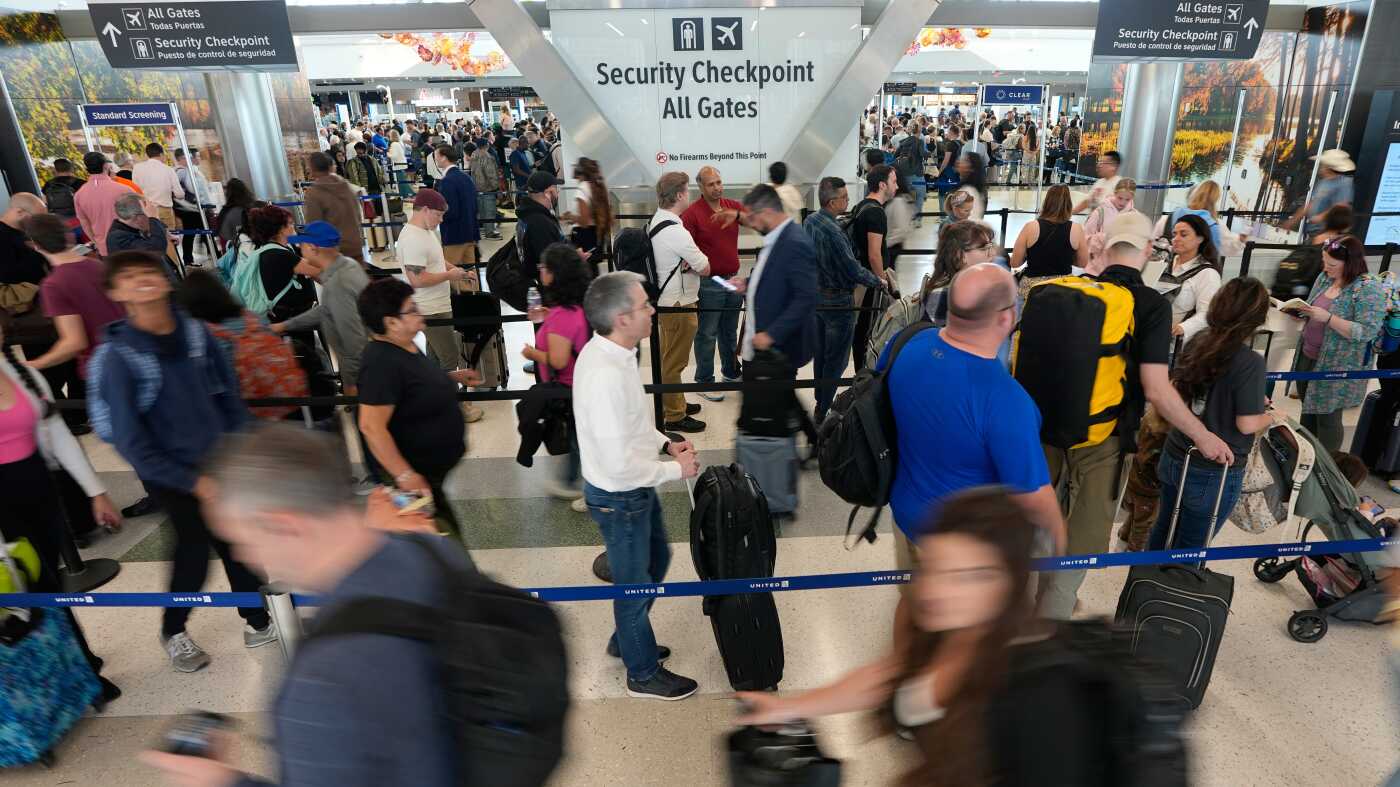
ICE officers could remain at airports after TSA workers are paid

Scathing report claims nation’s oldest labor union ‘betrayed’ MAGA members through ‘shocking’ spending

Republican US lawmaker demands Congress vote on any Iran troop deployment
-

 Sports1 week ago
IOC addresses execution of 19-year-old Iranian wrestler Saleh Mohammadi
-

 New Mexico1 week ago
Clovis shooting leaves one dead, four injured
-

 Miami, FL4 days ago
Jannik Sinner’s Girlfriend Laila Hasanovic Stuns in Ab-Revealing Post Amid Miami Open
-

 Tennessee6 days ago
Tennessee Police Investigating Alleged Assault Involving ‘Reacher’ Star Alan Ritchson
-

 Minneapolis, MN4 days ago
Boy who shielded classmate during school shooting receives Medal of Honor
-

 Politics1 week ago
Schumer gambit fails as DHS shutdown hits 36 days and airport lines grow
-

 Science1 week ago
Record Heat Meets a Major Snow Drought Across the West
-

 Technology1 week ago
YouTube job scam text: How to spot it fast