Mississippi
Mississippi State enters postseason play after best SEC finish in 17 years


After finishing .500 or better in Southeastern Conference play for the first time since 2007, Mississippi State is ready for the postseason. And the Bulldogs have a lot to play for this week at Auburn’s Jane B. Moore Field.
The only SEC team to miss the NCAA Tournament in 2023, MSU is all but assured of a return to the tournament this year, but the Bulldogs (33-17, 12-12 SEC) are hoping for more than that. Despite hitting a rough patch in late April, MSU rebounded to win two out of three against Georgia to close the regular season and still has a shot to host a regional for the first time in program history.
The No. 6 seed Bulldogs arrived in Auburn on Monday, giving them plenty of time to prepare for their first SEC Tournament game Wednesday night against 11th-seed South Carolina. A win over the Gamecocks may not move the needle much, but it would send MSU to the quarterfinals against No. 3 seed Texas A&M, and if the Bulldogs can knock off the Aggies, it may just be enough to sneak in and earn a top-16 national seed.
“We’re just really excited,” fifth-year senior pitcher Aspen Wesley said. “As long as we have fun, keep doing what we’re doing and try not to get ahead of ourselves, we’re going to do just fine.”
As of Tuesday, MSU’s RPI was back up to No. 20, but the Bulldogs still have work to do to climb into the hosting conversation — the worst RPI of a team that ended up hosting in the last five tournaments was 18. Some of the peripheral metrics should help, though. MSU is an impressive 11-11 against the top 25 and has 19 wins against the top 50, more than any of the other teams around them in the latest RPI.
The road starts with South Carolina (33-21, 8-16), a team the Bulldogs already took a series from in Columbia back in early April. The Gamecocks have the SEC’s worst team batting average, on-base percentage and slugging percentage and have hit just 32 home runs, the fewest in the conference. South Carolina’s pitching, though, is among the SEC’s best.
Led by Stanford transfer Alana Vawter, the Gamecocks’ team ERA of 2.02 is behind only conference champion Tennessee, and they keep the ball in the park better than any other SEC team, yielding just 18 homers in the regular season. Sage Mardjetko and Jori Heard complement Vawter to form one of the strongest pitching staffs in the conference.
Texas A&M (39-12, 15-9) took two out of three at Nusz Park in mid-March, but enters the postseason trending in the wrong direction after being swept at Florida. The Aggies, once considered a lock to host, are now down to No. 16 in the RPI, so a potential MSU-A&M quarterfinal matchup could have major implications for Selection Sunday.
With Trinity Cannon, Allie Enright and Jazmine Hill leading the way, the Aggies are second to the Gators in team batting average in the SEC. Tall left-hander Emiley Kennedy is Texas A&M’s ace, with a 20-10 record and a 1.67 ERA in 168 innings pitched.
Wesley comes in pitching the best softball of her career, holding a deep Georgia lineup to one run over 14 innings in two wins last weekend. Sophomore Josey Marron has struggled of late, though, although she did throw a shutout against South Carolina last month.
The Bulldogs’ offense stumbled down the stretch and scored just four runs in the Georgia series despite winning two of three. In particular, MSU needs to get Madisyn Kennedy going again — the fifth-year senior hit 10 homers and drove in 34 runs in March, but was held to just one hit over her last eight games. That one hit was a go-ahead solo shot Friday night against Georgia, but teams are pitching her differently and she has not shown consistency in her adjustments.
The conference tournament is also a homecoming of sorts for Jessie Blaine, who transferred from Auburn last offseason and is batting .328 with a .543 slugging percentage in her first year as a Bulldog.
“She’s such a great team player, and she’s all in for the matchups and for doing whatever she can to help the team,” head coach Samantha Ricketts said. “Just another one who fits so well in our culture when she got here. It feels like she’s been here for three years. We’re excited to have her, taking her back to her original field, but I know she’s proud to be here in the maroon and white.”
Quality, in-depth journalism is essential to a healthy community. The Dispatch brings you the most complete reporting and insightful commentary in the Golden Triangle, but we need your help to continue our efforts. In the past week, our reporters have posted 41 articles to cdispatch.com. Please consider subscribing to our website for only $2.30 per week to help support local journalism and our community.



GPS data from the Mississippi Department of Marine Resources, obtained by CBS News, tracks the movements of the boat that carried Nolan Wells to Horn Island on July 4. Wells was found dead after going missing following an outing on the island.
The vessel left a dock at approximately 9:56 a.m. that morning and arrived at Horn Island at 11:14 a.m. CBS News has previously reported that Wells was not on the boat when it departed the island.
According to the GPS data, the boat left Horn Island at 4:31 p.m. and returned to its original departure dock. It then traveled into Fort Bayou around 5:52 p.m. before returning to the dock at 6:06 p.m.
Later that evening, the boat went to the Fort Bayou boat launch at 7:19 p.m., according to the MSDMR report. From there, it traveled over land — presumably towed by a vehicle — to the Biloxi, Mississippi, residence of the boat’s owners.
The MSDMR report indicates that the boat’s owner, his mother and one other individual who was reportedly with Wells on the day of the incident have cooperated with the investigation.
The department’s report ends on July 5, following notification that the Jackson County Sheriff’s Office would take over as the lead investigative agency.
Wells, 18, was last seen on July 4 on Horn Island, where he had taken a boat trip with friends to celebrate the holiday, officials said. Wells traveled to the island with his friends but did not return to the mainland with them that afternoon, Jackson County Sheriff John Ledbetter has said.
He was last seen on the island at 3 p.m., according to attorney Ben Crump’s office. His mother reported him missing later that night and a search began.
His body was discovered July 6 off the coast of the island, which is about 10 miles south of the Mississippi mainland, following a search that involved the U.S. Coast Guard, the Mississippi Department of Marine Resources and the National Park Service.
Dental records confirmed the body was Wells, Jackson County coroner Bruce Lynd told CBS News. An autopsy took place on July 7, Lynd said, but the results were not immediately made public. Wells’ body was flown to Washington, D.C., for an independent autopsy, according to Crump.
Wells’ parents have said they don’t believe their son would’ve stayed behind on the island by choice when his friends left by boat.
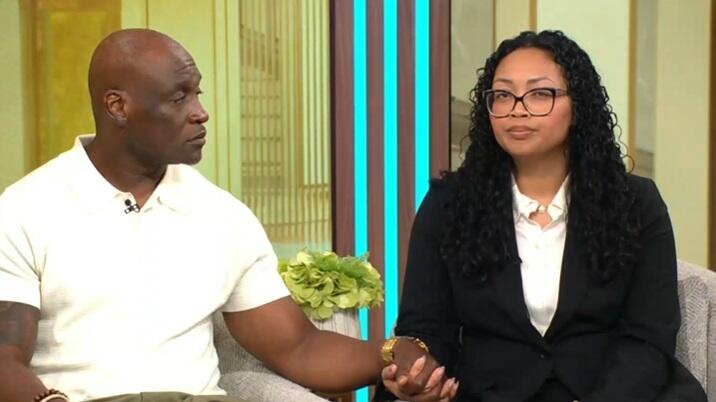
“No, he wouldn’t. Nolan always stays with the group,” Elmore Wonsley, Nolan’s father, told “CBS Mornings” last week. “If you be with me, you come back with me. So that I don’t understand, and with me being a parent, if I was in that situation, I would have told them, ‘You’re going to get back on this boat with me because I don’t want to answer to your parents if something happens to you.’”
When directly asked if he believed Nolan was left behind on the island, his father responded, “Yes. I don’t believe he decided to stay on the island by himself. It just doesn’t — that’s not his character.”
Wells went to Ocean Springs High School and was a rising sophomore on Southwest Mississippi Community College’s football team. Crump said Wells was a good swimmer.


Permanent daylight saving time in New Jersey
House approves permanent DST: NJ gets later sunsets year-round but darker winter mornings; sunrise could be ~8:25 a.m.
Are Americans finally done changing the clocks twice a year? Congress moved a step closer to ending the ritual after the U.S. House passed legislation that would make daylight saving time permanent.
It hasn’t been approved by the Senate yet, but it did pass the House with broad support (308-117). If it passes the Senate, it could be signed by President Donald Trump or become law without his signature, unless he vetoes it.
Trump has previously backed ending twice-a-year time changes.
“I am going to work very hard to see The Sunshine Protection Act signed into Law. It’s time that people can stop worrying about the ‘Clock,’” he wrote in a May Truth Social post.
A few versions of the Sunshine Protection Act were introduced in Congress. Rep. Vern Buchanan, R-Florida, introduced the one that’s gaining ground last year.
Here’s what to know about daylight saving time and the move to change it.
What is daylight saving time and why do we use it?
Daylight saving time is the practice of setting clocks forward an hour from March until November in an effort to gain more sunlight during the summer months.
According to the Library of Congress, it was first enacted in 1918 as a fuel cost-saving measure during World War I.
Daylight saving time became federal law under the Uniform Time Act of 1966. Under the law, some states can opt to exempt themselves from daylight saving time.
Would Mississippi keep daylight saving time year-round?
In 2021, the Mississippi Legislature passed a law saying the state plans to stick with daylight saving time year-round. But that only takes effect if Congress changes the federal law to let states adopt it all the time. A bill updating the effective date died in committee in the 2026 session.
Nineteen states, including Mississippi, are ready to make daylight saving time permanent if Congress changes the law to make the twice-a-year time shift optional, according to the National Conference of State Legislatures (NCSL).
How later sunrises would affect Mississippi
Sunrise and sunset times in summer would look the same.
But the period from November to March would be different. The amount of daylight would be the same, just shifted an hour later than usual.
Mississippi could expect the latest winter sunrises around 7:59 a.m. in mid-January. The earliest sunsets would shift from about 4:46 p.m. in early December to 5:46 p.m., according to timeanddate.com.
Why permanent daylight saving time failed before
Yes. Congress did drop Daylight Saving Time before.
The move failed in 1974 after parents worried about kids going to school before dawn, risking more vehicle crashes.
Some parts of the country, like Michigan or Indiana, don’t see sunrise until after 9 a.m. with the permanent daylight saving time.
When clocks fall back in 2026
Clocks will “fall back” from 2 a.m. to 1 a.m. on Sunday, Nov. 1, 2026, unless Congress changes the law.
Daylight saving time ends on the first Sunday in November each year, under current law. That’s when we get back that missing hour of sleep from the spring time change.
Does Mississippi change clocks twice a year?
Yes. Mississippi, which is in the Central time zone, observes daylight saving time.
What time is it in Mississippi?
Visit timeanddate.com to see the current time in Jackson.
Which states don’t observe daylight saving time?
Most of the U.S. participates in daylight saving time except for Hawaii and most of Arizona. The Navajo Nation in the northeast corner of the state does participate.
Bonnie Bolden is the Deep South Connect reporter for Mississippi with USA TODAY Network. Email her at bbolden@usatodayco.com.
Melina Khan is a national trending reporter for USA TODAY. Keep up with her on X @melinakh and Instagram @bymelinakhan.
Mississippi
Mississippi teen accused of killing elderly couple had worked for them before shooting: family

A teenager in Mississippi knew the elderly couple he’s accused of killing before sparking a standoff with law enforcement, according to new testimony in court.
Cordarius Hobbs, 17, is charged with killing 74-year-old Billy Blair and his 71-year-old wife Virginia Carol Blair during a home break-in on June 3 in Mendenhall, Mississippi.
Family members of Hobbs testified during the Thursday preliminary hearing that he knew the couple.
Family members testified that Hobbs did work for the Blairs for things like cleaning around the house before the alleged shooting, according to WAPT.
Billy Newsome, Hobbs’ grandfather, said he believes his grandson was called to work on the day of the alleged shooting but believes he’s innocent.
“My grandson used to work for the man, why you gone rob a man that you work for,” Newsome said. “Why you gone stay there that long and you know the police out there, and then you gone wait until everybody gets there to run, it just ain’t adding up, something just ain’t right here.”
On June 3, three contractors installing a generator at the Blairs’ home discovered Carol Blair’s car door open with several guns on the seats around 10 a.m., prompting them to call the Simpson County Sheriff’s Department for a welfare check at 11:30 a.m, according to a Mississippi Bureau of Investigation investigator.
By noon, the investigator said that officers arrived and were met with shots fired at them, starting a nearly two-hour-long standoff.
Hobbs was captured after trying to run away from officers, the official said, adding that the teen was unarmed when he was caught.
Carol Blair was found in a bedroom curled in the fetal position and had three gunshots to the back of her head. Bill Blair was found lying on his back in the kitchen with three gunshot wounds to his face.
The state investigator said three firearms were found inside the home as well as 280 shell casings, all owned by Bill Blair.
Hobbs’ defense attorney, Zachary Vaugh, argued that there’s a lack of direct forensic evidence connecting the teenager to the shooting.
“There was nothing to say he’s a principal, he’s the one that pulled the trigger on these things,” Vaugh said. “One of the things alone was, one of the victims was shot twice on one side of the head and once on the other. I think that’s pretty compelling that somebody else may have been in there. There’s a lot of things that are possible, just a tremendous amount of things.”
“When you have an officer say there’s no one that can identify him at the time of the shooting, I just don’t see how that adds up,” he said.
Hobbs is charged with two counts of capital murder and one count of burglary, in addition to 10 other charges. He was denied bond.
In a statement on Facebook, the couple’s family previously said, “We are crushed in spirit, bruised, and brokenhearted, but we are not alone.”
Jason Busby, who was friends with the couple, remembered them as being extremely selfless when speaking with WLBT.
“The man would’ve given you the shirt off his back, his wife is the same, and they’re just great people. It’s just a tragedy,” Busby said. “Everybody around here is still in shock. They were just good people.”
-

 Health6 minutes ago
Game-changing cholesterol pill wins FDA approval after cutting LDL nearly 60%
-

 Sports12 minutes ago
2026 AL, NL MVP Odds: Ohtani Favored; Alvarez Holding Off Challengers
-

 Technology18 minutes ago
Tesla helped save a driver. Is your car ready?
-
 Business24 minutes ago
SpaceX stock erases all its gains and slides below IPO price in intraday trading
-
 Entertainment30 minutes ago
Contributor: Hollywood will stop fueling racism when audiences demand better
-
 Politics42 minutes ago
Trump seeks prime-time spotlight for election claims, sparking concerns he’ll intervene
-
 Science48 minutes ago
California employer health premiums will cost as much as a new car in 2027
-
 Sports54 minutes ago
How Spain ‘recaptured the spirit of 2010’ in its run to the World Cup final

