Maryland
No. 12 Maryland men’s lacrosse escapes past No. 9 Ohio State in overtime 8-7 – WMUC Sports


No. 12 Maryland men’s lacrosse returned home to face off against No. 9 Ohio State, with the Terps being the second game of a women’s and men’s lacrosse doubleheader at SECU Stadium.
Cathy Reese’s women’s team continued its undefeated season and it was her son, Riley Reese, who was the story for the men’s team. A five-goal first quarter, along with an impressive defensive performance that was capped off by Reese’s game-winner, gave Maryland a much-needed 8-7 overtime win Saturday night.
Ohio State’s defense has been arguably the best in the country up to this point. The Buckeyes have allowed just seven goals per game this season, including multiple games holding teams to five or fewer goals.
Despite this, Maryland’s attack got going early.
The Terps scored five goals in the first quarter, including a 4-0 run to open the game. Leo Johnson led the offense, assisting twice and scoring a goal of his own during the opening run.
But the first quarter was the only time Maryland’s offense looked good all game, only scoring twice for the remainder of regulation, including a zero-goal fourth quarter.
“Two goals in three quarters … you’re really not scoring a lot of goals,” head coach John Tillman said. “We’ll put a lot of time in. We just got to help these guys be better.”
Maryland applied pressure, but struggled to convert on their chances. The Terps scored just one goal in each of the second and third quarters, despite having 16 shots and nine shots on goal over that stretch.
The turnover issues resurfaced, a problem for Maryland all year. The Terps average over 14 per game, and after only one in the first quarter, Maryland turned it over nine times in the last three quarters.
With the offensive struggles, Maryland looked to faceoffs to keep the attack afloat. The Terps pair of Henry Dodge and Jonah Carrier delivered, winning 12 of 18 from the spot.
Dodge was dominant, winning 8-of-10 face-offs, including the lone face-off in the overtime period.
With the offense scuffling throughout most of the game, it was the defense that came through for Maryland. Coming off one of its best defensive games of the season last week, Maryland built on that performance again against the Buckeyes.
Ohio State lacked rhythm on offense, aided by Maryland forcing 12 turnovers. The Terps’ defensive prowess was amplified in the second half, as they allowed just two goals.
The backline was able to keep pressure away from Brian Ruppel, allowing just 17 shots on goal throughout the game. Ruppel performed when needed, making 10 saves good for a .558 save percentage.
With the Terps attack scoring four times on their first five shots on goal, Ohio State goalkeeper Caleb Fyock looked to be on his way to a second straight bad performance in Big Ten play.
Fyock rebounded in the second quarter, ending with eight total saves heading into the break and keeping Maryland from building on its early lead.
The junior dominated the rest of the game and completely locked up the Maryland attack, making multiple big saves.
“Give their defense credit, you look at what they’ve done all year, they’ve been rock solid.” Tillman said. “Caleb [Fyock]’s excellent… hats off to them, they were as advertised.”
Despite Ohio State building on its goalkeeper’s dominance to end the game, its offense lacked the firepower to overcome the early deficit.
The win for the Terps comes at a crucial point in Big Ten play. With just two games remaining in the regular season, Maryland is tied for first place in the Big Ten standings.
Related



(Photo by Celal Gunes/Anadolu via Getty Images)
WASHINGTON – The Department of Justice is suing Maryland and State Attorney General Anthony Brown, alleging the state’s “sanctuary” policies hinder the enforcement of federal immigration laws.
The lawsuit claims that Maryland’s sanctuary policies are illegal under federal law and that the state’s “refusal to cooperate with federal immigration authorities” has had negative consequences for immigration law enforcement officials.
What we know:
According to the lawsuit, the state’s refusal to cooperate has led to facilities refusing to help transfer immigrants to federal custody.
Under the direction of Acting Attorney General Todd Blanche, the DOJ’s Civil Division will identify state and local laws, policies and practices that violate federal laws or impede federal operations.
“When sanctuary jurisdictions enact laws to shield [undocumented immigrants] from federal law enforcement, it is not merely federal law that is violated, but the voices of everyday American voters silenced,” said Associate Attorney General Stanley Woodward.
The lawsuit cites Maryland’s Community Trust Act, a law that went into effect in May, which prevents local law enforcement from holding an individual without a warrant on behalf of U.S. Immigration and Customs Enforcement (ICE). There is an exception for those who commit felonies or sex offenses.
What they’re saying:
The Community Trust Act law sparked pushback from local law enforcement leaders across the state, with 17 of Maryland’s 24 sheriffs suing, and saying the law “undermines public safety and restricts cooperation” between local and federal officials.
“Such blatant disregard for federal laws that have been on the books for decades is not merely a political disagreement or passive abstention; it is deliberate, disruptive action that jeopardizes the public safety for all Americans,” the DOJ lawsuit reads. “The Supremacy Clause of the United States Constitution prohibits a state from obstructing Congress and the Executive in this manner.”
The Source: This information is from a Department of Justice lawsuit.

GLEN BURNIE, Md. (WBFF) — An office building in Glen Burnie was evacuated on Thursday afternoon after its underground parking garage experienced a shift in one of its floors.
The Anne Arundel County Fire Department initially responded to the 7300 block of Ritchie Highway around 2:30 p.m. on July 9 after reports of a partial building collapse.
However, the department later clarified that there has been no collapse of the 10-story building.
Officials said crews are evaluating the building’s structural integrity after work was being performed in the parking garage.
All occupants were safely evacuated, and no injuries have been reported, according to Fire Captain Jenny Macallair.
The fire department is asking drivers to avoid the area while crews continue their assessment.
FOX45 News has a crew on the way to the scene, and we will provide updates as they become available.


See America’s most iconic hot dogs
Welcome to the United States of Hot Dogs! We’ve compiled a few of the best hot dogs eaten across the country.
Although Maryland is often celebrated for its seafood, one over-the-top creation has carved out its own loyal following among locals and visitors alike: The Baltimore-style hot dog.
Sausage is merely its first layer of meat. It’s wrapped in a thick slice of fried beef bologna and piled high with toppings.
It’s proof that while hot dogs are truly an All-American food, their real power lies in how they adapt to local tastes.
Hot dogs were “invented” in the U.S. after German sausages were served in buns. They’re a staple of baseball games — the all-American pastime. And they are truly a democratic food: nearly anyone can afford to enjoy them.
But even more, hot dogs are American because of their adaptability, reflecting the ingenuity and diversity that gives our country such a rich culinary tapestry.
“You can tell the story of America through hot dogs. There are probably other things you could use, other objects or icons, but I think hot dog is a really good one,” said Bruce Kraig, a Ph.D. food historian and author of “Hot Dog: A Global History’ and ‘Man Bites Dog: Hot Dog Culture in America.”
Regional hot dog toppings, from chili in Cincinnati to celery salt in Chicago to jalapeños in the Southwest, tell distinct stories of place.
Here in Baltimore, Maryland, our contribution to the United States of Hot Dogs is the Baltimore-style hot dog.
What is a Baltimore-style hot dog?
At its core, the Baltimore dog is a meat-on-meat masterpiece. It starts with a kosher all-beef sausage that is split, fried and wrapped alongside thick, charred bologna slices.
It’s traditionally topped with raw onions and yellow mustard, with a pickle spear on top or on the side. Some variations include the addition of sweet relish, ketchup or cheese.
“In this creation, grease from the bologna mixes with the grease from the hot dog, and both find their way into the bread to form an unforgettable aroma, taste and aftertaste — and 200 points on your cholesterol count,” Baltimore historian Gilbert Sandler told The Baltimore Sun in a 2019 story.
Where did the Baltimore-style hot dog come from?
Its origins are often somewhat unclear, but it’s believed to have originated during the Great Depression when, according to TasteAtlas.com, “people added bologna slices to the hot dog in order to make it a fuller, heartier meal.”
Jewish delis along Baltimore’s historic “Corned Beef Row” were looking for ways to offer working-class customers a filling, calorie-dense meal for a small chunk of change, leading to the birth of the Baltimore-style hot dog.
First becoming popular in the early 1940s at Mandell and Ballow deli, the bologna-wrapped hot dog spread throughout Baltimore, The Sun reported.
“Despite being a nutritionally questionable combo of two of the world’s least-healthful meats, the bologna dog continues to be a local favorite, enjoyed without apology,” FoodRepublic.com wrote in 2023.
Four best places to try a Baltimore-style hot dog
Attman’s Delicatessen: A Baltimore institution since 1915, Attman’s version of the Baltimore-style hot dog sits at the top of its menu. Its dog — for $7.99 — comes with your choice of mustard, relish, chopped onions and ketchup. Details: 1019 East Lombard St., Baltimore; 410-563-2666, attmansdeli.com.
Weiss Deli: Another Baltimore staple, Weiss serves speciality sandwiches and, of course, the Baltimore-style hot dog. You can customize the $7.49 dog with up to eight toppings, but its most popular version comes with just deli mustard and raw onions on top of the bologna-wrapped sausage. Details: 1127 East Lombard St., Baltimore; 410-276-7910, baltimoreweissdeli.com
The Dog House Carryout: A legendary landmark in Baltimore, The Dog House Carryout has been slinging its classic comfort food for more than 75 years. You can get a quarter-pound all-beef hot dog for $6.95, with bologna added for an extra $1.25. The dog comes with your choice of mustard, relish, onions and ketchup. Details: 617 Fallsway, Baltimore; 410-685-7269, thedoghousebaltimore.com
Killa Dogz: Killa Dogz, one of the more modern hot dog spots in the city, offers a wide variety of options, including what it calls the “Bmore” dog. At $7, its version is deep fried, wrapped in bologna and “served on a squishy bun with mustard.” Chili and cheese are among the top ways to customize its dog. Details: 6106 Belair Rd, Baltimore; 443-438-7822. killadogz.com.
Jennifer Borresen contributed the interactive graphic to this story. She is a graphic journalist at USA TODAY, specializing in explanatory graphics and illustrations in various fields, including politics, science, weather and entertainment.
-

 Georgia5 minutes ago
Georgia cops’ alleged misuse of Flock license plate tracking data fuels privacy concerns
-

 Hawaii8 minutes ago
3 candidates to be considered for District 18 seat
-
 Idaho13 minutes ago
“We won’t insure you”: Robie Creek homeowners struggle to get home insurance due to wildfire risks
-

 Illinois20 minutes ago
After recent Illinois lightning strikes, officials share safety tips
-

 Indiana23 minutes ago
Kelsey Mitchell winner completes Fever comeback against Mercury, without Caitlin Clark
-

 Iowa28 minutes ago
McKeever’s 7′3″ frame made Iowa the ‘obvious choice’ in the transfer portal
-
 Kansas35 minutes ago
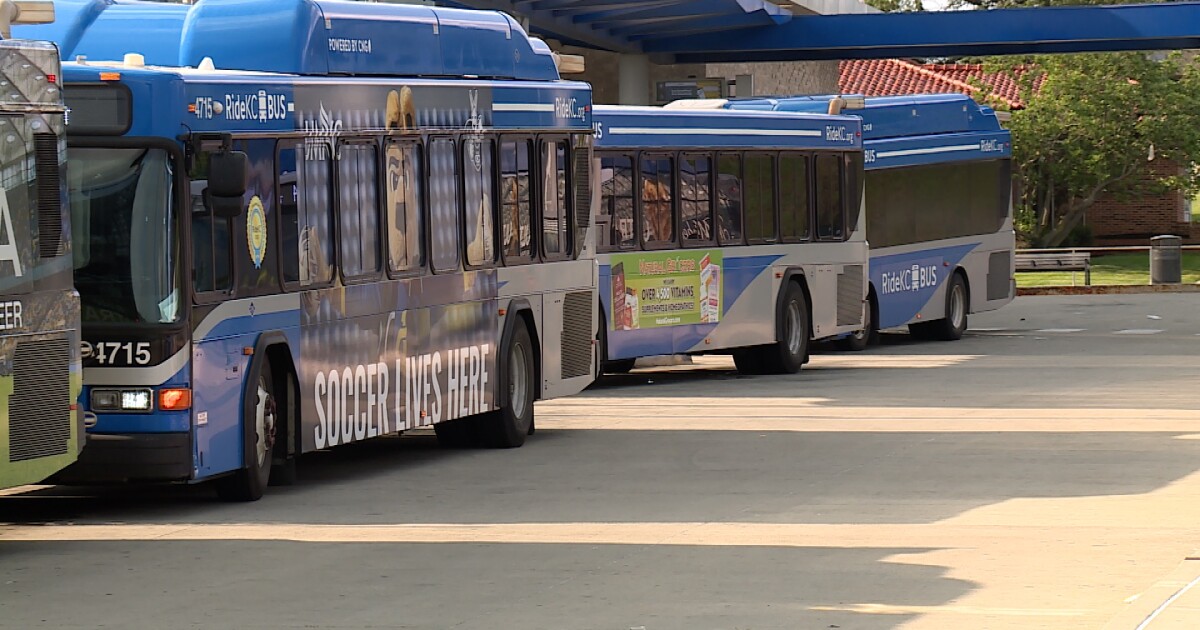
Kansas City to reduce bus transit frequency, extended hours after World Cup matches end
-

 Kentucky38 minutes ago
Public Health Student Hollie Hagan found her calling in rural Kentucky

