Louisiana
‘New Orleans wrecked me’: How a young pastor’s time in Louisiana reshaped his faith


Jared Stacy doesn’t talk about his years in New Orleans as a charming chapter of early adulthood. He talks about them as devastation — the good kind.
“New Orleans wrecked me in the best way possible,” he said.
Near the end of his time in Louisiana, Stacy attended what he thought was a prayer gathering for pastors at LSU’s Pete Maravich Assembly Center. Instead, he found himself crossing a protest line between a Christian rally and pro-choice demonstrators — a moment that unsettled him in ways he didn’t yet understand.
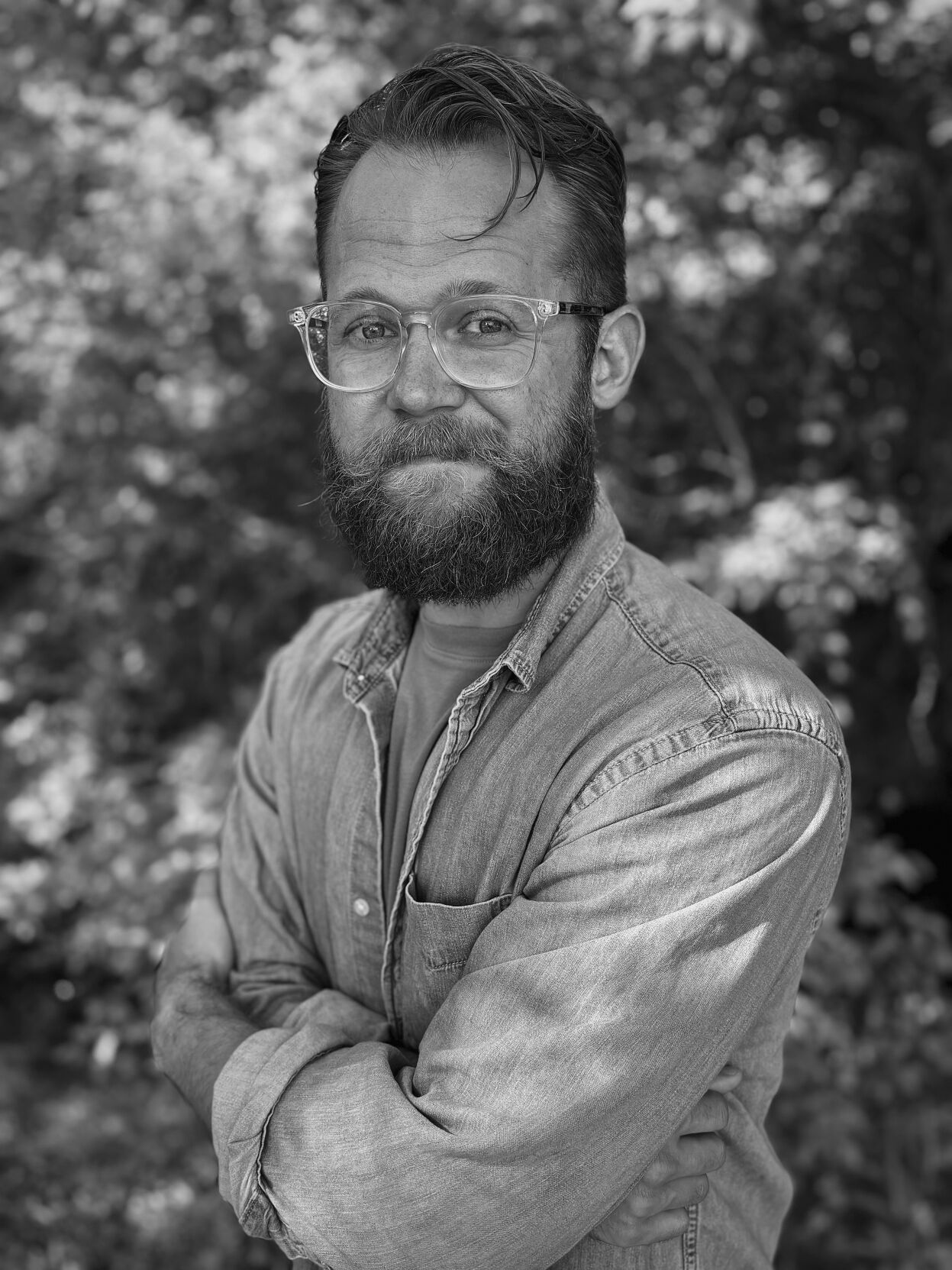
Author Jared Stacy’s new book, “Reality in Ruins: How Conspiracy Theory Became an American Evangelical Crisis,” will be released March 17. The book is published by HarperCollins.
Stacy, now 35 and living in St. Petersburg, Florida, grew up in a conservative Baptist environment that he describes as “hard right and far right.” As a child, the word “fundamentalist” simply meant serious Christianity.
In the church culture he knew, faith was defined by certainty — about theology, politics and the boundaries between believers and everyone else.
Living and working in New Orleans began to chip away at that certainty.
The experience eventually became the starting point for his work examining conspiracy thinking inside American evangelicalism — and for his new book, “Reality in Ruins: How Conspiracy Theory Became an American Evangelical Crisis,” which will be released March 17 by HarperCollins.
“I definitely grew up and knew the language,” he said. “Fundamentalist was a good thing. To me as a kid, it just meant we were Christians. We were serious Christians.”
A storefront church in Metairie
After marrying his wife, Stevie Noble, the couple chose New Orleans in 2012 so they could both pursue graduate degrees. Stacy enrolled at New Orleans Baptist Theological Seminary in Gentilly. Within six months he was pastoring a small church in Metairie.
The congregation met in a storefront church near Fat City, where apartment buildings, parade routes and late-night restaurants filled the surrounding blocks and the church door stayed open throughout the week. Neighbors drifted in and out. The surrounding neighborhood — dense, pedestrian and diverse — exposed him to people he had rarely encountered in his upbringing.
“People just walked in,” he said.
That environment brought him into conversations he had rarely experienced before.
The congregation included people with different political views and life experiences than the communities he had grown up around.
“I remember thinking, ‘Man, I’m going to church with people who are Democrats,’” he said. “That was a first for me.”
Living and working in the New Orleans area slowly dismantled assumptions he had carried since childhood. He says that the experience was not dramatic in the moment, but it gradually reshaped how he understood faith and the people around him.
“I really felt like I was the one being pastored just by the experience itself,” he said. “I didn’t have the language to be able to articulate the sort of changes that were occurring. The ways that my lived theology was undergoing a crisis that I didn’t realize.”
At the time, he did not fully understand the internal shift that was happening. Years later, those experiences would shape his academic work.
His book examines the long relationship between evangelical Christianity and conspiracy thinking in the United States. One of his central arguments is that conspiracy theories are not a recent intrusion into evangelical culture but something woven into its history.
“Conspiracy theory is very much like a load-bearing wall in the evangelical house in America,” he said. “It is a feature, not a bug.”
The idea deepened during his doctoral studies at the University of Aberdeen, which he completed in 2024.
The more he studied American history and evangelical culture, the more he saw how persistent conspiracy thinking had been.
“You can’t tell the story of America without conspiracy theories,” he said. “These stories are always the things that get told when we’re afraid of society getting turned upside out.”
What surprised him even more was how resistant those beliefs are to correction.
Fact-checking alone, he said, rarely changes deeply held beliefs shaped by religious or cultural narratives. Instead, he argues, conspiracy thinking often operates inside broader stories people already believe about the world — stories that make some claims feel plausible and others impossible.
Modern technology has only accelerated that dynamic.
“We are living with more facts, more information than we’ve ever lived with before,” he said. “And, ironically, we are less able to parse fact from fiction, reality from disreality than perhaps at any other time.”
For Stacy, those questions are not purely academic.
After their time in New Orleans, Stacy and his wife moved to her childhood church in Fredericksburg, Virginia.
“We didn’t realize how much we had changed. We thought we were going back to somewhere familiar,” Stacy said, “but that was the place where we began to work through how our beliefs changed and the contradictions between our beliefs and the Southern Baptist Convention were unveiled in a local, concrete place.”
From Fredericksburg, Stacy decided to go back to graduate school to earn a doctorate.
His research intersects with his own spiritual journey and with debates inside American Christianity about power, politics and belief.
He describes his approach as “doing theology against theology” — using Christian ideas to challenge political or religious movements that claim Christian authority.
“I do that as an insider,” he said. “I was in there — and I called White Christian nationalism just Christianity.”
The urgency of the problem, he argues, is not simply theoretical.
The stories communities tell about one another can shape how people treat each other in the real world.
“I call it a crisis because there are real human communities, human lives, human bodies that are placed in physical risk because of the stories we tell,” he said.
But the word “crisis,” he said, also carries another meaning.
Moments of crisis demand decisions.
“A crisis in the truest sense of the word calls for a decision,” he said. “To not choose is to choose.”
Noticing the signs at LSU
Walking across LSU’s campus with a Bible in hand, Stacy joined a group heading toward the event at the PMAC. Along the way, he struck up a conversation with an English professor walking beside him.
As they neared the PMAC, Stacy noticed the signs. He realized that the people he was walking with were part of a pro-choice demonstration that he would have to walk through to attend the Christian rally inside.
The moment forced him to confront two worlds colliding in the same space.
“I suddenly look around and realize that they are holding pro-choice signs,” he said. “And I have this moment where the guy that I was walking with, and I suddenly recognized that we’re not part of the same people here.”
Crossing the protest line to enter the rally unsettled him in ways he could not fully explain at the time.
He now sees that moment as an early glimpse of the religious and political fusion he later studied.
“I had this very unsettling sense that maybe the Jesus that I worshipped would not have crossed that picket line,” he said. “I felt like this lit professor and I might have had a lot to talk about. I’m like crossing this protest line to go to a prayer rally.”
Looking back, he says those kinds of experiences helped him recognize how closely political rallies and religious revivalism could mirror each other, seeing the two as almost indiscernible.
A crisis inside evangelicalism
Today, Stacy works as a hospice chaplain and attends what he describes as a “post-evangelical” church in St. Petersburg. The congregation still recites ancient Christian creeds and the Lord’s Prayer each week, but it has moved away from the evangelical label.
The shift reflects a broader attempt to acknowledge the tradition the church came from while moving beyond it.
“If we just give it up,” he said of the label evangelical, “no one has to say they’re sorry.”
Stacy still considers himself a Christian, though his faith looks different from the one he inherited and knew as a child. He says that his faith has been totally altered — and yet it hasn’t changed at all.
Part of faith, he believes, involves letting go of illusions.
“I think part of the Christian faith involves being dispossessed of our illusions,” he said.
For pastors and believers wrestling with the tensions he describes, Stacy says speaking honestly may come at a cost and that “courage can look like ruin.” The choice to challenge conspiracy thinking or Christian nationalism can threaten careers and congregations.
Pastors who speak out, he acknowledged, may lose jobs, relationships or stability. But, he says, silence carries its own consequences.
“Our world needs not just analysts and experts,” he said. “It also needs witnesses.”
For Stacy, that journey began years earlier in a storefront church in Metairie — where the certainty he once carried first began to come undone.



Louisiana
Voters casting ballots Saturday for candidates to fill vacant La. House of Representatives seat

BATON ROUGE, La. (WAFB) – Many voters in Baton Rouge and St. George are headed to the polls Saturday (March 14).
A special election is taking place to fill the vacant Louisiana House District 69 seat. It opened up after former Louisiana State Representative Paula Davis announced her resignation in December.
“This decision has not come lightly, but I believe the time is right to step away from public office and embrace the next chapter of my personal and professional life,” Davis said.
Four candidates are vying for the open seat. They are Democrat Angela Roberts and Republicans Paul Sawyer, Adam Beach, and Lynn Coxe Graham.
The polls are open from 7 a.m. to 8 p.m. According to the Louisiana Secretary of State’s Office, anyone in line by 8 p.m. will be allowed to cast their ballot.
When going to vote, you should bring a valid ID with you, which can be a Louisiana driver’s license, a digital license via the LA Wallet App, a Louisiana Special ID card, or a generally recognized picture identification card like a passport.
For information about your polling place and to view a sample ballot, you can visit the Louisiana Secretary of State’s website.
Voters in parts of the New Orleans area are also headed to the polls Saturday. Residents are choosing the next state senator for Louisiana Senate District 3 and a state representative for Louisiana House District 100.
Click here to report a typo. Please include the headline.
Click here to subscribe to our WAFB 9 News daily digest and breaking news alerts delivered straight to your email inbox.
Watch the latest WAFB news and weather now.
Copyright 2026 WAFB. All rights reserved.


See the shoreline road in Falmouth often battered and eroded by storms
A flyover heading west along Surf Drive in Falmouth shows a section of the road the town has decided needs ‘targeted nourishment’ to prevent erosion.
When you think of long shorelines in the U.S., your mind most likely goes to Florida or California.
While Florida does have the second-most shoreline in the U.S., Louisiana is not far behind.
Louisiana may not be known for sandy, swimmable beaches, but it is among states with the most shoreline in the U.S.
Louisiana has the third longest shoreline in the U.S. according to WorldAtlas
Louisiana has the third most shoreline, with total shorelines in the state equating to 7,721 miles, according to WorldAtlas.
Louisiana’s amount of shoreline is no surprise, as the state borders the Gulf of Mexico and its coastline is home to a maze of wetlands, bayous, estuaries, barrier islands and tidal waterways.
All of these waterbodies add up under the NOAA’s definition of shoreline, with edges where land and tide-influenced water making up shoreline mileage, says WorldAtlas.
While Louisiana is not exactly known for its beaches, the state has approximately 397 miles of direct coastline, and the longest beach in the state, Holly Beach, spans 17 miles and can be found in Cameron Parish, according to A-Z Animals.
10 states with the longest shorelines according to WorldAtlas
- Alaska: 33,904 miles
- Florida: 8,436 miles
- Louisiana: 7,721 miles
- Maine: 3,478 miles
- California: 3,427 miles
- North Carolina: 3,375 miles
- Texas: 3,359 miles
- Virginia: 3,315 miles
- Michigan: 3,224 miles
- Maryland: 3,190 miles
Presley Bo Tyler is a reporter for the Louisiana Deep South Connect Team for USA Today. Find her on X @PresleyTyler02 and email at PTyler@Gannett.com

A Roman Catholic priest in the south-west Louisiana diocese where the US church’s clergy abuse scandal effectively started decades ago has been formally charged with three counts of felony indecent behavior with a juvenile.
A bill of information from the district attorney for Acadia parish charges 37-year-old Korey LaVergne with three counts of felony indecent behavior with a juvenile who was 15 at the time of the alleged offenses.
Court documents charge LaVergne with “willfully, unlawfully, knowingly and intentionally [committing] lewd or lascivious acts upon [the] juvenile” – or in the presence of the minor – on or about 1 January 2024. The charges contend that LaVergne had the “intention of arousing or gratifying the sexual desires of either person”.
A document dated 11 March filed by LaVergne’s attorneys state that the clergyman opted to waive his formal arraignment and in writing pleaded not guilty to the charges outlined in the bill of information.
LaVergne is a priest for the diocese of Lafayette, Louisiana. Another Lafayette diocese priest named Gilbert Gauthe brought the Catholic clergy abuse crisis to the US’s collective conscience by pleading guilty in 1985 to molesting several boys he encountered through his ministry.
He served 10 years in prison and now lives in Texas, and he has continued to be named in civil lawsuits from victims seeking damages from the Lafayette diocese over their abuse at Gauthe’s hands.
LaVergne’s formal charges came after he was arrested in mid-January on the same three counts referred to in the bill of information.
At the time, records showed that LaVergne, the pastor at the St Edward Catholic church in the community of Richard, posted bail of $15,000 less than 90 minutes after being jailed. That secured his release from custody while the case proceeds.
A week after his arrest, the Guardian obtained the investigators’ initial report on the case, which stated that LaVergne had been jailed after local authorities were told that the clergyman had “inappropriately touched a child” over the course of a year.
The Lafayette news station KADN reported on 16 January that another priest had reported the allegations against LaVergne to authorities prior to his arrest.
A pretrial hearing in the case has been tentatively scheduled for 12 June after LaVergne’s attorney filed a series of standard court motions, records show.
Neither LaVergne nor his attorney immediately responded to requests for comment from the Guardian on Friday regarding the formal charges.
LaVergne faces a maximum sentence of seven years in prison and up to $5,000 in fines.
Generally, under Louisiana law, indecent behavior with a juvenile can be punished with up to seven years in prison.
The state defines the offense as “any lewd or lascivious act … in the presence of any child under the age of 17”. The law also states that messages – including texts – and actions alleged to constitute grooming can fall under the offense.

Propelled from grief to action | Arkansas Democrat Gazette

California man charged in Love Field assaults, feds say

Crazy or genius? A nuclear-powered solution to the West’s water crisis

Overnight Forecast for March 15

Delaware teen charged with attempted murder after violently stabbing rideshare driver, police say

Florida High School Football Rankings: Top 25 teams – Oct. 21

How old is Bo Nix? What to know about Oregon quarterback ahead of 2024 NFL Draft

Cleary's 21 help Le Moyne down Central Connecticut State 69-64 in OT

99th annual Pony Swim held in Virginia

Indiana Members Credit Union announced as new anchor tenant at Bottleworks District

Trump-backed Potomac sewage cleanup complete after massive spill ahead of summer America250 celebrations

Russian strikes kill at least four people in Ukraine’s Kyiv region

U.S. service members killed in refueling aircraft crash in Iraq identified as Ohio National Guard members and Florida-based crew

Ex-Dem senator admits to affair with former bodyguard in explosive court filing: ‘Romantic and Intimate’

Israel bombs Basij checkpoints in Tehran as US, Iran trade fire and jabs
-

 Detroit, MI1 week ago
U.S. Postal Service could run out of money within a year
-

 Pennsylvania1 week ago
Pa. man found guilty of raping teen girl who he took to Mexico
-

 Oklahoma7 days ago
OSSAA unveils Class 6A-2A basketball state tournament brackets, schedule
-

 Michigan6 days ago
Operation BBQ Relief helping with Southwest Michigan tornado recovery
-
 Southeast5 days ago
‘90 Day Fiancé’ alum’s boyfriend on trial for attempted murder over wild ‘Boca Bash’ accusations
-

 Health7 days ago
Ancient herb known as ‘nature’s Valium’ touted for improving sleep and anxiety
-

 Nebraska2 days ago
Wildfire forces immediate evacuation order for Farnam residents
-

 Tennessee1 week ago
Lady Vols fall to Alabama in SEC Tournament for seventh loss in row