Louisiana
Louisiana police have July 4 flashing light show for impaired drivers


The following has been provided by the Louisiana Highway Safety Commission:
Fireworks shows are a hallmark of Independence Day. But flashing police lights are the only show for impaired drivers as the Louisiana Highway Safety Commission begins its statewide Drive Sober or Get Pulled Over campaign.
According to AAA, a record 60.6 million people will travel by car this 4th of July. Law enforcement officers across Louisiana will be looking specifically for impaired drivers this holiday weekend, and those who fail a sobriety test will be arrested, LHSC Executive Director Lisa Freeman said.
“This is a Louisiana campaign to keep Louisiana citizens safe from the scourge of impaired driving,” Freeman said. “People should be able to celebrate without worrying about getting hit by a drunk driver.”
LHSC has made funds available to Louisiana law enforcement agencies to schedule extra troopers, officers, and deputies to patrol the roads and interstates through Sunday, July 7. These law enforcement officers have been trained to spot behaviors that indicate a driver is impaired.
“If a driver has a blood-alcohol concentration of .08 or higher, that driver is legally impaired and subject to arrest,” Freeman said. “Actual impairment can begin with just one alcoholic beverage. Bottom line: If you’re drinking, you shouldn’t be driving.”
According to the National Highway Traffic Safety Administration, just a small amount of alcohol can cause a decline in visual functions, an inability to perform two simultaneous tasks, reduced coordination, an inability to steer, and a reduced response to emergency driving situations.
Motor vehicle crashes involving drivers who have been drinking kill and injure hundreds of people every year in Louisiana. The statistics are generally worse during holiday periods. From 2018-2022, 12 people were killed and 254 people were injured in alcohol-related crashes during the Independence Day holiday period, according to the Center for Analytics and Research in Transportation Safety at LSU.
“We’ve made so much progress in making roads safer and making vehicles safer, but we continue to see these tragedies,” Freeman said. “Unfortunately, you can never make a road or a car safe enough for an impaired driver. Drive Sober or Get Pulled Over is an important tool for us to protect all road users.”
Besides refusing to drive impaired, avoiding distractions behind the wheel such as a cell phone, driving the speed limit, and wearing a seatbelt greatly reduce the risk of being injured or killed in a motor vehicle crash.
Copyright 2024 Louisiana Highway Safety Commission. All rights reserved.



MONROE, La. (KNOE) – Families spent part of Independence Day weekend at Louisiana Purchase Gardens and Zoo for the first-ever “Red, White and Blue Day,” a new event the zoo hopes will become an annual tradition.
The celebration featured children’s activities, food vendors and patriotic decorations throughout the grounds.
Organizers also added a pair of crowd-pleasers: a pizza-eating contest and a watermelon-eating contest, drawing spectators who gathered to watch contestants race the clock.
Zoo Director Phillip Crawley said the event was designed as a family day focused on bringing the community together.
“We want a family day, you know, we want people to come together. We want the, all of America needs to come together,” Crawley said. “Everybody’s been so at each other lately that hey, let’s all just get back together… let’s come out here to the zoo let’s have a good time… and see that everybody’s happy.”
Crawley said the goal is to give families another reason to visit while creating a positive, shared experience in a relaxed setting.
Zoo officials said “Red, White and Blue Day” was the first of its kind at Louisiana Purchase Gardens and Zoo, and they hope to make it a yearly event moving forward.
Copyright 2026 KNOE. All rights reserved.

(KTAL/KMSS) – The ongoing saga of Louisiana Attorney General Liz Murrill has many commentators on social media questioning what the grand jury process entails.
A grand jury is unlike a trial jury. A trial jury hears a case and decides a defendant’s guilt or innocence. The purpose of the grand jury is to determine if there is sufficient evidence against a defendant to bring them to trial.
The evidence viewed by a grand jury only represents what the state government considers just cause to bring charges in a case. They do not render verdicts; instead, they indict, which is a formal accusation or a decision that a person should be tried for their alleged crimes in a court of law.
In Louisiana, the grand jury is empanelled for a six-month service term. Occasionally, a special grand jury may be empanelled for eighteen months. Grand jurors are selected by lot from a pool of at least 300 prospective jurors. The number of grand jurors is specified by the court.
Once a grand jury is selected, the process becomes cloaked in privacy as names are sealed in envelopes and locked in sealed boxes. The clerk of court in the parish prepares subpoenas ordering pool members to appear on the date set forth by the court for grand jury selection.
Louisiana
Louisiana Supreme Court recalls Liz Murrill’s arrest warrant in late-night emergency ruling

The Louisiana Supreme Court in an emergency order late Friday night agreed to recall an arrest warrant for Louisiana Attorney General Liz Murrill, after issuing a ruling earlier in the day to stay her indictment from an Orleans Parish grand jury.
The grand jury indicted Murrill on Thursday, charging her with 16 felony counts of malfeasance in office and intimidation. Orleans Criminal District Court Judge Leon Roche issued an alias capias arrest warrant and set Murrill’s bond at $400,000.
The attorney general quickly asked the state Supreme Court to intervene, who responded with an order Friday morning that stayed the indictment.
But by late Friday, Murrill went back to the high court alleging that the special prosecutor appointed to her case, former New Orleans judge Laurie White, had refused to recall the alias capias arrest warrant despite the stay.
“I object to the removal of the capias (warrant), as the accused should not get any more preferential treatment than any other criminally charged defendant,” White allegedly told Murrill’s legal team, according to their filing to the Supreme Court.
The Louisiana Supreme Court issued another order late Friday night, saying it was “in order to add clarity and specificity where none should have been required.” The order recalled Murrill’s arrest warrant, ordered White and law enforcement to remove the warrant from law enforcement databases, and ordered White and law enforcement to “take all necessary actions to comply with this Order.”
The court’s vote on recalling the warrant was 4-3, with Justices Billy Burris, Cade Cole, Jefferson Hughes and Jay McCallum voting in the majority. Chief Justice John Weimer and Justices Piper Griffin and John Michael Guidry each dissented. Weimer and Guidry had also dissented earlier Friday from the decision to stay Murrill’s indictment; Griffin had voted in favor of the stay.
“It is said that procedure is the handmaiden of substance, but in criminal cases procedural rules are indispensable to serve justice and ensure that all are treated equally,” Weimer wrote in his Friday night dissent over recalling the warrant. “Yet, ironically, on the eve of this July 4th when our nation will commemorate the 250th anniversary of the Declaration of Independence, this court is once again called upon to provide exceptions to the normal process pursuant to another feigned emergency by one party.”
Griffin wrote in a dissent that recalling the warrant goes to the merits of the case. Guidry wrote in his dissent that the majority had elevated “power and privilege over process.”
“This is yet another unprecedented preferential act by the majority bestowing a privilege that no other criminally charged defendant can reasonably expect to receive,” Guidry wrote.
This is a developing story, check back later for more.
-
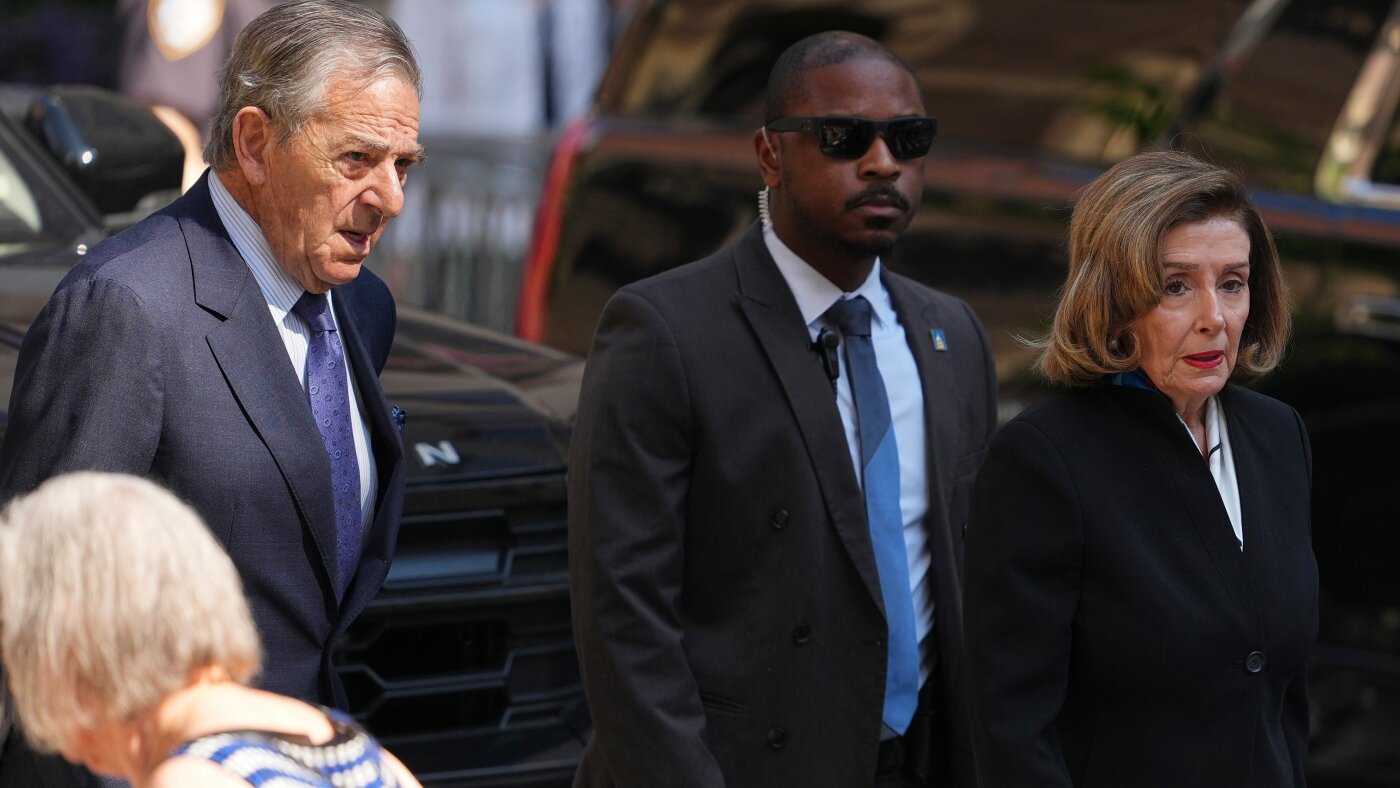 News6 minutes ago
Paul Pelosi in hit-and-run in California, car left with major damage, authorities say
-

 Los Angeles, Ca1 hour ago
Firefighters battle Fourth of July blazes around Los Angeles
-

 Detroit, MI2 hours ago
Storm chances linger into the start of the week across Metro Detroit
-

 San Francisco, CA2 hours ago
Relay for America runs flag from San Francisco to D.C. in message of unity
-

 Dallas, TX2 hours ago
Cowboys newcomer already looks like a waste of money in Dallas
-

 Miami, FL2 hours ago
Police search for suspect after man is shot while on a boat near hotel in Fort Lauderdale on 4th of July
-

 Boston, MA2 hours ago
Sonny Gray shines again, and the Red Sox make it two straight wins at the Angels to start grinding road trip – The Boston Globe
-

 Denver, CO2 hours ago
Aldi expanding into Colorado, applies for permits at two Denver locations

