Louisiana
Louisiana Passes Public Schools Ten Commandments Law, Parents and Clergy Sue – by Jan Wondra – Ark Valley Voice


This past week, Louisiana became the first state in the nation — or the nation’s history for that matter — to pass a state law requiring that a suitably-produced copy of the Ten Commandments be posted in every public school classroom of every school, at all grade levels through university level.
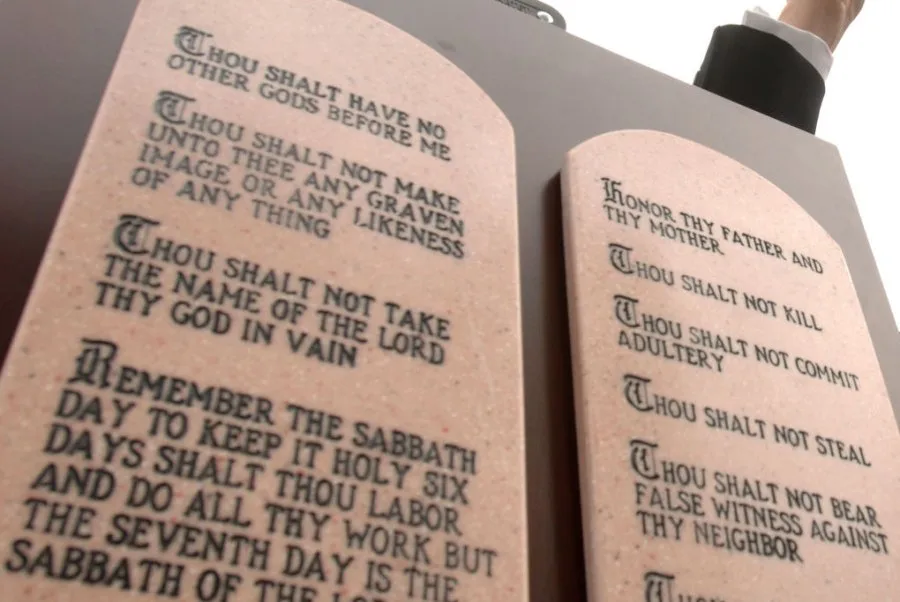
Civil rights groups on Monday filed a lawsuit against Louisiana’s House Bill 71, which mandates that all public schools display the Ten Commandments. File Photo by Michael Kleinfeld/United Press International.
The law, HB 71, stipulated that this posting would be paid for by donations — but that has not silenced objectors. Nor has it negated the fairly obvious intrusion of a political movement known as “Christian nationalism” into politics, our daily lives, and schools.
A lawsuit was filed Monday, June 24 by a group of public school parents, as well as clergy against the mandated display of the Ten Commandments, the group known as Americans United for the Separation of Church and State, the Freedom From Religion Foundation, and offices of the ACLU (American Civil Liberties Union).
‘This is religious favoritism, and it is not only dangerous but runs counter to my religion and faith,’ said Presbyterian Church (USA) minister and plaintiff in the case the Rev. Jeff Sims.
Speaking at a press conference after the suit was filed, the head of Americans United for the Separation of Church and State, Rachel Laser, pointed out that several other states [Oklahoma, Mississippi, and South Carolina] have introduced similar bills attempting to dictate public morality. Calling this an example of “the Christian nationalism that is on the march across this country” she said that Texas has also already passed a law allowing public schools to enlist chaplains.
Communicating with several journalists in the past few days, we noted it could reasonably be asked that if anything is required to be posted in every classroom in a state, it should be the law of this land — the United States Constitution, not a Christian document.
In fact, the posting of the TEn Commandments would appear to violate the establishment clause of the First Amendment: “Congress shall make no law respecting an establishment of religion, or prohibiting the free exercise thereof;”
This is a multi-cultural nation. The reaction across the U.S. may not be what the Louisiana legislators thought they might see. Objections are not just being voiced by those of other religions, from Jewish to Muslim, and Hindus, but by the leadership of Christian denominations, including the mainline protestant faiths.
According to Religious News Service, “the plaintiffs argue the statute unfairly privileges a specific version of Christian scripture in addition to impinging on the rights of the nonreligious and those of other faiths.” Further, they say, “the law violates their First Amendment right to religious freedom as well as the U.S. Constitution’s prohibition against establishing a state religion.
“This simply cannot be reconciled with the fundamental religious-freedom principles that animated the founding of our nation,” reads the complaint, which notes no federal court has upheld the display of the Ten Commandments in a public school setting.
The plaintiffs in this case are a mixture of religious and non-religious parents, and include clergy who object to a narrow interpretation of religion.
“By subjecting my children to permanent displays of scripture in every classroom, the Ten Commandments conflicts with this principle,” said Unitarian Universalist Minister Rev. Darcy Roake. According to Religious News Service (RNS) she pointed out “that among her faith tradition’s seven principles is a call for “the right to a free and responsible search for truth and meaning,” that her husband is Jewish and that they have raised their children in a multi-faith household.
“My husband believes this state-mandated version of the Ten Commandments does not conform with his Jewish faith either, because the displays misappropriate and alter the text of the Ten Commandments as they are set out in the Torah,” she told a RNS reporter.
There is more irony — turns out that the Louisiana law requires the Ten Commandments to be posted in English — but of course the original ten were in Hebrew.


NEW ORLEANS, La (WVUE) – A new education center in the town of Jean Lafitte is giving visitors a chance to learn about south Louisiana’s coast.
Dave McNamara explores how the center combines history, culture, science, and a walk through a cypress swamp in the heart of Louisiana.
For more, visit the Heart of Louisiana archive here.
See a spelling or grammar error in our story? Click Here to report it. Please include the headline.
Subscribe to the Fox 8 YouTube channel.
Copyright 2026 WVUE. All rights reserved.


Luxury resort in Sarasota County ranked among South’s best new hotels
Luxury resort in Sarasota County ranked among South’s best new hotels
When you think of resorts, you probably think of hotels with expansive grounds, upscale amenities and all-inclusive packages.
While these types of resorts can surely be found in major-destination cities and foreign countries, Louisiana has its own resorts that are just as nice.
At Louisiana’s resorts, you can enjoy all the same amenities and stay at locations that are just as luxurious.
Plan your stays with Booking.com
Why these 6 resorts are the best in Louisiana for 2026
Travel US News has ranked the six best resorts in Louisiana based on hotel class rating, property type and guest reviews.
1. L’Auberge Casino Resort in Lake Charles
L’Auberge Casino Resort in Lake Charles is the best resort to stay in Louisiana, with a guest rating of 8.7 out of 10. More than just a nice place to stay, this resort offers premiere casino games, plenty of shopping, golfing opportunities, a spa, relaxing cabanas and upscale restaurants. The hotel also has business and fitness centers, and the rooms are in the modern arts and crafts style.
2. Caesars in New Orleans
Caesars in New Orleans is the second-best resort in Louisiana and has a guest rating of 7.9 out of 10. This resort has a great location within the Central Business District, making it near all the top attractions in the Crescent City. Here, there are plenty of dining and gambling opportunities. The rooms are equipped with standard amenities and are in a Louisiana-inspired style.
3. Margaritaville Resort Casino in Bossier City
Margaritaville Resort Casino in Bossier City is the third-best resort in Louisiana, with a guest rating of 8.7 out of 10. Strategically located across the Red River from Shreveport, this resort offers plenty to do, like testing your luck at the casino, spending a day by the pool, relaxing at the spa, eating delicious food at one of the restaurants or enjoying live entertainment at the performance hall.
4. Bally’s Casino & Hotel in Shreveport
Bally’s Casino & Hotel in Shreveport is among the best resorts in Louisiana and has a guest rating of 7.6 out of 10. Bally’s offers plenty of casino games and dining opportunities, and you can keep the night going with drinks and dancing at one of the lounges. The hotel offers business and fitness centers and the rooms come with standard amenities, like flat-screen TVs and minifridges.
5. Nottoway Plantation Resort in White Castle
Nottoway Plantation Resort in White Castle is one of the best resorts in Louisiana, as it is among the 4.0 star hotel class. This historic antebellum plantation, originally constructed in 1859, includes nine Acadian-style cottages, a salon, an outdoor pool, a fitness center and tennis courts. Visitors can tour the plantation house itself and embark on a guided tour of the on-site museum.
6. Cypress Bend Resort, a Wyndham Hotel in Many
Cypress Bend Resort, a Wyndham Hotel in Many is among the best resorts in Louisiana, with a guest rating of 7.7 out of 10. This hotel features two restaurants, a golf course, fitness center indoor and outdoor pools, as well as a bar and lounge. Belonging to the 3.0 star hotel class, this casual resort is the perfect spot for a quick getaway, as it’s set on 600 acres on Toledo Bend Lake.
Presley Bo Tyler is the Louisiana Deep South Connect Team for USA Today Network. Find her on X @PresleyTyler02 and email at PTyler@Gannett.com
The Louisiana Lottery offers several draw games for those aiming to win big.
Here’s a look at July 6, 2026, results for each game:
Winning Powerball numbers from July 6 drawing
17-44-63-66-67, Powerball: 04, Power Play: 2
Check Powerball payouts and previous drawings here.
Winning Pick 3 numbers from July 6 drawing
8-7-1
Check Pick 3 payouts and previous drawings here.
Winning Pick 4 numbers from July 6 drawing
5-9-3-6
Check Pick 4 payouts and previous drawings here.
Winning Pick 5 numbers from July 6 drawing
0-3-3-5-6
Check Pick 5 payouts and previous drawings here.
Feeling lucky? Explore the latest lottery news & results
Are you a winner? Here’s how to claim your lottery prize
All Louisiana Lottery retailers will redeem prizes up to $600. For prizes over $600, winners can submit winning tickets through the mail or in person at Louisiana Lottery offices. Prizes of over $5,000 must be claimed at Lottery office.
By mail, follow these instructions:
- Sign and complete the information on the back of your winning ticket, ensuring all barcodes are clearly visible (remove all scratch-off material from scratch-off tickets).
- Photocopy the front and back of the ticket (except for Powerball and Mega Millions tickets, as photocopies are not accepted for these games).
- Complete the Louisiana Lottery Prize Claim Form, including your telephone number and mailing address for prize check processing.
- Photocopy your valid driver’s license or current picture identification.
Mail all of the above in a single envelope to:
Louisiana Lottery Headquarters
555 Laurel Street
Baton Rouge, LA 70801
To submit in person, visit Louisiana Lottery headquarters:
555 Laurel Street, Baton Rouge, LA 70801, (225) 297-2000.
Hours: 8 a.m. to 4:30 p.m., Monday through Friday. This office can cash prizes of any amount.
Check previous winning numbers and payouts at Louisiana Lottery.
When are the Louisiana Lottery drawings held?
- Powerball: 9:59 p.m. CT Monday, Wednesday and Saturday.
- Mega Millions: 10 p.m. CT Tuesday and Friday.
- Pick 3, Pick 4 and Pick 5: Daily at 9:59 p.m. CT.
- Easy 5: 9:59 p.m. CT Wednesday and Saturday.
- Lotto: 9:59 p.m. CT Wednesday and Saturday.
This results page was generated automatically using information from TinBu and a template written and reviewed by a Louisiana editor. You can send feedback using this form.
-
 Politics3 minutes ago
Seth Doane and Jim Axelrod among contenders for ’60 Minutes’ roles
-
 Science10 minutes ago
Contributor: The crucial medical question that AI can’t ever answer
-
 Sports13 minutes ago
Commentary: Lionel Messi is the ultimate summer romance
-

 World25 minutes ago
Spain pitches €850bn per year in common EU borrowing
-

 News49 minutes ago
DOJ warns of criminal charges for state election officials if noncitizens vote
-

 Los Angeles, Ca2 hours ago
Bicyclist killed by hit-and-run driver in Long Beach
-

 Detroit, MI2 hours ago
Child shot while riding bike outside home on Detroit’s west side, police say
-

 San Francisco, CA3 hours ago
Bay Area restaurant has strict policy on acceptable children behavior

