Louisiana
Doctors seek more guidance from Louisiana officials as new maternal care drug law takes effect • Louisiana Illuminator


NEW ORLEANS — Louisiana’s new law reclassifying pregnancy care pills as controlled dangerous substances took effect Tuesday, creating an outcry from the state’s medical community as doctors, pharmacists and hospital lawyers try to determine how to navigate new protocols. The drugs are being targeted because they can be used to induce abortion.
The law, which Republican Gov. Jeff Landry signed in May, makes misoprostol and mifepristone Schedule IV drugs, adding the requirement that they be locked, securely stored and their use closely documented. Health care providers have shared worries that any delays in access to misoprostol, which has multiple other uses beyond medication abortions, could create life-threatening delays for patients bleeding post delivery.
The New Orleans health department hosted a learning session for physicians and pharmacists Sept. 19 about the law, Act 246. After the session, city health director Dr. Jennifer Avegno sent a letter to Louisiana Surgeon General Dr. Ralph Abraham and Health Secretary Michael Harrington compiling some of the most pressing questions and seeking guidance.
“We believe it is imperative that these questions are submitted to LDH for any necessary clarification, guidance, or additional rule-making, so that providers have legally accurate and medically appropriate tools,” Avegno wrote in the letter, a copy of which The Illuminator obtained.
GET THE MORNING HEADLINES.
Avegno is also in charge of an investigation into the law’s impact and whether it leads to any delay of care issues. The city’s health department created a reporting form health care workers and patients can complete to submit confidential information about any challenges.
Questions from last month’s webinar included asking for photographs of and specific instructions for officially approved and legal “secured areas” where the drugs can be stored for immediate access. The Louisiana Department of Health issued a memo in early September suggesting hospitals store the drugs in a “locked or secured area of an obstetric hemorrhage cart.”
So far, hospitals have not found this to be a feasible option because of the logistics involved with tracking and storing controlled substances. Instead, they are storing misoprostol in passcode-protected storage lockers made by Pyxis Corp. and named after the company. They are located outside of patient rooms.
Another question dealt with the word “abortion.” Medically-speaking and outside of political context, abortion can mean a miscarriage and pregnancy loss. There are several common, legal and medically appropriate diagnosis words that include the word abortion, including missed abortion, incomplete abortion and spontaneous abortion.
While elective abortions are almost entirely illegal in Louisiana, misoprostol is still safe and legal for use in miscarriage management. But providers are worried that pharmacists, particularly those in rural areas, might be fearful of filling any prescriptions with the word “abortion” in it.
The webinar panel encouraged additional education and outreach to make sure pharmacists and patients understood the distinction, and they asked the state health department for additional clarification.
Act 246 has gained nationwide attention, with Louisiana becoming the first state to make these medications controlled substances.
Maternal fetal medicine specialist Dr. Jane Martin of New Orleans wrote a commentary for StatNews, a health and medicine periodical, criticizing the reclassification of the drugs.
“A pregnant uterus receives 700 milliliters of blood per minute leading up to delivery, and the same amount can be lost each minute if a postpartum hemorrhage is not adequately treated immediately after being recognized,” Martin wrote. She describes how the original version of the bill criminalized coerced abortion and had wide support, but it took “an unprecedented turn” when amendments were added to reclassify pregnancy care pills as controlled dangerous substances.
“I didn’t choose this profession to navigate legal obstacles, but to provide compassionate care during some of the most pivotal and vulnerable moments in someone’s life,” Martin added, saying that restricting access to misoprostol puts her patients in “unnecessary danger.’
“The delivery room is a place of healing, not hesitation,” she wrote “The last thing I need to be asking myself during an emergency, while running through my mental checklist that I’ve used in every postpartum hemorrhage I’ve ever attended, is ‘Could I go to jail for this?”
Martin isn’t the only one speaking out forcefully. Dr. Veronica Gillispie-Bell, the state health department’s leading expert on maternal mortality, penned a column for MSNBC voicing her opposition. She practices medicine in the New Orleans area.
“As an OB-GYN whose patients expect me to give the best care to them (and their babies), I’m convinced that this new law endangers them,” Gillispie-Bell wrote. “Lawmakers must engage with physicians to craft evidence-based policies that protect our patients, not increase their risk of death.
Republican Attorney General Liz Murrill and anti-abortion group Louisiana Right to Life have accused the news media of fear-mongering and spreading ”disinformation” about the controversial law.
“The appropriate and professional way to obtain answers to questions about the law is to ask them, not to create and perpetuate confusion,” Murrill said Tuesday, when the law took effect, in a video address.
Avegno sent the letter with doctors’ questions Sept. 26 but has yet to hear back, she said.
YOU MAKE OUR WORK POSSIBLE.
This report was published in partnership with the Pulitzer Center’s StoryReach U.S. fellowship. Read more of our coverage.



The future North Lafayette library will expand learning opportunities while honoring the lifelong impact of the Louisiana education and civil rights leader.

Watch Lafayette Parish Schools break ground on Paul Breaux K-8 School
Groundbreaking for $50M Paul Breaux K-8 in North Lafayette — with 1,300 students, 66 classrooms and an 18-month timeline.
Lafayette Consolidated Government (LCG) has officially designated the Northeast Regional Library as the Norman C. Francis Library, recognizing the lifelong legacy of one of Louisiana’s most influential educators and civil rights leaders.
The Lafayette Parish Council approved the naming, cementing a tribute to the late Francis, whose decades of leadership in higher education and public service helped shape opportunities for generations of Louisianans.
The new library will serve as the cornerstone of North Lafayette’s ongoing revitalization efforts through the Holy Rosary Redevelopment initiative while expanding access to educational resources, technology and community programming.
“By bringing a new chapter of opportunity for residents on the Northside of Lafayette, this library stands as a fitting tribute to one of the most influential educators and civic leaders in Louisiana’s history,” Lafayette Mayor-President Monique B. Boulet said.
Boulet added that Francis dedicated his life to expanding access to education and creating opportunities for others.
“It is only fitting that this library, a place of learning, discovery, and community, bears his name for generations to come,” Boulet said.
Norman C. Francis’ legacy honored in Lafayette
Born in Lafayette in 1931, Francis dedicated his life to expanding educational access and advancing social justice.
In 1952, he became the first African American to enroll at Loyola University New Orleans College of Law. After earning his law degree, he joined Xavier University of Louisiana in 1957 before serving as the university’s president from 1968 through 2015, making him one of the longest-serving university presidents in the United States.
His influence extended far beyond higher education. Francis advised eight U.S. presidents, led the Louisiana Recovery Authority following Hurricanes Katrina and Rita, and received the Presidential Medal of Freedom from President George W. Bush in 2006.
Francis died in February 2026 at the age of 94, but community leaders say his impact continues to inspire future generations.
Northeast Regional Library’s Upgrades
Conceptual design plans for the new Northeast Regional Library were presented to the Lafayette Public Library System Board on June 29.
The planned facility will encompass 20,533 square feet on a 6.5-acre site and include:
- Space for 44,000–53,000 library materials.
- 37 public computer stations.
- Children’s and teen areas.
- STE(A)M learning and maker spaces.
- Study rooms and quiet reading areas.
- Walking paths and music garden.
- Interactive displays.
- 119 parking spaces, including six ADA-accessible.
Community leaders celebrate library naming
State Sen. Gerald Boudreaux said the designation reflects years of work by local leaders and residents to bring the long-planned Northside library to fruition.
“I would like to thank the Boulet Administration, the Lafayette City and Parish Councils, and most importantly the many community members and organizations that remained committed for years to making this vision a reality,” Gerald Boudreaux said. “Dustin Cravins and the Holy Rosary Redevelopment Committee have developed a master plan that will positively transform this historic property while honoring the remarkable legacy of Dr. Norman C. Francis.”
City Council Chair Kenneth Boudreaux said the project represents a decades-long investment in North Lafayette.
“Seeing this library become a reality is deeply personal. I was honored to help secure the initial funding for this project years ago because I believed the north side of Lafayette deserved a first-class library that would serve generations to come,” Kenneth Boudreaux said. “To now see it bear the name of Dr. Norman C. Francis, a man whose life was defined by education, opportunity, and service, is a powerful reminder of what can happen when a community refuses to stop believing in its future.”
Parish Councilman Abraham “AB” Rubin Jr. called the naming a symbol of perseverance.
“There were times when this project faced real uncertainty, but our community never gave up because we knew this library was worth fighting for,” Rubin, Jr said. “Dr. Norman C. Francis spent his life opening doors for others and believing in possibilities that many thought were out of reach. Naming this library in his honor reflects that same spirit of perseverance and hope to future generations.”
City Councilman Elroy Broussard said the library will become an educational anchor for North Lafayette.
“As a former member of the Lafayette Parish School Board, I know that libraries are not just brick and mortar, but are gateways to learning and opportunity,” Broussard said. “This library will touch countless lives across the northern parts of Lafayette, and there is no more fitting namesake than Dr. Norman C. Francis, whose extraordinary legacy will remind every young person who will walk through its doors that education has the power to transform lives.”
For additional information about the Northeast Regional Library project and design plans, visit the Lafayette Public Library’s Northeast Regional Library information page.
Aaron Gonsoulin is the General Assignment/Trending Reporter for The Daily Advertiser. Contact him at AGonsoulin@theadvertiser.com.

ST. MARTIN PARISH — As the Mega Millions jackpot climbs to an estimated $604 million, excitement is growing in St. Martinville, where a quick stop at a convenience store has many imagining what they would do if they won.
The jackpot, the largest Mega Millions prize offered so far this year, drew plenty of attention at Simmis Mart. Some customers were ready to buy tickets, while others simply enjoyed thinking about the possibilities.
Charlotte Wilson said she has noticed that major lottery jackpots often seem to be won outside Louisiana, but that has not stopped her from hoping.
“When they do hit it’s always out of state. It’s never in Louisiana in a little small town, but if you do hit and I win!” Wilson said.
The excitement extended beyond customers. Store employee Vicky Williams admitted she would not mind seeing some of the jackpot come her way.
“I need to get some of that. I could use some of that money,” Williams said.
Among those purchasing a ticket was Shakina Hart, who said playing the lottery is something she has done before, “I’ve played it in the past, but never won the Mega Millions, so yes, I’m hoping I’m winning on this,” Hart said.
For Wilson, hitting the jackpot would be about more than the money. She already knows exactly how she’d put it to use.
“First of all, I’ll buy me a house and a nice car, and I’ll take care of the homeless people because they have a lot of those that need somewhere to live who are hungry and homeless,” Wilson said.
Hart said her priorities would center on her family, especially her children’s education.
“I have one that wants to be a lawyer and one that wants to be a doctor, so the money would definitely help with their school funding and basic care needs,” Hart said.
The next Mega Millions drawing is scheduled for Friday July 10th. While the odds of winning remain long, the growing jackpot has many people holding onto the same thought: What if their numbers are the ones called?
Louisiana
Leadership Louisiana Health Fellows Welcomes Inaugural Class – Leaders for a Better Louisiana

Nearly 40 years after launching Louisiana’s premier statewide leadership development program, Leaders for a Better Louisiana is proud to announce the inaugural class of Leadership Louisiana Health Fellows, marking an important new chapter in the organization’s longstanding commitment to developing informed, connected leaders equipped to address the state’s most pressing challenges.
Building on the proven model and legacy of Leadership Louisiana, the Health Fellows program brings together leaders from across healthcare, business, public policy, higher education, philanthropy, and community organizations to gain a deeper understanding of the systems, opportunities, and challenges shaping health outcomes across Louisiana. Throughout the year, fellows will participate in immersive sessions across the state, engaging directly with healthcare providers, researchers, policymakers, workforce leaders, and innovators while exploring the issues that influence the health and well-being of Louisiana’s people and communities.
“The strength of Leadership Louisiana has always been its ability to bring together accomplished leaders from different sectors and regions to learn from one another while developing a broader understanding of our state,” said Sheree Blanchard, Director of Leadership Louisiana. “The Health Fellows program extends that tradition by focusing on one of Louisiana’s most significant opportunities for improvement. We are excited to welcome this outstanding inaugural class.”
The inaugural class represents a broad cross-section of Louisiana’s healthcare and civic leadership, with participants serving in hospitals, health systems, higher education, business, nonprofit organizations, public agencies, and community-based organizations throughout the state. Together, they bring diverse expertise and perspectives that will strengthen dialogue and collaboration around Louisiana’s health challenges and opportunities.
“From the beginning, our vision was to create a program that mirrors the excellence and impact of Leadership Louisiana while taking a comprehensive look at the many factors that influence health outcomes,” said Blanchard. “This first class reflects the caliber of leadership we hoped to attract, and we look forward to watching these fellows build lasting relationships and develop new ideas that will benefit communities across Louisiana.”
Leadership Louisiana has graduated more than 1,600 leaders over nearly four decades, creating one of the state’s strongest cross-sector leadership networks. Leadership Louisiana Health Fellows builds on that foundation by providing participants with a focused exploration of Louisiana’s healthcare landscape while reinforcing the program’s longstanding commitment to collaboration, informed leadership, and service to the state.
The 2027 Health Fellows class will begin its yearlong experience this summer with sessions held in multiple regions of Louisiana.
View the complete roster of the Leadership Louisiana Health Fellows inaugural class.
-
World2 minutes ago
AI notetakers promise easy meeting recaps, but some professionals question their use
-
Culture44 minutes ago
Which Version of the ‘Odyssey’ Should You Read?
-
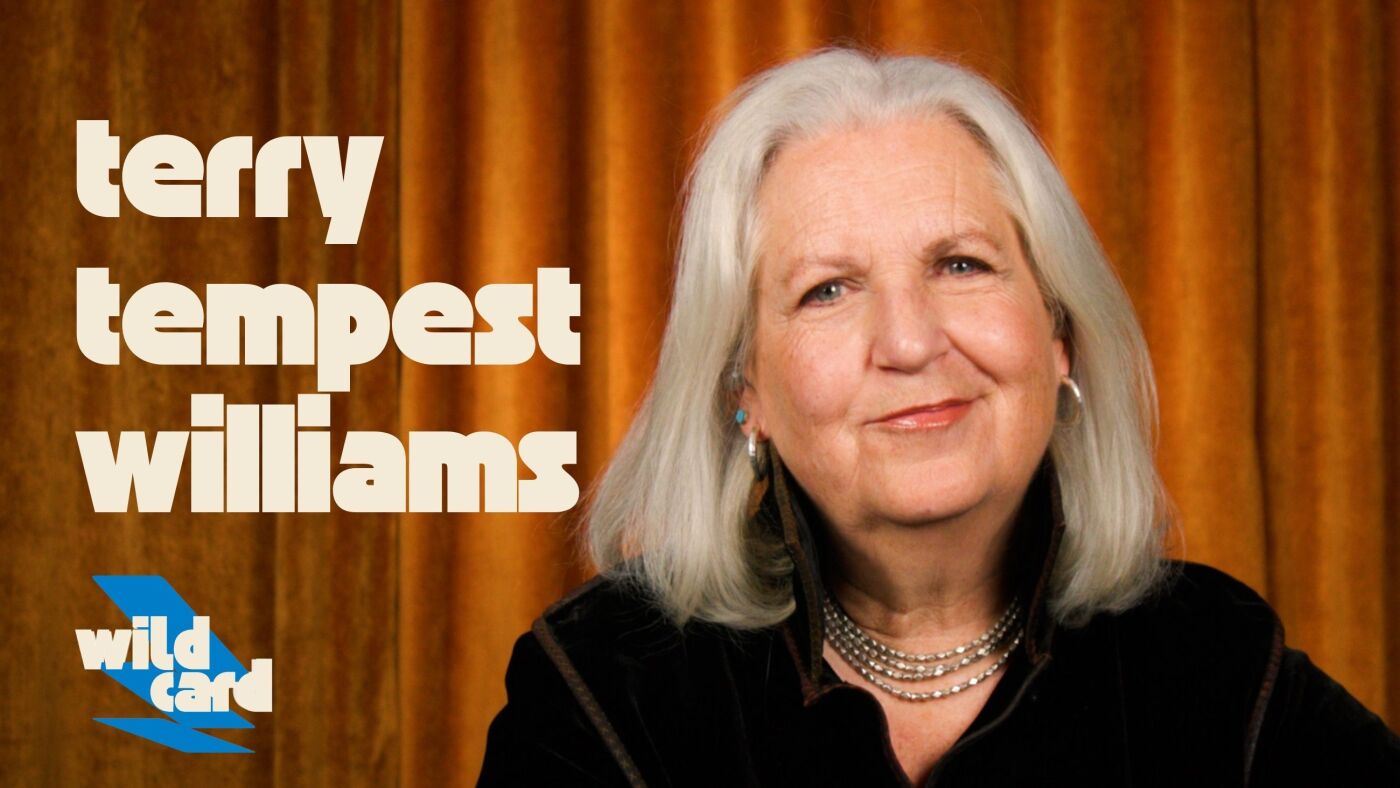 Lifestyle47 minutes ago
Terry Tempest Williams on why women with big ideas get labeled ‘crazy’ : Wild Card with Rachel Martin
-

 Technology59 minutes ago
Google’s Nest Thermostat has hit its best price of the year
-

 World1 hour ago
Argentinian flight instructor jumps to death from plane, 22-year-old student forced to land alone
-

 Politics1 hour ago
Omar’s disclosures erased millions, leaving her with potential negative net worth. She won’t explain why.
-

 Health1 hour ago
Dr Oz links obesity to chronic disease surge, says GLP-1s can ‘jumpstart’ better health
-

 Sports1 hour ago
Pirates star pitcher makes unfortunate history after being taken out in middle of perfect game bid


