Georgia
Judge says lethal injection doesn’t violate Ga. inmate’s rights


ATLANTA, Ga. (AP) – A federal judge has ruled against a man on Georgia’s death row who argued that lethal injection could cause him excruciating pain and suggested a firing squad as an alternative.
Michael Wade Nance argued that because of his medical history an injection of the sedative pentobarbital, the only execution method authorized in the state, could cause him severe pain in violation of his constitutional rights.
U.S. District Judge J.P. Boulee ruled Thursday that Nance had failed to prove that and, as a result, Boulee didn’t weigh in on whether a firing squad is a feasible alternative.
Anna Arceneaux, a lawyer for Nance, on Friday declined to comment on the ruling but said they plan to appeal. The case was originally filed in January 2020 and has already been up to the U.S. Supreme Court once before.
Nance, 63, was convicted and sentenced to death for killing Gabor Balogh in 1993. Nance had just robbed a Gwinnett County bank and abandoned his own car after dye packs hidden in the stolen money exploded. Balogh was backing out of a parking space at a liquor store across the street when Nance pulled open the car door and shot him, according to court filings.
Nance’s lawyers argued that his veins are tough to find by sight and that those that can be seen are compromised. There is a substantial risk that his veins could “blow” during an execution, causing the drug to leak into surrounding tissue and cause intense pain, they wrote.

His lawyers also argued that Nance’s longtime use of a medication for back pain could make the pentobarbital used in lethal injections ineffective or less effective.
Boulee noted that a doctor who testified for the state during a bench trial in May indicated that since Nance’s suit had been filed he had undergone three separate medical procedures that required an IV to be placed and that there had been no problems.
On the issue of whether his longtime use of a pain medication could interfere with the execution drug, Boulee cited the testimony of a doctor called by Nance’s lawyers who said “no one actually knows” what the effect would be.
The U.S. Supreme Court has said that to challenge an execution method under the Eighth Amendment, a person must show that the method creates “a substantial risk of serious harm” and that there are “known and available alternatives” that are “feasible, readily implemented” and that will significantly reduce the risk of severe pain.

That is why Nance’s lawyers had raised the possibility of the firing squad.
The lawsuit was initially filed in January 2020, and Boulee ruled in March of that year that Nance’s arguments were procedurally barred because he’d waited too long to make them and that he had failed to show his constitutional protections against cruel and unusual punishment would be violated.
Nance appealed and a panel of the 11th U.S. Circuit Court of Appeals concluded that since lethal injection is the only method of execution authorized by Georgia law, Nance was effectively challenging the validity of his death sentence. The panel said Nance was procedurally barred from bringing that type of challenge.
Ga.-based CDC to lose 10% of workforce under Trump job cuts
Nearly 1,300 probationary employees at the Centers for Disease Control and Prevention — roughly one-tenth of the agency’s workforce — are being forced out under the Trump administration’s move to get rid of all probationary employees.

Nance appealed to the U.S. Supreme Court, which overturned the 11th Circuit ruling. Justice Elena Kagan wrote in the majority opinion that in challenging Georgia’s execution method he was “not confined to proposing a method authorized by the executing State’s law.” There is no reason to believe that amending state law to allow executions by firing squad would be a “substantial impediment” to carrying out the death sentence, she wrote.
That is how the case landed back before Boulee, who held a bench trial in May during which he heard testimony that execution by firing squad would result in a quick death. But because Nance failed to show that his medical conditions would cause him to suffer severe pain during a lethal injection, the judge said he had “no need to address” the firing squad argument.
Copyright 2025 WRDW/WAGT. All rights reserved.



What to expect from Georgia’s quarterback room during the spring game.
While the Georgia Bulldogs do not have a quarterback battle occuring at the moment for the starting spot, it’s still a very important position to pay attention to during the spring game. Gunner Stockton returns as the starter, but fans have not gotten to see the guys behind Stockton a whole lot throughout their careers.
With that said, here is what fans expect to see from Georgia’s quarterback room during the spring scrimmage on Saturday.
What to Expect from Georgia’s Quarterback Room on Saturday
For starters, fans should not expect to see a whole lot from Stockton. He has been with the program for a long time now. The coaching staff knows what they have in him, so the most important part is that he is ready to go when the fall rolls around.
What’s more important is for Georgia to get a good look at guys like Ryan Puglisi and Ryan Montgomery on Saturday. Puglisi served as the backup quarterback last season, but with Montgomery fully healthy this offseason, it could create a little bit of a battle for the No. 2 spot on the depth chart.
So the expectation should be that Puglisi and Montgomery get the bulk of the reps during Saturday’s scrimmage. The best way to get in good graces with Georgia’s coaching staff at quarterback is to not turn the ball over and have the offense stay ahead of the sticks.
Puglisi has all of the tools in the world to be successful at the college level. The arm talent is there and he is the perfect mold for what most are looking for in a quarterback. However, he did turn the ball over against Kentucky in some limited playing time last season, so it will be important to see if he has cleaned that up this year.
As for Montomgery, this is the first real look fans will get of him since he got to Athens. He was rehabbing a knee injury he suffered during his senior season in high school last spring, but is a full go this year.
Fans can also expect to see Colter Ginn, Hezekiah Millender and Bryson Beaver some this weekend as well. Beaver got to Georgia in January after transferring out of Oregon.
Fans who are not able to attend Saturday’s spring scrimmage will be able to watch the game on ESPN+. Kickoff is set for 1 PM ET.
 Add us as a preferred source on Google
Follow

ATLANTA — Four years ago, Democrat Stacey Abrams commanded the spotlight with her campaign for Georgia governor, dumping millions of dollars into the race as the media followed her every move.
But there is little of that energy so far in 2026. Even though Democrats may have a better shot at winning, there is far less attention and money as their candidates compete for the nomination in next month’s primary.
Their struggles raise the possibility that the Democrats could miss another chance to win the Georgia governor’s office for the first time since 1998.
National Democrats say they are not going to let that happen. Kentucky Gov. Andy Beshear, who leads the Democratic Governors Association, said Georgia is “in play” and the money will be there for the party’s eventual nominee.
“We’re going to make sure the Democratic candidate in Georgia has the funding they need to compete,” Beshear told The Associated Press on Saturday as he visited Atlanta to keynote a party dinner.
While Republicans have flooded the state with nearly $100 million in advertising, Democrats have spent only $1.24 million. Most observers believe no Democrat will win a majority in the rapidly approaching May 19 primary, prolonging the party’s uncertainty.
Former Atlanta Mayor Keisha Lance Bottoms could be headed toward a June 16 runoff, thanks to superior name identification and being the only Black woman running in a party that has historically relied on support from Black women. But the scramble for a second spot appears wide-open, with likely contenders including former Republican Lt. Gov. Geoff Duncan, former state Sen. Jason Esteves and former state labor commissioner and CEO of suburban DeKalb County Mike Thurmond.
Mike Thurmond, a Democrat running for governor in Georgia, speaks to reporters after a debate on Wednesday, April 15, 2026 at WXIA-TV in Atlanta. Credit: AP/Jeff Amy
Democrat could face big Republican money
On the Republican side, health care billionaire Rick Jackson has already spent or pledged $50 million toward his bid, twice as much as any previous primary candidate for Georgia governor. There is also Lt. Gov. Burt Jones, who has been endorsed by President Donald Trump; Secretary of State Brad Raffensperger; and Attorney General Chris Carr.
It is a contrast to 2022, when Abrams outraised Republican Gov. Brian Kemp. She ended up losing the race, her second defeat to Kemp.
But Democrats say they are not worried this year even if they are outspent.
“I’ll still win,” Bottoms said after a campaign event Monday, echoing other Democrats who say money can’t paper over voter discontent with Republicans.
Former Atlanta Mayor Keisha Lance Bottoms smiles while waiting in line to file paperwork to qualify for the 2026 Georgia governor’s race at the Georgia State Capitol, Monday, March 2, 2026, in Atlanta. Credit: AP/Matthew Pearson

She argues that she is a “battle-tested leader” who gained national experience in President Joe Biden’s administration. Like other Democrats, she cites expanding health care, affordable housing and better education as among her top issues.
“When given the opportunity to lead, I led on behalf of not just the city of Atlanta, but people across the state, and I am ready to go and fight for all of our communities to make Georgia a better place for our children,” Bottoms said Wednesday.
The Democratic race doesn’t feature notable policy splits along the lines of the progressive-moderate fissures that have opened around the country. It is not even a clear-cut contrast on style like in the Texas Senate primary that James Talarico won over Jasmine Crockett. Only Esteves, who started nearly unknown statewide, has been willing to attack the other candidates.
The noncombative nature of the other candidates was on display Wednesday night in a televised debate that included only Bottoms, Duncan and Thurmond. Duncan made only the most oblique criticisms of Bottoms’ record as mayor. After Thurmond blamed Duncan for supporting a bill allowing people to carry guns more widely, he said in a postdebate interview that the criticism wasn’t aimed at Duncan directly.
Esteves tries to go from unknown to contender
Esteves is banking on a late surge to propel him to the runoff. He has spent about $1 million on a burst of advertising, the only significant spending by any Democrat thus far. The 42-year-old, who has a Puerto Rican father and a Black mother, argues he can build the “multiracial, multigenerational coalition” needed to win the young and diverse electorate in Georgia.
He often references his experience as a middle school teacher and small business owner in addition to his time as a lawyer, school board member and state senator.
“A lot of the challenges that Georgians are facing, I am facing in real time,” Esteves said in a Wednesday interview. “They’re looking for someone who not only wants to solve their issues, but can identify personally with their issues.”
Esteves is the only Democrat attacking Bottoms on how she managed crime, disorder and the COVID pandemic as mayor before her surprise decision not to seek a second term.
“The fact that she did not run for reelection confirmed people’s belief that when the going gets tough, she stepped out on the city,” Esteves said.
Bottoms defends her stewardship and says she declined to run again “based on what was best for me personally and my family.”
Esteves has also repeatedly taken aim at Duncan, saying Duncan “oversaw some of the passage of the worst bills” while lieutenant governor, including Georgia’s ban on abortions after fetal cardiac activity is detected. Although dozens of state lawmakers are backing Esteves, his top surrogate has been Shanette Williams, the mother of Amber Nicole Thurman, a woman who died in a suburban Atlanta hospital in 2022 after taking abortion pills and developing an infection.
New Democrat Duncan seeks ‘trust’
Duncan is best known for opposing Trump’s attempt to overturn his 2020 election loss to Biden. He has spent the past year apologizing for his Republican past and argues he is the only Democrat who can win over enough moderate voters to give his new party a win. In recent weeks, Duncan has begun to pick up some endorsements from moderate Democrats and unions.
“I don’t want to only earn your vote, I want to earn your trust,” Duncan said in Wednesday night’s debate.
Thurmond calls himself a “throwback” and says his experience in state and local government, including leading the state child welfare agency, serving as labor commissioner and helping to bail out the DeKalb County school district as superintendent, would let him move quickly to enact Democratic priorities.
“I have a track record of service to the people of Georgia, and I believe this election would turn not on promises, but on performance,” Thurmond said in an interview after Wednesday’s debate.
He has been trying to knit together a coalition of rural voters and older Democrats. Among those backing him are Roy Barnes, the last Democratic governor, and Andrew Young, the former mayor of Atlanta and one of the last surviving leaders of the 1960s Civil Rights movement.

The Georgia Institute of Technology may be expanding as the Atlanta university works to finalize an agreement to buy a piece of property owned by the Coca-Cola Company.
The two organizations announced the plan for Georgia Tech to buy a two-story building and an adjacent two-acre park along North Avenue this week.
The area is expected to sell for $31.3 million and has been part of Coca-Cola’s holdings since 1988, a press release revealed.
School officials say that the property would strengthen the university’s capacity to advance research and educate its students.
“This strategic addition to our core campus will support our growth in enrollment and research activity for years to come,” said Georgia Tech President Ángel Cabrera. “I appreciate our long relationship with The Coca-Cola Company that allowed us to pursue this opportunity as we continue to invest in our campus, our neighborhood, and Atlanta’s innovation ecosystem.”
“When we decided this space was no longer needed for our corporate campus, our goal was to work with Georgia Tech, as this site offers a great opportunity for them to expand,” Quincey said. “Coca-Cola has a long legacy of involvement and partnership with Georgia Tech, and we are excited to see them redevelop this important area in Atlanta.”
Once the sale goes through, Georgia Tech will evaluate how the property can support its academic and student needs.

13 Actors You Should Never Miss on the New York Stage

Detroit Tigers call up prospect Hao-Yu Lee, place Zach McKinstry on IL

Maria Isabel Is a Masterclass in Mariscos and Moles

The Dallas Stars’ Secret Weapon Is a Canadian Hockey Genius

Inventory drops for first time since 2023 as sales rebound across coastal Miami, beaches

Florida High School Football Rankings: Top 25 teams – Oct. 21

How old is Bo Nix? What to know about Oregon quarterback ahead of 2024 NFL Draft

Cleary's 21 help Le Moyne down Central Connecticut State 69-64 in OT

99th annual Pony Swim held in Virginia

Indiana Members Credit Union announced as new anchor tenant at Bottleworks District

Minnesota Republicans reveal which far-left candidate they want to challenge in open Senate race

Swedish rights groups slam ‘honest living’ criteria for migrants

Orbán’s defeat is a win for democracy and a warning to Trump, some say

Firefighters Likely Had Limited View of Approaching Plane in LaGuardia Crash

Tennessee governor signs nuclear family month resolution as critics push back on exclusions
-

 Ohio3 days ago
‘Little Rascals’ star Bug Hall arrested in Ohio
-

 Arkansas1 week ago
Arkansas TV meteorologist Melinda Mayo retires after nearly four decades on air
-

 Austin, TX1 week ago
ABC Kite Fest Returns to Austin for Annual Celebration – Austin Today
-

 Politics3 days ago
Dem fundraising giant in the hot seat as GOP lawmakers demand answers over dodged subpoena
-

 Politics6 days ago
Trump blasts Spanberger ahead of Virginia meetings, says state faces tax base exodus like New York, California
-
 Science3 days ago
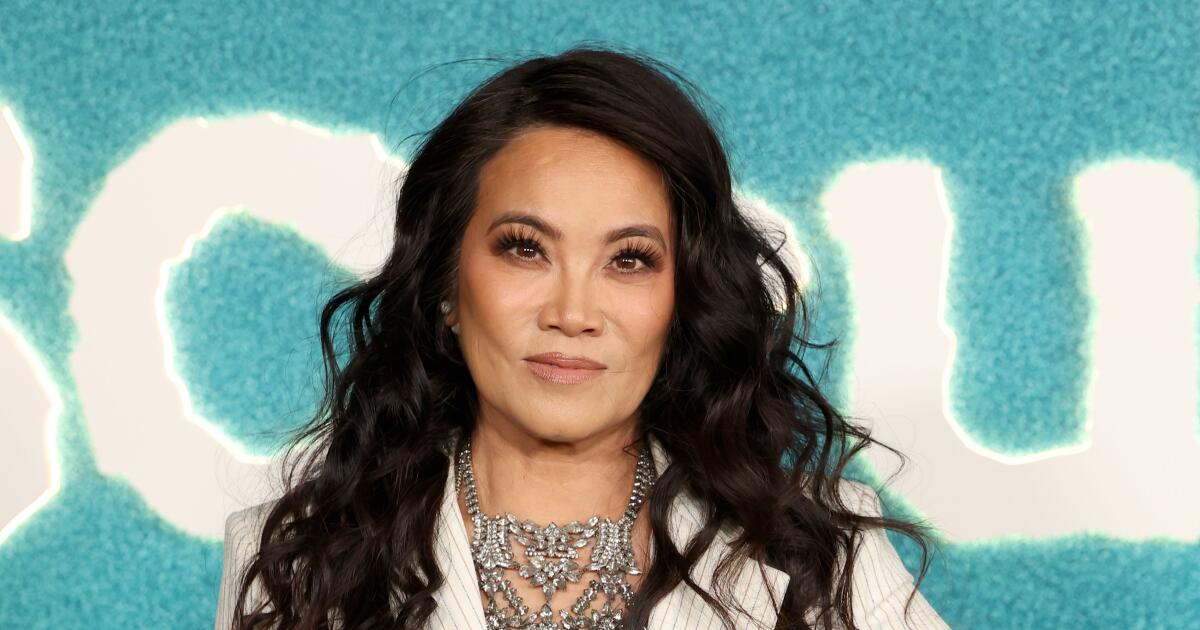
‘Dr. Pimple Popper’ Sandra Lee had a stroke last fall. Here’s how the TV doc is bouncing back
-

 Health1 week ago
Woman discovers missing nose ring traveled to her lungs, causing month-long cough
-

 San Francisco, CA5 days ago
President Trump terminates Presidio Trust