Florida
Man who helped Florida girl bitten by shark may be facing deportation


Girl, 9, survives shark bite off Florida coast
A 9-year-old girl had her hand nearly severed during a shark encounter while snokeling off a Florida beach.
A man who ran into the water to help a 9-year-old girl after she was bitten by a shark in Florida may be facing deportation after he was arrested and accused of driving without a license days after the attack.
Luis Alvarez, 31, of Lehigh Acres, in Lee County, Florida, around 140 miles northwest of Miami, was stopped about 1:30 a.m. on June 14 after police say he was driving without his headlights on.
He was driving a gray SUV with a Rhode Island tag, according to the Collier County Sheriff’s Office arrest report.
Court records indicate he is being held in jail by U.S. Immigration and Customs Enforcement, according to reporting from the Fort Myers News-Press, part of the USA TODAY Network. He is scheduled to go before a judge on July 9.
USA TODAY has reached out to ICE for more information.
Why was Alvarez arrested?
On the day of the arrest, at around 1:30 a.m. local time, police say Alvarez was driving a car without its headlights on when he was pulled over.
When asked for his license, Alvarez called up a picture of his Employment Authorization Card on his phone. He told the arresting officer in Spanish that he had been in the country for two-and-a-half years and had never had a driver’s license, according to the arrest report.
Alvarez was arrested on a charge of driving without a license and was issued a warning for not having his headlights on.
The arrest report said Alvarez is from Boaco, Nicaragua. Court records indicate he is being held in jail by ICE.
Alvarez previously arrested in different Florida county
Court records indicate Alvarez has no arrest history in Collier County. He was arrested on similar charges of not having a valid driver’s license four times in Lee County, dating back to December 2023. Lee County is located in southwest Florida along the Gulf Coast.
He paid fines or had adjudication withheld by three different judges. In the most recent case, the judge issued a D6 suspension on June 23, meaning since Alvarez had not paid his fine, he was unable to apply for a license.
Alvarez ran in to help girl attacked by shark
Alvarez was on the beach and ran into the water to help on June 11 when Leah Lendel, 9, was bitten by a shark.
Lendel’s hand was nearly severed after the attack, which happened in the ocean a few feet off the beach in Boca Grande, Florida.
Lendel’s hand was nearly severed, but fast action at the scene and an airlift to Tampa General Hospital allowed surgeons to reattach her hand. She is recovering.
Alvarez went into the water first to scare the shark, her sister Raynel Lugo, who also helped during the rescue, said in an interview with Fox4 News.
“He jumped in that area to bring her out when I was assisting Leah,” said Lugo in the Fox4 interview. “He went deep underwater, not even caring about the shark. He went really deep. He probably faced the shark.”
Body camera footage from a Lee County Sheriff’s Office Deputy who responded to the call shows the three men standing next to the water as Leah was being treated by EMS.
Alvarez, through an interpreter, told first responders it looked like about an eight-foot shark. Experts later said it was possibly a bull shark, one of the more aggressive sharks in Florida waters.
Julia is a trending reporter for USA TODAY. Connect with her on LinkedIn, X, Instagram and TikTok: @juliamariegz, or email her at jgomez@gannett.com



A 77-year-old man is facing charges after deputies say he threatened a woman with a firearm during a domestic incident in the Florida Keys.
According to the Monroe County Sheriff’s Office, the incident happened around 2:50 p.m. on March 28 near Mile Marker 38 on U.S. 1.
Authorities say Charles Durand Wilkinson, of Okeechobee, retrieved a revolver and told the victim, “I aught to shoot you.”
The woman was able to pull over, disarm Wilkinson, and throw the firearm into nearby bushes, deputies said. The weapon was later recovered by responding officers.
Wilkinson was arrested and charged with aggravated assault with a deadly weapon.
No serious injuries were reported.

The train hit a pedestrian about 7:20 a.m. March 29 at the 77th Street railroad crossing, just west of Old Dixie Highway.
A man died in a freight train crash on the morning of March 29 in Indian River County, according to sheriff’s officials.
The Florida East Coast Railway train hit the man, identified as a pedestrian, about 7:20 a.m. at the 77th Street railroad crossing, just west of Old Dixie Highway, according to officials.
The man was pronounced deceased at the scene, according to officials. His name was withheld pending notification of his next of kin.
Because of the length of the train, several crossings in the area remain closed until the train can be moved. Drive alternate routes if traveling in the area.
County Road 510 at the crossing and 77th Street at 58th Avenue are currently closed.
A Brightline train was seen stopped just south of 69th Street unable to travel north.
Sheriff’s deputies and railroad officials remain at the scene investigating the cause of the crash.
No further information was immediately available.
Laurie K. Blandford is a breaking news reporter with TCPalm. Email her at laurie.blandford@tcpalm.com.

HALLANDALE BEACH, Fla. — Commandment broke his maiden last fall at Churchill Downs. He’ll soon be headed back there, looking for a much bigger victory.
By the slimmest of margins — a photo finish — Commandment won the Florida Derby on Saturday, completing a worst-to-first rally in the six-horse field and overtaking The Puma with the final bob of his head.
It was the fourth consecutive win for Commandment, who had jockey Flavien Prat aboard on Saturday. Next up: the Kentucky Derby, the start of the Triple Crown series on May 2 at Churchill Downs.
“He’s a racehorse, bottom line,” said trainer Brad Cox, who saddled the Florida Derby winner for the second consecutive year. “He always shows up. … He’s a Grade 1 winner. Florida Derby’s a big race. Proud of the horse. Very proud of the horse.”
The Puma took the lead at the top of the stretch and was maybe an inch or two shy of keeping it the rest of the way. Bettors roared when the official order of finish was announced, and Cox could finally exhale.
“Little too close for comfort,” Cox said.
Commandment returned $5.80 for the win. Chief Wallabee was third, favorite Nearly — the 7-5 top choice — was fourth and Wayne’s Law was fifth.
Commandment got 100 points toward the Road to the Kentucky Derby leaderboard. The Puma got 50 for finishing second, Chief Wallabee got 25 for third, Nearly got 15 for placing fourth and the fifth-place showing by Wayne’s Law earned him 10 points.
The Puma and Commandment went into Saturday’s race with spots for the Kentucky Derby basically secured, based on their point totals coming in — The Puma had 56, Commandment 50, and those likely would be enough to make the field.
Now, assuming both emerge from Saturday healthy and stay that way, they’re locks for the Run for the Roses.
“He’s got a great mind,” said Cox, just the fourth trainer to win the Florida Derby in back-to-back years, joining Todd Pletcher (who did it three times), Nick Zito and Horace Jones. “That’s going to take him a long way, the first Saturday in May.”
History has shown there’s a clear path from the winner’s circle at Gulfstream Park to the winner’s circle at Churchill Downs. The Florida Derby has been run by 26 eventual Kentucky Derby winners, more than any other prep race — most recently Sovereignty last year. Sovereignty was second in last year’s Florida Derby.
And Florida Derby winners have gone on to win 31 Triple Crown series races, including the Kentucky Derby on 15 occasions — the last of which was when Always Dreaming pulled it off in 2017. Those 31 victories in the Kentucky Derby, Preakness and Belmont have come from 21 different Florida Derby winners.
UAE Derby
On Dubai World Cup day at Meydan, Wonder Dean won the UAE Derby for trainer Daisuke Takayanagi.
Wonder Dean is the fifth consecutive Japanese-trained winner of the UAE Derby. All four of the others went to the Kentucky Derby and Takayanagi — who guided T O Password to a fifth-place finish at the Run for the Roses in 2024 — said Wonder Dean is on his way as well.

77-year-old Florida man arrested after allegedly threatening woman with gun on U.S. 1
![[WatchLive]TV!!!] Lithuania vs Georgia 𝐋𝐈𝐕𝐄 Streams ON Tv Channel](https://i2.wp.com/cdn1.edgedatg.com/aws/v2/abc/ABCUpdates/blog/4233167/1f510177bdba686174bb0267c66389ca/528x299-Q90_1f510177bdba686174bb0267c66389ca.jpg?w=80&resize=80,80&ssl=1 "[WatchLive]TV!!!] Lithuania vs Georgia 𝐋𝐈𝐕𝐄 Streams ON Tv Channel")
[WatchLive]TV!!!] Lithuania vs Georgia 𝐋𝐈𝐕𝐄 Streams ON Tv Channel

Free mobile clinic treating storm-related injuries to relocate

Fire damages sheds, power lines near W. Idaho Ave in Ontario
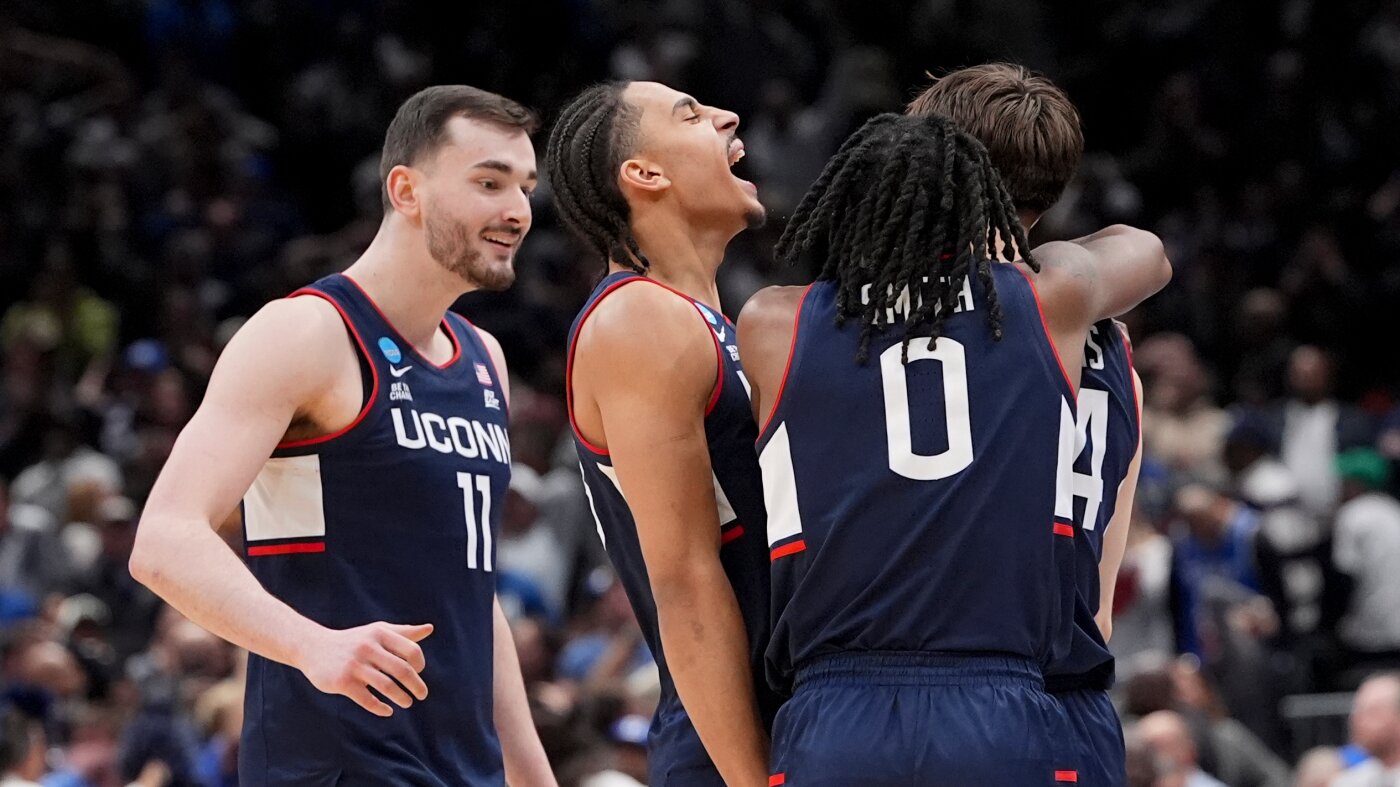
The Final Four is set with UConn stunning Duke to join Illinois, Arizona and Michigan

Florida High School Football Rankings: Top 25 teams – Oct. 21

How old is Bo Nix? What to know about Oregon quarterback ahead of 2024 NFL Draft

Cleary's 21 help Le Moyne down Central Connecticut State 69-64 in OT

99th annual Pony Swim held in Virginia

Indiana Members Credit Union announced as new anchor tenant at Bottleworks District

Scathing report claims nation’s oldest labor union ‘betrayed’ MAGA members through ‘shocking’ spending

Republican US lawmaker demands Congress vote on any Iran troop deployment

So you went to a No Kings protest. Now what?

JD Vance says he was ‘obsessed’ with UFOs, believes aliens are actually ‘demons’
The EU's recipe for trade deals : easy on beef, tough on wine
-

 Sports1 week ago
IOC addresses execution of 19-year-old Iranian wrestler Saleh Mohammadi
-

 New Mexico1 week ago
Clovis shooting leaves one dead, four injured
-

 Miami, FL3 days ago
Jannik Sinner’s Girlfriend Laila Hasanovic Stuns in Ab-Revealing Post Amid Miami Open
-

 Tennessee6 days ago
Tennessee Police Investigating Alleged Assault Involving ‘Reacher’ Star Alan Ritchson
-

 Minneapolis, MN3 days ago
Boy who shielded classmate during school shooting receives Medal of Honor
-

 Politics1 week ago
Schumer gambit fails as DHS shutdown hits 36 days and airport lines grow
-

 Technology1 week ago
YouTube job scam text: How to spot it fast
-

 Science1 week ago
Record Heat Meets a Major Snow Drought Across the West