Florida
Florida to consider returning to party runoffs in 2026


Florida could soon reinstate primary runoffs for the first time since 2000.
A Committee bill filed Monday (PCB SAC 6) for the House State Affairs Committee would call for a second Primary to be held whenever more than two candidates file for a partisan office. It’s a significant election reform that could substantially extend the election season in Florida — though not until the 2026 cycle.
As drafted, the bill would call for a first Primary Election in every partisan race in Florida to be held 20 weeks before the General Election.
That would mean a state Primary would be scheduled for June 16, 2026, with a runoff held 10 weeks later on Aug. 25.
A runoff wouldn’t happen if any candidate receives a majority vote on the first run, a guarantee if only two candidates file. Both would advance in the rare event of a tie between two candidates.
Florida used to hold Primary runoffs. Indeed, the political career of many of Florida’s most storied political leaders like former Gov. Bob Graham, owed statewide wins to the system. In Graham’s case, he came in second in a Democratic Primary for Governor in 1978 behind Robert Shevin, then won a runoff for the Democratic nomination before ultimately winning the Governor’s mansion in November.
Graham’s daughter, former U.S. Rep. Gwen Graham, endorsed the proposal.
“When no primary candidate gets more than 50% of the vote, runoffs allow for the strongest candidate in the general election,” the Panhandle Democrat said. “My Dad would not have been Governor without the runoff. Bringing back runoffs would be good for Florida and democracy.”
The younger Graham has her own history with runoffs— or the lack thereof. She ran for Governor in 2018 but lost the nomination to Tallahassee Mayor Andrew Gillum in a crowded field with a winner-takes-all primary. With a runoff, she and Gillum would have advanced and she might have consolidated a moderate wing of the party against the progressive. Gillum, who was under federal investigation as he ran, lost to Republican Ron DeSantis by an historically slim margin.
Runoffs existed in Florida for most of the 20th century.

The state implemented a runoff system in 2001, setting a first Primary and a runoff four weeks apart, with the nomination for each party determined four weeks ahead of the General Election. About 12 years later, the state changed to a ranked-choice system, but by 1929, it re-established a Primary runoff system that would survive the century.
The state largely moved away from runoffs after 2002, when the federal Help America Vote Act became law. Scheduling issues prompted the state to suspend runoffs in 2002 and 2004 before formally repealing them in 2006.
Of course, the election cycle under the old runoff system was more abbreviated than what’s proposed now. The longer periods between the first Primary, Runoff and General elections would allow the state to comply with federal requirements about mailing ballots and other timing issues.
But this would also impact qualification deadlines, requiring just one qualifying period that runs 71 to 67 days before the first Primary. Currently, the state has separate qualifying periods, one for federal and judicial offices and one for state, county, School District and special taxing district offices.
This year, the first qualifying deadline ends on April 26, with the second deadline on June 14.
Under the new law, the federal and judicial qualifying deadline in 2026 would be on Feb. 20, while the state and county qualifying deadline would be on April 6.
But a single qualifying deadline would occur sooner under the proposed law. In 2026, the qualifying for all offices impacted would be on April 10 at noon.
Post Views: 0



Sign up to get the Florida TODAY statewide newsletter in your inbox weekdays. It’s free.
Here’s a quick glimpse of Florida TODAY, our statewide newsletter:
How long does it take to save for a first home, Florida?
In Jacksonville, the answer could be less than a year.
In Miami, it could be more than 40.
A new report suggests homeownership is slipping further out of reach for many Florida workers — especially those in retail and restaurant jobs.
There’s a lot more going on across the Sunshine State:
License to blush: A South Florida retiree was taken aback by her new license plate. Her family thinks she should keep it. Would you?
Tiny terror: Florida is racing to stop a fuzzy new invasive pest that can wipe out a field in weeks. It has a taste for everything from grass to corn to sugarcane.
Small miracle: Black skimmer chicks are back on the Sanibel Causeway for the first time in 30 years. Photojournalist Andrew West got a close look at the comeback.
That’s not all. Want the full statewide newsletter every weekday? Subscribe to Florida TODAY
NOTE: If you are a digital or print subscriber to a USA TODAY Network-Florida site, follow this link to subscribe via your local site.

VOLUSIA COUNTY, Fla. – If you felt shaking along Florida’s east coast on Thursday, you’re not alone. But it wasn’t an earthquake.
A strong “experimental explosion” was reported in the waters off Central Florida on Thursday afternoon, according to the U.S. Geological Survey.
The USGS website indicates that the explosion happened around 3:04 p.m., roughly 91 miles east-northeast of Ponce Inlet.
Per the agency, the event registered a preliminary magnitude of 3.9. However, few other details about what may have caused the explosion have been provided at this time.
“The recorded ground motions from this event are more typical of an explosion than a naturally occurring earthquake,” the USGS website reads. “The Navy has conducted Full Ship Shock Trials in this region in the past.”
[A LOOK BACK: U.S.S. Gerald R. Ford performs shock trials on an aircraft carrier in 2021]
News 6 has reached out to Navy officials for more information and is awaiting additional details.
Anyone who felt the impact of the explosion is urged to report their experience here.
Copyright 2026 by WKMG ClickOrlando – All rights reserved.

Florida preacher Tommie Zito discusses his acquisition of the former Green Mountain College in Vermont to establish “Z University,” a Christian college.
Florida preacher Tommie Zito discusses his mission to transform the abandoned Green Mountain College in Vermont into “Z University,” a Christian college. Zito’s goal is to train future leaders in evangelism, business, government, and music. He plans for the college to be fully operational by August 2027, emphasizing the need for godly institutions to counter current educational trends.
-

 Los Angeles, Ca29 minutes ago
LADWP begins long-term repairs after West Hollywood water main rupture
-

 Detroit, MI53 minutes ago
Livestream: Mayor Sheffield, Detroit health chief to address wildfire smoke threat
-
 San Francisco, CA1 hour ago
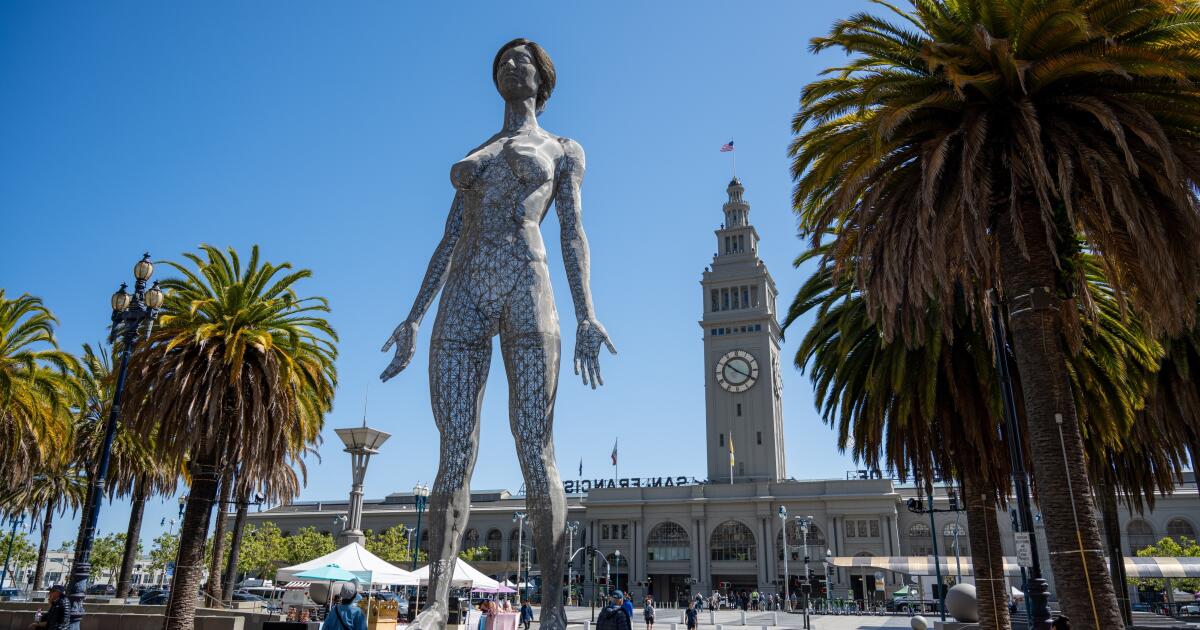
A sculpture of a giant naked woman goes on sale in San Francisco. Bring a crane
-

 Dallas, TX1 hour ago
No ‘straight answer’: Why Pioneer Cemetery is the latest battleground at City Hall
-

 Miami, FL1 hour ago
TSA hosts news conference ahead of World Cup third place match at Miami Stadium
-

 Boston, MA1 hour ago
ICE Boston arrests Barbados national during targeted operations in Attleboro
-

 Denver, CO1 hour ago
Denver Broncos training camp is 2 weeks away
-

 San Diego, CA2 hours ago
Daily Business Report: July 17, 2026, San Diego Metro Magazine

