Austin, TX
Texas cities, congressman consider hospital safety changes after KXAN crash investigation


Project Summary:
This story is part of KXAN’s “Preventing Disaster” investigation, which initially published on May 15, 2024. The project follows a fatal car crash into an Austin hospital’s emergency room earlier that year. Our team took a broader look at safety concerns with that crash and hundreds of others across the nation – including whether medical sites had security barriers – known as bollards – at their entrances. Experts say those could stop crashes from happening.
AUSTIN (KXAN) – The crashes at hospitals keep coming – and now, following a KXAN investigation, more Texas cities and a member of Congress are looking at ways to stop them.
A crash through the front window of a health center in Kentucky happened just four days ago. Two other wrecks at medical facilities – in Pennsylvania and Ohio – occurred in just the past month.
They’re now part of a growing list that includes more than 340 similar crashes across the country in the last decade, according to data KXAN compiled from the Texas Department of Transportation and the Storefront Safety Council.
KXAN’s ongoing analysis has uncovered even more crashes here in Texas. The list has grown to nearly 100 incidents involving Lone Star State medical facilities in the last decade, including crashes in Austin, College Station, Friendswood, Navasota and Weslaco.


KXAN shared our investigation – prompted by a deadly crash at St. David’s North Austin Medical Center on Feb. 13 that injured five people, including two toddlers – with more than 50 state lawmakers and a dozen cities with prior medical facility crashes. In response, Austin, League City, Navasota and College Station are now considering policies that could require hospitals to install security barriers, called bollards, to stop cars from driving through.

These types of crashes are surprisingly common due, in large part, to drivers in “distress” coming very close to unprotected ER entrances, according to building crash expert Rob Reiter. He co-founded the Storefront Safety Council, which has tracked nationwide incidents for more than a decade.
“You have increased risk, by virtue of drivers who are not in the best of condition at the time they’re approaching,” Reiter said. “And if you have set people up to be aimed at your door, because that’s where you want them to come, don’t be surprised if vehicles, from time to time, don’t stop.”

Authorities believe some of the crashes we found – in California, Connecticut and Florida – were intentional.
“This is very interesting,” League City Mayor Nick Long told KXAN, after we sent him a copy of our investigation. “We had not considered adding a requirement for bollards but I will have staff look into it.”
“Yes, we would be willing to consider looking into this with input from City Council and our community,” said Navasota spokesperson Taylor Hughes, following a crash at a Baylor Scott & White medical facility in that city in January.
Austin City Councilmember Mackenzie Kelly plans to bring forward a resolution, based on KXAN’s investigation into safety measures following the St. David’s North crash, at the July 18 council meeting.
“I had several productive conversations today with my colleagues and that is moving forward,” Kelly said on June 10. “The resolution would direct the city manager to look at the land development code to see where there are places that could be amended to include that as a safety measure on any new hospital builds.”
Changes at St. David’s

St. David’s – one of the largest health systems in Texas – is accused of “gross negligence” for not having bollards at its North Austin Medical Center, according to a lawsuit seeking more than $1 million filed last month by the family of four seriously hurt after being run over inside the ER lobby.
“Per St. David’s HealthCare policy, we do not comment on issues related to pending litigation,” a statement read.
Following February’s deadly crash, St. David’s North installed seven bollards outside its ER entrance. Five more were added to the same area after KXAN’s investigation.
St. David’s would not say if its new, or existing, bollards are crash-rated – an important distinction, our investigation found, because they can otherwise be “useless” at stopping a vehicle.
The hospital’s former CEO, Tom Jackson, retired on March 20 – just over a month after the deadly accident. KXAN reached out to Jackson for comment but did not hear back. St. David’s said his retirement was unrelated to the February incident.
On June 6, the hospital announced Jeremy Barclay would take over as its new CEO. For the past seven years, Barclay served as CEO of St. David’s Round Rock Medical Center, where he oversaw a $53 million expansion project.

That facility was one of 34 Central Texas hospitals KXAN visited in March and April. We found 18 hospitals had bollards, nine had partial coverage and seven — including the Round Rock Medical Center ER — had none. However, its Surgery Center/Women’s Center, which has a different entrance, had at least eight bollards in front.
Another hospital, Cedar Park Regional Medical Center, installed at least one bollard after KXAN reached out with questions. It said it planned to add more, citing a “commitment to maintaining a safe environment for our patients, employees, physicians and visitors.”
We requested to interview Barclay but, so far, have not heard back. He took over the new position on June 10.
“Jeremy’s knowledge of our market and healthcare system, combined with his demonstrated success in managing hospital operations and building positive stakeholder relationships, makes him well-prepared to take on this new role,” St. David’s HealthCare President and CEO David Huffstutler said in a press release touting Barclay’s new position.
‘I just had no idea the severity’
KXAN traveled two hours east of Austin to the home of Republican College Station Councilman Bob Yancy. He watched our investigation and is now considering requiring bollards at new hospitals in his city.

“That’s an issue I just had no idea the severity of until I saw your reporting,” Yancy said.
Crashes have happened in his city before – twice.
In 2017, a truck drove through the ER doors at what was then called the College Station Medical Center.
The hospital is now affiliated with St. Joseph Health. During a recent visit in June, KXAN counted 19 bollards across two entrances. A spokesperson said it would take time to research what happened and when bollards were installed since “we did not own the facility at the time of the incident mentioned.”

Days before the fatal crash at St. David’s North Austin Medical Center, a woman drove into the ER lobby at the Baylor Scott & White Medical Center in College Station on Jan. 29.
In a phone call with KXAN, the driver, who was not arrested, said she was suffering from a medical episode at the time and had driven to the hospital to get help.
“Not intentional and not intoxication,” she said. “It was medically related.”
That is the same hospital where Yancy was the inaugural chairman of the board and had served for almost a decade from 2013-2022. He is no longer affiliated with the hospital but called his time there a “wonderful, fulfilling experience” that he still holds “in high esteem.”

“Why weren’t there bollards there?” KXAN investigative reporter Matt Grant asked.
“That’s a good question,” Yancy said. “It’s just not an issue that ever really occurred to me. And I think, in a lot of ways, this is how public policy evolves. I think you have good investigative journalism that brings to light a significant safety issue.”

Nearly six months after that crash, his former hospital has still not installed bollards. Instead, it’s using the same stone blocks as barriers – even though they were proven to be ineffective since the car was able “to push a large stone to the side,” according to a College Station police report.
“I now know from your research and that of Texas Transportation Institute, Texas A&M’s TTI, they’re inadequate to the cause,” Yancy said. “Only through a properly engineered bollard can vehicles be stopped and these injuries and our fatalities be avoided.”
“If I had the benefit of your reporting when I was serving as chairman of the board of our local hospital,” he added, “this, I guarantee you, would have been a topic of discussion.”
The city hall building where a bollard requirement discussion could soon take place, it turns out, is surrounded by them.

As more and more cities look to make changes on a local level to improve hospital security, that momentum could lead to broader safety changes, experts said.
“I think it helps tremendously,” Reiter said. “If you have multiple cities in a given state who start doing their own ordinances, states get a little nervous about that and they’d like to standardize it and make sure everybody’s on a level playing field.”
“I think, without question, it’ll have an impact on the state level,” he added.
St. David’s previously said it will work with policymakers to “ensure compliance with any new laws if they are passed.” That sentiment was also echoed by Ascension Seton, another large healthcare provider in Central Texas.
Seeking answers, safety fixes
Baylor Scott & White Health did not answer any of our questions, including why its College Station medical center does not have crash-rated bollards, or if any of its other hospitals do.

“Baylor Scott & White takes the safety of our patients, visitors and staff seriously,” a statement sent to KXAN read. “We have a number of safety protocols and traffic safety measures at our facilities throughout Texas. We appreciate the open dialogue as we continue our efforts to keep those visiting our facilities safe, and we look forward to working with elected officials.”
“I want to thank you for what I believe is a public service that you, Matt, and your team have done with this story,” Yancy said.
The changes that College Station and Austin are considering will likely only apply to new hospitals, according to Yancy and Kelly.
But, what about existing facilities?
Experts said a lack of awareness and cost are barriers to making changes.

KXAN reached out to FEMA, the US Department of Health and Human Services, and the Department of Homeland Security to see if there are any federal grants that could help pay for physical security upgrades to harden hospitals and other vulnerable critical infrastructure since some of the crashes were intentional.

FEMA said it does not provide any type of grants for bollards for private hospitals. There is a Nonprofit Security Grant Program through FEMA that provides “physical and cyber security enhancements to non-profits that are at high risk of a terrorist or extremist attack.” Eligible organizations specifically include “medical facilities” but exclude “for-profit hospitals.” Applicants can apply for $150,000 per site, up to a maximum of $450,000 for three separate locations.
HHS has grants to help hospitals with disasters and public health emergencies but the money cannot be used for “construction or major renovation,” according to the most recent Notice of Funding Opportunity. Funding, or any federal action, could require Congress getting involved.
Doggett: ‘You’ve identified a serious problem’
Congressman Lloyd Doggett, D-Austin, said he is not aware of any grants for security upgrades at private for-profit hospitals. But he thinks they, not taxpayers, should pony up the cost.
“As the very name entails, these are for-profit enterprises,” Doggett said. “And, some of them, have very substantial profits that should be sufficient to pay for safety issues like this to protect their customers, their patients.”
Installing 20 crash-rated bollards at an ER entrance can carry a price tag of around $30,000, according to the McCue Corporation, which makes bollards for companies across the country, including hospitals, and recently invited KXAN to watch its products get crash-tested at TTI.

Doggett’s office has been “closely tracking” our series. In an interview with Grant last week, Doggett said our reporting identified “a serious problem” that he was “not personally familiar (with) … until you made these reports.” The day after our interview, on June 11, he sent a letter with a link to KXAN’s investigation to the General Services Administration’s Regional Administrator overseeing Texas, Louisiana, Arkansas, Oklahoma and New Mexico. In his letter, Doggett asked the GSA, which is responsible for federal facilities, to ensure government buildings – such as Veterans Affairs hospitals and “smaller facilities” like Social Security offices – are properly protected.
Doggett said he wants to ensure “adequate safety measures” are installed at “all locations” providing federal services and is “absolutely” committed to that.
“A recent tragedy at St. David’s Hospital in Austin, brought to my attention by the in-depth investigative reporting of Matt Grant at KXAN, resulted from a car driven into a hospital emergency room … These troubling incidents have increased calls for action to require the installation of safety bollards or posts to prevent vehicles from crashing into buildings. With growing security concerns in recent years, I would anticipate that federal buildings have such protection,” Doggett’s letter said.
Doggett cited the Storefront Safety Council’s research, which has tracked around 30,000 crashes in the past decade at privately-owned buildings. Based on its research, the SSC estimates there are more than 100 incidents at commercial buildings every day with 6,000 injuries and more than 2,600 fatalities per year.
“This suggests to me a concern that should be raised about federal facilities to ensure that they’re safe,” he said. “Not just for those in the building as government employees, but for all who approach them … to be sure we’re providing adequate protection to all those who use those federal facilities.”

The congressman now wants to know if “any buildings used by federal agencies” in this US region “lack safety bollards or similar safety measures” to prevent crashes.
“I think your report is really important,” Doggett told Grant. “And I will pursue (this) with GSA as a result of your report.”
Investigative Photojournalist Richie Bowes, Graphic Artist Wendy Gonzalez, Director of Investigations & Innovation Josh Hinkle, Investigative Producer Dalton Huey, Investigative Photojournalist Chris Nelson, Digital Special Projects Developer Robert Sims and Digital Director Kate Winkle contributed to this report.

Texas active shooter alert system has yet to be activated
What happened to AUS’ frequent parker program?
Round Rock ISD police radio changes draw criticism
Motion filed to replace attorney in DA removal case
Don’t Miss



AUSTIN (KXAN) — A report released by the think tank Texas 2036 claims that ten state laws implemented between 2019 and 2025 led to “one of the nation’s most comprehensive strategies for connecting education to careers.”
The report is titled “The Next Generation of the Texas Miracle.” It can be read below.
Mary Lynn Pruneda, Texas 2036’s director of education and workforce policy, said in an announcement accompanying the report that the reforms have been steps in the right direction.
“Texas has a bright economic future ahead of it, but we have to make sure that Texas students are equipped to share in this prosperity,” she said. “Texas needs to double down on improving and investing in high-quality career pathways so that all Texas students can take part in the Texas Miracle. Thankfully, due to the Legislature’s great work over the past four sessions, we are on our way to that critical goal.”
The report gives several data points, such as a 532% increase in high schoolers earning “post-secondary credentials” since 2018, or that community colleges awarded 140,000 “credentials of value” in 2024.
It paints a rosy picture of the future Texas economy, but doesn’t source its data or explain how it reached these conclusions. It’s apparent that the think tank wants further laws related to Texas’ workforce and education.
“Texas 2036 is actively engaged in that process, pushing for data modernization and interoperability reforms that would allow the state to track whether credentials are meeting real employer needs in communities across the state,” said the think tank in its announcement.
Grace Atkins, policy advisor of postsecondary education for Texas 2036, called the think tank’s report “encouraging.”
“The early results are encouraging: more students are earning credentials that can help them move into good jobs, and that is real progress,” she said. “For students and families, these pathways can be the difference between getting by and getting ahead. The next step is making sure more Texans can earn credentials that lead to strong wages, real career options and greater economic mobility.”

AUSTIN, Texas — After Senator Charles Perry vowed to introduce another bill to ban THC in Texas next legislative session, an Austin cannabis shop owner is urging lawmakers to find a middle ground.
Estella Castro owns Austinite Cannabis Co., a family-owned shop that makes and sells cannabis and hemp products.
Austinite Cannabis Co. (Photo: CBS Austin/Audrey Wong)
Her business has faced a potential THC ban before. During the 2025 legislative session, Senate Bill 3 attempted to enact a broad ban on all cannabinoids except CBD and CBG.
Castro says she was most worried for her customers. “It was a big initial hit of like, what are we gonna do? How are we gonna pivot? How are we gonna keep the doors open for everybody to keep their jobs?” she said.
RELATED | Texas state senator plans to introduce new THC ban bill in upcoming session
That bill passed, but was later vetoed by Governor Greg Abbott. Similar legislation failed to pass during the subsequent special session.
However, the possibility of a total ban bill being introduced and passed next session could spell trouble for Austinite Cannabis.
During a hearing Tuesday, July 7, Senator Charles Perry vowed to present such a bill next session as public officials, medical experts, and others discussed THC’s medical uses, effects on minors, and regulation.
Castro says over half of the store’s revenue comes from products that contain THC.
“I would say it’s about a 60/40 split: 60% THC and 40 CBD… So feel like it is a huge number that affects my store in so many ways,” she said.
ALSO | Texas French Bread reopens dining room four years after fire
She feels that a total ban on THC would negatively affect multiple parties.
“Banning it is just hurting the consumer,” she said. “Making the consumer go and find a street dealer… killing any dispensaries… it’s gonna hurt your small business owner.”
If another THC ban bill is written, it will be introduced during the next legislative session, which begins in January 2027.
In the meantime, Castro’s two stores will continue to operate as normal. She hopes lawmakers will think twice about instituting a complete ban on THC.
“I feel like we’re better than that, you know, we’re Texas,” she said. “We need to find some middle ground where it’s not a complete ban, and we can still be able to come together.”

AUSTIN (KXAN) – Trevor Goosby is a projected first-round pick in the upcoming 2027 NFL Draft. The Texas offensive lineman anchors the group up front for one of the best teams in the country and was named a preseason All-American by Walter Camp.
But his football career felt in jeopardy when he was in high school.
“That was kind of my biggest question,” said Goosby. “I was really nervous because would I be the same football player coming back?”
Goosby was born with a congenital heart defect and had open-heart surgery when he was just 16 years old. He wasn’t sure how this would change his everyday life, including his football career.
“Definitely a lot of nerves just because you’re getting your ribs cracked open essentially and getting your heart worked on…It was a scary moment. I remember driving up to the hospital super nervous.”
Goosby was able to recover and become a great football player. He said not only has he become a person in learning to fight through adversity, but it helped him as a player as well with improved endurance.
Now, the star Longhorn is giving back as much as possible.
Goosby hosted a camp in Austin to benefit the Children’s Heart Foundation. The organization works to fund research on congenital heart defects.

The offensive tackle is matching all donations up to $20,000 made to the Children’s Heart Foundation through the event and campaign.
“It means a lot to me just because of the heart condition I did have back when I was 16. That just kind of changed my life. I just want to bring awareness to that.”
The camp was at Hyde Park High School in Northwest Austin. Goosby spoke about what he hopes the young campers took away from the event.
“I think it’s just more than football. Football is a big part of what I do but it’s not who I am…I just want to show all these kids that I’m just another great guy and just someone they can look up to.”
-

 Florida5 minutes ago
Florida man accused of driving drunk, causing head-on crash and seriously injuring 2
-

 Georgia12 minutes ago
Georgia cops’ alleged misuse of Flock license plate tracking data fuels privacy concerns
-

 Hawaii15 minutes ago
3 candidates to be considered for District 18 seat
-
 Idaho20 minutes ago
“We won’t insure you”: Robie Creek homeowners struggle to get home insurance due to wildfire risks
-

 Illinois27 minutes ago
After recent Illinois lightning strikes, officials share safety tips
-

 Indiana30 minutes ago
Kelsey Mitchell winner completes Fever comeback against Mercury, without Caitlin Clark
-

 Iowa35 minutes ago
McKeever’s 7′3″ frame made Iowa the ‘obvious choice’ in the transfer portal
-
 Kansas42 minutes ago
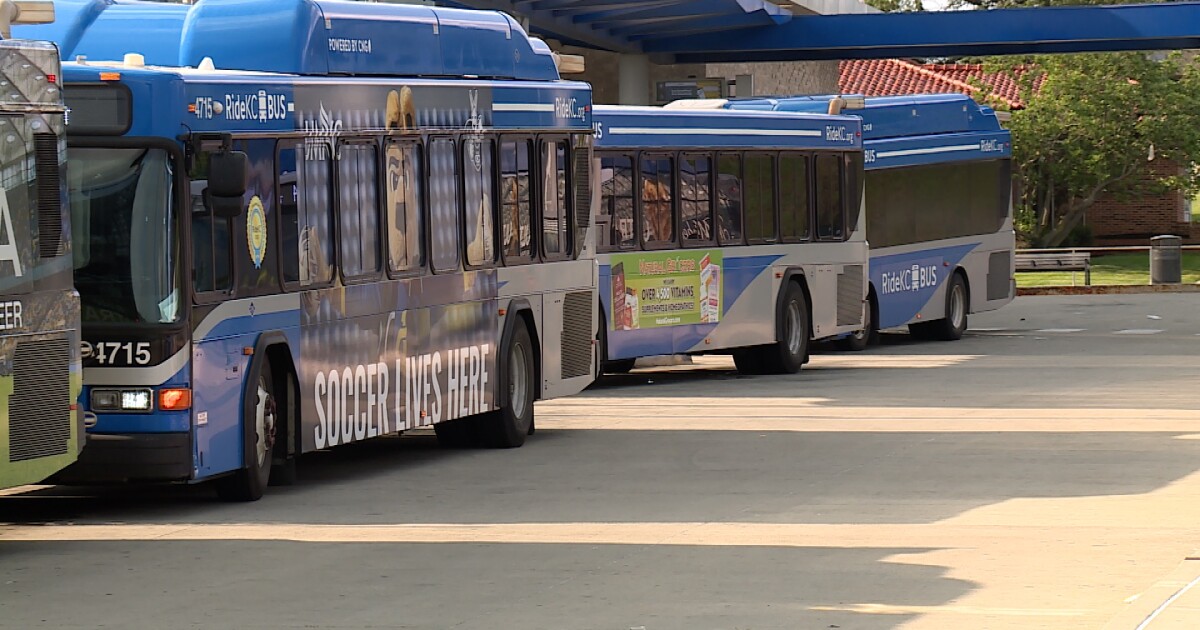
Kansas City to reduce bus transit frequency, extended hours after World Cup matches end

