Austin, TX
Texas Attracted California Techies. Now It’s Losing Thousands of Them.


Back in the halcyon days of 2020, a year we all remember fondly, a new flash point opened in the enduring war between Texas and California. Technologists started picking up sticks in Taxifornia and moving to the Lone Star State in greater numbers. The enemy’s chief newspaper, the Los Angeles Times, worried that Silicon Valley’s “monopoly” was over and wondered if Austin was “the future.” Governor Greg Abbott declared Texas was “truly the land of business, jobs, and opportunity.”
In the wave of stories about Austin’s ascension in 2020, there were always two pieces of evidence given top billing. That year the tech goliath Oracle relocated its HQ to Austin, where it had already built a massive campus on the south shore of Town Lake, and Elon Musk began building a gargantuan Cybertruck factory just outside the city. Austin-area authorities helped Oracle secure valuable lakefront real estate and offered Tesla some $60 million in tax abatements, including $50 million from the historically struggling school district in Del Valle. The new facilities were greeted by state officials as evidence that the “Texas Miracle” was alive and well. Abbott proudly proclaimed last year that Austin was “THE destination for the world’s leading tech companies.”
This week saw a major plot twist in that narrative: Oracle declared it was moving its headquarters to Nashville, and Tesla—the largest private employer in the capital city—announced it would be laying off almost 2,700 workers from its Austin plant after a disappointing earnings report. Texas wasn’t really at fault here. Oracle, which makes business software, cited Nashville’s strength as a center of the American health-care industry, though it surely also helps that the company is getting nearly a quarter of a billion dollars in tax breaks and incentives from the city and the state of Tennessee. Tesla, meanwhile, laid off workers across the country after the Cybertruck suffered significant quality issues that put the future of its Austin production facility in doubt. The city’s debut in auto manufacturing is a vehicle that apparently rusts in the rain. The factory complex, which Musk once promised would become an “ecological paradise,” recently took advantage of a new state law to exempt itself from Austin’s environmental regulations.
But while hard financial realities explain the HQ move and the layoffs, the news also evidences a moment of cultural change: the sudden hotness Austin enjoyed in 2020 has dissipated, at least a bit, into notness. In the mad summer of 2020, tech evangelist Joe Lonsdale wrote that Texas stood as a new frontier in the fight for human freedom and vowed to build a new city outside Austin to serve as a safe haven for disruptors, like other utopians who have been coming to the state for centuries. But, it turned out, after the COVID-19 pandemic, there was more utility in the status quo. When in-person work came back, rubbing shoulders in Palo Alto became more valuable to tech leaders. And while Lonsdale remains, many members of his tribe started heading home.
In December, perhaps not coincidentally after Austin’s most miserably hot summer ever, TechCrunch wrote that start-ups were fleeing the city, which was “losing its luster.” Not surprisingly, some of the Californians who moved here during the pandemic realized they had traded Edenic weather for 110-degree summers and no income tax, and they decided that the income tax wasn’t that bad. That was reflected in the tech industry’s financials. Venture capitalists invested $6.75 billion in Austin start-ups in 2021, but in 2023 they invested only $3.8 billion. (Funding also fell in Palo Alto amid an industry-wide crunch, but the Bay Area remained king by far, with companies there raising more than $60 billion in investment in 2023.)
Oracle’s decision to move its HQ out of Texas after less than four years is a reminder that trying to lasso global companies is like trying to wrestle the wind, and that the economic-development incentives that were so vaunted here earlier this century can only do so much. Austin will most likely continue to grow, of course, but the end of this particular hype cycle coincides with a ground shift in the state’s political identity.
For the first two decades of the century, what it meant to be Texan—as explained by the state’s politicians—was largely wrapped up in a feeling of competition with California. The state’s “wins” were often counted by how many new residents and companies Texas could induce to move here from the Golden State.
Governor Rick Perry was the main figure associated with this contest: he bragged endlessly about the deals he had struck with CEOs from colder and more heavily income-taxed states, and even about the rising price of in-demand U-Haul rentals from San Francisco to Dallas. He took credit for the growth of the Texas economy, the primary accomplishment of his fourteen-year stretch in office. Abbott picked up the baton, and Senator Ted Cruz has sought to share in the glory. The political culture of the state was oriented around attracting newcomers at any cost, even if the effort got a little ridiculous.
In 2014, the producer of the hip Sriracha Hot Chili Sauce, Huy Fong Foods, got into trouble with the local authorities in Irwindale, California, near Los Angeles. The problem: residents said the roasted chile fumes from the factory were giving their eyes and throats hell, and the city sued the company to try to make it curb its emissions. (The company denied responsibility and hung a banner outside its headquarters reading, “No tear gas made here,” but air-quality regulators promised to investigate.) “[That] would not happen in Texas,” said then–state representative Jason Villalba, a moderate Republican from the Dallas area. He led a delegation of Texas lawmakers—two state representatives, a state senator, and officials from the governor’s office, the attorney general’s office, and the Texas Department of Agriculture—to beg Huy Fong to relocate to some part of Texas where the residents would be grateful.
The delegation did not succeed: the factory’s owner used the Texans as leverage to negotiate with California authorities and sent both groups packing. Nearly every statewide politician in the Lone Star State, however, agreed that this kind of effort was valiant, even as theater: the state’s role was to encourage new businesses and new folks to move here, even if the transplants inspired grumpy jokes.
That belief has dissipated. The right wing in Texas has changed how state officials view newcomers and the very prospect of economic growth. That shift accelerated at the start of the pandemic, when hostility to Californians and transplants had become more commonly expressed by Texas politicians. Republicans are now just as likely to promise to protect Texas from Californians as to celebrate winning them over. At a rally this spring, Perry noted that Texans frequently approach him to blame him—even if jokingly—for all the out-of-staters they have to deal with now. Last Friday, the Republican Party of Texas (run by a transplant from Connecticut) sent a fund-raising appeal that began with the declaration that “Joe Biden is flooding Texas with migrants & Californians.”
This generation of Republican leaders, most prominently Lieutenant Governor Dan Patrick—himself a transplant from Baltimore—is less prone to seeing economic growth as a goal in and of itself. The state GOP has grown increasingly skeptical of business interests, which often favor moderate Republicans and a timid approach to the culture wars. When Rick Perry left office, the Legislature kneecapped his most treasured economic development: slush funds.
Recent sessions saw a prolonged fight over the future of the Chapter 313 tax-incentive program, created in 2001, which authorized property tax breaks to induce large businesses to relocate here. The Legislature allowed the program to expire in 2022 and then revived it in a new and shrunken form that went into effect this year. While Abbott blamed the loss of a major semiconductor plant to New York on the lapse of the program, Patrick was quite proud of the death of Chapter 313, which he said had been “misused.”
More than just the mood of the Legislature has changed. While many Texans don’t like Californians, those who use the word as a curse are generally using it to describe all newcomers, much like those who call brown migrants “Mexicans.” Though no polling will tell you so, and though those who are angry about newcomers may not themselves make the connection, there’s a good case to be made that the fear of both Latin American migrants and American transplants comes from a general sense of economic instability. Texas overall has gotten much wealthier this century. But that wealth has been distributed unevenly. The cost of living in the state’s cities has skyrocketed: home prices have risen faster in Austin than in Los Angeles this century, according to Federal Reserve data. In the last decade, housing prices in DFW more than doubled, while the median income only rose 45 percent. Chicago is now a better bet for would-be homeowners.
Meanwhile, Texas is not a low-tax, low-service state, as is commonly held. It’s a high-tax, low-service state: we may have no income tax, but at least one study found that we have one of the ten highest total tax burdens in the nation, with property taxes making up most of the gap. The quality of state services, however, has not improved commensurate with the growth of state budgets. Older Texans feel squeezed in cities where they’ve lived for decades. Younger Texans go to too-often substandard schools, receive substandard health care, and then can’t afford homes in the cities of their birth. Texas politics has increasingly focused on managing the resulting resentment, and the easiest way to do so is to blame outsiders.
But that puts state leaders in a bind. The state’s economic model is dependent on cheap migrant labor, skilled workers from out of state, and the regular infusion of new capital. Transplants are twice as likely as native Texans to have a bachelor’s degree. They live in homes built by, and eat at restaurants staffed by, undocumented migrants. The growth that results helps everyone, but it benefits some much more than others. “All boats rise,” Steven Pedigo, a professor at the LBJ School of Public Affairs at the University of Texas at Austin, told Texas Monthly in 2021, “but not all boats rise enough and rise fast enough” to account for rising costs of living. So even in the good times, you have burgeoning resentment. Problems accruing from the population surge go unaddressed as the Legislature stumbles from budget surplus to budget surplus.
Smarter anti-immigration conservatives make the case that by using foreign labor to solve America’s skilled-labor shortages, the country stifles the process by which native Americans might be trained up to meet skilled-labor demand. We import doctors and engineers because it’s cheaper than training our own. Whether that’s true or not, Texas is doing something similar with “Californians.” The state stinks at developing its own labor force. And why should we bother when we can poach workers from other states?
But no boom lasts forever, and Oracle’s departure is a reminder that folks can move in both directions. What happens when the influx slows—and we’re left with our own atrophied mechanisms for generating growth? Well, we can do what Americans have always done. We can hitch the U-Haul to the Cybertruck and hit the road.



The Texas Longhorns are less than two months away from starting their regular season slate of the 2026 schedule.
Just like last season, the Longhorns have been given unrealistic expectations by some, but will look to avoid the slow start that had everyone counting them out in September. On paper, the Longhorns should be a lot better than they were last season.
A national championship run should be on the table for head coach Steve Sarkisian and his team. One of the reasons that is a possibility is due to the Longhorns have something in common with previous national championship winners.
Legacy Year
Last season, the college football world was enamored by the Indiana Hoosiers. A program that no one saw ever winning the national championship, was hoisting the trophy at the end of the season.
Now, the Hoosiers had a talented roster from top to bottom. But the play of starting quarterback Fernando Mendoza was the leading factor in this team reaching the mountaintop.
Longhorns quarterback Arch Manning has the chance to make that same impression this season. After his first full season as the starting quarterback in Austin last year, there is a growing confidence that Manning is going to be on another level in 2026.
Last season, Manning threw for 3,163 yards and 26 touchdown passes. If you were to compare those numbers to Mendoza’s last season, the Hoosiers quarterback threw for 3,535 yards and an impressive 41 touchdown passes.
Those numbers make it clear that Manning will have to elevate his performance this season. With a revamped offensive line, the Longhorns quarterback may have the time to rival the numbers of Mendoza from this past season.
But another key piece to the Longhorns’ 2026 roster is a massive wide receiver addition.
It’s going to take the whole village, and Coach Sarkisian went out and got one of the most talented wide receivers in the transfer portal with Cam Coleman.
Coleman had two solid years with the Auburn Tigers and now will look to be the deep field threat for Manning and the Longhorns. The junior receiver’s addition to the roster could take this offensive unit to being one of the top units in the country.
All championship teams have a quarterback who could lead them to victory. Manning could very well be the next elite quarterback to hold a national championship trophy.
Sign up to our free newsletter and follow us on Facebook, X and Instagram for the latest news.
 Add us as a preferred source on Google
Follow

Join several Austin labor unions and community members to honor Lorenzo Salgado Araujo’s life and the countless immigrants who have been impacted by ICE.
The community vigil will take place at the Wildflower Church on Saturday, July 11th starting at 6 PM. All are welcome to bring flowers and candles as we honor the loss of life and grieve the separation of families.
Community Vigil Details
🗓️ July 11, 2026 | 6:00 – 8:00 PM
🗺️ 1314 E Oltorf St, Austin, TX 78704
🚗 Public transit and rideshare encouraged! Limited parking available and overflow parking may be available at Travis High School.
Please consider donating to the family’s GoFundMe if you are able: https://bit.ly/atx4lorenzo

AUSTIN (KXAN) — A report released by the think tank Texas 2036 claims that ten state laws implemented between 2019 and 2025 led to “one of the nation’s most comprehensive strategies for connecting education to careers.”
The report is titled “The Next Generation of the Texas Miracle.” It can be read below.
Mary Lynn Pruneda, Texas 2036’s director of education and workforce policy, said in an announcement accompanying the report that the reforms have been steps in the right direction.
“Texas has a bright economic future ahead of it, but we have to make sure that Texas students are equipped to share in this prosperity,” she said. “Texas needs to double down on improving and investing in high-quality career pathways so that all Texas students can take part in the Texas Miracle. Thankfully, due to the Legislature’s great work over the past four sessions, we are on our way to that critical goal.”
The report gives several data points, such as a 532% increase in high schoolers earning “post-secondary credentials” since 2018, or that community colleges awarded 140,000 “credentials of value” in 2024.
It paints a rosy picture of the future Texas economy, but doesn’t source its data or explain how it reached these conclusions. It’s apparent that the think tank wants further laws related to Texas’ workforce and education.
“Texas 2036 is actively engaged in that process, pushing for data modernization and interoperability reforms that would allow the state to track whether credentials are meeting real employer needs in communities across the state,” said the think tank in its announcement.
Grace Atkins, policy advisor of postsecondary education for Texas 2036, called the think tank’s report “encouraging.”
“The early results are encouraging: more students are earning credentials that can help them move into good jobs, and that is real progress,” she said. “For students and families, these pathways can be the difference between getting by and getting ahead. The next step is making sure more Texans can earn credentials that lead to strong wages, real career options and greater economic mobility.”
-
 Politics2 minutes ago
Trump ousts bipartisan commission in latest effort to reshape elections before midterm
-
 Science7 minutes ago
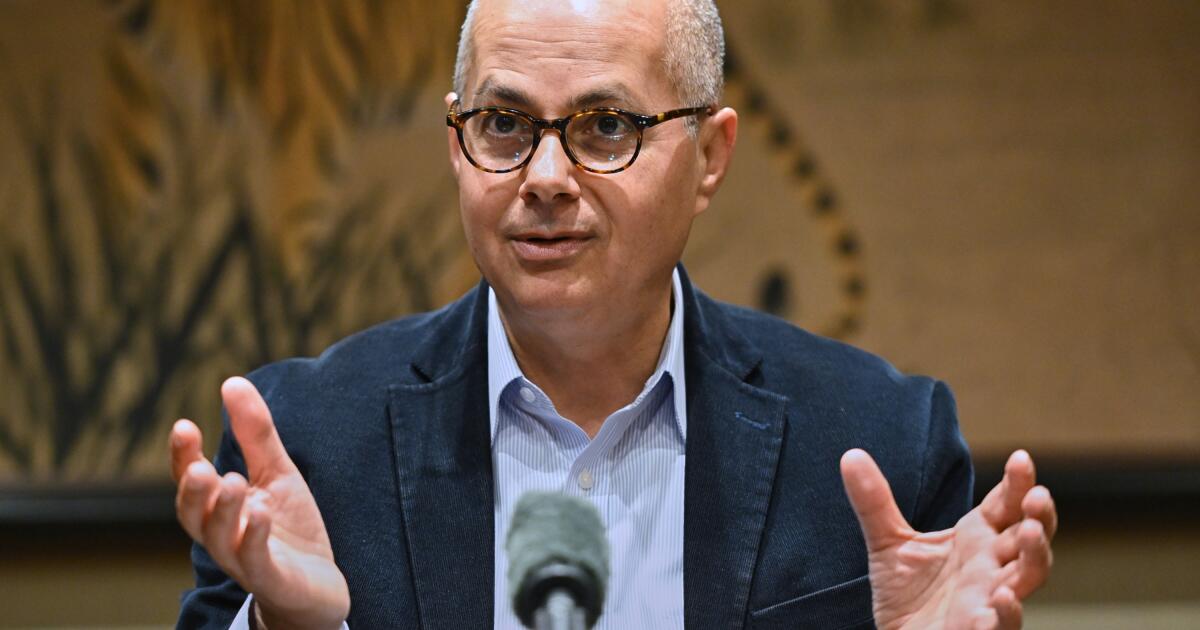
Nobel Prize winner leaving UC Berkeley for new role in China
-
 Sports14 minutes ago
Mikel Merino lifts Spain over Belgium, setting up World Cup showdown with France
-

 World22 minutes ago
Belgium to introduce new road tax in 2027, even for transiting drivers
-
 News47 minutes ago
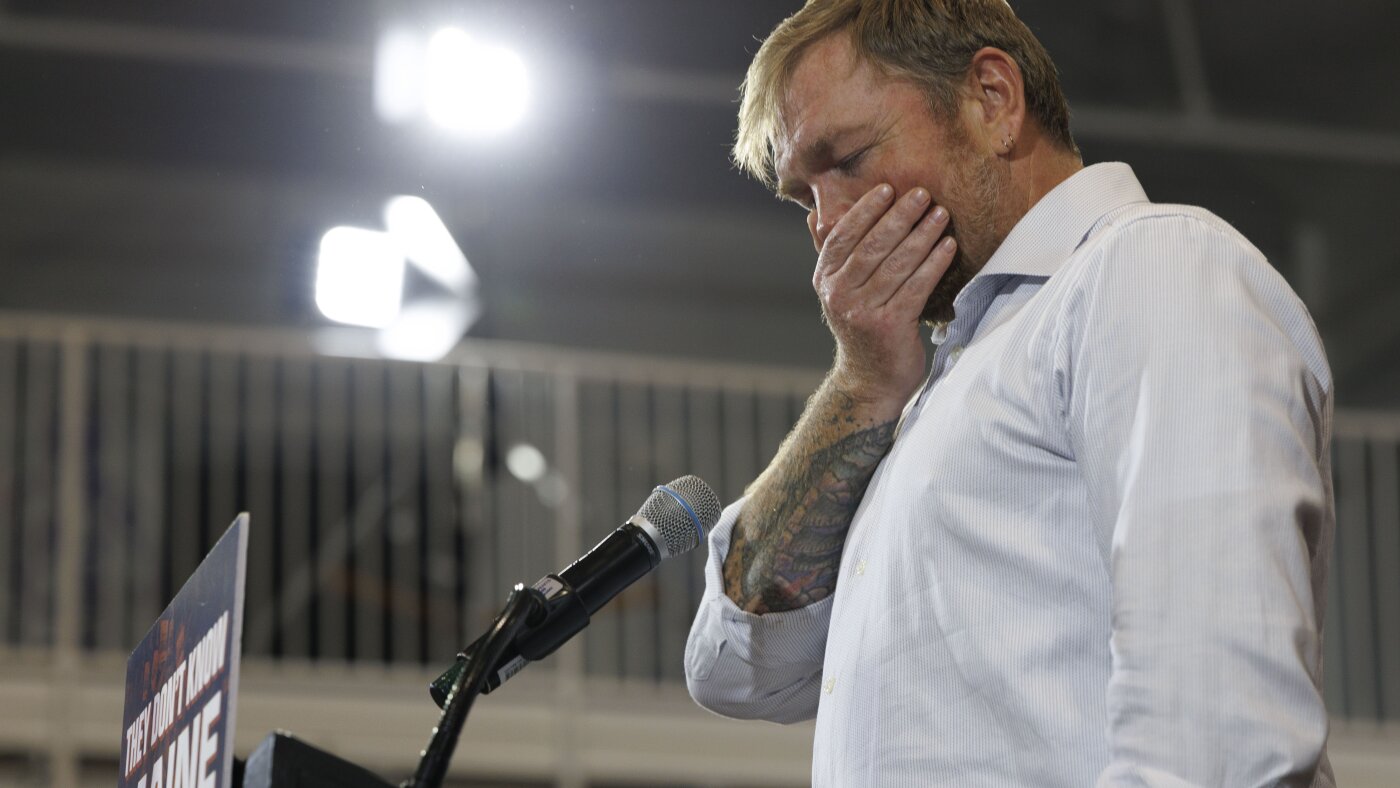
Graham Platner makes it official in Maine, submitting paperwork to leave Senate race
-

 Los Angeles, Ca2 hours ago
Knee irritation forces Shohei Ohtani out of Friday start, All‑Star game
-

 Detroit, MI2 hours ago
Detroit Evening Report: Waymo cars blocking first responders – WDET 101.9 FM
-

 San Francisco, CA3 hours ago
San Francisco Mayor Daniel Lurie Blocks Vacant Grocery Store Tax Proposal | KQED

