Austin, TX
Interim UT-Austin president seeks to walk fine line between faculty and lawmakers’ concerns

:focal(0x0:3200x1820)/static.texastribune.org/media/files/40695a9e2493dfe7179bcadf4efe9d63/0324%20Faculty%20Council%20LW%20-%20CROPPED%2002.jpg?ssl=1 "Interim UT-Austin president seeks to walk fine line between faculty and lawmakers’ concerns")
Sign up for The Brief, The Texas Tribune’s daily newsletter that keeps readers up to speed on the most essential Texas news.
In his first meeting with faculty leadership since being named interim president of the University of Texas at Austin, Jim Davis said he’d share their concerns and good work with state lawmakers considering legislation to increase oversight on universities’ curricula and hiring — but stopped short of saying he’d challenge efforts to limit faculty’s influence on campuses.
“You will always hear me say on any topic that I do not want to cause harm to this university,” Davis said. “I always want to help it, protect it, preserve it and grow it. And so where that balance is, I need to figure that out.”
Davis was named interim president of the UT System’s flagship last month at a critical time for higher education in Texas and nationwide. At the state level, faculty senates have become the latest target.
These bodies are made up of professors from each college and make recommendations on academic policies, curriculum design and faculty hiring and evaluation. They can also be an outlet for faculty to express disapproval with university leadership.
Several bills have been filed this legislative session that would require half of a faculty senate’s members to be appointed by university administrators rather than elected by faculty. They would also prohibit faculty senates from conducting investigations or taking any action on personnel or curricula, shifting those responsibilities to the governing boards that oversee universities. Governing boards have always had the ultimate responsibility and authority over those matters but usually delegated them.
UT-Austin faculty on Monday asked Davis if he was comfortable publicly expressing his opinions on legislative proposals or if he had been encouraged to keep quiet.
“I’m not bothered about saying what I say in public,” Davis said. “People that know me in this room — and many of you do — know that I am not always the person that follows all the rules. At the same time, what I want to do is make sure I do my very dead-level best to put this university in the best position to succeed.”
He said maintaining UT’s excellent teaching, research and student experience is his first priority.
“And so I want to start by letting you know how grateful I am to the faculty, that the faculty is the essence of teaching excellence and research excellence,” he said. “We have not forgotten that.”
Davis also acknowledged that the university’s finances are uncertain.
UT-Austin, like other universities across the country, stands to lose millions of dollars if the federal government follows through with a plan to slash spending on research overhead. State lawmakers also continue to threaten to yank public universities’ funding over the perception that they are not complying with the state’s ban on diversity, equity and inclusion offices and programs and that they are too left-leaning.
Davis said UT-Austin has dealt with these kinds of threats at least twice in its history and that he thinks the university can overcome them by telling its story better.
“Every different viewpoint matters here. We need to be able to sustain those kinds of things for the protection of education and, frankly, the protection of democracy,” he said.
State lawmakers are also considering banning DEI in coursework and research and requiring universities to use the state’s broad definition of what constitutes antisemitism in student disciplinary proceedings, which critics say will stifle free speech.
A few hours before Davis met with faculty, his predecessor, Jay Hartzell, was more candid about some of those proposals during an interview with Evan Smith, a UT professor and founder of The Texas Tribune, at the LBJ School of Public Affairs.
When asked about Senate Bill 37, which would prohibit college courses from endorsing “specific public policies, ideologies or legislation,” Hartzell pointed out that UT-Austin has taught Marxism for a long time and “that’s a good thing.” Some lawmakers have expressed concern that classes with gender, race and identity in the title are being used to fulfill core curriculum requirements.
“Even if you are on the other side of that argument, say, capitalism, it’s good to know how the other side is seeing the world. And so I think I feel way differently about what is offered than I do what’s required,” Hartzell said.
Hartzell also said another provision of the bill, which would allow regents to have the final say on every university hire in a leadership position, sounded like an “administrative nightmare.”
Hartzell compared universities to law firms in which presidents are managing partners and “the faculty are partners in this effort and there’s a reason they have the say they have.” Hartzell faced strong faculty pushback firsthand last spring when he called in state police to help wrangle pro-Palestinian protesters.
Hartzell was a dean before he was named UT-Austin president in 2020 while Davis was chief operating officer.
As president, Hartzell said he had to think about the short- and long-term effects of taking a stand against the Legislature. The long-term effects of protesting the DEI ban last legislative session, he said, ultimately outweighed the short-term ones. He oversaw the layoff of dozens of employees and the closure of the school’s multicultural center.
“If we hadn’t laid anybody off and let these perceived inefficiencies continue forever, I thought we’d be pounded in the next session,” Hartzell said.
The Texas Tribune partners with Open Campus on higher education coverage.
Disclosure: University of Texas at Austin and University of Texas at Austin – LBJ School of Public Affairs have been financial supporters of The Texas Tribune, a nonprofit, nonpartisan news organization that is funded in part by donations from members, foundations and corporate sponsors. Financial supporters play no role in the Tribune’s journalism. Find a complete list of them here.
We can’t wait to welcome you to the 15th annual Texas Tribune Festival, Texas’ breakout ideas and politics event happening Nov. 13–15 in downtown Austin. Step inside the conversations shaping the future of education, the economy, health care, energy, technology, public safety, culture, the arts and so much more.
Hear from our CEO, Sonal Shah, on TribFest 2025.
TribFest 2025 is presented by JPMorganChase.



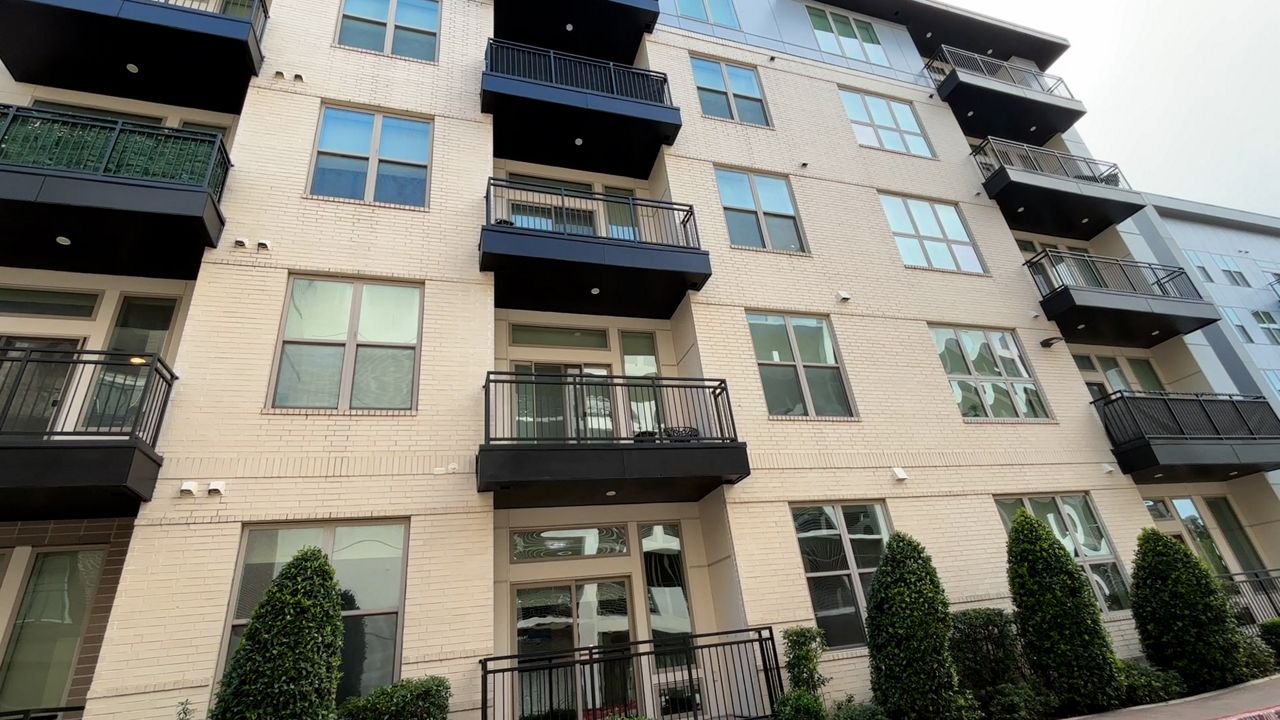
TEXAS — According to Redfin, a national real estate brokerage firm, the top three most affordable cities for renters in the country are in Texas. The firm released its study in 2025, which also lists the median incomes needed to afford the average rent.
Renters living in the Sawyer Heights neighborhood near downtown Houston say apartments in that area come with a hefty price tag.
“It’s not cheap to live in this city, especially with income the way it is,” said Evan Camp, a renter.
Jacinto Cepeda shares his sentiment, adding you get what you pay for.
“It’s just increasing in price if you want to live somewhere nicer or a little bit safer, I would say, it’s definitely on the pricier side,” Cepeda said.
However, Redfin’s report ranking the top 10 most affordable metros for renters across the country shows renters in the Houston metro area may be better off compared to other Texans. Austin, Houston and Dallas took the top three spots, respectively.
The study analyzes Census Bureau data on median incomes and average rent costs, based on the affordability criteria of renters spending no more than 30% of their income on rent.
“In the most recent American Community Survey, we found that, for the first time, the majority of renters in Harris County in Houston are cost-burdened, meaning they spend more than 30% of their income on rent,” said Dr. Stephen Sherman, an associate director of research at the Kinder Institute for Urban Research at Rice University.
Sherman says while some may consider Houston rent as more reasonable than New York City and Los Angeles, Harris County incomes have not kept up with inflation.
“When you start to look at how that compares to people’s incomes, how high eviction rates are, the quality of multifamily building here, you start to see that that cheery story has some cracks and fissures,” he said.
The Redfin study shows the typical U.S. renter earns nearly $9,000 less than the income needed to afford the median apartment. It shows a median rent in the Houston metro of $1,239, meaning the affordability required for annual income needed is closer to $50,000. As of December 2024, Houston’s median renter income was roughly $58,000, which was nearly $9,000 more than needed to cover the rent. Sherman says that means nearly half of renters don’t make enough.
“Apartment rents and home prices, as well, have stabilized, but when you look at incomes, especially after adjusting for inflation, they’ve actually gone down,” said Sherman, adding this is while expenses like groceries and gas have gone up. “Everything is a trade-off. You can find affordable places to live in Houston, but it might be in an older building in dire need of repairs.”
Cepeda said walkability is one thing he appreciates about the Heights area.
“It’s just a matter of where you’re willing to live where you’re willing to live, and how you’re willing to live is the most important thing,” he said.

An outbreak of cyclosporiasis, an intestinal illness that can cause explosive diarrhea, has been confirmed in Texas, prompting health officials to urge extra precautions when handling fresh produce.
The Texas Department of State Health Services has confirmed 48 cases of cyclosporiasis across 10 Texas counties. State health officials say there have been no deaths linked to the outbreak so far.
There are no reported cases in Southeast Texas at this time, and Port Arthur officials say they have not received any reported cases from area hospitals or health care providers. Still, health officials say now is the time to take extra precautions.
Judith Smith, Port Arthur’s director of health services, said cyclosporiasis is caused by “a microscopic parasite that is usually found in contaminated food and contaminated water.”
Smith said contamination typically stems from floodwater or sewage water when produce is harvested, allowing parasites to transfer to produce long before it reaches consumers.
“I have not heard of an outbreak like this. It’s been a while. It might have been 2023, 2024, and so, you know, and of course, Texas is not immune,” Smith said.
Smith said foods that are eaten raw can pose a higher risk. “Those foods that are not cooked are the ones that really make you more at risk,” she said.
Health officials recommend washing raw produce, including lettuce, cilantro, raspberries and basil. They also recommend cleaning cutting boards, refrigerating fresh goods and throwing away any remaining produce after experiencing symptoms.
Symptoms can include watery diarrhea, fatigue, lack of appetite and a low-grade fever. “Those individuals that may have that watery diarrhea or really just more than two to three days should seek medical attention,” Smith said.
Testing can confirm the parasite, and early treatment can help prevent more serious complications, especially for children and elderly relatives. Health care experts recommend contacting a health care provider as soon as possible if persistent stomach cramps and other symptoms develop after eating fresh produce.

The Texas Longhorns are less than two months away from starting their regular season slate of the 2026 schedule.
Just like last season, the Longhorns have been given unrealistic expectations by some, but will look to avoid the slow start that had everyone counting them out in September. On paper, the Longhorns should be a lot better than they were last season.
A national championship run should be on the table for head coach Steve Sarkisian and his team. One of the reasons that is a possibility is due to the Longhorns have something in common with previous national championship winners.
Legacy Year
Last season, the college football world was enamored by the Indiana Hoosiers. A program that no one saw ever winning the national championship, was hoisting the trophy at the end of the season.
Now, the Hoosiers had a talented roster from top to bottom. But the play of starting quarterback Fernando Mendoza was the leading factor in this team reaching the mountaintop.
Longhorns quarterback Arch Manning has the chance to make that same impression this season. After his first full season as the starting quarterback in Austin last year, there is a growing confidence that Manning is going to be on another level in 2026.
Last season, Manning threw for 3,163 yards and 26 touchdown passes. If you were to compare those numbers to Mendoza’s last season, the Hoosiers quarterback threw for 3,535 yards and an impressive 41 touchdown passes.
Those numbers make it clear that Manning will have to elevate his performance this season. With a revamped offensive line, the Longhorns quarterback may have the time to rival the numbers of Mendoza from this past season.
But another key piece to the Longhorns’ 2026 roster is a massive wide receiver addition.
It’s going to take the whole village, and Coach Sarkisian went out and got one of the most talented wide receivers in the transfer portal with Cam Coleman.
Coleman had two solid years with the Auburn Tigers and now will look to be the deep field threat for Manning and the Longhorns. The junior receiver’s addition to the roster could take this offensive unit to being one of the top units in the country.
All championship teams have a quarterback who could lead them to victory. Manning could very well be the next elite quarterback to hold a national championship trophy.
Sign up to our free newsletter and follow us on Facebook, X and Instagram for the latest news.
 Add us as a preferred source on Google
Follow
-

 Milwaukee, WI2 minutes ago
Milwaukee dives into the Global Swimmable Cities Alliance
-

 Atlanta, GA5 minutes ago
Atlanta Starting Lineup: July 2026 (NASCAR O’Reilly Series) – Racing News
-

 Minneapolis, MN10 minutes ago
Former Obama press aide accused of stealing cash, credit cards, from Minneapolis coworkers to buy kratom
-

 Indianapolis, IN17 minutes ago
Woman killed in downtown Indianapolis hit-and-run crash
-

 Pittsburg, PA20 minutes ago
Game Discussion (Let’s Try This Again): Milwaukee Brewers (59-34) @ Pittsburgh Pirates (47-47)
-

 Augusta, GA25 minutes ago
8 school district cops lose certifications over cheating scandal
-

 Washington, D.C32 minutes ago
D.C. police investigating fatal Saturday morning stabbing in Columbia Heights
-

 Cleveland, OH35 minutes ago
Lakewood woman dies after being thrown from ATV; police seek persons of interest

