Atlanta, GA
Titans Take Falcons Star in Re-Draft


The Tennessee Titans could have taken a quarterback in the stacked 2024 NFL Draft class.
Instead, they chose Alabama offensive tackle JC Latham, which filled a big need for the Titans offensive line. Tennessee drafted Will Levis in the second round a year prior, so it wasn’t a likelihood for Tennessee to take a quarterback in back-to-back years.
However, the Titans should have considered taking a quarterback after Levis flopped in his second season. Tennessee is trying to correct its error by taking Cam Ward with the No. 1 overall pick in this year’s draft.
In a 2024 re-draft exercise from Bleacher Report writer Kristopher Knox, the Titans take Atlanta Falcons quarterback Michael Penix Jr., who was taken No. 8 overall right behind Latham.
“Last April, the Tennessee Titans were still hoping that 2023 second-round pick Will Levis could be their quarterback of the future. They hired an offensive coach in Brian Callahan and used the seventh overall pick on Alabama offensive tackle JC Latham,” Knox wrote.
“Levis actually regressed in his second season, which led to Tennessee using the No. 1 overall pick in the 2025 draft on Cam Ward. Meanwhile, Latham was decidedly average as a rookie. Pro Football Focus ranked him 70th overall among 140 offensive tackles.”
“With the benefit of hindsight in tow, the Titans instead use this selection on Washington quarterback Michael Penix Jr. Penix spent much of his rookie campaign backing up Kirk Cousins for the Atlanta Falcons. However, he had some impressive moments once he finally got on the field.”
“Does Ward have a higher ceiling than Penix? Perhaps. But taking the latter would free up the Titans to take an elite prospect like Travis Hunter or Abdul Carter at the top of the 2025 draft.”
The Titans may come to regret taking Levis in 2023 and not taking Penix or another quarterback in 2024, but they are trying to move on from the past and focus on the future.
Make sure you bookmark Tennessee Titans on SI for the latest news, exclusive interviews, film breakdowns and so much more!



The Center, a beloved downtown Atlanta landmark, is set to reopen in May under the new name “Common Ground,” promising a revitalized hub for community engagement, arts, and culture.
After months of anticipation, the Center is undergoing final preparations to welcome back visitors with refreshed programming and a renewed mission to serve as a gathering place for all Atlantans.
The reopening follows extensive planning and input from local leaders, artists, and residents, ensuring that Common Ground reflects the vibrant diversity and creative spirit of the city. Organizers say the space will offer a dynamic schedule of events, including art exhibits, live performances, community forums, and educational workshops.
“We’re excited to reintroduce this space to Atlanta as Common Ground—a place where everyone can connect, learn, and be inspired,” said a spokesperson for the Center. “Our goal is to foster meaningful connections and provide a platform for voices across the city.”
The May reopening is expected to draw large crowds, with a grand opening celebration featuring performances, local food vendors, and interactive activities for families. The launch will also highlight partnerships with Atlanta organizations dedicated to social impact, youth development, and economic opportunity.
Located in the heart of downtown, Common Ground aims to become a central meeting point for both residents and visitors. Organizers encourage the public to stay tuned for updates on event schedules and ways to get involved.
For more information about Common Ground and the May reopening, visit the Center’s official website or follow CBS Atlanta for more.

Courtesy Of Waymo and Uber
Because she’s legally blind and doesn’t drive, Lee Rogers has always used rideshare to navigate the city. A Candler Park resident, Rogers has been enjoying a new experience: being alone in the car, ferried to her destination by a driverless Waymo. The autonomous vehicles, which have been available through the Uber app since June 2025, cover about 65 square miles of intown Atlanta. Rogers has come to prefer Waymo to traditional rideshare options, citing benefits such as safety, cleaner cars, no small talk with a driver, and no tipping. She appreciates the solo ride—a first for her.
“I think a lot of people who drive are afraid of self-driving cars because they don’t have control,” Rogers says. “But I’ve never had control because I’m blind.”
Atlanta is among the first cities in the country to offer Waymo, along with San Francisco, Los Angeles, Austin, and Phoenix. Though the software company has its own app in certain markets, it’s been using Uber as a platform to introduce Atlantans to Waymo; an option in the app’s settings allows users to opt for the autonomous ride. Waymo’s Atlanta fleet consists of about 100 vehicles, and the company plans to add more over the next few years.

Courtesy Of Waymo and Uber
“Waymo chose Atlanta almost two years ago because of the rideshare demand,” says Ethan Teicher, a spokesperson for Waymo. Teicher says Miami is the company’s next target market, with launches in other major cities soon to follow.
Midtown resident Cator Sparks chose the Waymo option on Uber out of sheer curiosity. He’d been seeing the cars around town and was happy to discover they were clean and quiet. “I thought the Waymo was easy to operate,” he says. “I touched my phone to the door to unlock it and picked 1940s jazz out of the music options.”
Still, some experiences with autonomous vehicles have resulted in frustration, and Rogers and Sparks say there’s room for improvement. “Waymo didn’t register that it had new passengers,” Sparks says of one recent ride. “We had to call for support, step out of the car, and give it a minute. Meanwhile, it blocked other cars from entering the parking lot.”
Nationwide, Waymo cars and other autonomous vehicles have come under scrutiny for failing to adhere to road safety laws such as stopping for school buses; some state legislatures have considered tougher restrictions on driverless cars.
Rogers acknowledges that the driverless ride still isn’t perfect. “But if I have a choice between an Uber and a Waymo,” she says, “I’m taking a Waymo.”
This article appears in our February 2026 issue.
Advertisement

Atlanta is rated highly for many things, but traffic is once again among them.
A new report released Tuesday by the American Transportation Research Institute ranks four metro Atlanta highway interchanges among the top 10 worst bottlenecks in the country.
According to the report, some of the most congested stretches include:
- I-285 at I-85 North
- I-75 at I-285 North
- I-20 at I-285 West
- I-75 in McDonough
Drivers navigating those areas said the ranking comes as no surprise.
“It is irritating, that is all I can say,” said motorist Olivia Grant.
A common sight across metro Atlanta highways: flashing brake lights, bumper-to-bumper traffic, and long delays during rush hours. “It is pretty rough, as usual,” added driver Raymond Meeks.
The report focuses heavily on truck congestion. Drivers said they understand why trucks are emphasized in the findings.
“They have to stay on the road 18 and 19 hours a day,” Meeks said.
Grant pointed to rapid development as another possible factor.
“Especially with the increase in the new warehouses around here,” she said.
One truck driver who did not want to appear on camera, said the report accurately reflects what drivers experience every day particularly along I-75 south of Atlanta.
“Yes, every day. From here on I-75, from basically the Jonesboro Road exit all the way down to Locust Grove, it’s bottlenecks,” he said. He added that maneuvering large trucks is especially challenging. “It is very difficult because of the traffic and the road restrictions, and it is hard to maneuver,” he explained.
What can be done to ease congestion this congestion?
Staton’s advice to commuters: “It takes time, but you just have to be patient. If you do it enough, you’ll get used to it.”
Others hope long-term solutions are on the horizon.
“Something definitely needs to be done about it,” Grant said.
Lawmakers set to revisit proposed highway speed limit increase at rescheduled hearing
Local lawmakers are scheduled to meet Friday to discuss additional strategies in HB809 to address metro Atlanta’s traffic challenges. A hearing was scheduled for Tuesday, but officials said it had to be rescheduled.
It’ll take place at the Paul D. Coverdell Legislative Office Building (CLOB) in Suite 606. The address is 18 Capitol Square SW, Atlanta, GA 30334.
If lawmakers vote favorably for the proposal, it will be passed to the Rules Committee.
It would increase the minimum speed limit to 50 miles per hour on highways in the state located in 65+ miles per zones.

UMMC confirms cyberattack, closing clinics and canceling surgeries

Issue resolved roads back open after police activity forced closure of several roads around downtown
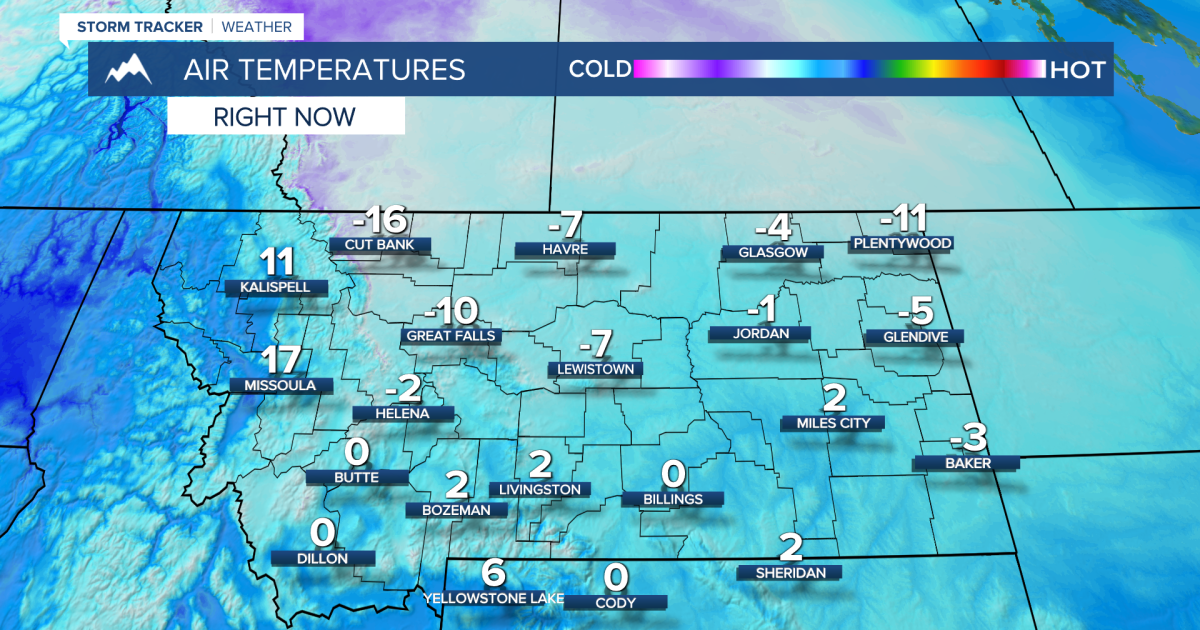
Some of the coldest air in the country is right here in Montana

Kearney Area Animal Shelter announces 2026 Gala featuring ‘The Voice’ finalist Bryan Olesen

State offices on two hour delay due to weather conditions

Florida High School Football Rankings: Top 25 teams – Oct. 21

Cleary's 21 help Le Moyne down Central Connecticut State 69-64 in OT

How old is Bo Nix? What to know about Oregon quarterback ahead of 2024 NFL Draft

99th annual Pony Swim held in Virginia

Indiana Members Credit Union announced as new anchor tenant at Bottleworks District

DC Mayor Bowser declares emergency over Potomac sewage spill, asks for federal help

Israel installed security at Epstein’s Manhattan apartment for ex-PM Barak

Iran and the US lean into gunboat diplomacy as nuclear talks hang in balance

Democrats risk FEMA disaster funding collapse as DHS shutdown hits Day 5

Fact check: Will Spain’s regularised migrants be allowed to vote?
-

 Culture1 week ago
Try This Quiz on Passionate Lines From Popular Literature
-

 Oklahoma2 days ago
Wildfires rage in Oklahoma as thousands urged to evacuate a small city
-

 Health1 week ago
James Van Der Beek shared colorectal cancer warning sign months before his death
-
![“Redux Redux”: A Mind-Blowing Multiverse Movie That Will Make You Believe in Cinema Again [Review]](https://i1.wp.com/www.thathashtagshow.com/wp-content/uploads/2026/02/Redux-Redux-Review.png?w=400&resize=400,240&ssl=1 "“Redux Redux”: A Mind-Blowing Multiverse Movie That Will Make You Believe in Cinema Again [Review]")
![“Redux Redux”: A Mind-Blowing Multiverse Movie That Will Make You Believe in Cinema Again [Review]](https://i1.wp.com/www.thathashtagshow.com/wp-content/uploads/2026/02/Redux-Redux-Review.png?w=80&resize=80,80&ssl=1 "“Redux Redux”: A Mind-Blowing Multiverse Movie That Will Make You Believe in Cinema Again [Review]") Movie Reviews1 week ago
Movie Reviews1 week ago“Redux Redux”: A Mind-Blowing Multiverse Movie That Will Make You Believe in Cinema Again [Review]
-

 Technology1 week ago
HP ZBook Ultra G1a review: a business-class workstation that’s got game
-
 Science1 week ago
A SoCal beetle that poses as an ant may have answered a key question about evolution
-
 Politics7 days ago
Culver City, a crime haven? Bondi’s jab falls flat with locals
-

 Politics7 days ago
Tim Walz demands federal government ‘pay for what they broke’ after Homan announces Minnesota drawdown