Science
We Asked for Environmental Fixes in Your State. You Sent In Thousands.


It’s been a tough year for the environment. And yet, people all over the country are working hard to reduce greenhouse gases, reverse the harms of pollution, save imperiled species and restore pockets of nature. In our 50 States, 50 Fixes series this year we featured one success story from every state.
We also asked readers to share eco-friendly projects, big and small, underway in their communities. More than 3,200 submissions poured in, 14 of which we featured.
As 2025 draws to an end, we’re highlighting just a few more of the ideas that stood out but that did not make it into the series.
The following submissions have been edited and condensed.
— Cara Buckley and Catrin Einhorn
Looking out for the little guys
I’ve been rescuing bugs from the trap of nighttime lighting, like the ones that flew into my aunt’s house last night when the doors were open, drawn in by the glow. Sometimes I can save 20 in an hour. It’s thrilling. It’s empowering.
And it makes you wonder: Why are we even here, if we’re letting animals die simply because we don’t notice them? If there’s one place you can be a hero, it’s your own house, your own backyard. You can save so many animals just by paying attention. It’s really a mindset shift.There’s so much magic in our neighborhoods. So much heartbreak, too. But wow, definitely some magic. — Nicola Plowman, California
Greening the homeowner association
Our large homeowner association in Irving, Texas, has recently earned the National Wildlife Federation’s Community Wildlife Habitat certification. We switched to native plantings in nine parks and 20 common areas, converted four acres to native pollinator-friendly wildflowers and grasses, planted native trees and installed dark sky public lighting. We also educate residents, who have now certified 135 individual homes and a commercial property. Volunteers with the Valley Ranch Association’s green club did it with help and funding from the federal government, national nonprofits, local businesses, our H.O.A. and private donors. Our community is working hard to protect our urban wildlife and pollinators. — Nancy Payne, Texas
A Nebraska-shaped solution
The Central Nebraska Public Power and Irrigation District
When we say Mary Bergstrom plants Nebraska, we mean that literally! Mary created a pollinator garden in the shape of Nebraska, including a walking path through the middle of the garden that replicates how the Platte River winds its way through the state.
Featuring 27 species of plants, flowers and grasses, many native to the Great Plains region, the garden, which was made possible by a 2023 grant from the PlantNebraska foundation, provides food and habitat to a legion of pollinators, from the monarchs that travel through Nebraska on their migration from Canada to Mexico, to native bees and more. Mary, who lives on the shores of Johnson Lake, Neb., spent 20 years as a librarian at Lexington High School and said she wanted to create a garden that could be a geography lesson, too.
— Michelle DeRusha, Nebraska
Protecting a pair of piping plovers
Chicago’s motto is “city in a garden,” but our cutest conservation success story has to do with two federally endangered piping plovers, Monty and Rose (named after Montrose Beach, where they nested). After settling on the beach in 2019 they were spotted by birders, and a little spit of land was protected for them to breed. They became the first successful pair of piping plovers to breed in the city in 71 years, and their offspring became famous, too.
— Rebecca Silverman, Illinois
In 2021, the Chicago Park District expanded the protected natural habitat around the plovers’ nesting ground by 3.1 acres, an area that was renamed the Monty and Rose Wildlife Habitat last year.
Planting an urban forest
Tree Fredericksburg is an organization of citizen volunteers dedicated to the restoration of the urban forest in Fredericksburg, Va. Since 2008, we have planted over 10,000 trees along the street, in the parks and in the schoolyard. We have also given away over 60,000 native trees and shrubs to the general public. Last fall, an inventory of the trees in the city was conducted and it showed that Tree Fredericksburg is responsible for 47 percent of the trees now growing in the city in the public right of way.
Volunteers have come from all walks of life, including Scouts, students from the local schools and university, churches, civic associations and even from as far away as Northern Virginia. We have had students from George Mason University and the local mosque in Manassas, Va.
We believe trees to be the answer for many problems in our city: the heat island effect, stormwater management, walkable city streets and just plain beauty. There was no city arborist from 2008 to 2023 and so Tree Fredericksburg was the de facto arborist for our city. We have had a strong partnership with the city of Fredericksburg and great support from our political leaders. We have been a Tree City for 37 years. — Anne Little, Virginia
Bringing buffalo back
For over three decades, I’ve run the Black Feather Buffalo Ranch on 3,000 leased acres in Oglala Lakota County, S.D., on the Pine Ridge Reservation. Named after John Black Feather, who entrusted me with this legacy, the ranch represents far more than a business. It’s a living testament to our Lakota heritage, a way of bringing our people back to our most sacred relatives, the buffalo. In the past few years, I’ve invested in new fencing to create a rotational grazing structure. Traditional, Native methods also encouraged buffalo to move around the land. Now it’s classified as a climate-smart activity by the U.S.D.A. When I look out over my herd, I think of my ancestral knowledge, and the generational knowledge my elders, including my uncle John Black Feather, passed down to me: that buffalo represent abundance and hope.
Each animal represents a living connection to our past and a promise for our future. As a single parent raising both my children and my buffalo, I’m proud to continue this sacred work. I wish my uncle was alive to see how much our herd has grown, how we’re bringing our buffalo back and we’re keeping our culture alive, one buffalo at a time.
— Virgil Two Eagle, South Dakota
Installing solar in low-income places
Southern Energy Management
In North Carolina, we are U.N.C. students who created the nonprofit SolarEquity to bring affordable renewable energy to low- to moderate-income communities. In the Southeast, it is difficult to implement renewable energy in affordable ways due to regulations and utility constraints, so we decided to be the intermediary between communities, affordable housing organizations and financial entities to bring solar and energy efficiency to places often left out of the energy transition, while decreasing carbon emissions.
— Kaya Johnson, North Carolina
Planting pollinators
Skateport is a rollerskating events and lessons service based in Connecticut. We had concrete poured in the heart of downtown in order to place a shipping container onsite to house our rental roller skates and decided to plant a public pollinator garden to offset the heat island effect and support our local ecosystem and pollinators!
— Takina Pollock Shafer, Connecticut
Celebrating the natural world
Procession of the Species Celebration is a 30-year-old event that highlights community-made art to celebrate and appreciate nature. Each year, the community has a parade or procession that includes floats, live music and dancing, with large-format art of different species. It was started by Earthbound Productions and is organized by the community. Leading up to the event, there are two months of free and open studios and workshops to create the collective artwork. Art, culture and community are essential in fostering an ethic of environmental stewardship and protection.
— Natalie Weiss, Washington
Teaching climate change in business class
Mike Belleme for The New York Times Appalachian State is now requiring all undergraduates to take at least one class in the sustainability and climate literacy arena as a general education requirement. I teach the Walker College of Business’s version of the class. I really want my opening line to be in The N.Y. Times lol: “This class is not to discuss whether we think climate change is real or not, or who is to blame, that is a waste of oxygen. This class’s charge is to come up with better business processes to not treat the Earth like shit.”
— Scott Bowie Gray, North Carolina
Recycling rainwater
Brad Lancaster in Tucson, Ariz., has, for 30 years, advocated for and installed citywide rainwater harvesting infrastructure and planted thousands of trees native to the Sonoran Desert. The savings in deferred groundwater use run to the millions of gallons per year.
— Eric Wagner, Arizona
Mr. Lancaster said he’s helped neighbors plant more than 1,800 native food-bearing trees and thousands of understory plants, which are irrigated by more than one million gallons of stormwater harvested annually from neighborhood rain gardens.
Decomposing yard signs
In Berkeley, Calif., Berkeley High School parents and families stopped receiving lawn signs for free when their seniors graduated earlier this year. As a result, a group of parents began selling eco-friendly seed paper signs, which decompose and grow into native flowers after it rains, unlike typical plastic lawn signs. The idea for a biodegradable sign started with an opinion article in the high school newspaper, and the signs were sold to hundreds of parents and families in the district. It’s an idea that’s very small and the families hope it will incite a bigger movement.
— Sydney Lehrer, California
Ron Levi, a parent of a recently graduated senior, spearheaded the effort, and said leftover proceeds from the sale of the signs went to a nonprofit parent group that raises funds for the school.
Reducing fire risk
In Oakland, Calif., volunteers are busy reducing the risk of fire while restoring the open spaces. Parts of the hills here are classified as a high fire hazard zone where the forests are packed with overgrown underbrush and deadwood. But these open spaces are also beloved green oases in this highly urban city, used by thousands of bikers, hikers and picnickers. They need care, but the city doesn’t have the capacity to properly maintain them.
A nonprofit called Friends of Sausal Creek musters up scores of volunteers every weekend to steward multiple locations in the parks, removing invasive plants and shrubs, planting native plants, reducing the fire risks and maintaining Sausal Creek, where a small population of wild trout lives.
— Wendy Tokuda, California
Sharing vegan delights
I write a vegan recipe and educational column called Recipe for a Healthy Planet for our local newspaper, The Monadnock Ledger-Transcript. I worked on a web portal of the same name for our local environmental education center, the Harris Center. We’re educating people about how food choices affect the environment.
— Lisa Murray, New Hampshire
Building without gas
In terms of decarbonizing buildings, everybody despairs about getting America’s builders, HVAC contractors and homeowners to accept electrification. There are so many people to persuade! A big New Mexico developer has figured it out: He doesn’t put gas infrastructure into his new developments in the city of Las Cruces, which saves him millions of dollars in unnecessary infrastructure. Just like that, a development is on the path to being 100 percent decarbonized. He is in the middle of a 6,000-lot housing project now, with homes selling out quickly. He can’t figure out why more developers aren’t doing it.
— Don Kurtz, New Mexico
The developer, John Moscato, said not adding gas lines to developments saved him $3,000 per lot.
Running from plastic
I have been a runner for over 50 years. The vast majority of plastic is not recycled, and I don’t like the single-use plastic bottles given at races. I have been trying to get races to use paper cups with water canisters instead. Some smaller races in New York, New Jersey and Pennsylvania have made progress, like the Scott Coffee Moorestown 8K, the Cooper Norcross Run the Bridge 10K and the Finger Lakes Runners Club’s Twilight 5K. I have tried to get the Broad Street 10 miler in Philadelphia to give up plastic, as it would save nearly 100,000 plastic water bottles from the landfill or ocean. I speak to race directors at every race I attend.
I am 86.
— Sandra Folzer, Pennsylvania
This year, Ms. Folzer became the world record holder for women aged 85-90 in the indoor mile.
Keeping textiles out of the landfill
I thought you might be interested in a project near me in Kent, Ohio. It’s called The Socially Responsible Sweatshop of Kent. From their flier: “The Socially Responsible Sweatshop is committed to repurposing landfill-destined textiles into useful, beautiful items. These items are lovingly crafted and priced affordably. Proceeds from the sales of these items are donated to provide extra funds for food-insecure community members.”
They sell their wares at the Haymaker Farmers’ Market in Kent year round and online and a couple of local stores. I discovered this organization at the farmers’ market about a year and a half ago and ended up donating my late mother’s sewing machine to them. I have since donated fabric and other machines and sewing supplies when I can. Last year they raised $50,000, 100 percent of which went to the food-insecure of Portage County.
— Kyle A. Klever, Ohio
Grabbing trash on the go
Heidi Cramer/Piscataway Public Library I’m writing on behalf of my friend, Douglas Johnston, who lives in Piscataway, N.J. An avid hiker, Doug serves his community and his environment by picking up trash from the trails. He never leaves the house without a trash bag and grabber. Doug knows I’m submitting this; he’s too humble to do it himself. He’s making a difference quietly.
— Kate Baker, New Jersey
Doug also picks up trash around Piscataway, often pulling over to clean up garbage from roadsides, and said he needs to wash out his car a lot.
Eating invasive species
Young, small-operation Rhode Island fishermen are fighting the European Green Crab invasion, spearheading new legislation and encouraging everyone to get out there and trap the crabs. A bill to create a more affordable, accessible license to commercially harvest the green crabs passed the R.I. General Assembly unanimously, and I, a 17-year-old, proposed it! The restaurant demand for the crabs is growing in the state, and there are a few fishermen leading the charge.
— Liam Cromie, Rhode Island
Imitating beaver dams
We are a small group of fly fishers concerned about cold, clean water. We have constructed more than 100 beaver dam analogues to keep more water on the landscape. These B.D.A.s not only store, cool and spread water but also provide habitat for many species of animals and plants.
— William Young, South Dakota
Pivoting careers
I left my cushy tech job at Adobe this spring to open a native plant nursery. In Utah, we are way behind the rest of the country when it comes to environmentally conscious landscaping. Kentucky bluegrass lawns continue to dominate residential landscapes even though we live in a high desert. I’ve only been in business for six months but I’ve already made over $100,000 in gross sales. I believe Utahns are ready and businesses like mine are emerging to meet the growing demand.
— Sara Southwick, Utah
Fighting for marine forests
In an effort to protect the coastline, Sebastian Ford, a high school student from Bainbridge Island, Wash., worked with the Seattle Aquarium, the Puget Sound Restoration Fund and tribes to raise awareness of bull kelp and get it designated as the state’s “marine forest.” His work became House Bill 1631 and was signed into law on April 16. He was also named Washingtonian of the day.
— Rebecca Robins, Washington
Sebastian Ford is the grandson of the reader who sent in this submission.
𓆑



Science
Did you feel it? As Artemis II nears reentry, scientists want to know how far the sonic boom travels

Southern Californians may hear a distinct “boom” around 5 p.m. Friday as NASA’s Artemis II moon flyby mission makes its energetic reentry off the coast of San Diego, the U.S. Geological Survey said.
USGS does not know how far up and down the coast — or how far inland — Californians will be able to hear this sonic boom, produced as the capsule breaks the sound barrier as it slows down, said John Bellini, a geophysicist with the agency.
For this reason, USGS is asking for the public’s help: Californians can report whether or not they heard the boom to the agency’s “Did You Feel It” survey.
This information, Bellini said, will help scientists better predict sonic booms in the future, which are dependent on a variety of atmospheric conditions.
“Since this is a known source with a relatively known location and time of occurrence, people reporting this can help us in the future to better characterize unknown sources of a similar type,” he said.
NASA astronaut and Artemis II Pilot Victor Glover in the Orion spacecraft during the Artemis II lunar flyby.
(NASA via Getty Images)
For example, meteorites and space debris piercing the atmosphere can produce sonic booms — as can supersonic tests from the military and private aerospace companies.
While Southern Californians might hear the intense reentry, NASA isn’t so confident they’ll be able to see it.
However, Aaron Rosengren, assistant professor of space systems at UC San Diego, is more optimistic.
“The weather is quite nice today,” he said. “If you have any view along the Southern Coast and you’re looking westward along the horizon, you should be able to see a faint light in the sky as it reenters.”
Rosengren expects that streak in the sky to last less than a minute.
The Artemis II crew, the first to reach the moon in a half-century, will slam into the atmosphere at 30 times the speed of sound, generating a fireball of nearly 5,000 degrees Fahrenheit around the capsule.
When Artemis II pilot and SoCal native Victor Glover was asked Wednesday evening about the moments from this mission he’ll carry with him for the rest of his life, he joked: “We’ve still got two more days, and riding a fireball through the atmosphere is profound as well.”

Between all the monitors, wires and keyboards are the normal trappings of a workplace: lunchboxes, water bottles, backpacks and smartphones.
A vase of roses brightens up the center of the room. Since the Challenger disaster in 1986, a couple in Houston has sent more than a hundred bouquets to mission control to commemorate NASA’s space launches and honor the lives of fallen astronauts.
Mission control is in a new room, and looks a little different than in the Apollo era. Wood desks have replaced green metal mainframes, and the ashtrays and rotary phones are gone.
But the bones of the operation have not changed, said Judd Frieling, one of the Artemis II flight directors, who spoke from mission control to reporters on Saturday. Every spacecraft needs similar systems — propulsion, navigation and the like — to succeed.
“We’re building upon the giants that started it back in the Apollo era,” Mr. Frieling said. “We continued our evolution during the space shuttle program, during the International Space Station program and now on to the Artemis program.”
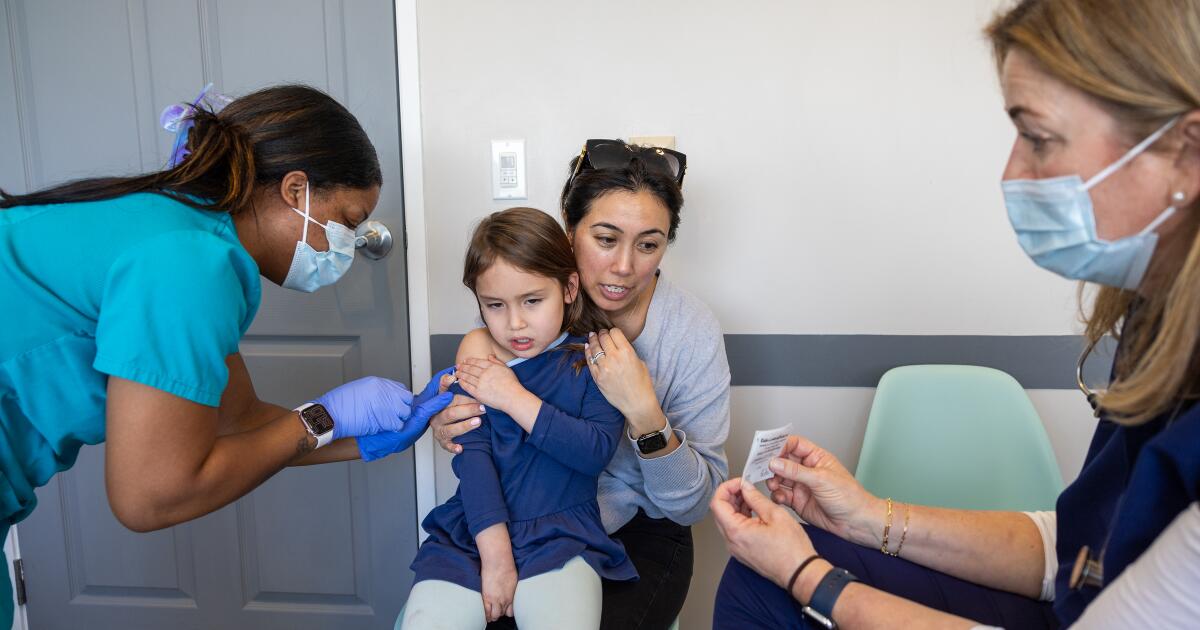
Measles is back in the United States. More than 1,500 cases have already been reported in the first months of 2026, putting the country on pace to surpass last year’s total of more than 2,200, the highest number in decades. Public health officials warn that the nation’s status as “measles free” is now at risk as childhood vaccination rates decline.
Measles may not be the only disease poised for a comeback. Another virus that once infected thousands of American children each year could be heading in the same direction.
A recent study my colleagues and I conducted using national electronic health record data found that hepatitis B vaccination rates among newborns declined by more than 10% between 2023 and August 2025.
At first glance, hepatitis B may seem like an unlikely threat to infants. The virus spreads through infected blood or bodily fluids, exposures many parents assume newborns would rarely encounter. But before routine vaccination began, hepatitis B infected roughly 18,000 children under the age of 10 in the United States every year.
About half of those infections were passed from mother to child during birth. The rest occurred through everyday household exposure, often through contact with a caregiver or family member who did not know they were infected.
The consequences can be lifelong. While acute infection is often mild or asymptomatic, as many as 90% of babies infected in their first year of life develop chronic hepatitis B. Over time, chronic infection can lead to cirrhosis, liver cancer and liver failure.
The first major step toward prevention was screening. In 1988, universal hepatitis B testing during pregnancy was recommended so that infants born to infected mothers could receive protection immediately after birth. The strategy helped identify many high-risk cases, but it did not prevent all infections. Each year between 50 and 100 infants still developed hepatitis B.
To close those remaining gaps, universal newborn vaccination was recommended in 1991. Over the following decades, hepatitis B infections in children fell to fewer than 20 annually.
That is why many physicians were surprised when, in December, the federal government’s Advisory Committee on Immunization Practices revised its recommendation for newborn hepatitis B vaccination. Under the new guidance, babies born to mothers who test negative for hepatitis B may receive the vaccine based on individual clinical decision making rather than a universal recommendation.
The idea behind this approach is straightforward. If a mother tests negative for the virus, the immediate risk to the newborn is extremely low.
But the history of hepatitis B prevention shows why universal protection became necessary in the first place.
Today, an estimated 660,000 Americans still live with chronic hepatitis B, and roughly half are unaware of their infection. Exposure risks have not disappeared. They have been controlled through vaccination and screening.
At the same time, the nation’s vaccine guidance is becoming increasingly confusing. Earlier this year, the Centers for Disease Control and Prevention revised its childhood immunization schedule, moving several vaccines from being universally recommended to being suggested as topics of discussion for parents and providers.
The changes were not supported by new evidence. In response, the American Academy of Pediatrics created its own immunization schedule that largely maintains the previous recommendations.
As a result of a lawsuit against the CDC and the Department of Health and Human Services, a federal judge has temporarily blocked the changes to the federal recommendations and invalidated actions taken by the advisory committee.
The result is growing confusion.
In my clinic, parents have begun asking questions I never heard before. Which vaccine schedule should we follow? Is this the schedule with all the vaccines or only some of them? Vaccination decisions are influenced by science but also by trust and consistency. When parents receive mixed messages, some begin to question whether vaccines are necessary at all. We have already seen the consequences of declining vaccination with measles.
For decades, hepatitis B vaccination protected American children from a virus that once infected thousands every year. Because the disease became rare, many parents and younger physicians have never seen its consequences firsthand.
If measles is a warning, hepatitis B could be next.
The lesson from the past is simple. When we stop using vaccines that work, the diseases they prevent come back.
Joshua Rothman is a pediatrician at UC San Diego Health and a clinical assistant professor of pediatrics at the UC San Diego School of Medicine.

WATCH: Artemis II astronauts splash down on Earth

How David Cross Gets Ready for a Night of ‘Dangerous’ Comedy

“Moon tree” in Metro Detroit rediscovered following Artemis II mission

San Francisco store created and run by AI

Wembanyama drops 40 as Spurs beat Mavericks, reach award eligibility

Florida High School Football Rankings: Top 25 teams – Oct. 21

How old is Bo Nix? What to know about Oregon quarterback ahead of 2024 NFL Draft

Cleary's 21 help Le Moyne down Central Connecticut State 69-64 in OT

99th annual Pony Swim held in Virginia

Indiana Members Credit Union announced as new anchor tenant at Bottleworks District
WATCH: Artemis II astronauts splash down on Earth

Swalwell’s former female staffer drops bombshell allegations of sexual assault, exposing himself: report

NASA’s Artemis II prepares for splashdown on Earth

Trump proposes painting executive office building white

Hummingbird feeds newly hatched chick
-

 Atlanta, GA6 days ago
1 teenage girl killed, another injured in shooting at Piedmont Park, police say
-

 Education1 week ago
Video: Toy Testing with a Discerning Bodega Cat
-

 Movie Reviews1 week ago
Vaazha 2 first half review: Hashir anchors a lively, chaos-filled teen tale
-

 Georgia4 days ago
Georgia House Special Runoff Election 2026 Live Results
-

 Pennsylvania4 days ago
Parents charged after toddler injured by wolf at Pennsylvania zoo
-

 Arkansas17 hours ago
Arkansas TV meteorologist Melinda Mayo retires after nearly four decades on air
-
 Milwaukee, WI5 days ago
Potawatomi Casino Hotel evacuated after fire breaks out in rooftop HVAC system
-
 Entertainment1 week ago
Inside Ye’s first comeback show at SoFi Stadium