Science
The L.A. wildfire cleanup was fast. Residents eager to rebuild worry officials chose speed over safety


The devastation left in the wake of January’s Eaton and Palisades fires was unimaginable. The firestorms engulfed 59 square miles of Southern California — more than twice the size of Manhattan — transforming entire city blocks in Altadena and Pacific Palisades into corridors of ashes, twisted metal and skeletal trees.
Federal disaster officials rapidly deployed thousands of workers to gather up the wreckage across the burn scars. Armed with shovels and heavy construction equipment, crews quickly collected fire debris from rugged cliffsides, dusky shorelines and sprawling burnt-out neighborhoods. In a matter of months, they transformed the heaps of charred rubble into mostly vacant matchbox lots, ready for rebuilding.
Recently, the U.S. Army Corps of Engineers reported that it had finished clearing roughly 2.6 million tons of wreckage from nearly 9,700 properties, an astonishing eight-month federal cleanup that has been extolled as the largest and fastest in modern American history. Private contractors removed fire debris from an additional 2,100 parcels.
However, many experts worry that the rapid pace of federal cleanup resulted in sloppy work, time-saving measures and lax oversight that may ultimately cost homeowners.
The Army Corps has largely demobilized and contractors have cleared out, and they’ve left serious questions for disaster victims who are preparing to embark on one of the region’s largest reconstruction campaigns in the past century.
Mandana Sisco, right, and her husband, Justin, visit the site where their home once stood as their children, Marley, 5, and her brother, August, 7, play in Pacific Palisades. The Siscos, who had their lot independently tested for toxins, were relieved when tests revealed there was no contamination to the soil.
(Genaro Molina / Los Angeles Times)
Federal officials also notably disavowed the need to conduct soil testing, insisting it would be too time-consuming. But soil sampling performed by university researchers, local public health authorities and Los Angeles Times journalists have found excessive levels of toxic metals at properties already cleared by the Army Corps.

-
Share via
A team of university scientists from UCLA, Loyola Marymount and Purdue tested soil samples from 47 already-cleaned homes in Altadena, finding 49% of already-cleaned homes still had elevated levels of lead above California’s standards for residential properties.
“It’s not a recovery if you leave 50% of the properties unsafe.”
— Andrew Whelton, Purdue University
“This recovery cannot be credibly compared to any other wildfire cleanup in recent memory,” said Andrew Whelton, an engineering professor at Purdue University who studies natural disaster recovery. “And that is because of deliberate decisions by government officials at all levels to skip soil testing. They did not determine that when the contractors left a property, the property was safe to use.
“It’s not a recovery if you leave 50% of the properties unsafe. While the federal government may demobilize, the onus now has been pushed to the property owners to either finish the job. Or they can ignore it, because L.A. County doesn’t require your property to be safe to rebuild.”
Despite such concerns, many praise the effort for its efficiency. The speedy recovery has allowed some survivors, including Altadena resident Carlos Lopez, to rebuild much earlier than they anticipated.
“It’s hope,” Lopez said about his homesite, where, on Sept. 10, workers have already built a wooden frame. “Neighbors that I talked to, we just wanted something to grasp onto that we’re actually moving forward. There’s some realization that we can get back home sooner rather than later.”

Col. Jeffrey Palazzini, who oversaw debris removal operations for the Palisades fire, said the Army Corps and its contractors have largely received positive feedback from property owners, like Lopez. He said the speed is a reflection of the urgency of the public health threat, not necessarily an indication of poor workmanship.

Carlos Lopez is already starting to rebuild his home on the property he owns in Altadena, shown here in mid-September.
(Allen J. Schaben / Los Angeles Times)
The L.A. County wildfire cleanup marks the maturation of a federal wildfire response that has tackled a barrage of historically destructive fires in Oregon in 2020, New Mexico in 2022 and Hawaii in 2023 — each of which were the largest wildfires in their state’s history.
“Over the past seven to 10 years, I think there has been — sadly — enough experiences for this process to be streamlined and improved upon with lessons learned each time it happens,” said Laurie Johnson, a renowned urban planner who specializes in natural disaster recovery. “And I think L.A. has been a benefit of that.”
Lindsey Horvath, L.A. County supervisor representing the Palisades, expressed cautious optimism for the road ahead. “Throughout the cleanup, we’ve followed all recommended best practices and will continue to follow the advice of experts throughout our recovery,” Horvath said in a statement. “I continue to call for soil testing to give homeowners greater peace of mind before rebuilding, and support efforts to make recovery assistance more accessible so we can rebuild faster and safer. Recovery doesn’t end here.”
Early days
In Pacific Palisades and Malibu, the wildfires turned some of the region’s most famous stretches of roads — including Sunset Boulevard and Pacific Coast Highway — into an unrecognizable labyrinth of debris. Mansions with picturesque views of the Pacific Ocean were obliterated into charred slabs of stucco, broken concrete and dust.
In Altadena, a middle-class melting pot tucked into the foothills of the San Gabriel Mountains, the inferno consumed century-old cottages and family-owned businesses on Lake Avenue, the community’s main commercial drag.
In the wake of these twin disasters, Gov. Gavin Newsom’s administration asked the federal government to take the lead on recovery. In the final days of his administration, President Biden approved funding and deployed federal agencies to start removing and disposing the most dangerous materials from affected properties.

Jan. 9 aerial view of neighborhoods destroyed by the Palisades fire.
(Robert Gauthier / Los Angeles Times)
In mid-January, neighborhoods were a literal minefield of explosive materials, including propane tanks, firearm ammunition and large lithium-ion batteries in electric vehicles, e-bikes and blackout-ready battery storage systems. There were also a plethora of household items that contained corrosive acids and toxic ingredients that needed to be collected to prevent them from polluting soil and groundwater.
On Jan. 16, the Environmental Protection Agency deployed its first teams to assess the damage and presence of hazardous materials. The agency ultimately identified about 13,600 properties, mostly single-family homes, that had been damaged or destroyed in the fire, and probably rife with hazardous materials.
Residential properties where EPA removed hazardous materials
Properties shown by parcel
Eaton fire homes

Palisades fire homes
Environmental Protection Agency, U.S. Army Corps of Engineers, U.S. Geological Survey
Lorena Iñiguez Elebee LOS ANGELES TIMES
Within days of taking office, President Trump signed an executive order instructing the EPA to expedite the removal of hazardous materials. EPA administrator Lee Zeldin later said Trump had directed the agency to complete the mission in 30 days — a demanding directive for work that typically takes several months.
In response, the Federal Emergency Management Agency increased disaster funding by nearly $179 million, money used to “surge” 850 contractors to collect the most dangerous materials from the burn scars by that deadline, according to records obtained by The Times.
In white coverall suits and full-face respirators, hazmat workers went property by property sifting through the ashes to dredge up lead-acid batteries, tins of paint thinner and pesticide canisters.
EPA personnel and agency contractors converted popular community gathering spots, including the driving range of Altadena Golf Course and the parking lot of Will Rogers State Beach, into hazmat stockpile sites. Workers laid down multiple layers of plastic liners where materials could be sorted and eventually hauled to hazardous waste dumps.

EPA crews comb the ruins of a home on Miami Way that was burned in the Palisades fire.
(Robert Gauthier / Los Angeles Times)
On Feb. 25 — two days ahead of schedule — the EPA announced it had completed that work. Its hazmat crews had overseen the removal of 300 tons of hazardous debris from 9,400 properties — making it the largest-ever hazardous materials cleanup for a wildfire the EPA had ever executed.
However, the EPA had also passed over 4,500 parcels, or 30% of properties, deeming them unsafe to enter. A Times analysis of residential properties found that workers balked at accessing 1,336 homes damaged or destroyed in the Palisades fire, and 1,453 homes in the Eaton fire.
EPA spokesperson Julia Giarmoleo said the deferred properties had hazardous trees, dangerous obstructions, steep slopes and unstable walls that prevented the EPA field teams from safely accessing the property.
“EPA’s operations are always based on completing the entirety of our work as quickly, efficiently, and safely as possible,” Giarmoleo said. “In the case of the L.A. fires, EPA encountered a higher percentage of properties that required deferral due to partial structural destruction compared to previous EPA wildfire responses.”
The remaining hazmat work was, instead, left for the Army Corps of Engineers, the agency tasked with handling the second phase of debris removal.
Residential properties where the EPA postponed removal of hazardous materials
Properties shown by parcel
Eaton fire homes
Palisades fire homes
Environmental Protection Agency, U.S. Army Corps of Engineers, U.S. Geological Survey
Lorena Iñiguez Elebee LOS ANGELES TIMES
The Army Corps rolls in
The Army Corps and its primary contractor, Environmental Chemical Corp., were charged with removing millions of tons of ash, concrete and metal. They vowed to remediate upward of 12,000 properties by January 2026 — within a year of when the deadly wildfires first broke out. The ambitious timeline would outpace any wildfire debris removal mission the Army Corps had ever tackled, including the 18-month recovery for the 2023 Lahaina wildfire that destroyed 2,200 homes and buildings.

Jan. 14 photo of Eliot Arts Magnet Middle School burned by the Eaton fire in Altadena.
(Jason Armond / Los Angeles Times)
The Army Corps and ECC hired several subcontractors, and in early February dispatched the first cleanup crews to several schools that were ruined in the fires, including Pasadena Rosebud Academy Charter School in Altadena, where hazmat workers shoveled asbestos waste into thick plastic bags. They waded through a field of charred debris, gathering up fire-gnarled steel rods, metal door frames and structural beams into piles, which were later loaded onto dump trucks and hauled away to landfills.
Soon after, workers moved onto fire-destroyed homes. In mid-February, after a two-day delay due to heavy rainfall, crews finished clearing their first homesites in Altadena and Pacific Palisades.

A view of Eliot Arts Magnet Middle School after the federal cleanup.
(Allen J. Schaben / Los Angeles Times)
As the cleanup progressed, one obstacle for public officials was tracking down the thousands of displaced survivors and getting them to sign paperwork that would grant federal cleanup crews permission to clear their properties. Because the fast-moving wildfires forced people to evacuate with little warning, many fled with only the clothes on their backs.
“Obviously, someone will have to be last. But we wanted to make sure that process was transparent.”
— Anish Saraiya, director of Altadena recovery director
Army Corps personnel tried to disseminate sign-up instructions and appeal to the public at press conferences and community meetings. Local officials helped by making phone calls to disaster victims in parts of Altadena where response had been lacking, according to Anish Saraiya, Altadena’s recovery director for L.A. County Supervisor Kathyn Barger’s office.
“Our office even started calling individual property owners, because there was already a concern about the disparity postfire west of Lake [Avenue],” Saraiya said. “One of the things we wanted to make sure is that this was an equitable process that got to everybody at once. Obviously, someone will have to be last. But we wanted to make sure that process was transparent.”

Wildfire victims seek disaster relief services at one of two FEMA Disaster Recovery Centers at the Pasadena City College Community Education Center in Pasadena.
(Allen J. Schaben / Los Angeles Times)
By April, with roughly 9,000 opt-ins, the federal cleanup had hit its stride. About 230 cleanup crews and 4,000 workers fanned out across the burn scars, working 12-hour shifts to remove debris from homes and haul it to landfills and scrapyards.
Following reporting by The Times, FEMA and the Army Corps drew criticism from environmental advocates and fire survivors for deciding not to perform soil testing after cleanups to ensure properties did not have toxic metals, such as lead, above California’s health standards for residential properties.
It would be the first major wildfire response in California since 2007 without a measurable goal for clearing toxic substances.
Homes destroyed by the Eaton fire were cleaned at a faster rate than those affected by the Palisades fire, according to a Times analysis of residential properties. Army Corps officials said they attempted to prioritize properties near schools, coastlines, waterways and occupied homes.
One such property belonged to Bronwen Sennish and her husband; their Spanish-style home had been a short distance from Palisades Elementary Charter School.
Sennish said she appreciated the sense of urgency and sensitivity with which the Army Corps approached her home. On one April morning, when she and her husband arrived at their lot, heavy machinery was already humming. Sennish said that the crew happily explained the parameters of their work. And the excavator operator took the time to sift through the rubble with the two in search for anything salvageable. “People who have been trained in the military are incredibly good at problem solving and logistics,” Sennish said.
But not everyone had a positive experience.
Cleanup crews, for example, excavated too much soil from Colten Sheridan‘s lot in northeast Altadena in April, according to internal Army Corps reports obtained by the Los Angeles Times. Sheridan, who is still displaced and living temporarily in Santa Cruz County, said he was never informed of the potentially costly mistake.
Instead, five months later, while Sheridan contemplated rebuilding plans, he was shocked to find out from L.A. Times journalists that his property had been the subject of a complicated internal debate within the Army Corps and debris removal workers.
“I feel like I absolutely should have been notified. I’m just reeling in my head right now,” he said. “If they over-excavated, and if they’re not going to do anything about it, what are my recourses? I don’t know.”
In early September, Sheridan called an Army Corps hotline dedicated to handling questions and concerns about the federal cleanup, but didn’t get answers.

A sign, put up on private property in Altadena, expressing community resilience as the federal cleanup was underway, on Sept. 10.
(Allen J. Schaben / Los Angeles Times)

A sign announcing that a new home will be built on a burned-out property in Altadena on Sept. 10.
(Allen J. Schaben / Los Angeles Times)
Now Sheridan fears he may have to foot the bill to bring in clean soil and regrade his property before he can rebuild. If a home is seated too low, it won’t be able to properly connect sewer lines and storm drains, which require a high-to-low slope.
Army Corps officials declined to comment on Sheridan’s property, citing privacy concerns.
Many environmentalists and community members had worried the speed of the cleanup might lead to workers cutting corners or substandard workmanship.
Cleanup supervisors routinely observed workers without masks and other safety equipment, according to Army Corps records. In some cases, workers disregarded decontamination protocols by stepping outside of contaminated areas without rinsing their boots.

Jana Karibyna inspects a burned lamp in the backyard of her home after it was destroyed by the Eaton fire in February.
(Robert Gauthier / Los Angeles Times)
And according to internal documents attained by The Times, debris crews were regularly confused how to handle contaminated pool water — which researchers have found to contain trace amounts of lead, arsenic and other toxic chemicals. The contractors allegedly sprayed it into building footprints, front lawns, neighboring properties and even in the street, where it could have ended up in drainage systems leading to the oceans.
James Mayfield, owner of Mayfield Environmental Engineering, a private contractor specializing in hazardous materials, cleaned around 200 properties destroyed in the L.A. fires. For pools filled with ash, he suctioned contaminated water with a vacuum truck and sent it to locations that treat wastewater.
Mayfield believes inexperienced workers and the breakneck timeline probably led to some crews ignoring those best practices and redepositing toxic metals onto residential properties and local waterways.
“Proper hazmat disposal is about $10,000,” Mayfield said. “You can imagine, most people didn’t want to do that. They want to cut corners.”
Many wealthier homeowners with robust insurance policies opted out of the federal cleanup and decided to hire private contractors, which, in some cases, may have expedited their cleanup and rebuilding timeline, and provided access to services the government program didn’t provide — such as post-cleanup testing or property-wide soil removal.
A Times analysis of the private cleanups underscores the wealth gap between affluent residents of Pacific Palisades and working-class communities in Altadena: At least 1,392 homes opted out of the cleanup in the Palisades, nearly four times the number in the Eaton fire area, according to the analysis.
Residential properties that opted out of the Army Corps cleanup
Properties shown by parcel
Eaton fire homes
Palisades fire homes
Environmental Protection Agency, U.S. Army Corps of Engineers, U.S. Geological Survey
Lorena Iñiguez Elebee LOS ANGELES TIMES
Tom James, a lifelong Palisades resident, decided that the Army Corps cleanup came with too many uncertainties. He also didn’t feel comfortable signing the liability waiver that would indemnify the federal government and contractors in the event of mistakes. He chose instead to hire a private crew that he was able to pay with his insurance policy, to clear out fire debris from his historic Victorian home in the heart of the Alphabet Streets, along with his collection of vintage cars and motorcycles in his garage underneath.
Still, James was affected by federal contractors. An Army Corps crew working next door left a large pile of his neighbors’ soil in his backyard. He walked down to the American Legion where Army Corps officials were stationed to let them know. A representative apologized and vowed to remove soil, but James said they never returned.
A time to rebuild
All told, the federal project cleared 9,673 properties — a mix of home sites, commercial properties, parks and schools — according to the Army Corps.

Aerial view of cleared properties and construction crews working on rebuilding a home after the federal cleanup of properties in Altadena following the Eaton and Palisades fires.
(Allen J. Schaben / Los Angeles Times)
That has paved the way for the submission of more than 3,000 applications to rebuild — some 900 of which have already been approved.
In Altadena, some residents ready to rebuild have returned to their empty lots in RVs. The screech of tablesaws and popping of nail guns break up the silence in the fire-hollowed corners of these neighborhoods.
“I had a very simple lot, and they took everything I wanted removed … my neighbor has a real issue to solve now with getting dirt back in.”
— Lamar Bontrager, Altadena resident.
Lamar Bontrager, a real estate agent, has already laid a foundation and begun framing his home on Loma Alta Drive. He credits the Army Corps for the quick start.
“I had a very simple lot, and they took everything I wanted removed,” Bontrager said. Bontrager counts himself lucky. Looking at other lots around town, he said some neighbors will have a big lift. “At some houses, they [federal contractors] dug massive holes — my neighbor has a real issue to solve now with getting dirt back in.”

A fallen tree being prepared for removal from a destroyed property in Altadena. In the background, a construction crew works on rebuilding a home that burned down.
(Allen J. Schaben / Los Angeles Times)
While the cleanup was the fastest in history, some survivors feel forgotten. According to federal records, 391 property owners who requested federal help were deemed ineligible by FEMA.
FEMA says some of those properties did not experience enough damage for eligibility. The agency deemed others, including many multi-family homes, as commercial properties, and, therefore, also ineligible.
These decisions put some of the largest housing developments affected by the fires in a bind. For example, the Army Corps cleared the Tahitian Terrace mobile home park in Pacific Palisades, across the street from Will Rogers State Beach, but did not clean up the Pacific Palisades Bowl, a 170-unit mobile home park next door.
“There’s hundreds and hundreds of people that are still having sleepless nights.”
— Jon Brown, Pacific Palisades Bowl resident.
Residents were never told why one property qualified and the other did not; those decisions are entirely up to FEMA.
Rusted metal frames and a blanket of pallid ash still sit within a few hundred feet from the ocean. Residents, who have heard little from the landowners about the dilemma, have been stuck in limbo.
“There’s hundreds and hundreds of people that are still having sleepless nights,” said one resident, Jon Brown, co-chair of the Palisades Bowl Community Partnership fighting for residents’ right to return home. “I just drove by the park today and it just makes me sick.”
Brown and others have watched the Corps clear thousands of lots and a handful of owners start rebuilding, while their piles of charred debris remained virtually untouched. They have little certainty they’ll ever be able to return.
Brown, facing steep rent for temporary housing, fears the owners may be looking for a way out — selling the land or changing its use.
“What is going to compel them to rebuild it as a mobile home park if they can’t even be motivated to clean it up?” Brown asked.
Federal disaster officials and contractors are no longer around to answer those questions.
Before the Army Corps and its workers packed up, they held two small ceremonies to commemorate the last homes to be cleaned in each burn scar.
In Altadena, Tami Outterbridge, daughter of renowned artist John Outterbridge, had specifically requested to be last.

Tami Outterbridge invited other artists to sift through the ashes of the property in hopes of finding objects they can use to create new artworks as tributes to her father.
(Robert Gauthier / Los Angeles Times)
She and her mother, Beverly, lived in two separate homes on their family’s lot in West Altadena. They postponed their cleanup several times, asking her father’s friends and contemporaries to help them scour the ashes for pieces of his artwork and other mementos. They found a pair of her father’s vintage spectacles and fragments of his sculptures, assembled from knickknacks and everyday objects.
When the cleanup crew arrived in mid-August, they came with a team of dog-assisted archaeologists that helped find her grandmother’s ashes — and recover some of John Outterbridge’s collection of flutes from underneath a collapsed wall.
“Those are things that literally are irreplaceable,” Tami Outterbridge said. “As I was reckoning with what it meant to say you’ve lost two homes and all your possessions — that’s when the idea started formulating. I can literally adhere to Dad’s art practice, which was very much about this notion of finding objects that other people saw as discarded — not worthy, trash debris — and turning them into aesthetic marvels.”

Stanley C. Wilson, a fellow artist and longtime friend of John Outterbridge, sifts through the ashes that remain of Outterbridge’s family home on June 8.
(Robert Gauthier / Los Angeles Times)
At the Aug. 14 ceremony commemorating Outterbridge’s home as the final Altadena home to be cleaned as part of the federal project, Saraiya, the Altadena recovery director, looked around at a neighborhood that just a few months ago had been chock-full of ash and cinders. It was now a sweeping panorama of mostly empty, mulch-covered lots.
“I’m not a very emotional person, but I felt myself getting choked up,” he said, “because it was really this one clarifying moment that this work is done.”
Saraiya said he understood local officials would need to soon start discussing rebuilding roads, installing underground power lines and planning a more fire-resilient community. “After all of these months, after all of this work and all of this effort — there’s so much more to do.”
Assistant data and graphics editor Vanessa Martinez and senior journalist Lorena Iñiguez Elebee contributed to this report.



A respiratory virus that doesn’t have a vaccine or a specific treatment regimen is spreading in some parts of California — but there’s no need to sound the alarm just yet, public health officials say.
A majority of Northern California communities have seen high concentrations of human metapneumovirus, or HMPV, detected in their wastewater, according to data from the WastewaterScan Dashboard, a public database that monitors sewage to track the presence of infectious diseases.
A Los Angeles Times data analysis found the communities of Merced in the San Joaquin Valley, and Novato and Sunnyvale in the San Francisco Bay Area have seen increases in HMPV levels in their wastewater between mid-December and the end of February.
HMPV has also been detected in L.A. County, though at levels considered low to moderate at this point, data show.
While HMPV may not necessarily ring a bell, it isn’t a new virus. Its typical pattern of seasonal spread was upended by the COVID-19 pandemic, and its resurgence could signal a return to a more typical pre-coronavirus respiratory disease landscape.
Here’s what you need to know.
What is HMPV?
HMPV was first detected in 2001, according to the U.S. Centers for Disease Control and Prevention. It’s transmitted by close contact with someone who is infected or by touching a contaminated surface, said Dr. Neha Nanda, chief of infectious diseases and hospital epidemiologist for Keck Medicine of USC.
Like other respiratory illnesses, such as influenza, HMPV spreads and is more durable in colder temperatures, infectious-disease experts say.
Human metapneumovirus cases commonly start showing up in January before peaking in March or April and then tailing off in June, said Dr. Jessica August, chief of infectious diseases at Kaiser Permanente Santa Rosa.
However, as was the case with many respiratory viruses, COVID disrupted that seasonal trend.
Why are we talking about HMPV now?
Before the pandemic hit in 2020, Americans were regularly exposed to seasonal viruses like HMPV and developed a degree of natural immunity, August said.
That protection waned during the pandemic, as people stayed home or kept their distance from others. So when people resumed normal activities, they were more vulnerable to the virus. Unlike other viruses, there isn’t a vaccine for human metapneumovirus.
“That’s why after the pandemic we saw record-breaking childhood viral illnesses because we lacked the usual immunity that we had, just from lack of exposure,” August said. “All of that also led to longer viral seasons, more severe illness. But all of these things have settled down in many respects.”
In 2024, the national test positivity for HMPV peaked at 11.7% at the end of March, according to the National Respiratory and Enteric Virus Surveillance System. The following year’s peak was 7.15% in late April.
So far this year, the highest test positivity rate documented was 6.1%, reported on Feb. 21 — the most recent date for which complete data are available.
While the seasonal spread of viruses like HMPV is nothing new, people became more aware of infectious diseases and how to prevent them during the pandemic, and they’ve remained part of the public consciousness in the years since, August and Nanda said.
What are the symptoms of HMPV?
Most people won’t go to the doctor if they have HMPV because it typically causes mild, cold-like symptoms that include cough, fever, nasal congestion and sore throat.
HMPV infection can progress to:
- An asthma attack and reactive airway disease (wheezing and difficulty breathing)
- Middle ear infections behind the ear drum
- Croup, also known as “barking” cough — an infection of the vocal cords, windpipe and sometimes the larger airways in the lungs
- Bronchitis
- Fever
Anyone can contract human metapneumovirus, but those who are immunocompromised or have other underlying medical conditions are at particular risk of developing severe disease — including pneumonia. Young children and older adults are also considered higher-risk groups, Nanda said.
What is the treatment for HMPV?
There is no specified treatment protocol or antiviral medication for HMPV. However, it’s common for an infection to clear up on its own and treatment is mostly geared toward soothing symptoms, according to the American Lung Assn.
A doctor will likely send you home and tell you to rest and drink plenty of fluids, Nanda said.
If symptoms worsen, experts say you should contact your healthcare provider.
How to avoid contracting HMPV
Infectious-disease experts said the best way to avoid contracting HMPV is similar to preventing other respiratory illnesses.
The American Lung Assn.’s recommendations include:
- Wash your hands often with soap and water. If that’s not available, clean your hands with an alcohol-based hand sanitizer.
- Clean frequently touched surfaces.
- Crack open a window to improve air flow in crowded spaces.
- Avoid being around sick people if you can.
- Avoid touching your eyes, nose and mouth.
Assistant data and graphics editor Vanessa Martínez contributed to this report.
Science
After rash of overdose deaths, L.A. banned sales of kratom. Some say they lost lifeline for pain and opioid withdrawal

Nearly four months ago, Los Angeles County banned the sale of kratom, as well as 7-OH, the synthetic version of the alkaloid that is its active ingredient. The idea was to put an end to what at the time seemed like a rash of overdose deaths related to the drug.
It’s too soon to tell whether kratom-related deaths have dissipated as a result — or, really, whether there was ever actually an epidemic to begin with. But many L.A. residents had become reliant on kratom as something of a panacea for debilitating pain and opioid withdrawal symptoms, and the new rules have made it harder for them to find what they say has been a lifesaving drug.
Robert Wallace started using kratom a few years ago for his knees. For decades he had been in pain, which he says stems from his days as a physical education teacher for the Glendale Unified School District between 1989 and 1998, when he and his students primarily exercised on asphalt.
In 2004, he had arthroscopic surgery on his right knee, followed by varicose vein surgery on both legs. Over the next couple of decades, he saw pain-management specialists regularly. But the primary outcome was a growing dependence on opioid-based painkillers. “I found myself seeking doctors who would prescribe it,” he said.
He leaned on opioids when he could get them and alcohol when he couldn’t, resulting in a strain on his marriage.
When Wallace was scheduled for his first knee replacement in 2021 (he had his other knee replaced a few years later), his brother recommended he take kratom for the post-surgery pain.
It seemed to work: Wallace said he takes a quarter of a teaspoon of powdered kratom twice a day, and it lets him take charge of managing his pain without prescription painkillers and eases harsh opiate-withdrawal symptoms.
He’s one of many Angelenos frustrated by recent efforts by the county health department to limit access to the drug. “Kratom has impacted my life in only positive ways,” Wallace told The Times.
For now, Wallace is still able to get his kratom powder, called Red Bali, by ordering from a company in Florida.
However, advocates say that the county crackdown on kratom could significantly affect the ability of many Angelenos to access what they say is an affordable, safer alternative to prescription painkillers.
Kratom comes from the leaves of a tree native to Southeast Asia called Mitragyna speciosa. It has been used for hundreds of years to treat chronic pain, coughing and diarrhea as well as to boost energy — in low doses, kratom appears to act as a stimulant, though in higher doses, it can have effects more like opioids.
Though advocates note that kratom has been used in the U.S. for more than 50 years for all sorts of health applications, there is limited research that suggests kratom could have therapeutic value, and there is no scientific consensus.
Then there’s 7-OH, or 7-Hydroxymitragynine, a synthetic alkaloid derived from kratom that has similar effects and has been on the U.S. market for only about three years. However, because of its ability to bind to opioid receptors in the body, it has a higher potential for abuse than kratom.
Public health officials and advocates are divided on kratom. Some say it should be heavily regulated — and 7-OH banned altogether — while others say both should be accessible, as long as there are age limitations and proper labeling, such as with alcohol or cannabis.
In the U.S., kratom and 7-OH can be found in all sorts of forms, including powder, capsules and liquids — though it depends on exactly where you are in the country. Though the Food and Drug Administration has recommended that 7-OH be included as a Schedule 1 controlled substance under the Controlled Substances Act, that hasn’t been made official. And the plant itself remains unscheduled on the federal level.
That has left states, counties and cities to decide how to regulate the substances.
California failed to approve an Assembly bill in 2024 that would have required kratom products to be registered with the state, have labeling and warnings, and be prohibited from being sold to anyone younger than 21.
It would also have banned products containing synthetic versions of kratom alkaloids. The state Legislature is now considering another bill that basically does the same without banning 7-OH — while also limiting the amount of synthetic alkaloids in kratom and 7-OH products sold in the state.
“Until kratom and its pharmacologically active key ingredients mitragynine and 7-OH are approved for use, they will remain classified as adulterants in drugs, dietary supplements and foods,” a California Department of Public Health spokesperson previously told The Times.
On Tuesday, California Gov. Gavin Newsom announced that the state’s efforts to crack down on kratom products has resulted in the removal of more than 3,300 kratom and 7-OH products from retail stores. According to a news release from the governor’s office, there has been a 95% compliance rate from businesses in removing the products.
(Los Angeles Times photo illustration; source photos by Getty Images)
Newsom has equated these actions to the state’s efforts in 2024 to quash the sale of hemp products containing cannabinoids such as THC. Under emergency state regulations two years ago, California banned these specific hemp products and agents with the state Department of Alcoholic Beverage Control seized thousands of products statewide.
Since the beginning of 2026, there have been no reported violations of the ban on sales of such products.
“We’ve shown with illegal hemp products that when the state sets clear expectations and partners with businesses, compliance follows,” Newsom said in a statement. “This effort builds on that model — education first, enforcement where necessary — to protect Californians.”
Despite the state’s actions, the Los Angeles County Board of Supervisors is still considering whether to regulate kratom, or ban it altogether.
The county Public Health Department’s decision to ban the sale of kratom didn’t come out of nowhere. As Maral Farsi, deputy director of the California Department of Public Health, noted during a Feb. 18 state Senate hearing, the agency “identified 362 kratom-related overdose deaths in California between 2019 and 2023, with a steady increase from 38 in 2019 up to 92 in 2023.”
However, some experts say those numbers aren’t as clear-cut as they seem.
For example, a Los Angeles Times investigation found that in a number of recent L.A. County deaths that were initially thought to be caused by kratom or 7-OH, there wasn’t enough evidence to say those drugs alone caused the deaths; it might be the case that the danger is in mixing them with other substances.
Meanwhile, the actual application of this new policy seems to be piecemeal at best.
The county Public Health Department told The Times it conducted 2,696 kratom-related inspections between Nov. 10 and Jan. 27, and found 352 locations selling kratom products. The health department said the majority stopped selling kratom after those inspections; there were nine locations that ignored the warnings, and in those cases, inspectors impounded their kratom products.
But the reality is that people who need kratom will buy it on the black market, drive far enough so they get to where it’s sold legally or, like Wallace, order it online from a different state.
For now, retailers who sell kratom products are simply carrying on until they’re investigated by county health inspectors.
Ari Agalopol, a decorated pianist and piano teacher, saw her performances and classes abruptly come to a halt in 2012 after a car accident resulted in severe spinal and knee injuries.
“I tried my best to do traditional acupuncture, physical therapy and hydrocortisone shots in my spine and everything,” she said. “Finally, after nothing was working, I relegated myself to being a pain-management patient.”
She was prescribed oxycodone, and while on the medication, battled depression, anhedonia and suicidal ideation. She felt as though she were in a fog when taking oxycodone, and when it ran out, ”the pain would rear its ugly head.” Agalopol struggled to get out of bed daily and could manage teaching only five students a week.
Then, looking for alternatives to opioids, she found a Reddit thread in which people were talking up the benefits of kratom.
“I was kind of hesitant at first because there’re so many horror stories about 7-OH, but then I researched and I realized that the natural plant is not the same as 7-OH,” she said.
She went to a local shop, Authentic Kratom in Woodland Hills, and spoke to a sales associate who helped her decide which of the 47 strains of kratom it sold would best suit her needs.
Agalopol currently takes a 75-milligram dose of mitragynine, the primary alkaloid in kratom, when necessary. It has enabled her to get back to where she was before her injury: teaching 40 students a week and performing every weekend.
Agalopol believes the county hasn’t done its homework on kratom. “They’re just taking these actions because of public pressure, and public pressure is happening because of ignorance,” she said.
During the course of reporting this story, Authentic Kratom has shut down its three locations; it’s unclear if the closures are temporary. The owner of the business declined to comment on the matter.
When she heard the news of the recent closures, Agalopol was seething. She told The Times she has enough capsules of kratom for now, but when she runs out, her option will have to be Tylenol and ibuprofen, “which will slowly kill my liver.”
“Prohibition is not a public health strategy,” said Jackie Subeck, executive director of 7-Hope Alliance, a nonprofit that promotes safe and responsible access to 7-OH for consumers, at the Feb. 18 Senate hearing. “[It’s] only going to make things worse, likely resulting in an entirely new health crisis for Californians.”
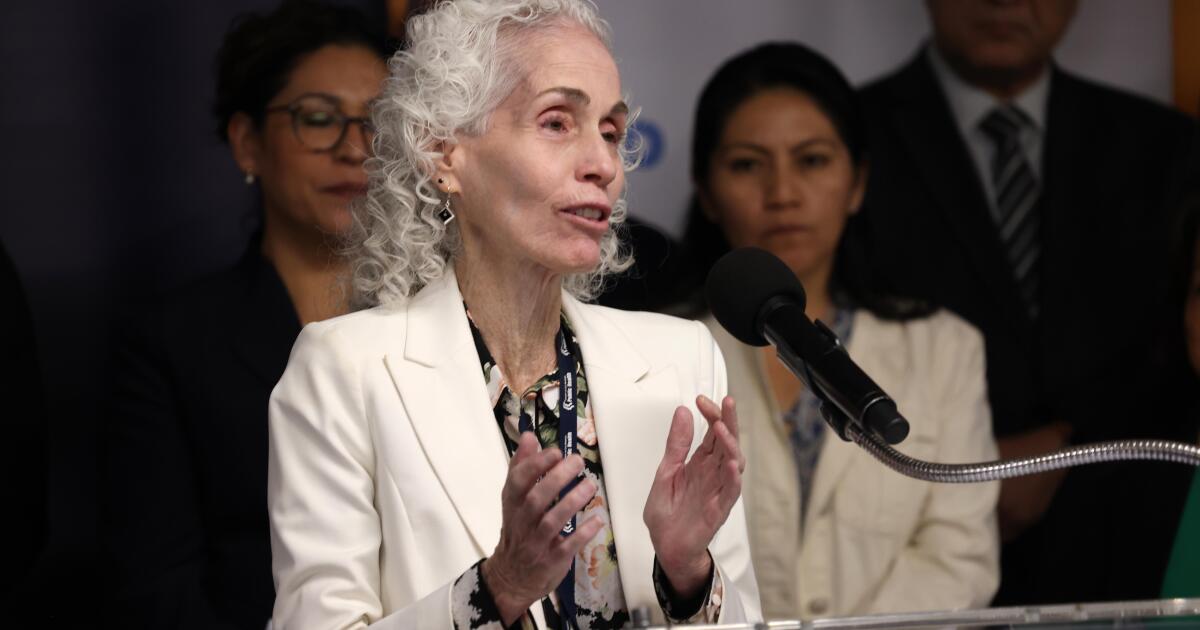
Because of budget cuts, the Los Angeles County Department of Public Health has ended clinical services at seven of its public health clinic sites.
As of Feb. 27, the county is no longer providing services such as vaccinations, sexually transmitted infection testing and treatment, or tuberculosis diagnosis and specialty TB care at the affected locations, according to county officials and a department fact sheet.
The sites losing clinical services are Antelope Valley in Lancaster; the Center for Community Health (Leavy) in San Pedro, Curtis R. Tucker in Inglewood, Hollywood-Wilshire, Pomona, Dr. Ruth Temple in South Los Angeles, and Torrance. Services will continue to be provided by the six remaining public health clinics, and through nearby community clinics.
The changes are the result of about $50 million in funding losses, according to official county statements.
“That pushed us to make the very difficult decision to end clinical services at seven of our sites,” said Dr. Anish Mahajan, chief deputy director of the L.A. County Department of Public Health.
Mahajan said the department selected clinics with relatively lower patient volumes. Over the last month, he said, the department has sent letters to patients about the changes, and referred them to unaffected county clinics, nearby federally qualified health centers or other community providers. According to Mahajan, for tuberculosis patients, particularly those requiring directly observed therapy, public health nurses will continue visiting patients.
Public health clinics form part of the county’s healthcare safety net, serving low-income residents and those with limited access to care. Officials said that about half of the patients the county currently sees across its clinics are uninsured.
Mahajan noted that the clinics were established decades ago, before the Affordable Care Act expanded Medi-Cal coverage and increased the number of federally qualified health centers. He said that as more residents gained access to primary care, utilization at some county-run clinics declined.
“Now that we have a more sophisticated safety net, people often have another place to go for their full range of care,” he said.
Still, the closures have unsettled providers who work closely with local vulnerable populations.
“I hate to see any services that serve our at-risk and homeless community shut down,” said Mark Hood, chief executive of Union Rescue Mission in downtown Los Angeles. “There’s so much need out there, so it always is going to create hardship for the people that actually need the help the most.”
Union Rescue Mission does not receive government funding for its healthcare services, Hood said. The mission’s clinics are open not only to shelter guests, up to 1,000 people nightly, but also to people living on the streets who walk in seeking care.
Its dental clinic alone sees nearly 9,000 patients a year, Hood said.
“We haven’t seen it yet, but I expect in the coming days and weeks we’ll see more people coming through our doors looking for help,” he said. “They’re going to have to find help somewhere.” Hood said women experiencing homelessness are especially vulnerable when preventive care, including sexual and reproductive health services, becomes harder to access.
County officials said staffing impacts so far have been managed through reassignment rather than layoffs. Roughly 200 to 300 positions across the department have been eliminated amid funding cuts, officials said, though many were vacant. About 120 employees whose positions were affected have been reassigned; according to Mahajan, no one has been laid off.
The clinic closures come amid broader fiscal uncertainty. Mahajan said that due to the Trump administration’s “Big Beautiful Bill,” Los Angeles County could lose $2.4 billion over the next several years. That funding, he said, supports clinics, hospitals and community clinic partners now absorbing patients who previously went to the clinics that closed on Feb. 27.
In response, the L.A. County Board of Supervisors has backed a proposed half-cent sales tax measure that would generate hundreds of millions of dollars annually for healthcare and public health services. Voters are expected to consider the measure in June.

Why is Popular Bracketologist Still Considering West Virginia for NCAA Tournament?

Explore small streams of Wyo. with WGFD XStream Angler challenge

Paramount ally RedBird says using Middle East money to help buy Warner Bros. could be a good idea

Fitness Class Volume Tied to Exercise Intensity Perception

Peaky Blinders: The Immortal Man review – Tommy Shelby returns for muddy, bloody big-screen showdown

Florida High School Football Rankings: Top 25 teams – Oct. 21

Cleary's 21 help Le Moyne down Central Connecticut State 69-64 in OT

How old is Bo Nix? What to know about Oregon quarterback ahead of 2024 NFL Draft

99th annual Pony Swim held in Virginia

Indiana Members Credit Union announced as new anchor tenant at Bottleworks District

Map: 4.9-Magnitude Earthquake Shakes Louisiana

Paxton vows he’s ‘staying in this race’ even if Trump backs Cornyn in Texas GOP clash

Which Kurdish groups is the US rallying to fight Iran?

Man accused of plot to assassinate Trump testifies Iran pressured him, says Biden and Haley were other possible targets

DHS defends McLaughlin against allegations husband’s company profited millions from ad contracts: ‘Baseless’
-

 World1 week ago
Exclusive: DeepSeek withholds latest AI model from US chipmakers including Nvidia, sources say
-

 Massachusetts1 week ago
Mother and daughter injured in Taunton house explosion
-

 Wisconsin4 days ago
Setting sail on iceboats across a frozen lake in Wisconsin
-

 Maryland4 days ago
AM showers Sunday in Maryland
-

 Florida4 days ago
Florida man rescued after being stuck in shoulder-deep mud for days
-

 Denver, CO1 week ago
10 acres charred, 5 injured in Thornton grass fire, evacuation orders lifted
-

 Massachusetts2 days ago
Massachusetts man awaits word from family in Iran after attacks
-

 Oregon6 days ago
2026 OSAA Oregon Wrestling State Championship Results And Brackets – FloWrestling