Science
'Miracle' weight-loss drugs could have reduced health disparities. Instead they got worse

The American Heart Assn. calls them “game changers.”
Oprah Winfrey says they’re “a gift.”
Science magazine anointed them the “2023 Breakthrough of the Year.”
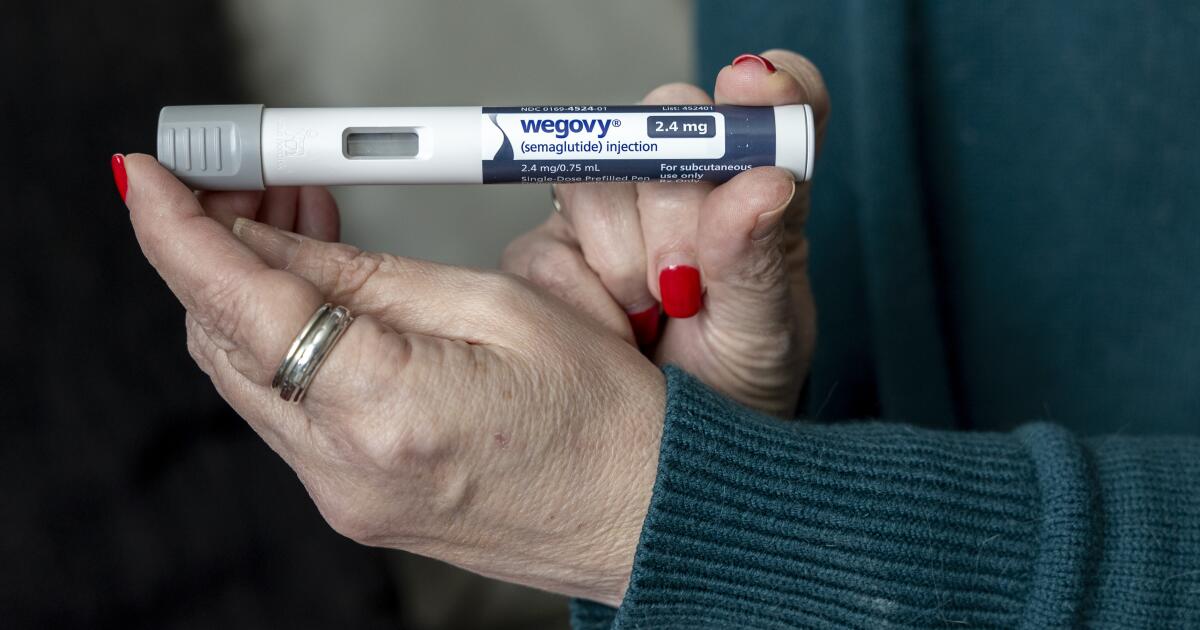
Americans are most familiar with their brand names: Ozempic, Wegovy, Mounjaro, Zepbound. They are the medications that have revolutionized weight loss and raised the possibility of reversing the country’s obesity crisis.
Obesity — like so many diseases — disproportionately affects people in racial and ethnic groups that have been marginalized by the U.S. healthcare system. A class of drugs that succeeds where so many others have failed would seem to be a powerful tool for closing the gap.
Instead, doctors who treat obesity, and the serious health risks that come with it, fear the medications are making this health disparity worse.
“These patients have a higher burden of disease, and they’re less likely to get the medicine that can save their lives,” said Dr. Lauren Eberly, a cardiologist and health services researcher at the University of Pennsylvania. “I feel like if a group of patients has a disproportionate burden, they should have increased access to these medicines.”
Why don’t they? Experts say there are a multitude of reasons, but the primary one is cost.
The injectable drug Ozempic sparked a revolution in obesity care.
(David J. Phillip/Associated Press)
Ozempic, which is approved by the Food and Drug Administration to help people with Type 2 diabetes control their blood sugar and reduce their risk of serious cardiovascular problems like heart attacks and strokes, has a list price of $968.52 for a 28-day supply. Wegovy, a higher dose of the same medicine that’s FDA-approved for weight loss in people with obesity or who are overweight and have a weight-related condition like high blood pressure or high cholesterol, goes for $1,349.02 every four weeks.
Mounjaro is a similar drug approved by the FDA to improve blood sugar levels in Type 2 diabetes patients, and it comes with a list price of $1,069.08 for 28 days of medicine. Zepbound, a version of the same drug approved for weight loss, has a slightly lower price tag of $1,059.87 per 28 days. For now, at least, all the new drugs are meant to be taken indefinitely.
Few health insurance programs cover the medications when prescribed to help people reach and maintain a healthy weight. Federal law requires that weight loss drugs be excluded from basic coverage in Medicare Part D plans, and as of early 2023, only 10 states included an antiobesity medication in the formularies for their Medicaid programs.
“If everybody had equal access, then this would be a way to help,” said Dr. Rocio Pereira, chief of endocrinology at Denver Health. “But without equal access — which is what we have now — it’s likely this is going to increase the disparity we see.”
U.S. obesity rates have been rising for decades, and they’re consistently higher for Black and Latino Americans. Among adults 20 and older, 49.9% of Black Americans and 45.6% of Hispanic Americans have a body mass index of 30 or greater, compared with 41.1% of white American adults and 16.1% of Asian American adults, according to age-adjusted data from the Centers for Disease Control and Prevention.
Obesity rates are also associated with income. In 2022, the age-adjusted rate was 38.4% for adults with household incomes between $15,000 and $24,999, compared with 34.1% for those with household incomes of $75,000 or more.
The two are related, said Pereira, who studies health disparities in diseases related to obesity. Black and Latino Americans are more likely to live in lower-income neighborhoods, where fast food is usually cheaper and more convenient than grocery stores.
“If you look at a map of the U.S. and plot out the neighborhoods where there’s no grocery store within a mile and there’s a high percentage of people who have no car, those are the areas where there’s the highest rates of obesity,” she said.
There’s also the time factor, she said: “Can you afford to cook your own meals, or do you have to work two jobs?”
An unusual experiment by the Department of Housing and Urban Development demonstrated the degree to which physical surroundings can influence obesity risk, Pereira said. In the 1990s, hundreds of mothers who were living in public housing were offered housing vouchers they could use only in wealthier neighborhoods. Ten to 15 years later, the women randomly assigned to receive the windfall had significantly lower rates of severe obesity (14.4%) than women in a control group who weren’t offered vouchers (17.7%). They were also less likely to have a body mass index of 35 or higher (31.1% vs. 35.5%).
Two women talk in New York.
(Mark Lennihan / Associated Press)
The American Medical Assn. recognized obesity as a disease in 2013. People with the chronic condition are at heightened risk of cardiovascular disease, Type 2 diabetes, 13 types of cancer, osteoarthritis, asthma and other health problems. Researchers have pegged the annual medical costs associated with obesity at $174 billion in the U.S. alone.
Some people with obesity are able to lose weight by changing their diets and burning more calories through exercise. But that doesn’t work for people who have developed resistance to leptin, a hormone that suppresses appetite.
“If you try to lose weight with diet and exercise, your body is going to fight you,” said Dr. Caroline Apovian, co-director of the Center for Weight Management and Wellness at Brigham and Women’s Hospital in Boston. “Your leptin levels go down, and when leptin goes down, a signal goes to the brain that you don’t have enough fat to survive.” That prompts the release of another hormone, ghrelin, that triggers feelings of hunger.
Leptin resistance also makes exercise less worthwhile.
“Your body fights you by decreasing your total energy expenditure,” Apovian said. “When your muscles work, they work more efficiently. If you want to lose 10 pounds, you’re going to get really, really hungry. And you can’t fight that. Your body thinks it’s starving to death.”
The “breakthrough” drugs counteract this by impersonating a hormone called glucagon-like peptide 1, or GLP-1, that’s involved in appetite regulation. Inside cells, the drugs bind with the same receptors as GLP-1, reducing blood sugar and slowing digestion. They also last longer than their natural counterparts.
Oprah Winfrey credits the new generation of medications for helping her keep her weight under control.
(Chris Pizzello / Associated Press)
The first so-called GLP-1 receptor agonist was approved in 2005 to treat diabetes, and early versions had to be injected once or twice a day. Ozempic improved on this by requiring an injection only once a week. After clinical trials showed that the drug helped people with obesity achieve substantial, sustainable weight loss, the FDA approved Wegovy as a weight management drug in 2021.
Mounjaro and Zepbound also mimic GLP-1, along with a related hormone called glucose-dependent insulinotropic peptide, or GIP.
Linda Morales credits Ozempic and Mounjaro for helping her lose 100 pounds and drop from a size 22 to a size 14. The 25-year-old instructional aide at Lankershim Elementary School in North Hollywood said she started to become overweight in middle school and carried 293 pounds on her 5-foot, 5-inch frame when she was referred to the Center for Weight Management and Metabolic Health at Cedars-Sinai two years ago.
She is no longer breathless when she climbs stairs, has an easier time when she goes bowling and fits comfortably into the seat on the Harry Potter ride at Universal Studios. Thanks to the medications, she is no longer on a path toward Type 2 diabetes.
Her job with the Los Angeles Unified School District comes with health insurance that covers the pricey drugs and charges her a copay of $30 a month for her Mounjaro prescription. She said she could swing a monthly payment of up to $50, but beyond that she’d have to stop taking the drug and hope the lifestyle changes she’d made would be enough to sustain the weight loss she’s achieved so far.
“It would definitely get hard for me, for sure,” Morales said.
Indeed, even when the drugs are covered by insurance or patients qualify for discounts from pharmaceutical companies, researchers have found that they often remain out of reach.
In one study, Eberly and her colleagues examined insurance claims for nearly 40,000 people who received a prescription for GLP-1 copycats. Patients who had to pay at least $50 a month to fill their prescriptions were 53% less likely to get most of their refills over the course of a year compared to patients whose copayments were less than $10. Even patients whose out-of-pocket costs were between $10 and $50 were 38% less likely to buy the medicine regularly for a full year, the team found.
In another study of insured patients with Type 2 diabetes, those who were Black were 19% less likely to be treated with these drugs than those who were white, while Latino patients were 9% less likely to get them, Eberly and her colleagues reported.
In some parts of the country, Black patients with diabetes are only half as likely as white patients to get GLP-1 drugs, according to research by Dr. Serena Jigchuan Guo at the University of Florida, who studies health disparities in pharmaceutical access. The disparity was greatest in places with the highest overall usage of the medications, including New York, Silicon Valley and South Florida.
“In those places, the drug is actually widening the gap,” she said.
Researchers have spent years documenting racial disparities in the use of effective treatments for obesity, such as bariatric surgery. Newer drugs like Ozempic simply bring the problem into sharper focus, said Dr. Hamlet Gasoyan, an investigator with the Cleveland Clinic’s Center for Value-Based Care Research.
“We get excited every time a new, effective treatment becomes available,” Gasoyan said. “But we should be equally concerned that this new and effective treatment reduces disparities between the haves and have-nots.”


new video loaded: NASA Announces Artemis III Crew
transcript
transcript
NASA Announces Artemis III Crew
NASA announced the crew of Artemis III mission, which will fly to low-Earth orbit to test rendezvous and docking maneuvers with one or two lunar landers.
-
“I am excited to welcome you as the next crew in the Artemis journey to successfully return to the moon — this time to stay.” “I’m honored by the role that I’ve been given. I’m also very humbled by the task in front of us. But first and foremost, I’m grateful.” “So with that, the Artemis II crew, comrade, hands you the baton. You got the controls.” “As you know, we had a significant anomaly at our Launch Complex 36A on May 28. We’ve redoubled our efforts and are moving forward.”
By Alisa Shodiyev Kaff
June 9, 2026
Science
Santa Monica Mountains’ last steelhead trout survived the Palisades fire — and even had babies

Scientists feared the Santa Monica Mountains’ last remaining steelhead trout were dead, smothered by debris flows unleashed by the Palisades fire.
But the endangered fish surprised them: A team of biologists recently spotted 30 of the rare trout — and 21 babies — in Topanga Creek.
“There was a lot of happy dancing in the creek,” said Rosi Dagit, principal conservation biologist for the Resource Conservation District of the Santa Monica Mountains, which works with public and private landowners to conserve natural resources.
That’s because the steelhead here are endangered, at both the state and federal levels. Once, they swam in most streams of the Santa Monicas, but their numbers plummeted amid overfishing and coastal development. Increasingly frequent wildfire has further stressed their habitat. Topanga Creek, a biodiversity hot spot, is home to their last known population in the mountains that stretch from the Hollywood Hills to Point Mugu in Ventura County.
The trout that were spotted, including this one, are part of a distinct Southern California population that’s listed as endangered at the state and federal levels.
(RCDSMM Stream Team)
The California Department of Fish and Wildlife spearheaded a complex mission to rescue trout threatened by the Palisades fire that sparked in January 2025.
Time was of the essence. The fire hadn’t yet been fully contained. But rain was on the way, which would sweep massive amounts of sediment from the denuded hillsides into the water. Fish are often killed this way.
Crews stunned the fish with electricity, scooped them up in buckets, trucked them to a hatchery and ultimately moved them to Arroyo Hondo Creek in Santa Barbara County.
Within days, Topanga Creek was choked with mud. Some assumed the fish left behind were goners.
But in March, the conservation district’s team found four. The following month, when water conditions were clearer, they saw more.
“These fish continue to amaze me,” said Kyle Evans, environmental program manager for the state Department of Fish and Wildlife, who had seen the damage to the creek. “I had seen populations get wiped out in similar situations. So when I heard, I was thrilled.”
Evans surmises the fish that survived were in an area of the creek where less charred material and sediment were swept in.
“These fish likely hunkered down, were hiding under some rocks or places to try to get away from the main concentration of flow,” he said. “And luckily they weren’t buried.”
The ones that were spotted were fairly small, around 6 to 14 inches. Rainbow trout and steelhead trout are the same species, but with different lifestyles. If the fish remain in freshwater, they’ll be considered rainbows. However, they can migrate to the ocean and become steelhead, where they typically grow larger before returning to their natal waters to spawn.
Topanga Creek hasn’t fully recovered from the damage it sustained, but scientists say it’s looking better. Surveys last year were “so depressing,” Dagit said, with very few animals, and stretches that were essentially transformed into flat roads from all the sediment buildup. Some of the riparian canopy burned right down to the creek.
Then came 32 inches of rain over the last nine months, scouring out and moving sediment, creating deeper pools. Dagit said they recently found newt egg masses for the first time in years, as well as a few adult newts and many frogs. Plants that provide cover are starting to recover.
She provided photos comparing certain pools last year and this year, some dramatically transformed. In September 2025, the Shrine Pool could have been an overgrown hiking trail. This April, it was filled with shallow water.

The Shrine Pool in September 2025, left, and the same location in April 2026, right, with RCDSMM’s Isaac Yelchin donning a wetsuit.
(RCDSMM Stream Team)
Topanga Creek is home to another endangered fish, the small but hardy northern tidewater goby, often described as cute. Not long before the trout operation, Dagit led a rescue of hundreds of these fish too. Many were repatriated to the lagoon at the mouth of the creek in a moving ceremony last June.
There’s still the matter of what to do with the trout that were moved to Santa Barbara County last year. Evans would like to bring them home to the Santa Monicas at some point, but isn’t sure if it will happen. On one hand, they could bolster the small, genetically isolated surviving population. On the other, they might inadvertently bring in a disease or bacteria. There is some time to decide. Evans estimates the creek still needs to recover for two to three more years.
For now, the fish are functioning fine in their adopted creek. Experts worried the trauma wrought by the move would disrupt their spawning process, but they had babies that spring. This year, they spawned again.

The Pacifica Municipal Pier was shut down and taped off Thursday after city workers noticed cracks running through the landmark structure and concrete chunks falling into the ocean.
It’s just one of many coastal California structures that have recently crumbled under pressure from a rising and relentless ocean.
Officials from the small, beach city south of San Francisco said the pier was closed due to “cracking, separation, and displacement of the concrete walkway and structural elements.”
It will stay closed while structural engineers asses its safety.
Photos taken by city employees show a wide crack that runs from top to bottom and across the structure as well. Other photos show a large horizontal crack under the foundation of a small restaurant on the pier, the Chit Chat Cafe.
The cafe was also shut down.
This is not the first time the 53-year-old pier has shown signs of stress. In 2021, part of it was shut down after handrails along the edge collapsed. And in 2023, after a series of storms pummeled the Central California coast, damaging parts of the pier, the structure was partially closed for more than year.
Those same storms caused extensive damage in Aptos and Capitola, 70 miles south, where piers and waterfront infrastructure were swept away or damaged.
In 2024, a 150- to 180- foot section of the Santa Cruz wharf was ripped off by powerful waves.
At least 10 of the state’s dozens of coastal public piers were closed for part or all of 2024 due to structural damage sustained in winter storms since 2022. At least five others have longer-term upgrades planned to address structural issues.
“These things are costly to maintain,” said Zach Plopper, senior environmental director at Surfrider. “They are a part of our California coastal culture in many ways, but we’re going to need to reckon with, one, the state that they’re in, and two, the continuous and worsening threats they’re going to experience,”
He said most of the piers were constructed in the early 1900s, and they weren’t built to withstand decades of rough seas, storms and rising sea level.
“With this incoming El Niño, which is forecasted to be significant, and this marine heat wave we’re in the midst of, we’re kind of in uncharted waters as far as what this winter could bring in terms of storms and swells to the California coast, and we’re likely going to see a lot more damage,” he said. “Not just piers, but roads and other coastal infrastructure up and down the state.”
There was no storm in Pacifica earlier this week, so no single event could be blamed for the destruction.
However, a 2025 report from an outside engineering firm, GHD, found that several sections of the pier were in “poor” or “serious” condition, and they recommended closure before anticipated storms or events that could “subject the piles to high winds, swells and large waves.”
The firm found several areas of the pier where concrete was missing and rebar was exposed and corroding.
“The pier has continued to experience high winds and large waves in a harsh marine environment,” the engineers wrote in the report, noting that continuous exposure to seawater or marine spray was “detrimental” to the structure.
A 2023 city report estimated it would cost $19 million to repair.
That same year, a state law was enacted to require local governments along the California coast to plan for sea level rise in the coming decades.
Sea level has risen some 8 inches, on average, along the coast in the past 150 years, Plopper said, and researchers anticipate another foot in the next 25 years.
“We’re going to see profound shifts on our coastline, none that we have ever experienced before, and building static structures on the coast just doesn’t work all that well,” he said. “We’re going to have to make some really hard decisions.”
-

 Sports5 minutes ago
Jordan Staal’s two-goal night lifts Hurricanes past Golden Knights, evening Stanley Cup Final series
-

 Technology12 minutes ago
Android fake call detection warns you about scams
-
 Business15 minutes ago
Primm is a spooky shell of its former self. But the gambling oasis may have found a savior
-
 Entertainment20 minutes ago
Hiker who died in Runyon Canyon ID’d as Hollywood screenwriter, pal of Caitlyn Jenner
-
 Politics30 minutes ago
Supporters of L.A. County healthcare sales tax declare victory
-
 Sports42 minutes ago
USC freshman linebacker Talanoa Ili joins lawsuit seeking to upend new NIL system
-

 World50 minutes ago
Who has the most and fewest judges in the EU?
-
 News1 hour ago
In Nevada, Trump’s policies are making things tough for Republican Gov. Joe Lombardo

