Science
I had to man up and get a mammogram


I show up for my appointment. A nurse asks me to get undressed from the waist up and put on a gown with the opening in front. For the life of me, I can’t figure out the correct way to tie the gown’s tassels. When I mention this feat of incompetence to the technologist inside the examining room, she tells me I could’ve just taken off my shirt. The nurse, she says, is “not used to male patients for mammograms.”
Thus began my first of what will be many regular mammogram screenings, screenings that, as a man, I never expected I’d need. I guess that nurse didn’t expect it either.
Let’s be clear, the breast cancer statistics for women are downright frightening: One in eight women will be diagnosed with breast cancer in their lifetime. For men, it’s only 1 in 726. Looking at those numbers, it’s obvious and even reasonable to understand why breast cancer is treated as a greater health threat for women. But much of the culture surrounding the disease seems ensconced in a gendered mold, including those pink awareness ribbons, pink merchandise, wigs, sisterhood and the general idea that men don’t have breasts in the first place, so why on earth would they have to worry about getting breast cancer?
In fact, some of us do have to worry. Breast cancer in men isn’t so rare that it hasn’t affected a few male celebrities, like KISS drummer Peter Criss, actor Richard Roundtree (star of “Shaft”), and famous by association, Beyoncé’s father, Mathew Knowles. Despite these high-profile diagnoses, the perception of breast cancer as a threat to men’s health has struggled to go mainstream.
Cheri Ambrose founded the Male Breast Cancer Global Alliance more than a decade ago after learning her friend’s husband received a breast cancer diagnosis. She looked on the internet for some information about it. “And to my surprise, there was nothing out there for men,” she tells me. “It was crickets.”
Dr. Aditya Bardia is a UCLA breast cancer oncologist who’s been in the field for 15 years and, in that time, has treated over 20 men. He says that men should watch out for lumps, pain, discomfort or nipple inversion. “If you have any of that, get it checked out with an ultrasound,” says Bardia. “Otherwise, if a man is only at average risk, then a mammogram is not necessary. But if he has BRCA and a family history, then a mammogram is recommended.”
The genetic risk factor
Those major risk indicators are what ushered me into my own cancer prevention safari. My mother was diagnosed with breast cancer in 2000, and my grandmother was diagnosed around a decade earlier. Add to this the fact that I have an Ashkenazi background, and I’m about as at-risk for breast cancer as any man can be.
To get a more accurate genetic indicator of cancer risk, my mother encouraged me to get my DNA tested for the BRCA1 gene mutation. Sure enough, I tested positive for BRCA1, and now my doctors and I are on high alert not just for breast cancer but also linked cancers like prostate and pancreatic cancer. (While it’s not public record if Richard Roundtree was BRCA1 positive, he survived his bout with breast cancer only to pass away decades later from pancreatic cancer, suggesting that he possibly carried the gene mutation.)
The mammogram experience
After testing positive for BRCA1, the geneticist I spoke with emphasized that my biggest new health concern would be prostate cancer, so I was a little bit surprised when my general practitioner gave me a referral for my first mammogram. I had no idea what to expect.
This is where I have to say that the scope of what I don’t know about women’s health is probably wider than I’d care to admit. My first exposure to the realities of what a mammogram procedure actually entails came from watching the pilot episode of “Girls5eva.” We first meet Sara Bareilles’ character while she’s in the middle of getting one, latched in somewhat medieval fashion to a mechanical vice that towers high over her head. I knew uncomfortable breast squeezing was involved; I just didn’t realize a machine did all the work. “Girls5eva,” if you’re unfamiliar, is not an old show, which means I’ve been unaware for most of my life how a mammogram actually works.
Still, as I headed to my appointment, I wondered, because I’m a man, how my own mammogram would differ from the one I saw Sara Bareilles getting on TV. It turns out, it wasn’t very different at all.
After getting rid of that gown, the technician positioned me chest-forward against her own mechanical vice. I was instructed to hold my breath while the machine gave me two tight squeezes on the left and two tight squeezes on the right, each squeeze lasting a few seconds. Yes, this was uncomfortable, but comparatively breezy as far as medical procedures go — simple, brief and noninvasive. My greatest irrational fear was that the machine might squeeze far tighter than necessary and I’d just be stuck there in immense pain until someone unplugged the cord. Of course, that did not happen. Actually, nothing else happened. I was in and out of the building in under 15 minutes.
The results? “No significant masses, calcifications or other findings are seen in either breast.” Good to know.
Navigating, and breaking down, the gender stigma
The mammogram itself was a piece of cake, yet I have to acknowledge that there were times on this journey of cancer risk self-discovery when I felt like a tourist prying into someone else’s health narrative. It wasn’t just the incident with the gown, or the geneticist assuring me that prostate cancer would be my major BRCA-related concern. While filling out a required questionnaire before scheduling my mammogram, I had to answer questions like, “Have you had an entire breast removed?” and “Does your bra size exceed 42DD?” I answered no, but if there had been an “N/A” option, I would’ve gone with that instead.
Bardia acknowledged the disconnect. “Because it’s relatively rare for men, guidelines and management for men are informed by the guidelines and management for women,” he tells me.
In a different context, some people could misinterpret these gendered hiccups as microaggressions. I don’t personally feel that way, but I’m trying to be fair, taking into account both the overwhelming impact breast cancer inflicts on women’s bodies in much greater numbers and the stigmatic pain points that men might be experiencing in their own breast cancer journeys.
Let’s face it: The stigma for men is real and it has consequences. “Even though it’s much more rare, the mortality rate for men is 19% higher for breast cancer than for women,” says Ambrose. “That’s because of lack of awareness and, I think, the stigma.”
A big part of that stigma, Ambrose believes, is the unfortunate proliferation of associating breast cancer with the color pink. “Pink is not a cure,” she says. “Sadly, it’s become a moneymaker for everyone during October, and not just the breast cancer organizations. People are making pink bagels, pink pens and even little pink ducks. People are making money off of it. And honestly, it’s not pink, it’s not fluffy, it’s not a happy disease. It’s breast cancer. And anyone going through it, male or female, or any gender, the pink ribbon is definitely stigmatizing.”
Even Mathew Knowles has publicly fiddled with the true name of his diagnosis, opting instead for the not-quite-accurate “chest cancer” and also “male breast cancer,” which falsely implies a masculine version of the disease.
But I can’t help but wonder if some of the stigma comes from other places as well. In parts of America, the idea of a man doing anything that can be perceived as feminine is politically charged. I also don’t need to point out that we live in a time of aggressive transphobia, which factors heavily in today’s divisive politics. For some political leaders, there’s nothing scarier than the possibility of sharing a public restroom with a woman who was born a man. Even drag queens can’t read books to children at the library without getting political blowback. Under this societal construct, how are men supposed to take seriously a disease that bears the name of a body part so associated with the opposite gender?
Then again, Peter Criss spent his entire career wearing makeup to look like a glam kitty cat, but if that didn’t stop him and his KISS bandmates from earning Kennedy Center Honors last year from our current president, then I don’t think it should stop anyone from heeding Criss’ advice to take charge of our own health.
I’m grateful to not feel bothered by this perceived stigma. I can understand it, but I can also roll with the feminized aspects. I guess if I’ve learned anything from this experience, it’s that everyone has breasts — just different kinds and all of them prone to disease. After all, what part of my body went into those mechanical vices during my mammogram?
In the days after my appointment, I saw a few friends I hadn’t seen in a while. When they asked what was new, I told them I’d just had my first mammogram. Some of them, men and women, thought I was kidding, but I assured them it was no joke.
I share this anecdote with Ambrose and she dives right in, “You helped spread awareness and break down the stigma,” she says, with some gratitude I wasn’t expecting. “That’s what each person who tells their story does.”



Scientists spent the first weeks of the year on an expedition to Antarctica to study Thwaites Glacier, which is melting at an alarming rate. If it breaks apart entirely, it could push up global sea levels by two feet over the course of several decades, affecting tens of millions worldwide, according to a New York Times analysis.
The maps below show some of the coastal cities at risk and populated, low-lying areas that could be threatened if the glacier were to collapse today.
1.7 million
These are just the minimum effects that Thwaites’s disintegration would be likely to have on the world’s coastlines. As the glacier breaks apart, global warming will raise sea levels even higher by melting the ice from Greenland and causing oceans to expand in volume. And Thwaites acts as a plug, holding back many of the Antarctic glaciers on land around it. If it collapses, they could break apart and spill into the sea as well.
“Eventually it would take out all of the West Antarctic,” said Richard Alley, a professor of geosciences at Penn State.
Seaside cities all over the world are at risk, but the threat is especially acute in Asia, and includes some of the world’s fastest-growing urban areas, as the map below shows:
The costs of guarding against higher storm surges and more frequent flooding would be huge. One proposal from the U.S. Army Corps of Engineers to protect parts of New York City would cost more than $52 billion, a price tag that would be out of reach for much of the world.
“We’ll defend the highest-value places that are defensible, but there will be other places that we don’t,” said Benjamin Strauss, Chief Scientist at Climate Central, a nonprofit science organization that produced the elevation models used in this article.
In city after city, the Times’s analysis found that heavily populated areas tend to be near the coasts, as opposed to higher, safer areas.
Shanghai, one of the major cities under threat, already has more than 600,000 residents living below sea level. If average sea levels rose two feet, an additional 4.7 million people would be affected.
Shanghai’s population at each elevation
Like many of the most vulnerable places, Shanghai is situated on a soft, marshy delta, a landscape naturally prone to sinking, although humans often speed up the process by building structures and draining the groundwater below. The city has also been adding and reinforcing seawalls, and replacing concrete with wetland parks to absorb stormwater.
For places like Shanghai, the cost of defending the city is relatively modest compared with its value, said Jochen Hinkel, director of the Global Climate Forum, an international research organization based in Germany. “There’s so much capital concentrated on a small piece of land,” he said.
But not all places have the resources to protect themselves. Dhaka, the capital of Bangladesh, is expected to swell to over 50 million people by 2050, and will rely extensively on borrowed money to prepare for the worst.
Dhaka’s population at each elevation
Bangladesh, a low-lying delta nation, is experiencing more volatile monsoons and stronger cyclones as the planet warms. Villages have already been erased as the tides rise and rivers in the region change shape. Saltwater tides have ruined farmland, driving rural residents to the already-crowded capital.
The limits to adaptation
In the United States, a two-foot increase in sea levels wouldn’t affect as many people as in parts of Asia, but the price of adaptation would be astronomical. And even in the wealthiest country in the world, flood defenses aren’t bulletproof.
When the network of pumps and levees failed during Hurricane Katrina in 2005, the catastrophe killed 1,400 people and displaced more than a million. Recovery in New Orleans has cost about $140 billion. Dozens of smaller communities along the Gulf Coast may not be so lucky.
120,000 people within 2 feet of high tide
Areas protected
by levees
125,000

Coastal cities elsewhere are bracing for higher sea levels. It would cost $13.6 billion to shield part of the San Francisco waterfront. Farther inland in California, it would take $2 billion to improve protections in Stockton. Across the country, a giant barrier at New York City’s harbor could cost $119 billion.
Yet people and buildings continue to accumulate in harm’s way. Miami’s population and real estate values have exploded in recent years, despite the fact that the city is notoriously difficult to protect.
Clearer answers about if, and when, Thwaites could collapse may make all the difference in how well coastal areas are able to adapt. “The value of the information is grotesquely higher than what we’ve invested in it,” Dr. Alley said.
Under President Trump, the United States has abandoned research that could better forecast the effects of Antarctica’s melting ice. It has also promoted the use and burning of fossil fuels, adding to the greenhouse gas emissions that are dangerously heating the planet. That could speed up the glacier’s collapse.
The fallout from decisions made today may not be felt immediately, Dr. Strauss said, but “this is what we’re signing up the future for.”
Methodology
The Times’s analysis includes cities with 300,000 residents or more and within 100 miles of the coast.
It used elevation data from Climate Central’s CoastalDEM 3.0 to calculate the average high tides at each location. This model reflects local water levels more accurately than global averages. It used data from the European Commission’s Global Human Settlement Layer (GHS-UCDB) for city boundaries and Worldpop’s 2026 data for population estimates.
The sea level rise scenarios in this article focus only on the effects from Antarctica. The continent is expected to lose its gravitational pull on ocean water as it loses ice. As that happens, parts of the Northern Hemisphere, including the United States and much of Asia, will experience higher-than-average effects in sea level rise than places closer to Antarctica.
The maps and total population numbers are adjusted to reflect this dynamic, using data from Jerry Mitrovica, professor of geophysics at Harvard. They do not account for similar dynamics from Greenland’s ice loss, or for any other influences that may cause an uneven distribution of sea level rise.

New research shows the chemicals we use to kill pests, heal our bodies and package our foods are spread throughout the ocean, intermingling with the microorganisms that feed marine life. They’ve reached even the most distant and remote places on the planet.
In a new study, Daniel Petras, a biochemist at UC Riverside — together with 29 researchers from around the world — looked at 2,315 seawater samples collected from estuaries, coastal regions, coral reefs and the open ocean. The samples came from the North Pacific, the Baltic Sea and the coast of South Africa, among other places. For each sample, the researchers used a relatively new technique that allowed them to see every chemical present — not just ones they were looking for or suspected.
What they found was disconcerting: Human-made chemicals were everywhere, even in water hundreds of miles from land.
The study was published Monday in Nature Geoscience.
“This presents a pretty sobering view of just how widespread these chemical pollutants have become in the ocean,” said Douglas McCauley, an associate professor in the Department of Ecology, Evolution, and Marine Biology at UC Santa Barbara. McCauley was not involved in the research.
At the mouths of rivers and along the coasts, the research team found large concentrations of pharmaceuticals such as beta blockers, antidepressants and antibiotics. They also discovered cocaine and methamphetamine, as well as insecticides and pesticides, such as DEET and Atrazine. In some cases, including samples taken near Puerto Rico, signatures for these pollutants constituted nearly 20% of the dissolved organic matter.
As the distance from coasts increased, the number and concentration of industrial chemicals decreased, but did not disappear. The researchers found that even hundreds of miles from North America’s Pacific coastline, or floating through the California current, significant levels of other industrial chemicals — namely ones from petroleum-based plastics — were present in the organic material at levels between 0.5% and 4%.
“This finding provides further evidence that plastic-derived carbon, including micro- and nano-plastics, contributes a substantial portion to the marine carbon pool,” wrote the authors, who took care to account for any plastic materials inadvertently introduced in the laboratory or during collection.
“As an ecologist, what is a bit scary here is trying to wrap my head around what this means for ocean health,” McCauley said. “I think there is going to be a lot we need to learn now about how these chemicals, in the concentrations they are being detected … are affecting ocean species — from plankton to whales.”
He said the open ocean samples upped “the ante on concern about the penetration of pollutants associated with plastics and plastic pollution. We discovered how widespread big pieces of plastic were in the ocean, then micro plastics, then nano plastics. These results highlight the even more invisible risk of chemicals leaking out of plastics and turning some parts of the ocean into a petrochemical soup.”
Petras said the work they did was novel in that it used a method of chemical detection in which the sample is screened not for specific chemicals, but everything in it — a relatively new technology that allows researchers to go beyond targeting the chemicals they suspect might be there.
What’s new, he said, is the technology not only “sees” all the different chemical structures, but identifies them, “so we can give those chemical compounds names, and hypothesize about their origin. I think that this is the first large-scale meta analysis, where we could propose where the different chemicals are coming from. Before that, this kind of analysis was not really possible.”
Researchers looked at 21 publicly available data sets comprising 2,315 samples acquired by three laboratories. Each lab used the same instruments and technologies, allowing Preta’s team to sift through a standardized set of open-source mass spectrometry data to do its own analysis.
Petras said the analysis provides the scientific community with a variety of new questions to ask and test. For instance, how will these industrial pollutants affect or integrate into global carbon cycling?
The carbon cycle is a continuous, biogeochemical exchange of carbon among the atmosphere, oceans, land and geological reservoirs, such as rocks and fossil fuels. The cycle regulates the planet’s temperature and supports life.
“The vast majority of ocean water samples typically consist of metabolites that are made by microbial communities, like the ones that fix carbon through photosynthesis. They release molecules such as sugars and peptides and lipids … they’re elementally important for carbon cycling,” Petras said. Now, because of this research, as well as other studies on microplastics, “we assume that there might also be a substantial contribution of human made molecules in this cycling. But to what degree this might influence microbial communities and global carbon cycling, is largely unknown.”
In the best-case scenario, he said, the microbes simply incorporate, ingest or “breathe” these chemicals in, recycle them, “and then respire them as carbon dioxide.” But it’s possible these chemicals could be altering this system.
“If herbicides or other molecules are there in large amounts, or if they act in synergy with them, they may have certain effects on the microbial communities … and those questions we need to address and experimentally test in the laboratory,” he said.

In the three years since Los Angeles County declared an end to COVID-19 as a public health emergency, mask sales have dwindled, unopened tests have expired in their boxes and people have returned to in-person school, work and socializing.
But for thousands of L.A. County residents living with the complex, chronic condition known as long COVID, the emergency has never ended. And as the virus continues to circulate, more people are being forced to reckon with a life-altering yet often invisible disability whose relative newness offers few answers for the future and few avenues for support.
“You’re not just becoming disabled,” said Elle Seibert, 31, who has dealt with debilitating fatigue and cardiac symptoms since 2020. “You’re realizing how easily society at large and people in your life will abandon you when you cannot offer them things.”
Elle Seibert, 31, has been living with long COVID.
(Christina House / Los Angeles Times)
Long COVID is an infection-associated chronic condition, a class of illness triggered or worsened by viral, bacterial or parasitic infections. Symptoms typically affect multiple organs or body systems, and cluster around fatigue, cardiovascular problems, cognitive issues and pain.
“What causes long COVID is an abnormal immune system response [plus] dysregulation of the nervous system,” said Dr. Caitlin McAuley, director of the Keck Medicine of USC’s COVID Recovery Clinic, one of two dedicated clinics in the county (the other is at UCLA).
Researchers have also found that long COVID patients are more than twice as likely as people without the condition to have particles of the SARS-CoV-2 virus lingering in their blood — remnants of original infection that could be causing ongoing inflammation.
Though the condition strikes across age, gender, race, vaccination status and patients’ previous levels of health or activity, a few demographic patterns have emerged. Women, people of Hispanic origin, people with severe initial infections and people who have not been vaccinated against the virus appear more likely than other groups to develop long COVID.
Severity of the initial disease can’t perfectly predict the aftermath: debilitating symptoms have set in for people with mild initial infections. Patients arrive at a diagnosis once symptoms have persisted for at least three months and all other explanations have been ruled out.
Lawrence Totress, 51, was busy working full time and volunteering as his church’s office manager when he tested positive for COVID in July 2022.
For two weeks, he had the same fever, shortness of breath, dizziness and fatigue that his friends experienced. But while his fever eventually lifted, frighteningly intense cognitive symptoms descended.

Lawrence Totress, 51, at his apartment in Los Angeles. “It’s not like we’re twiddling our thumbs and trying to get some money. This is a very serious condition,” he said.
(Ariana Drehsler / For The Times)
“I could not find words,” he said recently from his home in South Los Angeles. “I would have phone calls with my supervisor, with my insurance, and I would just cry because I couldn’t even finish the conversation.” At one point, he could not recall the name of the person he’d reported to for the last two years. He scrolled through his phone contacts until he saw “Supervisor” typed below a name.
A trip to the bathroom or the front door left him without energy to return. He cycled through migraines and bouts of postural orthostatic tachycardia syndrome, or POTS, a common long COVID symptom that sent his heart rate skyrocketing when he stood up.
Through occupational therapy at Keck’s long COVID clinic, he learned skills that have allowed some semblance of independence: hydration, rest, careful management of his time and energy.
Where he once bounced from task to task, he now clears a whole day for a grocery store outing. On a bad day, he may not make it past the produce before he’s hit with fatigue so intense he can’t recall why he’s there.
He can no longer work; bills are still piling up. Like every patient interviewed for this story, his application for long-term disability was denied, despite a thick stack of medical records.
“It’s not like we’re twiddling our thumbs and trying to get some money. This is a very serious condition,” he said. “Take it as it being serious, and allow us to have the resources.”
There is no reliable data for county long COVID cases, nor for the number of people disabled by the condition.
The official county count for total confirmed COVID infections ended in mid-2023 at 3.5 million. Given the World Health Organization’s estimate that 6% of infections result in long COVID, just the first two years of the pandemic may have yielded up to 175,000 long COVID cases, a number that has only grown as the virus has continued to circulate.
In 2023, 15.6% of respondents to a countywide health survey said they had experienced COVID symptoms for at least three months after testing positive. A follow-up county survey currently underway asks more precisely whether respondents have had long COVID symptoms within the last 12 months, said Barbara Ferrer, director of the L.A. County Department of Public Health. Those results will be available later this year.
Ferrer compared the current state of public understanding to the early days of the HIV/AIDS epidemic. In both cases, she said, a new virus created a large population of people living with a complex, chronic condition with far-reaching implications for their health, housing and economic security.
“COVID-19 really has had a profound impact in terms of long-lasting symptoms that affect all kinds of different parts of the body, at a much higher rate than we usually see from other viruses,” Ferrer said.
This month, the public health department formed a physician and patient advocate working group that for 12 months will study policies and services that could help long COVID patients, Ferrer said, such as a clearer pathway to disability payments and better education for healthcare providers.
“We still hear stories about people who are saying, you know, my physician dismissed it or misdiagnosed it, or told me to just go home and wait,” Ferrer said.
Patient advocates have lobbied the county Board of Supervisors to establish a similar task force, thus far unsuccessfully.

Beth Nishida, 64, at Creekside Park in Walnut. She retired from special education administration due to the ongoing effects of a 2022 infection.
(Ariana Drehsler / For The Times)
“The goal really, in my opinion, should be how do we fix it, not just how do we count it,” said Beth Nishida, 64, of Walnut, who retired from special education administration due to the ongoing effects of a 2022 infection. “I know [long COVID] is new, but it’s not as new as it was. At some point, we have to start learning things and implementing them.”
The outlook at the federal level is grim. Last year, the Trump administration closed the Office for Long COVID Research and Practice and canceled grants for long COVID research.
“The COVID-19 pandemic is over, and HHS will no longer waste billions of taxpayer dollars responding to a nonexistent pandemic that Americans moved on from years ago,” a Department of Health and Human Services spokesperson told the magazine Science.
Yet new COVID infections are producing new long COVID patients. People who were healthy and active just a few months ago are still arriving at USC’s clinic with cardiovascular and cognitive problems that have upended their lives.
“There has been a societal move to go past COVID as if it’s not around anymore — but it definitely is,” McAuley said. “If it’s not on people’s radar, it’s never going to be addressed. And people will bounce in and out of the ER, and they will potentially have a degree of disability [to] the point where they just lose their job, and no one really is addressing it.”

Snowmobilers squeeze in riding time as Wisconsin trails briefly reopen post-blizzard

Morrisey Signs Bill Creating WV–Ireland Education Alliance

Wyoming Wrestlers Set for NCAA Championships in Cleveland – SweetwaterNOW

How do geopolitical tensions affect cryptocurrency markets | News.az

Lily Nguyen (MSFS’26) bridges climate policy, finance and global diplomacy | School of Foreign Service | Georgetown

Florida High School Football Rankings: Top 25 teams – Oct. 21

How old is Bo Nix? What to know about Oregon quarterback ahead of 2024 NFL Draft

Cleary's 21 help Le Moyne down Central Connecticut State 69-64 in OT

99th annual Pony Swim held in Virginia

Indiana Members Credit Union announced as new anchor tenant at Bottleworks District

Map: Small Earthquake Shakes Northern California

Mamdani references Palestinian ‘genocide’ during St Patrick’s Day event

Ex-Belgian diplomat ordered to stand trial over murder of Congo’s Lumumba
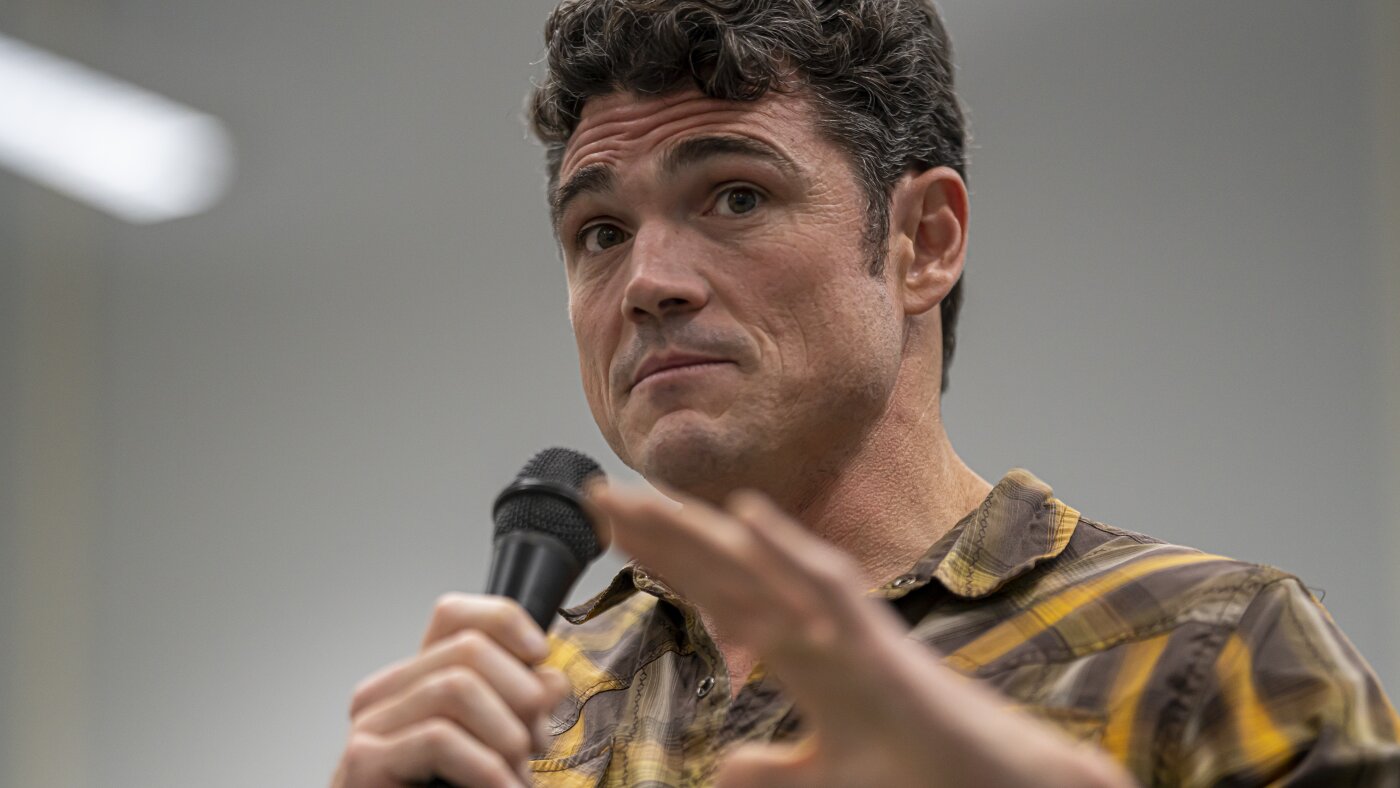
Joe Kent, a top counterterrorism official, resigns citing Iran war

Minnesota bill would ban warrants allowing police to collect data from devices near a crime scene
-

 Oklahoma1 week ago
OSSAA unveils Class 6A-2A basketball state tournament brackets, schedule
-

 Oklahoma3 days ago
Family rallies around Oklahoma father after head-on crash
-

 Michigan1 week ago
Operation BBQ Relief helping with Southwest Michigan tornado recovery
-

 Nebraska4 days ago
Wildfire forces immediate evacuation order for Farnam residents
-

 Southeast1 week ago
‘90 Day Fiancé’ alum’s boyfriend on trial for attempted murder over wild ‘Boca Bash’ accusations
-

 Health1 week ago
Ancient herb known as ‘nature’s Valium’ touted for improving sleep and anxiety
-

 Connecticut1 week ago
Exclusive | Ex-CBS anchor Josh Elliott back on Connecticut dating scene after ugly Liz Cho split
-

 Technology1 week ago
Sony appears to be testing dynamic pricing on PlayStation games