Crypto
How do geopolitical tensions affect cryptocurrency markets | News.az


Cryptocurrency markets are increasingly shaped not only by technology and finance but also by global geopolitical developments.
From armed conflicts and sanctions to trade disputes and energy shocks, geopolitical tensions now play a direct role in driving volatility, investor behavior, and long term narratives in the crypto space. This FAQ explainer examines how and why global instability influences digital assets, and what it means for investors and policymakers.
What are geopolitical tensions in the context of financial markets
Geopolitical tensions refer to conflicts, rivalries, and uncertainties between countries or regions that can disrupt economic stability. These include military conflicts, diplomatic crises, sanctions, trade wars, and political instability.
In traditional markets, such tensions often lead to volatility in stocks, commodities, and currencies. Increasingly, cryptocurrencies are also reacting to these developments, reflecting their growing integration into the global financial system.
Why do geopolitical events impact cryptocurrency markets
Geopolitical events affect investor confidence, capital flows, and economic expectations. When uncertainty rises, investors reassess risk and often reallocate assets.
Cryptocurrencies are sensitive to these shifts because they are still considered high risk assets. At the same time, they offer unique features such as decentralization and borderless transactions, which can make them attractive during certain types of crises.
As a result, geopolitical events can both boost and weaken crypto markets depending on the nature of the situation.
Is crypto considered a safe haven during geopolitical crises
The idea of cryptocurrencies as safe haven assets is complex and still evolving.
In theory, Bitcoin has characteristics similar to gold, including limited supply and independence from central banks. This has led some investors to treat it as a hedge against geopolitical instability.
In practice, however, crypto often behaves like a risk asset. During major global shocks, such as sudden escalations in conflict, investors may sell crypto alongside stocks to reduce exposure.
That said, in specific situations involving currency instability or restricted access to banking systems, cryptocurrencies can function as a practical alternative for storing and transferring value.
How do wars and military conflicts influence crypto prices
Military conflicts create uncertainty in global markets, affecting investor sentiment and economic expectations.
In the early stages of conflict, markets often react with sharp volatility. Crypto prices may drop as investors move to safer assets or cash. However, if the conflict leads to prolonged instability, crypto can benefit from increased demand as an alternative financial system.
Conflicts can also drive real world use cases for crypto. In some regions, individuals and organizations use digital assets to move funds across borders quickly when traditional systems are disrupted.
What is the effect of economic sanctions on crypto markets
Sanctions are a major geopolitical tool that can have direct implications for cryptocurrencies.
When countries or entities are cut off from global financial systems, they may turn to alternative channels, including crypto, to conduct transactions. This can increase demand for digital assets in affected regions.
At the same time, governments and regulators closely monitor such activity, leading to stricter rules and enforcement measures. This creates a balance between increased usage and increased regulatory pressure.
Sanctions can also impact global energy markets and currencies, indirectly influencing crypto prices.
Can crypto be used to bypass sanctions
There is ongoing debate about the extent to which cryptocurrencies can be used to bypass sanctions.
While crypto offers a degree of anonymity and decentralization, large scale transactions are still traceable on public blockchains. Authorities have developed tools to monitor suspicious activity and enforce compliance.
However, smaller scale usage and peer to peer transactions can still occur outside traditional oversight. This has raised concerns among regulators and contributed to increased scrutiny of the crypto sector.
How do energy markets and oil prices affect crypto
Geopolitical tensions often impact energy markets, particularly oil and gas prices. These changes can influence crypto markets in several ways.
Higher energy prices can increase inflation, which may drive interest in alternative assets like Bitcoin. At the same time, rising costs can reduce disposable income and limit retail investment in crypto.
Energy prices also directly affect crypto mining operations, especially for proof of work networks like Bitcoin. Higher electricity costs can reduce profitability for miners and influence network dynamics.
What is the relationship between crypto and traditional safe haven assets
Cryptocurrencies are often compared to traditional safe haven assets such as gold and government bonds.
During geopolitical crises, gold typically rises as investors seek stability. Crypto has sometimes followed this pattern but not consistently.
In many cases, crypto correlates more closely with equities, particularly technology stocks. This suggests that it is still viewed primarily as a growth oriented asset rather than a defensive one.
However, the correlation can shift over time, especially as the market matures.
How do currency crises influence crypto adoption
Currency instability is one of the strongest drivers of crypto adoption.
In countries experiencing high inflation or currency devaluation, individuals may turn to cryptocurrencies to preserve value. This is particularly evident in regions facing economic crises or strict capital controls.
Geopolitical tensions can trigger such conditions, increasing demand for digital assets as an alternative to local currencies.
This type of adoption is often practical rather than speculative, focusing on utility rather than investment returns.
What role do central banks and governments play
Governments and central banks respond to geopolitical tensions with policies that can affect crypto markets.
These include interest rate changes, capital controls, sanctions, and regulatory measures. Each of these actions can influence investor behavior and market dynamics.
In addition, many countries are exploring central bank digital currencies. These initiatives are partly driven by the desire to maintain control over financial systems in an increasingly digital and geopolitically complex world.
How do global trade tensions affect crypto
Trade disputes and tariffs can disrupt global supply chains and economic growth. This uncertainty can lead to volatility in financial markets, including crypto.
Investors may adjust their portfolios in response to changing economic conditions, affecting demand for digital assets.
Trade tensions can also influence currency values, which in turn impact crypto markets. For example, a weakening currency may drive local investors toward cryptocurrencies.
Does crypto benefit from financial system distrust
One of the core narratives behind crypto is its independence from traditional financial institutions.
During periods of geopolitical tension, trust in banks and governments can decline. This can increase interest in decentralized systems that operate outside traditional frameworks.
This narrative is particularly strong among certain investor groups and can contribute to increased demand during times of crisis.
What are the risks of relying on crypto during geopolitical instability
While crypto offers potential advantages, it also carries risks.
Price volatility can undermine its effectiveness as a stable store of value. Regulatory crackdowns can limit access or usage in certain regions.
Security risks, including hacks and fraud, remain concerns. In addition, technological barriers can make it difficult for some users to adopt crypto during crises.
These factors mean that crypto is not a universal solution to geopolitical challenges.
How are regulators responding to the geopolitical dimension of crypto
Regulators are increasingly aware of the intersection between crypto and geopolitics.
Efforts are underway to strengthen compliance requirements, improve monitoring of transactions, and prevent illicit use of digital assets.
International cooperation is also expanding, with governments sharing information and developing coordinated approaches to regulation.
These measures aim to balance innovation with security and stability.
What does this mean for investors
For investors, geopolitical awareness is becoming essential in understanding crypto markets.
Monitoring global developments can provide insights into potential market movements. However, predicting the exact impact of geopolitical events remains challenging.
Investors should consider diversification, risk management, and long term strategies rather than reacting to short term news.
Understanding the broader context can help in making more informed decisions.
How might the role of crypto evolve in future geopolitical crises
As the crypto market matures, its role in global finance is likely to expand.
In future crises, cryptocurrencies may become more integrated into financial responses, both as investment assets and as practical tools for transferring value.
At the same time, regulatory frameworks will continue to evolve, shaping how crypto is used and perceived.
The balance between decentralization and oversight will be a key factor in determining its future role.
Conclusion
Geopolitical tensions are now a central factor influencing cryptocurrency markets. They affect investor sentiment, economic conditions, and real world usage of digital assets.
While crypto can offer alternatives during periods of instability, it also remains highly volatile and sensitive to global developments.
Understanding the complex relationship between geopolitics and crypto is essential for navigating this rapidly evolving market. As global uncertainty continues, cryptocurrencies are likely to play an increasingly visible role in the financial landscape.
News.Az
By Faig Mahmudov



Key Takeaways
- LAB token cratered 90% over 48 hours, wiping out billions in market cap.
- ZachXBT slammed top centralized exchanges for failing to halt the July manipulation.
- Investors surged to avoid trading LAB as team token unlocks are set for later in July 2026.
LAB Trade Blames ‘Large Market Participants’
LAB, the native token of the multi-chain trading platform LAB Trade, suffered a catastrophic collapse this week, plunging from just over $7 to $1.25 on Wednesday—a staggering 80% decline in under 24 hours. This crash followed an equally brutal sell-off on Tuesday, which saw the token slide from nearly $17. In total, LAB wiped out nearly 90% of its value in just 48 hours.
The financial fallout was swift: a market capitalization that exceeded $5 billion on Tuesday morning evaporated to just $390 million by 3:30 p.m. EST on Wednesday. The freefall prompted the LAB Trade team to address the panic on X, where they expressed disappointment and deflected blame toward external heavy-sellers:
“While today’s market activity is disappointing, our product roadmap and long-term focus remain unchanged. We’re seeing significant selling pressure from large market participants. Several independent trading firms also hold substantial LAB positions that are not affiliated with our team. We’re working closely with our liquidity partners and continue to monitor market conditions,” the team said on X.
With this crash, LAB joins a notorious lineup of volatile tokens, such as RAVE, RIVER and SIREN. Each of these projects experienced meteoric rises followed by near-instantaneous erasures, sparking widespread “pump-and-dump” allegations against their respective teams and murky distribution networks.
Crypto Sleuth Slams Centralized Exchanges
Prominent on-chain detective ZachXBT, who previously flagged suspicious insider loans and market-maker coordination back in May, blasted major centralized exchanges ( CEXs) for failing to protect retail investors. Taking to X, ZachXBT criticized the lack of proactive intervention:
“Disappointing to see how no action was taken by Binance, Bitget, and Gate earlier to prevent it. If CEXs cared, profits from the accounts manipulating the price would be distributed to users at a minimum. Unlocks for investors were scheduled to begin later this month, however, multiple late vesting changes occurred in the past.”
ZachXBT reiterated his previous warnings that insiders have effectively controlled the entire circulating supply, allowing market makers to orchestrate extreme price manipulation on major exchanges. His final advice to the community was blunt: avoid trading LAB under any circumstances.

ZachXBT Names RAVE, RIVER, SIREN, and LAB as Victims of Bitget-Enabled Market Maker Fraud
Blockchain investigator ZachXBT has renewed his assault on Bitget, accusing the exchange of knowingly enabling market makers to run supply…


ZachXBT Names RAVE, RIVER, SIREN, and LAB as Victims of Bitget-Enabled Market Maker Fraud
Blockchain investigator ZachXBT has renewed his assault on Bitget, accusing the exchange of knowingly enabling market makers to run supply…
ZachXBT Names RAVE, RIVER, SIREN, and LAB as Victims of Bitget-Enabled Market Maker Fraud
Blockchain investigator ZachXBT has renewed his assault on Bitget, accusing the exchange of knowingly enabling market makers to run supply…

STARKVILLE – Potentially higher utility bills and sound pollution topped the list of concerns raised by six residents who addressed the board of aldermen Tuesday about a cryptocurrency mining facility proposed for Industrial Park Road.
Vice Mayor Roy Perkins, who represents Ward 6, said he has fielded similar concerns from constituents following the board’s June 12 work session, during which members heard a presentation about the potential project.
“I know these things need to have full accountability, full transparency and different things,” Perkins said. “… Well you can rest assured the vice mayor is going to be on assignment. I’m going to do my part. I’m not going to do anything that’s going to negatively impact this community.”
The proposed facility would be a specialized type of data center designed to mine cryptocurrency, a digital currency that operates independently of government-backed financial systems. It is stored in digital wallets and fluctuates in value.
Mining facilities use specialized computers that draw large energy loads to secure the digital transactions that take place. The center proposed in Starkville would be much smaller than “hyperscale data centers” that store and process data for large tech companies.
Utility usage topped the concerns of most residents with Pam Jones, the first to speak, set the tone.
“I understand that this is on a smaller scale than the hyper-scale facilities, and I just wanted to be sure that we had ordinances in place that will count the noise, especially at night and that there will be water and power management,” Jones said.
Other residents took issue with what they see as a lack of transparency around the proposed project.
“I was quite disappointed to learn (the mining facility) was not an agenda item today,” said Eadie Keenan, a Ward 7 resident. “… Quite frankly, I have more questions than can fit in three minutes.”
Tiffany Womack, another Starkville resident, echoed Kennan’s concerns, adding utility usage and market volatility to her own list of issues.
“If (the center was) to go bankrupt or something like that, would that possibly fall back on the responsibility of Starkville citizens?” Womack asked.
Mayor Lynn Spruill did not answer each question individually, instead encouraging those with questions to watch the June 12 presentation. Due to the project’s early stage, she noted the board does not yet know answers to all the questions raised during Tuesday’s meeting.

“I brought (the center) to the board as an opportunity for us to begin that process of learning so we are nowhere near making a decision,” Spruill said. “Which is why it isn’t on the agenda and won’t be on the agenda for some time.”
Spruill said the proposed center is currently going through the staff vetting process. Once the process is complete, staff will make a recommendation to the board on whether to pursue the center. At that time, Spruill expects to be able to answer residents’ remaining questions.
Spruill said transparency is important to her and the board while going through the process of vetting the mining center.
“Nothing is being hidden. It’s all out there for everybody to see, and we’ll make decisions based on facts not on Facebook craziness,” Spruill said. “… We want facts, and we want all decisions to be made with facts. And so hopefully that will put some of your concerns (to rest), at least to the extent that this is nowhere near something that will be on the agenda.”
Quality, in-depth journalism is essential to a healthy community. The Dispatch brings you the most complete reporting and insightful commentary in the Golden Triangle, but we need your help to continue our efforts. In the past week, our reporters have posted 24 articles to cdispatch.com. Please consider subscribing to our website for only $2.30 per week to help support local journalism and our community.
Quality, in-depth journalism is essential to a healthy community. The Dispatch brings you the most complete reporting and insightful commentary in the Golden Triangle, but we need your help to continue our efforts. In the past week, our reporters have posted 24 articles to cdispatch.com. Please consider subscribing to our website for only $2.30 per week to help support local journalism and our community.
-
Politics7 minutes ago
Column: Trump decries ‘communism’ while his government takes ownership of companies
-
 Science10 minutes ago
‘I’d rather my house burn down than get cancer’: Herbicide use upends California’s fight to save forests
-
 Sports15 minutes ago
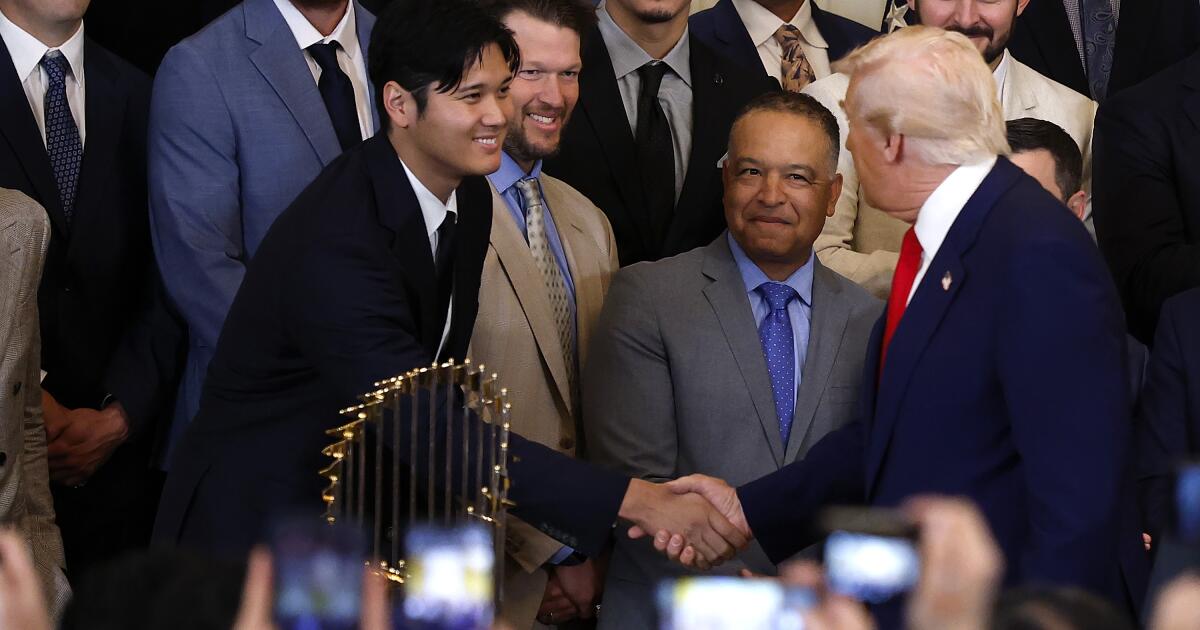
Dodgers scheduled to visit White House in late July to celebrate 2025 World Series win
-

 World25 minutes ago
Former US Olympian pleads not guilty in DC reflecting pool vandalism case
-
 News52 minutes ago
Former Olympian pleads not guilty in reflecting pool vandalism charges
-

 Los Angeles, Ca2 hours ago
Heat advisory, beach hazards in effect as Southern California sizzles
-

 Detroit, MI2 hours ago
Teen on moped hit by car after cruising through stop sign in Detroit
-

 San Francisco, CA3 hours ago
Flight of fancy: San Francisco moves to build private luxury airport terminal


