Politics
Trump vows block on signing new laws until SAVE America Act passes Senate


NEWYou can now listen to Fox News articles!
President Donald Trump is vowing to reject signing any new bills into law until the SAVE America Act is passed by the Senate, a tall order with just 53 Republicans seated and the 60-vote filibuster threshold a high hurdle.
“Great Job by hard working Scott Pressler on Fox & Friends talking about using the Filibuster, or Talking Filibuster, in order to pass THE SAVE AMERICA ACT, an 88% issue with ALL VOTERS,” Trump wrote Sunday morning on Truth Social. “It must be done immediately.”
“It supersedes everything else,” Trump added. “MUST GO TO THE FRONT OF THE LINE.”
The vow to halt all new law signings is a new one coming from the White House and notable because of the Senate hesitation to follow the urgings of Sen. Mike Lee, R-Utah, to force the Senate to bring the bill forward through the talking filibuster.
Sen. Mike Lee, R-Utah, talks with a guest during an “Only Citizens Vote Bus Tour” rally in Upper Senate Park to urge Congress to pass the Safeguard American Voter Eligibility (SAVE) Act on Wednesday, Sept. 10, 2025. (Tom Williams/CQ-Roll Call, Inc via Getty Images)
“I, as President, will not sign other Bills until this is passed,” Trump’s post continued, “AND NOT THE WATERED DOWN VERSION – GO FOR THE GOLD: MUST SHOW VOTER I.D. & PROOF OF CITIZENSHIP: NO MAIL-IN BALLOTS EXCEPT FOR MILITARY – ILLNESS, DISABILITY, TRAVEL: NO MEN IN WOMEN’S SPORTS: NO TRANSGENDER MUTILIZATION FOR CHILDREN! DO NOT FAIL!!!”
While Senate Majority Leader John Thune, R-S.D., has publicly acknowledged a willingness to bring a vote on the SAVE America Act before the upper chamber, there is hesitation within the Republican Party about forcing the talking filibuster under the current Senate rules.
The talking filibuster would force Democrats to speak on the Senate floor to argue against a voter identification position widely supported by Americans, as Trump noted, but it would also force Republicans to sit in attendance with a quorum. That has been rebuked by longtime Senate GOP veterans as something that would “waste time.”
FETTERMAN EXPECTS DHS SHUTDOWN AMID PARTISAN FUNDING FEUD, BREAKS WITH DEMOCRATS ON VOTER ID
Senate Majority Leader John Thune, R-S.D., has promised to bring the SAVE America Act to the Senate floor, but there remains some GOP hesitation on forcing the talking filibuster. (Kevin Dietsch/Getty Images)
Former Senate GOP Leader Mitch McConnell, R-Ky., has been publicly opposed to forcing a talking filibuster because of the time constraints it would force on the Senate GOP, and he remains one of the few Senate Republicans not signing on to support the SAVE America Act.
Another development that clouds the SAVE America Act filibuster is the recent appointment of Sen. Markwayne Mullin, R-Okla., to serve as the next Department of Homeland Security secretary, perhaps resigning from the Senate by the end of March.
Fox News Digital reached out to Mullin’s office for comment. McConnell’s office declined to comment on Trump’s Truth Social vow to block all new law signings amid the standoff on the DHS funding that has the government in a partial shutdown and the Senate sitting on the House-passed SAVE America Act.
GOP REACHES KEY 50-VOTE THRESHOLD FOR TRUMP-BACKED VOTER ID BILL AS SENATE FIGHT LOOMS
“We’re going to have a vote on this, but in terms of what the president is willing to sign, Maria, we need to get the Department of Homeland Security funded,” Senate Majority Whip John Barrasso, R-Wy., told Maria Bartiromo on “Sunday Morning Futures.”
“The Democrats have blocked that right now. And the greatest threat to the American people today is terrorism. So I want to make sure that the Democrats work with us to pass and fund the Department of Homeland Security, because I’m worried about the lone wolf, the sleeper cells and the cyber terrorism that’s coming our way because of what Iran is telling people around the world to do to continue this reign of terror,” Barrasso said.
Getting to 60 votes in the Senate is unlikely with just Sen. John Fetterman, D-Pa., as the lone potential Democrat vote to side with the Senate GOP on the SAVE America Act.
HOUSE REPUBLICANS PUSH JOHNSON TO GO TO WAR WITH SENATE OVER SAVE ACT
Senate GOP WHIP John Barrasso, R-Wy., and current Senate Majority Leader John Thune, R-S.D., have expressed more support for forcing Democrats to filibuster the SAVE America Act than former GOP leader Sen. Mitch McConnell, R-Ky. (Getty Images)
“The Democrats are against so many of the things that I think help this country,” Barrasso added to Bartiromo. “They’d rather stand with illegal immigrant criminals than with the safety and security of the American people. I want to get the Save act to the floor. I want to have a vote.”
“That’s the next step on this need to get the Department of Homeland Security open and funded,” he continued. “The Democrats are bowing to the liberal left: The people that want to eliminate ICE, the people that want open borders again, and the people that really aren’t looking out for the best interest of the American people.
“As the president said in the State of the Union, it is the first duty of the American government to protect American citizens, not illegal aliens. But that’s what not one single Democrat stood up for that when every Republican stood and cheered loudly.”
Barrasso, the Senate GOP member whipping up support, considers the SAVE America Act “common sense.”
CLICK HERE TO DOWNLOAD THE FOX NEWS APP
“You want to make sure that only citizens can vote,” he concluded to Bartiromo. “You want to make sure that when people show up, they have a photo ID to prove they are who they say they are. You need a you need a photo ID to buy a beer, to board a plane, all of those things. And it’s 90% popular with the American people. The only people against this are the Democrats because they want to make it easier to cheat.”
Related Article




new video loaded: President Trump Fires Pam Bondi as Attorney General
transcript
transcript
President Trump Fires Pam Bondi as Attorney General
On Thursday, President Trump announced on social media that Attorney General Pam Bondi would be leaving her role for a new position in the private sector.
-
“I’m not going to discuss anything about that with you.” “Eventually, you’re going to have to answer for your conduct in this.” “It is shocking that the department did not redact the names of Epstein’s victims, but it did redact the names of their abusers.” “Who’s responsible? Are you able to track who in your organization made this massive failure and released the victims’ names? Literally the worst thing you could do to the survivors, you did.” “I’m a career prosecutor, and despite what the ranking member said, I have spent my entire career fighting for victims, and I will continue to do so.”

By Jamie Leventhal and Shawn Paik
April 2, 2026

NEWYou can now listen to Fox News articles!
The U.S. is now flying B-52 bombers over Iran — an operational shift that signals American forces have achieved air superiority inside parts of the country after weeks of strikes degraded Tehran’s defenses.
Chairman of the Joint Chiefs of Staff Gen. Dan Caine said in a briefing Tuesday the missions began “given the increase in air superiority,” as U.S. forces expand operations inside Iranian territory.
President Donald Trump said during an address to the public Thursday night Iran’s air defenses had been “annihilated,” calling U.S. forces “unstoppable.”
“We are in this military operation … for 32 days,” he said. “And the country has been eviscerated and essentially is really no longer a threat.”
TRUMP SAYS IRAN ‘NO LONGER A THREAT’ AFTER 32 DAYS — OUTLINES NEXT PHASE OF US WAR
The bomber, first used during the Cold War and flown for about 70 years, allows the U.S. to expand the pace and flexibility of its strikes. Unlike earlier stand-off attacks focused on fixed targets, B-52s can remain over the battlefield and hit multiple targets in a single mission, including mobile systems and hardened sites, Mark Gunzinger, a retired Air Force colonel and former B-52 command pilot, told Fox News Digital.
The development signals the U.S. has moved beyond the initial phase of degrading Iran’s air defenses and is now able to operate more freely inside the country’s airspace, allowing for sustained, higher-volume strikes as the campaign enters a potentially more intense phase.
The aircraft can carry up to 70,000 pounds of ordnance — more than any other bomber in the U.S. arsenal — and deliver a mix of precision-guided bombs and long-range cruise missiles in a single mission.
The bomber, first used during the Cold War and flown for about 70 years, allows the U.S. to expand the pace and flexibility of its strikes (Leon Neal/Getty Images)
But the bomber is slower than modern aircraft and lacks stealth, making it more vulnerable to radar and air defenses — conditions that would typically keep it out of contested airspace.
“The fact that these B-52s are now flying over Iran is clear evidence that we have air superiority — and even air dominance over parts of Iran,” Gunzinger said.
Gunzinger said that level of control allows U.S. forces to operate more freely over Iran, including remaining over the battlefield and striking targets as they emerge rather than relying solely on pre-planned, long-range attacks.
While U.S. officials have emphasized growing control of the skies, air superiority does not eliminate all threats. Iran still retains missile and drone capabilities, and has relied on asymmetric tactics throughout the conflict to continue attacks despite losses to its air defenses.
Early in the campaign, B-52s fired long-range cruise missiles from outside Iranian airspace. More recently, bombers operating from U.S.-operated UK base Royal Air Force Fairford have been seen carrying precision-guided bombs — a shift that reflects growing U.S. control of the skies and the move toward closer-range strikes.
“B-52s flying in Iran’s airspace shows America’s complete air dominance — and guaranteed, there are also F-22s and F-35s at high altitude on overwatch,” Rebecca Grant, a military analyst, told Fox News Digital. “They bring the big bomb payload for direct attacks on Iran’s drone and missile factories, plus underground targets.”
The Pentagon could not immediately be reached for comment.
During the June 2025 strikes on Iran’s nuclear facilities, stealth B-2 bombers led the assault, dropping massive bunker-buster bombs on hardened sites like Fordow and Natanz.
B-52s, meanwhile, were deployed to the region as part of the broader U.S. buildup — positioned to support sustained operations if needed.
MORE THAN 90% OF IRANIAN MISSILES INTERCEPTED, BUT A DANGEROUS IMBALANCE IS EMERGING
Chairman of the Joint Chiefs of Staff Gen. Dan Caine said the missions began “given the increase in air superiority,” as U.S. forces expand operations inside Iranian territory. (Matthew Horwood/Getty Images)
CENTCOM shared footage of strikes against airplanes amid Iran war. (U.S. Central Command on X)
The latest development signals the U.S. has moved beyond the initial phase of degrading Iran’s air defenses and is now able to operate more freely inside the country’s airspace, allowing for sustained, higher-volume strikes as the campaign enters a potentially more intense phase.
The expanded freedom of action could become more important as the campaign enters what Trump has described as its final phase, with U.S. officials signaling that strikes could intensify in the coming weeks.
“If you really want to devastate Iran’s ability to continue to launch missiles and drones, you would want to use bombers to do that,” Gunzinger said.
Gunzinger added that the U.S. is using a significant portion of its combat-ready bomber fleet to sustain operations, underscoring the scale of the campaign as it enters what could be its most intense phase.
“Our bomber force now totals 140 aircraft,” he said, referring to B-2s, B-52s and B-1Bs. “If you scale that down to how many are ready to go to combat today, you’re probably at less than 50.”
“That is a dramatic change since the end of the Cold War era, where we had over 400 bombers, so we’re using a good percentage — I’d say a majority — of our combat capable bombers for this fight, to sustain this fight.”
CLICK HERE TO DOWNLOAD THE FOX NEWS APP
Built in the early 1960s for nuclear war against the Soviet Union, the B-52 Stratofortress was never designed to operate inside modern, heavily defended airspace — making its current use over Iran a reflection of how much those defenses have been degraded.
While U.S. officials have emphasized growing control of the skies, air superiority does not eliminate all threats. Iran still retains missile and drone capabilities, and has relied on asymmetric tactics throughout the conflict to continue attacks despite losses to its air defenses.

President Trump’s meandering speech on the Iran war late Wednesday — in which he paired promises of a swift exit with new threats of escalated bombing and denied responsibility for the Strait of Hormuz — did little to assuage U.S. allies and world markets concerned about the conflict’s ongoing disruptions to the global oil supply.
Stocks dropped after markets opened Thursday and oil prices soared, with the price of U.S. crude oil jumping more than 10%, to above $110.
In the wake of the speech, diplomats from more than 40 nations — not including the U.S. — met to strategize on how to lift Iran’s continued stranglehold on the strait, the vital oil corridor that the U.S.-Israeli war drove Iran to restrict but which Trump on Wednesday said wasn’t his problem.
Iranian officials remained unbowed, asserting the U.S. and Israel “know nothing” of its remaining capabilities, that “not a single life will be spared” if either attempts a ground incursion into its territory, and that “every last” Iranian would become a soldier if necessary.
“Iranians don’t just talk about defending their country. They bleed for it,” Iranian parliament Speaker Mohammad Qalibaf, a pugilistic figure and one of Iran’s most prominent wartime voices, wrote on X. “You come for our home… you’re gonna meet the whole family. Locked, loaded, and standing tall. Bring it on.”
Meanwhile, remarks Trump made earlier Wednesday about leaving NATO elicited subtle rebukes from both international and domestic allies, including French President Emmanuel Macron and Senate Majority Leader John Thune (R-S.D.), while the president’s comments about the U.S. not being able to focus on social services like Medicare or other domestic needs such as child care as it wages its foreign war sparked outrage at home.
Far from a call for a unified push to end the war alongside allies, Trump’s speech — his first formal address to the nation since the war began a month ago — further isolated the U.S. and the Trump administration on the global stage.
Trump firmly asserted in his speech that reopening the Strait of Hormuz to oil tanker traffic was not the responsibility of the U.S., despite it causing the war, because it receives less oil from the corridor than other nations.
“The countries of the world that do receive oil through the Hormuz Strait must take care of that passage. They must cherish it. They must grab it and cherish it. They could do it easily. We will be helpful, but they should take the lead in protecting the oil that they so desperately depend on,” Trump said.
“To those countries that can’t get fuel, many of which refuse to get involved in the decapitation of Iran — we had to do it ourselves — I have a suggestion: No. 1, buy oil from the United States of America. We have plenty. We have so much,” Trump continued. “And No. 2, build up some delayed courage.”
He said those nations should have been better assisting the U.S. in its war effort already, but should now “go to the strait and just take it, protect it, use it for yourselves.”
“Iran has been essentially decimated,” he said. “The hard part is done, so it should be easy.”
Trump has consistently downplayed the threat Iran continues to pose in the region. And securing the strait — which runs along Iran’s mountainous coast, full of strategic locations from which Iranian forces can threaten ship traffic — is not an easy task, as was acknowledged by the foreign diplomats meeting to solve the issue without the U.S. on Thursday.
“We have seen Iran hijack an international shipping route to hold the global economy hostage,” said U.K. Foreign Secretary Yvette Cooper.
Meanwhile, Macron, speaking in South Korea, said the U.S. “can hardly complain afterward that they are not being supported in an operation they chose to undertake alone.”
Macron also slammed Trump’s criticism of NATO, which Trump called a “paper tiger” in remarks prior to his speech Wednesday.
“If you cast doubt on your commitment every day, you erode its very substance,” Macron said.
Trump for weeks has suggested that NATO allies who declined to join the U.S. war had failed to live up to their treaty obligations, and that remaining in the alliance may not be worth it for the U.S., though he made no mention of NATO in his Wednesday evening speech.
Trump has no power to unilaterally withdraw the U.S. from NATO. That power sits with Congress — where Trump’s own allies downplayed the idea.
“We got an awful lot of people who think that NATO is a very critical, incredibly successful post-World War II alliance,” Thune said. “I think in the world today, you need allies.”
Trump’s formal speech appeared to be geared in part toward his allies at home, including his MAGA base, where frustrations with the war have mounted among the cohort of Trump supporters who’d championed his “America First” message and campaign promises to extricate the U.S. from foreign entanglements, not start new ones.
Trump said he has promised since his first foray into politics in 2015 that he would never let Iran develop a nuclear weapon. He told Americans listening that the war “is a true investment in your children, and your grandchildren’s future,” because it was making the world safer.
However, Trump exacerbated frustrations over the war’s distraction from domestic priorities with separate comments he made earlier on Wednesday at a private Easter luncheon, video of which the White House posted online and then deleted.
In those remarks, Trump said U.S. military needs had to take priority over social services and other major costs for Americans, such as child care, which maybe states could pay for by increasing taxes.
“It’s not possible for us to take care of daycare, Medicaid, Medicare, all these individual things,” Trump said. “They can do it on a state basis. You can’t do it on a federal. We have to take care of one thing: military protection. We have to guard the country.”
The president’s political opponents leaped on the remarks as out of touch.
“Trump says we can pay for war in Iran but can’t afford childcare,” Rep. Ro Khanna (D-Fremont) wrote on X, before asserting that the billions of dollars the U.S. has spent in Iran could have been used to offset Americans’ daycare costs.
White House Press Secretary Karoline Leavitt, in response, accused Democrats and the media of taking Trump’s remarks “out of context,” and claiming he was only talking about “stopping the scams” and rooting out fraud in such programs.
Democrats also took broader swipes at Trump’s framing of the war.
“Donald Trump’s month-long war with Iran has come at a big cost to taxpayers and has tragically taken the lives of 13 American service members. He dragged our country into a conflict that rattled markets, drove up gas prices, squeezed working families, and further destabilized the Middle East,” Sen. Alex Padilla (D-Calif.) wrote on X. “With his poll numbers falling to record lows, Trump is now trying to cut and run with little to show for it. He started this unauthorized war with no clear or consistent justification and the consequences of his choices won’t disappear when he walks away.”
United Nations Secretary-General António Guterres on Thursday said the war was “inflicting immense human suffering and already triggering devastating economic consequences,” and called directly on the U.S. and Israel to end it. He also called on Iran to “stop attacking their neighbors” and “respect navigational rights and freedoms along critical maritime routes, including the Strait of Hormuz.”
“Conflicts do not end on their own,” Guterres said. “They end when leaders choose dialogue over destruction.”
In addition to defending NATO, Macron and other French politicians on Thursday were also reacting to Trump mocking Macron in his remarks Wednesday. He mimicked a French accent while accusing Macron of only wanting to aid the U.S. war effort once the battle had been “won” and referenced a moment last year when Brigitte Macron was caught on video pushing her husband’s face, which he said was them joking with each other.
“There is too much talk, and it’s all over the place,” Macron said, according to French newspaper Le Monde. “We all need stability, calm, a return to peace — this isn’t a show!”
Yaël Braun-Pivet, president of France’s lower house of parliament, told the French broadcaster franceinfo that the Iran war is “having consequences for the lives of millions of people, people are dying on the battlefield, and we have a president who is laughing, who is mocking others.”
Times staff writer Nabih Bulos in Beirut contributed to this report.

Louisiana rocket powers Artemis II moon shot for NASA
World Affairs Council of Maine announces 2026 Governor’s International Breakfast

Overdose deaths in Maryland, Wicomico County detailed in new dashboard

Michigan’s Biggest X Factor Against Arizona in Final Four Showdown

Massachusetts secures $1B for water infrastructure

Florida High School Football Rankings: Top 25 teams – Oct. 21

How old is Bo Nix? What to know about Oregon quarterback ahead of 2024 NFL Draft

Cleary's 21 help Le Moyne down Central Connecticut State 69-64 in OT

99th annual Pony Swim held in Virginia

Indiana Members Credit Union announced as new anchor tenant at Bottleworks District

Video: Trump Struck Iran. Now Farmers Are Paying the Price.

What B-52 bombers bring to Iran fight — and what it means for the war now

Podcast: Hungary elects: what is at stake and who is likely to win?
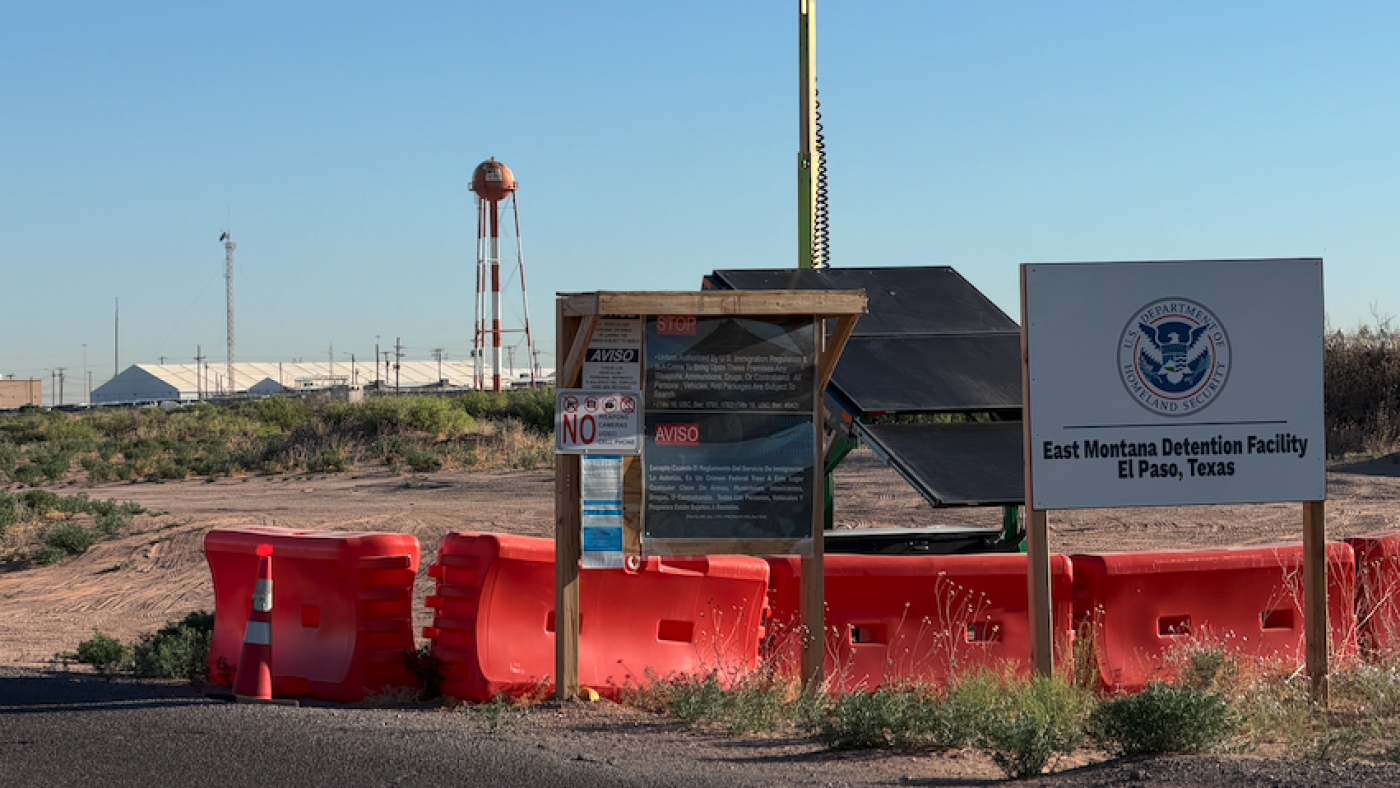
ICE detention deaths are on a record pace. One Texas facility bears the brunt

GOP rails against ‘s— sandwich’ deal as all eyes turn to House to end DHS shutdown
-

 South-Carolina5 days ago
South Carolina vs TCU predictions for Elite Eight game in March Madness
-

 Culture1 week ago
Wil Wheaton Discusses ‘Stand By Me’ and Narrating ‘The Body’ Audiobook
-

 Miami, FL1 week ago
Jannik Sinner’s Girlfriend Laila Hasanovic Stuns in Ab-Revealing Post Amid Miami Open
-

 Culture1 week ago
What Happens When We Die? This Wallace Stevens Poem Has Thoughts.
-

 Minneapolis, MN1 week ago
Boy who shielded classmate during school shooting receives Medal of Honor
-

 Vermont5 days ago
Skier dies after fall at Sugarbush Resort
-

 Education1 week ago
Video: Transgender Athletes Barred From Women’s Olympic Events
-

 Politics5 days ago
Trump’s Ballroom Design Has Barely Been Scrutinized