Politics
Top manager of California's largest water supplier accused of sexism and harassment

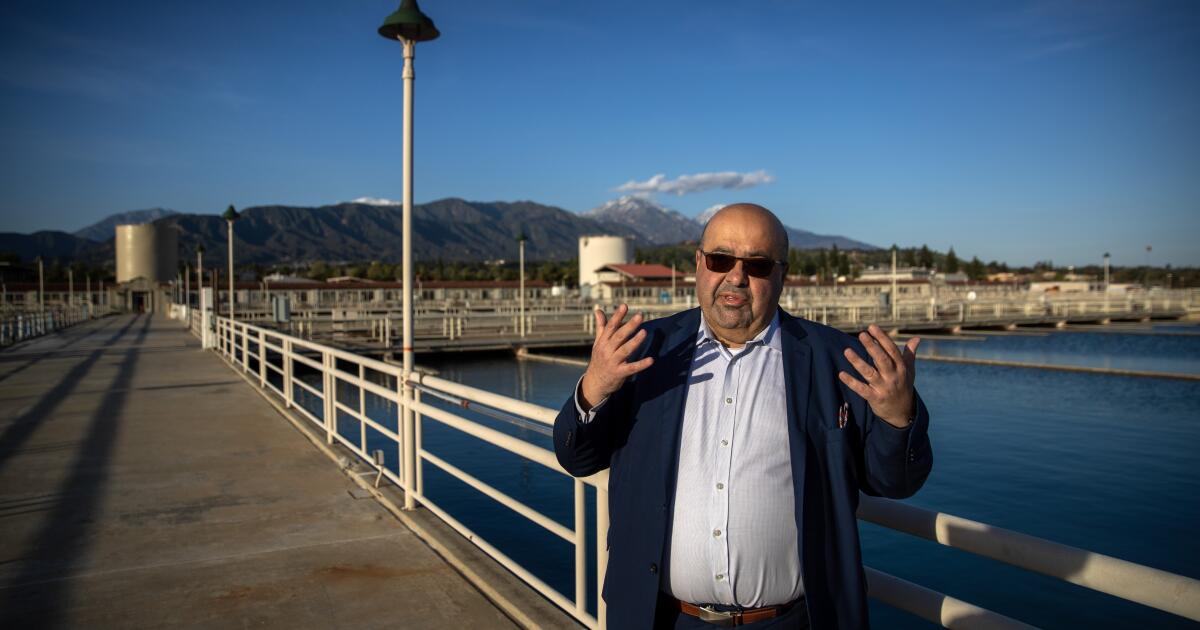
The board of the Metropolitan Water District of Southern California voted to place General Manager Adel Hagekhalil on leave Thursday while the agency investigates accusations of harassment against him by the agency’s chief financial officer.
Chief Financial Officer Katano Kasaine made the allegations in a confidential letter to the board, which was leaked and published by Politico. She said Hagekhalil has harassed, demeaned and sidelined her and created a hostile work environment.
MWD Board Chair Adán Ortega Jr. announced the decision after a closed-door meeting, saying the board voted to immediately place Hagekhalil on administrative leave and to temporarily appoint Deven Upadhyay, an assistant general manager, as interim general manager.
“This board is determined to act with unity and swiftness in order to protect everybody,” Ortega said. “My hope is that under Deven’s leadership in the coming months, that we will find some common purpose, that we will realize the urgency of the policies and the tasks that confront us.”
Ortega said in an interview after the meeting that there are “several investigations” underway. He declined to comment on the other investigations, and said Hagekhalil will be on administrative leave for up to 90 days.
“We’re calculating that that’s the amount of time it will take to complete the investigations,” Ortega told The Times.
Ortega began the meeting by announcing that the board had decided earlier this week to open an investigation. He called a vote allowing him to publicly discuss confidential matters discussed during that Tuesday meeting, and he criticized the release of the letter.
“The person who released this sensitive document knows that we as a board and as individuals are constrained by law not to reveal closed-session proceedings and related documents,” Ortega said. “They were trying to take advantage of that. But I’m not letting them. At minimum, by releasing the document, that person has tried to set a narrative that is potentially harmful to the general manager, the chief financial officer, this board and this agency, and they know it.”
Ortega said the board acted to start the investigation “in order to avoid the leak that happened anyway.” He said he and other board members believe that both Hagekhalil and Kasaine “deserve the due process prescribed by law.”
Thursday’s special meeting was scheduled while Hagekhalil was traveling in Singapore for a water conference. According to the board meeting agenda, the closed session included a review of Hagekhalil’s performance as well as a discussion of potential discipline or dismissal. On those two items, Ortega said, there were “no reportable actions” during the closed meeting.
Board members voted unanimously to place Hagekhalil on administrative leave, with one abstention and several board members absent.
Kasaine said in her letter that throughout 30 years of government work, “I have encountered toxic work environments, but none as hostile and dysfunctional as Metropolitan.”
“Despite my tireless dedication and outstanding performance ratings, it has become incredibly stressful to even show up for work. I am constantly scrutinized, sidelined, and demeaned for standing up against issues that are not in Metropolitan’s best interest,” Kasaine said in the May 27 letter, which following the leak was released by the district.
Hagekhalil responded to the accusations in a text message, denying any wrongdoing.
“I’ve always treated our MWD staff with complete respect, professionalism and kindness. Always,” Hagekhalil said. “I stand by my record of reforming the agency’s workforce policies and creating a healthy, supportive and inclusive work environment. Any investigation of these unsubstantiated claims will reveal that they are false, and I look forward to returning to my work at MWD to serve our staff and our community as soon as possible.”
He said the claims are “disagreements on management decisions.”
“When I started at MWD, I increased Katano’s responsibilities on an interim basis, and as CFO, she has had an important leadership role in recent MWD actions, including overseeing the agency’s adoption of a two-year budget and development of a long-range financial plan,” Hagekhalil said.
MWD is the nation’s largest wholesale supplier of drinking water, serving cities and agencies that supply 19 million people across Southern California.
Ortega lamented that with the release of the letter, “the confidentiality that they were to enjoy in order to correct matters, has now been compromised for the benefit of an undeclared individual who, depending on our silence, thought that they could deceive the press.”
“Thus, the person who released the document should not be considered a whistleblower, but should be questioned by those listening to him or her about their motives and the personal gain they would like to achieve by violating the rights of others and trying to taint our agency,” Ortega said, reading from a prepared statement. “While I can’t reveal the extent of our continuing deliberations today, or guarantee outcomes, on behalf of the board, I want to assure our workforce that we will continue to act in a transparent way to bring security, harmony and protection of rights for everyone who works here so we can do the work of bringing water to Southern California.”
Several people spoke at the meeting, expressing support for Hagekhalil and calling for a fair and impartial investigation.
“Due process has been tainted in a major, major way,” said Mark Gold, director of water scarcity solutions for the Natural Resources Defense Council. “It’s a personnel issue that you need to investigate and keep private as much as possible.”
Gold also said Hagekhalil “lives and breathes water in this agency more than anyone I’ve ever seen.”
Hagekhalil has led the agency at a time of major challenges, including negotiations aimed at addressing shortages of Colorado River water, plans for building the country’s largest wastewater recycling facility, and the MWD board’s consideration of Gov. Gavin Newsom’s plan to build a $20-billion water tunnel in the Sacramento-San Joaquin River Delta.
Hagekhalil previously worked for the city of Los Angeles leading programs focusing on sewers and streets. He was appointed MWD’s general manager in 2021 after a bitter power struggle among board members. He earns $503,942 a year as general manager and chief executive, leading more than 1,900 employees and overseeing more than $2.2 billion in annual spending.
Hagekhalil has said he is seeking to transform the district to make the region’s water supplies resilient to the effects of climate change.
“This is at a time when MWD is at a crossroads,” said Bruce Reznik, executive director of Los Angeles Waterkeeper, who has supported Hagekhalil’s efforts at MWD. “The old way of doing business, the old model for water, doesn’t work in our climate change reality, and I know MWD is wrestling with these very challenging issues. And I think Adel and his team have done an amazing job of starting to tackle that.”
Some of Hagekhalil’s supporters questioned why the matter was brought to the board while he was traveling, and suggested the public airing of grievances appeared to be a calculated ambush.
Kasaine wrote in the letter that she has been “maligned, harassed, bullied, and sidelined from my core responsibilities.” She said Hagekhalil’s “preference for male colleagues/staff over me has continued to sow the seeds of sexism and belittling.”
She also criticized Hagekhalil’s hiring of a team of trusted, highly paid consultants, calling it “an entire shadow leadership team, wielding more power than those holding official titles.”
Kasaine said Hagekhalil has told her that she will no longer have oversight responsibilities leading the district’s human resources and diversity, equity and inclusion offices.
“Taking these core services from me without any justification or reason is highly suspect and leads me to believe it is retaliation for speaking up on key concerns,” Kasaine wrote in the letter.
During Thursday’s meeting, many speakers said the matter demands a thorough and impartial investigation.
Ellen Mackey, chair of the employee union’s women’s caucus, told the board that as the situation stands, “we don’t have facts, just accusations.”
Some environmental advocates said they suspect a link between the surfacing of allegations against Hagekhalil and his work leading efforts to take the district in a new direction by developing a climate adaptation plan, investing in local water sources and revamping MWD’s financial model.
Charming Evelyn, who chairs the Sierra Club’s water committee in Southern California, said Hagekhalil has brought positive changes to the MWD, and that has put him in conflict with the district’s “old guard.”
The California Water Impact Network, an advocacy group, said in a press release that the possibility that Hagekhalil’s efforts might lead the board to eventually vote against the proposed Delta Conveyance Project “has led to an attempted mutiny” by supporters of the tunnel among the district’s board members and staff.
The group noted that Kasaine currently serves as treasurer of the Delta Conveyance Design and Construction Authority, the entity that was created to finance the tunnel project.
Max Gomberg, a board member of the California Water Impact Network, charged that the move against Hagekhalil appears to be a “political power play” designed to push through the tunnel project.
Leaders of Indigenous tribes and other environmental groups also voiced concerns.
Krystal Moreno of the Shingle Springs Band of Miwok Indians said that while the accusations should be independently investigated, “we also ask that the investigation include the questionable and concerning timing of these allegations and the board’s swift attempt to remove Adel without any investigation while he has been out of the country.”
Barbara Barrigan-Parrilla, executive director of the group Restore the Delta, which opposes the tunnel project, said the allegations and the timing of the claims are “equally problematic.”
“Both deserve a thorough and fact based investigation with transparent findings and due process,” she said.

The federal government agreed to temporarily hold off on construction of a planned Immigration and Customs Enforcement facility in Northern California.
The voluntary pause until Sept. 9 comes after the California Atty. Gen. Rob Bonta and Santa Clara County officials sued the Trump administration last month to block the facility from being developed near Gilroy. The lawsuit remains ongoing.
“This pause in the construction, demolition, and development at the site of the challenged ICE facility is a significant step towards protecting our people, our communities, and our environment while the case remains ongoing,” Bonta said in a statement Monday night.
The Department of Homeland Security, which oversees ICE, didn’t immediately reply to a request for comment.
State and local officials believe the facility will be used for short-term detention of up to 150 people at a time, though ICE denied that it would be a detention center.
Community members and advocates for immigrants swiftly opposed the project. ICE has consistently looked to increase its detention capacity in California, where eight detention centers can now hold a combined 9,000 people, though the state has long been a thorn in the agency’s side.
The halt is part of a compromise between both sides involved in the legal action. After the state and county submitted a request for the court to temporarily halt the project, a hearing was set for Oct. 7.
Now, state and federal officials jointly requested that the court move up the hearing by at least a month. The agreement also extends how much time the federal government has to respond.
A federal judge signed off on the agreement Monday night.
The lawsuit, filed in U.S. District Court in San José, alleges that the leased land is zoned exclusively for agricultural use and that the federal government violated laws requiring state and county notification, as well as procedural steps before beginning construction.
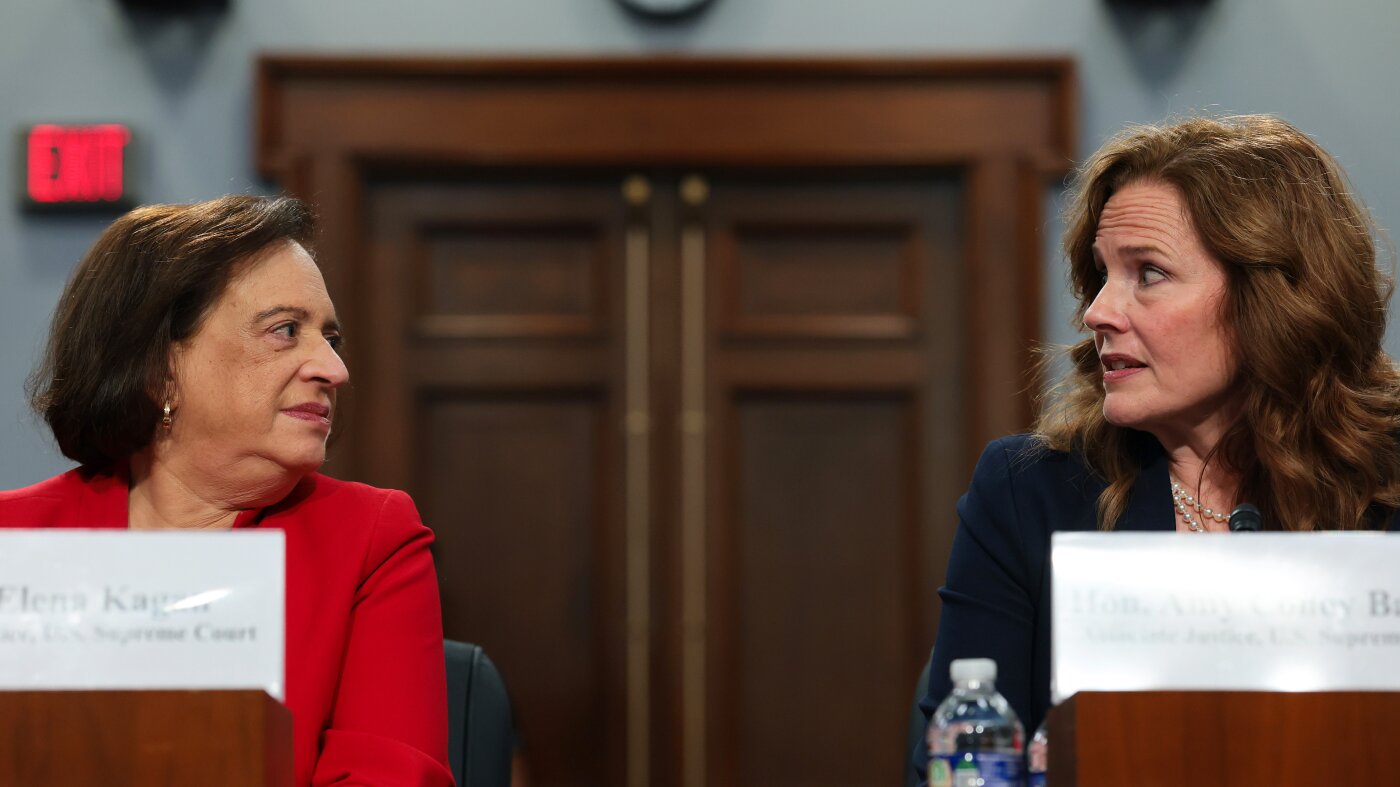
Supreme Court justices are asking lawmakers on Capitol Hill to increase their 2027 budget, with most of the additional funding earmarked for security. Ann E. Marimow, a New York Times reporter, explains why the justices say these measures are necessary to protect them from rising threats.

GOP scrambles to replace Sen. Lindsey Graham
Former Kevin McCarthy communications director Mark Bednar discusses the urgent political scramble to replace Sen. Lindsey Graham in South Carolina. He emphasizes President Donald Trump and Gov. McMaster’s need to quickly coordinate an interim appointment and rally around a strong Republican candidate for the impending special election. Potential candidates include Lt. Gov. Pamela Evette and Rep. Russell Fry, with warnings against infighting.
NEWYou can now listen to Fox News articles!
President Donald Trump teased who he may like to see as a long-term replacement for the late Sen. Lindsey Graham, R-S.C., as a special election to lock in a candidate for the seat fast approaches.
Private and public jockeying is already underway to snag Trump’s coveted endorsement in the special election, which is slated for Aug. 11, with two lawmakers already expressing interest in launching a campaign.
And as members of the South Carolina GOP congressional delegation and beyond line up for the race, the president hinted that he may already have a favorite: Rep. Russell Fry, R-S.C.
GRAHAM ALLY RIPS ‘THIRSTY’ REPUBLICANS JOCKEYING TO REPLACE LATE SENATOR
Sen. Lindsey Graham speaks with reporters aboard Air Force One with President Donald Trump and Secretary of Commerce Howard Lutnick on the way back to Washington, D.C., on Jan. 4, 2026. (Jim Watson/AFP via Getty Images)
“I think Russell Fry, a young congressman, is outstanding, and that could happen. I could see that happening,” Trump told Newsmax on Monday night. “I think he’s a very, very talented person.”
Trump backed Fry in his first bid for Congress in 2022, where he toppled former Rep. Tom Rice, R-S.C., in the primary. Rice was one of 10 House Republicans to vote to impeach Trump following the Jan. 6, 2021, riots on Capitol Hill.
‘THE HALLS OF THE SENATE ALREADY FEEL EMPTY’: TEARFUL THUNE HONORS LINDSEY GRAHAM AS SISTER TAKES HIS SEAT
“He took the place of somebody that was — I mean, he’s doing much better than the person that preceded him,” Trump said. “He’s been very popular in the state, so I think a name like Russell Fry is somebody you can watch out for and there are probably some others.”
Trump’s comments on Fry come after Politico reported that the lawmaker has been communicating with the White House about a run and was viewed as a top contender for the president’s stamp of approval. Fox News Digital did not immediately hear back from the White House or Fry on whether he’s being eyed for the special election.
LINDSEY GRAHAM’S SISTER APPOINTED TO SENATE AS GOP RUSHES TO PROTECT FRAGILE MAJORITY
Rep. Russell Fry, R-S.C., arrives for a House Republican Conference caucus meeting at the Capitol Hill Club in Washington on May 13, 2026. (Bill Clark/CQ-Roll Call, Inc. via Getty Images)
In the meantime, Trump threw his support behind Graham’s sister, Sen.-designate Darline Graham, to take over the lawmaker’s seat for the remainder of his term. South Carolina Gov. Henry McMaster appointed her on Monday, and she’ll be sworn in to the role Tuesday afternoon.
Trump said that he believed Graham would be there “only on an interim basis.”
CLICK HERE TO DOWNLOAD THE FOX NEWS APP
Meanwhile, Reps. Nancy Mace, R-S.C., and Ralph Norman, R-S.C., are eyeing the race, too. Norman has gone so far as to ask Trump for his endorsement.
Both Mace and Norman failed to clinch the GOP nomination for governor in South Carolina, which ultimately went to South Carolina Attorney General Alan Wilson, who toppled Trump-backed South Carolina Lt. Gov. Pam Evette.
-
 Business2 minutes ago
Commentary: Trump greenlights California’s dumbest water project
-
 Entertainment8 minutes ago
‘Hail Satan? Not me.’ Charley Crockett fires satanic duo Twin Temple, so Jack White hires them
-
 Lifestyle14 minutes ago
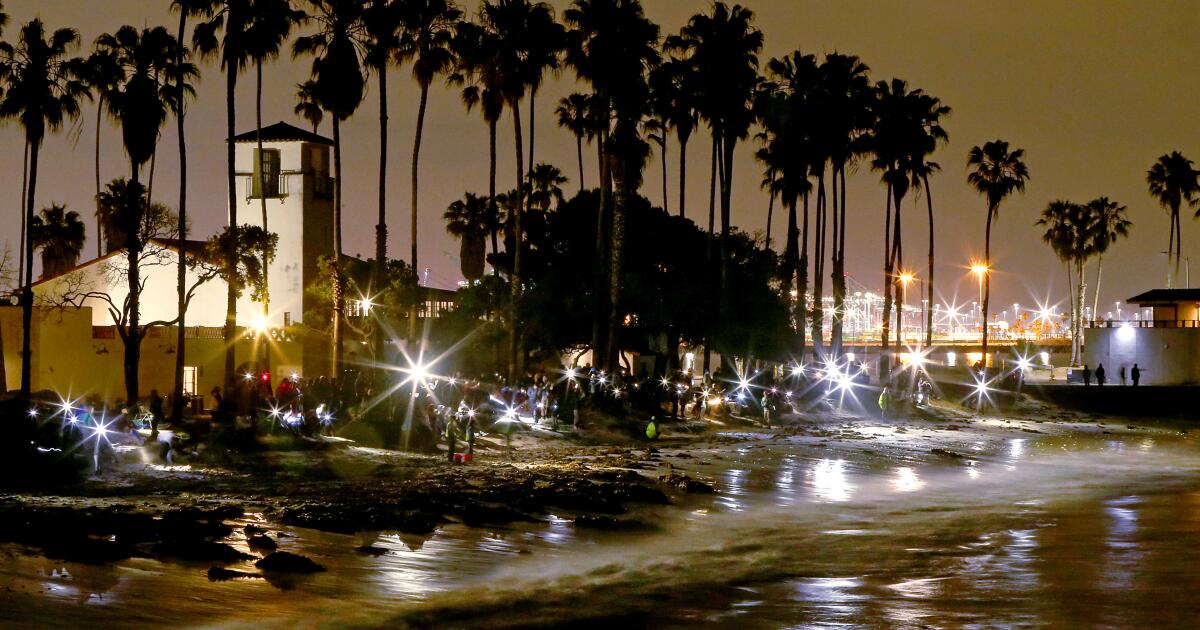
It’s time for the night trip to the beach — the grunion are running
-
Politics20 minutes ago
After lawsuit, ICE pauses construction of Bay Area detention facility
-
 Science26 minutes ago
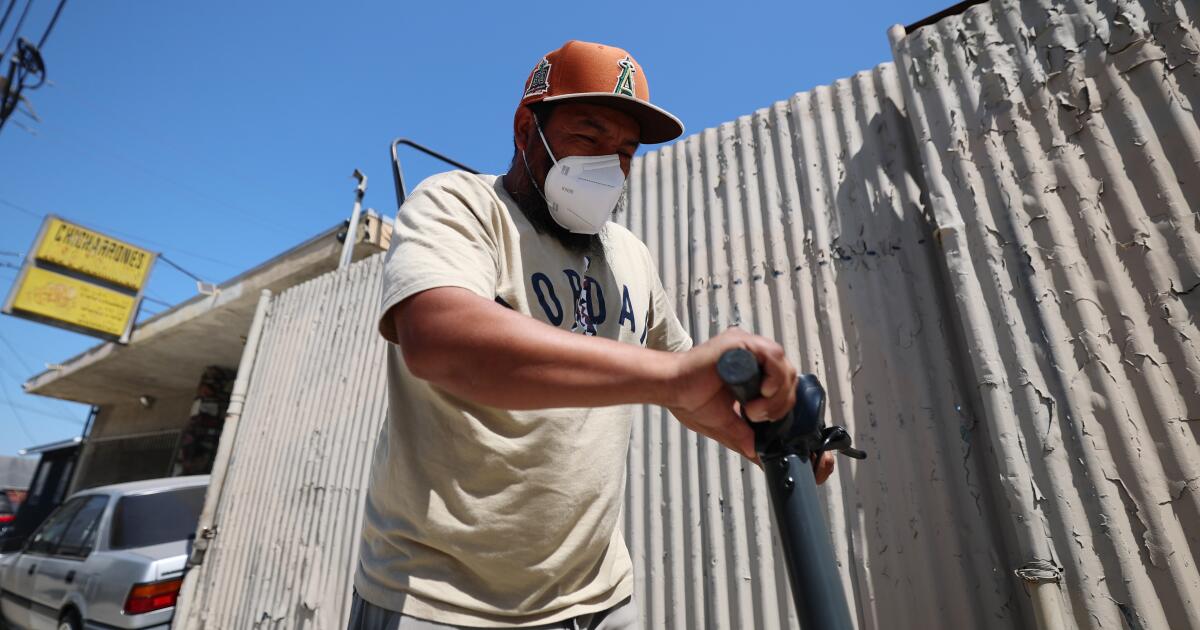
Anger grows in Boyle Heights as warehouse fire leaves stench, flies and vermin in its wake
-
 Sports32 minutes ago
Spain delivers surprise rout of France, clinches berth into World Cup final
-

 World44 minutes ago
US says latest Iran strike wave over, IRGC claims damage to US Naval HQ
-
 News1 hour ago
Supreme Court Justices give chilling accounts of threats to their safety

