Politics
Threats of terrorism in the U.S. are 'more diverse and difficult to counter'

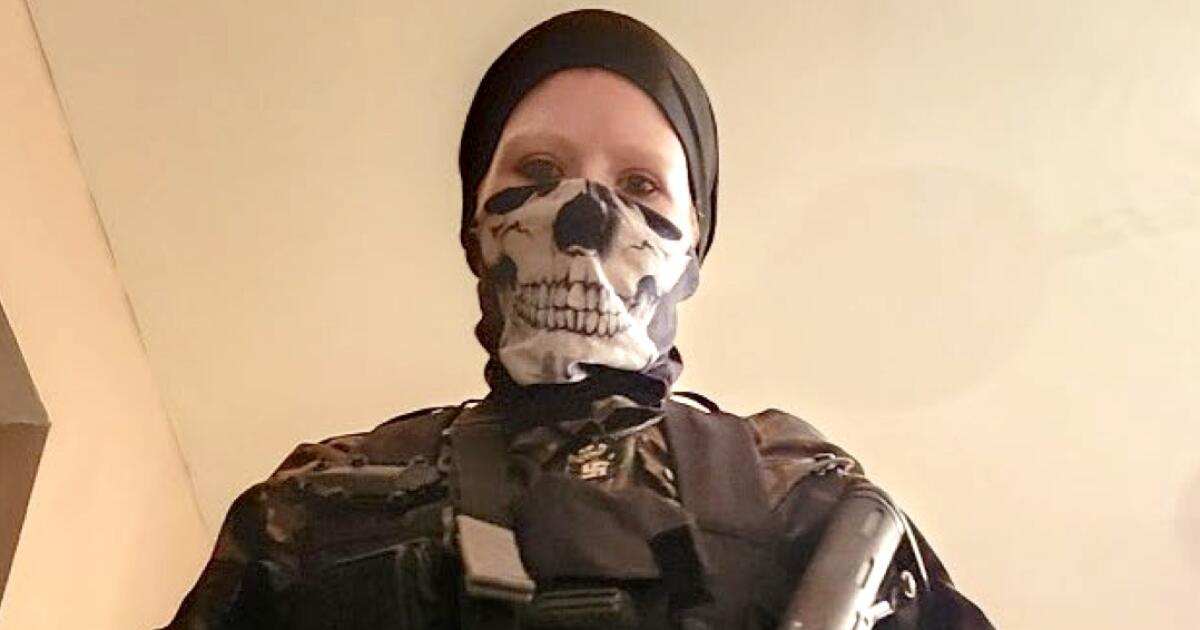
She wanted a rifle. He needed a soldier for his plan to overthrow the government.
Sarah Beth Clendaniel was a radical looking for a target when, authorities say, she plotted with Brandon Russell — a white supremacist who belongs to an organization known as Atomwaffen Division — to destroy the power grid around Baltimore. Clendaniel dressed in camouflage fatigues. Russell went by the alias “Raccoon” and, according to federal agents, kept a framed picture of Oklahoma City bomber Timothy McVeigh on his dresser.
They communicated through encrypted messages, but the mission was foiled by authorities. Clendaniel pleaded guilty in May to conspiring to damage or destroy electrical stations in Maryland. Russell, who was charged earlier with possessing explosives, is awaiting trial. The case did not attract much attention outside Baltimore, but it was another reminder of the danger of terrorism in an unsettled nation.
The U.S. is facing security threats in a presidential election year coming from Islamic militants, far-right extremists, leftist radicals and an array of zealots disgruntled over the nation’s culture wars and our polarized society. Officials are increasingly worried about the deepening strands of left- and right-wing venom rooted in antiestablishment anger and amplified by social media that are testing the government’s ability to track militants like Clendaniel and Russell.
Timothy McVeigh’s hatred of the federal government led him to bomb the Alfred P. Murrah Federal Building in Oklahoma City in April 1995, killing 186 people and injuring hundreds more. According to federal agents, Brandon Russell, who is accused of plotting to blow up the Baltimore power grid, kept a photo of McVeigh on his dresser.
(Associated Press)
“The threat’s not more potent than it was around 9/11, but it’s certainly more diverse and difficult to counter,” said Colin P. Clarke, the director of research at the Soufan Group, an intelligence and security consulting firm in New York City. “We’re dealing with a more aggressive far-right, left-wing and what we call ‘salad bar people,’ who take a little bit of each ideology and thread them together. Incels. Q-Anon. The range of actors at play now is a lot broader than what we’re used to.”
The race between President Biden and Donald Trump underscores the prospects for unrest and violence. GOP senators have asked the Secret Service to keep demonstrators farther from the Republican National Convention at Fiserv Forum in Milwaukee. Protesters are also expected to arrive en masse at the Democratic National Convention in Chicago, where in 1968, during an era of intense upheaval around the Vietnam War that some suggest parallels today’s political tremors, police beat and tear-gassed hundreds of marchers.
On a visit to Chicago this month, Secret Service Director Kimberly Cheatle met with nearly 100 agents who will be protecting both conventions. She told CNN she was concerned about a number of threats, including “the lone gunman.”
“You’ve got folks that are radicalized. You’ve got demonstrations that may pop up. And obviously, we hope they remain peaceful here, but they could turn violent,” she said.
Most of the violence and “other threat indicators [are] from groups that lean more conservative,” said Amy Cooter, a terrorism expert with the Middlebury Institute of International Studies at Monterey. What’s notable, she added, was that the extremist narratives, particularly accelerationist ones — like those espoused by Clendaniel that use violence to speed up social collapse — can appeal to radicals across the political spectrum.
“There’s potential for people who have very different underlying political beliefs,” said Cooter, “to join forces on issues they have common ground on.”
National militant organizations complicit in the Jan 6. riots, including the Proud Boys, remain a danger, Cooter said, despite arrests of its leaders and loss of a centralized online home since Facebook blocked extremist groups. Before the 2020 election, Trump told the Proud Boys to “stand back and stand by.” Reuters reported that after Trump was found guilty in May of falsifying business records, a Proud Boys chapter in Ohio promised “war” in a statement that read: “Fighting solves everything.”
Trump’s increasingly militant campaign speeches against immigrants and conspiracies about the “deep state” also resonate with other groups in the so-called patriot movement. The former president suggested in veiled language that his followers might rise up if he were sent to prison: “I’m not sure the public would stand for it,” he told Fox News. “You know, at a certain point, there’s a breaking point.”
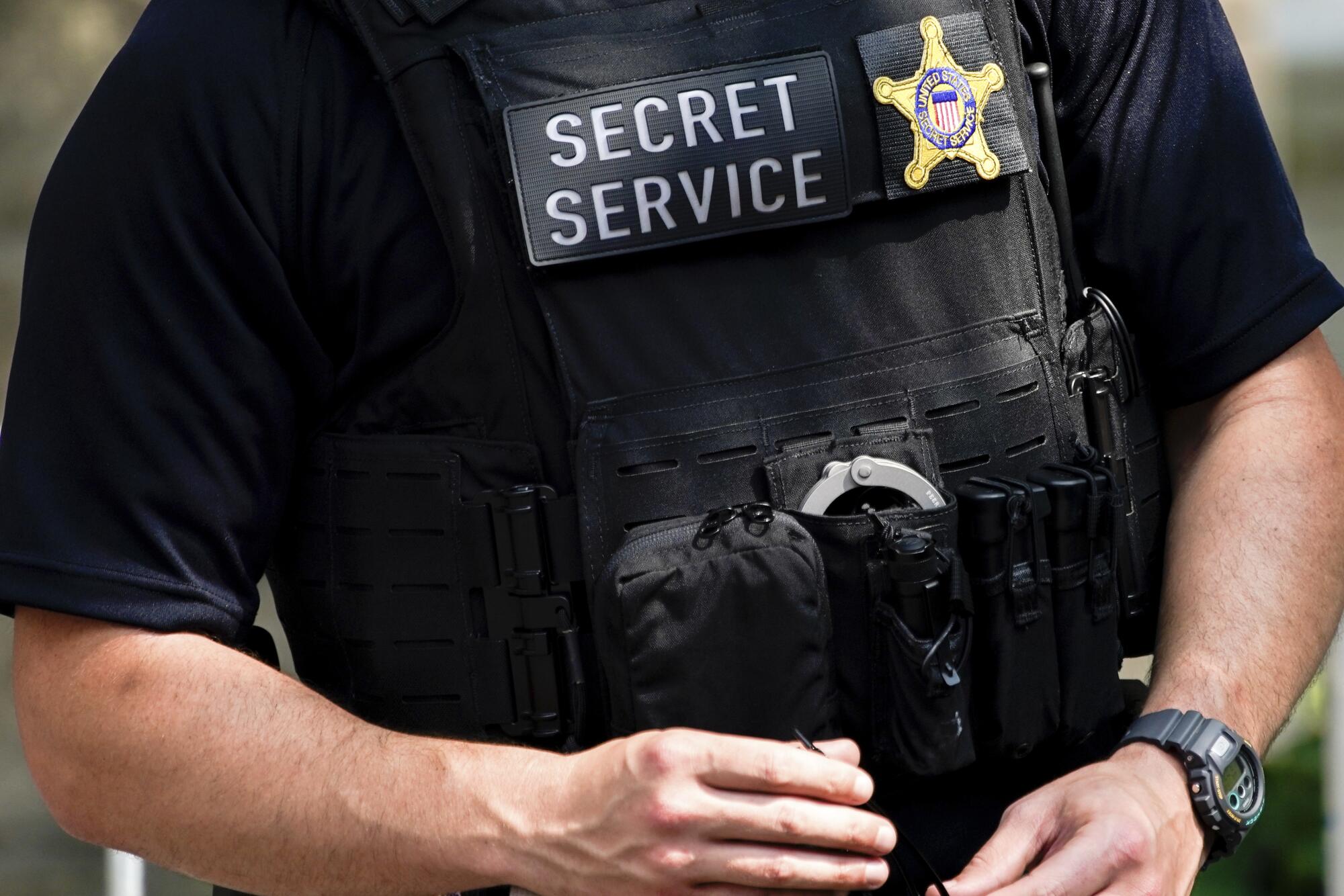
Secret Service Director Kimberly Cheatle told CNN she was concerned about a number of threats to the U.S.
(Julia Nikhinson / Associated Press)
“Not all militia members like Trump. Some think he’s too brash, too old,” said Cooter, who spent years interviewing and investigating militia groups in Michigan. “But they are very responsive to his rhetoric because he appeals to their worries about immigration or about changing culture in other ways. Even if they’re not going to vote for him, their urgency around these issues gets stirred up.”
Today’s turmoil has yet to reach the magnitude of the late 1960s or the 1970s, when far-left domestic terror groups like the Weather Underground and Symbionese Liberation Army orchestrated scores of bombings. Many of the threats these days come from varied agendas, including Payton Gendron, who wrote a 180-page racist screed before killing 10 Black people at a supermarket in Buffalo, N.Y., in 2022, and James Hodgkinson, a left-wing radical who in 2017 shot and wounded at least four people at a softball practice for Republican congressmen in Alexandria, Va.
In April, Kyran Caples, who police say was radicalized while at Fresno State and joined an obscure antigovernment group known as the Moorish sovereign citizens, shot and critically wounded two police officers in Florida. Caples was killed by police. In the plot to destroy the Baltimore power grid, the Justice Department quoted Clendaniel, once photographed heavily armed and wearing camouflage fatigues, a headscarf and a skull mask, as saying an attack “would probably permanently completely lay this city to waste.”
The country has been shaken by anger and unrest in recent years around the COVID-19 pandemic, mass shootings, George Floyd protests, an insurrection at the Capitol and pro-Palestinian rallies on college campuses. Those domestic ruptures have coincided with a rejuvenated branch of ISIS that is recruiting militants beyond its base in Afghanistan and this year carried out attacks in Russia and Iran that killed at least 220 people.
FBI Director Christopher A. Wray recently told cadets at the U.S. Military Academy at West Point that his agency was concerned about “a rogues’ gallery” of foreign organizations calling for violence against Americans. But he suggested that the more pressing danger comes from individuals and small groups in the U.S. who “draw twisted inspiration from the events in the Middle East to carry out attacks here at home.” The agency, he said, has been “running down thousands of reported threats.”
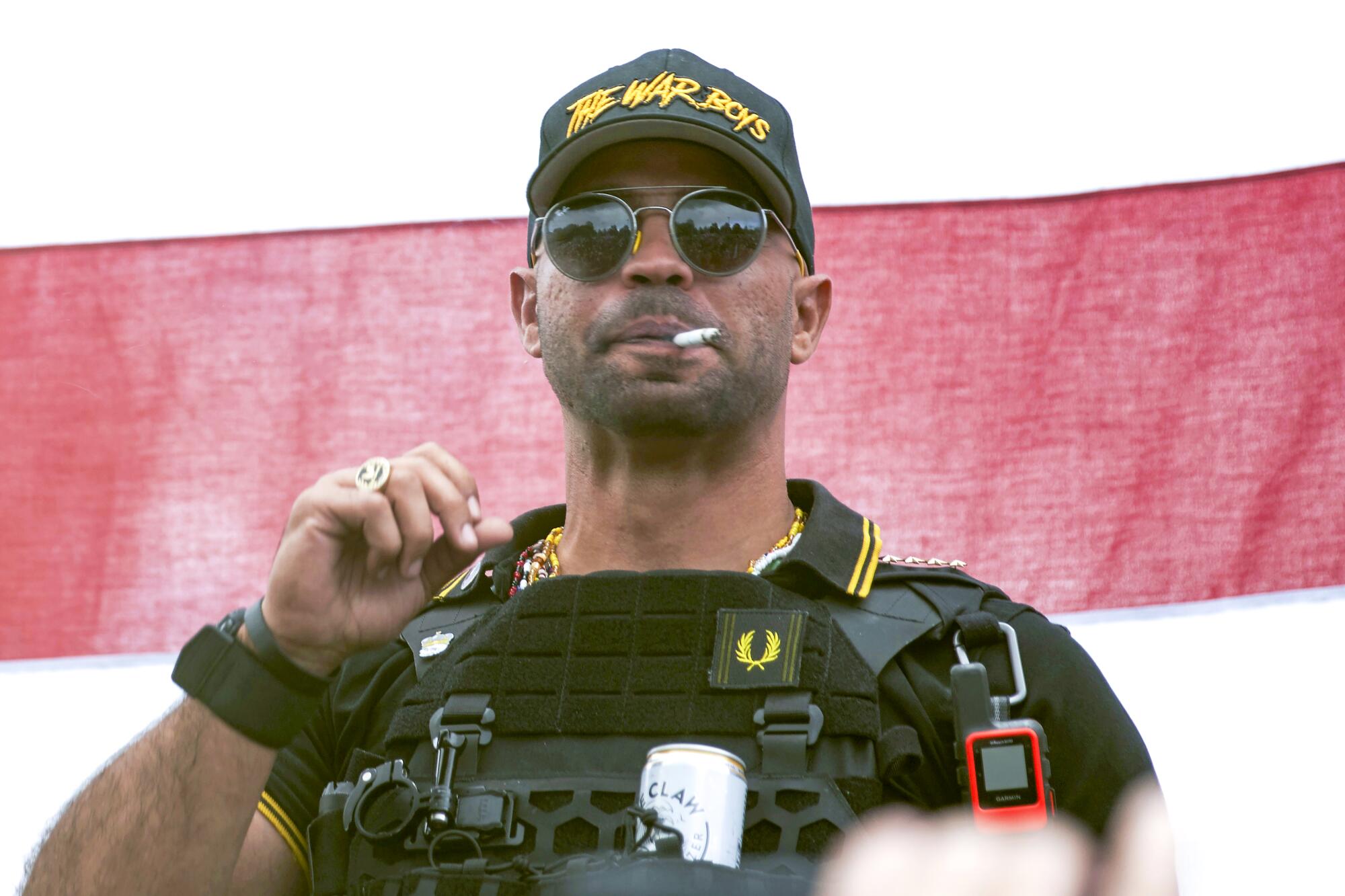
(Allison Dinner / Associated Press)
He added that tensions around the Israel-Hamas war “will feed a pipeline of radicalization and mobilization for years to come.” In April, Wray, describing what he called a heightened threat environment, told the House Appropriations Committee that the agency’s 2024 fiscal year budget was nearly $500 million below what it needed. “This could not come at a worse time,” he said. “We need people…. Now is not the time to cut back.”
That threat landscape — radiating through a wide prism of anger and ideologies — has shaped America’s discourse and sharpened its divisions. The battles playing out in Congress have run parallel to social and political fervor around antisemitism, Gaza, abortion, immigration and gun rights unfolding on college campuses, state houses, podcasts, rallies and talk shows.
“The powerful emotions that have been unleashed aren’t fading,” said Bruce Hoffman, a terrorism expert and professor at Georgetown University. “Terrorism never occurs in a vacuum. It always leverages off of the divisions, contentiousness and controversies that are in the political arena and that will lead to a very small fringe to conclude that violence is the only way” to overthrow a corrupt system.
The radicalization of the young is rooted in the generation that came of age during the isolation of the pandemic and has since seen governments as either powerless or indifferent to climate change, wealth gaps and stopping wars in Ukraine and Gaza. “This seeds a bed of frustration and mistrust,” said Hoffman, co-author of “God, Guns, and Sedition: Far-Right Terrorism in America.” “They’re looking to be entertained and stimulated rather than informed and confident that they’re getting accurate information. TikTok is feeding them what they want.”
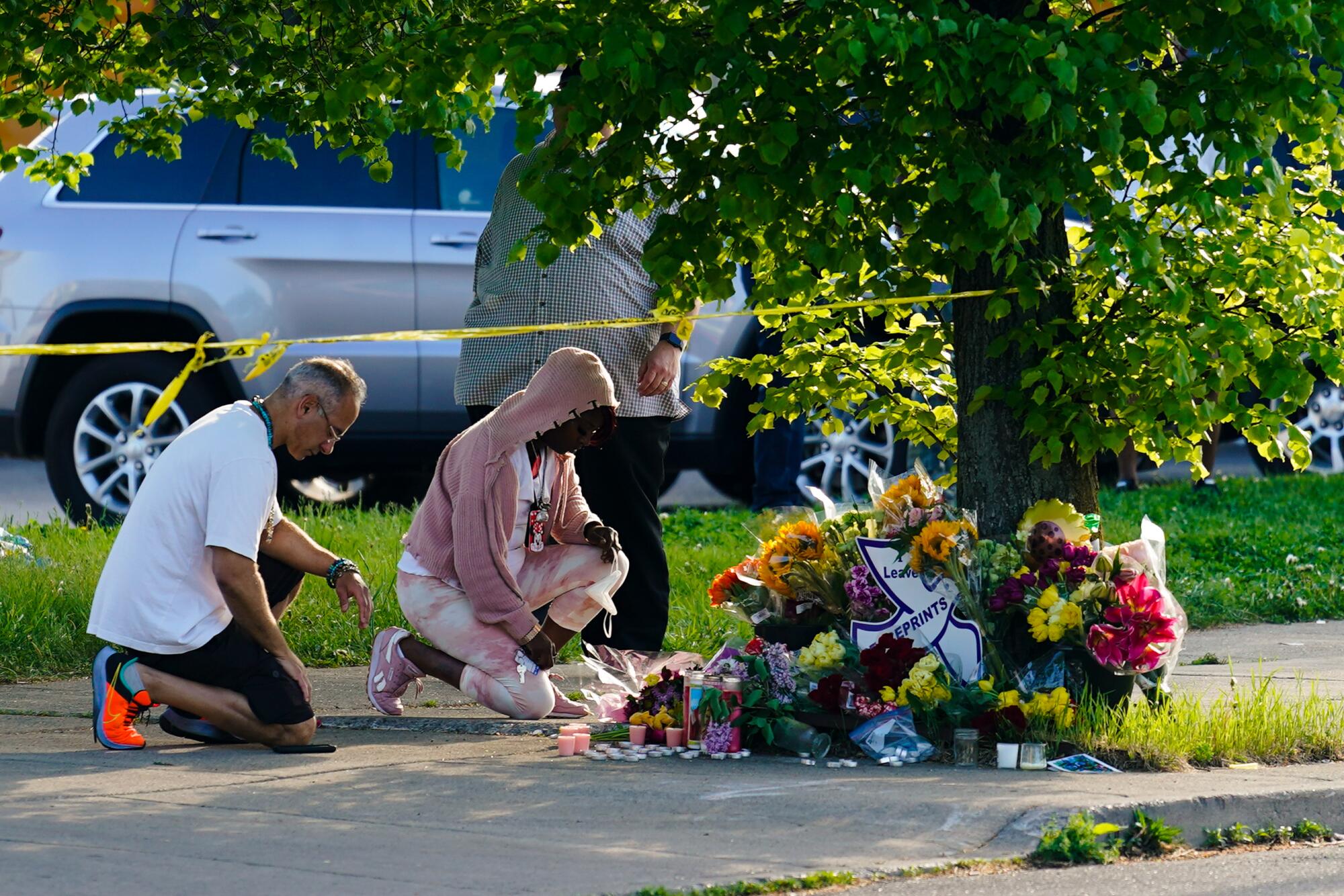
People pay their respects outside the scene of a shooting at a supermarket in Buffalo, N.Y., on May 15, 2022. Payton Gendron wrote a 180-page racist screed before killing 10 Black people at the market.
(Matt Rourke / Associated Press)
When he was testifying testified before the House Appropriations Committee, Wray outlined the threats the U.S. faces from terrorism, cartels trafficking fentanyl, and cyberattacks on business and infrastructure.
“As I look back over my career in law enforcement,” he said, “I would be hard-pressed to think of a time where so many threats to our public safety and national security were so elevated all at once.”

Politics
Trump’s Iran gamble divides GOP hawks and ‘America First’ conservatives over what victory looks like

NEWYou can now listen to Fox News articles!
President Donald Trump may have united Republicans behind military action against Iran, but his push to formalize peace is proving far more divisive.
As details of a memorandum of understanding emerge, GOP hawks are questioning whether the administration gave up too much, while Trump allies argue the president achieved a historic objective that crippled Iran’s military capabilities without dragging the U.S. into another prolonged war.
The disagreement is about more than Iran. It has exposed a growing divide inside the GOP over what Trump’s “America First” foreign policy should look like in practice — and what victory should mean once a military campaign ends.
At its core, the debate centers on competing visions of American power. One camp views military success as leverage to extract maximum concessions from adversaries and secure lasting strategic gains. The other sees it as a tool to neutralize threats and end conflicts before they become another Iraq or Afghanistan. Trump’s Iran agreement has forced those competing philosophies into a rare public collision.
That divide is already playing out among some of the party’s most prominent national security voices.
TOP SENATE REPUBLICAN RIPS INTO TRUMP’S IRAN DEAL, SAYS $300 BILLION MAKES OBAMA DEAL LOOK LIKE ‘A PITTANCE’
The administration’s memorandum of understanding with Tehran has exposed a divide among Republicans over what constitutes victory after the military campaign against Iran. (Anna Moneymaker/Getty Images)
The deal’s fiercest Republican critics argue Trump is giving away leverage at the very moment Iran is most vulnerable. Sen. Bill Cassidy, R-La., has blasted the agreement on X as the “worst foreign policy blunder in decades,” while Senate Armed Services Committee Chairman Sen. Roger Wicker, R-Miss., has warned it appears “out of step” with the goals of the military campaign.
Sen. Ted Cruz, R-Texas, has questioned the concessions offered to Tehran and former U.N. Ambassador and former South Carolina Gov. Nikki Haley has criticized proposals that could help rebuild Iran.
Former Vice President Mike Pence has gone even further, calling the agreement a potential “lifeline” for the regime and warning it “smacks of appeasement.”
VANCE SAYS ‘UNITED STATES WINS EITHER WAY’ AS HE DEFENDS TRUMP’S IRAN DEAL AGAINST GOP SKEPTICS
Vice President JD Vance has defended Trump’s Iran agreement as the culmination of a successful military campaign that brought Tehran to the negotiating table from a position of weakness. (Chip Somodevilla/Getty Images)
Trump’s allies, however, argue critics are overlooking the sweeping military campaign that preceded the agreement.
Vice President JD Vance and other administration officials contend the president achieved his core objective after U.S. and allied forces struck key Iranian military and nuclear sites, eliminated senior commanders and inflicted significant damage on Tehran’s military infrastructure. Supporters say those operations crippled Iran’s ability to project power, restored deterrence and ultimately brought the regime to the negotiating table without requiring a large-scale deployment of American ground troops.
They argue victory is defined by achieving U.S. objectives and ending the conflict on favorable terms — not by risking another prolonged war in the Middle East.
The clash highlights a foreign policy debate that has been simmering inside the Republican Party for years.
NEW SATELLITE IMAGES SHOW FIRES, NAVAL BASE DAMAGE ACROSS IRAN AFTER US-ISRAELI STRIKES
Supporters argue the agreement locks in military gains, while critics contend it gives Tehran too much after suffering major setbacks. (Fatemeh Bahrami/Getty Images)
While Republicans have largely rallied around Trump’s use of military force against Iran, the disagreement over what comes next reflects a deeper tension inside the party.
For traditional hawks, military victories create opportunities to reshape adversaries and secure lasting concessions. For many America First conservatives, the objective is narrower: neutralize threats, avoid nation-building and keep U.S. troops out of prolonged conflicts.
CLICK HERE TO DOWNLOAD THE FOX NEWS APP
As lawmakers and conservative leaders continue debating the memorandum of understanding’s merits, the fight may ultimately be less about the details of the Iran deal than about the future direction of Republican foreign policy — and what victory should mean in the Middle East.

SACRAMENTO — Gov. Gavin Newsom vetoed legislation to require proposed data centers to provide estimates of their water usage last year, saying he was “reluctant to impose rigid reporting requirements” without understanding the impact on businesses and consumers.
Opposition to the mammoth tech hubs and their massive thirst of water, power and land has only escalated throughout the state and nation ever since. In just a matter of months, Newsom again could find himself in the political crosshairs.
Several bills to regulate the facilities and increase public transparency on their impacts are progressing in the California Legislature, which could create a conundrum for a governor who has long aligned with the tech industry but also paints himself as an environmental and social justice advocate.
“I think the governor is in a fragile position,” said Megan Mullin, a public policy professor at UCLA. “Tech has been a long backer of his, but at the same time there is this growing national outcry against data centers.”
Data centers have existed for decades but are rapidly expanding due to the worldwide boom in artificial intelligence. The newer centers built to power AI are far larger than their original counterparts and require immense amounts of water and energy.
The facilities also contribute to fossil fuel emissions, with Cornell University researchers estimating last year that AI growth could add 24 to 44 million metric tons of carbon dioxide to the atmosphere annually by 2030. Fossil fuel emissions are drivers of climate change and linked to a range of health conditions, including asthma, various cancers and birth defects.
Environmental Protection Agency Administrator Lee Zeldin announced last week that the Trump administration will not set national environmental requirements or recommendations for the data center industry, leaving it to state lawmakers to determine best policies.
Thad Kousser, a political science professor at UC San Diego, said the nation will likely look to the Golden State for guidance.
“California’s laws will create a national model,” he said. “We’re the home of Silicon Valley and we’re just a massive state — the way we regulate data centers will set the tone.”
The political landscape around data centers has since changed since Newsom’s veto in October, said Dan Schnur, a political science professor who teaches at UC Berkeley and USC.
“No one should assume he will automatically act in the same way,” Schnur said. “Newsom is an incredibly savvy politician so he is clearly aware that voters are a lot more upset or concerned about data centers than they were a year ago.”
A Gallup poll released last month found 7 out of 10 Americans oppose data centers being built in their area.
The facilities can create thousands of jobs for construction workers and generate significant revenue for local governments due to sales and property taxes. The artificial intelligence they power is also — at least temporarily — boosting the stock market, leading to more tax dollars for California.
But residents who live near hyperscale centers have expressed outrage over a range of issues, including health impacts, spiking utility bills, constant noise, dropping water pressure and concerns about potentially losing their land through eminent domain. Meanwhile, community meetings about data centers are growing contentious, with police arresting a farmer in Oklahoma, three women in Wisconsin and a man in California.
Earlier this month, residents of Monterey Park voted overwhelmingly to ban data centers, making the San Gabriel Valley city the first in the nation to do so by public vote.
“Six months ago, politicians of both parties were falling all over each other to bring data centers into their states,” Schnur said. “Now that the public backlash has erupted, they are working just as hard to distance themselves from these projects.”
With Newsom eyeing a presidential bid in 2028, he might be reluctant to brand himself as a defender of an increasingly unpopular industry.
But Schnur said the governor likely also has concerns about angering one of his biggest backers.
“The tech community is a critical part of Newsom’s donor base, so he has to keep fundraising in mind when he makes these decisions,” Schnur said.
A spokesperson for the governor’s office declined to comment on data centers or pending legislation.
Newsom, during an interview at a Center for American Progress conference in May, said the concern that data centers may drive up electricity costs for Californians is a “legit issue,” but not the main one.
“The tech genie is not going to go back in the bottle,” Newsom said. “Just saying that you should not or cannot build a data center is not going to slow this technology down. What can be, will be. Nature of technology. And so we just have to steer it and not make the mistakes we made with social media.”
Among the measures in the Legislature are two bills from Sen. Steve Padilla (D-San Diego). SB 886 would create a corporate tariff to cover the cost of data center-related grid upgrades. SB 887 would ban data centers from receiving ministerial exemptions from the California Environmental Quality Act, known as CEQA.
Neither bill picked up support from Republicans, but both cleared the Senate and were recently referred to the Assembly Utilities and Energy Committee.
Padilla represents Imperial County, a farming community near the border of Mexico where plans for a 950,000–square–foot data center face fierce opposition from residents. The county exempted the proposal from CEQA, which requires projects to undergo an extensive state environmental review before breaking ground.
The city of Imperial sued the county earlier this year, arguing the project should not have received an exemption. The San Diego Chapter of the Sierra Club joined the lawsuit last month. The county board of supervisors last week approved a 45-day moratorium on all new data centers to allow the county to evaluate proposed data center development.
Two other data center-related bills recently passed the Assembly, each picking up support from a few Republicans. They now await action from the Senate.
AB 2619 from Assemblymember Diane Papan (D-San Mateo) would require data center owners to provide an estimate under penalty of perjury about expected water usage and sources before applying for a business license. AB 1577 from Assemblymember Rebecca Bauer-Kahan (D-Orinda) would require data center owners to submit monthly information to a state commission about water and fuel consumption.
Ben Green, an assistant public policy professor at the University of Michigan who is researching how data centers impact communities, said reporting requirements are a “bare minimum” type of regulation, making it especially noteworthy that Newsom vetoed a similar measure last year.
For comparison, several states are weighing more restrictive bills — New York recently sent legislation to the governor’s desk that would enact a one-year moratorium.
“It seems that there was a ton of lobbying pressure that he was getting,” Green said. “The tech industry doesn’t want to have any restrictions.”
Green said data centers could be a hot topic in upcoming elections, as Americans on both sides of the aisle are expressing valid concerns.
“There’s not an easy fix for getting the public on board with data centers because their critiques are grounded in reality,” he said. “This is not just some sort of reactionary NIMBY-ism or pearl clutching.”
Politics
Obama Center visitors say project symbolic of ‘Black excellence,’ claim scandal-free legacy while Trump ripped

NEWYou can now listen to Fox News articles!
CHICAGO — Opening weekend visitors at the Barack Obama Presidential Center called the 44th president’s legacy an example of unifying, scandal-free “Black excellence,” while they lamented what they view as a dark turn for the U.S. under President Donald Trump.
“The community is great, we’re just kind of glad it’s here,” Lauren Tillman, who lives about 40 minutes outside of Chicago, told Fox News Digital. “We needed something like this. Chicago looks like a certain place to certain people who are not from the area… so I just think this brought everybody together, like, ‘oh there’s something for the community,’ for Black people, and on Juneteenth, so I thought that was great, too.”
The presidential center’s opening weekend began with a star-studded private ceremony and concert on Thursday night, and the 19.3-acre campus opened to the public on Friday during the Juneteenth holiday, which celebrates the day Black slaves were declared free in 1865.
TOM HANKS, OPRAH, STEVEN SPIELBERG TURN OBAMA’S PRESIDENTIAL CENTER OPENING INTO HOLLYWOOD’S HOTTEST TICKET
The Obama Presidential Center building is shown with its glass facade and surrounding trees. (Peter D’Abrosca/Fox News Digital)
“Just knowing that Chicago doesn’t always get the best rep, to know that we’ve had a Black president come from this place, and then to memorialize his legacy is just great,” said Ashley Woods, who joined Tillman at the opening.
“To know that [Obama] was going to try to do at least something for his people, that meant a lot to me and being here means a lot,” added Tillman.
“And I think, to piggyback off that, I think the legacy is Black excellence,” continued Woods. “Again, growing up in a place like Chicago, you don’t really think you can do much besides being a rapper or, you know, going into sports, but so see that somebody actually made it to the top per se, they were able to run the nation, there was very little scandal around him and his family, like it just shows you that we can be more than what America tells us we can be.”
OBAMA’S LEGACY PROJECT OFFERS LITTLE HOPE FOR CHICAGO’S SOUTH SIDE RESIDENTS
Lauren Tillman and Ashley Woods speak with Fox News Digital at the Barack Obama Presidential Center in Chicago on Friday. (Peter D’Abrosca/Fox News Digital)
Sheryl Rogers and Peggy Neely-Harris made the trip from St. Louis for the weekend’s festivities.
“What it means for African Americans [is] a coming together, a reckoning, a remembrance of the excellence that is within each one of us, particularly in African Americans and particularly at this time when our very existence is under attack,” Rogers told Fox News Digital.
Neely-Harris agreed, and said that the brand new presidential center is a symbol of hope and renewal, and that the center is a “light in this present darkness.”
OBAMA PRESIDENTIAL CENTER SLAMMED FOR PROMOTING ‘FAR-LEFT’ AGENDA ON PUBLIC LAND
Sheryl Rogers and Peggy Neely Harris speak with Fox News Digital on the opening weekend of the Barack Obama Presidential Center in Chicago, Friday. (Peter D’Abrosca/Fox News Digital)
“[Obama] has left an excellent example of how you should live, what type of character you should have and the love of family and community,” Rogers continued. “You can see love just exudes from them, and I love to see love in action.”
“No scandal,” she added.
However, Obama did face some major scandals and controversies during his two terms in the White House.
Obama’s DOJ infamously seized records of Fox News’ phone lines, including a phone number that belonged to the parents of a reporter.
The seizure was approved after a warrant was granted by a judge, and in an affidavit seeking the warrant, an FBI agent called reporter James Rosen a likely criminal “co-conspirator” in a violation of the Espionage Act.
Obama also faced government weaponization claims when his IRS allegedly slow-rolled the tax-exempt nonprofit approval of grassroots conservative organizations that set out to oppose his agenda.
Groups with words such as “Tea Party” or “Patriot” in their names were allegedly hindered from forming for months and years.
OBAMA CENTER SUBCONTRACTOR FILES $40M DISCRIMINATION LAWSUIT AGAINST ENGINEERING FIRM FOR OVERRUNS
Barack Obama speaks during the dedication of the Barack Obama Presidential Center, Thursday, in Chicago. (Kent NISHIMURA / AFP via Getty Images)
Operation Fast and Furious was another chart-topping Obama scandal.
ATF agents intentionally allowed illegal straw purchases of weapons near the U.S. southern border with Mexico, in hopes that tracking the firearms would lead them directly to high-level cartel kingpins. But the Obama-era agency failed to monitor at least 2,000 of the weapons, which did in fact make their way into the hands of dangerous characters.
One of the weapons in the ill-fated sting was used to kill Border Patrol Agent Brian Terry in 2010.
When, in 2012, then-Attorney General Eric Holder was subpoenaed during a House Oversight Committee investigation into the matter, he refused to comply, disallowing the committee from seeing thousands of pages of records pertaining to the operation. He later became the first U.S. cabinet official to be held in contempt of Congress, but the Obama DOJ failed to prosecute him.
Obama ordered the extrajudicial drone strike killings of four terror-tied Americans in Yemen without due process.
TRUMP OFFERS TO HELP OBAMA WITH PRESIDENTIAL LIBRARY’S ‘DISASTER’
Valerie Reynolds speaks to Fox News Digital during the opening weekend of the Barack Obama Presidential Center in Chicago, Friday. (Peter D’Abrosca/Fox News Digital)
Twenty-six-year-old Chicago resident Valerie Reynolds told Fox News Digital she thinks the center will improve the image of the city’s South Side, which often finds itself in news headlines for violence and poverty.
“I think Barack Obama’s legacy is and will continue to be the inspiration of togetherness, of the power of what can be done and what can be created when we all come together,” she said. “It’s absolutely something that we are missing today. I’ve seen divisions in this country in ways that I’ve never seen before, and I was reminded of just how vast those divisions are being out here today, because it’s the first time I’ve felt this closeness since he ran for office in 2008.”
An emotional Kia Ware, a woman from Virginia, said the grand opening of the center was a sad reminder of the direction of the U.S. since Obama left office.
OBAMA REMAINS DEM HEADLINER WHILE PRESIDENT WITH MOST VOTES EVER FADES INTO BACKGROUND: ‘IT WAS ALL A DREAM’
Kia Ware speaks with Fox News Digital during the opening weekend of the Barack Obama Presidential Center in Chicago on Friday. (Peter D’Abrosca/Fox News Digital)
“It makes me sad because I was so proud of everything that was accomplished during that legacy in terms of, you know, fighting for vulnerable people and vulnerable lands and protection of so many things that are now being erased forever, and I feel like it’s setting us back,” she said.
CLICK HERE TO DOWNLOAD THE FOX NEWS APP
Ware added that Obama is still a “powerhouse” in the Democratic Party, and said that people who believe in his legacy want him to “step back in.”
“I guess it just means, like for me, I just am feeling very thankful that we have those eight years of history for putting women forward, putting minorities forward,” she said. “I felt like that unification, just seeing all people of different backgrounds and ages and generations here, I get that same feeling.”
-

 Maine21 seconds ago
4-year-old girl in critical condition after near drowning at Kennebunk hotel pool
-

 Maryland3 minutes ago
Crash Shuts Down All Northbound Lanes Of I-95
-

 Michigan8 minutes ago
Michigan bills establishing American Freedmen infrastructure introduced in House
-

 Massachusetts15 minutes ago
Joyous occasion: Boston celebrates new beginnings, local pride
-

 Minnesota18 minutes ago
Over a dozen cases dropped against Minnesota protesters accused of assaulting federal agents during ICE operation
-

 Mississippi23 minutes ago
Fort Worth youth baseball team rescued after floodwaters trap families in Mississippi
-

 Missouri30 minutes ago
MoDOT scheduled road work across Northwest Missouri for June 22–28
-
 Montana33 minutes ago
Anaconda shaken by second bar shooting within a year

