Politics
The One Thing Americans Remember About Biden


We surveyed more than 2,000 Americans this month and asked for their most prominent memory of Mr. Biden’s time in office. Here’s what they said, in their own words.
“Economy wrecker”
Trump voter in 2024
“The economy improved”
Harris voter
“Giving money to Israel and Ukraine”
Harris voter “Allowing migrants illegally”
Did not vote
“Very high border crossings”
Trump voter
“His declining cognitive abilities”
Harris voter
“Trying to help the common people”
Harris voter
“He was a total disaster”
Trump voter “A return to normal presidential responsibility and decency”
Harris voter
What one thing do you remember most about Joe Biden’s presidency?
President Joe Biden will leave office on Monday with a dismal approval rating and a complicated legacy.
Unsurprisingly, Americans’ positive and negative memories of Mr. Biden in a poll conducted by The New York Times and Ipsos this month largely split along partisan lines. Respondents who voted for Donald J. Trump were unsparing in their criticism of Mr. Biden, while those who voted for Kamala Harris had mostly positive views, though some also disapproved.
What they said about Mr. Biden in these open-ended responses offers an early look at his legacy in the public’s mind.
Republicans, in particular, pointed to Mr. Biden’s mental state and age as the top thing they remember. Many Democrats relayed memories of Mr. Biden’s kindness and empathy, while others cited the economy, at times in a positive light and other times negatively. A quarter of respondents could not think of a memory at all or declined to share one.
Based on a poll by The New York Times and Ipsos of 2,128 U.S. adults conducted Jan. 2-10.
Top 10 categories shown, excluding “don’t know” or blank responses.
Thinking back on Joe Biden’s presidency, what one thing do you remember most about his time in office?
In a separate question, nearly half of Americans said that Mr. Biden left the country worse off than when he took office, just one quarter felt he left it better off, and another 25 percent said things were the same as before he became president.
There was a partisan split on this question, too, but Black and Hispanic Americans were more likely to say Mr. Biden made things worse than better, and Americans 18 to 29 were twice as likely to say Mr. Biden left the country worse off than better off.
Memories of presidents are often not static, and can grow rosier over time, a phenomenon that played out after Mr. Trump’s first term. Here’s a closer look at Americans’ current views of Mr. Biden’s time in office.
“He usually didn’t have a clue what was going on around him”
Trump voter in 2024
“His declining health and confusion”
Trump voter “His dementia”
Trump voter
“He’s old”
Harris voter
“His performance in the debate was shocking”
Harris voter
“I think Joe Biden has a good heart, but he’s too old to be effective”
Harris voter
“He’s just not all there”
Did not vote Selected responses from a poll by The New York Times and Ipsos of 2,128 U.S. adults conducted Jan. 2-10.
Comments from Americans who said what they remembered most was Biden’s age
Many Americans remember Mr. Biden more for his personal characteristics than his policies. Fourteen percent cited his age or perceived mental decline as their most prominent memory, a greater share than any specific policy. Another 4 percent mentioned memories related to his empathy and kindness.
Concern about Mr. Biden’s cognition primarily came from Republicans, though some Democrats and independents also shared misgivings. Many specifically cited his debate performance, which proved to be a turning point in his aborted campaign, as their key memory of his time in office.
“Gas prices skyrocketing”
Did not vote in 2024
“Out of control spending, reduced energy creation and inflation”
Trump voter “He worked hard for the middle class and added protections and laws to help most Americans”
Harris voter
“High gas prices”
Trump voter
“I honestly don’t know much of what Joe Biden did, but I know the economy has suffered”
Harris voter
“Inflation, inflation, inflation”
Trump voter
“Better economy”
Harris voter “Prices have gone way up”
Harris voter
Selected responses from a poll by The New York Times and Ipsos of 2,128 U.S. adults conducted Jan. 2-10.
Comments from Americans who said what they remembered most was the economy
During the campaign, voters consistently cited the economy as their most important issue. As Americans look back on Mr. Biden’s time in office, many mentioned economic conditions as their principal recollection.
Republicans pointed to rising prices as the main impact of his presidency, while Democrats were largely more positive, citing the economic recovery from the Covid-19 pandemic. Still, many Democrats and independents had concerns about the cost of living.
“Open border”
Trump voter in 2024 “The huge numbers of illegal immigrants that have entered the country”
Trump voter
“Unsafe borders, terrible economic policies, weak leadership”
Harris voter
“So many immigrants living on welfare”
Trump voter
“Immigration ran amok for several years and now it is too late to try and curtail the problem”
Harris voter
“His indifference to open borders”
Harris voter “Skyrocketing illegal immigration”
Did not vote
Selected responses from a poll by The New York Times and Ipsos of 2,128 U.S. adults conducted from Jan. 2-10.
Comments from Americans who said what they remembered most was immigration
Mr. Trump made Mr. Biden’s immigration policy a core issue in his campaign to return to the White House. Border crossings rose during Mr. Biden’s presidency, creating the largest immigration surge in U.S. history (though crossings plummeted late in his term after he tightened enforcement).
Among Republicans, Mr. Biden’s immigration policies were among the most mentioned memories. These recollections were often expressed with evident frustration, and were frequently intertwined with economic concerns.
“Getting out of Afghanistan. It was horrible”
Trump voter in 2024 “His epic debate failure and his retreat from Afghanistan, sacrificing troops’ lives doing it”
Harris voter
“Continuing to send weapons overseas during the Israel and Palestine conflict and not allowing Ukraine to use them against Russia”
Harris voter
“His inability to tell Israel that genocide is wrong, no matter the provocation”
Did not vote
“More interested in foreign aid than the American people”
Trump voter
“Helping a lot outside the country”
Harris voter “War”
Harris voter
“Supporting war with billions”
Harris voter
Selected responses from a poll by The New York Times and Ipsos of 2,128 U.S. adults conducted Jan. 2-10.
Comments from Americans who said what they remembered most was foreign policy
Americans who mentioned foreign policy mostly looked back on the Biden years as a time of war. Democrats and Republicans alike expressed concern about spending on foreign conflicts that they believed starved domestic spending. Overall, 60 percent of Americans in the survey said the United States was too focused on helping other countries and needed to focus more on problems at home.
Many cited the wars in Ukraine and Gaza as their main memory of Mr. Biden’s time in office. Democrats were especially likely to cite concerns about the deaths of Palestinians during the Israel-Hamas war.
Comments from Americans who said what they remembered most was pandemic recovery or legislative accomplishments
-
“Coming out of Covid, avoiding recession, dealing with global supply issues”
Harris voter in 2024
-
“He got us through the pandemic, he probably saved many people from dying of Covid”
Harris voter
-
“Covid stimulus and rebuilding the economy after Covid”
Harris voter
-
“He fixed us from Covid mess”
Did not vote
-
“Build back better”
Harris voter
-
“Getting the bipartisan jobs act passed”
Harris voter
-
“Infrastructure”
Harris voter
-
“Forgiving student debt, Covid lockdowns”
Trump voter
-
“His attempt to unburden some of us with student loans”
Harris voter
-
“He forgave my loan”
Trump voter
Selected responses from a poll by The New York Times and Ipsos of 2,128 U.S. adults conducted Jan. 2-10.
Few Americans mentioned memories of the pandemic, but those who did remembered Mr. Biden’s work to help pull the country out of it. Many cited his work on the economic recovery after the pandemic and his efforts to avoid a recession.
Some, particularly Democrats, also cited key pieces of post-pandemic legislation like the Inflation Reduction Act and infrastructure spending.
And for a handful, Mr. Biden’s student loan forgiveness was their key memory, including some who had firsthand experience.
“Corrupt”
Trump voter in 2024 “Corruption to enrich him and his family”
Trump voter
“Endless scandals and fraud”
Trump voter
“He is a criminal”
Trump voter
“Pardoned his son, bad policies”
Did not vote
“Pardoning his son”
Did not vote “The lies and corruption”
Did not vote
Selected responses from a poll by The New York Times and Ipsos of 2,128 U.S. adults conducted Jan. 2-10.
Comments from Americans who said what they remembered most was corruption
A small but significant share of Republicans mentioned corruption, with many citing Mr. Biden’s pardon of his son, Hunter Biden, as evidence.
Taken all together, these responses offer a snapshot in time as Mr. Biden leaves office. History shows that many former presidents later get a reputational boost. This was the case for George W. Bush, George H.W. Bush and Jimmy Carter. Time will tell if Mr. Biden will follow a similar path.



Politics
Trump gives Iran 48-hour ultimatum to reopen Strait of Hormuz or face strikes on power plants

NEWYou can now listen to Fox News articles!
President Donald Trump issued a 48-hour ultimatum to Iran on Saturday, warning the U.S. would strike its power plants if the Strait of Hormuz is not reopened.
“If Iran doesn’t FULLY OPEN, WITHOUT THREAT, the Strait of Hormuz, within 48 HOURS from this exact point in time, the United States of America will hit and obliterate their various POWER PLANTS, STARTING WITH THE BIGGEST ONE FIRST!” Trump said in a post on Truth Social.
The president’s threat represents a notable escalation in rhetoric as tensions surge over the strategically vital waterway.
Traffic through the Strait of Hormuz, a global choke point for oil and gas transport that supplies roughly one-fifth of the world’s crude oil, has been largely limited since early March, shortly after the war with Iran began.
US SIGNALS READINESS TO ESCORT TANKERS THROUGH HORMUZ AS TRAFFIC THINS BUT NO MISSION LAUNCHED
President Donald Trump warned on Saturday that the U.S. could strike Iranian power plants if the Strait of Hormuz is not reopened. (Getty Images)
Trump’s post comes after he told reporters Friday that reopening the strait was a “simple military maneuver.”
“It’s relatively safe, but you need a lot of help in the sense of you need ships, you need volume,” he said.
The president added that NATO hasn’t had the “courage” to assist the U.S. with reopening the waterway.
TRUMP SAYS US ‘OBLITERATED’ TARGETS IN STRIKE ON KEY IRANIAN OIL HUB
The Callisto tanker sits anchored as the traffic is down in the Strait of Hormuz, amid the U.S.-Israeli conflict with Iran, in Muscat, Oman. (Benoit Tessier / Reuters)
“NATO could help us, but they so far haven’t had the courage to do so, and others could help us,” Trump said. “But, you know, we don’t use it. You know, at a certain point, it’ll reopen itself.”
Earlier Friday, Trump ripped NATO on Truth Social as “cowards,” saying they “complain about the high oil prices they are forced to pay, but don’t want to help open the Strait of Hormuz.”
A growing group of countries has signed onto a joint statement signaling their “readiness to contribute to appropriate efforts to ensure safe passage” through the strait.
The joint statement said, “We express our readiness to contribute to appropriate efforts to ensure safe passage through the Strait,” and, “We welcome the commitment of nations who are engaging in preparatory planning.”
The statement was attributed to leaders from more than 20 countries, including the United Kingdom, France, Germany, Italy, Japan, Canada and the United Arab Emirates.
“We condemn in the strongest terms recent attacks by Iran on unarmed commercial vessels in the Gulf, attacks on civilian infrastructure including oil and gas installations, and the de facto closure of the Strait of Hormuz by Iranian forces,” the statement reads.
NATO HEAVYWEIGHTS BALK AT HORMUZ MISSION AS TRUMP WARNS ALLIANCE AT RISK
A satellite image shows the Strait of Hormuz, a key maritime passage connecting the Persian Gulf to the Gulf of Oman, vital for global energy supply. (Amanda Macias/Fox News Digital)
“We express our deep concern about the escalating conflict. We call on Iran to cease immediately its threats, laying of mines, drone and missile attacks and other attempts to block the Strait to commercial shipping, and to comply with UN Security Council Resolution 2817,” the statement continued.
CLICK HERE TO DOWNLOAD THE FOX NEWS APP
Earlier this week, U.S. forces struck Iran’s anti-ship missile sites near the Strait of Hormuz with 5,000-pound bunker-buster bombs, according to U.S. Central Command (CENTCOM).
Fox News Digital’s Greg Norman-Diamond contributed to this report.

Riverside County Sheriff Chad Bianco, who is a leading Republican candidate for governor, has seized more than 650,000 ballots from last November’s election and is investigating whether they were fraudulently counted.
“This investigation is simple: Physically count the ballots and compare that result with the total votes recorded,” Bianco said at a news conference Friday.
The unusual probe drew a sharp rebuke from California Atty. Gen. Rob Bonta, who said in a statement Friday that it is “unprecedented in both scope and scale” and appears “not to be based on facts or evidence.”
“There is no indication, anywhere in the United States, of widespread voter fraud,” Bonta said. “Counts, recounts, hand counts, audits, and court cases all support this.”
According to Bonta’s office, Bianco’s department on Feb. 26 seized about 1,000 boxes of ballot materials in Riverside County related to the November election for Proposition 50, which temporarily redrew the state’s congressional districts to favor Democrats in response to partisan redistricting in Republican states, including Texas.
The sheriff said his investigators are looking into allegations by a local citizens group that “did their own audit” and found that the county’s tally was falsely inflated by more than 45,000 votes — a claim that local election officials have rejected.
The investigation comes as President Trump — who remains fixated on his 2020 election loss — continues to amplify election conspiracy theories and has repeatedly called for the federal government to “nationalize” state-run elections to counter what he says is widespread fraud.
Bonta and California Secretary of State Shirley Weber, both Democrats, have vowed to fight federal interference that could affect voting in California, including efforts to seize election records, as the FBI recently did in Georgia.
Bianco is an outspoken Trump supporter who said in an endorsement video in 2024 that, after 30 years of putting criminals in jail, he figured it was “time to put a felon in the White House — Trump 2024, baby” — referencing Trump’s conviction by a New York jury for falsifying business records while paying hush money to a porn actor.
Bianco’s investigation, which includes all the ballots cast in Riverside County in November, raises questions about how he would handle the election denialism movement if elected governor.
A poll released last week by UC Berkeley’s Institute of Governmental Studies and co-sponsored by The Times showed Bianco and conservative commentator Steve Hilton leading the crowded field of gubernatorial candidates by slim margins, in a left-leaning state.
Last fall, Proposition 50 passed in Riverside County with 56% of the vote — a margin of more than 82,000 ballots.
A citizens group called the Riverside Election Integrity Team has said it performed an audit finding that 45,896 more ballots were counted than were cast.
In a lengthy February presentation to the Riverside County Board of Supervisors, Registrar of Voters Art Tinoco disputed that figure, saying it was based on a misunderstanding of raw data that had not been fully processed.
The actual discrepancy, Tinoco said, was 103 votes, a variance of 0.016% that was far below what he said was the state’s preferred 2% margin of error for certifying results.
Bianco on Friday said that there “is no acceptable error, small or large, in our elections.”
The sheriff did not name the Riverside Election Integrity Team, but his description of the allegations brought to him by “a group of citizen volunteers” matched theirs.
Bianco said the investigation was “not a recount” for the Proposition 50 contest and was “just as much to prove the election is accurate as it is to show otherwise — we will not know until the count is complete.”
Bonta said his office has “attempted to work cooperatively” with the Sheriff’s Department to understand the basis for the probe. The sheriff, Bonta said, “has delayed, stonewalled, and otherwise refused to work with us in good faith” and failed to provide most of the requested documents.
“We’re concerned that there is not sufficient justification for seizing every ballot that was cast in this very largely populated county,” an official in Bonta’s office said in an interview Friday night.
In a March 4 letter to Bianco, the attorney general cited Bianco’s plan to use Sheriff’s Department staffers, “who are not trained and have no experience,” to count the ballots.
“Let me be clear: this is unacceptable,” Bonta wrote. “Your decision to seize ballots and begin counting them based on vague, unsubstantiated allegations about irregularities in the November special election results sets a dangerous precedent and will only sow distrust in our elections. You are also flagrantly violating my directives.”
At his news conference Friday, Bianco fired back by calling Bonta “an embarrassment to law enforcement.”
A Riverside County Superior Court judge, Bianco said, has ordered the appointment of a special master to oversee the ballot count.
In a statement Friday, Secretary of State Weber said “the Sheriff’s assertion that his deputies know how to count is admirable. The fact remains that he and his deputies are not elections officials and they do not have expertise in election administration.”

NEWYou can now listen to Fox News articles!
Senate Republicans blocked an attempt by Senate Minority Leader Chuck Schumer, D-N.Y., to only pay Transportation Security Administration (TSA) workers as the Homeland Security shutdown drags on.
Despite being in the minority and not controlling the Senate floor, Schumer used an arcane tactic to force a procedural vote to allow the Senate to get onto the bill in Democrats’ move to shift the narrative of the ongoing Department of Homeland Security (DHS) shutdown.
“It is unacceptable for workers and travelers and entire airports to get taken hostage in political games,” Schumer said on the Senate floor. “But that’s what the Republicans are doing. It is unacceptable to say we will only pay TSA workers if it is attached to a bill that funds ICE with no reforms, but that’s what the Republicans have been doing.”
GOP SENATOR’S GAMBIT EXPOSES FALSE DEM CLAIMS ABOUT SUPPORTING VOTER ID
Senate Minority Leader Chuck Schumer, D-N.Y., forced a rarely used procedural tactic to pay TSA workers, which Senate Republicans blocked in their quest to fully reopen DHS. (Heather Diehl/Getty Images)
The shutdown entered its 36th day on Saturday as the ongoing partial closure hurtles toward matching the record-breaking full government shutdown from last year. Schumer’s failed gambit follows increasingly long wait times at airports as thousands of TSA agents go without pay.
Senate Democrats have dug in deep in their demands for stringent reforms to Immigration and Customs Enforcement (ICE) and have so far refused to reopen the agency or temporarily extend funding to end the closure until they get what they want.
Senate Republicans and the White House made a new compromise offer to Democrats on Friday night after an open letter from the administration on several reforms to immigration operations was revealed earlier this week. The letter spurred two back-to-back meetings on Capitol Hill with Republicans, Democrats and administration officials.
THUNE ACCUSES CRITICS OF ‘CREATING FALSE EXPECTATIONS’ AMID BACKLASH OVER STALLED SAVE AMERICA ACT
Travelers wait in line at a Transportation Security Administration (TSA) checkpoint at Hartsfield-Jackson Atlanta International Airport (ATL) in Atlanta, Georgia, (Elijah Nouvelage/Bloomberg via Getty Images)
Whether they accept that offer or counter remains in the air for now. Sen. Katie Britt, R-Ala., who was in the meeting, said that she hoped there would be another soon.
“That will be up to them, but I hope so,” Britt said.
Still, Republicans tried and failed for a fifth time to fully reopen the agency on Friday. In the background, there have been several attempts by Senate Democrats to move forward with standalone funding bills — like Schumer’s gambit — to open parts of DHS, save for immigration enforcement.
DHS SHUTDOWN TIED FOR SECOND-LONGEST EVER AS DEMS AGAIN BLOCK FUNDING AMID AIRPORT CHAOS, TERRORISM CONCERNS
Senate Majority Leader John Thune, R-S.D., speaks during the Senate Republicans’ news conference in the Ohio Clock Corridor in the U.S. Capitol on Tuesday, Feb. 10, 2026. (Bill Clark/CQ-Roll Call, Inc via Getty Images)
Time is also running out for lawmakers to find middle ground on reopening the agency, given that they are set to leave Washington, D.C., for a two-week break at the end of next week.
At a press conference earlier Saturday, Senate Majority Leader John Thune, R-S.D., told Fox News Digital that it’d be “very, very hard to explain if we leave town this next week without having funded the Department of Homeland Security.”
CLICK HERE TO DOWNLOAD THE FOX NEWS APP
“At some point the Democrats are going to be held accountable for this,” Thune said.
“I know they think it’s, as has been described by one of their leaders, ‘very serene, very serene’ with their position,” he continued. “Well, I’m telling you something, the people who are sitting in those lines at the airports right now don’t see it as very serene. This needs to be resolved.”

Seal windows, flush water heater, change furnace filter for spring savings

SF crews investigate possible gas leak after person dies in St. Mary’s Park

We asked North Texans who should be honored instead of Cesar Chavez. Here’s what they said

The Sunday Read: Reichel Finding Role In Bruins Lineup | Boston Bruins

Colorado is proposing major changes to autism therapy — and families are worried

Florida High School Football Rankings: Top 25 teams – Oct. 21

How old is Bo Nix? What to know about Oregon quarterback ahead of 2024 NFL Draft

Cleary's 21 help Le Moyne down Central Connecticut State 69-64 in OT

99th annual Pony Swim held in Virginia

Indiana Members Credit Union announced as new anchor tenant at Bottleworks District

Video: Former F.B.I. Director Robert Mueller Dies at 81

Trump gives Iran 48-hour ultimatum to reopen Strait of Hormuz or face strikes on power plants

Macron pushes tougher EU digital action ahead of key votes
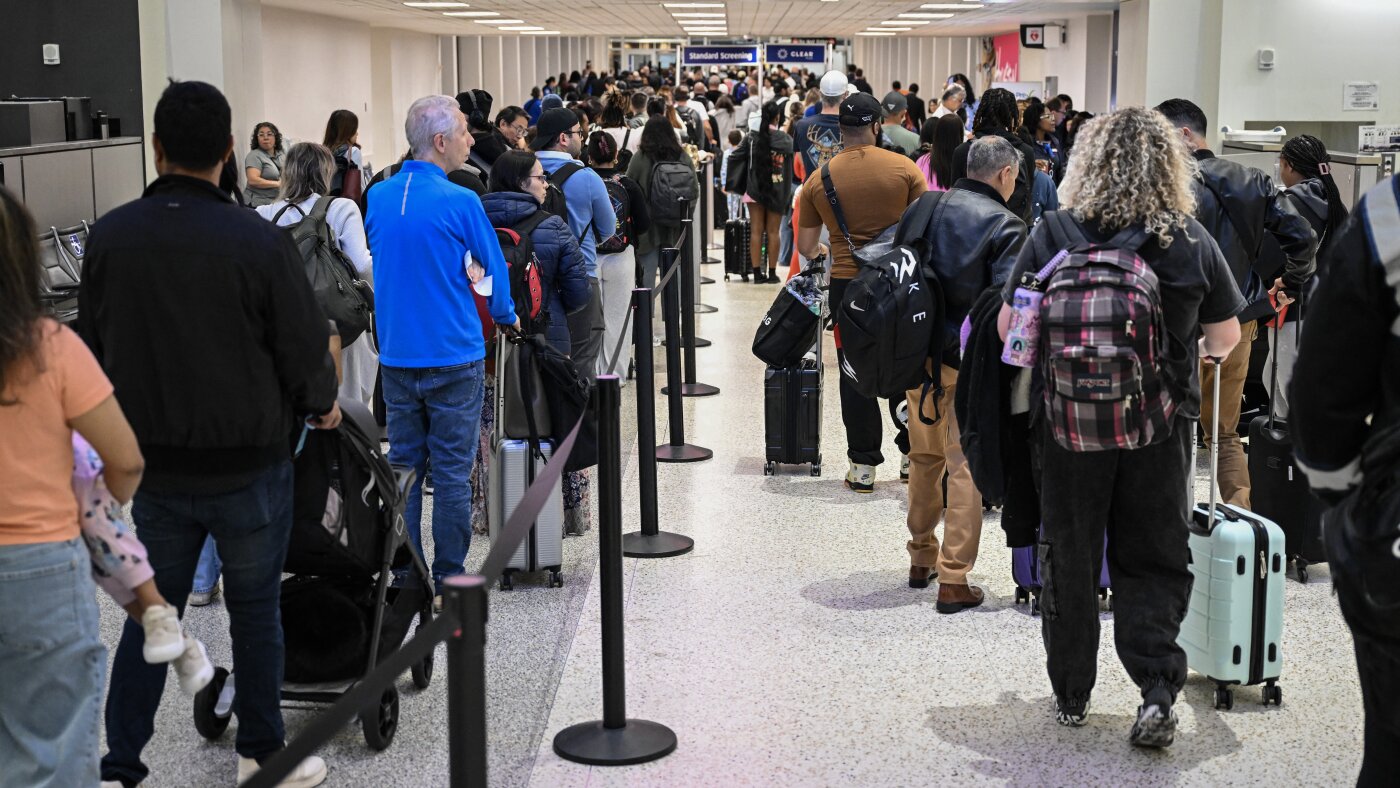
Airport security lines are long. Here’s what to know if you’re flying

Schumer gambit fails as DHS shutdown hits 36 days and airport lines grow
-

 Detroit, MI4 days ago
Drummer Brian Pastoria, longtime Detroit music advocate, dies at 68
-

 Oklahoma1 week ago
Family rallies around Oklahoma father after head-on crash
-

 Nebraska1 week ago
Wildfire forces immediate evacuation order for Farnam residents
-

 Georgia6 days ago
How ICE plans for a detention warehouse pushed a Georgia town to fight back | CNN Politics
-

 Alaska1 week ago
Police looking for man considered ‘armed and dangerous’
-
 Science1 week ago
Federal EPA moves to roll back recent limits on ethylene oxide, a carcinogen
-
 Science1 week ago
H5N1 bird flu spreads to sea otters and sea lions along San Mateo coast, wildlife experts say
-

 Movie Reviews3 days ago
‘Youth’ Twitter review: Ken Karunaas impresses audiences; Suraj Venjaramoodu adds charm; music wins praise | – The Times of India