Politics
Nonstop attacks about Trump, Biden's mental acuity loom over the first presidential debate

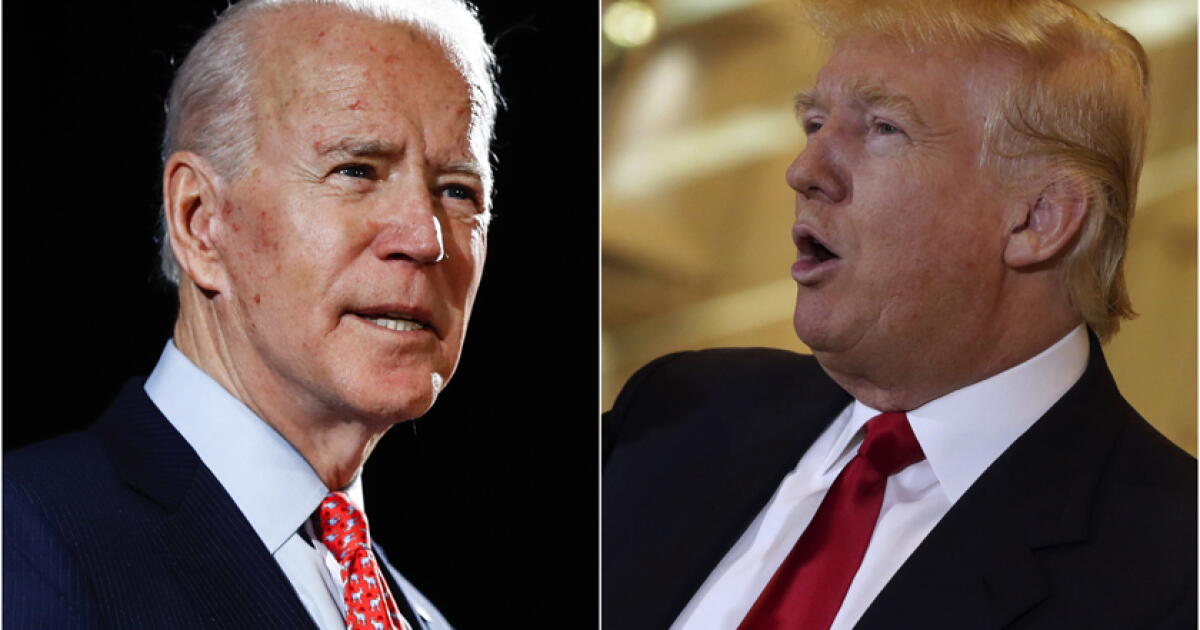
For those with questions about the leading 2024 presidential candidates’ mental acuity, or those involved in stoking the increasingly heated spin online around such questions, Saturday night was a bonanza.
President Biden appeared to “freeze up,” as the New York Post put it, as he walked offstage at a downtown Los Angeles fundraising appearance with former President Obama and late-night host Jimmy Kimmel.
“A scene right out of ‘Weekend at Bernie’s,’” Chris LaCivita, senior Trump campaign advisor and chief operating officer of the Republican National Committee, told The Times.
The Biden campaign and its allies accused the Post and others who circulated the “freeze” meme of misrepresenting the footage. In other cases they went further, attacking media outlets and Republicans for sharing doctored video of the president.
“Rupert Murdoch’s sad little Super Pac, the New York Post, is back to disrespecting its readers and itself once again by pretending the President taking in an applauding crowd for a few seconds is somehow wrong,” White House spokesperson Andrew Bates said on X.
The same evening, former President Trump called for his 2024 rival to take a “cognitive test,” claiming he himself had “aced” one while in office — then botched the name of the doctor who administered it. “Ronny Johnson. Does everybody know Ronny Johnson?” Trump said, meaning Dr. Ronny Jackson, who is now a Texas congressman.
Next week’s debate, which will be broadcast by CNN and simulcast on other networks, will be one of the few moments for the public to view the candidates side-by-side, unfiltered, for an extended period of time. Voters will be able to judge for themselves each man’s vitality, energy and mental acuity.
Peter Reed, director of the Sanford Center for Aging at the University of Nevada Reno, said it’s not possible to know a person’s mental acuity based on video snippets. Cognitive and physical capabilities vary from person to person — and there’s no way to tell just by watching a five-second clip, he added.
“It would be extremely difficult for me as a professional to watch either of the presidential candidates on TV, or see something that was posted on social media, and make an accurate assessment of their abilities. I just don’t think that that’s possible,” Reed said. “And frankly, any nonprofessionals that are armchair diagnosing either of these folks are off base.”
President Biden arrives onstage at Saturday night’s Los Angeles fundraiser with former President Obama.
(Alex Brandon / Associated Press)
This potential inflection point in the campaign — one of two scheduled debates between the men — comes as the candidates and their allies grab hold of video moments of alleged or apparent slippage, circulating them for maximum outrage on TikTok, X and Instagram. In a race between an 81-year-old incumbent and a 78-year-old challenger, age has been fully weaponized.
Just days before the L.A. fundraiser, critics claimed video showed Biden wandering off during a G-7 summit. (“Meanderer in chief,” the New York Post said.) In fact, he was walking over to greet some French paratroopers.
The political combat via video images further draws attention to the fact that the majority of the Americans say they are dissatisfied with the major parties’ candidates for president — in part because they’re both so old.
A February ABC News/Ipsos poll found that 59% of Americans think both Biden and Trump are too old to serve. Biden consistently fares worse on the age question than Trump — 63% of voters said they were not very or not at all confident in his mental capability to serve as president, compared with 57% who thought the same of Trump, according to a March poll from the Associated Press-NORC Center for Public Affairs Research.
At the debate, “Biden has to be direct and frank and take it in a way that Trump can’t, which is to acknowledge it,” Democratic strategist Doug Herman said in an interview. “Trump won’t acknowledge his age. Biden can and should. He should make light of it. He should refer to it in ways that are humorous and not defensive, and if he does that he’ll win this debate hands down.”
Amy Pason, an associate professor of communication studies at the University of Nevada Reno, said that assessing candidates’ faculties in the context of age is not new in a presidential election. Former Secretary of State Hillary Clinton was scrutinized in 2016 for coughing. Trump countered by releasing a physician’s note declaring him “the healthiest individual ever elected to the presidency.”
In the 1940s, President Franklin Roosevelt projected a healthy persona, usually appearing seated behind tables to obscure the fact he used a wheelchair as a result of polio. In the first televised debate in 1960 between Richard Nixon and John F. Kennedy, many who watched thought the young, suave and freshly made-up Kennedy won, while those who listened on the radio believed the strongly worded, decisive-sounding Nixon did.
“All of these kinds of images and portraying yourself as someone who is healthy, vigorous, able to do the things that we think that you need to do as a president are always … a place for campaigns to naturally go to as an attack on their opponent,” Pason said.
Democrats have been quick to pounce on Trump’s repeated verbal miscues and what they say is his relative incoherence when it comes to talking policy. They’ve highlighted Trump confusing former President Jimmy Carter with tennis legend Jimmy Connors.
Progressive activist Brian Tyler Cohen invoked the mantra of former Trump advisor Steve Bannon, who told a journalist: “The real opposition is the media. And the way to deal with them is to flood the zone with s—.”
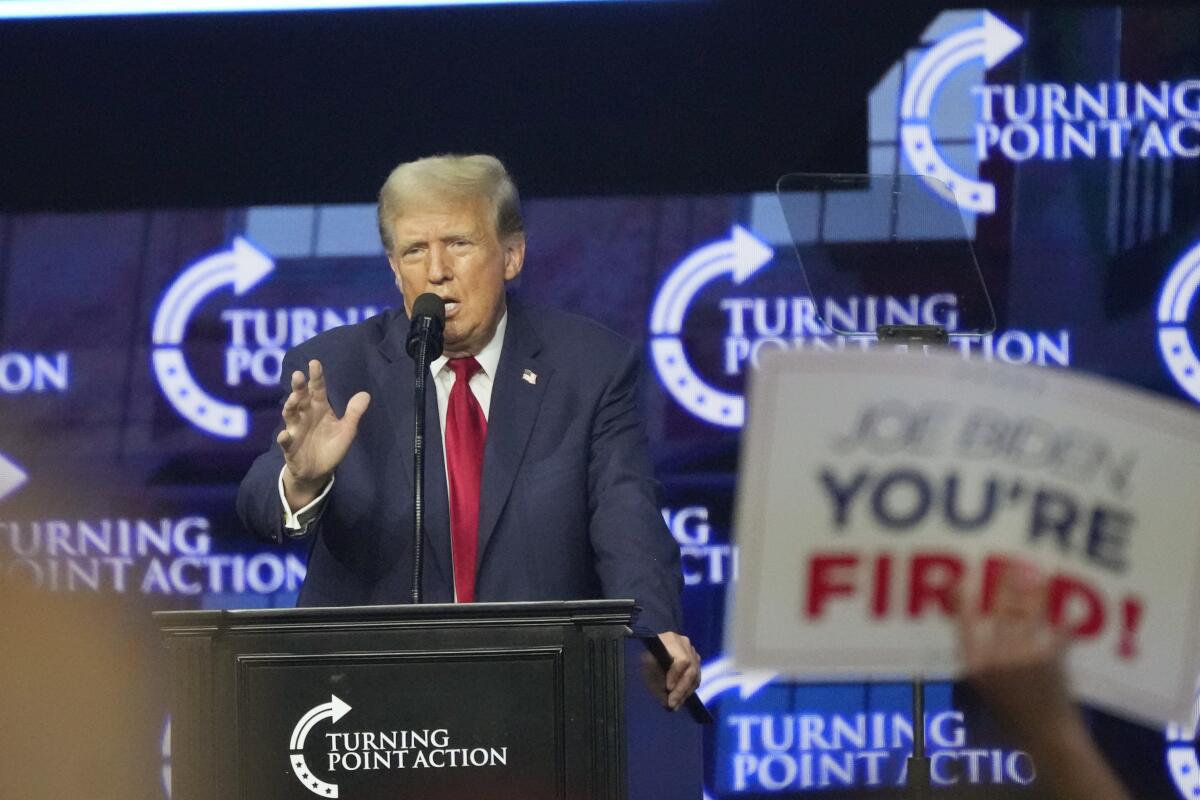
Former President Trump at last week’s rally in Detroit.
(Carlos Osorio / Associated Press)
Cohen’s point is that Democrats shouldn’t stand by as Republicans disseminate misleading clips of Biden, whom Cohen has interviewed on his YouTube channel. Cohen’s social media feeds are full of videos of Trump appearing addled or needing help walking off stage, though from another angle, it’s clear that Trump is shaking the hand of one of his sons. For his part, Cohen says Democrats need to fight fire with fire.
“Here is a photo of Trump having to hold someone’s hand to guide him off stage,” Cohen wrote on X. “I’m sure this will get just as much coverage as the daily [“Biden old”] story gets.”
Cohen attended the Los Angeles fundraiser and posted forceful denunciations of the New York Post and others who said Biden froze. He’s said it’s important that Democrats not “cede any ground” when it comes to a conversation about the candidates’ mental fitness.
“The Republican Party has a mandate to make this election a referendum on age as a distraction from anything else that is more important,” Cohen said in an interview.
He said that “Republicans know” that stories about Biden’s achievements are not going “to stand up to the sexiness of some story about a purported physical gaffe on stage.”
The Biden campaign has accounts on TikTok, Instagram and X, where staffers highlight videos of Trump sounding incoherent or bungling basics about policy.
The accounts have featured videos of Trump saying that if he were elected “it will be a bloodbath,” and regularly highlighted Trump’s unwillingness to protect NATO allies, among other topics. The Republican National Committee runs similar accounts, which have surfaced videos of Biden falling onstage at an event at the Air Force Academy and walking gingerly to Marine One.
Voters can expect these accounts to be steadily pushing out content during the debate and right after.
Both candidates have been prepping. Biden has been at Camp David with his former chief of staff, Ron Klain, and others. The New York Times reported last week that Trump had been meeting with staffers and certain Republican senators for policy sessions in advance of next week’s showdown.
“This debate is going to be a great opportunity for President Trump to highlight his strength vs. Joe Biden’s weakness,” Trump press secretary Karoline Leavitt said on Newsmax on Thursday.
Jim Demers, a New Hampshire-based Democratic strategist, said the debate will be a great moment for Biden to highlight the extent of Trump’s legal troubles and how he doesn’t have voters’ best interests in mind.
“Donald Trump couldn’t get a job working for almost any company in America because he couldn’t pass the background check,” Demers said.
“There are people who would have liked to have seen two younger candidates, but that isn’t the case. This race really has now taken full shape and voters are going to have to make up their mind based upon reality, and the reality is that we have two candidates who are older.”



NEWYou can now listen to Fox News articles!
Maine state Rep. Valli Geiger, a Rockland Democrat, former nurse and former mayor, is drawing sudden national attention after saying now-former Democratic Senate nominee Graham Platner encouraged her to consider taking his place on the ballot in the Maine Senate race.
While Geiger has not been named the replacement nominee, her name entered the Maine Senate scramble after she told local outlet WMTW that Platner called her Monday night, praised her as a “fighter” and asked whether he could put her name forward. Platner’s campaign told the outlet he had not made an endorsement decision but confirmed he encouraged Geiger to consider running if he stepped aside.
After Geiger said Platner called her about potentially putting her name forward, Geiger posted Tuesday she would not “throw Graham under the bus,” while also saying she would not “slander or accuse” Jenny Racicot, the woman who accused Platner of rape, “of anything more than telling the truth as she experienced it.”
By Wednesday, local outlets were reporting that Geiger said Platner had encouraged her to consider running if he withdrew. Platner, who suspended his campaign Wednesday night, has denied the claim.
WHAT HAPPENS NEXT IF PLATNER DROPS OUT? HERE’S WHO COULD REPLACE HIM ON THE BALLOT AND HOW IT COULD WORK
Graham Platner Maine State Rep. Valli Geiger (Maine State Legislature/Getty Images)
“For the movement to continue, it can’t be me. For that reason, we are suspending campaign operations,” Platner said in a video posted to social media.
Geiger is a third-term Democratic state representative from Rockland, according to her legislative biography, representing a coastal House district in Maine that includes Rockland, Criehaven Township, Matinicus Isle Plantation, the Muscle Ridge Islands, North Haven and part of Owls Head. Her biography says she serves on the Labor Committee and the Energy, Utilities and Technology Committee.
Before entering the state legislature, Geiger served six years on the Rockland City Council, including one year as mayor and four years on the Rockland Comprehensive Planning Commission, three of them as chair.
Her biography says she holds a master’s degree in sustainable design and built her own passive-solar, net-zero-energy house. It also describes her as a former nurse at Pen Bay Medical Center who later worked as a health policy analyst and health administrator, including as director of the Healthreach Hospice program and clinical director for Federally Qualified Health Centers around Maine.
The Maine State Capitol May 18, 2026, in Augusta, Maine. (Joe Raedle/Getty Images)
PLATNER CAMPAIGN PUTTING ‘THUMB ON SCALE’ TO INFLUENCE POSSIBLE REPLACEMENT, MAINE DEM ALLEGES
Geiger’s connection to Platner predates the latest replacement speculation. Local reporting has described her as a close Platner supporter, and WMTW reported she previously stood with him and credited him with helping secure funding for rape kit tracking in Maine.
In her Facebook post responding to Racicot’s allegation, Geiger wrote that Racicot’s story “seems credible” but added that “none of us knows the truth nor will we ever.” She also described Platner as “a man becoming a better man” and said she had hoped he would lead the political movement his campaign had built and will not “throw Graham under the bus.”
In the post, Geiger also praised Platner’s “passion for economic populism” and said she had granted him “an enormous amount of grace” for his behavior during what she described as his “dark years” after multiple deployments.
Dr. Nirav D. Shah, director of the Maine Center for Disease Control and Prevention, speaks during a news conference about COVID-19 at Maine Emergency Management Agency in Augusta. (Derek Davis/Portland Press Herald via Getty Images)
CLICK HERE TO DOWNLOAD THE FOX NEWS APP
The Maine state representative is not the only Democrat whose name has surfaced as Maine Democrats prepare for the possibility that Platner exits the race against Republican Sen. Susan Collins.
Several Democrats have expressed interest or are considering bids, including former gubernatorial candidate Troy Jackson, Secretary of State Shenna Bellows and former Maine CDC Director Nirav Shah.
Under Maine law, the Maine Democratic Party can replace him on the general election ballot by selecting a new nominee through its party process, with the replacement required to be chosen by July 27.
Fox News Digital’s Andrew Mark Miller and Paul Steinhauser contributed to this report.
Politics
Nexstar launches its first digital subscription service with The Hill Insider, aimed at political junkies

Nexstar Media Group’s The Hill, the political web site that started as a free newspaper read in most congressional offices in Washington, is launching a new direct-to-consumer streaming service that will be behind a paywall.
Starting Wednesday, Nexstar will offer The Hill Insider, which will carry daily streaming video programs and newsletters. Subscribers will also be able to interact with The Hill’s journalists and analysts, who will take questions live.
The service, available for $5.99 a month or $59.99 a year, is the first digital subscription product for the Irving, TX-based Nexstar, the largest owner of television stations in the U.S. Premium memberships are available for $9.99 a month, or $99.99 a year, which will be ad-free and offer access to live events presented by The Hill.
The endeavor is the first subscription streaming service offered by Nexstar. The Hill already produces a free ad-supported streaming channel distributed on such platforms as Roku.
The free version of The Hill is the most viewed political web site in the U.S. with 1.24 billion page views in 2025, a year-to-year increase of 7%, according to Comscore. The Hill is known for offering brisk, up-to-date reports out of each branch of government in Washington, and is often linked to on other websites.
Nexstar, which also owns the cable network NewsNation, acquired The Hill in 2021 from New York-based entrepreneur James Finkelstein for $130 million. NewsNation adapted The Hill brand name for its Washington-based programs, including a Sunday roundtable show with Chris Stirewalt, politics editor for The Hill and NewsNation.
NewsNation politics editor Chris Stirewalt on the set of “The Hill Sunday.”
(NewsNation)
Stirewalt and the Washington journalists and commentators seen on NewsNation programs will be featured on The Hill Insider. The service will also use the resources of Decision Desk HQ, the political media firm that was the first to call President Trump’s victory on election night in 2024. Decision Desk will be involved in a streaming show called “Data Nerds.”
The Hill Insider will be aimed at the political junkie who wants to go deeper on polling data and hear longer, in-depth discussion on issues. Bill Sammons, senior vice president of editorial content for Nexstar, said the company’s research shows there is a national appetite for such content, as only 5% of The Hill’s current audience is based in Washington.
The Hill has long touted itself as non-partisan and Stirewalt hopes users will gravitate to the subscription version to become better informed about legislative and political issues and not reaffirm their existing opinions.
“My imagined audience is of people in America who are not addicted to politics but are addicted to good citizenship and the idea of fulfilling their civic virtue,” Stirewalt said in a recent interview. “And they would like to do it in a way that doesn’t insult their intelligence.”
While the free version of The Hill has been growing, the new subscription product enters a crowded field of digital programs and platforms aimed at the consumers of political news.
The launch comes as journalists from legacy media such as former CNN anchor Jim Acosta, former ABC News correspondent Terry Moran, and Chuck Todd, the longtime moderator of NBC’s “Meet the Press,” have launched their own daily podcasts and newsletters as second acts in their careers.
MS NOW, the progressive-leaning cable news channel, is entering the direct to consumer market later this year making the channel available outside of pay-TV packages for the first time. Like The Hill Insider, the MS NOW streaming product is expected to offer users additional benefits, such as access to live events and content not seen on the cable network.
Original topical programming that does not have a shelf life is challenging to sustain on a streaming service. When Fox News Media launched its streaming service Fox Nation in 2018, it carried a line-up of live, politically-oriented shows aimed at its conservative-leaning audience. The service eventually pivoted to documentary, movies and lifestyle programming and became the home of the annual Fox News fan event, The Fox Nation Patriot Awards.

NEWYou can now listen to Fox News articles!
Political heavyweight Dana White, whose endorsement of President Donald Trump was instrumental in his 2024 victory, is now hinting that he may jump back into presidential politics in 2028 because he has “become really close” with Secretary of State Marco Rubio.
This comes as White’s UFC announced a rare “sports diplomacy” partnership with the State Department this week. White and Rubio signed a memorandum of understanding establishing the partnership last month, according to a UFC statement. The league said that as part of the agreement, UFC athletes and coaches will serve as “sports ambassadors” for young athletes around the world through the State Department’s Sports Envoy Program.
White was explicitly asked by OutKick’s Tomi Lahren, whether there are any leaders he is looking at for 2028, to which he responded, “It’s funny, As I was, leading up to the White House fight, doing all this media, you know, a lot of the left media was saying to me, ‘So, you’re out of politics after this, right?’ And I can’t remember who it was that I said it to but … I said, ‘I’ve become really close to Rubio.’ We’ve become really close.”
“People are asking me if I’m going to get out of politics when the president leaves and I just said, ‘I’ve become very close to Rubio.’ He and I have become friends,” he emphasized.
RUBIO ANNOUNCES FRAMEWORK DEAL BETWEEN ISRAEL AND LEBANON AS EXPERTS WARN IRAN WILL FIGHT TO SABOTAGE IT
UFC President and CEO Dana White and US Secretary of State Marco Rubio shake hands as htey participate in a Memorandum of Understanding signing ceremony at the State Department in Washington, DC, on June 11, 2026. (Brendan SMIALOWSKI / AFP via Getty Images)
White said that Rubio “is a great guy, I like him,” adding, “He’s smart, I like the way he handles himself.”
He also said, “I’ve met his sons, and I like his kids and, you know, so, never say never.”
Pressed on whether Rubio is his official pick to succeed Trump as president, White clarified, “I’m not saying I’m picking.” He noted that he also likes Vice President JD Vance, who, alongside Rubio, is a rumored 2028 presidential frontrunner.
“JD is a great guy too,” said White, adding, “It’s a tricky situation, and I don’t know enough about politics to even comment on that, but, yeah, I don’t know, but it’s not a bad thing to have two strong candidates.”
Rubio and Vance are the two Republicans most discussed as possible successors to Trump. While Rubio ran for president in 2016, he has expressed support for Vance, calling him a “close friend” and saying the vice president “would be a great nominee if he decides he wants to do that.”
VIRAL MARCO RUBIO CLIP ON HIS VISION FOR AMERICA SPARKS MORE 2028 SPECULATION
Vice President JD Vance speaks during a visit to ALTA Refrigeration Inc., Aug. 21, 2025, in Peachtree City, Georgia. (Brynn Anderson/The Associated Press)
Though White stopped short of issuing a full-throated endorsement of Rubio, his partnership with the State Department through UFC underscores the high regard he appears to have for the secretary.
This is the first time the UFC has entered into such a partnership with the State Department. The NFL, which entered into a similar agreement in January, is the only other major sports organization to have signed such a formal agreement with the department.
SIGN UP TO GET THE POLITICS NEWSLETTER
UFC Chief Operating Officer Lawrence Epstein said the league is “thrilled” about the partnership. He said it would allow the State Department and UFC to “work together to build bridges through community engagement.”
“We’re excited to join this program, led by Secretary Rubio, as UFC is a truly global organization with athletes representing 75 countries. We can’t wait to get started later this year,” said Epstein.
VANCE TAKES LEAD SELLING TRUMP’S IRAN GAMBLE AS RUBIO, HEGSETH AND RATCLIFFE CEDE SPOTLIGHT ON FRAGILE DEAL
President Donald Trump speaks with Secretary of State Marco Rubio and UFC CEO and President Dana White during UFC 327 at Kaseya Center on April 11, 2026 in Miami, Florida. (Julia Demaree Nikhinson – Pool / Getty Images)
CLICK HERE TO DOWNLOAD THE FOX NEWS APP
In turn, Rubio spoke very highly of the UFC, saying it “has become a global phenomenon by embracing values that resonate far beyond the Octagon: excellence, discipline, opportunity, and meritocracy.”
The secretary said the State Department is “proud” to launch the sports diplomacy partnership with UFC and to “continue growing the sport of MMA.”
-

 Los Angeles, Ca2 minutes ago
Heat advisory, beach hazards in effect as Southern California sizzles
-

 Detroit, MI22 minutes ago
Teen on moped hit by car after cruising through stop sign in Detroit
-

 San Francisco, CA31 minutes ago
Flight of fancy: San Francisco moves to build private luxury airport terminal
-

 Dallas, TX37 minutes ago
Dallas’ digital creator economy is booming. Burnout is too.
-
Miami, FL44 minutes ago
I went to 2 famous Miami restaurants, a flashy steakhouse and a Cuban hot spot. Here’s how they compared.
-

 Boston, MA47 minutes ago
Pedestrian struck and killed in Roxbury – Boston News, Weather, Sports | WHDH 7News
-

 Denver, CO52 minutes ago
Santa Fe Drive in Denver closed this weekend for pedestrian bridge construction
-

 Seattle, WA59 minutes ago
Police video shows West Seattle Bridge copper wire theft suspect’s arrest

