Politics
Molotov cocktail attack part of surge in antisemitic violence; 'community is terrified'

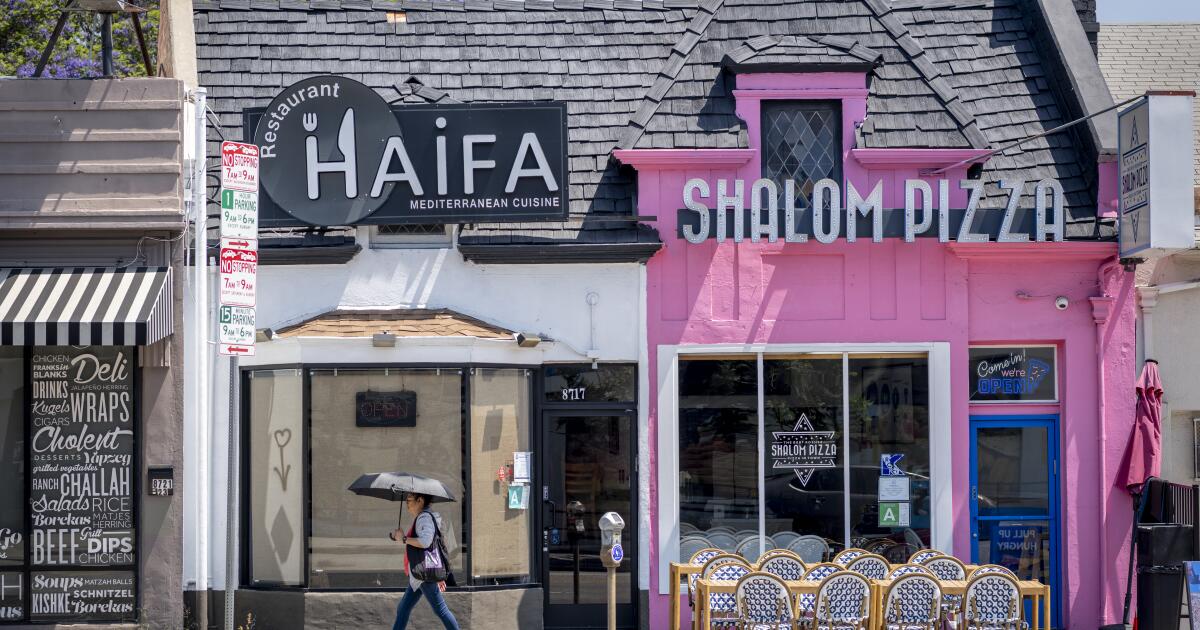
The morning after a man hurled Molotov cocktails at a crowd of Jewish Americans in Boulder, Colo., Rabbi Noah Farkas celebrated the first day of Shavuot in the usual way: He read the Torah about the giving of the Ten Commandments to the Israelites at Mt. Sinai.
But Farkas, the president of the Jewish Federation of Greater Los Angeles, said what was supposed to be a holiday celebrating the establishment of law and order was marred by the weekend violence.
“The community is terrified,” Farkas said outside Temple Ramat Zion in Northridge.
“It’s remarkable to me that those who want to assault us are coming up with ever new and novel ways to do harm to us and to try to kill us.”
Twelve people between the ages of 52 and 88 were burned in the Colorado attack. A man — identified by law enforcement as Mohamed Sabry Soliman, 45, an Egyptian citizen who had overstayed his tourist visa — used a “makeshift flamethrower” to attack demonstrators marching peacefully in a weekly event supporting Israeli hostages in Gaza.
According to an FBI affidavit, the attacker yelled “Free Palestine!” — the same cry uttered by the suspect in a May 21 incident in which two Israeli Embassy aides were shot and killed outside the Capital Jewish Museum in Washington.
The back-to-back attacks have unnerved many Jewish Americans — particularly as they come just a month after a man set fire to the residence of Pennsylvania Gov. Josh Shapiro, who is Jewish. A suspect later said the fire was a response to Shapiro’s stance on Israel’s war in Gaza.
“We are in a completely new era for antisemitic violence in the United States,” said Brian Levin, the founder of the Center for the Study of Hate and Extremism and professor emeritus at Cal State San Bernardino. “We are now at a point of extraordinary national security concern with respect to protecting Jewish communities across the U.S. and worldwide.”
Anti-Jewish hate crimes, Levin said, hit record levels nationally in 2023 and 2024. In 2023, the last year that the FBI has available data, anti-Jewish hate crimes rose 63% to a record 1,832 incidents, Levin said. Last year, religious hate crimes were up significantly in major U.S. cities, Levin said, with anti-Muslim hate crimes rising 18%, and anti-Jewish ones rising for the fourth consecutive year, up 12% to a new record.
“Over the last decade, we’re seeing more mass casualty attacks, and they’re becoming more frequent and more fatal,” Levin said. “It used to be that anti-Jewish hate crimes, unlike a lot of other hate crimes, were much more tied to property damage and intimidation. Now we’re seeing just a slew of high-intensity types of attacks.”
The attacks in the U.S. come as United Nations officials and aid groups warn that the situation in Gaza has become increasingly dire, with Palestinians in Gaza on the brink of famine as Israel continues its 19-month military offensive against Hamas militants.
Two weeks ago, Israel agreed to pause a nearly three-month blockade and allow a “basic quantity” of food into Gaza to avert a “hunger crisis” and prevent mass starvation.
On Sunday, Gaza health officials and witnesses said more than 30 people were reported killed and 170 wounded as Palestinians flocked to an aid distribution center in southern Gaza, hoping to obtain food. The circumstances were disputed. Witnesses said Israeli forces fired on crowds about 1,000 yards from an aid site run by a U.S.-backed foundation, but Israel’s military denied its forces fired at civilians.
Levin attributed the rise in violence in the U.S. to a number of factors, including the Israel-Hamas war and the “increasingly unregulated freewheeling online environment.” Horrifying imagery coming out of the Middle East, Levin said, was amplified on social media by those who ascribed responsibility to anyone who believes Israel has a right to exist, or is Jewish, or wanted hostages to be released.
“What happens is angry and unstable people not only find a home for their aggression, but a honed amplification and direction to it that is polished by this cesspool of conspiracism and antisemitism,” Levin said.
In Los Angeles’ Pico-Robertson neighborhood, the mood was subdued Monday as a smattering of Orthodox families made their way to services to observe Shavuot. Many kosher establishments were closed and armed guards flanked entrances to larger Jewish centers and temples.
On Pico Boulevard, a 25-year-old Orthodox man carried a prayer shawl close to his chest as he headed to a service at a temple just before noon. He had slept just a few hours after staying up all night reading the Torah.
Despite the news of the attack in Colorado, the man — who identified himself as Laser — carried an easy smile.
“It’s a joyous holiday,” he said.
The Colorado attack was horrifying, he said, but it was not anything new and paled in comparison with the feeling that descended on the Jewish community in Los Angeles and across the world after Oct. 7.
“It’s never good to see or read about those types of things,” he said. “We just pray for the ultimate redemption, for peace here, peace abroad, peace around the world.”
At Tiferet Teman Synagogue, a man standing at the door repeatedly apologized to a Times reporter, saying that he would not discuss the event that happened in Colorado.
“I’m not going to invite politics into the community,” he said. “God bless you all.”
Others observing the holiday declined to have their photo taken and many of the businesses were closed. A quiet buzz pervaded Pico Boulevard as Orthodox members of the community made their way to services, many of them trying their best to avoid eye contact.
A Persian Jewish man from Iran said he has always been hesitant about religious violence. The man, who declined to give his name, was on his way to service.
“You always have to keep your eyes open,” he said. “No matter where you are in the world.”
Noa Tishby, an Israeli-born author who lives in L.A. and is Israel’s former special envoy for combating antisemitism and delegitimization, said that many Jewish people were afraid to congregate.
“The Jewish community feels under siege,” she said. “People are removing their mezuzahs … They’re removing Jewish insignia from themselves, removing their Star of David or hiding it. They’re afraid to go to Jewish events.”
Tishby said that the Colorado attacker appeared to be motivated by antisemitism: the views and beliefs of the victims didn’t matter.
“What if that particular woman that man tried to burn alive yesterday, what if she was a Bibi hater, would that appease him?” Tishby asked, using a nickname for Israeli Prime Minister Benjamin Netanyahu. “The answer is no. He doesn’t know what her political opinions are in America or in Israel. He just burned her because she was Jewish.”
Antisemitism, Tishby argued, was a shape-shifting conspiracy theory that had evolved into anti-Zionism.
“What happened is that the word Zionist is now a code name for Jew,” she said. “We have been warning for decades that anti-Zionism is the new face of antisemitism…. They’re taking all the hate, everything that’s wrong in the world right now, and they’re pinning it on the Jewish state.”
L.A. Mayor Karen Bass was quick to denounce the attack Sunday as “an atrocious affront to the very fabric of our society and our beliefs here in Los Angeles.” In a statement, she said she would call an emergency meeting at City Hall addressing safety and security across the city immediately after Shavuot.
“LAPD is conducting extra patrols at houses of worship and community centers throughout LA. Anti-Semitism will not be tolerated in this city,” she said.
After speaking to Bass on Sunday, Farkas said that he planned to meet in person with the mayor on Wednesday after the Shavuot holiday to have a “real, frank conversation” about antisemitism.
“There is a cycle that we go through where our hearts are shattered and yet we have to keep enduring,” Farkas said. “And it makes us call into question the commitment of our wider community and our government to the safety of the Jewish community.”
The Associated Press contributed to this report.



Politics
Iran fires missiles at US bases across Middle East after American strikes on nuclear, IRGC sites

NEWYou can now listen to Fox News articles!
Iran launched missile and drone strikes targeting U.S. military facilities in multiple Middle Eastern countries Friday, retaliating after coordinated U.S.–Israeli strikes on Iranian military and nuclear-linked sites.
Explosions were reported in or near areas hosting American forces in Bahrain, Qatar, the United Arab Emirates, Kuwait and Jordan, according to regional officials and state media accounts. Several of those governments said their air defense systems intercepted incoming projectiles.
It remains unclear whether any U.S. service members were killed or injured, and the extent of potential damage to American facilities has not yet been confirmed. U.S. officials have not publicly released casualty figures or formal damage assessments.
Iran’s Islamic Revolutionary Guard Corps (IRGC) described the operation as a direct response to what Tehran called “aggression” against Iranian territory earlier in the day. Iranian officials claimed they targeted U.S. military infrastructure and command facilities.
Explosions were reported in or near areas hosting American forces in Bahrain, pictured above. (Photo by Petty Officer 2nd Class Adelola Tinubu/U.S. Naval Forces Central Command/U.S. 5th Fleet )
The United States military earlier carried out strikes against what officials described as high-value Iranian targets, including IRGC facilities, naval assets and underground sites believed to be associated with Iran’s nuclear program. One U.S. official told Fox News that American forces had “suppressed” Iranian air defenses in the initial wave of strikes.
Tomahawk cruise missiles were used in the opening phase of the U.S. operation, according to a U.S. official. The campaign was described as a multi-geographic operation designed to overwhelm Iran’s defensive capabilities and could continue for multiple days. Officials also indicated the U.S. employed one-way attack drones in combat for the first time.
IF KHAMENEI FALLS, WHO TAKES IRAN? STRIKES WILL EXPOSE POWER VACUUM — AND THE IRGC’S GRIP
Smoke rises after reported Iranian missile attacks, following strikes by the United States and Israel against Iran, in Manama, Bahrain, Feb. 28, 2026. (Reuters)
Iran’s retaliatory barrage targeted countries that host American forces, including Bahrain — home to the U.S. Navy’s Fifth Fleet — as well as Qatar’s Al Udeid Air Base and the UAE’s Al Dhafra Air Base. Authorities in those nations reported intercepting many of the incoming missiles. At least one civilian was killed in the UAE by falling debris, according to local authorities.
Iranian officials characterized their response as proportionate and warned of additional action if strikes continue. A senior U.S. official described the Iranian retaliation as “ineffective,” though independent assessments of the overall impact are still developing.
Smoke rises over the city after the Israeli army launched a second wave of airstrikes on Iran in Tehran on Feb. 28, 2026. (Fatemeh Bahrami/Anadolu via Getty Images)
CLICK HERE TO DOWNLOAD THE FOX NEWS APP
Regional governments condemned the strikes on their territory as violations of sovereignty, raising the risk that additional countries could become directly involved if escalation continues.
The situation remains fluid, with military and diplomatic channels active across the region. Pentagon officials are expected to provide further updates as damage assessments and casualty reviews are completed.
Fox News’ Jennifer Griffin contributed to this report.
Related Article

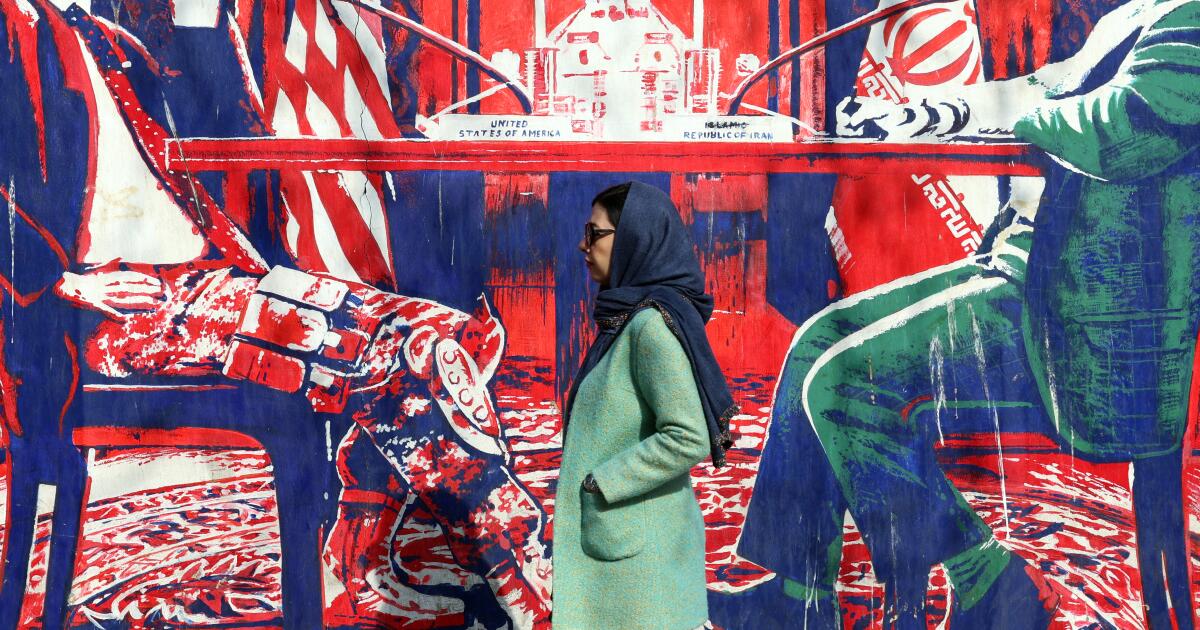
Embassy staffers and dependents evacuating, airlines suspending service, eyes in Iran warily turning skyward for signs of an attack.
The prospects of a showdown between the U.S. and Iran loom ever higher, as massive American naval and air power lies in wait off Iran’s shores and land borders.
Yet little of that urgency is felt in Iran’s government. Rather than quickly acquiescing to President Trump’s demands, Iranian diplomats persist in the kind of torturously slow diplomatic dance that marked previous discussions with the U.S., a pace that prompted Trump to declare on Friday that the Iranians were not negotiating in “good faith.”
But For Iran’s leadership, Iranian experts say, concessions of the sort Trump are asking for about nuclear power and the country’s role in the Middle East undermine the very ethos of the Islamic Republic and the decades-old project it has created.
“As an Islamic theocracy, Iran serves as a role model for the Islamic world. And as a role model, we cannot capitulate,” said Hamid Reza Taraghi, who heads international affairs for Iran’s Islamic Coalition Party, or Hezb-e Motalefeh Eslami.
Besides, he added, “militarily we are strong enough to fight back and make any enemy regret attacking us.”
Even as another round of negotiations ended with no resolution this week, the U.S. has completed a buildup involving more than 150 aircraft into the region, along with roughly a third of all active U.S. ships.
Observers say those forces remain insufficient for anything beyond a short campaign of a few weeks or a high-intensity kinetic strike.
Iran would be sure to retaliate, perhaps against an aircraft carrier or the many U.S. military bases arrayed in the region. Though such an attack is unlikely to destroy its target, it could damage or at least disrupt operations, demonstrating that “American power is not untouchable,” said Hooshang Talé, a former Iranian parliamentarian.
Tehran could also mobilize paramilitary groups it cultivated in the region, including Iraqi militias and Yemen’s Houthis, Talé added. Other U.S. rivals, such as Russia and China, may seize the opportunity to launch their own campaigns elsewhere in the world while the U.S. remains preoccupied in the Middle East, he said.
“From this perspective, Iran would not be acting entirely alone,” Tale said. “Indirect alignment among U.S. adversaries — even without a formal alliance — would create a cascading effect.”
We’re not exactly happy with the way they’re negotiating and, again, they cannot have nuclear weapons
— President Trump
The U.S. demands Iran give up all nuclear enrichment and relinquish existing stockpiles of enriched uranium so as to stop any path to developing a bomb. Iran has repeatedly stated it does not want to build a nuclear weapon and that nuclear enrichment would be for exclusively peaceful purposes.
The Trump administration has also talked about curtailing Iran’s ballistic missile program and its support to proxy groups, such as Hezbollah, in the region, though those have not been consistent demands. Tehran insists the talks should be limited to the nuclear issue.
After indirect negotiations on Thursday, Oman’s Foreign Minister Badr al-Busaidi — the mediator for the talks in Geneva — lauded what he said was “significant progress.” Iranian Foreign Ministry spokesman Esmail Baghaei said there had been “constructive proposals.”
Trump, however, struck a frustrated tone when speaking to reporters on Friday.
“We’re not exactly happy with the way they’re negotiating and, again, they cannot have nuclear weapons,” he said.
Trump also downplayed concerns that an attack could escalate into a longer conflict.
This frame grab from footage circulating on social media shows protesters dancing and cheering around a bonfire during an anti-government protest in Tehran, Iran, on Jan. 9.
(Uncredited / Associated Press)
“I guess you could say there’s always a risk. You know, when there’s war, there’s a risk in anything, both good and bad,” Trump said.
Three days earlier, in his State of the Union address Tuesday, said, “My preference is to solve this problem through diplomacy. But one thing is certain, I will never allow the world’s number one sponsor of terror, which they are by far, to have a nuclear weapon — can’t let that happen.”
There are other signs an attack could be imminent.
On Friday, the U.S. Embassy in Israel allowed staff to leave the country if they wished. That followed an earlier move this week to evacuate dependents in the embassy in Lebanon. Other countries have followed suit, including the U.K, which pulled its embassy staff in Tehran. Meanwhile, several airlines have suspended service to Israel and Iran.
A U.S. military campaign would come at a sensitive time for Iran’s leadership.
The country’s armed forces are still recovering from the June war with Israel and the U.S, which left more than 1,200 people dead and more than 6,000 injured in Iran. In Israel, 28 people were killed and dozens injured.
Unrest in January — when security forces killed anywhere from 3,000 to 30,000 protesters (estimates range wildly) — means the government has no shortage of domestic enemies. Meanwhile, long-term sanctions have hobbled Iran’s economy and left most Iranians desperately poor.
Despite those vulnerabilities, observers say the U.S. buildup is likely to make Iran dig in its heels, especially because it would not want to set the precedent of giving up positions at the barrel of a U.S. gun.
Other U.S. demands would constitute red lines. Its missile arsenal, for example, counts as its main counter to the U.S. and Israel, said Rose Kelanic, Director of the Middle East Program at the Defense Priorities think tank.
“Iran’s deterrence policy is defense by attrition. They act like a porcupine so the bear will drop them… The missiles are the quills,” she said, adding that the strategy means Iran cannot fully defend against the U.S., but could inflict pain.
At the same time, although mechanisms to monitor nuclear enrichment exist, reining in Tehran’s support for proxy groups would be a much harder matter to verify.
But the larger issue is that Iran doesn’t trust Trump to follow through on whatever the negotiations reach.
After all, it was Trump who withdrew from an Obama-era deal designed to curb Iran’s nuclear ambitions, despite widespread consensus Iran was in compliance.
Trump and numerous other critics complained Iran was not constrained in its other “malign activities,” such as support for militant groups in the Middle East and development of ballistic missiles. The Trump administration embarked on a policy of “maximum pressure” hoping to bring Iran to its knees, but it was met with what Iran watchers called maximum resistance.
In June, he joined Israel in attacking Iran’s nuclear facilities, a move that didn’t result in the Islamic Republic returning to negotiations and accepting Trump’s terms. And he has waxed wistfully about regime change.
“Trump has worked very hard to make U.S. threats credible by amassing this huge military force offshore, and they’re extremely credible at this point,” Kelanic said.
“But he also has to make his assurances credible that if Iran agrees to U.S. demands, that the U.S. won’t attack Iran anyway.”
Talé, the former parliamentarian, put it differently.
“If Iranian diplomats demonstrate flexibility, Trump will be more emboldened,” he said. “That’s why Iran, as a sovereign nation, must not capitulate to any foreign power, including America.”

new video loaded: Bill Clinton Says He ‘Did Nothing Wrong’ in House Epstein Inquiry
transcript
transcript
Bill Clinton Says He ‘Did Nothing Wrong’ in House Epstein Inquiry
Former President Bill Clinton told members of the House Oversight Committee in a closed-door deposition that he “saw nothing” and had done nothing wrong when he associated with Jeffrey Epstein decades ago.
-
“Cause we don’t know when the video will be out. I don’t know when the transcript will be out. We’ve asked that they be out as quickly as possible.” “I don’t like seeing him deposed, but they certainly went after me a lot more than that.” “Republicans have now set a new precedent, which is to bring in presidents and former presidents to testify. So we’re once again going to make that call that we did yesterday. We are now asking and demanding that President Trump officially come in and testify in front of the Oversight Committee.” “Ranking Member Garcia asked President Clinton, quote, ‘Should President Trump be called to answer questions from this committee?’ And President Clinton said, that’s for you to decide. And the president went on to say that the President Trump has never said anything to me to make me think he was involved. “The way Chairman Comer described it, I don’t think is a complete, accurate description of what actually was said. So let’s release the full transcript.”

By Jackeline Luna
February 27, 2026

Wyoming State Parks surpasses five million visitors in 2025

Bitcoin drops to $63,000 as U.S. and Israel launch strikes on Iran

Lawmakers target ‘free money’ home equity finance model

How much exercise is enough? A local doctor says you only need 15 minutes a day – WTOP News

Movie review: Ballet-themed erotic drama ‘Dreams’ dissipates in finale

Florida High School Football Rankings: Top 25 teams – Oct. 21

Cleary's 21 help Le Moyne down Central Connecticut State 69-64 in OT

How old is Bo Nix? What to know about Oregon quarterback ahead of 2024 NFL Draft

99th annual Pony Swim held in Virginia

Indiana Members Credit Union announced as new anchor tenant at Bottleworks District

2 Survivors Describe the Terror and Tragedy of the Tahoe Avalanche

Iran fires missiles at US bases across Middle East after American strikes on nuclear, IRGC sites

Israel strikes two schools in Iran, killing more than 50 people

Anthropic CEO says he’s sticking to AI “red lines” despite clash with Pentagon

ICE blasts Washington mayor over directive restricting immigration enforcement
-

 World3 days ago
Exclusive: DeepSeek withholds latest AI model from US chipmakers including Nvidia, sources say
-

 Massachusetts3 days ago
Mother and daughter injured in Taunton house explosion
-

 Montana1 week ago
2026 MHSA Montana Wrestling State Championship Brackets And Results – FloWrestling
-

 Louisiana5 days ago
Wildfire near Gum Swamp Road in Livingston Parish now under control; more than 200 acres burned
-

 Denver, CO3 days ago
10 acres charred, 5 injured in Thornton grass fire, evacuation orders lifted
-

 Technology1 week ago
YouTube TV billing scam emails are hitting inboxes
-

 Technology1 week ago
Stellantis is in a crisis of its own making
-

 Politics1 week ago
OpenAI didn’t contact police despite employees flagging mass shooter’s concerning chatbot interactions: REPORT