Politics
In this red California county, Biden beat Trump by just 14 votes. What happens next?

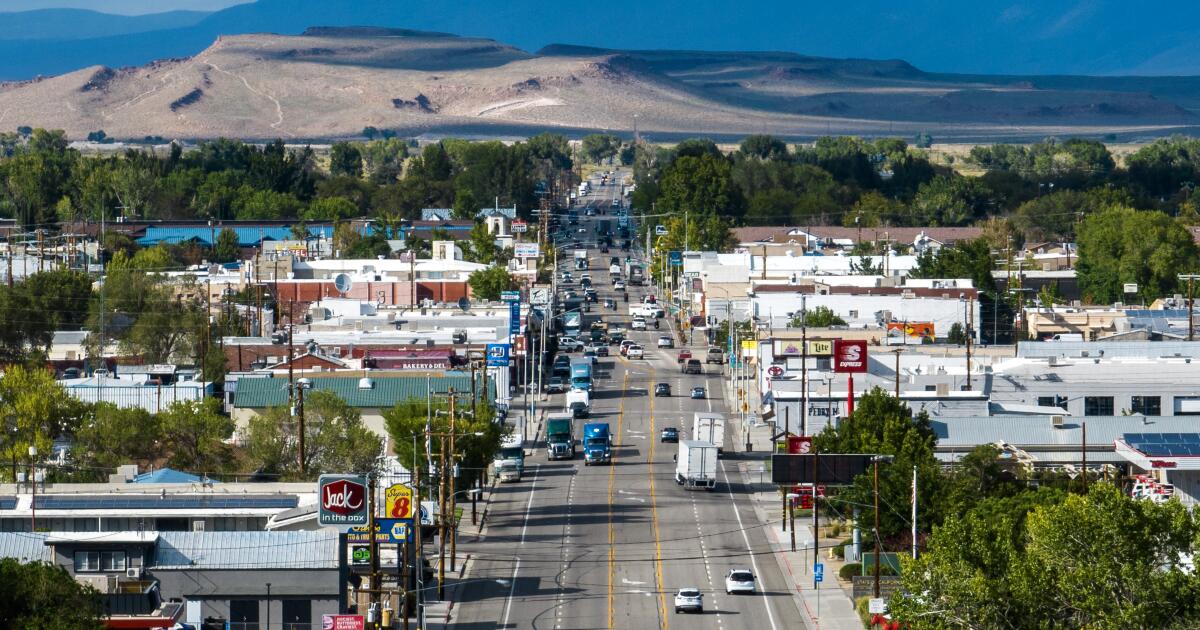
— Rural Inyo County was one of two California counties to vote for Biden in 2020 after supporting Trump in 2016.
— The red-to-blue flip came after an influx of new residents, who skewed Democrat, from other counties.
— Progressives in the small town of Bishop have become more visible in the Trump era.
The last time rural Inyo County backed a Democrat for president was in 1964, when voters chose Lyndon B. Johnson.
But in 2020, Joe Biden beat Donald Trump. By 14 votes.
A sign supporting Vice President Kamala Harris in Bishop.
Considering Trump carried Inyo County by 13 percentage points four years earlier, it was quietly one of the most dramatic red-to-blue flips in the country.
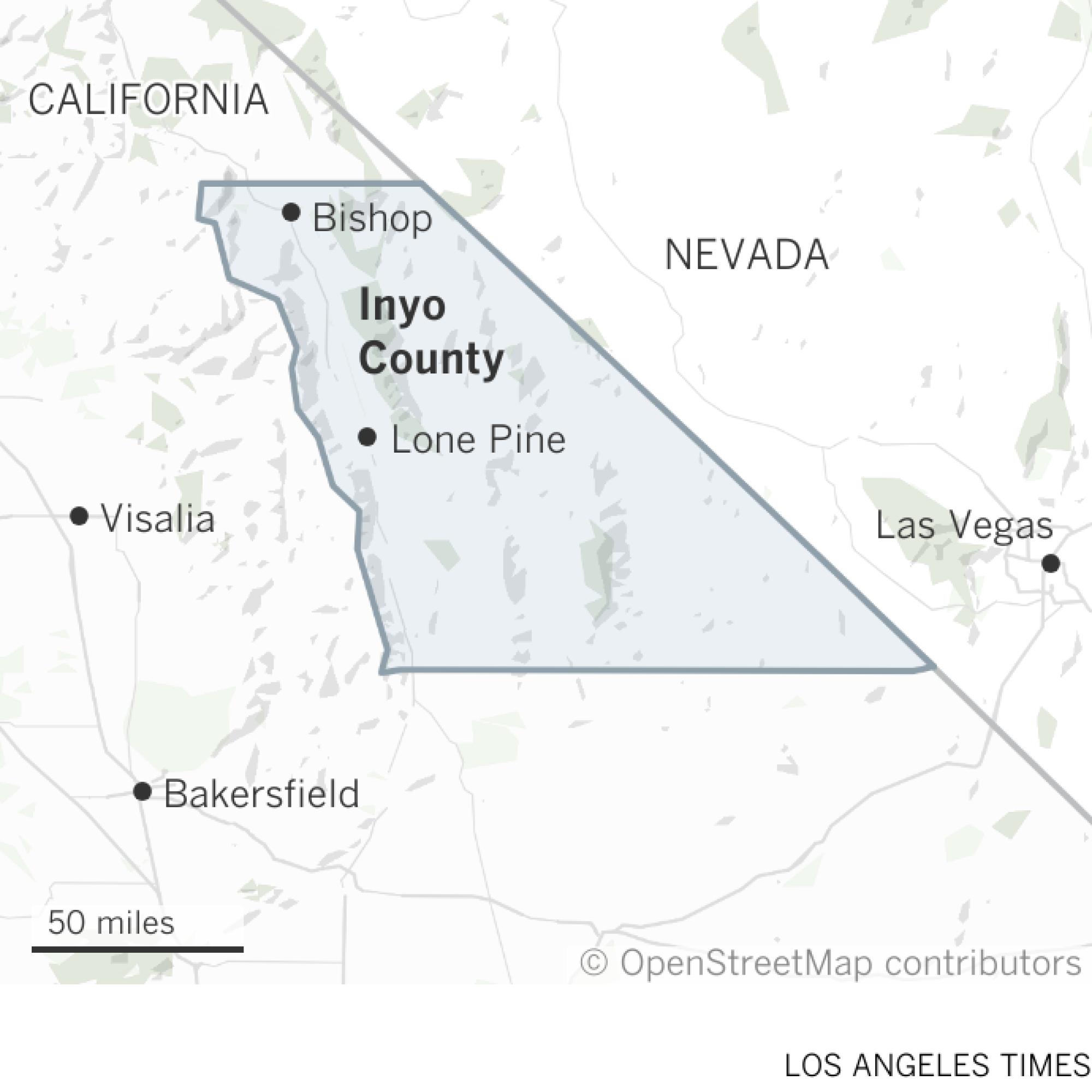
While California almost certainly will vote for Vice President Kamala Harris over Trump, once deep-red Inyo County — home to some 19,000 people between the Eastern Sierra and Nevada state line — is a tossup.
Unlike other rural places that overwhelmingly vote Republican, Inyo County “is more of an outlier,” with its mountain and desert towns appealing to “rednecks and hippies,” gun-toting hunters and backpacking environmentalists, said Kim Nalder, director of the Project for an Informed Electorate at Sacramento State.
“Our politics are so divided right now, but I have a little glimmer of hope that exposure to each other as humans will break through that at some point,” said Nalder, a former wildland firefighter who has spent much time in Inyo County. “I think the best opportunity for that kind of future healing is in small towns where there’s no way to avoid people from the other side.”
Alas, Inyo County’s purpling has been uncomfortable for the politically-inclined, who have grown more vocal, and more suspicious of their neighbors, whether they are ultra-MAGA or never-Trump.
And just about everybody blames the changes on newcomers — remote workers and “the invasion of L.A. Sprinter vans,” as one Democrat put it, who during the pandemic fled their expensive, locked-down cities for the Eastern Sierra, and never left.
(The city folks left so much trash and feces in the forest that locals distributed stickers promoting proper camping etiquette, including one with a smiling piece of poop that reads: “Pack it out! We care where you go!”)
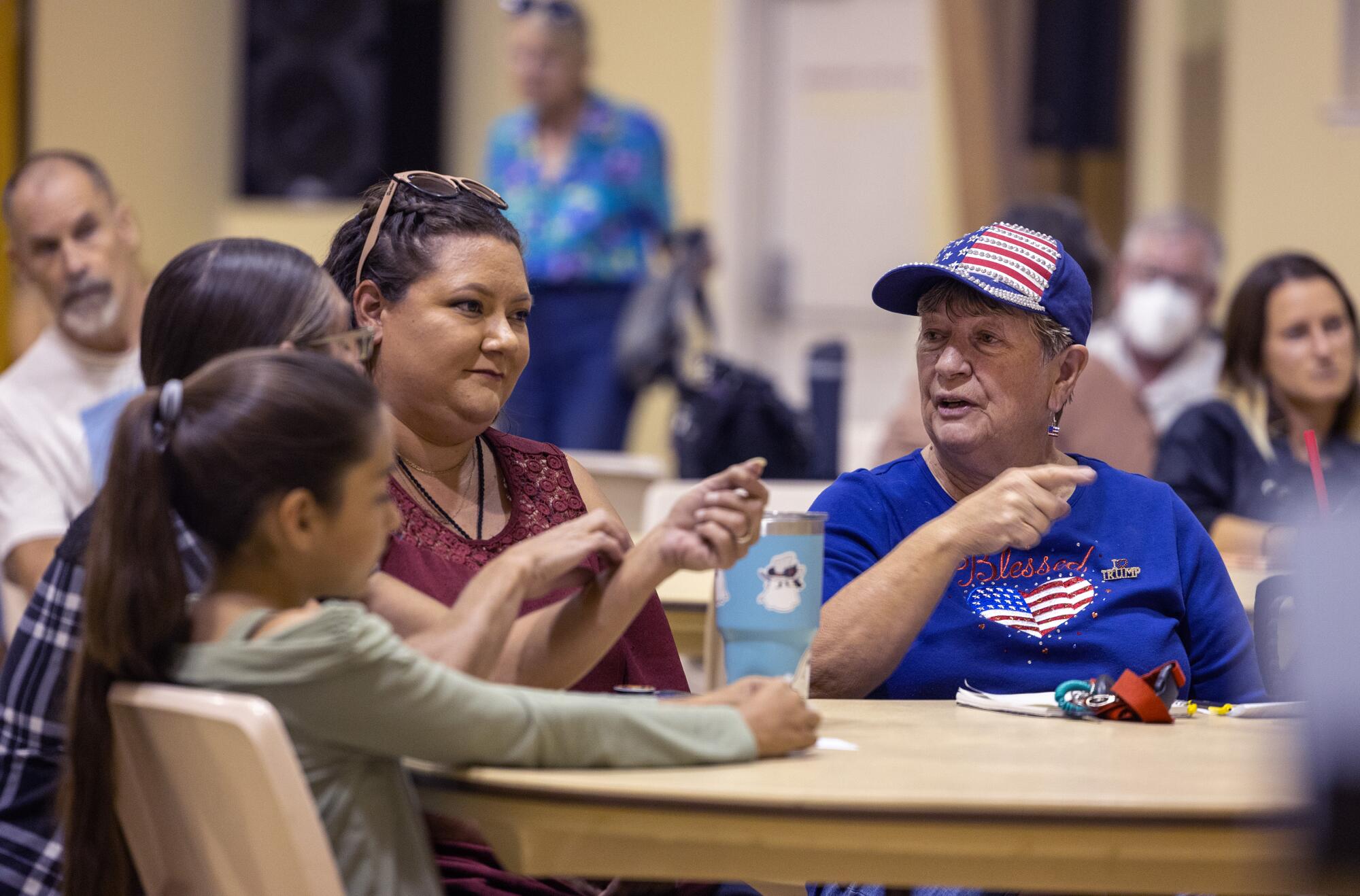
Lynette McIntosh, right, talks with others attending a Bishop City Council candidate forum on Oct. 2, 2024.
Lynette McIntosh, who describes herself as “very, very MAGA” and has lived for nearly five decades in Bishop — the county’s biggest town, population 3,800 — has a dark view of the influx.
She believes there has been a coordinated effort by well-connected progressive groups like the Sierra Club to infiltrate and divide small, conservative communities all over the country, to take over school boards and city councils, and to turn residents against Trump.
In another sign of differing views here, McIntosh charged that a new public artwork depicted the horned demonic deity Baphomet. Local artists say it is just a fanciful mashup of animal images, including a bear and bighorn sheep — with wings in the rainbow colors of the Pride flag.

A mural at C5 Studios Community Arts Center in Bishop, Calif., proved controversial.
(Brian van der Brug / Los Angeles Times)
“We’re a real conservative community, but there’s this whole barrage of left wingers that have come in — I mean, radicals. Radicals,” said McIntosh, a 73-year-old Presbyterian church elder who favors bedazzled, star-spangled ball caps and drives around with a “Trumplican” bumper sticker.
McIntosh, who happily credits Trump for the overturning of Roe v. Wade, says Trump is “called by God” to lead the country.
Fran Hunt, a fellow Bishop resident, also mentioned God when asked how she felt about Trump. “Oh, God,” she said, putting her face in her hands and shaking her head.
Like McIntosh, Hunt, 65, is a grassroots political activist who still attends public meetings and protests in a face mask to guard against COVID-19, drawing eye rolls from McIntosh, who protested mask and vaccine mandates while Trump was president.
Hunt is a proud Democrat who is, yes, retired from the Sierra Club. She helped organize Inyo350, a chapter of the international activist group 350.org, which focuses on environmental and social justice issues.
Hunt and her wife — the daughter of a tungsten mine worker who grew up in Bishop — moved here from Washington, D.C., in 2014 to be near family. She is horrified by the possibility of another Trump presidency.
“He’s threatening a dictatorship,” she said. “He’s threatening to prosecute his opponents. Mass deportations. He’s threatening chaos in a country that is full of guns. Where does my worry list stop?”
Hunt is heartened by Inyo County’s recent liberal tilt. But what’s sad, she said, is that “we may be more blue — or more purple — but we are more divided.”
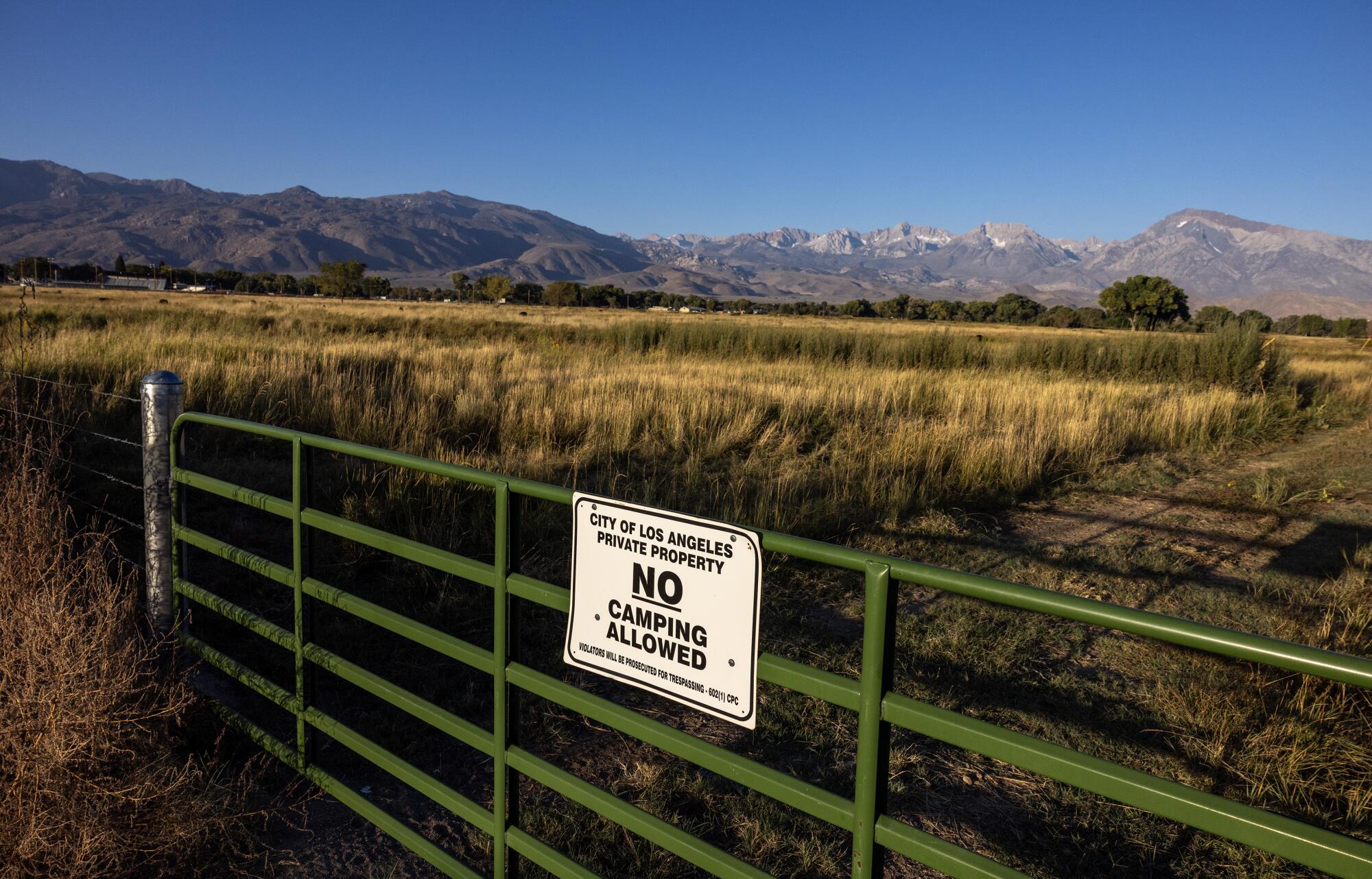
The Los Angeles Department of Water and Power owns huge swaths of land in the Owens Valley and leases some of it to ranchers and businesses.
The politics of Inyo County, a place roughly the size of Massachusetts, have long been tinted red by residents’ distrust and resentment of liberal big cities like Los Angeles, whose Department of Water and Power owns much of the county’s land.
This is a place where people still brag about then-Gov. Ronald Reagan being grand marshal of the Mule Days parade in 1974.
When Trump ran in 2016, just over 41% of registered voters in Inyo County were Republicans — a 10-point advantage over Democrats.
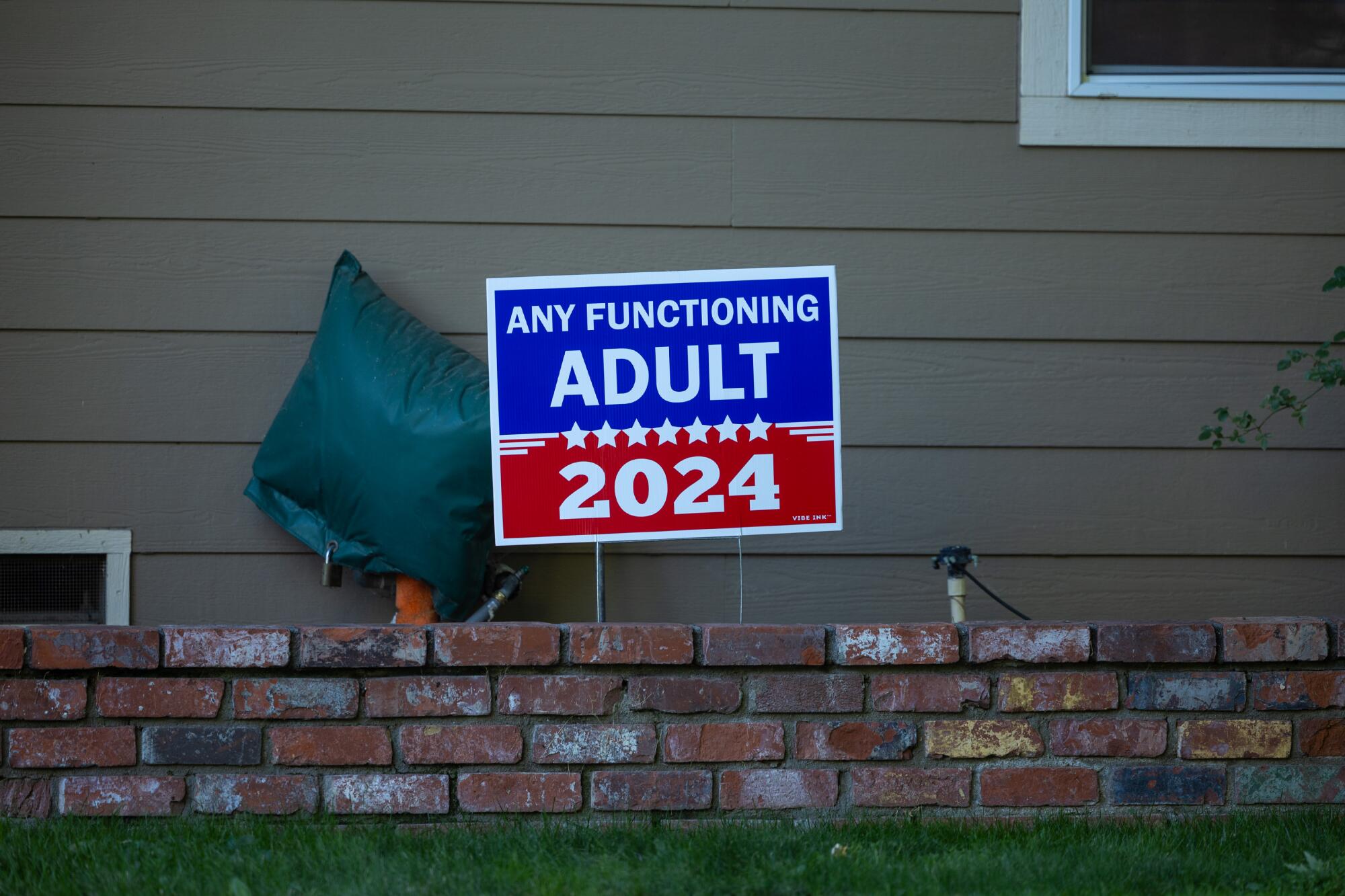
A yard sign at a home on Elm Street in Bishop, Calif.
This year? Republicans hold a 4% registration advantage.
Newcomers have almost certainly had an impact.
In 2020, when the county went purple, 10% of registered voters had moved to Inyo County from another county in California since 2016, according to an analysis of voter registration data for the Times by Eric McGhee, a senior fellow at the Public Policy Institute of California.
Statewide, just 5% of registered voters in 2020 had moved from a different county since 2016.
In Inyo County, about 34% of the newcomers came from Los Angeles or Orange counties, according to the data. Eleven percent came from the Bay Area. Most were Democrats and independents.
The only other California county to flip blue after voting for Trump in 2016 was mostly-rural Butte County — which saw massive displacement after the deadly Camp fire destroyed the town of Paradise in 2018.
David Blacker, chairman of the Inyo County Republican Central Committee, said that, in 2020, local conservatives “got lulled into a false sense of security” and were surprised by the political flip.
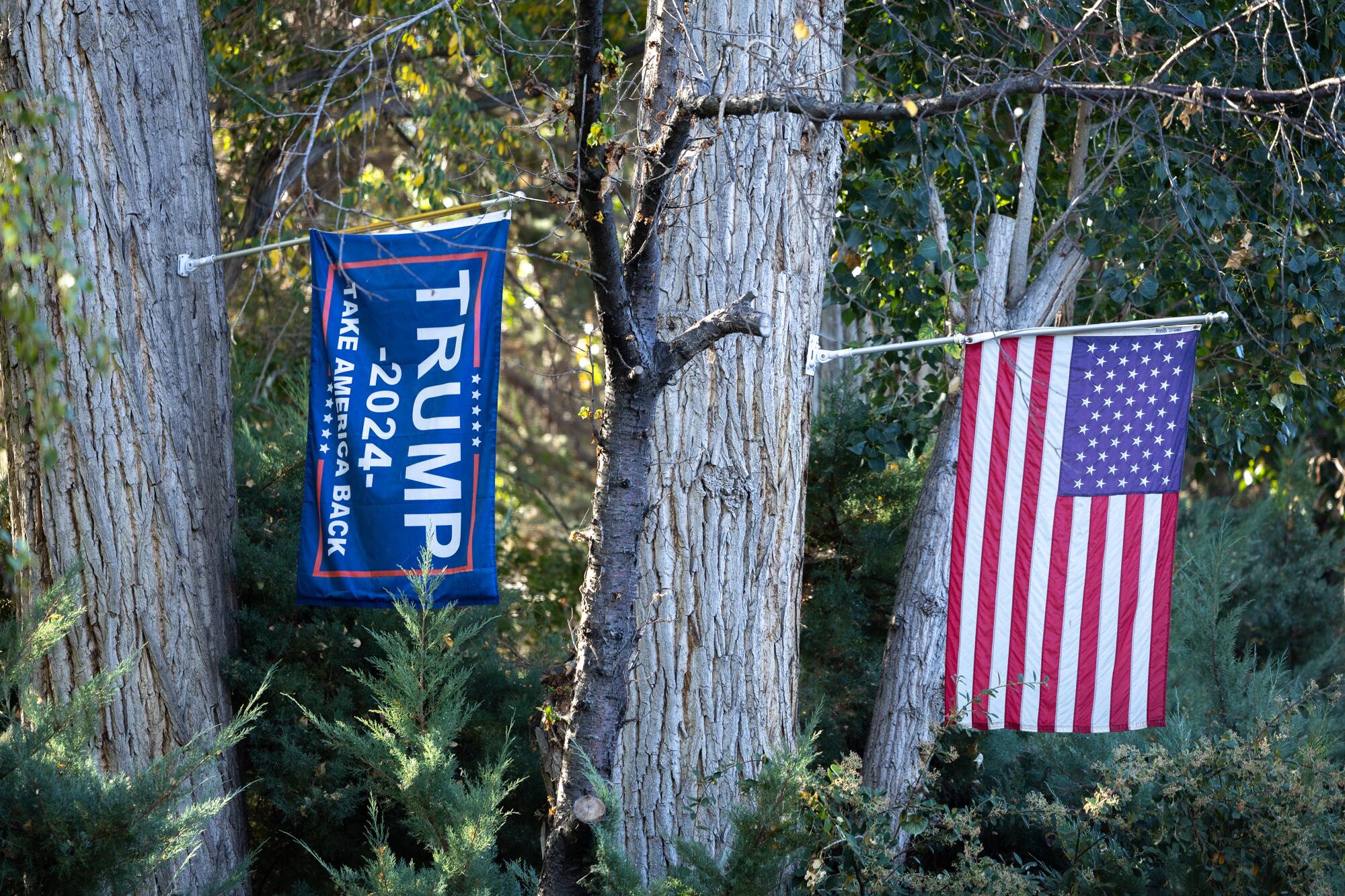
A pro-Trump flag hangs beside an American flag in Bishop, Calif., this month.
He noted that the GOP still wins down-ballot races here, and that in the 2022 gubernatorial race, Inyo County voters backed Republican state Sen. Brian Dahle over Democratic Gov. Gavin Newsom.
Blacker, who lives and works in Death Valley National Park, said the economy is voters’ top concern in Inyo County, which relies upon tourists’ financial ability to vacation in its public lands. Biden-era inflation, he said, has been brutal.
“All the people I’m talking to now, they’re saying they’re they’d rather have mean tweets and a vibrant economy than continue the way we’re going,” Blacker said.
Trump appeals here, he said, because Democrats in Washington and Sacramento “don’t understand rural communities” and prioritize things like electric vehicles — which do not work well in far-flung places with few charging stations. (He said he has to drive at least an hour to the grocery store — and across the Nevada state line to buy cheaper gas.
Emily Lanphear, vice chair of the local Republican Central Committee, ran a booth last month at the county fairground — complete with a giant photo of a bloodied Trump raising his fist after a July assassination attempt. She said she was pleasantly surprised by how many kids and teenagers came up to ask questions and pose with a cardboard cutout of the former president.
“They think he’s such a badass,” she said.
Lanphear, a 21-year resident of the Owens Valley and the wife of a law enforcement officer, said many people are nervous to display Trump signs and flags because of the county’s growing political divide.
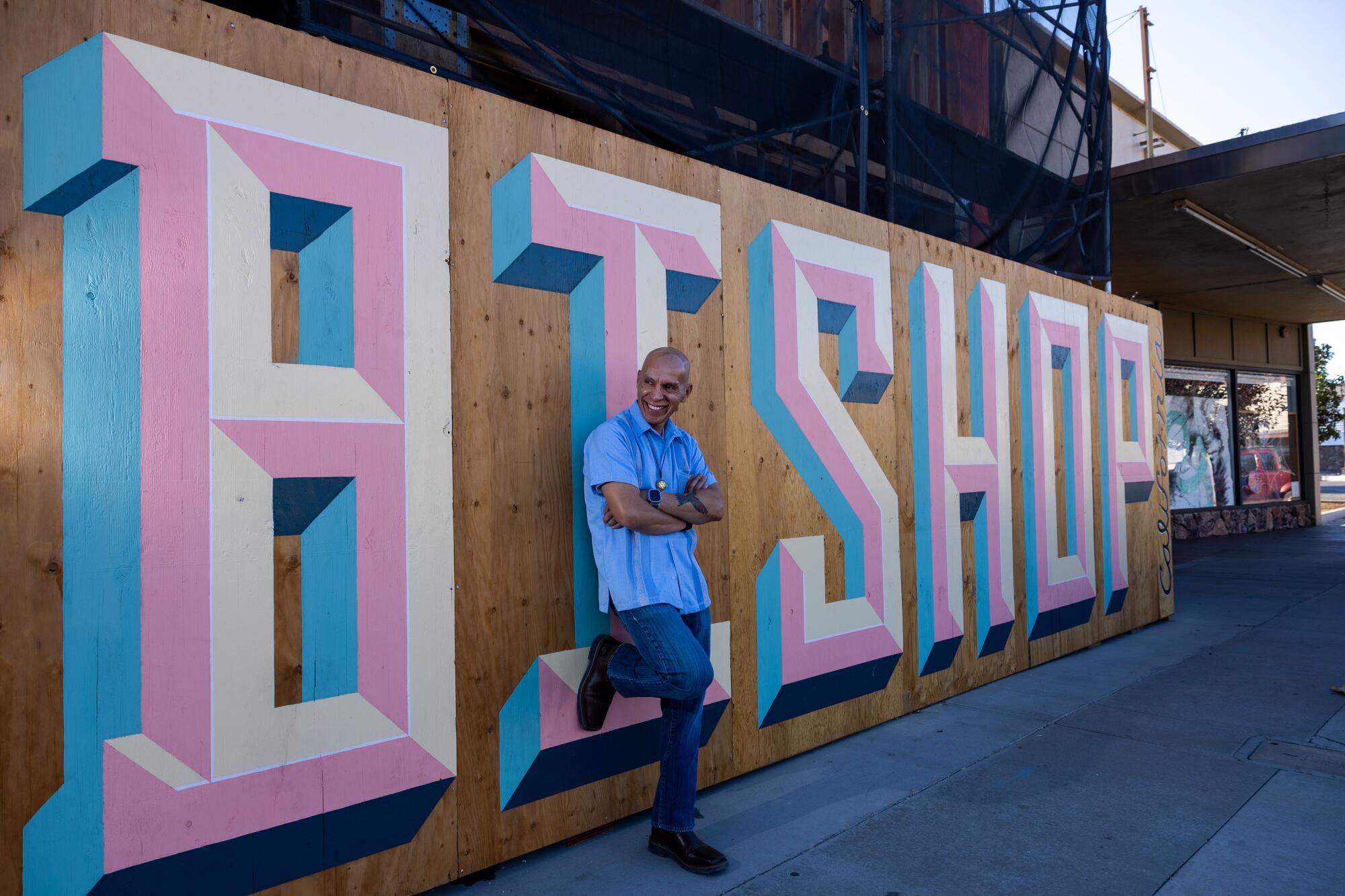
Bishop Mayor Jose Garcia poses by a mural on Main Street. He said the small city has too many important issues, like housing, to focus on and should not be divided by national politics.
After Trump’s 2016 election, marches were organized for liberal causes.
“All of a sudden we see women’s rights protests, anti-Trump protests, pro-immigrant open-border protests,” she said, adding, “Locals are like, ‘What is going on?’ That creates division.’”
Even before the pandemic-era newbies moved in, local progressives aghast at Trump’s 2016 victory were becoming more visible. They restarted what had been an inactive Inyo County Democratic Central Committee. They organized a women’s march and Black Lives Matter protests in Bishop.
In 2018, progressives helped elect Stephen Muchovej, the first out gay member of the Bishop City Council, who said he got into politics because he believed Trump was stoking anti-LGBTQ+ sentiment.
Muchovej, a 44-year-old Brazilian immigrant and astrophysicist, moved here from New York City around 2007 to work at the Owens Valley Radio Observatory near Big Pine.
Around the time Trump was elected, Muchovej and his husband were walking their dog — a black lab nicknamed Prince Valium “because he was so chill” — through a public field when, he said, members of a nearby church called the cops on them, alleging that their dog was running amok and scaring children.
There were no kids around at the time, said Muchovej, who believes the real issue was “walking while gay.”
In his first City Council race, Muchovej defeated the incumbent, a former Bishop police chief. He ran for reelection in 2022 unopposed.
“A lot of people — closeted liberals — are realizing that they’re not in the minority, and that conservatives nationwide have been skewing so far to the right that [liberals are] not willing to sit in the shadows anymore,” he said.
Indeed, in 2022, the region’s increasingly-visible local LGBTQ+ community organized its first-ever Eastern Sierra Pride, complete with an all-ages drag show — over the objections of religious conservatives who vowed to “reclaim the rainbow.”

Deena Davenport-Conway at her Luxe Salon on Main Street in Bishop.
One of the event’s founders was Deena Davenport-Conway, who married her wife at San Francisco City Hall in 2013, the year the U.S. Supreme Court cleared the way for same-sex marriages to resume in California — after Harris, as state attorney general, refused to defend Proposition 8, the state ballot initiative that banned same-sex marriage.
Davenport-Conway, 58, fears Trump will roll back hard-won rights for women and LGBTQ+ people.
But from her beauty salon on Bishop’s Main Street, she tries to be upbeat about the county’s political divide. Since moving to Inyo County in 2016, she has made a lot of conservative friends and neighbors. They have embraced her — and she, them.
“There’s a lot of sophistication in compromise,” she said. “Hopefully our country can get back to that. The Owens Valley, and Inyo County in particular, is a perfect cross section of America.”
Bishop Mayor Jose Garcia, a healthcare interpreter and former dentist from Mexico City who moved here in 1989, said that in Inyo County he has found kindness and grace that transcend partisan bickering.
“We’re less than 4,000 people. Are we going to divide ourselves because of politics? No,” he said.
Garcia, who was elected in 2020 and is running for reelection, last month he did a substantive interview on the podcast Butthurt Owens Valley, which is named after a red-leaning Facebook group where locals gossip and gripe.
He read aloud a recent comment from the Facebook page: “Democrats stay off my property!!! and Mr. Garcia you’ll never have my vote!!!”
It made him laugh.



Politics
Iran fires missiles at US bases across Middle East after American strikes on nuclear, IRGC sites

NEWYou can now listen to Fox News articles!
Iran launched missile and drone strikes targeting U.S. military facilities in multiple Middle Eastern countries Friday, retaliating after coordinated U.S.–Israeli strikes on Iranian military and nuclear-linked sites.
Explosions were reported in or near areas hosting American forces in Bahrain, Qatar, the United Arab Emirates, Kuwait and Jordan, according to regional officials and state media accounts. Several of those governments said their air defense systems intercepted incoming projectiles.
It remains unclear whether any U.S. service members were killed or injured, and the extent of potential damage to American facilities has not yet been confirmed. U.S. officials have not publicly released casualty figures or formal damage assessments.
Iran’s Islamic Revolutionary Guard Corps (IRGC) described the operation as a direct response to what Tehran called “aggression” against Iranian territory earlier in the day. Iranian officials claimed they targeted U.S. military infrastructure and command facilities.
Explosions were reported in or near areas hosting American forces in Bahrain, pictured above. (Photo by Petty Officer 2nd Class Adelola Tinubu/U.S. Naval Forces Central Command/U.S. 5th Fleet )
The United States military earlier carried out strikes against what officials described as high-value Iranian targets, including IRGC facilities, naval assets and underground sites believed to be associated with Iran’s nuclear program. One U.S. official told Fox News that American forces had “suppressed” Iranian air defenses in the initial wave of strikes.
Tomahawk cruise missiles were used in the opening phase of the U.S. operation, according to a U.S. official. The campaign was described as a multi-geographic operation designed to overwhelm Iran’s defensive capabilities and could continue for multiple days. Officials also indicated the U.S. employed one-way attack drones in combat for the first time.
IF KHAMENEI FALLS, WHO TAKES IRAN? STRIKES WILL EXPOSE POWER VACUUM — AND THE IRGC’S GRIP
Smoke rises after reported Iranian missile attacks, following strikes by the United States and Israel against Iran, in Manama, Bahrain, Feb. 28, 2026. (Reuters)
Iran’s retaliatory barrage targeted countries that host American forces, including Bahrain — home to the U.S. Navy’s Fifth Fleet — as well as Qatar’s Al Udeid Air Base and the UAE’s Al Dhafra Air Base. Authorities in those nations reported intercepting many of the incoming missiles. At least one civilian was killed in the UAE by falling debris, according to local authorities.
Iranian officials characterized their response as proportionate and warned of additional action if strikes continue. A senior U.S. official described the Iranian retaliation as “ineffective,” though independent assessments of the overall impact are still developing.
Smoke rises over the city after the Israeli army launched a second wave of airstrikes on Iran in Tehran on Feb. 28, 2026. (Fatemeh Bahrami/Anadolu via Getty Images)
CLICK HERE TO DOWNLOAD THE FOX NEWS APP
Regional governments condemned the strikes on their territory as violations of sovereignty, raising the risk that additional countries could become directly involved if escalation continues.
The situation remains fluid, with military and diplomatic channels active across the region. Pentagon officials are expected to provide further updates as damage assessments and casualty reviews are completed.
Fox News’ Jennifer Griffin contributed to this report.
Related Article

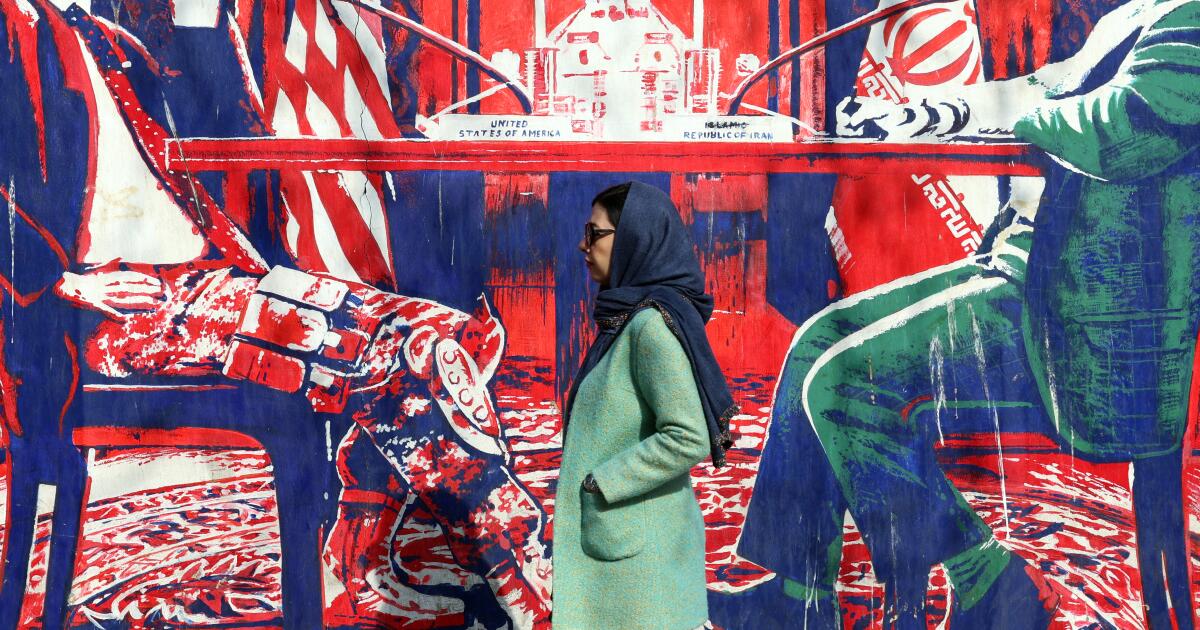
Embassy staffers and dependents evacuating, airlines suspending service, eyes in Iran warily turning skyward for signs of an attack.
The prospects of a showdown between the U.S. and Iran loom ever higher, as massive American naval and air power lies in wait off Iran’s shores and land borders.
Yet little of that urgency is felt in Iran’s government. Rather than quickly acquiescing to President Trump’s demands, Iranian diplomats persist in the kind of torturously slow diplomatic dance that marked previous discussions with the U.S., a pace that prompted Trump to declare on Friday that the Iranians were not negotiating in “good faith.”
But For Iran’s leadership, Iranian experts say, concessions of the sort Trump are asking for about nuclear power and the country’s role in the Middle East undermine the very ethos of the Islamic Republic and the decades-old project it has created.
“As an Islamic theocracy, Iran serves as a role model for the Islamic world. And as a role model, we cannot capitulate,” said Hamid Reza Taraghi, who heads international affairs for Iran’s Islamic Coalition Party, or Hezb-e Motalefeh Eslami.
Besides, he added, “militarily we are strong enough to fight back and make any enemy regret attacking us.”
Even as another round of negotiations ended with no resolution this week, the U.S. has completed a buildup involving more than 150 aircraft into the region, along with roughly a third of all active U.S. ships.
Observers say those forces remain insufficient for anything beyond a short campaign of a few weeks or a high-intensity kinetic strike.
Iran would be sure to retaliate, perhaps against an aircraft carrier or the many U.S. military bases arrayed in the region. Though such an attack is unlikely to destroy its target, it could damage or at least disrupt operations, demonstrating that “American power is not untouchable,” said Hooshang Talé, a former Iranian parliamentarian.
Tehran could also mobilize paramilitary groups it cultivated in the region, including Iraqi militias and Yemen’s Houthis, Talé added. Other U.S. rivals, such as Russia and China, may seize the opportunity to launch their own campaigns elsewhere in the world while the U.S. remains preoccupied in the Middle East, he said.
“From this perspective, Iran would not be acting entirely alone,” Tale said. “Indirect alignment among U.S. adversaries — even without a formal alliance — would create a cascading effect.”
We’re not exactly happy with the way they’re negotiating and, again, they cannot have nuclear weapons
— President Trump
The U.S. demands Iran give up all nuclear enrichment and relinquish existing stockpiles of enriched uranium so as to stop any path to developing a bomb. Iran has repeatedly stated it does not want to build a nuclear weapon and that nuclear enrichment would be for exclusively peaceful purposes.
The Trump administration has also talked about curtailing Iran’s ballistic missile program and its support to proxy groups, such as Hezbollah, in the region, though those have not been consistent demands. Tehran insists the talks should be limited to the nuclear issue.
After indirect negotiations on Thursday, Oman’s Foreign Minister Badr al-Busaidi — the mediator for the talks in Geneva — lauded what he said was “significant progress.” Iranian Foreign Ministry spokesman Esmail Baghaei said there had been “constructive proposals.”
Trump, however, struck a frustrated tone when speaking to reporters on Friday.
“We’re not exactly happy with the way they’re negotiating and, again, they cannot have nuclear weapons,” he said.
Trump also downplayed concerns that an attack could escalate into a longer conflict.
This frame grab from footage circulating on social media shows protesters dancing and cheering around a bonfire during an anti-government protest in Tehran, Iran, on Jan. 9.
(Uncredited / Associated Press)
“I guess you could say there’s always a risk. You know, when there’s war, there’s a risk in anything, both good and bad,” Trump said.
Three days earlier, in his State of the Union address Tuesday, said, “My preference is to solve this problem through diplomacy. But one thing is certain, I will never allow the world’s number one sponsor of terror, which they are by far, to have a nuclear weapon — can’t let that happen.”
There are other signs an attack could be imminent.
On Friday, the U.S. Embassy in Israel allowed staff to leave the country if they wished. That followed an earlier move this week to evacuate dependents in the embassy in Lebanon. Other countries have followed suit, including the U.K, which pulled its embassy staff in Tehran. Meanwhile, several airlines have suspended service to Israel and Iran.
A U.S. military campaign would come at a sensitive time for Iran’s leadership.
The country’s armed forces are still recovering from the June war with Israel and the U.S, which left more than 1,200 people dead and more than 6,000 injured in Iran. In Israel, 28 people were killed and dozens injured.
Unrest in January — when security forces killed anywhere from 3,000 to 30,000 protesters (estimates range wildly) — means the government has no shortage of domestic enemies. Meanwhile, long-term sanctions have hobbled Iran’s economy and left most Iranians desperately poor.
Despite those vulnerabilities, observers say the U.S. buildup is likely to make Iran dig in its heels, especially because it would not want to set the precedent of giving up positions at the barrel of a U.S. gun.
Other U.S. demands would constitute red lines. Its missile arsenal, for example, counts as its main counter to the U.S. and Israel, said Rose Kelanic, Director of the Middle East Program at the Defense Priorities think tank.
“Iran’s deterrence policy is defense by attrition. They act like a porcupine so the bear will drop them… The missiles are the quills,” she said, adding that the strategy means Iran cannot fully defend against the U.S., but could inflict pain.
At the same time, although mechanisms to monitor nuclear enrichment exist, reining in Tehran’s support for proxy groups would be a much harder matter to verify.
But the larger issue is that Iran doesn’t trust Trump to follow through on whatever the negotiations reach.
After all, it was Trump who withdrew from an Obama-era deal designed to curb Iran’s nuclear ambitions, despite widespread consensus Iran was in compliance.
Trump and numerous other critics complained Iran was not constrained in its other “malign activities,” such as support for militant groups in the Middle East and development of ballistic missiles. The Trump administration embarked on a policy of “maximum pressure” hoping to bring Iran to its knees, but it was met with what Iran watchers called maximum resistance.
In June, he joined Israel in attacking Iran’s nuclear facilities, a move that didn’t result in the Islamic Republic returning to negotiations and accepting Trump’s terms. And he has waxed wistfully about regime change.
“Trump has worked very hard to make U.S. threats credible by amassing this huge military force offshore, and they’re extremely credible at this point,” Kelanic said.
“But he also has to make his assurances credible that if Iran agrees to U.S. demands, that the U.S. won’t attack Iran anyway.”
Talé, the former parliamentarian, put it differently.
“If Iranian diplomats demonstrate flexibility, Trump will be more emboldened,” he said. “That’s why Iran, as a sovereign nation, must not capitulate to any foreign power, including America.”

new video loaded: Bill Clinton Says He ‘Did Nothing Wrong’ in House Epstein Inquiry
transcript
transcript
Bill Clinton Says He ‘Did Nothing Wrong’ in House Epstein Inquiry
Former President Bill Clinton told members of the House Oversight Committee in a closed-door deposition that he “saw nothing” and had done nothing wrong when he associated with Jeffrey Epstein decades ago.
-
“Cause we don’t know when the video will be out. I don’t know when the transcript will be out. We’ve asked that they be out as quickly as possible.” “I don’t like seeing him deposed, but they certainly went after me a lot more than that.” “Republicans have now set a new precedent, which is to bring in presidents and former presidents to testify. So we’re once again going to make that call that we did yesterday. We are now asking and demanding that President Trump officially come in and testify in front of the Oversight Committee.” “Ranking Member Garcia asked President Clinton, quote, ‘Should President Trump be called to answer questions from this committee?’ And President Clinton said, that’s for you to decide. And the president went on to say that the President Trump has never said anything to me to make me think he was involved. “The way Chairman Comer described it, I don’t think is a complete, accurate description of what actually was said. So let’s release the full transcript.”

By Jackeline Luna
February 27, 2026

Iran fires missiles at US bases across Middle East after American strikes on nuclear, IRGC sites

Common nighttime noise exposure may trigger heart problems, study suggests

MLB pitcher Merrill Kelly says California tax rate swayed decision to reject Padres’ free agency offer

Google dismantles 9M-device Android hijack network

A new delivery bot is coming to L.A., built stronger to survive in these streets

Florida High School Football Rankings: Top 25 teams – Oct. 21

Cleary's 21 help Le Moyne down Central Connecticut State 69-64 in OT

How old is Bo Nix? What to know about Oregon quarterback ahead of 2024 NFL Draft

99th annual Pony Swim held in Virginia

Indiana Members Credit Union announced as new anchor tenant at Bottleworks District
Iran fires missiles at US bases across Middle East after American strikes on nuclear, IRGC sites

Israel strikes two schools in Iran, killing more than 50 people

Anthropic CEO says he’s sticking to AI “red lines” despite clash with Pentagon

ICE blasts Washington mayor over directive restricting immigration enforcement

Did the EU bypass Hungary’s veto on Ukraine’s €90 billion loan?
-

 World2 days ago
Exclusive: DeepSeek withholds latest AI model from US chipmakers including Nvidia, sources say
-

 Massachusetts3 days ago
Mother and daughter injured in Taunton house explosion
-

 Montana1 week ago
2026 MHSA Montana Wrestling State Championship Brackets And Results – FloWrestling
-

 Louisiana5 days ago
Wildfire near Gum Swamp Road in Livingston Parish now under control; more than 200 acres burned
-

 Denver, CO3 days ago
10 acres charred, 5 injured in Thornton grass fire, evacuation orders lifted
-

 Technology1 week ago
YouTube TV billing scam emails are hitting inboxes
-

 Technology1 week ago
Stellantis is in a crisis of its own making
-

 Politics1 week ago
OpenAI didn’t contact police despite employees flagging mass shooter’s concerning chatbot interactions: REPORT