Politics
How Trump Is Using Truth Social to Concoct and Spread Conspiracy Theories


Former President Donald J. Trump’s penchant for amplifying easily debunked conspiracy theories is well known. But an extensive analysis of his posts and reposts on Truth Social reveals a candidate who promotes sinister conspiracy theories at a scale and frequency well beyond his already infamous playbook.
The New York Times’s examination of Mr. Trump’s activity on Truth Social shows that, often multiple times a day, the former president is concocting or promoting dark, paranoid material and pushing it out to his millions of followers. Mr. Trump is so hungry for this content that he appears to be willing to share outlandish information from anyone, including both well-known conspiracists and anonymous accounts that tag him.
The Times analyzed thousands of Mr. Trump’s posts and reposts over a six-month period in 2024 and found that at least 330 of them met two tightly defined and striking criteria: They each described both a false, secretive plot against Mr. Trump or the American people and a specific entity supposedly responsible for it. The unfounded theories ranged from suggestions that the F.B.I. had ordered his assassination to accusations that government officials had orchestrated the Capitol riot on Jan. 6, 2021.
About 75 percent of the conspiracy-theory posts came directly from Mr. Trump’s account. The rest Mr. Trump reposted from other social media accounts. The Times also analyzed hundreds more of his posts and reposts that didn’t strictly meet both criteria but still invoked the theories with slogans and subtle references.
In addition to the posts themselves, the analysis zeroed in on the 170 Truth Social accounts that Mr. Trump had amplified on the platform. Some are ones he follows; others have just come across his radar. The vast majority of the accounts regularly promoted conspiracy theories, the analysis showed.
The Trump campaign did not respond to a request for comment from The Times.
A spokeswoman for Truth Social did not answer questions from The Times about the company’s policies on conspiratorial content and the accounts that spread it. Instead, the spokeswoman criticized reporters.
Since Mr. Trump inaugurated the platform with its first post in 2022, Truth Social has attracted the kinds of users, and the kinds of posts, that mainstream and more heavily moderated social networks might not have tolerated. Mr. Trump’s use of the platform is near constant; he averaged 30 posts a day in the six-month period The Times analyzed. That frequency far surpasses his posting on any other social media network this year, and shows how much Mr. Trump relies on the platform, and its users, to bolster his conspiratorial worldview.
From July to September, Truth Social received an average of about 4.7 million unique monthly visitors, according to the web analytics firm Similarweb. Those users are, in general, part of a group whose fealty to Mr. Trump sets the network apart from larger ones like Facebook or X, which have monthly user counts orders of magnitude higher. While Truth Social is populated by many everyday fans and supporters of Mr. Trump’s, there are also sensationalist right-wing media upstarts, Covid deniers and devotees of QAnon, a far-right conspiracy theory whose adherents think that satanic pedophiles control the “deep state.”
“He’s building a coalition of people who just see the world in a very dark way,” said Joseph Uscinski, who is a co-author of the book “American Conspiracy Theories” and a professor of political science at the University of Miami. Mr. Trump’s rhetoric, he said, isn’t meant to cater to traditional Republican values, but instead appeals to those “who just want to see the system blown up.”
The conspiracy theories that Mr. Trump is exposed to on Truth Social have made their way into his campaign speeches and public appearances. He has repeatedly referred, both online and off, to an “enemy from within” that includes Democrats and government officials, and suggested that the military might be needed to handle them. In October, Mr. Trump described the Jan. 6 riot as a day of “love” at a town hall event and two days later shared a Truth Social post that claimed the attack had been staged by the federal government.

To analyze Mr. Trump’s account, The Times collected all 5,641 of his Truth Social posts and reposts from March 12 to Sept. 12 using computer code. Reporters also manually analyzed hundreds of posts from each profile Mr. Trump amplified to identify whether those accounts had displayed a pattern of propagating conspiratorial content.
Much of the activity on Mr. Trump’s feed consisted of general campaign-related fare, like videos from rallies or endorsements of other political candidates. It also included disinformation and hateful rhetoric about immigrants, his political opponents and other targets.
But over and over — almost twice a day on average — Mr. Trump’s account went one step further and promoted conspiracy theories to his 7.9 million followers.
A grab bag of false conspiracies: George Soros, the Nord Stream pipeline and a ‘rigged’ election
The Times’s analysis identified 10 distinct themes in the conspiracy theories shared by Mr. Trump. Some of the posts depicted below referred to multiple false theories.
Nearly 400 additional posts not depicted above used language to refer to conspiracy theories but did not spell out the full theory on their own. This included using slogans and phrases that a believer of the theory would understand, but that an average person might not.
The common thread through most of the conspiracy theories is a belief that Mr. Trump is the protagonist of every moment and that his political adversaries are the villains.
Experts said that it was particularly concerning that some of the theories shared on Mr. Trump’s account sought to undermine institutions the public relies on, including the Federal Emergency Management Agency during Hurricane Helene, and the institutions holding the former president to account, like the Justice Department.
Mr. Trump also — with stunning frequency — sowed doubt about American democracy itself.
In more than 260 posts in the six-month period The Times analyzed, Mr. Trump shared conspiracy theories that supported his frequently stated claim that the 2024 presidential election would be fraudulent. That includes saying the criminal cases against him are Biden administration plots to interfere in the election.
This ridiculous political HOAX, which most thought was already won by me, comes right out of the White House and DOJ, and is being pushed by Kamala Harris and Crooked Joe Biden against their political opponent, ME. Like all of the other Witch Hunt cases, it is being mocked by legal scholars and experts as gross election interference. This shouldn’t be happening in America! MAGA2024
I truly wish people would remember that all of these “trials” are concocted and run by the Crooked Joe Biden White House, and DOJ, for the purpose of Election Interference and damaging Crooked’s Political Opponent, ME, as much as possible. These are not legitimate trials, they are merely part of an illegal POLITICAL WITCH HUNT the likes of which our Country has never seen before! MAGA2024
The Radical Left Democrats are already cheating on the 2024 Presidential Election by bringing, or helping to bring, all of these bogus lawsuits against me, thereby forcing me to sit in courthouses, and spend money that could be used for campaigning, instead of being out in the field knocking Crooked Joe Biden, the WORST President in the History of the United States. Election Interference!
Some posts falsely alleged that Democrats were relying on undocumented immigrants to vote and sway the election. Mr. Trump also shared posts with references to replacement theory, a far-right false claim often promoted by white supremacists that says powerful forces are trying to replace American citizens with immigrants.
If Republicans in the House, and Senate, don’t get absolute assurances on Election Security, THEY SHOULD, IN NO WAY, SHAPE, OR FORM, GO FORWARD WITH A CONTINUING RESOLUTION ON THE BUDGET. THE DEMOCRATS ARE TRYING TO “STUFF” VOTER REGISTRATIONS WITH ILLEGAL ALIENS. DON’T LET IT HAPPEN – CLOSE IT DOWN!!! For 3 years, Crooked Joe Biden has flooded our Country with tens of millions of Illegal Aliens, while insisting he could do nothing to stop it. Do NOT be fooled by any phony Biden Executive Order. Crooked Joe opposes Deportations, and he wants to turn his Illegal Migrants into Voting Citizens. He is giving them Free Welfare, Healthcare, and Housing, and he’s letting them crash our Hospitals, our Education System, and Social Security and Medicare, while our Communities are under siege from Migrant Crime. Joe Biden opposes the Laken Riley Act to deport Illegal Alien Criminals. Crooked Joe Biden’s Illegal Invasion is a crime against the United States of America. Ask Joe how many of these millions of Illegal Aliens, Murderers, and Terrorists his Order will deport – The answer is ZERO. On Day One, I will Deport Crooked Joe’s Illegals, and SHUT THE BORDER DOWN!
It’s unclear whether Mr. Trump or one of his campaign staffers wrote any individual post, but each one had been sent from the former president’s official account.
Max Read, a senior research manager at the Institute for Strategic Dialogue who studies election disinformation, said that after months of Mr. Trump’s false assertions about election integrity, some Truth Social users may accept only a Trump victory.
“Who are you going to go to to trust election results?” Mr. Read said. “It’s not going to be the media. It’s not going to be the professionals doing the elections. If you’re living in that reality and getting that information on Truth Social, you’re going to trust Trump and only Trump.”
Other conspiracy theories Mr. Trump shared included claims that the Biden administration had blown up the Nord Stream pipeline to start a world war; that George Soros, a billionaire Democratic donor, was devising plots to undermine Mr. Trump (a claim that often has antisemitic undertones because Mr. Soros is Jewish); and that Vice President Kamala Harris had used artificial intelligence to fake the size of her crowds at rallies.
#FJB #TrumpWon2020 #Trump2024Landslide #ArrestBiden #ArrestObama #DeathPenaltyForPedophiles #MilitaryTribunalsForTreason
The posts from Mr. Trump that did not meet the threshold of conspiracy theory on their own, but still referred to conspiratorial viewpoints, touched on some of the most dangerous and persistent false claims. For example, he has called the people in prison for their actions on Jan. 6 “hostages,” implying they had been falsely imprisoned in a plot against him. In one of those posts, Mr. Trump shared a song that combined his voice with a choir made up of people charged for their alleged roles in the attack on the Capitol.
January 6th hostages with President Donald J. Trump…
In more than a dozen instances, Mr. Trump shared posts that included known QAnon slogans and imagery, like the acronym “NCSWIC,” meaning “Nothing can stop what is coming,” and “Q+,” the movement’s nickname for Mr. Trump.
“He’s able to reference a series of claims and characters and so forth now,” said Brendan Nyhan, a professor of government at Dartmouth College who studies misinformation and conspiracy theories. “There’s an incredible conceptual apparatus that has been built up around the various villains that he thinks are persecuting him and his followers.”
The far-right universe Trump amplifies: real-life confidants and anonymous sycophants
Not everything Mr. Trump posts to Truth Social is a conspiracy theory. But almost every voice he amplifies at least dabbles in them — some even more extreme than what Mr. Trump shares from their accounts.
The Times’s analysis found that in the same six-month period this year, Mr. Trump reposted or quote-posted messages from 170 accounts, about 85 percent of which regularly promote conspiracy theories on their own feeds.
About one-third of those 170 accounts were run by people or organizations that Mr. Trump knows in real life, follows on Truth Social or both. They include some of the most extreme figures in the MAGA wing of the Republican Party, many of whom regularly visit his Mar-a-Lago resort, like the far-right activist Laura Loomer and Michael T. Flynn, his former national security adviser.
Mr. Trump reposted a campaign endorsement from Mr. Flynn that alleged that children “will be enslaved by a corrupt, wasteful government of woke globalists” if he is not elected.
Most of the other accounts reposted by Mr. Trump were not as well known, including 15 that had fewer than 500 followers. Because Truth Social allows for anonymity in its users’ public profiles, determining the identities of the owners of many of these accounts can be difficult.
U.S. officials have said that foreign nations have injected disinformation into dozens of social media platforms ahead of the 2024 election. It was unclear if any of these accounts were part of that effort.
The three posts below were all reposted by Mr. Trump, who shared material from each of the three accounts more than 20 times in the six months The Times examined:
TIME TO EXPOSE THIS COUP AGAINST AMERICA! BRING DOWN THE ENTIRE SOROS FAMILY AND ALL THESE TREASONOUS TRAITORS THAT HE FUNDS!
In some cases, Truth Social users tag and reply to the former president over and over, and he intermittently rewards them with a repost. For instance, Mr. Trump reposted the image below after being tagged in a post:
Let’s get an administration that is American First! #Trump2024 
In April, “Ultra MAGA Truther” tagged Mr. Trump in a post with a litany of conspiracy theories about Mr. Biden, including that “he stole the election” and “sold the influence of his office to China for millions.” Mr. Trump reposted it.
“Ultra MAGA Truther” is one of at least three dozen accounts amplified by Mr. Trump that either included a reference to QAnon in its bio or repeatedly posted messages with slogans and imagery associated with the conspiracy theory.
Mr. Trump also posts screenshots of content from Truth Social or other social media platforms without linking to the original post, or visual content that includes watermarks of social media handles. The Times looked at nearly 300 accounts identified in these kinds of posts, dozens of which also trafficked in conspiracy theories. They include well-known figures such as Elon Musk, whom Mr. Trump has suggested would have a job in his administration if he wins.
In one post in August, Mr. Trump shared an image of a post on X that used the phrase “too big to rig,” a conspiratorial shorthand that promotes the baseless idea that the 2024 election will be fair only if Mr. Trump wins in a landslide. The Times found that the account behind the image had posted antisemitic content on X, including a post that said “Adolf Hitler was right.”
As Americans vote, Trump ramps up threats and undermines election
Truth Social hails itself as a “free speech haven” and publicly says it doesn’t moderate content unless it is illegal or otherwise prohibited by its terms of service. In addition to the conspiracy theories, The Times found multiple posts from social media accounts Mr. Trump amplified that included crude sexual comments about Ms. Harris, racist disinformation about immigrants and manipulated images and videos used to attack his opponents.
Mr. Trump’s use of the platform continues to be constant: He posted more than 240 times last week.
On Friday, Mr. Trump took to Truth Social to repeat his false claims that the 2020 election had been stolen and that he would seek retribution on anyone who had been involved once elected. He said those people, including lawyers, donors, election officials and “illegal voters,” would be “sought out, caught, and prosecuted at levels, unfortunately, never seen before in our Country.”
CEASE & DESIST: I, together with many Attorneys and Legal Scholars, am watching the Sanctity of the 2024 Presidential Election very closely because I know, better than most, the rampant Cheating and Skullduggery that has taken place by the Democrats in the 2020 Presidential Election. It was a Disgrace to our Nation! Therefore, the 2024 Election, where Votes have just started being cast, will be under the closest professional scrutiny and, WHEN I WIN, those people that CHEATED will be prosecuted to the fullest extent of the Law, which will include long term prison sentences so that this Depravity of Justice does not happen again. We cannot let our Country further devolve into a Third World Nation, AND WE WON’T! Please beware that this legal exposure extends to Lawyers, Political Operatives, Donors, Illegal Voters, & Corrupt Election Officials. Those involved in unscrupulous behavior will be sought out, caught, and prosecuted at levels, unfortunately, never seen before in our Country.
The post quickly gathered thousands of replies from other users who shared additional conspiracy theories and cheered on Mr. Trump’s call for retribution.
Though most of these accounts are not household names, at least eight — including one that called former President Barack Obama “a sleeper cell terrorist” in a reply — may have looked familiar to Mr. Trump. He has reposted their content before.
Methodology
The New York Times collected 5,641 posts Mr. Trump made on Truth Social from March 12 to Sept. 12 using Truthbrush, a tool built by researchers at the Stanford Internet Observatory, to scrape the text, media and metadata of Truth Social posts. The data didn’t include any posts he may have deleted before Sept. 13.
Times reporters then analyzed each post to determine if it contained the hallmarks of a conspiracy theory. For a post to meet the standard, it had to mention a secret and ultimately false plot against Mr. Trump, his allies or the American public and point out the people or entities supposedly behind it. An additional 388 posts that included only one of these elements or only subtly referred to the conspiracy theories, such as by using slogans known by their believers, were labeled as “conspiracy theory adjacent” and were not included in the eventual tally of at least 330 posts.
These posts were then categorized into one or more of 10 common topics that were referred to in the conspiracy theories. To understand whom Mr. Trump was interacting with, The Times also looked at the 170 accounts that Mr. Trump reposted or quote-posted in the time period. Each account was categorized into multiple buckets, including whether it had displayed a pattern of promoting conspiracy theories; whether its bio included references to QAnon or the account repeatedly shared QAnon content; whether it was followed by Mr. Trump or run by someone Mr. Trump knew in real life; and whether the account posted crude attacks of a sexual nature.
Mr. Trump also frequently shared videos and images containing watermarks by other users and screenshots of content from Truth Social and other platforms. To capture these accounts, The Times used an open-source machine learning model called Qwen-2 to extract the social media usernames visible in the images or in the first frame of videos from the 3,400 pieces of media in Mr. Trump’s posts and reposts. Times reporters then manually matched the extracted handles to the associated account on the correct platform.



Politics
Graham’s death ignites GOP scramble for Senate seat as Trump hints he already has a favorite

NEWYou can now listen to Fox News articles!
Sen. Lindsey Graham’s, R-S.C., sudden death from an undisclosed illness has triggered a two-pronged approach to replace him, and President Donald Trump will likely be a focal point in the process.
Graham’s passing overnight comes at a time when Republicans in the upper chamber need every vote they can get. The Senate GOP now holds a 52-seat majority, and with the timetable for Sen. Mitch McConnell’s, R-Ky., absence still unclear, that majority is now effectively 51 votes.
That will up the pressure, and drama, to find a replacement for the longtime South Carolina lawmaker.
LINDSEY GRAHAM, SOUTH CAROLINA SENATOR WHO ROSE FROM SMALL-TOWN ROOTS TO GOP POWER BROKER, DIES AT 71
Sen. Lindsey Graham speaks with reporters aboard Air Force One with President Donald Trump and Secretary of Commerce Howard Lutnick on the way back to Washington, D.C., on Jan. 4, 2026. (Jim Watson/AFP via Getty Images)
Trump, during an appearance on NBC’s “Meet the Press” on Sunday, said, “I have somebody that I think would be great.”
“But I don’t want to say it now because it’s just, it’s too soon with Lindsey,” Trump said. “I don’t wanna even talk about anybody, but I do have somebody that I think is really good.”
It’s a process guided by the Constitution and state law. The first step will require South Carolina Gov. Henry McMaster, a Republican, to appoint a replacement for Graham on a temporary basis.
McMaster, a close ally of Trump, can appoint a temporary replacement as soon as he wants. That pick will serve until the next special or general election.
MCCONNELL FACES FRESH CALLS TO COME CLEAN ABOUT HEALTH ISSUES
Fox News Digital did not immediately hear back from McMaster’s office on when he would make the announcement, or who he was considering for the seat.
Graham was already in-cycle running for a fifth term in the upper chamber, and he easily cruised to a primary victory early last month. That means that whoever McMaster taps would serve until the end of the year to finish off the remainder of Graham’s fourth term.
The second prong is finding his long-term successor.
The candidate filing period for that special election to win the GOP nomination opens July 21. The election is slated for Aug. 11, according to South Carolina law.
That race could see several familiar faces in South Carolina GOP politics jumping in, including McMaster himself, who is termed out as governor.
TRUMP’S ENDORSEMENT POWER FACES ANOTHER GOP TEST IN SOUTH CAROLINA AFTER ALAN WILSON ADVANCES
Rep. Nancy Mace, R-S.C., departs the U.S. Capitol after a series of House votes on funding for Homeland Security and a War Powers resolution on Iran on March 5, 2026, in Washington, D.C. (Andrew Harnik/Getty Images)
Trump heaped praise on McMaster, noting that he endorsed his first bid for the White House in 2016.
“Henry’s been a great governor, you know now he’s termed out, but he’s going to do the right thing,” Trump said. “I think Henry will be fantastic.”
There are six members of South Carolina’s GOP congressional delegation who could toss their hats into the mix. Rep. Nancy Mace, R-S.C., who recently lost a bid for the GOP gubernatorial nomination, is eyeing jumping into the special election.
A person familiar with Mace’s plans told Fox News Digital, “Congresswoman Mace is considering a bid to run.”
Then there’s Rep. Joe Wilson, R-S.C., the longest-serving Republican member of the Palmetto State’s delegation. He quickly snuffed speculation about whether he’d leap into the fray.
CLICK HERE TO DOWNLOAD THE FOX NEWS APP
“I was grateful to speak with President Trump today reminiscing about our mutual friend, Senator Lindsey Graham,” Wilson said on X. “I assured him my goal is to remain in the House to keep his two-vote majority for the American people!!!”
Then there’s the remaining four: South Carolina Republican Reps. Ralph Norman, who also lost out on scoring the GOP nomination for governor, Russell Fry, William Timmons and Sheri Biggs, none of whom, so far, have signaled that they would jump into the battle for Graham’s seat.
Meanwhile, South Carolina Lt. Gov. Pamela Evette could also be in the mix.
A source familiar told Fox News Digital that Evette is receiving “tons of encouragement from all across the state and from around the country” to serve as the temporary caretaker for Graham’s seat.
The source said that Evette is also being encouraged to run to seek a full six-year term in the Senate.
Evette, a top South Carolina ally of Trump’s and McMaster’s, was endorsed by both as she finished first in South Carolina’s Republican gubernatorial primary in this year’s race to succeed McMaster.
But after Trump also endorsed her GOP rival in the runoff, State Attorney General Alan Wilson, she was trounced by Wilson a few weeks ago in the runoff election
Fox News Digital did not immediately receive responses to requests for comment from possible contenders in the House.
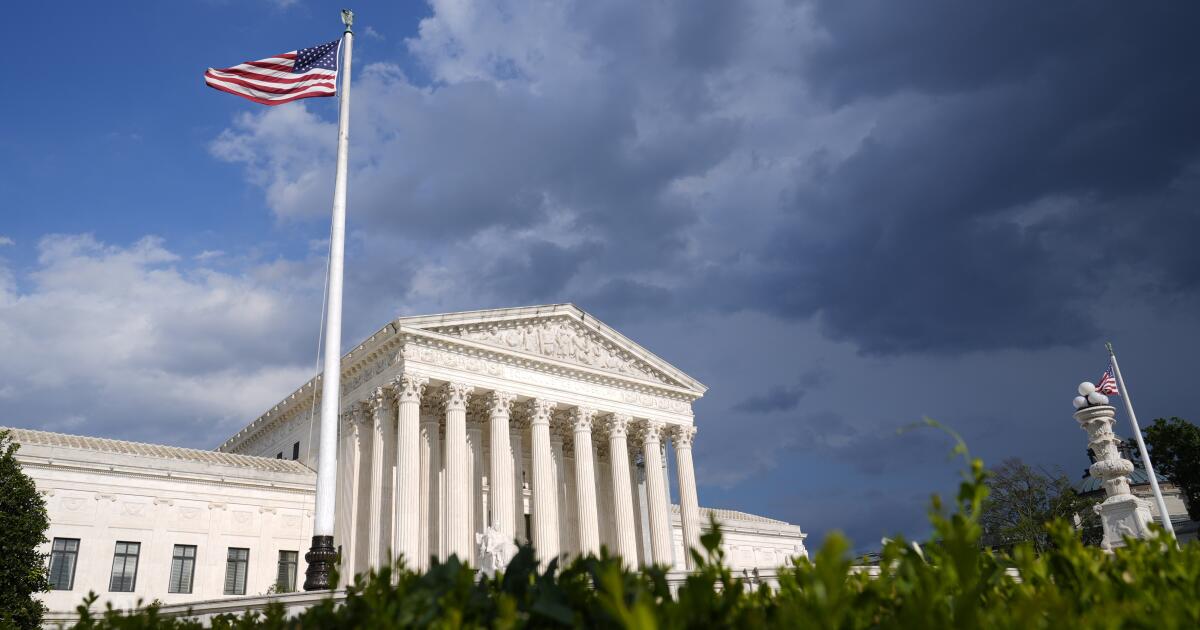
WASHINGTON — The Supreme Court’s conservative justices say they decide cases based on the words and original history of the Constitution — and not on their personal or political views.
Following the lead set by the late Justice Antonin Scalia, they say they see history and “originalism” as a guiding principle to prevent judges from changing the Constitution to adjust to new and changing times.
This text-and-history approach is said to contrast with an evolving or “living Constitution” favored by progressives and liberal activists.
But this year saw a flip of sorts on birthright citizenship.
The foremost conservatives agreed with President Trump that the surge of illegal immigration called for reconsidering the promise of citizenship at birth set out in the 14th Amendment of 1868.
“The number of illegal immigrants in this country exploded” in recent years, Justice Samuel A. Alito Jr. wrote in dissent. The rule of citizenship at birth provides “a powerful incentive to enter or remain in this country illegally,” he added.
“The Constitution is an enduring document,” wrote Justice Brett M. Kavanaugh, but its rules and meaning must adjust to “modern situations that were unknown or unanticipated by the Constitution’s Framers.”
In a concurring opinion, he said that “significant illegal immigration into the United States is a new circumstance that was largely unknown as of 1868.”
There were no federal immigration laws in the mid-19th century, but it was an era when a surge of Irish immigrants had settled on the East Coast and large numbers of Chinese immigrants came to California.
Under the law, their children were deemed to be citizens at birth.
Among the conservative originalists, only Justice Amy Coney Barrett signed the majority opinion that was written by Chief Justice John G. Roberts Jr. and joined by the three liberals.
The opening words of the 14th Amendment of 1868 say: “All persons born or naturalized in the United States and subject to the jurisdiction thereof are citizens of the United States.”
In 1898, the Supreme Court upheld the rule of citizenship at birth in the case of Wong Kim Ark, who was born in San Francisco to Chinese parents.
In an executive order, Trump proposed to end birthright citizenship for the newborns whose parents were in the country illegally or temporarily.
Writing for the court, the chief justice said the words of the 14th Amendment were clear and were clearly understood at the time. He dismissed the “dramatically revisionist view” that has been cited recently.
Kavanaugh voted with the majority to block Trump’s order from taking effect. He did so because Congress had adopted birthright citizenship in a 1952 law.
“Consistent with the 14th Amendment, Congress could … enact new legislation establishing exceptions to birthright citizenship,” he wrote.
Justices Clarence Thomas and Alito wrote long dissents arguing that the framers of the 14th Amendment did not or would not have favored birthright citizenship.
They pointed to recent scholarship by law professors that raised questions about the accepted understanding of the 14th Amendment and the citizenship rule.
Thomas said citizenship of the child should turn on whether the parents were “domiciled” in this country. Black people who were enslaved were undoubtedly domiciled here, but the same is not true of temporary visitors.
Justice Neil M. Gorsuch agreed in part with Thomas and questioned whether the newborns of temporary visitors should be deemed as citizens at birth.
Many court commentators were surprised by the close 5-4 divide on the constitutional issue.
“Given how clear the language was, I expected it to be 7 to 2,” said Melissa Murray, a New York University law professor. “I really gasped when I saw it was 5-4. This is not settled. We’re not done with this debate.”
Sarah Isgur, a podcaster and SCOTUSblog analyst, said that “originalism is getting more and more muddled. Either the history matters or it doesn’t.”
However, she agreed with Kavanaugh’s approach of leaving it to Congress to reconsider the issue.
Not all originalists are conservative.
Yale Law Professor Akhil Amar, a constitutional historian, argued that the history of birthright citizenship is clear and not subject to revisionist thinking. He said the Reconstruction Congress adopted this principle of citizenship at birth and stated their intent in clear words in the 14th Amendment.
“When a baby is born on American soil and an American flag flies above, that baby is a birthright citizen, as the Reconstruction Republicans across the land understood,” he wrote in February. This rule “has virtually nothing to do with the baby’s parents.”
Last week, he was mostly cheered by the court’s ruling.
“It’s a triumph, but it should have been 9-0,” Amar said on a review of the court term sponsored by SCOTUSblog. “Shame on the dissenters. They didn’t even the address the statute” and its wording.
But the majority led by Roberts “clearly affirmed the plain meaning of the constitutional text and its history. And that’s a win,” he said.
History has a recurring role at the Supreme Court.
Isgur noted the court will hear arguments in the fall on whether the 2nd Amendment of 1791 gives gun owners a right to have “assault weapons” like AR-15 rifles.
She said the court will decide then between history and changed circumstances.
At issue is whether these modern rapid-fire rifles fit within the history of the gun rights protected by the 2nd Amendment or instead represent a new and dangerous threat to public safety that was unknown in 1791.
Scalia’s opinion upholding gun rights in 2008 is often cited as a model of originalism, but it too emerged from a court divided 5-4.
The 2nd Amendment says, “A well-regulated Militia, being necessary to the security of a free state, the right of the people to keep and bears Arms, shall not be infringed.”
For decades, the Supreme Court had all but ignored the 2nd Amendment, viewing it as a somewhat outdated provision involving militias, akin to the 3rd Amendment. It forbids having soldiers “quartered in any house … in time of peace.”
Four liberal dissenters in 2008 said the court should stand by that understanding of history.
Justice John Paul Stevens said the 2nd Amendment was added to the Constitution to protect state militias from federal interference. Moreover, the reference to “bear arms” suggests it was about militias, he said.
But Scalia’s opinion stands as the landmark precedent, and he said the dissenters had the history all wrong.
The right to have guns for self-defense arose in England and came to the American colonies. “By the time of the founding, the right to have arms had become fundamental for English subjects,” he wrote.
The 2nd Amendment did not establish a new right, he said. Rather, it “codified a pre-existing right [of] having and using arms for self-preservation and [defense],” he wrote.
“There seems to us no doubt, on the basis of both text and history,” Scalia wrote, “that the 2nd Amendment conferred an individual right to keep and bear arms.”

NEWYou can now listen to Fox News articles!
Sen. Lindsey Graham, R-S.C., died Saturday evening following a “brief and sudden” illness, according to a statement from his office.
“On the evening of Saturday, July 11, U.S. Senator Lindsey Graham passed away from a brief and sudden illness,” his office said.
“Senator Graham’s family appreciates prayers at this time and asks for privacy during this incredibly difficult period,” it continued.
CLICK HERE TO DOWNLOAD THE FOX NEWS APP
Sen. Lindsey Graham, R-S.C., speaks with reporters about aid to Ukraine, on Capitol Hill, Wednesday, March 10, 2022, in Washington. (AP Photo/Alex Brandon)
This is a breaking story; check back for updates.
-

 Michigan6 minutes ago
Michigan churches strengthen safety after recent attacks on houses of worship
-

 Massachusetts9 minutes ago
Fire spreads to 3 multi-family buildings in Lawrence, Massachusetts
-

 Minnesota14 minutes ago
Police seeking suspect in Eagan road rage shooting incident
-

 Mississippi21 minutes ago
Mississippi State signee, top 100 prospect Landon Brown withdraws from 2026 MLB Draft
-

 Missouri24 minutes ago
Locals reckon with loss as floodwaters recede along Black River in southeast Missouri
-

 Montana29 minutes ago
Inside the Montana Senate race giving both Democrats and the GOP heartburn
-

 Nebraska36 minutes ago
Nebraska has two pitchers selected in the third round of the MLB draft
-

 Nevada39 minutes ago
Cooler, cloudier pattern arrives Sunday in northern Nevada after Saturday’s 100-degree heat

