Politics
How Paramount's $16-million Trump settlement came together — and could've fallen apart

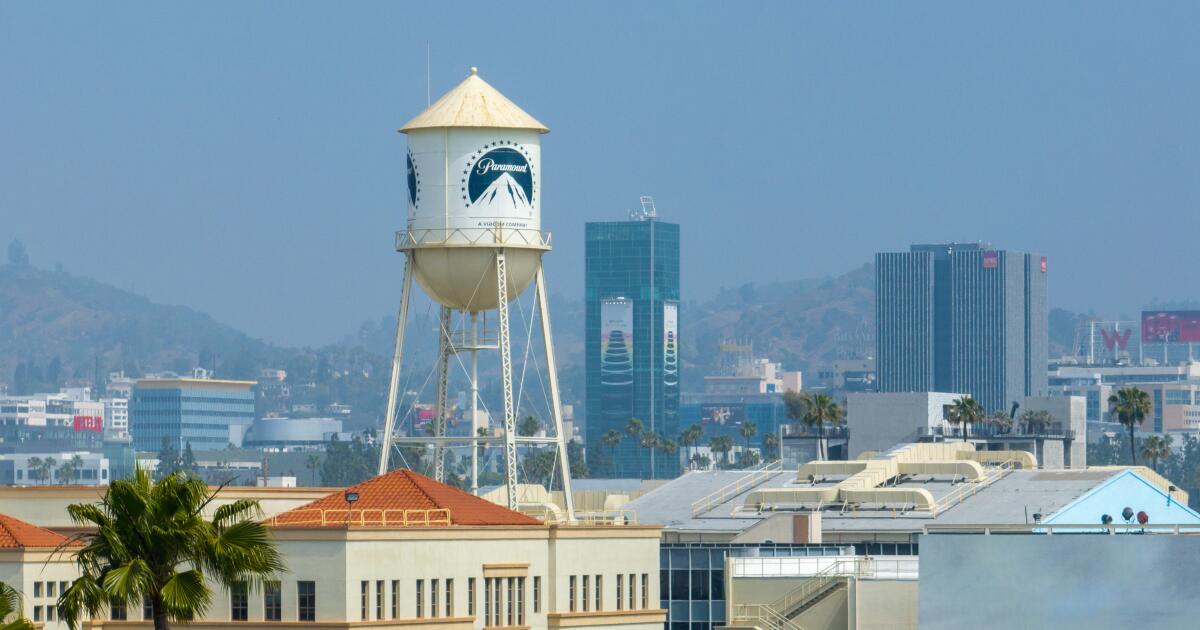
By early spring, Paramount Global was in crisis. President Trump wouldn’t budge from his demand for an eye-popping sum of money and an apology from the company to settle his lawsuit over a CBS News “60 Minutes” interview with Kamala Harris. Journalists at the storied broadcaster were in revolt against the parent company.
Meanwhile, Paramount’s board faced withering pressure, with a settlement widely seen as a prerequisite for getting government approval for the company’s $8-billion sale to David Ellison’s Skydance Media, or the deal would collapse.
Then a new emergency erupted.
On May 4, CBS aired a hard-hitting “60 Minutes” segment that took aim at Trump’s targeting of law firms. Correspondent Scott Pelley anchored the report, which relied heavily on an interview with a leading Trump irritant — former top Hillary Clinton advisor Marc Elias.
Trump was furious. He threatened Paramount with an additional lawsuit alleging defamation, according to people close to the situation who were not authorized to comment.
The behind-the-scenes drama eventually would culminate with Paramount agreeing to pay $16 million to end the president’s battle over edits to October’s Harris interview, which Trump alleged was manipulated to boost the then-vice president’s election chances. Trump’s suit had demanded $20 billion in damages.
The deal resulted from months of back-and-forth among a constellation of power players with competing interests: the president, mogul Shari Redstone, tech billionaire Larry Ellison and his son David, Hollywood super agent Ari Emanuel, CBS News’ ousted leader Wendy McMahon and Jeff Shell, a former NBCUniversal chief now with RedBird Capital Partners, which backs Ellison’s Skydance.
The settlement, which the president approved late Tuesday, included a commitment by Trump to drop his claims and not sue over the May “60 Minutes” broadcast, according to sources and a Paramount statement.
Paramount said it agreed to pay Trump’s legal fees. The remainder of the $16-million settlement will go toward his future presidential library.
“Larry Ellison is a friend of mine. He’s a great guy,” Trump told reporters following a Thursday night rally in Iowa. “I think he’s going to run CBS really well, and I think he’s making a good deal to buy it.”
The beleaguered company behind “Mission: Impossible” and “Yellowstone” mustered victories during the negotiations, withstanding the Trump team’s earlier demand for a $100-million payout, the knowledgeable sources said.
The company also refused to apologize for CBS’ reporting or edits, a stance to protect its journalistic ethics and 1st Amendment rights.
“This settlement allows Paramount to focus on its prospective sale, and CBS can maintain its principles,” said C. Kerry Fields, a business law professor at the USC Marshall School. “But principle has its price, and there certainly was one set here.”
The eight-month skirmish with Trump shined a harsh light on Paramount’s vulnerabilities — and deep divisions within the company and its prospective new owners.
Paramount had a narrow window to reach a truce. The company wanted to finalize the settlement before Wednesday, when Paramount held its annual shareholder meeting and three new members joined the board.
“This [settlement] was all about survival — it was that dark,” Fields said. “Paramount has to execute the sale to Skydance in order to survive.”
At first, Paramount’s sale to the Ellison family seemed like a sure bet. Larry Ellison, co-founder of Oracle Corp., is close to Trump and his company is a possible buyer for TikTok, another deal of interest to the president. The landmark Paramount-Skydance deal, struck a year ago, could reshape one of Hollywood’s original studios and the entertainment landscape.
Redstone and her family agreed to part with their entertainment holdings, National Amusements Inc., and controlling Paramount shares. The family’s shaky finances were a catalyst for the sale. Redstone has borrowed heavily to meet debt obligations, including a $186-million term loan from Larry Ellison last year. The family is waiting for the cash from the sale of Paramount and National Amusements to the Ellisons and RedBird, a private equity firm.
But an unexpected misstep altered the deal’s course.
Last fall, “60 Minutes” invited Trump and Harris to participate in preelection interviews. Trump agreed, then backed out. CBS News went forward with a Harris sit-down.
Former Vice President Kamala Harris talks to “60 Minutes” correspondent Bill Whitaker.
(CBS News)
Correspondent Bill Whitaker asked Harris about the Biden administration’s rocky relations with Israel’s prime minister. Producers used different portions of her answer on two programs: a convoluted response on CBS’ Sunday morning show “Face the Nation,” and a more succinct part on “60 Minutes.”
Trump and his supporters zeroed in on the discrepancy. They accused CBS of doctoring the interview. CBS News denied the allegation, saying the edits were routine.
Days before the election, Trump sued in Amarillo, Texas, ensuring the case would be overseen by a Trump-appointed judge.
His lawsuit alleged the “60 Minutes” edits amounted to election interference — “malicious, deceptive, and substantial news distortion calculated to confuse, deceive, and mislead the public,” in the suit’s words.

President Donald Trump in the Oval Office.
(Bloomberg)
1st Amendment experts said the case had no merit; some figured it was a campaign stunt.
Days later, Shell, the RedBird executive who will become Paramount’s president should Skydance take over, held a conference call with top CBS executives. Shell suggested “60 Minutes” release the full Harris interview transcript in a bid for transparency, according to people familiar with the matter.
News executives refused, drawing a clear division between some high-level Paramount executives and Ellison’s team.
Those Paramount executives have bristled over Shell’s involvement, including a comment he reportedly made to McMahon late last year, stating the company eventually would have to settle. Skydance has said it has an agreement with Paramount that gives Ellison and Shell the ability to give input on key business issues — even before acquiring Paramount.
A spokesperson for Shell declined to comment.
The role of Shell, ousted from his previous role running NBCUniversal after acknowledging an inappropriate relationship with an underling, has been controversial. Representatives for the creators of “South Park” have accused him of overstepping his authority and meddling with a protracted negotiation over their overall deal and streaming rights to the long-running cartoon. A representative for Shell denied that accusation.
Trump had scored previous victories over media organizations. In December, the Walt Disney Co. agreed to pay him $16 million, including $1 million for his attorney fees, to end a dispute stemming from ABC anchor George Stephanopoulos’ inaccurate description of Trump’s liability in a civil court case. Press advocates howled.
Paramount held firm. But it failed to get Trump’s case dismissed or moved to a court in New York, where CBS and “60 Minutes” are based.
So the company was in a box. Its sale to Skydance requires the approval of the Federal Communications Commission to transfer CBS TV station licenses to the Ellisons, and that consent has been elusive.
In one of his first moves as FCC chairman, Trump appointee Brendan Carr launched an inquiry into whether CBS’ edits of the Harris interview rose to the level of news distortion — the crux of Trump’s lawsuit.
In February, Carr demanded CBS release a raw transcript of the Harris interview and the unedited footage. CBS complied; the material showed Harris had been accurately quoted.
The Texas judge ordered Paramount and Trump’s lawyers into mediation. Talks began April 30.
That weekend, “60 Minutes” ran its report on Trump and the law firms, riling Redstone and others. The Trump team and Paramount were already far apart, the sources said.
Soon, CBS News and Stations President Wendy McMahon was forced out. Knowledgeable sources attributed her departure to months of strife and persistent criticism from Redstone, who serves as Paramount’s chair. McMahon also made missteps, including overseeing an unsuccessful reboot of “CBS Evening News.”
Her exit followed that of Bill Owens, the longtime executive producer of “60 Minutes,” who fought efforts to settle.
The day McMahon was ousted, left-leaning U.S. Sens. Elizabeth Warren (D-Mass.), Bernie Sanders (I-Vt.) and Ron Wyden (D-Ore.) lobbed a salvo at Redstone. In a May 19 letter, they warned that Paramount board members risked possible bribery charges if they paid Trump to settle the lawsuit as a way to win FCC approval for the Skydance deal.
By early June, Redstone and the Ellison team were getting restless.
Emanuel, the agent, stepped in to help get the dealmaking back on track, people familiar with the matter said. Emanuel is Trump’s former talent agent and one of Ellison’s closest allies.
On June 7, Ellison met briefly with Trump at a UFC event in New Jersey. Emanuel is executive chairman of the WME Group and chief executive of UFC’s parent company, TKO.
According to a source, Emanuel associate Dana White, the Trump-supporting UFC chief executive, helped facilitate the Ellison meeting with the president, which occurred steps away from the fighters’ octagon.
People close to Ellison and Emanuel declined to discuss Ellison’s interactions with the president. Representatives of Skydance, Redstone and Emanuel declined to comment for this story.
Finally, a breakthrough came when Trump offered support for Ellison and the Skydance deal, though he continued to blast Harris and CBS News.
“Ellison is great,” Trump said from the White House lawn on June 18. “He’ll do a great job with it.” Late Thursday, Trump called David Ellison “a fantastic young man.”
Meanwhile, the clock was ticking. Redstone and others wanted the board to handle the settlement before the shareholder meeting, when one director stepped down, and three new members joined the board.
Redstone recused herself from voting but made her wishes known.
The settlement was finally reached about 10 hours before the Paramount board switched.
One person close to the legal effort said the agreement “got over the finish line” due to a sweetener for Trump. His team anticipates that Paramount networks eventually will run millions of dollars worth of free commercials, or public service announcements, in support of Trump causes, including combating antisemitism and increasing border security.
Trump also referenced the alleged side deal.
“We did a deal for about $16 million plus $16 million — or maybe more than that in advertising,” Trump said. “So [the settlement] is like $32- to maybe $35 million.”
Paramount said it agreed to a $16-million settlement. .
“Paramount’s settlement with President Trump does not include PSAs,” the company said in a statement. “Paramount has no knowledge of any promises or commitments made to President Trump other than those set forth in the settlement proposed by the mediator and accepted by the parties.”
Skydance declined to comment. Emanuel did not respond to messages.
The settlement does contain another provision championed by Trump.“60 Minutes” will release transcripts of interviews with eligible U.S. presidential candidates after those interviews air, “subject to redactions as required for legal or national security concerns,” Paramount said.
1st Amendment advocates were disheartened by the deal. So were Trump’s enemies, including the senators who had vowed to investigate the deal for bribery.
Paramount’s move to “settle a bogus lawsuit with President Trump over a “60 Minutes” report he did not like is an extremely dangerous precedent,” Sanders, the U.S. senator, said in a statement. “Paramount’s decision will only embolden Trump to continue attacking, suing and intimidating the media.”



Politics
Iran fires missiles at US bases across Middle East after American strikes on nuclear, IRGC sites

NEWYou can now listen to Fox News articles!
Iran launched missile and drone strikes targeting U.S. military facilities in multiple Middle Eastern countries Friday, retaliating after coordinated U.S.–Israeli strikes on Iranian military and nuclear-linked sites.
Explosions were reported in or near areas hosting American forces in Bahrain, Qatar, the United Arab Emirates, Kuwait and Jordan, according to regional officials and state media accounts. Several of those governments said their air defense systems intercepted incoming projectiles.
It remains unclear whether any U.S. service members were killed or injured, and the extent of potential damage to American facilities has not yet been confirmed. U.S. officials have not publicly released casualty figures or formal damage assessments.
Iran’s Islamic Revolutionary Guard Corps (IRGC) described the operation as a direct response to what Tehran called “aggression” against Iranian territory earlier in the day. Iranian officials claimed they targeted U.S. military infrastructure and command facilities.
Explosions were reported in or near areas hosting American forces in Bahrain, pictured above. (Photo by Petty Officer 2nd Class Adelola Tinubu/U.S. Naval Forces Central Command/U.S. 5th Fleet )
The United States military earlier carried out strikes against what officials described as high-value Iranian targets, including IRGC facilities, naval assets and underground sites believed to be associated with Iran’s nuclear program. One U.S. official told Fox News that American forces had “suppressed” Iranian air defenses in the initial wave of strikes.
Tomahawk cruise missiles were used in the opening phase of the U.S. operation, according to a U.S. official. The campaign was described as a multi-geographic operation designed to overwhelm Iran’s defensive capabilities and could continue for multiple days. Officials also indicated the U.S. employed one-way attack drones in combat for the first time.
IF KHAMENEI FALLS, WHO TAKES IRAN? STRIKES WILL EXPOSE POWER VACUUM — AND THE IRGC’S GRIP
Smoke rises after reported Iranian missile attacks, following strikes by the United States and Israel against Iran, in Manama, Bahrain, Feb. 28, 2026. (Reuters)
Iran’s retaliatory barrage targeted countries that host American forces, including Bahrain — home to the U.S. Navy’s Fifth Fleet — as well as Qatar’s Al Udeid Air Base and the UAE’s Al Dhafra Air Base. Authorities in those nations reported intercepting many of the incoming missiles. At least one civilian was killed in the UAE by falling debris, according to local authorities.
Iranian officials characterized their response as proportionate and warned of additional action if strikes continue. A senior U.S. official described the Iranian retaliation as “ineffective,” though independent assessments of the overall impact are still developing.
Smoke rises over the city after the Israeli army launched a second wave of airstrikes on Iran in Tehran on Feb. 28, 2026. (Fatemeh Bahrami/Anadolu via Getty Images)
CLICK HERE TO DOWNLOAD THE FOX NEWS APP
Regional governments condemned the strikes on their territory as violations of sovereignty, raising the risk that additional countries could become directly involved if escalation continues.
The situation remains fluid, with military and diplomatic channels active across the region. Pentagon officials are expected to provide further updates as damage assessments and casualty reviews are completed.
Fox News’ Jennifer Griffin contributed to this report.
Related Article


Embassy staffers and dependents evacuating, airlines suspending service, eyes in Iran warily turning skyward for signs of an attack.
The prospects of a showdown between the U.S. and Iran loom ever higher, as massive American naval and air power lies in wait off Iran’s shores and land borders.
Yet little of that urgency is felt in Iran’s government. Rather than quickly acquiescing to President Trump’s demands, Iranian diplomats persist in the kind of torturously slow diplomatic dance that marked previous discussions with the U.S., a pace that prompted Trump to declare on Friday that the Iranians were not negotiating in “good faith.”
But For Iran’s leadership, Iranian experts say, concessions of the sort Trump are asking for about nuclear power and the country’s role in the Middle East undermine the very ethos of the Islamic Republic and the decades-old project it has created.
“As an Islamic theocracy, Iran serves as a role model for the Islamic world. And as a role model, we cannot capitulate,” said Hamid Reza Taraghi, who heads international affairs for Iran’s Islamic Coalition Party, or Hezb-e Motalefeh Eslami.
Besides, he added, “militarily we are strong enough to fight back and make any enemy regret attacking us.”
Even as another round of negotiations ended with no resolution this week, the U.S. has completed a buildup involving more than 150 aircraft into the region, along with roughly a third of all active U.S. ships.
Observers say those forces remain insufficient for anything beyond a short campaign of a few weeks or a high-intensity kinetic strike.
Iran would be sure to retaliate, perhaps against an aircraft carrier or the many U.S. military bases arrayed in the region. Though such an attack is unlikely to destroy its target, it could damage or at least disrupt operations, demonstrating that “American power is not untouchable,” said Hooshang Talé, a former Iranian parliamentarian.
Tehran could also mobilize paramilitary groups it cultivated in the region, including Iraqi militias and Yemen’s Houthis, Talé added. Other U.S. rivals, such as Russia and China, may seize the opportunity to launch their own campaigns elsewhere in the world while the U.S. remains preoccupied in the Middle East, he said.
“From this perspective, Iran would not be acting entirely alone,” Tale said. “Indirect alignment among U.S. adversaries — even without a formal alliance — would create a cascading effect.”
We’re not exactly happy with the way they’re negotiating and, again, they cannot have nuclear weapons
— President Trump
The U.S. demands Iran give up all nuclear enrichment and relinquish existing stockpiles of enriched uranium so as to stop any path to developing a bomb. Iran has repeatedly stated it does not want to build a nuclear weapon and that nuclear enrichment would be for exclusively peaceful purposes.
The Trump administration has also talked about curtailing Iran’s ballistic missile program and its support to proxy groups, such as Hezbollah, in the region, though those have not been consistent demands. Tehran insists the talks should be limited to the nuclear issue.
After indirect negotiations on Thursday, Oman’s Foreign Minister Badr al-Busaidi — the mediator for the talks in Geneva — lauded what he said was “significant progress.” Iranian Foreign Ministry spokesman Esmail Baghaei said there had been “constructive proposals.”
Trump, however, struck a frustrated tone when speaking to reporters on Friday.
“We’re not exactly happy with the way they’re negotiating and, again, they cannot have nuclear weapons,” he said.
Trump also downplayed concerns that an attack could escalate into a longer conflict.
This frame grab from footage circulating on social media shows protesters dancing and cheering around a bonfire during an anti-government protest in Tehran, Iran, on Jan. 9.
(Uncredited / Associated Press)
“I guess you could say there’s always a risk. You know, when there’s war, there’s a risk in anything, both good and bad,” Trump said.
Three days earlier, in his State of the Union address Tuesday, said, “My preference is to solve this problem through diplomacy. But one thing is certain, I will never allow the world’s number one sponsor of terror, which they are by far, to have a nuclear weapon — can’t let that happen.”
There are other signs an attack could be imminent.
On Friday, the U.S. Embassy in Israel allowed staff to leave the country if they wished. That followed an earlier move this week to evacuate dependents in the embassy in Lebanon. Other countries have followed suit, including the U.K, which pulled its embassy staff in Tehran. Meanwhile, several airlines have suspended service to Israel and Iran.
A U.S. military campaign would come at a sensitive time for Iran’s leadership.
The country’s armed forces are still recovering from the June war with Israel and the U.S, which left more than 1,200 people dead and more than 6,000 injured in Iran. In Israel, 28 people were killed and dozens injured.
Unrest in January — when security forces killed anywhere from 3,000 to 30,000 protesters (estimates range wildly) — means the government has no shortage of domestic enemies. Meanwhile, long-term sanctions have hobbled Iran’s economy and left most Iranians desperately poor.
Despite those vulnerabilities, observers say the U.S. buildup is likely to make Iran dig in its heels, especially because it would not want to set the precedent of giving up positions at the barrel of a U.S. gun.
Other U.S. demands would constitute red lines. Its missile arsenal, for example, counts as its main counter to the U.S. and Israel, said Rose Kelanic, Director of the Middle East Program at the Defense Priorities think tank.
“Iran’s deterrence policy is defense by attrition. They act like a porcupine so the bear will drop them… The missiles are the quills,” she said, adding that the strategy means Iran cannot fully defend against the U.S., but could inflict pain.
At the same time, although mechanisms to monitor nuclear enrichment exist, reining in Tehran’s support for proxy groups would be a much harder matter to verify.
But the larger issue is that Iran doesn’t trust Trump to follow through on whatever the negotiations reach.
After all, it was Trump who withdrew from an Obama-era deal designed to curb Iran’s nuclear ambitions, despite widespread consensus Iran was in compliance.
Trump and numerous other critics complained Iran was not constrained in its other “malign activities,” such as support for militant groups in the Middle East and development of ballistic missiles. The Trump administration embarked on a policy of “maximum pressure” hoping to bring Iran to its knees, but it was met with what Iran watchers called maximum resistance.
In June, he joined Israel in attacking Iran’s nuclear facilities, a move that didn’t result in the Islamic Republic returning to negotiations and accepting Trump’s terms. And he has waxed wistfully about regime change.
“Trump has worked very hard to make U.S. threats credible by amassing this huge military force offshore, and they’re extremely credible at this point,” Kelanic said.
“But he also has to make his assurances credible that if Iran agrees to U.S. demands, that the U.S. won’t attack Iran anyway.”
Talé, the former parliamentarian, put it differently.
“If Iranian diplomats demonstrate flexibility, Trump will be more emboldened,” he said. “That’s why Iran, as a sovereign nation, must not capitulate to any foreign power, including America.”

new video loaded: Bill Clinton Says He ‘Did Nothing Wrong’ in House Epstein Inquiry
transcript
transcript
Bill Clinton Says He ‘Did Nothing Wrong’ in House Epstein Inquiry
Former President Bill Clinton told members of the House Oversight Committee in a closed-door deposition that he “saw nothing” and had done nothing wrong when he associated with Jeffrey Epstein decades ago.
-
“Cause we don’t know when the video will be out. I don’t know when the transcript will be out. We’ve asked that they be out as quickly as possible.” “I don’t like seeing him deposed, but they certainly went after me a lot more than that.” “Republicans have now set a new precedent, which is to bring in presidents and former presidents to testify. So we’re once again going to make that call that we did yesterday. We are now asking and demanding that President Trump officially come in and testify in front of the Oversight Committee.” “Ranking Member Garcia asked President Clinton, quote, ‘Should President Trump be called to answer questions from this committee?’ And President Clinton said, that’s for you to decide. And the president went on to say that the President Trump has never said anything to me to make me think he was involved. “The way Chairman Comer described it, I don’t think is a complete, accurate description of what actually was said. So let’s release the full transcript.”

By Jackeline Luna
February 27, 2026

Movie review: Ballet-themed erotic drama ‘Dreams’ dissipates in finale

Takeaways from AP’s report on the ICE detention center holding children and parents

2 Survivors Describe the Terror and Tragedy of the Tahoe Avalanche

‘The Fall and Rise of Reggie Dinkins’ falls before it rises — but then it soars

Xiaomi 17 is a small(ish) phone with a big(ish) battery

Florida High School Football Rankings: Top 25 teams – Oct. 21

Cleary's 21 help Le Moyne down Central Connecticut State 69-64 in OT

How old is Bo Nix? What to know about Oregon quarterback ahead of 2024 NFL Draft

99th annual Pony Swim held in Virginia

Indiana Members Credit Union announced as new anchor tenant at Bottleworks District
2 Survivors Describe the Terror and Tragedy of the Tahoe Avalanche

Iran fires missiles at US bases across Middle East after American strikes on nuclear, IRGC sites

Israel strikes two schools in Iran, killing more than 50 people

Anthropic CEO says he’s sticking to AI “red lines” despite clash with Pentagon

ICE blasts Washington mayor over directive restricting immigration enforcement
-

 World3 days ago
Exclusive: DeepSeek withholds latest AI model from US chipmakers including Nvidia, sources say
-

 Massachusetts3 days ago
Mother and daughter injured in Taunton house explosion
-

 Montana1 week ago
2026 MHSA Montana Wrestling State Championship Brackets And Results – FloWrestling
-

 Louisiana5 days ago
Wildfire near Gum Swamp Road in Livingston Parish now under control; more than 200 acres burned
-

 Denver, CO3 days ago
10 acres charred, 5 injured in Thornton grass fire, evacuation orders lifted
-

 Technology1 week ago
YouTube TV billing scam emails are hitting inboxes
-

 Technology1 week ago
Stellantis is in a crisis of its own making
-

 Politics1 week ago
OpenAI didn’t contact police despite employees flagging mass shooter’s concerning chatbot interactions: REPORT