Politics
Granderson: Top Republicans know better than to back Trump

When it comes to disaster movies, my biggest pet peeve is the sex scene. As soon as a Diane Warren song starts playing in the background, the male and female leads will lock eyes and suddenly decide they have time to cuddle. “Saving the planet” loses all sense of urgency.
Opinion Columnist
LZ Granderson
LZ Granderson writes about culture, politics, sports and navigating life in America.
That’s what it feels like watching Republicans today refuse to endorse Kamala Harris because of the optics. They can see as well as anyone else that former President Trump is a threat to democracy. He says it openly. But apparently when members of the GOP look at their chances of holding on to power, the romantic music in their heads just sweeps them away.
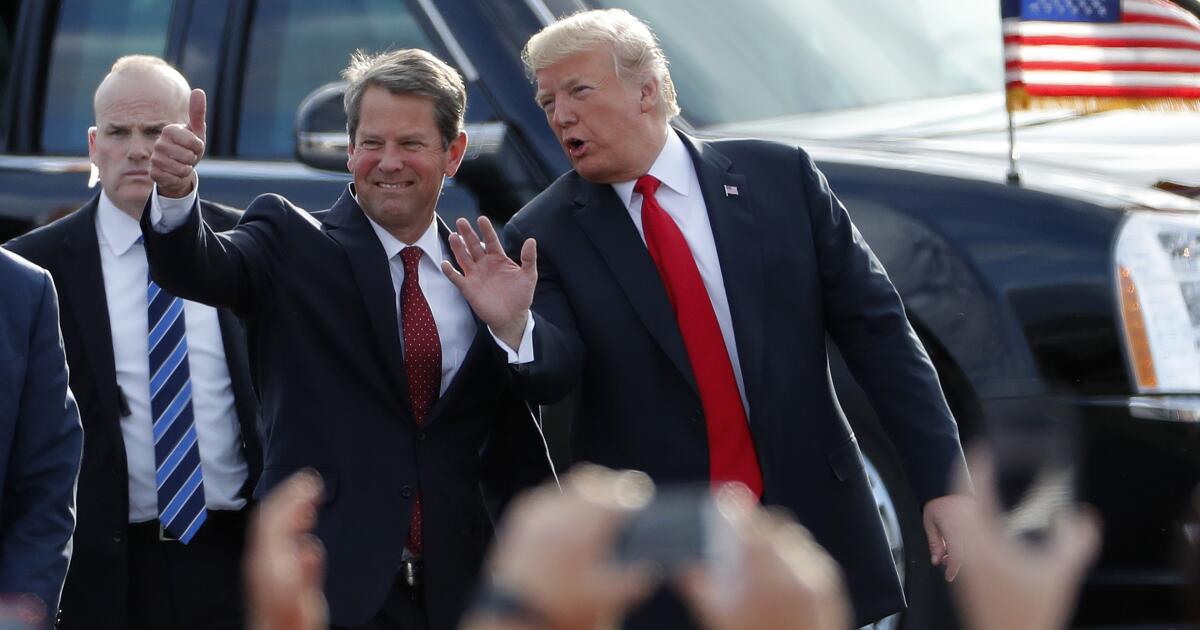
Take Georgia Gov. Brian Kemp. If anyone knows how far Trump will go to grab power, it’s him. Trump has been harassing him ever since losing the state to President Biden by 11,779 votes back in 2020. We heard Trump’s phone call with Republican Secretary of State Brad Raffensperger. We saw the indictment (though whether the Fulton County district attorney can continue to prosecute it remains in limbo). Trump’s allies tried to use fake electors to pretend he won the state.
Kemp followed the law and common sense and certified the real electors, which gave Biden the state’s 16 electoral votes.
We’re still hearing about Trump’s grudge, most recently in a long rant at a campaign stop in Georgia.
“He’s a bad guy. He’s a disloyal guy. And he’s a very average governor,” Trump said on Saturday about Kemp, who has a 63% approval rating in his state — and whom Trump endorsed for governor in 2018.
If anyone knows of the danger that Trump represents, it’s Kemp. And yet the governor responded to that latest barrage with a social media post supporting Trump’s campaign: “my focus is on winning this November and saving our country from Kamala Harris and the Democrats — not engaging in the petty personal insults, attacking fellow Republicans, or dwelling on the past.”
That’s how he characterized Trump’s attempt to overturn the election. Dwelling on the past. His wife, Marty Kemp, is so worried about what Trump would do if he regained power that she said she is going to write in her husband’s name for president instead of voting for Trump. Oh, great. Such bravery.
Kemp is expected to run for Senate, so perhaps what we’re seeing is that his political future matters more to him than the country’s future does. He wouldn’t want to be seen endorsing a Democrat, even when the alternative is a felon whom Kemp has personally seen attempting to overthrow American democracy.
The public spat between Kemp and Trump prompted Sen. Lindsey Graham (R-S.C.) to beg the two to work things out. As if there’s some sort of acceptable middle ground between democracy and a failed coup d’etat.
The political maneuverings from folks who used to say “never Trump” — such as Graham and Trump’s running mate, Sen. JD Vance of Ohio — would not be possible without a healthy dose of cowardice.
Harris, like most politicians, will have to answer for positions she has taken in the past and may no longer support. But one stance she hasn’t changed is on the importance of protecting a free and fair election. On the day of the Jan. 6 attack, Harris’ motorcade came within 20 feet of the pipe bomb planted the day before outside the Democratic National Committee’s office. Authorities still don’t know who placed that one or the similar device found at the Republican National Committee’s headquarters.
We are not in ordinary times. Many conservatives know this firsthand. And yet despite understanding the urgency that the moment calls for, they continue to make time to play politics, like the romantic leads in a doomsday flick. At least most of them do.
This week a new group launched, called Republicans for Harris. It’s an effort to make it OK for conservatives to do all that they can to stop someone who tried to overturn the election from having another crack at becoming king. Among the most important strategies, of course, is voting for Trump’s opponent. Many Americans who tend to vote Republican will be reluctant.
The Kemps of the world aren’t helping, but consider the record of Sen. Mitt Romney (R-Utah). He has waffled at moments but mostly seems to have seen Trump for what he is and been bold enough to say so.
During the primary in 2016, Romney recorded robocalls in support of Marco Rubio and John Kasich, encouraging voters to vote for “a candidate who can defeat Hillary Clinton and who can make us proud.” After Chris Christie endorsed Trump, Romney reportedly wrote Christie him an email saying Trump is “unquestionably mentally unstable, and he is racist, bigoted, misogynistic, xenophobic, vulgar and prone to violence.”
In 2018, Romney accepted Trump’s endorsement for the Senate. But in 2021 he voted for impeachment. Outlining his reasoning in a statement, Romney said the former president “attempted to corrupt the election by pressuring the Secretary of State of Georgia to falsify the elections results in his state” and “incited the insurrection against Congress by using the power of his office.”
Romney and Christie are like many Republicans who knew the danger of Trump before he became president but chose party over country. Members of Republicans for Harris, and the half-dozen former Trump Cabinet members who refuse to endorse him, have decided not to make that mistake twice. Other politicians, such as Graham and Kemp, do not care what happens to democracy as long as their careers survive.






Embassy staffers and dependents evacuating, airlines suspending service, eyes in Iran warily turning skyward for signs of an attack.
The prospects of a showdown between the U.S. and Iran loom ever higher, as massive American naval and air power lies in wait off Iran’s shores and land borders.
Yet little of that urgency is felt in Iran’s government. Rather than quickly acquiescing to President Trump’s demands, Iranian diplomats persist in the kind of torturously slow diplomatic dance that marked previous discussions with the U.S., a pace that prompted Trump to declare on Friday that the Iranians were not negotiating in “good faith.”
But For Iran’s leadership, Iranian experts say, concessions of the sort Trump are asking for about nuclear power and the country’s role in the Middle East undermine the very ethos of the Islamic Republic and the decades-old project it has created.
“As an Islamic theocracy, Iran serves as a role model for the Islamic world. And as a role model, we cannot capitulate,” said Hamid Reza Taraghi, who heads international affairs for Iran’s Islamic Coalition Party, or Hezb-e Motalefeh Eslami.
Besides, he added, “militarily we are strong enough to fight back and make any enemy regret attacking us.”
Even as another round of negotiations ended with no resolution this week, the U.S. has completed a buildup involving more than 150 aircraft into the region, along with roughly a third of all active U.S. ships.
Observers say those forces remain insufficient for anything beyond a short campaign of a few weeks or a high-intensity kinetic strike.
Iran would be sure to retaliate, perhaps against an aircraft carrier or the many U.S. military bases arrayed in the region. Though such an attack is unlikely to destroy its target, it could damage or at least disrupt operations, demonstrating that “American power is not untouchable,” said Hooshang Talé, a former Iranian parliamentarian.
Tehran could also mobilize paramilitary groups it cultivated in the region, including Iraqi militias and Yemen’s Houthis, Talé added. Other U.S. rivals, such as Russia and China, may seize the opportunity to launch their own campaigns elsewhere in the world while the U.S. remains preoccupied in the Middle East, he said.
“From this perspective, Iran would not be acting entirely alone,” Tale said. “Indirect alignment among U.S. adversaries — even without a formal alliance — would create a cascading effect.”
We’re not exactly happy with the way they’re negotiating and, again, they cannot have nuclear weapons
— President Trump
The U.S. demands Iran give up all nuclear enrichment and relinquish existing stockpiles of enriched uranium so as to stop any path to developing a bomb. Iran has repeatedly stated it does not want to build a nuclear weapon and that nuclear enrichment would be for exclusively peaceful purposes.
The Trump administration has also talked about curtailing Iran’s ballistic missile program and its support to proxy groups, such as Hezbollah, in the region, though those have not been consistent demands. Tehran insists the talks should be limited to the nuclear issue.
After indirect negotiations on Thursday, Oman’s Foreign Minister Badr al-Busaidi — the mediator for the talks in Geneva — lauded what he said was “significant progress.” Iranian Foreign Ministry spokesman Esmail Baghaei said there had been “constructive proposals.”
Trump, however, struck a frustrated tone when speaking to reporters on Friday.
“We’re not exactly happy with the way they’re negotiating and, again, they cannot have nuclear weapons,” he said.
Trump also downplayed concerns that an attack could escalate into a longer conflict.
This frame grab from footage circulating on social media shows protesters dancing and cheering around a bonfire during an anti-government protest in Tehran, Iran, on Jan. 9.
(Uncredited / Associated Press)
“I guess you could say there’s always a risk. You know, when there’s war, there’s a risk in anything, both good and bad,” Trump said.
Three days earlier, in his State of the Union address Tuesday, said, “My preference is to solve this problem through diplomacy. But one thing is certain, I will never allow the world’s number one sponsor of terror, which they are by far, to have a nuclear weapon — can’t let that happen.”
There are other signs an attack could be imminent.
On Friday, the U.S. Embassy in Israel allowed staff to leave the country if they wished. That followed an earlier move this week to evacuate dependents in the embassy in Lebanon. Other countries have followed suit, including the U.K, which pulled its embassy staff in Tehran. Meanwhile, several airlines have suspended service to Israel and Iran.
A U.S. military campaign would come at a sensitive time for Iran’s leadership.
The country’s armed forces are still recovering from the June war with Israel and the U.S, which left more than 1,200 people dead and more than 6,000 injured in Iran. In Israel, 28 people were killed and dozens injured.
Unrest in January — when security forces killed anywhere from 3,000 to 30,000 protesters (estimates range wildly) — means the government has no shortage of domestic enemies. Meanwhile, long-term sanctions have hobbled Iran’s economy and left most Iranians desperately poor.
Despite those vulnerabilities, observers say the U.S. buildup is likely to make Iran dig in its heels, especially because it would not want to set the precedent of giving up positions at the barrel of a U.S. gun.
Other U.S. demands would constitute red lines. Its missile arsenal, for example, counts as its main counter to the U.S. and Israel, said Rose Kelanic, Director of the Middle East Program at the Defense Priorities think tank.
“Iran’s deterrence policy is defense by attrition. They act like a porcupine so the bear will drop them… The missiles are the quills,” she said, adding that the strategy means Iran cannot fully defend against the U.S., but could inflict pain.
At the same time, although mechanisms to monitor nuclear enrichment exist, reining in Tehran’s support for proxy groups would be a much harder matter to verify.
But the larger issue is that Iran doesn’t trust Trump to follow through on whatever the negotiations reach.
After all, it was Trump who withdrew from an Obama-era deal designed to curb Iran’s nuclear ambitions, despite widespread consensus Iran was in compliance.
Trump and numerous other critics complained Iran was not constrained in its other “malign activities,” such as support for militant groups in the Middle East and development of ballistic missiles. The Trump administration embarked on a policy of “maximum pressure” hoping to bring Iran to its knees, but it was met with what Iran watchers called maximum resistance.
In June, he joined Israel in attacking Iran’s nuclear facilities, a move that didn’t result in the Islamic Republic returning to negotiations and accepting Trump’s terms. And he has waxed wistfully about regime change.
“Trump has worked very hard to make U.S. threats credible by amassing this huge military force offshore, and they’re extremely credible at this point,” Kelanic said.
“But he also has to make his assurances credible that if Iran agrees to U.S. demands, that the U.S. won’t attack Iran anyway.”
Talé, the former parliamentarian, put it differently.
“If Iranian diplomats demonstrate flexibility, Trump will be more emboldened,” he said. “That’s why Iran, as a sovereign nation, must not capitulate to any foreign power, including America.”

new video loaded: Bill Clinton Says He ‘Did Nothing Wrong’ in House Epstein Inquiry
transcript
transcript
Bill Clinton Says He ‘Did Nothing Wrong’ in House Epstein Inquiry
Former President Bill Clinton told members of the House Oversight Committee in a closed-door deposition that he “saw nothing” and had done nothing wrong when he associated with Jeffrey Epstein decades ago.
-
“Cause we don’t know when the video will be out. I don’t know when the transcript will be out. We’ve asked that they be out as quickly as possible.” “I don’t like seeing him deposed, but they certainly went after me a lot more than that.” “Republicans have now set a new precedent, which is to bring in presidents and former presidents to testify. So we’re once again going to make that call that we did yesterday. We are now asking and demanding that President Trump officially come in and testify in front of the Oversight Committee.” “Ranking Member Garcia asked President Clinton, quote, ‘Should President Trump be called to answer questions from this committee?’ And President Clinton said, that’s for you to decide. And the president went on to say that the President Trump has never said anything to me to make me think he was involved. “The way Chairman Comer described it, I don’t think is a complete, accurate description of what actually was said. So let’s release the full transcript.”

By Jackeline Luna
February 27, 2026

NEWYou can now listen to Fox News articles!
U.S. Immigration and Customs Enforcement (ICE) accused Everett, Washington, Mayor Cassie Franklin of escalating tensions with federal authorities after she issued a directive limiting immigration enforcement in the city.
Franklin issued a mayoral directive this week establishing citywide protocols for staff, including law enforcement, that restrict federal immigration agents from entering non-public areas of city buildings without a judicial warrant.
“We’ve heard directly from residents who are afraid to leave their houses because of the concerning immigration activity happening locally and across our country. It’s heartbreaking to see the impacts on Everett families and businesses,” Franklin said in a statement.
“With this directive, we are setting clear protocols, protecting access to services and reinforcing our commitment to serving the entire community.”
ICE blasted the directive Friday, writing on X it “escalates tension and directs city law enforcement to intervene with ICE operations at their own discretion,” thereby “putting everyone at greater risk.”
Mayor Cassie Franklin said her new citywide immigration enforcement protocols are intended to protect residents and ensure access to services, while ICE accused her of escalating tensions with federal authorities. (Google Maps)
ICE said Franklin was directing city workers to “impede ICE operations and expose the location of ICE officers and agents.”
“Working AGAINST ICE forces federal teams into the community searching for criminal illegal aliens released from local jails — INCREASING THE FEDERAL PRESENCE,” the agency said. “Working with ICE reduces the federal presence.”
“If Mayor Franklin wanted to protect the people she claims to serve, she’d empower the city police with an ICE 287g partnership — instead she serves criminal illegal aliens,” ICE added.
DHS, WHITE HOUSE MOCK CHICAGO’S LAWSUIT OVER ICE: ‘MIRACULOUSLY REDISCOVERED THE 10TH AMENDMENT’
U.S. Immigration and Customs Enforcement blasted Everett’s mayor after she issued a directive restricting federal agents from accessing non-public areas of city facilities without a warrant. (Victor J. Blue/Bloomberg via Getty Images)
During a city council meeting where she announced the policy, Franklin said “federal immigration enforcement is causing real fear for Everett residents.”
“It’s been heartbreaking to see the racial profiling that’s having an impact on Everett families and businesses,” she said. “We know there are kids staying home from school, people not going to work or people not going about their day, dining out or shopping for essentials.”
The mayor’s directive covers four main areas, including restricting federal immigration agents from accessing non-public areas of city buildings without a warrant, requiring immediate reporting of enforcement activity on city property and mandating clear signage to enforce access limits.
BLOCKING ICE COOPERATION FUELED MINNESOTA UNREST, OFFICIALS WARN AS VIRGINIA REVERSES COURSE
Everett, Wash., Mayor Cassie Franklin said her new directive is aimed at protecting residents amid heightened immigration enforcement activity. (iStock)
It also calls for an internal policy review and staff training, including the creation of an Interdepartmental Response Team and updated immigration enforcement protocols to ensure compliance with state law.
Franklin directed city staff to expand partnerships with community leaders, advocacy groups and regional governments to coordinate responses to immigration enforcement, while promoting immigrant-owned businesses and providing workplace protections and “know your rights” resources.
The mayor also reaffirmed a commitment to “constitutional policing and best practices,” stating that the police department will comply with state law barring participation in civil immigration enforcement. The directive outlines protocols for documenting interactions with federal officials, reviewing records requests and strengthening privacy safeguards and technology audits.
CLICK HERE TO DOWNLOAD THE FOX NEWS APP
Everett, Wash., Mayor Cassie Franklin issued a directive limiting federal immigration enforcement in city facilities. (iStock)
“We want everyone in the city of Everett to feel safe calling 911 when they need help and to know that Everett Police will not ask about your immigration status,” Franklin said during the council meeting. ”I also expect our officers to intervene if it’s safe to do so to protect our residents when they witness federal officers using unnecessary force.”
Fox News Digital has reached out to Mayor Franklin’s office and ICE for comment.
Related Article

Why Iran resists giving up its nuclear program, even as Trump threatens strikes

Commentary: My toothache led to a painful discovery: The dental care system is full of cavities as you age

Prep talk: Councilmember looking into helping fix fire damage at Encino Franklin Fields

Israel strikes two schools in Iran, killing more than 50 people

Anthropic CEO says he’s sticking to AI “red lines” despite clash with Pentagon

Florida High School Football Rankings: Top 25 teams – Oct. 21

Cleary's 21 help Le Moyne down Central Connecticut State 69-64 in OT

How old is Bo Nix? What to know about Oregon quarterback ahead of 2024 NFL Draft

99th annual Pony Swim held in Virginia

Indiana Members Credit Union announced as new anchor tenant at Bottleworks District
Israel strikes two schools in Iran, killing more than 50 people
Anthropic CEO says he’s sticking to AI “red lines” despite clash with Pentagon

ICE blasts Washington mayor over directive restricting immigration enforcement

Did the EU bypass Hungary’s veto on Ukraine’s €90 billion loan?
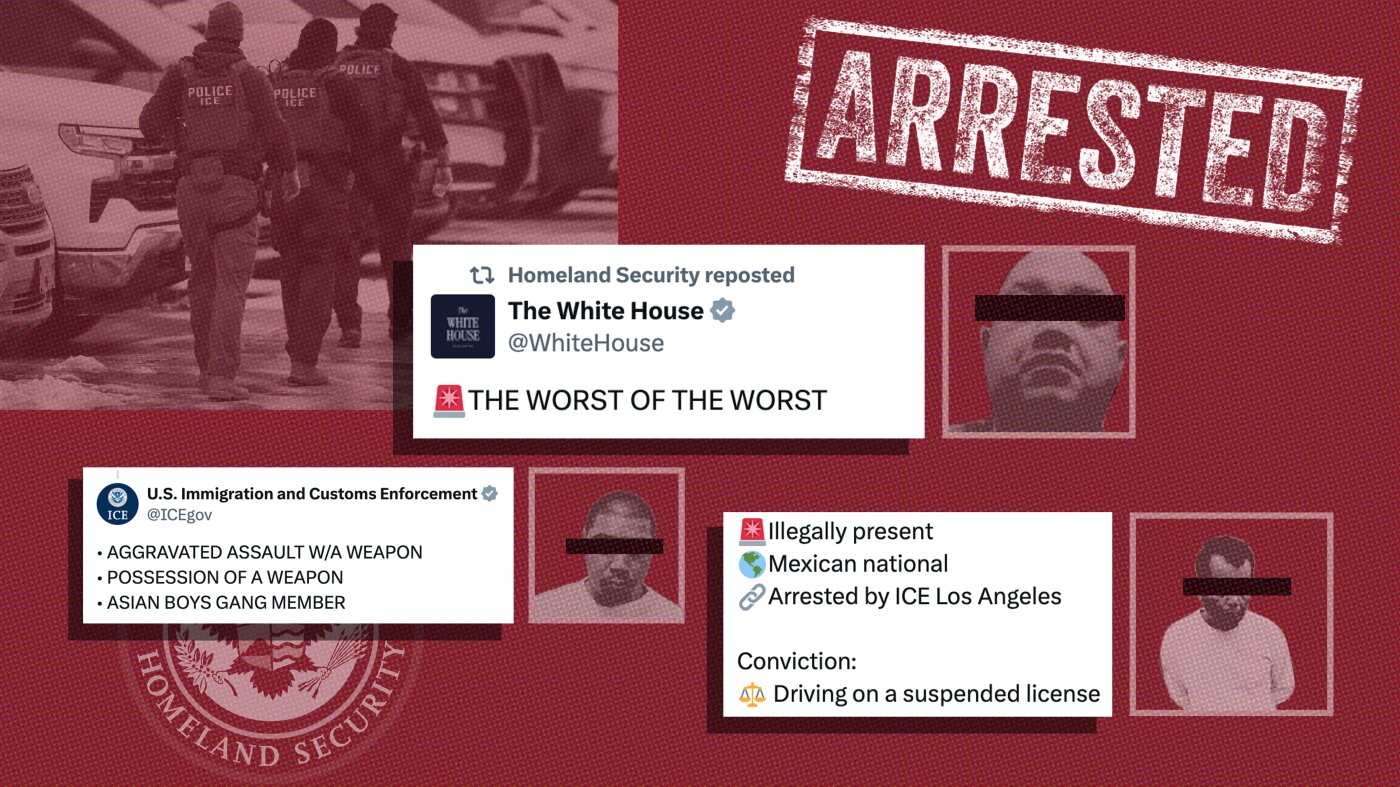
How the federal government is painting immigrants as criminals on social media
-

 World2 days ago
Exclusive: DeepSeek withholds latest AI model from US chipmakers including Nvidia, sources say
-

 Massachusetts3 days ago
Mother and daughter injured in Taunton house explosion
-

 Montana1 week ago
2026 MHSA Montana Wrestling State Championship Brackets And Results – FloWrestling
-

 Louisiana5 days ago
Wildfire near Gum Swamp Road in Livingston Parish now under control; more than 200 acres burned
-

 Denver, CO3 days ago
10 acres charred, 5 injured in Thornton grass fire, evacuation orders lifted
-

 Technology1 week ago
YouTube TV billing scam emails are hitting inboxes
-

 Technology1 week ago
Stellantis is in a crisis of its own making
-

 Politics1 week ago
OpenAI didn’t contact police despite employees flagging mass shooter’s concerning chatbot interactions: REPORT